Tag: students

  • Organization for Dummies

    Organization for Dummies

    We all lose things from time to time. It’s understandable, and oftentimes it’s forgivable. Yet it’s when disorganization starts to become a pattern that it can actually start interfering with your life.

    Consider making some organizational improvements to your lifestyle. It takes work, but you’ll be thanking yourself the next time you find yourself in a jam (and the next time you can’t find anything else). Here are some tips to help you stay organized.

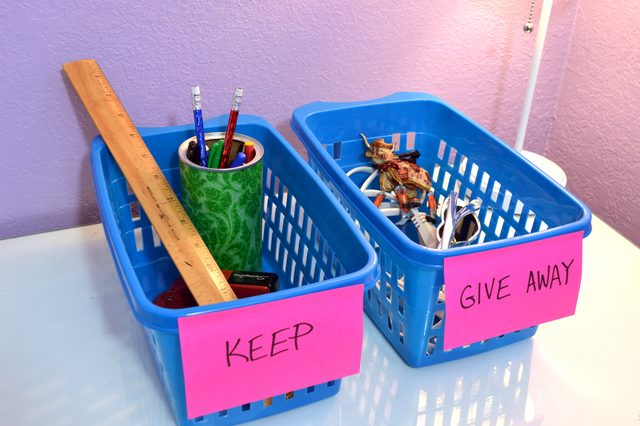
    De-clutter. Having to weed your way through clothes and piled-up dishes every time you want to enter your bedroom gets old pretty fast. To maintain a tidy living or work space, clear off surfaces, recycle/throw out what you don’t need anymore, and use cupboards or drawers to put away things that don’t belong. The best way to keep your space organized is to make de-cluttering a habit: take half an hour out of your week to clear up the accumulated mess, and you’ll notice a difference in no time.

    Label. Make sure you know where everything belongs by labeling file folders, drawers, and cabinets. That way, instead of rummaging through a massive pile of miscellaneous stuff, you’ll know where to look for something the next time it gets lost. This is also a good strategy for students who want to stay academically organized (for example, write the date and course code on every note you take, so you can file it away in the correct—and maybe colour-coded—folder at the end of the day).

    Trace your steps. Cell phones, bobby pins, house keys… If there are certain things you put down and just seem to never be able to find again, make it a point to put them in the same place each time. You can keep a list of “drop zones” (typical spots where you tend to leave things) so you know where to look the next time you absentmindedly put something down.

    Keep a “junk” drawer. This may seem counterintuitive, but when you’re in a rush, what can you do? There’s nothing wrong with tucking things away momentarily, to be revisited later—as long as you have one distinct place where you know you can find them again. The flip side to that, though, is that you have to clean out that junk drawer every once in a while. Once you get home and you have some time, make sure everything’s back in its proper place.

    Plan ahead. Before you go to bed, be proactive or “pre-organized”: try to get a jump-start on your morning routine. If you know you’re going to be up early the next morning, for example, you can prepare a lunch, pack your bag in advance, and set out the important things you’ll need (like your bus pass) in plain view, ready for you to grab on your way out the door. A little planning can save you a lot of scrambling!


  • University Mythbusters

    University Mythbusters

    We get the majority of our information about universities from family and friends, the media, and (if you’re in upper years in high school) even the universities themselves. These sources can provide a lot of useful information, but take them with a grain of salt: you won’t know what it’s like until you actually get there.

    If you’re curious about what university might actually be like, take the following information into account. Here are some common university myths, debunked by an undergraduate student at the University of Toronto.

    University is a non-stop party.

    We’ve all seen college movies with ridiculous frat parties, campus-wide parades, and non-stop (and underage) drinking. Don’t be fooled by that image (or the image many schools try to solidify during orientation week). It’s important to have fun, but you shouldn’t do so at the expense of your education. Plus, chances are, by mid-semester you’re going to be faced with too steep a workload to be going out every night.

    If you did well in high school, you’ll do well in university.

    For most students, university classes are much more difficult than their high school counterparts. The expectations are higher, the assignments are more difficult, and sometimes even the marking can throw you off. That being said, high school students that do become successful university students likely adjust well because of the skills they picked up along the way—time management, independence, resourcefulness, etc. Focus on developing those skills before you get here.

    It’s impossible (or at least mind-blowingly difficult) to do well.

    It’s true that expectations in university are high, and to be fair, some programs are more difficult or demanding than others. However, if you develop a solid routine (frequent study sessions, a good sleep schedule, planning in advance for due dates), and pay attention to what’s asked of you, your grades are bound to go up. It may be more difficult to handle than what you’re used to, but work hard at developing good habits and you’ll be set for the whole year.

    You have to have a concrete plan for your future.

    It’s good to keep some long-term goals in mind, but you shouldn’t go into your first year of university with a rigid conception of what life is going to be like after you graduate. A lot of students end up changing their majors or pursuing other studies after they finish their degrees. This isn’t a bad thing at all: university is a place for you to discover your strengths and weaknesses, as well as what you’re really passionate about. Don’t be discouraged if it takes you a little bit longer to come to those conclusions.

    Remember that regardless of what you hear, university is what you make it. Don’t feel the need to fit the image of the stereotypical student (whatever that may look like to you). Come to university with an open mind, and be prepared to work hard: you’ll find your place in no time.

  • Why Canada Needs More STEM Students

    Why Canada Needs More STEM Students

    As a wealthy, diverse and constantly growing nation, Canada needs students and workers going into the valuable fields of engineering, technology, science and mathematics. While these can be some of the most challenging career paths, they can also be some of the most rewarding. The acronym STEM stands for science, technology, engineering, and mathematics.

    There are many other subcategories within the STEM fields like biology, geology, psychology, robotic engineering, aerospace engineering, industrial engineering, software design, computer hardware design, anthropology, sociology and a whole lot more! STEM fields are the backbone of society and new students are always needed to design, improve, innovate and create.

    Graduates of STEM programs are extremely valuable to Canada and make great contributions to the Canadian economy and culture. The achievements of Canadians in STEM fields are known worldwide and it’s up to the next generation of students to continue that legacy of greatness. Engineers are responsible for buildings and structures and are required for just about any major project, from bridges to houses to high rise condominiums. Scientists and mathematicians are needed for a huge variety of jobs, from biologists and chemists to the robotics experts that created the world famous Canadarm or some of our leading bio medical doctors and researchers.

    STEM graduates are needed in almost every field, be it politics, conservation, law enforcement, architecture or military. Former STEM graduates create and plan the roads we drive on, the planes in the sky, the computer programs we use, and they even helped to design your home or school. This wide variety of STEM-based careers is integral to the functioning of society. Simply put, if there were no more STEM students the world would be a much more chaotic place to live!

    Not only do STEM graduates benefit their country, they also benefit themselves. They can open the doors to a wide variety of jobs and careers that put your intellect and creativity to the test as well as paying out steady incomes. Unfortunately, Canada currently isn’t producing as many STEM students as it once did, according to data from the Conference Board of Canada’s website.

    Now more than ever, Canada needs students to step up and study STEM programs and career paths. Take a look at STEM today!

  • Hot Jobs: Careers in Trades

    Hot Jobs: Careers in Trades

    The trades sector in Canada is constantly growing and changing. So how do you know which career path is right for you? Here at Jobs People Do, we’ve assembled a list of some of the hottest jobs in the trades industry that will be in high demand for years to come. Take a look at just some of your options and then click on the link to be taken directly to career information. Find out what kind of education you will need and how much you can expect to be paid.

    Aboriginal Child Development Practitioner
    Agricultural – Dairy Herdsperson
    Agricultural – Fruit Grower
    Agricultural – Swine Herdsperson
    Agricultural Equipment Technician
    Alignment and Brakes Technician
    Appliance Service Technician
    Arborist
    Architectural Glass and Metal Technician
    Assistant Cook
    Auto Body and Collision Damage Repairer
    Auto Body Repairer
    Automotive Electronic Accessory Technician
    Automotive Glass Technician
    Automotive Painter
    Automotive Service Technician
    Baker
    Baker-Patissier
    Bearings Mechanic
    Blacksmith
    Brick and Stone Mason
    Cabinetmaker
    Cement (Concrete) Finisher
    Chef
    Child and Youth Worker
    Child Development Practitioner
    Composite Structures Technician
    Computer Numerical Control (CNC) Programmer
    Concrete Pump Operator
    Construction Boilermaker
    Construction Craft Worker
    Construction Millwright
    Cook
    Developmental Services Worker
    Die Designer
    Draftsperson – Mechanical
    Draftsperson – Plastic Mould Design
    Draftsperson – Tool and Die Design
    Drywall Acoustic and Lathing Applicator
    Drywall Finisher and Plasterer
    Educational Assistant
    Electric Motor System Technician
    Electrical Control (Machine) Builder
    Electrician – Construction and Maintenance
    Electrician – Domestic and Rural
    Electrician (Signal Maintenance)
    Electronic Service Technician
    Elevating Devices Mechanic
    Entertainment Industry Power Technician
    Exterior Insulated Finish Systems Mechanic
    Facilities Mechanic
    Facilities Technician
    Fitter – Assembler (Motor Assembly)
    Floor Covering Installer
    Fuel and Electrical Systems Technician
    Gemsetter / Goldsmith
    General Carpenter
    General Machinist
    Hairstylist
    Hardware, Lumber and Building Materials Retailer
    Hazardous Materials Worker
    Heat and Frost Insulator
    Heavy Duty Equipment Technician
    Heavy Equipment Operator – Dozer
    Heavy Equipment Operator – Excavator
    Heavy Equipment Operator – Tractor Loader Backhoe
    Hoisting Engineer – Mobile Crane Operator 1
    Hoisting Engineer – Mobile Crane Operator 2
    Hoisting Engineer – Tower Crane Operator
    Horse Groomer
    Horse Harness Maker
    Horticultural Technician
    Hydraulic / Pneumatic Mechanic
    Industrial Electrician
    Industrial Mechanic Millwright
    Information Technology – Contact Centre Customer Service Agent
    Information Technology – Contact Centre Sales Agent
    Information Technology – Contact Centre Technical Support Agent
    Information Technology – Hardware Technician
    Information Technology – Network Technician
    Institutional Cook
    Instrumentation and Control Technician
    Ironworker – Generalist
    Ironworker – Structural and Ornamental
    Light Rail Overhead Contact Systems Lineperson
    Locksmith
    Machine Tool Builder and Integrator
    Marine Engine Technician
    Metal Fabricator (Fitter)
    Micro Electronics Manufacturer
    Motive Power Machinist
    Motorcycle Technician
    Mould Designer
    Mould Maker
    Mould or Die Finisher
    Native Clothing and Crafts Artisan
    Native Residential Construction Worker
    Network Cabling Specialist
    Optics Technician (Lens and Prism Maker)
    Packaging Machine Mechanic
    Painter and Decorator – Commercial and Residential
    Painter and Decorator – Industrial
    Parts Technician
    Pattern Maker
    Plumber
    Pool, Hot Tub and Spa – Installer
    Pool, Hot Tub and Spa – Service Technician
    Powered Lift Truck Technician
    Powerline Technician
    Precast Concrete Erector
    Precast Concrete Finisher
    Precision Metal Fabricator
    Pressure Systems Welder
    Process Operator – Food Manufacturing
    Process Operator – Power
    Process Operator – Refinery, Chemical, and Liquid Processes
    Process Operator – Wood Products
    Pump Systems Installer
    Railway Car Technician
    Recreation Vehicle Technician
    Refractory Mason
    Refrigeration and Air Conditioning Systems Mechanic
    Reinforcing Rodworker
    Relay and Instrumentation Technician
    Residential (Low Rise) Sheet Metal Installer
    Residential Air Conditioning Systems Mechanic
    Restoration Mason
    Retail Meat Cutter
    Roll Grinder / Turner
    Roofer
    Saddlery
    Saw Filer / Fitter
    Sheet Metal Worker
    Ski Lift Mechanic
    Small Engine Technician
    Special Events Coordinator
    Sprinkler and Fire Protection Installer
    Steamfitter
    Surface Blaster
    Surface Mount Assembler
    Terrazzo, Tile, and Marble Setter
    Thin Film Technician
    Tire, Wheel and Rim Mechanic
    Tool / Tooling Maker
    Tool and Cutter Grinder
    Tool and Die Maker
    Tool and Gauge Inspector
    Tractor-Trailer Commercial Driver
    Transmission Technician
    Truck and Coach Technician
    Truck-Trailer Service Technician
    Turf Equipment Technician
    Utility Arborist
    Water Well Driller
    Welder
    Wooden Boat Rebuilder
  • Living On A Budget

    Living On A Budget

    As a young person, your parents are probably paying for most, if not all, of your expenses. Perhaps you have a job, in which case you may be making some of your own money. However, because of the time that school takes up, you probably are only able to work part-time. This means that your income is limited to what your parents give you and what small amount of money you can make at your job. Learning how to budget your money is an invaluable skill that will help you to learn the value of money and make important decisions about what you need and what you can live without.

    Budgeting starts by thinking about your expenses and what you can and cannot afford to buy. It also involves setting goals for what purchases you would like to make in the coming years, which can be very exciting and rewarding. Your parents may already be paying for your “big” expenses like rent, food and transportation costs (bus pass, car, etc.). They might also pay your phone and internet bill. In turn, you would then be responsible for paying for your clothing, hygiene products (like shampoo and conditioner) and your entertainment costs. All of these amenities add up and you will eventually have to pay for all of these things yourself.

    Setting goals about when you will be able to afford a certain purchase is a really good way to initially ease yourself into a budget. If, for example, you currently work part-time hours (20-30 per week) and you want to buy a car within the next 4 years, you can calculate how much money you will have to put away in your savings account. Knowing this will help to set you up for success and encourage you to spend your money responsibly. It will help you to make tough decisions about what you really need and what you don’t (do you NEED that new Xbox game?).

    Depending on your financial situation, you might also be responsible for paying your university or college tuition. These costs can reach into the tens of thousands of dollars and definitely require budget planning. You will need to factor in all of the above mentioned cost in addition to the cost of school. This is where applying for student loans and scholarships becomes vitally important. Remember – student loans you are required to pay back. Scholarships are essentially free money. Ensure you have applied for as many scholarships as possible!

    All of this responsibility can tend to weigh down on you and make you feel trapped. But don’t worry! Everyone has a budget. Some are more restricted than others, but with a little creativity and organizational skills, you will be able to manage perfectly well and become a better person for it. Money comes and goes, but as long as you are doing your part to earn an income and to actively plan and manage your money, you will be fine.

  • Welcome to the New Community Living Pathway on JobsPeopleDo.com!

    Welcome to the New Community Living Pathway on JobsPeopleDo.com!

    JobsPeopleDo.com is proud to introduce our new Community Living Pathway, your link to the most up-to-date information for students with disabilities. Featuring scholarships, information on transitioning from high school to post-secondary and links to accessibility information for universities and colleges across Canada, it is our hope that this new section will become your one-stop shop for all the tools you need to succeed.

    The pathway to community leads to having a meaningful life in the community for people with disabilities that may involves things like employment, volunteerism, leisure, and further education.

    If you are a student with a disability who would like to contribute your advice, thoughts or success stories to the Community Living Pathway, please contact jasmin@jobspeopledo.com.

  • Tips to Help Students With LD Pass High-Stakes Tests

    Tips to Help Students With LD Pass High-Stakes Tests

    A growing number of students now take tests that determine whether they will advance to the next grade level. If students do not pass these tests, they may be held back one year, which can damage self-esteem, lead to frustration, and increase their chances of eventually dropping out of school. A growing number of high school students now take exit exams that determine whether they will graduate with a standard diploma. Students who do not pass these exams often find themselves with limited options after high school.

    High-stakes tests can have serious consequences for all students, but they pose a particular challenge for students with learning disabilities (LD). Due to their one-size-fits-all format, many parents and educators believe that standardized tests tend to reflect a student’s disabilities rather than his or her abilities. With so much at stake, it is critical that students with LD be well prepared and receive the support they need when taking such tests. Parents should not confuse high stakes tests with the tests given by the school to meet the requirements under No Child Left Behind (NCLB). These tests hold states and districts accountable for poor student performance, but do not require states to impose personal accountability on students.

    Reasonable Accommodations
    Students with learning disabilities, who have an Individualized Education Program (IEP), are entitled to appropriate accommodations while taking high-stakes tests.

    Accommodations are changes to testing materials and procedures that can help to “level the playing field.” The purpose of accommodations is not to give students with LD an unfair advantage over other students, but rather to assist them in demonstrating what they actually know.

    A student with dyslexia, for example, might know the answers on a multiple choice test, but not have enough time to read all of the questions. A reasonable accommodation for this student would be to receive additional time. Depending upon a student’s disabilities, accommodations can be made with regard to the setting, timing, or scheduling of the test, how the information is presented, what additional materials can be used and how the student is allowed to respond. An accommodation could be:

    • receiving extended time;
    • using a computer with spell-check;
    • listening to an adult read the instructions and/or test questions; or
    • taking the test in a separate room or with a small group.

    How Parents Can Help
    Parents should play an important role in helping their children navigate high-stakes tests. It is often up to parents to work constructively with the school to make sure that their children have every opportunity to succeed. Here are some tips for parents:

    • Talk early on with your child, your child’s teacher and the IEP team to determine which accommodations your child needs while taking high-stakes tests. (Note: Ideally, accommodations should be the same or similar as classroom instruction. However, some accommodations are only for instruction and cannot be used on state/district tests.)
    • Find out if there are any accommodations that your child needs that are not allowed by your state, district and school during high-stakes testing.
    • Make sure that your child’s IEP clearly spells out appropriate accommodations for both testing situations and classroom use. (Note: You should clarify whether your child will be permitted to use accommodations for testing that he or she has already been using in the classroom as part of everyday learning.)
    • Check to see whether your child has been taught the content and skills on which he or she will be tested.
    • This is important because sometimes students with LD have not had sufficient instruction in the general education curriculum upon which the tests are based.
    • Should your child fail a high-stakes test, make sure that there are multiple opportunities to retake it.
    • For a small percentage of students with LD, accommodations may not be enough to level the playing field. If you and the IEP team decide that your child needs an alternate form of assessment, work closely with school personnel to determine which type of alternate or modified assessment is best suited for your child.

    The Bottom Line
    No one test can accurately measure all of the skills, knowledge and abilities of a student. When students with LD take high-stakes tests, they deserve the same opportunities as other students to demonstrate what they know. When parents and schools work together, students with learning disabilities can have the support they need when taking tests that may determine so much about their future.

  • Why Do Employers Hire Recent Grads?

    Why Do Employers Hire Recent Grads?

    Often one of the most frustrating things for high school and university/college students is finding a job. We fill out so many applications and go for so many interviews but sometimes we still don’t get a call back. You may be racking your brain wondering if you could have done something better, if you bombed the interview, or if the interviewer didn’t like you. However, one of the reasons you may not be getting called back may have nothing to do with any of these reasons and more to do with the stage of education you are in. It is a well-known fact that employers often prefer hiring recent graduates.  There are a number of reasons why they do this. When you are searching for jobs you may see the term “entry level.” This means that an employer is looking for someone who has completed a program and is trying to enter the job market.

    Although having an academic background is a great thing to have under your belt, employers sometimes view students as having a very busy schedule. Between homework, assignments and exams, students may have to take time off work in order to balance their busy academic schedules. If employers feel like they can’t rely on you or that you don’t have a flexible schedule for them to work with, they may not hire you. Employers often want to hire people with open availability rather than limited availability. Also important to note is that employers sometimes want to wait until these students are no longer students and have completed their programs before hiring them. This could be because they will have less of an academic responsibility and can therefore work more hours.

    Another reason employers like hiring recent grads is because they have developed a skill set through their academic programs. They learn skills and gain knowledge that will help them become better employees. Through school, students learn how to manage their time and become more responsible. They also become better communicators both in written and oral forms. They also won’t have to spend as much time training you because you will have gained a lot of skills and knowledge about that particular field from your program. These are all things that employers look for and want in ideal candidates.

    This does not mean that someone who hasn’t graduated yet has a zero chance of being hired. What it means is that graduates tend to have a better chance because they have completed their education and employers appreciate that. They like to see that you have taken initiative to further your education and expand your skill set. So be patient and instead of getting frustrated try to understand why employers may hire recent grads.

  • Energy Drink Dangers

    Energy Drink Dangers

    You know the feeling –it’s the early afternoon and you are feeling tired and sluggish. It’s easy to go to a convenience store and grab a Red Bull for a quick pick-me-up. But did you know that so-called energy drinks can be doing you more harm than good?

    Most energy drinks come with a warning label that you should not consume more than 1 per day. The reason is the high caffeine content, which is responsible for the quick boost you receive immediately after drinking it. While you may feel good for a short period, you will inevitably have a “caffeine crash” as your body gets back to normal. This can lead to headaches, irritability and decreased focus.

    Recent studies have concluded that some energy drinks contain 4 to 5 times more caffeine than a regular can of soda. For most people, the increase in caffeine will cause unpleasant side-effects such as nausea and diarrhea. However, the larger dangers of consuming too much caffeine run the gamut from heart palpitations, seizures, strokes and even sudden death.

    The best thing you can do is to stay away from these drinks entirely and instead focus on getting more energy by getting enough sleep and exercising regularly. On those days where you simply must have a caffeinated beverage, drink something with a lower caffeine content such as tea.

    Even worse than consuming energy drinks alone is mixing them with alcohol. Alcohol is a depressant while caffeine gives you a short-lived shot of energy. Putting these two chemicals into your body together is playing with fire. It is absolutely imperative that these two beverages never be consumed at the same time, as they have been linked to deaths in teenagers and young adults. Be safe and smart about what you consume!

    On top of the health risks, energy drinks are some of the most expensive drinks on the market. At around $2.50 per can, you could spend almost $75 per month if you drink one per day. Imagine what you could spend that money on instead!

    Go for a walk or run, drink some water and go to bed at a regular time each night. Taking these steps will prevent you from being tempted to purchase an energy drink in the future.

    Remember – treat your body well and it will treat you well in turn!

  • Grants for Students with Disabilities

    Grants for Students with Disabilities

    Am I eligible?
    You are eligible if you:
    – apply and qualify for a Canada Student Loan;
    – are enrolled in a full-time or part-time program (minimum 32 weeks) at a designated post-secondary institution;
    – meet the criteria for students with permanent disabilities; and
    – include one of the following with your loan application as proof of your disability: a medical certificate, a psycho-educational assessment, or documentation proving receipt of federal or provincial disability assistance.

    What’s available?
    $2,000 per academic year (August 1 to July 31).
    This grant is available for each year of post-secondary studies, provided you continue to meet the eligibility criteria. This includes post-secondary studies beyond the undergraduate level. Grant money is issued by your province or territory of permanent residence at the beginning and in the middle of the school year.

    Since grant amounts are fixed, the amount you receive may exceed your assessed need.
    Example: If you qualify for the grant and you have an assessed need of $1,400, you will receive a $2,000 grant. In this case, the grant would cover your assessed need, so you would not need a student loan.

    How do I apply?
    The application process for this grant differs in each jurisdiction. To make sure you meet all the application requirements, contact your province or territory’s student financial assistance office.