
Tag: summer job

  • Summer Jobs – Are They Useful?

    Summer Jobs – Are They Useful?

    It’s summertime again, and besides gasping for that first breath of summer freedom and that thing called a “social life”, it also means looking for a part-time job.

    So what is the ideal summer job for you?

    Ask yourself what area of work you are interested in, or what skills you think are essential for a certain career. For example, many careers involve people skills – dealing with customers in a daily face-to-face environment. Becoming a cashier or waiter would be an opportune job for developing your communication skills.

    Perhaps you are interested in management? If you have any tourist hot spots in your city, getting a job within tourist areas and understanding how the tourism industry operates could be a beneficial summer job! Don’t let the thought of having to start at a lower-level position scare you away from a good experience; being able to understand how a company works from the ground up can improve your understanding of management.

    Perhaps engineering is your cup of tea? Getting a job at a retail technology store would be ideal. Previous Niagara Falls resident Zachary Edmonson spent a couple of months in the summer acquiring knowledge working in an Apple tech support company before heading off to Sheridan College in Oakville.

    “Acquiring the technological knowledge and customer service skills, as well as working independently, was a priceless experience for what I am looking to do,” Zach said.

    Understanding the reality that nationwide budget cuts have diminished the number of jobs available to students is essential when hitting the summer job market.  Be creative; even “typical” teenage jobs like fast food can be a great learning experience.  Many large fast food companies have intramural sports teams and volunteer opportunities that increase job value and learning experiences

    Current Brock student Heather Long is volunteering at an after-school program called “When I Grow Up,” where she is learning how to deal with different types of children.

    “I set the room up and organize days for the kids, like ‘physics’ day and ‘musician’ day,” Heather said.

    She usually supervises 12-13 kids between herself and one other employee. Learning how to work with children will benefit Heather in her future career as a teacher.

    There can be time for some fun in the sun, but manage your time wisely! It is never too early to think ahead about what skills you think will boost your resume and get you your dream job.

  • Summer Job Hunting (French version available)

    Summer Job Hunting (French version available)

    If you’re a student (and especially if you’re going through midterms or summatives), you’re likely looking forward to the break the warmer months will bring. However, summer vacation is also a great opportunity for work experience – not only to make some money, but also to gain valuable connections and references for future employment. If you’re interested in both of those things, spots fill up fast, so it’s never too early to start your summer job hunt.

    Here’s a step-by-step process on how to find a summer job.

    1) Figure out what you want.

    What kind of position are you looking for? Moreover, what kind of position are you eligible for? Consider both your past qualifications and what field you’d potentially like to get into. It might be difficult to get a summer job that’s directly related to your career goals, but if you do find one, it’s one more thing to put on your resume. (For example, if you’re thinking about a career in medicine, it might be a good idea to check out receptionist or data entry positions at a clinic.)

    2) Revisit your resume.

    If you’ve been busy with schoolwork, it may have been a while since you dug up that old resume, so make sure all of your qualifications are up to date. If you’re planning on applying to multiple jobs (which is what you should be doing!), you should create different versions depending on the position you’re looking for. Cover letters are usually helpful, but not all employers require them; check that out on a case-by-case basis.

    3) Do your research.

    Keeping in mind Step 1 (what you want) and Step 2 (what you have to offer), check out the jobs that would be realistically available to you. If you don’t have a lot of experience, you may not be able to aim too high, but it never hurts to ask whether there are positions available for less experienced candidates (or, specifically, for students). Some good resources for job hunting are Talentegg, Workopolis, Service Canada or even Kijiji, as long as you do a background check on the employer.

    4) Apply en masse.

    Unfortunately, not every employer you contact will call you back (wouldn’t that be nice!). Don’t be afraid to apply for too many positions—in fact, apply to as many things as you can or as you are eligible for. This is going to take a lot of work, but put effort into writing emails, tweaking your resume, and following up for various positions. The worst thing that could happen is that you don’t get the job. Don’t get discouraged: you just have to keep at it until you’re rewarded.

    5) Land an interview.

    With hard work and a little bit of luck, you’ll hopefully be called in for an interview. Be your charming, professional, and qualified self, and you’ll have a summer job in no time. Best of luck!

  • Tree Planting as a Summer Job

    Tree Planting as a Summer Job

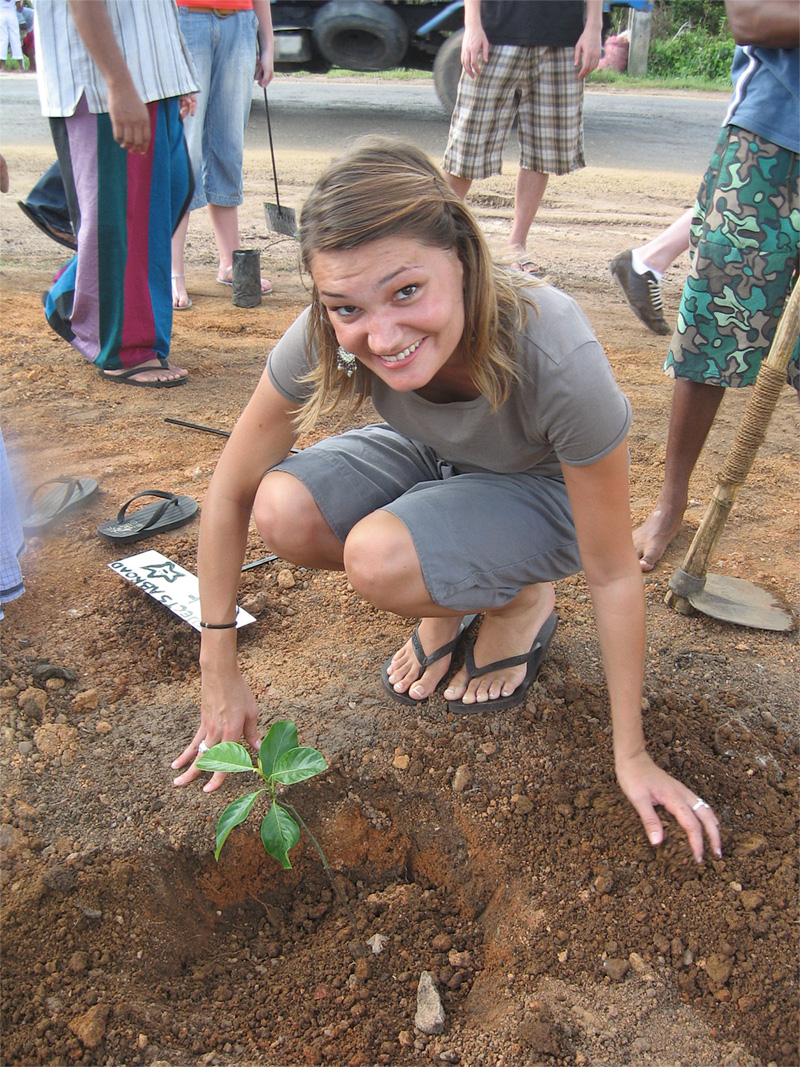
    The most common summer job field for teens is the food service industry followed closely by the retail trade industry, according to the American Bureau of Labour Statistics. That means that most of us spend our summers flipping burgers or folding t-shirts, honest work that feeds and clothes the capitalist masses. But for some, the call of consumer culture falls on deaf ears. 17 year old Sam Krawec has decided to earn his summer income while serving a greater purpose; tree-planting in Northern Ontario.

    Sam is a freshman in St. Francis Xavier University’s Development Studies program. He has always been environmentally conscious, thanks to a family that values sustainable living and global citizenship. “My mom inspired me to care about the world when I was very young,” he explains. “I always felt that it was important to give back.”

    By planting trees, Sam will be helping to filter pollutants from the air, reducing carbon dioxide levels in a community and producing healthy oxygen in a renewable, recyclable, and biodegradable way. Summer tree planting jobs generally coincide with the planting season; between six and eight weeks beginning in early May and ending in late June/early July. The average worker ends up planting upwards of 20,000 trees in that time, making a substantial impact in removing large quantities of the major greenhouse gases involved in global climate change.

    Tree planting is ‘piece work’, wherein you are paid according to the amount of trees you produce. This means that the income you earn is a direct reflection of your productivity. In Ontario, agencies generally pay planters between 8 and 12 cents per tree, with first year planters averaging between $2500 and $5000 in gross pay for the season. This varies depending on several factors, including whether or not your agency is unionized. Unionized agencies typically have better health and safety options, and may pay slightly more. The Ontario Forestry Safe Workplace Association produces written packages to educate planters on their health and safety rights.

    Joanna Gillies of Lakehead University compiled “A Qualitative Pilot Study of the Physical Demands of Tree Planting”, outlining them as specific areas of concern for any wishing to apply to a tree planting program. She claims that, “factors affecting a planter’s performance include flexibility, grip strength, balance and agility, back strength, hand-eye coordination, manual dexterity, strength endurance, mental toughness, aerobic fitness, and body fat percentage.” There are tests online to see if your general health is cohesive to the demands of life as a tree planter. If so, you are ready to start digging and making a difference in your environment.

    For Sam, every little bit he can contribute is worth the physical demands and summer time commitment. “The pay is good, and it’s something tangible that I can do to help the planet. The world is a beautiful place, and I want to have a positive part in maintaining that”.

    If you are interested in working with a tree planting agency, check out http://www.tree-planter.com/, http://www.replant.ca/ or http://hardcoretreeplanters.com/.

    Maybe your summer working in tree planting will encourage you to continue working in this in-demand trade for years to come!