Tag: teacher

  • I Want to Be a Music Teacher

    I Want to Be a Music Teacher

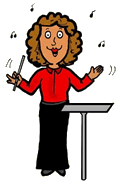
    Listening to music can be fun, but learning to play an instrument can be even better. Have you been taking music lessons? Some people can learn to play an instrument on their own, just by practicing their skills. Most people, however, need to learn from an expert. Music teachers help students learn the theory and techniques of playing music.

    Becoming a music teacher begins with knowing music. If you choose to become a piano teacher, you should know how to play the piano, and if you decide to become a clarinet teacher, you should be able to play your instrument. However, playing well is not enough. You also need to know about music theory, music history, and possibly even about composing (writing) music. How much you need to know depends on the age of your students and the level of music they want to learn. Students who want to reach a professional level of musical ability will need a teacher with a high level of skill in the instrument.

    Besides professional skills, music teachers need to know how to work with students, some of whom might not be interested in what they are learning. Some music teachers work in schools, where they teach regular classes to groups of students, but others teach students one or two at a time, either in their own homes or in the students’ houses. Flexibility in choosing a location depends on the size of the instrument and the needs of the teacher and students. A flute, for example, is much easier to carry than a piano.

    Another important skill is the ability to make arrangements for events like music recitals. In school, students do assignments and take tests to show what they have learned. How can anyone test a student’s musical ability? One way is through recitals, when students play music in front of an audience. As a music teacher, you might have to help students choose and practice the pieces they want to play. You might also need to make other arrangements for events like these, such as renting a room and finding chairs where people can sit. Even if you get help for tasks like these, you will have to learn the organizational skills to make sure that everything gets done.

    If you love music and enjoy sharing your skills with others, the job of music teacher might be a good choice for you.

  • What to Do if Your Teacher is a Bully

    What to Do if Your Teacher is a Bully

    Wouldn’t it be great if all teachers were devoted to educating their students and dedicated to encouraging them? Unfortunately, this is not always the case.

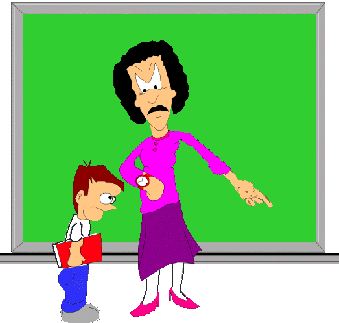
    If you are under the supervision of teacher whose behavior has crossed the line into bullying, there are things you can do to stop it. Discussing your concerns with the teacher in question and the head of his/her department, filing a formal complaint with your school and in the most extreme case, asking to be transferred to another class are just a few of your options.

    Many students think that they will never be believed if they bring a complaint against a teacher, but don’t let these unfounded fears stop you. Bullying by a teacher is unacceptable behavior, and no student should be subjected to it.

    What Is Teacher Bullying?
    It’s easy to get on a teacher’s bad side, or for a teacher to get on your own, but this does not mean that the teacher is a bully. Bullying behavior by a teacher includes behaviors such as:

    • Degrading comments about a student.
    • Unwanted or hostile physical contact with a student.
    • Unwanted or suggestive physical contact with a student.
    • Inappropriate or lewd remarks made to a student.
    • Suggesting to a student that his/her grade depends on something other than his/her studies.

    What Is the First Step to Stopping Teacher Bullying?
    If you feel that your teacher is a bully, the first step is to tell someone. This could be your parents, your principal or another teacher that you trust. If you are afraid to speak out, calling Kids Help Phone will get you in touch with people who can help you through this process. Remember – you are not alone and there is help available!

    Teacher bullying is unacceptable and must not be tolerated. If you feel that you are being treated poorly, but are uncertain if you are being bullied by your teacher, confide in a trusted adult.


  • Career Profile: French Teacher

    Career Profile: French Teacher

    A French teacher’s task is to inspire students to enjoy the French language. Learning is made much easier if the learner is enthusiastic about it; thus, a French teacher must demonstrate the benefits of speaking and using French every day. It is certainly not an easy job, but with enough passion and patience it can be a very rewarding one.

    Education
    In Ontario, teachers must hold a four-year Bachelor of Arts degree from any recognized University. A primary/junior teacher (grades K-6) will have a degree in any discipline (although a variety of courses is recommended). An intermediate/senior teacher (grades 7-12) is required to have a certain number of courses in two “teachable” areas – for example, French and History. Then, a teacher must take a one-year Bachelor of Education degree.

    “Teacher’s College”
    The Bachelor of Education is a combination of education classes and student teacher training. An example schedule would be six months of courses and two months of student teaching. French teachers would also take courses specific to teaching French to the age group they have chosen.

    The French Classroom
    The first year of employment in any profession is often the most difficult, and teaching is certainly no exception. In teaching, there is a lot of autonomy – that is, the teacher gets to decide what happens in his or her classroom without supervision. For some teachers, this is very scary, while others love the freedom. Teaching French is unique in that it involves teaching many classes of students at different grade levels. A single French teacher may teach six different classes every day, either in his or her own classroom, or by traveling from classroom to classroom.

    Skills and Challenges
    A French teacher must be highly organized, particularly because the job requires so much flexibility. Teaching grade 2 French, then grade 4 French, then back to another class of grade 2 French requires quick adjustment and well-planned materials. The job also requires a great deal of confidence, as does any teaching position; however, the French teacher might teach in front of students as well as coworkers, if he or she is on a “rotary” schedule. Teaching French can also be challenging because many students see French as an unnecessary chore; it can be quite challenging to earn class interest and attention as a result. A solid background is also required, as students quickly become skeptical of a teacher whose French knowledge is limited.

    Rewards
    For people who cannot imagine working in an office, the classroom is a liberating environment. Teachers direct the action of classrooms, and can decide what the class is doing at any given time. The feeling of getting a student interested in French, or having already-interested students show enthusiasm in the classroom, is the reason many teachers go into education. It is an extremely challenging but rewarding occupation.

    One word of caution, however: teaching should never be chosen for the vacations or “shorter hours.” Despite what non-teachers might say, teaching is a profession that is every bit as demanding, if not more demanding, than it is rewarding.

  • Career Profile: Teacher

    Career Profile: Teacher

    Teaching is a career which requires a great deal of knowledge and passion. While knowledge can certainly be learned, passion cannot be taught. However, if an aspiring teacher is passionate about the profession, a teaching education can certainly help him or her to develop the skills necessary to organize and manage a classroom that effectively promotes learning.

    Education
    In Ontario, teachers must hold a four-year Bachelor of Arts degree from any recognized University. A primary/junior teacher (grades K-6) will have a degree in any discipline, while an intermediate/senior teacher will hold a double-major degree in two “teachable” subjects.

    Then, teachers will complete the Bachelor of Education. This is a one-year degree where candidates spend most of their time taking courses in education, and the rest of it student teaching. For an average of two to three months spread across the year in “blocks” of time, the student teacher is paired with a working teacher, giving lessons and grading work in order to practice his or her skills.

    Job Searching
    Teaching jobs in Ontario are notoriously limited. Specializing in certain subjects (for example, French) will give candidates a hard competitive edge when job hunting. Many teachers must begin work as “occasional” (supply) teachers, sometimes having to work for several years before securing permanent positions. If you want it, don’t give up – however, if you are debating between several career options, this is something that you might want to keep in mind.

    What to Take?
    Primary/junior teachers are best advised to take a variety of subjects throughout their Bachelor of Education. For example, an aspiring teacher candidate might choose a major in child psychology, rounding out the timetable with diverse electives in math, art, or physical education.
    Intermediate/senior teachers are to have a minimum of two “teachable” subjects; this means that they have taken a certain number if courses in a high-school relevant subject. Examples of “teachable” subjects include mathematics, general science, biology, physics, history, English, and French.

    Do Your Research
    The Teaching Profession: www.edu.gov.on.ca/eng/teacher/employ.html
    Teacher Education Application Service (TEAS): www.ouac.on.ca/teas
    Ontario College of Teachers: www.oct.ca