Tag: tips

  • Five Places to Look for Summer Employment

    Five Places to Look for Summer Employment

    1. Golf Courses. Golf courses are everywhere and have a huge need for seasonal employment. Caddying, landscaping and working in the gift shop or restaurant are some opportunities available to teens.

    2. Offices. Whether it’s helping to answer phones, filing or doing paperwork, there is always a lot going on in an office for a smart and responsible teen to do. Working in an office also provides teens with the chance to learn about being in a professional workplace.

    3. Museums and Other Cultural Institutions. Summer is the time for big shows and large crowds. Museums are always looking for energetic, enthusiastic and affordable help. Teens provide the perfect fit for these unique opportunities.

    4. Restaurants. Because of high turnover, the restaurant industry is always hiring. Working in a restaurant setting provides teens with a skill set that can be transferable to other jobs as well as provide valuable life lessons.

    5. Volunteer. Although volunteering does not provide a salary, it offers a great way to make an impact on the community. Volunteering enables teenagers to develop skills, network, and strengthen their resumes so they can have a more fulfilling job search the next summer.

  • What I Wish I Knew Before Attending University

    What I Wish I Knew Before Attending University

    Hi! This is Jami and Ben – both fourth year students who attend Brock University. We decided to sit down and collaborate on a list of things we wish we had known before coming to university in the hopes that we can help future university students avoid the frustration and disappointment associated with finding out crucial information a little too late.

    1. Attend campus tours – This helps you to get familiar with the general location of important buildings and departments. It also helps you to know where your classes are so that your first day is not so overwhelming.

    2. Become best friends with your course/program calendar and academic adviser – Program guides are usually available online or as print copies at your university. These documents are useful in ensuring that you meet your degree requirements, but also typically give a list of courses along with their respective descriptions – use this to make sure your courses/program interest you! Your academic adviser can help make sure you are on track towards completing your degree, can provide assistance if you aren’t sure your program is right for you, or can offer you guidance concerning which courses to take – and more!

    3. Visit your Career Centre – We cannot stress how lifesaving a place this can be. From general job search help (including resume and cover letter assistance) to grad school information and career planning, your school’s career centre can help you when making difficult career-related decisions.

    4. Get involved – This can be done in a variety of ways and we suggest doing as many as you can! First, attending your orientation day/week events can help you get comfortable with your new environment and can answer many of the questions you have. Second, join a club or co-curricular activity, such as a mentoring program or students’ association in order to meet new people, provide you with networking opportunities, and make you feel more integrated into your university community. Third, volunteer or intern in your spare time – this looks great on a resume and can make you feel great about helping others! Fourth, attend career fairs and events in order to find exciting opportunities for part-time, full-time, career, abroad opportunities and more!

    While this list is not exhaustive, these are things that we did not think to do until later in our university careers, so we feel like we missed out on some great experiences and are now trying to catch up! Take our advice – ask questions, get involved, get informed. It will make your transition from high school to university much smoother and will aid in making your transition from university to the “real world” a lot easier, too! Good luck!

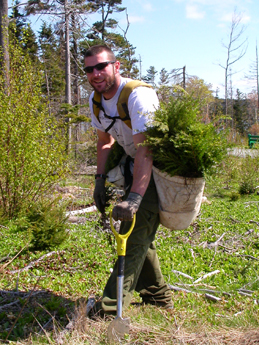
  • Work Safety Risks and Tips for Tree Planters

    Work Safety Risks and Tips for Tree Planters

    What does a tree planter do?
    Tree planters and other forestry workers perform physically demanding work. Some of their main duties are to:
    – Clear brush.
    – Carry and plant trees using manual tools.
    – Feed machines manually.
    – Prepare a site for planting.
    – Use, clean and maintain various equipment.
    – Work with chemicals for growth, or for weed and pest control.
    – Supervise other workers.

    What are some health and safety issues for tree planters?
    Tree planters face a variety of physical, biological, chemical, ergonomic and safety hazards. These include:
    – Insect bites or stings.
    – West Nile virus (mosquitoes).
    – Lyme disease or rocky mountain spotted fever.
    – Rabies.
    – Allergic reaction to plants.
    – Exposure to bird or rodent droppings:
    – Histoplasmosis
    – Psittacosis
    – Hantavirus
    – Exposure to chemicals.
    – Risk of pain or injury from working in awkward positions, performing repetitive tasks or lifting.
    – Risk of injury from hitting a hidden rock with a shovel.
    – Exposure to extreme temperatures or other extreme weather conditions.
    – Driving – vehicle safety hazards.
    – Slips, trips and falls.
    – Working with chainsaws and other tools/equipment.
    – Stress.
    – Working alone.
    – Extended work days.

    What are some preventive measures for tree planters?
    – Learn safe lifting procedures.
    – Keep tools and equipment in good working order.
    – Use appropriate personal protective equipment (PPE) for the task.
    – Wear appropriate footwear.
    – Avoid awkward postures and repetitive manual tasks, or take frequent breaks.
    – In the warmer months, cover up for protection from sun, heat and insects.
    – Stay hydrated.
    – In vehicles, always wear a seatbelt.

    What are some good general safe work practices?
    Use safety procedures for:
    – Safe lifting
    – Selection, use, maintenance and storage of PPE
    – Working with pesticides and other substances
    – Using chainsaws and other tools or equipment
    – Follow company safety rules.
    – Learn about chemical safety, WHMIS and MSDSs.
    – Know how to report a hazard.
    – Follow good housekeeping procedures.

  • How To Successfully Write An Essay

    How To Successfully Write An Essay

    Writing essays shouldn’t seem like a massive burden. Just try to follow these five simple steps.

    Step 1: Think
    Ask yourself, “What is the purpose of this assignment? Why is my teacher making me do this particular assignment?” No matter how stressed you feel, he or she is not intentionally trying to punish you. The assignment is meant to assess how much you have learned in class. Keep this in mind constantly from when you begin to write to when you revise your final draft.

    Step 2: Brainstorm
    Depending on the assignment’s requirements, decide what you want to say in the essay. Make a list of what you want to write about and don’t hesitate to write down any and all ideas that enter your mind. The more ideas, the better.

    Step 3: Plan
    Planning your essay might be the most important step. Once you have determined what it is you want to say, you will now need to map out how you’re going to say it. A typical essay format might look something like this:

    Introduction with a thesis statement that says your essay will be about topics A, B and C
    Body paragraph that describes topic A
    Body paragraph that describes topic B
    Body paragraph that describes topic C
    Conclusion that restates the introduction (but does not repeat it verbatim)

    Step 4: Write
    Choose the items on your brainstorm list that you want to use in the essay and write a full sentence for each. These sentences might become the topic sentences for your body paragraphs. It doesn’t matter (yet) exactly how you will say it, but rather that you have included everything your teacher has asked for. Don’t worry about writing formally or even completely logically – just write. You can improve your work later. Sometimes it is helpful to say what you want to write out loud. Tell a sibling, parent or friend about what you are trying to say and then work what you have said to them into sentences in your essay.

    Step 5: Edit
    Edit your work at least three times. Every essay you write should go through several drafts. If you have done a good job of editing, your final draft will likely be significantly different from the first (hopefully you will have completed the first draft early enough to edit and not the night before the assignment is due!) Read your work through once from the beginning to end without stopping to make sure the sentences flow and the paragraphs are logically connected by transition sentences. Read your work through twice to make sure the thesis statement, which explains what your essay is about and which is usually the last sentence of your introduction, describes what you have written in the body paragraphs and vice versa. Read your work through a third time very slowly to check for spelling and grammar mistakes. Then ask someone else to read your work through in case they spot anything you might have missed.

  • Interview Do’s and Don’ts for 2013

    Welcome to your job interview 2013. As we all know, it is getting harder to get jobs and fighting for that position will make you feel like a gladiator. It is important you don’t sabotage your opportunities by saying or doing the wrong things during the interview process.

    Do’s

    Practice your greeting in the mirror and be realistic. This means friendly eye contact and a good hand shake. If you are not comfortable with eye contact, practice it. It shows confidence and attention and will make the difference between landing and losing the job.

    Use professional body language. It is 2013 and all fields are competitive – so sit up and show some interest. If this rings a bell for it’s probably because you’ve been asked to sit up before in school as it shows the teacher you are taking interest.

    Dress to impress! You may have heard the phrase, “Dress for the job you want – not the job you have”. This is definitely true in an interview situation! Dress well and pay attention to little details, like your hair and make-up. Do not go overboard on cologne or perfume as the interviewer may have an allergy to it.

    Be prepared to answer a variety of questions. “What makes you an asset to our company?”, “How do you handle stressful situations?”, “Why THIS company?”, “ What would you say your weaknesses are?” Some of these questions are hard to answer on the spot. Make sure not to advertise
    any insecurities or doubt. Research a bit about the company you’re applying with and prepare for some of these questions.

    Shake and smile as you leave and do a follow up. You can follow up through email or by phone 24 hours later, reinforcing your interest for the position. If you have worked through an employment agency it would be a good idea to call them and express you interest in the job as well.

    Don’ts

    Say” I don’t know”. “I don’t know” may just be the most unintelligent thing you could ever say after “whatever”. To not know implies that you are clueless or haven’t given it any thought.

    Blast former employers. We all have past employers who we don’t think fondly of but this interview is not the time to express it. Consider it a test. When asked why you left your last job be vague, if it was for negative reasons.

    Ask about sick days or days off. Whether you mean it or not, it will imply you are irresponsible and that the employer will expect you to call in sick within your first month of being hired. If you are sick, get a doctor’s note.

    Never look at your phone. To an employer it’s a smack in the face. If you can’t not look at your phone for ten minutes during an interview it shows lack of interest and that you are not taking the interview seriously. Turn the phone off.

    Have anything in your mouth. Gum, toothpick, attitude – none of these things should be in your mouth.

  • Study Tips for the New Semester!

    Study Tips for the New Semester!

    Now that 2013 and a new semester are upon us, you may have resolved to be more organized or to get higher grades in your classes. We are here to help, with some handy tips on how to better prepare yourself for educational success this year!

    Take Notes on ALL Readings
    This may come as a surprise to some students, but you should be taking notes on your readings. Some people may not see the point of note taking, but it is necessary if you want to do well on your exams. If you haven’t started already, start as soon as possible. Course readings are usually on the exam. Taking notes on each reading will ensure you have a brief summary that will save you from having to read it again come exam time.

    Start Organizing Study Groups
    Starting a study group is a great way to get ready for exams. Try talking to fellow students and sending out e-mails to see who is interested in joining a study group. A study group allows you to share lecture notes, divide up the chapters and share these notes amongst yourselves, get new perspectives on the material (this can be especially beneficial if you are struggling with certain concepts), and test one another on course concepts. Meeting with the study group may also point out some important course concepts that you have neglected to include in your study notes. Consider asking your Teaching Assistant to meet with your study group and help to facilitate a course review.

    Review and Revise Your Lecture Notes
    Yes, it is early in the course, but it’s never too early to start reviewing your lecture notes. Reviewing your lecture notes ensures you have the opportunity to re-engage with course material before your exams start. You could review your notes after class, later in the week, or while you prepare for next week’s class. The more you engage with the material, the more you’ll absorb and understand. As you engage more with the material and develop a deeper understanding of course concepts, you should revise your notes and focus on concepts that are more difficult.

    Start Researching Papers Early
    As soon as your professor hands out the instructions for your first assignment, you need to start doing preliminary research on your topic. Starting early allows you to find key resources, including books, which may come in limited quantities from the library. It also allows you to approach your Teaching Assistant or Professor about your topic. Both your Teaching Assistant and Professor are there to provide guidance through the research process. They can provide you with vital information that can help you find appropriate resources, ensure you’re on the right track with your assignment, and look over early paper outlines to ensure you have a good grasp of your topic.

    Use the Library
    Many students attempt to do as much research as possible on the Internet. Although you can certainly find many quality sources online, particularly through online journal databases, this can limit the resources used for your assignment. Using the library allows you to not only access major scholarly books that are relevant to your field of study, but also allows you to discuss issues with the librarian, who can give advice on where to look for offline resources, and even suggest some materials you have yet to consider. Most university libraries also host workshops on how to research effectively and how to use the library to your advantage. Explore these workshops and use your library. It will definitely pay off when you get that final grade! Professors and Teaching Assistants like to see that you used a wide-range of resources.

  • Being Happy On a Budget

    Being Happy On a Budget

    Do you want to be rich or poor after you finish school? You might think the answer is obvious. Very few people actually choose to be poor. Being poor means constantly being careful about money and often giving up a lot of things you might want. It means living on a limited budget, but it doesn’t have to mean the end of fun.

    Most people have to live on a budget at some point in their lives. These days even highly educated people, who have traditionally earned high incomes, often have to survive on very low salaries in positions such as fast-food servers or cleaners. In difficult economic times, it can be hard to make enough money to pay the bills. In that case, how can you ever earn enough to have fun?

    Even on a tight budget, however, life doesn’t have to be bleak. With creativity and careful planning, you can still have fun even while watching your pennies. The most important thing when you design your budget is to remember what’s important to you and to plan around that. After you pay for the basics like housing, food, and clothes, you have to decide how to spend or save the money you have left.

    How you spend money depends on your situation and what you consider important. Living with your parents or with several roommates can help save a lot of rent money, or you can look after other people’s houses. If you live on your own, learning to like inexpensive foods like beans and lentils can help cut down on your grocery bills. Using coupons, looking for sales, and buying food in bulk can also help. If you find interesting recipes and know how to use spices, you can make good food without spending a lot of money. You can also allow yourself to have an occasional steak or restaurant meal to make it easier to stick to your budget.

    Entertainment can still be part of life on a budget. Instead of going to the movies on Friday evenings, you can spend time at a park or the zoo or attend a free cultural event like a concert. You can make gifts for people instead of buying them and you can turn a trip to the dollar store into a fun outing with friends. You can share your belongings with others and borrow from them, and maybe make new friends at the same time.

    Learning to live on a budget might even help you get a good job. Employers who are looking for people to manage budgets, for example, might be impressed if you know how to get the most out of a small amount of money. The leadership and cooperation skills you learn while living on a small amount of money might also be valuable. Even if that doesn’t work, you can still use the skills you’ve learned throughout the rest of your life.

    Living on a budget doesn’t have to mean the end of fun; it can be a beginning of something new and exciting. With creativity and determination, you can make a low income work for you.

  • Confidence Boosting Tips

    Confidence Boosting Tips

    Imagine for a second a world where you truly believe you can do anything; where the words “I can’t” no longer exist as part of your vocabulary. A place where you are as great as you always dreamed you could be. Now imagine that as your reality. Sounds great, doesn’t it?

    As great as it sounds, many of us have a hard time when it comes to self-confidence and self-esteem. Maybe it’s because from an early age we are taught not to “toot our own horn” too much or we will seem arrogant or egotistical. Doctor Bobbe Sommers, a world-renowned psychologist, said, “Having a low opinion of yourself is not ‘modesty’. It’s self-destruction. Holding your uniqueness in high regard is not ‘egotism’. It’s a necessary precondition to happiness and success.”

    But what does that mean and how do we hold our uniqueness in high regard?

    I have compiled a list of confidence boosting tips that may help you gain the happiness and success you want from life.

    –Discover yourself: Get to know you. Listen to what you are thinking and feeling. Know what you want and why you want it. If it helps, keep a journal to help you understand yourself better.

    –Make a list every day: On the list write at least three things you really like about yourself. For instance, “I like how I can make people laugh even in uncomfortable situations” or “I like my eye colour.” It can be absolutely anything you like about yourself. This will help remind you why it’s great being you.

    –“Dress for the job you want, not the one you have”: This may be an old cliché, but it’s stuck around for a reason. One of the best ways to feel good about yourself and to boost your self-confidence is to look good. Have a shower, do your hair, brush your teeth, wear nice clean clothes and comfy shoes and head out in the world with your head held high. This will surely get you noticed and get people to take you seriously.

    –Remove the word can’t: Stop saying “I can’t do that” before you even try. Fear of failure is common and sadly it prevents most of us from doing things we’ve always wanted to do. To overcome this, think positively – don’t think of the worst possible scenario. Picture yourself succeeding. Some of the greatest experiences you will have in this life will come from overcoming things you thought you couldn’t do.

    –Treat others the way you want to be treated: It’s karma, baby; the idea you get back what you send out into the world. So send out the good, and always remember to treat others fairly and kindly.

    –Be prepared: One of the best ways to improve your self-confidence is by being prepared. Whether it’s a test you need to study for, a university application you need to complete or a big basketball game coming up, make sure you are ready. Stop putting stuff off and get to it already. You will feel more confident if you are ready to face what’s ahead.

    –Be grateful: Don’t dwell on what you don’t have. Be thankful for all you do have.

    –Exercise: It’s a great way to immediately boost your mood. It also helps in the long term to boost self-confidence. You will be healthier, happier and more sure of yourself.

    –Listen to your favorite song: Nothing gives me an instant boost of confidence and energy, especially in the morning, as my favorite song. It really helps me have the right attitude to face the day with.

    The most important thing to remember is to think positively. If you believe you are good enough, the world will see you that way.


  • Prepping For A New Semester

    Prepping For A New Semester

    The beginning of a new semester can be a nerve-racking time for students, particularly those that are entering college or university for the first time. If you are concerned about starting college/university, don’t be! Many of your peers are having the same feeling. This article will provide five steps you can take to get prepared for a new semester of school and help guide you through your first week of school.

    Create a Budget
    Unlike high school, there are many costs associated with going to college/university. Creating your own budget will help you effectively manage your money and take account of the costs associated with your program. Your budget should account for tuition fees, books, food, housing (if you are away from home) and utilities, transportation/travel, cell phone, personal expenses, recreation, clothing and entertainment. A well-planned budget will ensure you have enough money for the year. If you are concerned you will not have enough money for the year, consider looking into getting a part-time job on campus.

    Create a Weekly Schedule
    Time is structured much differently in college/university. Most students have five courses that consist of two to three hour lectures and a tutorial or lab. Class times vary and you may have night classes or days without class. Since most new students struggle managing their time, it is best to create a weekly schedule. Your schedule outlines the time you need to read for each course, complete assignments, study for exams and relax. Most professors suggest that you spend 2 hours for every one hour of class you have per course.

    Set Deadlines
    As soon as you get your course schedule and course outline, take note assignment deadlines and exam dates. Some of these dates may conflict with each other, or you may have deadlines that are very close together. The best solution is to set your own deadlines. Make sure you give yourself a couple of days before assignments are actually due. This allows you to look over your assignment, make changes where necessary, and have extra time if you struggled with anything.

    Meet a ‘buddy’ in each class
    Most people that are starting at a college or university do not know any other students. Make sure you talk to the people sitting beside you during the first few weeks of class. These relationships can be particularly useful for forming study groups or catching up on notes if you had to miss class.

    Make a point of meeting your TA/Professor
    On the first day of class, the course instructor will usually tell you whether you have a teaching assistant (TA). If you do, make a point of introducing yourself to your TA and set up an appointment to discuss the assignments. Your TA will be marking your assignments and exams: ask them questions. If you are writing a term paper, ask your TA to review your thesis, check your preliminary bibliography or look over a one-page outline. TA’s can provide feedback and ensure you are on the right track. If the course does not have a TA, try to establish this type of relationship with the professor.

    Good luck on your new semester!

  • Volunteer Centres in Canada

    Volunteer Centres in Canada

    As you know, high school students require 40 hours worth of volunteer work/community service in order to graduate. Use our handy guide below to discover how your hours can best be used!

    Volunteering and Community Hours

    What is a Volunteer Centre?

    Volunteer Centres are non-profit organizations or groups dedicated to fostering and developing volunteerism in the community as a whole. While other organizations contribute to sustaining our national heritage of volunteering through their programs and outreach, Volunteer Centres serve the broadest membership; this includes volunteers and organizations/volunteer-involving organizations. Volunteer Centres reach across the non-profit and public sectors to include organizations working in human and social services, health care, education, the arts and recreation – regardless of their source of funding.