Tag: trade skills

  • Working on a Farm

    Working on a Farm

    By Gavin Mercier

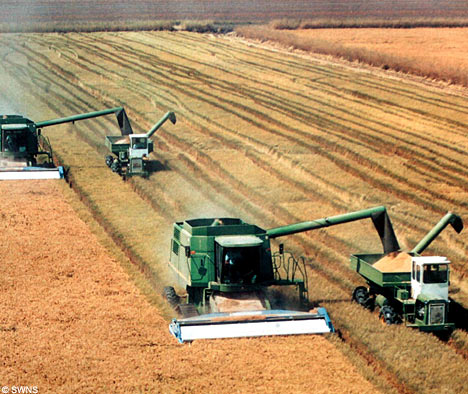
    Farm work is hard work- there’s no other way to say it. However, it is also some of the most valuable and rewarding work you can do. Farmers hold one of the most important jobs of our community, but they are also the most underappreciated. Working on a farm not only gives you a sense of what it’s like to be a farmer, but it also teaches you some real- life skills that will be valuable for your future.

    Hard Work, Fun Work, and Responsibility

    Yes, working on a farm is hard. But farming is the best example of the phrase “hard work pays off.” With farming, the harder you work the better the end result will be – in this case the end result is crop or cattle. Not only that, all the outdoor work is really great for great for your body. Working on a farm, you get to watch your work develop into something wonderful, whether it’s a crop of corn or a baby calf.

    While farming is hard work, it can also be a lot of fun. There is so much to do on farms you just can’t get bored. From feeding cows on a cattle farm to tending horses on a ranch, there are just so many fun things you can do on a farm – as long as you’re a little bit adventurous.

    Being on a farm isn’t all fun and games though. There is a lot of responsibility involved. Farmers are responsible for taking care of their animals and crops, and that can sometimes be a lot to handle. However, if you like being around animals and taking care of them, then this isn’t much of a chore at all.

    Appreciating Farmers

    Being a farmer is an underrated job – not many people choose to become a farmer anymore. There are also a lot of false facts about farming nowadays that put people off. Working on a farm, you get to see firsthand just how much they really do for us and what it’s really like. You will get a better appreciation for your food and how much work people really put into it. Seeing how your food is produced and being a part of that process gives a better understanding of the world we live in and how it all works for us.

    Appreciating Our Earth

    Not only will working on a farm help you appreciate all that farmers do for us, but it will also teach how to appreciate our planet more. Almost everything about farming is controlled by the weather and the landscape – crops are planted in the best soil around and watered by the rain. If there is no good soil, the crops can’t be planted, and if there is no rain then they cannot be watered. If we can’t take care of the earth, then it becomes harder for it to take care of us. Working on a farm is a great way to learn about the earth and how you can help take care of it.

    Working on a farm is great for so many reasons. I actually used to work on a cattle farm, and I still think it was one of the best experiences of my life. I had so much fun working there and learned so much, from the value of hard work to how I can help our earth. Working on a farm was one of the best things I ever did, and I hope it will be the best thing you ever do, as well.

  • Learn a Trade Skill (Whether You Use It or Not)

    Intellectual pursuits are all the craze. Even well-intentioned teachers and professors will put exorbitant weight on language, math, and science. In a world of growing automation and technology, hands-on work has a tendency to be neglected. However, learning a trade skill, regardless of your ultimate career path, is something to strongly consider.

    We rely more and more on technology that we understand less and less. From the many components to the cars we drive, to the mysterious inner-workings of the phones we use for virtually everything, we are more and more dependent on items that could malfunction at any time. What then? What happens when your car breaks down halfway to class? Or when something goes wrong in your home at the worst possible time?

    Trades can make you quite popular in times of need. Your know-how can help put people at ease before a licenced electrician or mechanic is on the scene. Learning a trade skill is more than just a popularity contest, though. The education can give you a greater appreciation for the world around us that operates under the hood.

    Electricians hop from house to house, building to building, to ensure the electricity is doing as it should. While you sleep, an emergency call at 3:00 a.m. will be attended to and the issue resolved before you even wake up. This is the result of years of practice, apprenticeships, and dedication to a trade. This is the side of society that keeps things running – the very things some people will praise as more important.

    Learning a trade skill through a course or short program lets you see this other side in full force. It does not have to be a full-time pursuit. It could be a night course on car mechanics, or perhaps a weekend carpentry class. You may never earn a dollar from it. Then again, you could save a dollar or two when you are able to make or fix something all on your own.

    In an economy shifting towards short-term work, juggling multiple jobs, and entrepreneurial efforts, diversifying your skillset is abundantly useful. The stability of long-term jobs until retirement may be a thing of the past, but this change paves the way for more adventurous and less predictable career paths. Your trades skill could become a crucial part-time job, or even be incorporated into the larger plans of your own business as an entrepreneur.  Someone in theatre could build parts of their own set, while someone else with their own store can fix little problems without having to call for help.

    The simplistic and flat-out incorrect notion that the trades are a second resort for those who could not get into university is quickly fading. Trades skills are gaining the respect they have thoroughly deserved. Now is the perfect time to check out classes and courses in your area to try your hand at a skill. It could be for a career, as an additional talent for use down the road, for simple enjoyment, or to gain appreciation for the oft-neglected work that goes into making our society function.

    Sources:

    Clarkson, Natalie and Daniel Orton. “Want a good career? Become a plumber, electrician, or learn any other trade.” GoThinkBig. https://gothinkbig.co.uk/

    Geremia, Anthony. “The Value of Skilled Trades.” Centennial College. http://www.centennialcollege.ca/centennial-college-blog/2014/october/22/the-value-of-skilled-trades/