Tag: trade

  • Educational Assistant

    Educational Assistant

    Description

    Educational assistants help primary educators by working with students with special needs and implementing the education plan. They apply intervention strategies, create a climate for learning, assist with life skills development, and supervise the students’ use of specialized equipment.

    Certification Requirements
    • The Educational Assistant apprenticeship consists of 2,268 hours of on-the-job training.
    • Apprentices must also complete 432 hours of in-class technical training.
    • Once you have successfully completed the apprenticeship requirements, you receive a Certificate of Apprenticeship and are certified as a journeyperson in the trade.
    • A person with at least 2,700 hours of related work experience is eligible to apply for a Trade Equivalency Assessment (TEA) and, if successful, becomes certified as a journeyperson in this trade.
    Educational Prerequisites

    Grade 12 or equivalent.


  • Roofer

    Roofer

    Roofers install, repair and replace flat and sloped roofs. They work with membrane roofing systems that consist of a variety of materials with different application methods. They also install, replace and repair shingles, slate, shakes, roofing tiles, sheet metal and other preformed sheeting on sloped roofs.

    Before the work begins, roofers may inspect existing roof systems and determine the extent and procedure for repair of the substrate or removal and replacement of roofing materials. Some roofers may be involved in the estimating of material and installation costs.

    As part of the job preparation, roofers may set up scaffolding to provide safe access to the work area and may install fall protection systems. They also weatherproof, waterproof and damp-proof roofing surfaces, foundation walls, floor slabs and bridge decks. They install roofing accessories such as sheet metal flashings, roof vent flashings, anchor bolt flashings, drain inserts and clamps.

    Roofers may be employed by roofing companies, general contractors or they may be self-employed. They may work on all types of roofs or may specialize in the flat or low sloped roofs of commercial and industrial buildings or on the steep sloped roofs found in most residential buildings.

    Key attributes for people in this trade are mechanical aptitude, manual dexterity and the ability to work as a team. Roofers work primarily outdoors and work may be seasonal. The work environment is exposed and may vary from extreme cold to extreme heat. Roofing is physically demanding work and requires considerable effort in lifting, climbing, bending, kneeling and balancing on high, sloped and sometimes slippery surfaces.

    Roofers work in conjunction with other tradespeople in the construction trades. With additional training, roofers may transfer their skills to related occupations such as carpenter or sheet metal worker. With experience, they may advance to positions such as supervisors, contractors or inspectors.

  • Career Profile: Hairstylist

    Career Profile: Hairstylist

    Hairstylists shampoo, cut, style and chemically treat hair. They may also provide other services such as scalp treatments and hairpiece services. In some jurisdictions, hairstylists may also provide additional services such as basic natural nail services, basic facial care and ear piercing.

    To be a successful hairstylist, one must incorporate technical and interpersonal skills. Continuous personal and professional development and client retention are crucial for long-term success. Hairstylists may recommend styles based on trends, clients’ physical features and lifestyle. Critical thinking, questioning and listening skills are important to serve their clientele. Depending on the workplace, recommending and selling hair and skin products may be done by the hairstylist.

    Hairstylists may work in hair salons, spas, barber shops, schools, hair replacement clinics, health care establishments, hotels, and in the cruise, fashion and entertainment industries. With experience, hairstylists may move into other positions such as salon managers, owners, fashion consultants, educators, platform artists and product sales representatives. Salons may specialize in services to either women or men, or both. Hairstylists may be remunerated through salary, commission, a combination of salary and commission or chair rental agreements. Some hairstylists work out of their residences where by-laws allow.

    Hairstylists work with various tools and equipment including brushes, combs, shears, clippers, razors, hair dryers and thermal irons. They own most of their tools and must keep them sanitized, disinfected and maintained.

    Some hairstylists specialize in areas such as cutting, hair extensions and chemical services. In addition, diversity across Canada requires specialization in ethnic specific services.

    Hairstylists work in clean environments, though the chemicals that they use may irritate their skin and produce strong odours and fumes. Some physical considerations of this trade are long periods of standing, posture fatigue and repetitive motion. This may result in repetitive strain injury, back and foot pain, although ergonomic considerations may reduce these effects.

    Key attributes for people entering this trade are: communication skills, personal interaction, coordination and manual dexterity, stamina, colour vision and depth perception. Respect, professionalism, teamwork, tact, discretion and creativity are important personal qualities. To keep current with trends and styles, hairstylists need to update their skills through trade shows and other educational venues. They must also understand and implement personal and public hygiene procedures to maintain workplace health and safety.


  • Career Profile: Glazier

    Career Profile: Glazier

    Every building has windows, and almost every room in a building has windows with glass in them. Some windows have fancy stained glass and others have plain glass, but they all have one thing in common. All of these windows required the work of a glazier – a specialist in glass. Glaziers are tradespeople who cut glass and fit it into various shapes and sizes of window. They work in new buildings, but they also help to repair breaks and to restore windows to their best condition. Being a glazier involves a combination of knowledge and skills in a trade that many people can enjoy.

    Windows come in many different forms. They can be the small ones in car doors, the glass in kitchen windows, large storefront windows, or even skylights on the roofs of buildings. Some glass even comes in several different colours for making stained glass windows. Glaziers install and repair all of these different types of glass. They have to be able to measure spaces where the glass will go and know how to use power tools with breakable material.

    Working as a glazier can be somewhat difficult. Sometimes glaziers get cuts from either the metal edges or from broken glass, and they have to be careful how they work. They might work with poisonous chemicals or be injured from lifting heavy pieces of glass. Glaziers work together with others to lift the glass into place, but they still need a certain amount of physical strength and an ability to climb ladders and manage heights. Although the job does not normally require great strength, it requires some physical ability and stamina.

    People become glaziers through a combination of education and experience. Besides being able to cut glass and fit it into metal, they often need to be able to read blueprints and to estimate costs for projects. Vocational training or an apprenticeship can be useful to teach people the skills they need to know for the work, such as the mathematical calculations for estimating costs. Learning from other people on the job is also an important part of training.

    Wages for glaziers in Canada are highest in areas of southern Alberta around Calgary and Banff and lowest in the Montreal area, but the average is about $20 per hour. Some glaziers work mainly in people’s homes, but others work in factories, stores or offices. They might work with all types of glass or specialize in one type, such as stained glass. Wherever there are windows that need glass, glaziers are at work.

    Does a job as a glazier sound like the kind of job you would enjoy? Maybe you should consider it as a career option.

  • Career Profile:  Farmer

    Career Profile: Farmer

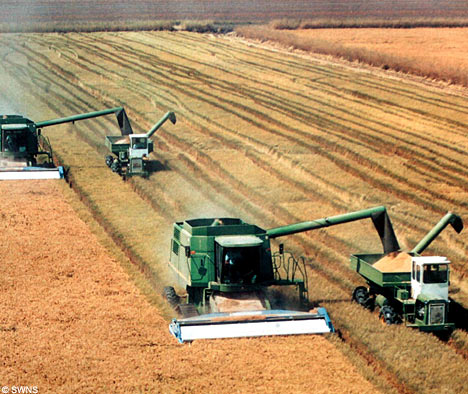
    Every day, people cook and eat food that has come from farms. Bread comes from grain that grows on farms, and fruits and vegetables also often come from there. Milk, cheese and eggs come from animals that live on farms, and also much of the meat that people eat. Farmers grow the food and take care of the animals so that people in the cities and around the country can eat. Working as a farmer can be a difficult and dangerous job, but it is an essential part of every society.

    Farming is a very old occupation which is found in almost every part of the world. People living in North America have grown crops like corn and beans for hundreds of years. However, when settlers came from Europe they brought many other crops with them. Farmers found that British Columbia, with its warm winters and wet climate, is good for growing many types of fruit like peaches and apricots. They discovered that they could grow grains like wheat and barley in places like Manitoba and Saskatchewan, with long, cold winters and short, hot summers.

    Flexibility is an important part of being a farmer. In the past and even now in many countries, farms were small and farmers would be involved in many different types of work. Besides growing grain, vegetables and fruit, they might raise chickens for eggs and for meat, keep bees for honey and possibly even raise fish or other animals. However, in countries like Canada, many farmers concentrate on growing one type of food, such as grain or fruit. They learn how to prepare the soil, fertilize the plants and care for everything the plants need to grow and thrive. Farmers who work mainly with animals learn how to deal with medications, diseases and injuries and to help the animals with finding food and other needs.

    Farming can be a tough job. Grain, fruit and vegetable farming tend to be very busy in spring, when farmers plant their fields, and in fall when they harvest the crops. Animals require a lot of care throughout the year, and many farmers wake up early every morning to milk the cows or to take the animals from the barn to the fields. When diseases hit the crops or animals, farmers can lose a lot of their earnings. Their income depends on the weather, the soil, the health of their animals and many other factors. Farming can also be a very dangerous occupation with all of the accidents that can happen.

    Despite the difficulties of farm life, many people enjoy it. Sometimes, people who grow up on farms decide to take over when their parents retire, but others start out on their own. A degree in agriculture is helpful but is not necessary, since farmers learn a lot from other people and from experience. Farming can be a very good life for people who love to work with their hands and to be outdoors. You might want to consider this ancient occupation.

  • Renewable Energy – A Trade for the Future

    Renewable Energy – A Trade for the Future

    Are you seeking a future-centric career? Looking to make a difference in the world? Want to join an industry destined to flourish significantly within your lifetime?

    With a growing awareness of the negative impacts humans have had on the environment, the increasing concern of environmental problems such as global warming, and the fight to preserve and find alternative ways to sustain the environment and human life, the renewable energy sector provides many opportunities for a rewarding career.

    As more alternative energy options are unveiled, more positions within the renewable energy sector are becoming available. Perhaps you’ll be the person responsible for energy audits, a technician working on solar panels, a designer of wind farms, or working to promote more sustainable building practices. The opportunities are endless and will continue to grow thanks to government initiatives to improve energy practices.

    In 2009, Ontario introduced a Green Energy Act, which was committed to promoting and supporting green energy projects and supporting energy efficiency province-wide, joining in a worldwide initiative to move toward renewable practices.

    The Ministry of Energy has also introduced many incentive programs, including tax rebates, to encourage Canadians to make energy updated to their homes. This could include installing solar panels or wind turbines, geothermal heating or cooling, and more.

    As the renewable energy sector grows, more programs are being offered at post secondary institutions throughout the province and country. Programs are for energy technicians, renewable energy technicians, sustainable building construction, sustainable agriculture, wind turbine technicians and more.

    If you’re looking to explore a rewarding career with opportunities for further growth, development and innovation, then a renewable energy career is perfect for you.

    Depending on the type of renewable energy career you’re interested in pursuing, there are apprenticeship, diploma, and degree opportunities available to suit your wants and needs. The opportunities are endless.

  • Interview with a Hairdresser

    Interview with a Hairdresser

    Fashion is a huge industry worldwide. People care about how they look, so they turn to professionals to give them exactly what they’re asking for. One such profession that benefits from making people look good is that of hairdressing. I interviewed a local hairdresser, Sarah Hearsey, about her schooling, professional opportunities, and how it feels to be in the business.

    M: When did you decide to become a hairdresser?
    S: I decided to become a hairdresser in the middle of my aesthetics training. I saw what the girls in the hairstyling class were doing, and I figured that since I was there already, why not do hairdressing as well? It turned out to be just what I wanted to do in the end. I do cuts and colours more than I do anything else now.

    M: How much schooling did you go through before becoming certified?
    S: Well, I was about five months into my aesthetics course as I mentioned before. I took my teachers aside to discuss doing the hairstyling course and they agreed that it was an excellent idea. The total time that I was in school was nearly two years because I had to make up lost time due to illness.

    M: With your qualifications, where are you able to get hired?
    S: With all of the qualifications I have, I can work in salons, kid’s salons, barber shops, makeup stores, and makeup counters.

    M: Would you say that getting a job in a salon is the best way to go, or can a freelancer make just as much?
    S: I think that it depends on if you want to do hair every single day. I find freelancing better for me because you can make up your own hours and wages, and you aren’t really under a time restriction like you would be in a salon. It depends on the individual.

    M: What are some other benefits of freelancing over working in a salon?
    S: Another perk of freelancing is that anything you make goes into your pocket. Honesty is important in this respect because you have to write down everything you make if freelancing is the way you are going to go.

    M: How do years of experience relate to the amount a hairdresser can charge for their services?
    S: I think that because they [experienced hairdressers] have been in business longer than those who are newer, they become more trusted with their employers and clients. They will get more clients so I believe that raising their wage by year seems fair.

    M: What is the best thing about having this trade under your belt?
    S: The best thing about being a hairdresser is all the types of people you work with. You make them feel good about themselves. They leave with a smile on their faces and they play with their hair and say, “I love it and I can’t stop touching it!” It’s a good feeling.

  • Career Profile: Meat Cutter/Butcher

    Career Profile: Meat Cutter/Butcher

    If you ever help with making supper for your family, you know that preparing food is a group effort. Your mother or father might do most of the cooking, but maybe you help to set the table or to chop the vegetables. Even before the food gets to your house, several people have probably been involved in preparing it. There are the farmers who grew grain for flour. Next, bakers used the flour to make the bread that your parents bought. If you eat meat, there are probably several more people, including the farmers who raised the animals and the meat cutters who prepared the food for sale. Meat cutters play an important role in making sure that the meat people eat looks and tastes good, and also that it is well kept and safe for people to eat.

    Meat cutters, sometimes also known as butchers, are often the last people to deal with meat before it goes into people’s homes and then to their tables. Retail meat cutters work in grocery stores and other places where people go to buy their meat. They clean, cut and weigh meat before putting it into packages for sale. They make sure that the store is clean and that the meat is stored at the right temperature and under the right conditions to keep it fresh. They advise people about the best kind of meat for their family meals or for restaurant or banquet meals. They report to their supervisors about problems such as products that have spoiled or are not up to the store’s standards.

    In restaurants, meat cutters prepare food according to what the diners want. They have to learn to prepare certain cuts of meat and to remove the bones from meat if necessary. They also have to work with fish and other items on the restaurant’s menu. Other meat cutters work at processing plants, preparing meat to send to stores and restaurants. In addition to cutting up meat to sell to customers, they might also grind up meat and turn it into sausages or remove the bones from ham or other kinds of meat.

    Working as a meat cutter can be a good job, but it also has challenges. A high school diploma is often necessary. Some meat cutters also learn their trade through classes, but others learn on the job. Physical endurance to stand for long hours and the ability to use sharp knives and slicers are the most important requirements. Often, meat cutters have to work in cold environments and be able to work well with others. Salaries vary a lot from one region to another, but meat cutters generally make between about $25,000 and $48,000 per year. Gaining experience or learning a special skill can help meat cutters rise to the top income level.

    Do you love food and working with meat? Can you learn to help customers and to stand for a long time? If so, the job of a meat cutter might be right for you.

  • Career Profile: Hairstylist

    Career Profile: Hairstylist

    Every day, you brush your teeth and wash your face. You eat your meals, go to school, maybe play some sports or go to a music lesson. Maybe you even have a routine of activities that you do each month or every two months. If you’re like most people, at least every month or two, you go to visit a tradesperson. That tradesperson is not an electrician or a plumber or any of the jobs that people think of when they talk about the trades. This is the person who cuts and styles your hair – most often known as a barber, hairdresser, or hairstylist.

    Training as a hairstylist is similar to other trades training. In Canada, people who want to become hairstylists have to complete high school or have an upgrading certificate like a GED. After that, they can either go to a college where they learn the techniques they need to know or go through a two- or three-year apprenticeship where they learn on the job. Once they finish this training, or if they have enough experience without it, they can apply for a license to practice their trade.

    Once they have their training and licences, hair stylists can begin to work. People working in this field go by many different names. They can be called barbers, hairdressers, or hairstylists if they spend most of their time dealing with hair. Cosmetologists deal with hair, skin and nails, although they often specialize in a particular area (such as keeping fingernails and toenails healthy and looking good). Believe it or not, someone who helps prepare the bodies of people who have died might be called a mortuary beautician. As you can see, there is a wide range of careers within this field!

    Like any other type of work, a job as a hairstylist has both good and bad points. The career is good for anyone who likes to be with people, since it involves dealing with customers all day. It usually involves a lot of standing, which can be tiring, and the workload can vary a lot from day to day. Many hairstylists also answer phones, book appointments, and keep track of payments. Unless they join an already established shop, they need to find a place to work and then to buy the tools of the trade: scissors, chairs, shampoos, lotions, and anything else they normally use. With advertising and a few good customers, becoming successful is possible.

    Generally, hairstylists can do fairly well once they become established. In 2010, the average salary was about $25,000 a year, although people in management positions made more. If you love to help people look their best and enjoy one-on-one customer service, becoming a hairstylist might be the right career for you!

  • A Career as an Electrician

    A Career as an Electrician

    A career as an electrician provides a fair amount of job security whether you are self-employed or hired within a company. Electricians are required across the board, from domestic to commercial settings. Due to the dangerous nature of the work involved, electricians must be highly qualified and trained. If a career as an electrician appeals to you, read on to find out what steps you will need to take to become qualified as an electrician.

    Education
    In order to become an electrician you first need to get qualified, which requires you to enroll in an apprentice program. In order to apply for an apprenticeship program you will most likely be expected to possess a high school diploma or equivalent. Apprenticeship programs will provide classroom instruction as well as on-the-job training. Expect the apprenticeship to last a duration of 4 years, with approximately 144 hours of classroom based instruction and 2,000 hours of on-the-job training. Classroom instruction will consist of learning about electrical theory, mathematics, electrical code requirements, blueprint reading, and safety practices. Some specialized training may be received, such as working with elevators and fire alarm systems. As for on-the-job training, expect to be work under the supervision of an experienced electrician who will set your tasks and guide you until you can master the tasks given on your own.

    Graduating
    Once you have graduated there are a variety of routes you can go down. Many electricians choose to work for construction firms, service companies or utility companies. Most graduates will be involved in some kind of maintenance work, where they will be expected to primarily maintain and upgrade existing electrical systems. If you enter into the construction field, you will be part of a team responsible for installing new wiring systems within new buildings. Alternatively you can go down the self-employed route, but that would require a lot of self-promoting and an understanding of registering your self-employed status for tax purposes. You would also need to pass a licensing exam in order to obtain a trading license. Check with your local authority about what is required to set yourself up, if you are interested in becoming a self-employed electrician.

    Earning potential
    Electricians are expected to command very good base wages. However, much of this depends on the company you work for and the perks they offer. If you are self-employed you will set your own hourly rate or job rate, but keep in mind that you will need to factor in promotional costs, transport costs and parts costs.

    Advancement
    Once experienced, electricians can advance to positions such as a supervisory roles. Within the construction field they can become employed as construction superintendents or project managers.

    If this sounds like a career that would suit you, check online via your local job center or career center in order to inquire about local apprenticeship programs. Find out what apprenticeship opportunities there are with local electrical contractors and local electricians. In order to become qualified you will need to study in the apprentice role for 4 years, so make sure you this is the right career choice for you before becoming committing.