Tag: training

  • Not Your Typical Welder

    Not Your Typical Welder

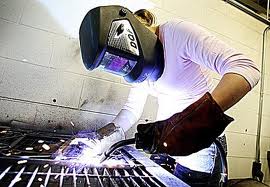
    Let’s be honest- how many of us girls grew up dreaming of being a mechanic or a welder? The answer is probably not many, and if you did you probably didn’t tell anybody because of the possibility of them thinking you were weird. When I was little I first wanted to be a marine biologist, I loved animals and wanted to work with them very badly. Then my life goal changed from a stunt car driver, to a photographer, to a mechanic and finally a welder.

    One of the things I was most excited about going to high school was that I was now able to take the auto mechanics and construction classes. I took them all through high school and loved every minute of it. I learned, fixed and made things that a lot of people didn’t, how many of you can honestly say you are comfortable with changing a flat tire on your own? I can say with all honesty I am and that’s because of my awesome auto teacher. My technology teachers not only gave me the skills and knowledge about their trades but also the courage to love the trades. To not be scared of trying something totally out of my comfort zone and to not care about what people think.

    I got the smart remarks in class “Girls can’t do that” and the classic “Don’t break a nail!” Taking those courses gave me the courage to pick something not many girls pick for a college program, Welding Technician. I knew two things that I wanted for sure out of what I picked for a program, I wanted to be able to get a job and I wanted to make money. I know those are not the best driving reasons for someone to pick a program, but they were honest. I had originally wanted to be a mechanic because of how much I loved my auto class but I soon realized there were a lot of mechanics and not a lot of jobs. So I had cut up an exhaust pipe about two times in auto with an old oxy-acetylene torch and I knew welding was an in demand job, so I decided on being a welder. The only knowledge I had on welding was what I learned from those two experiences using the torch, so not a whole lot.

    I remember showing up for my first welding class and them telling me that I would need safety boots, safety glasses and a welding helmet for tomorrow. The first thing I thought to myself is, “What have I done?! I have gotten myself into something I can’t handle, I know nothing about welding this is a horrible idea”. Then it got worse after I got all my equipment and they asked me to actually weld something, I don’t think I have ever sweated that much for a school assignment and it wasn’t from the heat of my torch. But with practice, some really great teachers and perseverance I got the hang of it and now I am actually a good welder. I am able to weld in shielded metal arc welding in flat, horizontal and vertical positions. I can use gas metal arc and flux core arc welding machines and I am learning tungsten arc welding at the moment.

    For those of you out there wondering what kind of woman I am, I would say I am not your typical looking welder, but then again isn’t that what we are trying to change? The notion of what the “typical” welder looks like? So this is what the typical welder looks like, a petite 19 year old woman, who stands at five feet and 2 inches, has a boyfriend and loves to go shopping just as much as anyone. The moral of the story is look at trades when you are deciding on college programs, any trade, believe me it’s a rewarding experience, that is challenging.

    If I can do it, you can do it.

  • The Human War with Technology

    The Human War with Technology

    Technology has become the essence of our everyday lifestyle. A life without our Blackberry’s or iPhone’s is a life that cannot be lived. Imagine how everyday tasks that have been simplified to suit our preference have been altered by technology to get the job done faster. Whether at school, work, or home, technology has made life easier by replacing everyday tasks with machines that process the work efficiently, saving you time and energy. However, one thing to be wary about is the replacement of, well, human beings. You see, with this booming techno-era becoming so dependent on machinery tools to operate us, they will soon operate without us. Technological innovation is so consistent and rapid that every day a couple of new items enter the market for competition and since every company is aware of this massive command, they go to extreme measures. For instance, the need to save time, reduce costs, and improve the safety and reliability of their product, companies will lay off and downsize their staff to hire professionals in the same field located overseas for cheaper labour, but who possess the same credibility and education level (if not more).

    According to Career Planner, some of the jobs that will witness a reduction from North America and Europe in the near future are data entry, programming, technical support, and customer service jobs. Even accounting will be done in countries unfamiliar to our roots; yet have perfectly mastered our education and language. Talent and expertise are no longer suited with a job offer and great pay; the willingness for companies to pay high prices for local contenders will soon be obsolete, and lower cost labour will move to other countries.

    However, students can surpass these challenges by choosing wisely their career path today. By picking a profession that cannot be performed remotely by someone else overseas, you can guarantee security. Here are some of the secure jobs of the future (to list a few) that will still be in demand, cannot be replaced, and require face-to-face interaction, speed, and are complex in their nature. When searching for the right career, make sure it requires physical energy, high level of skills and creativity (so it is not easily completed by someone else), and are hands on. Do not panic if the career you really love is technology based; do your homework and make sure you get familiar with onshore/offshore jobs for the future. No job is ever guaranteed, therefore to secure your position for tomorrow you must be aware of the fluctuation of the economy, along with its unexpected changes.  Plan it right today!

    High Demand Jobs for the Next 10 Years
    1.    Carpentry
    2.    Plumbing
    3.    Electrician
    4.    Hair Stylist
    5.    Construction Contractors
    6.    Auto Mechanics
    7.    Dental Hygienist
    8.    Truck Drivers for delivery service (UPS, FEDEX, Postal Service)
    9.    Airplane Mechanics
    10.  Entertainment (Actor, Singer)
    11.  Writer
    12.  Marketing Strategist
    13.  Lawyers
    14.  Doctors
    15.  Nurses (particularly home healthcare and nursing homes)
    16.  Politician
    17. Security and Financial Service Rep
    18. Real Estate Agent
    19. Teachers
    20. Emergency Medical Technicians
    21. Surgeon
    22. Chiropractor
    23. Therapists
    24. Medical Lab Technician

  • Becoming A Registered Nurse

    Thinking about a career? Think registered nurse! It’s more than a job, it’s a growing profession offering an astonishing range of choices and opportunities.

    You believe in a healthy lifestyle? Janet has been talking to teenagers about how to deal with sex and drugs. “These kids have their whole lives before them and I feel it’s so important to help them now when they need it. With some groups I get into fitness and diet, too. They really want the information and someone to talk to.”

    You want excitement? So does Robin, so she works in the emergency department of a city hospital. “When people burst through those doors, they need help, fast and our ER team gives it. I have to think on my feet here, make immediate decisions about what a person needs. No other job could give me the same challenge – or satisfaction.”

    Intrigued by health questions? So is Nicole, and she’s finding the answers. Nicole is the head of a research team studying the care needs of AIDS patients. “I used to give nursing care to people in their homes and then a great AIDS patient I had motivated me to move into research. I was shocked by how little knowledge and how few resources there seemed to be to care for people like Ted, so I decided to do something about it.”

    More interested in helping people over the long term? That’s what Michael wants, so he’s head nurse at a rehabilitation centre. “A lot of rehab patients start out fighting against our care; they’re depressed, angry, and worried about their future. Helping them work through that is as important as their physical therapy. It’s an incredible feeling to help a person go through the whole process back to health.”

    Michael, Janet, Robin and Nicole became registered nurses because they wanted to work with people in a career that offers challenges and the independence to make decisions. Nursing involves caring for the whole person – the physical, intellectual and social needs. Nurses also plan and deliver health programs for groups or communities.

    Nurses are the heart of care. As a registered nurse, you can make a difference in one person’s life through one-on-one, and in the health of all Canadians through research and leadership.

    Jobs, the real story

    This is an excellent time to enter nursing as there is a shortage. At some point in their life, every Canadian will require the services of a nurse. Since many nurses will soon retire, Canada needs bright young men and women to choose nursing as a career. Changes in the health care system continue to broaden the opportunities for nurses. An especially important trend is the increasing number of services that emphasize illness prevention and health promotion programs. Many of these are planned and staffed by registered nurses.

    Registered nurses earn salaries that compare with other professionals with a similar amount of education. Health care is offered 24 hours a day, so expect to work some nights and weekends, like doctors, law enforcement officers and others who provide essential services.

    As in any profession, salaries vary across the country, and people make more as they gain experience and responsibility. Graduates of degree programs usually have more opportunities for advancement, and in some provinces, make more money than graduates of diploma programs. Your provincial or territorial nurses’ association can provide current salary ranges.

    To see nursing jobs across Canada, visit NursingCareersCanada.ca, The National job board of the Canadian Nurses Association.

    Choices… lots!

    Nursing is full of opportunities to grow, to advance and to change your career direction. Whatever your interest – working with children, scientific procedures and high tech equipment, teaching and promoting healthy practices, developing your management skills – nursing has something for you. Here are just a few examples:

    In the Community

    • health clinics
    • schools
    • wellness programs in the workplace
    • doctors’ offices
    • home care
    • family planning clinics
    • poison control centres
    • prenatal and well-baby clinics
    • rehabilitation centres
    • sexually transmitted disease units
    • AIDS hospices

    IN A HOSPITAL:

    • emergency
    • intensive care
    • operating room
    • post-surgery
    • maternity
    • cardiovascular (heart)
    • oncology (cancer)
    • psychiatry
    • pediatrics (children)
    • palliative (dying people)
    • geriatrics (seniors)

    One of the most exciting opportunities for nurses in Canada is Northern nursing. Often, community health centres in Canada’s North are run completely by the nurse – independent and in charge. Many Aboriginal nurses return home to help their communities, other nurses find they enjoy learning about a different culture.

    The great thing about nursing is that your choices never end. With some years of experience and further studies you could branch out in almost any direction imaginable. After a few years in practice you might decide to become an advanced practice nurse. An expert nurse with a master’s degree, an advanced practice nurse provides direct care to clients and serves as a role model and consultant to other practising nurses. There are currently two types of ANPs in Canada, clinical nurse specialist and nurse practitioner.

    Or you might decide, like Nicole, that you want to investigate current issues in health care. On the leading edge of health care discoveries, nurse researchers design studies, collect data and analyze results. Their findings contribute to the vast body of scientific knowledge that supports and improves nursing.

    Leadership

    All nurses are teachers, helping people learn to prevent illness and manage health problems. But you might want to become a nurse educator, preparing future nurses to enter practice. You could work at a community college or a university, and research would be part of what you do.

    A nurse administrator coordinates nursing services in a hospital or community health centre. Handling large budgets, supervising staff and setting the standards for excellent care takes strength and good management skills.

    The sky is the limit

    And any of these choices could lead you still further. Nurses’ ideas and opinions are sought after by the media, politicians, and national and international groups. Imagine being a consultant to Health Canada, or the World Health Organization.

    Or you could travel. Northern Canada is a close-to-home example, but Canadian nurses are so highly regarded that other countries – both developing and developed – actively recruit them. Your skills and knowledge could take you places. The possibilities are endless!

    Degree or diploma?

    If you’re thinking about a career in nursing, you should seriously consider studying for a degree (BN or BNSc). More career opportunities and the possibility of graduate study will be open to nurses with university degrees. Most provinces already require a baccalaureate in nursing (BN or BScN) to enter the profession.

    Degree programs take four years. Besides learning social and physical sciences, and nursing, as in the diploma program, university programs generally offer additional studies in leadership, health teaching, research and other disciplines.

    Diploma programs take three years. Graduates generally work in hospitals, nursing homes or other structured settings. Many colleges now offer their diploma courses in collaboration with a university with the option of continuing on after graduation to obtain a degree. However, getting a diploma and then a degree generally takes longer, and costs more, than enrolling in a degree program from the beginning.

    Nursing students in both university and diploma schools of nursing will study psychology, child development, sociology, anatomy and physiology. The nursing courses include theory and clinical practice. You will be supervised and supported in the clinical setting to ensure the safety of patients and your own safety.

    If you are interested in continuing your education, master’s and doctoral programs in nursing are available in many places in Canada.

    Get ready

    Entrance requirements differ from one school to another. Generally, the admission requirements are high school graduation with senior level English or French, mathematics, chemistry, physics and biology. You can contact your provincial nurses’ association or individual schools for their specific requirements and information on funding.

    Caring for people, the independence to make decisions, the challenge and excitement of being on the leading edge of health care. Sound interesting? Then ask today for more information about a career as a registered nurse!

    Provincial associations

    • * Association of Registered Nurses of Newfoundland and Labrador
    • * Association of Registered Nurses of Prince Edward Island
    • * College of Registered Nurses of Nova Scotia
    • * Nurses Association of New Brunswick
    • * Ordre des infirmières et infirmiers du Québec
    • * Registered Nurses Association of Ontario
    • * College of Registered Nurses of Manitoba
    • * Saskatchewan Registered Nurses’ Association
    • * College and Association of Registered Nurses of Alberta
    • * College of Registered Nurses of British Columbia
    • * Registered Nurses Association of the Northwest Territories and Nunavut
    • * Yukon Registered Nurses Association
    • * Native Access Program to Nursing

  • Youth Apprenticeship Programs

    Youth Apprenticeship Programs

    Youth apprenticeship programs are available in most provinces and territories. Check out the programs available in your area.

    Alberta
    The Registered Apprenticeship Program (RAP) allows high school students to participate in an apprenticeship program while they are still attending school. RAP apprentices earn income as well as hours of on-the-job training and work experience as credit towards their apprenticeship program, and their high school diploma. Scholarships are also available for RAP students.

    British Columbia
    The Secondary School Apprenticeship (SSA) is a career program that provides students with the opportunity to begin an apprenticeship while still in high school, and to earn high school credits for doing so. It provides a smoother road from school to work, and a head start to an apprenticeship.
    ACE IT is an industry training program for high school students, with trade classes offered at colleges and sometimes at a high school. ACE IT programs involve a partnership of schools, employers and industry and provides funding for the first level of schooling. Local employers get involved in the development of ACE IT programs, leading to a higher employment rate following completion of the program.

    Manitoba
    The High School Apprenticeship Program (HSAP) combines regular high school instruction with paid, part-time, on-the-job training. Students can earn up to 8 supplemental academic credits for graduation based on 110 working/practical hours per credit.
    Youth Build is a job training and pre-apprenticeship program whereby young people are working under the supervision of a journeyperson to renovate homes and develop building skills. Young people can attend the Youth Build Program full time, as an alternative to school. In Manitoba, there is a 30 hour per week paid vocational component and a 10 hour per week unpaid academic component.

    New Brunswick
    The Career Connections Program (CCP) offers students experience, hands-on paid work experience, and expands their essential employability skills.

    Newfoundland and Labrador
    Youth apprenticeship courses are available for high school students through Skilled Trades Jump Start Your Life.

    Northwest Territories
    The Schools North Apprenticeship Program (SNAP) is an opportunity for high school students to earn credit and pursue a career in the trades.

    Nova Scotia
    The Workit Youth Apprenticeship Initiative is open to youth between the ages of 16 and 19.
    Options and Opportunities (O2) offers students more hands-on learning experiences with a career focus. It’s designed to prepare students for successful transitions from high school to work, a career path, or a post-secondary program.

    Ontario
    The Ontario Youth Apprenticeship Program (OYAP) is a School to Work program that opens the door for students to explore and work in apprenticeship occupations starting in Grade 11 or Grade 12 through the Cooperative Education program.

    Prince Edward Island
    Youth Apprenticeship or Accelerated Secondary Youth Apprenticeship Program (ASAP)Youth Apprenticeship is for students wanting to explore their trade career options and gain a head-start on the post-secondary apprenticeship training program while working toward their Grade 12 diploma.

    Québec
    Québec offers vocational and technical education programs under the apprenticeship system, which are run jointly by Emploi-Québec and the Ministère de l’Éducation, du Loisir et du Sport.

    Saskatchewan
    Saskatchewan Youth Apprenticeship (SYA) raises awareness of apprenticeship in Saskatchewan schools by helping young people discover what rewards come with being a Youth Apprentice and working in the skilled trades.

    Yukon
    The Yukon Secondary School Apprenticeship Training program is open to Yukon secondary school students who would like to explore a skilled trade and complete high school at the same time.

  • Career Profile: Police Officer

    Career Profile: Police Officer

    People who are attracted to being a police officer highlight the many benefits associated with this position. They want to work as a police officer because of the thrill of working to promote a crime free city or country, or they want to have the structure that working for a large organization like the city police or the federal police offers. The job of being a police officer is often unglamorous and involves a lot of paperwork – not like the movies would have you believe. It does, however, involve working on a team and also being responsible for your own independent work. In order to prepare to be a police officer, there is training to be done either at the college or university level. This training involves taking courses in law or another social justice type field, like police foundations.

    In Ontario there are many colleges and universities that offer these types of courses. If you’re looking for something in French, you could try the College Boreal in Sudbury. If you’re looking for something that will allow you to get through your schooling in the timeliest manner possible, you can check out the program at Mohawk College in Hamilton which has a duration of one year. Advanced Police Studies at Conestoga College in Kitchener will also have you through courses and ready to work in a year. If you’re on route to a university degree already, you may choose to enroll in a program at Georgian College in Orillia for a Bachelor of Human Services (Police Services) with a co-op option. Fleming College in Peterborough offers a program of 4 semesters for a total of 2 years of Police Foundations studies.

    Once you have your college or university degree you are all set to apply to the organizations for which you are qualified. If you chose a co-op option, you will be even more prepared for the work journey ahead of you. Once you get in with an organization, you will be able to earn a comfortable living starting at $46,000 per year and progressing to $83,000 per year after 36 months (OPP website, 2013). You also receive a set amount to cover travel expenses and benefits from the beginning of your employment. This will vary as per the organization that you are working for, but it gives you a good idea of what to expect.

    If being a civilian police officer is not for you, then you can look into being a military police officer – a position in which you will have many opportunities to travel. This is a great option for someone looking for structure and the protection that comes with working in a large organization like the Canadian Forces. In order to be a police in the military, you have to go through basic training (which is mostly physical in nature) and then you have to go through 6 months of training to become an officer. Starting wages as a military police officer are approximately $33,000 per year(Canadian Forces website, 2013).

  • Why the Trades?

    Why the Trades?

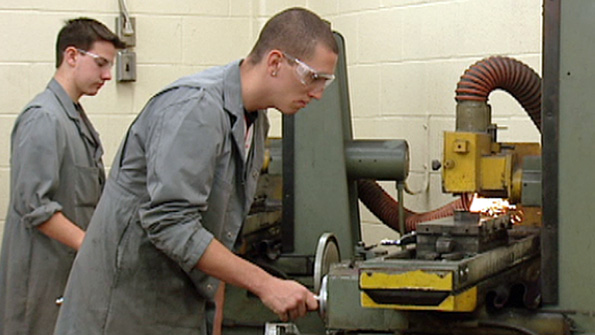
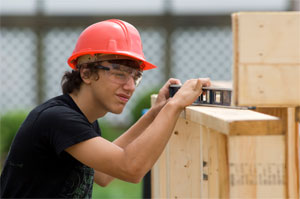
    When people think about the skilled trades, several immediately spring to mind – electrician, plumber, welder, carpenter. But opportunities in the skilled trades are much more extensive. From hairstylist to cook, painter to landscaper, automotive service technician to crane operator – and so many more. Learn more about the trades.

    Why consider a career in skilled trades?
    The data is in! Canadian Apprenticeship Forum research shows that apprenticeship completers fare better than their counterparts it comes to wages, job security and employment satisfaction. When compared to non-completers and graduates of other technical programs, those who complete an apprenticeship have:

    – Better employment outcomes, both immediately and several years after being certified
    – Better earning potential – in the short and longer term
    – Higher levels of job satisfaction and job security

    Apprentices also get:

    RESPECT
    Skilled trades play an important role in our economy and our society. Think about it … skilled trades workers touch almost every aspect of our lives. They build and maintain the homes we live in and the cars we drive. They work in manufacturing, mining, oil and gas, hospitality and tourism. They build and maintain the electrical systems that power our computers and heat our houses. Canada depends on the work of skilled tradespeople working in the designated trades to keep our country working.

    OPPORTUNITY
    With hundreds of skilled trades careers to choose from, there are opportunities available to suit almost any interest. As an apprentice, you participate in a post-secondary education like no other. By combining on-the-job training and in-school learning, apprentices get the best of both worlds – certification that comes with real world experience, providing the skills to work virtually anywhere.

    Skilled tradespeople are in demand and, as the baby-boom generation retires, that demand is only going to increase. Shortages of skilled trades workers are being reported across sectors and across Canada, and the competition to attract talent is growing.

    GOOD PAY
    People in skilled trades are rewarded for their efforts with good pay. In fact, according to Statistics Canada, the wage gap between workers with bachelor degrees and trade certificates is declining. Between 2000 and 2011, the average weekly wages of full-time workers aged 25 to 34 with trades certificates grew by 14%, while bachelor degree holders saw their wage growth slow to 1%. And, apprentices begin to make money right away, earning a wage from their first day at work.