Tag: transition

  • Support Services Available at Post-Secondary

    Support Services Available at Post-Secondary

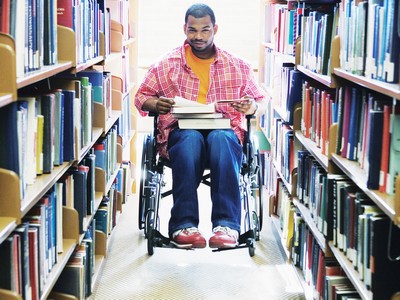
    Each post-secondary school will have a range of services to support students with disabilities and the wider student population.  These services provide an excellent source of support for students (and are often underused). Students are highly encouraged to take advantage of these resources, and a description of services that may be provided at post-secondary school is given below.

    ACADEMIC ACCOMMODATIONS

    Disability Advisors at each school review the documentation of students with disabilities and determine which accommodations each student needs. Types of accommodations may include:

    • Extended time on exams
    • No more than one exam per day
    • Access to a computer or spell check on exams
    • Note-taker in class
    • Sign language interpreter
    • Alternate format material (ex. Braille)

    It is important to remember that the laws that regulate accommodations at college and university are different than those for high school. Many post-secondary institutions require more specific and comprehensive documentation to show proof of a disability than is required in high school (especially for ADHD and learning disabilities). Incoming students will not automatically receive the same accommodations at college or university that they received at high school. To discuss available accommodations, students should contact their post-secondary school directly.

    DISABILITY SUPPORT SERVICES

    Many colleges and universities offer other services that cater directly to students with disabilities. These may include:

    • Summer Transition or Orientation Programs: some schools offer workshops for students with disabilities to help them prepare for life at post-secondary school; these programs range from one-day events to week long transition camps
    • Appointments with a Learning Strategist: many schools employ learning strategists in their OSD, to help students with disabilities develop strategies to improve their learning and study skills
    • Peer Mentoring: some schools offer peer mentorships with upper-year students who also have disabilities; these mentorships allow students someone to go to for advice and information about navigating post-secondary life
    • Tutoring Services and Academic Support: some schools may offer academic support that is available specifically to students with disabilities

    OTHER SUPPORT SERVICES

    Colleges and universities offer a wealth of support services to meet the diverse needs of all of their students. These services often include:

    • Student Health Centre: the health centre may be drop-in or by appointment only, may be able to offer all of the same services one would receive from a family doctor, or may offer more limited services (with referrals available to community practitioners)
    • Counselling Centre: support and counselling for students that need help regarding anxiety or mood problems, relationships, depression, substance abuse, or other personal crises
    • Library and Reference Workshops: resources and workshops on how to find and access materials in the library for research or other projects, as well as how to properly cite and reference one’s work
    • Peer Tutoring, Writing/Academic Centres: support for students’ writing (essays, research projects) or other academic courses
    • First Generation Student Centre: support for students whose parents did not attend college or university
    • Career Services: a resource centre providing job boards and career listings, sometimes including placement services, and resume-writing support
    • Child Care Services: on-site and/or subsidized child care is available at some post-secondary schools

  • Self-Advocacy for Students with Learning Disabilities

    Self-Advocacy for Students with Learning Disabilities

    There may be times when you’ll need extra assistance or special adaptations in high school, college, or at a job. When you were young, your parents or care-giver likely worked with teachers and other school personnel to develop a plan for your success. However, as an adult you will have learn to be your own advocate. It is important, therefore, to learn self-advocacy early on. Let’s get started!

    The following are steps you can take to help get ready for the transition into adulthood:

    1) Get to know your LD.
    Learn about your diagnosis. Ask yourself: How does my LD impact my learning? Are there specific things my teacher or parents have done that work best for me (did visual cues or having a note taker or even taping classes help with my learning)? Understanding your own LD and what accommodations have worked for you in the past will help you in college and in the workplace and will ultimately help you be successful.

    2) Think about your (big and small) goals for the future.
    What do you want to accomplish in your life? Do you want to go to college or are you planning to go directly to work? Do you know what career you would like to pursue? Write down your goals, and make sure to break it down into the smaller steps that will help you reach your bigger goals.

    3) If you are having problems, meet with your teachers.
    Becoming an advocate for yourself means you will need take initiative to solve problems. If you find yourself having problems keeping up or your grades are slipping, ask your teacher to meet with you after class to discuss your concerns and help you find solutions.

    4) Get to know your strengths and weaknesses.
    Understanding your strengths will help you work on your goals and may even help in determining your career choice. The point of understanding your weaknesses is not to highlight all of your faults (and we all have them), but is instead meant to understand which areas of your life need more attention or where you may need more assistance.

  • Offices for Students with Disabilities

    Offices for Students with Disabilities

    Educational institutions have a legal obligation to provide reasonable accommodations that promote equity for people who have disabilities. To adhere to their legal obligation, provincial/territorial governments provide publicly funded colleges and universities with operating funds to set up special services for students with disabilities.

    Note:
    For the purpose of this guide, we will refer to the disability services centres as the “Office for Students with Disabilities” or OSD. The name and location of the centre at each college or university can be found on the school’s website.

    WHAT KIND OF SERVICE DOES THE OSD PROVIDE?
    Staff at Offices for Students with Disabilities assist students in a variety of ways. Given that each student’s needs are unique, services and accommodations are established on an individual basis and based on the documentation of the student’s disability. A complete list of services and required documentation will either be available on the website of each post-secondary institution or by contacting them directly.

    WHAT ARE THE RESPONSIBILITIES OF THE OSD?
    – Assess requests for accommodations, on the basis of each student’s submitted documentation
    – Recommend and provide reasonable and appropriate accommodations, academic adjustments, and/or support services for students with disabilities
    – Provide information regarding policies, procedures, rights and responsibilities to students with disabilities in accessible formats upon request
    – Assist students in communicating with faculty (when needed) about their disability and required accommodations
    – Maintain confidentiality of all information pertaining to a student’s disability
    WHAT IS THE REGISTRATION PROCESS AT THE OSD?
    – When possible, contact the OSD before classes start to make a face-to-face appointment
    – Submit all required documentation to the OSD prior to the appointment (according to the school’s policies)
    – Attend the appointment to create an accommodation plan based on the submitted documentation
    WHAT DOCUMENTS WILL THE OSD REQUIRE?
    Each institution will have its own policies and procedures regarding the required documentation to show proof of a disability. Staff at the OSD can assist students in obtaining up-to-date documentation or assessments as needed. Be sure to check with the OSD at each institution to determine specifically what documentation requirements that they have.

    Some common requirements are:

    – Learning disabilities: a recent psychoeducational assessment (conducted within the last 3-5 years)
    – Attention Deficit Hyperactivity Disorder (ADHD): a diagnosis by a psychologist, psychiatrist, or physician with appropriate training in neuropsychological disorders
    – Autism Spectrum Disorder (ASD): a medical form or letter from a qualified specialist or a psycho-educational assessment
    – Physical and medical disabilities, and mental health disorders: a medical form or letter from a qualified specialist indicating the student’s diagnosis, limitations, and recommendations for academic accommodations
    – Deaf or hard-of-hearing: an audiologist report
    – Blind or low vision: CNIB registration number

  • School vs. Life

    School vs. Life

    When you  make the move to junior high and high school, everyone seems to think that there is no way to balance both having a social life and excelling in you academics. However, there is always a way – as long as there is a will!

    The way I see it, you need to earn your breaks, vacations and time off; That is what used to drive me to finish up my last essays and my final projects. I would look at the calendar and mutter to myself, “It’s almost March Break – I got to work hard now so that I can fully enjoy my time off school”. Then I would put all of my effort into my work until the very last class and forget about (almost) everything! Essentially, you want to be able to relax during your breaks and long weekends, so you just have to think of this as a “crunch time”.  Even now, in university, I do this to myself – I work and study hard and once I finish the exam, I shop! Sounds odd to some people, but I call it a “Celebratory Spree Day”, the day when I get to relax after pushing myself to study so hard for my exam period.

    One can also practice time management by planning when you will study and setting aside a few hours for fun with friends, too. For example, give yourself some hours to hang out with your friends before heading home to finish assignments and study.  It’s possible to have great academic standing and a social life, you just need to have the determination and the planning.

    Always remember to enjoy life!

  • Support Services Available at Post-Secondary

    Support Services Available at Post-Secondary

    Each post-secondary school will have a range of services to support students with disabilities and the wider student population. These services provide an excellent source of support for students (and are often underused). Students are highly encouraged to take advantage of these resources, and a description of services that may be provided at post-secondary school is given below.

    ACADEMIC ACCOMMODATIONS
    Disability Advisors at each school review the documentation of students with disabilities and determine which accommodations each student needs. Types of accommodations may include:

    • Extended time on exams
    • No more than one exam per day
    • Access to a computer or spell check on exams
    • Note-taker in class
    • Sign language interpreter
    • Alternate format material (ex. Braille)

    It is important to remember that the laws that regulate accommodations at college and university are different than those for high school. Many post-secondary institutions require more specific and comprehensive documentation to show proof of a disability than is required in high school (especially for ADHD and learning disabilities). Incoming students will not automatically receive the same accommodations at college or university that they received at high school. To discuss available accommodations, students should contact their post-secondary school directly.

  • High School Transition: Funding and Scholarship Programs

    High School Transition: Funding and Scholarship Programs

    A primary consideration for any student interested in pursuing postsecondary education is paying the costs involved. Tuition in many provinces and territories increases on an annual basis. Add to that the costs associated with books and other school supplies, transportation to-and-from campus, and housing expenses for those who live away from home, and the financial commitment associated with higher education can be intimidating.

    While some students are fortunate to have enough money saved up for an education, and others have family members who are willing to cover the cost, many do not have these resources. This section provides information on the student loan and grant programs available from the federal government. It also describes some of the major scholarships for students with disabilities, available from various sources.

    Much of the following information has been adapted from the NEADS guide, National Directory of Financial Assistance Programs for Post-Secondary Students with Disabilities, which can be found on the association’s Web site, www.neads.ca in the NEADS Online Resource Centre. Funding program information was reviewed and updated during the development of this guide. Finally, it should be noted that many other scholarships can be found on the Internet and from your college or university’s financial aid office.

    Visit the NEADS website for full information.

  • Entering High School: Why You Should Join Extracurriculars

    Entering High School: Why You Should Join Extracurriculars

    If you’re worried about trying to find the place you belong in the confusing high-school landscape, joining extracurricular groups is a great thing to do. These groups can range from sports teams, cultural clubs, interest clubs, and beyond.

    Joining these groups allows you to meet new people who share the same interests that you do. They also provide you with the opportunity to make new friends and become closer with the teachers who lead the groups. Developing relationships with teachers is important because they make awesome academic references for job applications as well as university applications down the road. Together, with your peers and teachers, you can explore these interests and satisfy your curiosities.

    Participating in extracurricular groups also looks fantastic on your resume and university/college applications. Employers and post-secondary institutions like to see that you are participating in groups outside of the classroom. Joining these extracurricular groups makes students seem well-rounded. It shows that you have interests that go beyond academics and make you stand-out. In a job interview, leveraging similar interests as the person interviewing you or showing passion for an interest outside of academics makes you a more memorable candidate.

    Through participating in extracurricular groups you can gain valuable skills. These include teamwork skills which you develop through working co-operatively with other members of the group. You may also develop leadership skills by leading a group project or inspiring and motivating others in the group. Both of these skills are very valuable in the work environment and the post-secondary school environment.

    Joining one of these groups will give you a sense of belonging. They can also be an outlet for stress from your academic life. You may even try out a new activity and discover that you really enjoy it. If you don’t end up enjoying it, no harm done – you now know more about yourself. There are definitely many more positive outcomes than negative outcomes from getting involved in extracurricular groups. They can make your overall high-school experience more enjoyable!

  • Transition Programs for Students with Disabilities

    Transition Programs for Students with Disabilities

    One of the best ways students can get a sense of what to expect when beginning a post-secondary program is to talk with people who have first-hand experience in such programs. These people may be instructors or administrators at the college or university you plan to attend, or they could be other students who have already made the transition to postsecondary school.

    Transition programs are available in many parts of the country, and offer students the opportunity to gather information on the post-secondary experience. There are also initiatives that assist in the transition from school to work, providing valuable opportunities in a workplace environment. Most of these programs are led by students, professors and others from colleges and universities, and some even give participants the chance to spend time living in campus dormitories. Transition programs other than the ones listed here may be available. Contact your local post-secondary institutions to ask if they offer such opportunities.

    Access information about high school transition programs on the NEADS website.

  • University: What to Expect

    University: What to Expect

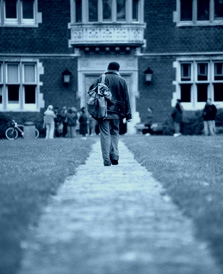
    Post-secondary education, though an important stage for many people, can be daunting. In high school, you become accustomed to small classes, friends in every course, and teachers who go out of their way to help you succeed—so accustomed that you start to take these things for granted. If you decide to go to university, you’re probably aware by now that things are going to change. The transition to post-secondary is a natural part of growing up, but it’s one adjustment you’re going to have to face head-on.

    Some students (whether by choice or not) move out in their first year of university, because their campus is far away from home or they want to get the residence experience. Regardless of whether you’re living on your own, a resident, or a “commuter” (who gets to school by his/her own means), you may be surprised by your newfound independence. No more bells (or whistles): you are basically let loose in university and given the freedom to make your own choices, a luxury not often afforded to you in high school. Without all those meddling teachers looking over your shoulder all the time, you can roam the university campus, go to all the parties you want, and basically do whatever you like!

    Actually, not quite. Hand-in-hand with independence comes a heavier burden than anything you’ve experienced in high school: responsibility. Sure, you’re free to go to class, or to not go, if you feel like it. You’re free to skip out on that midterm, or leave all your reading for next week. But keep something in mind. You’re paying for your education, and it’s now up to nobody else but you to make sure you keep up. No professor is going to hold your hand and walk you through the semester. Extra help is out there—and so are some amazing opportunities—but now it’s up to you to seek them out. Makes you wish you appreciated those “meddling teachers” while you had them, doesn’t it?

    To be a successful student in university, you have to ensure a balance between your newfound freedom and multitude of obligations. You may find yourself compromising your own desire to go out and play to deal with the workload, but that doesn’t mean you shouldn’t meet new people, go to events, and join clubs or teams. Weighing independence, responsibility, and the other wonderful traits you’re undoubtedly going to pick up, you start to be able to think for yourself. You start to judge what you personally feel is right or wrong (not necessarily what you’ve been told) and, at some point, you finally establish your identity.

    University is about education. But it’s also about experiencing the world through your own eyes and finally being able to voice your opinions. Take advantage of your undergraduate years and use that voice wisely. Perhaps you’ll learn something about yourself along the way.

  • Your New Responsibilities in High School

    Your New Responsibilities in High School

    Starting high school is an important stepping stone in your educational career. That being said, sometimes the transition into this new time of your life can be a bit of a challenge. High school comes with new subjects, new teachers and a variety of new responsibilities, and you’re going to have to work even harder to do well. It’s crucial to know what you’re expected of in high school. It might take a little time for you to adjust, but if you stay on track and try your best, there is no doubt you will continue to succeed in school.

    The main new responsibility you have in high school is initiative. There aren’t always going to be people to check up on you; a lot of your learning and progress depends on your hard work. You are responsible for your own grades: no one’s going to stand over you making sure you actually complete the work. Most teachers assign late penalties to assignments, which can seriously take a toll on your marks if you aren’t careful to get them in on time. What’s more, studying for tests, managing group projects and completing independent assignments are all up to you to handle. Teachers do try to help you out by providing reviews, giving extra help or reminding you of important dates. Ultimately, however, it’s up to you to put in the time you need to succeed.

    To add to that, all high school courses, no matter the subject, have exams. Usually worth 10-30% of your final mark, this can either be a final exam, a summative assignment or a combination of both. Depending on your school’s setup, these final evaluation periods are once or twice per year for each subject—and unfortunately, they often come at you all at the same time. When you’re completing summatives or studying for exams, it’s important to stay focused and try not to lose your cool. Exam season is a stressful time of year for everyone, but little by little you’ll start to become accustomed to the extra hours you have to spend on your schoolwork.

    Keeping all that in mind, don’t be too intimidated. Starting high school may be a difficult transition at first, but you can make it through if you try! It’s crucial to develop good work habits from the start, because as your education progresses your responsibilities will continue to grow. High school is designed to help you along the path to post-secondary (whether it is university, college, an apprenticeship, etc.). You might find that once you get used to your new learning environment, you can really start to enjoy the material you’re studying. Don’t discount the important learning you’re going to do at this time of your life—not only through your schoolwork, but through the life skills you pick up along the way.