Tag: transportation

  • Career Profile: Train Engineer

    Career Profile: Train Engineer

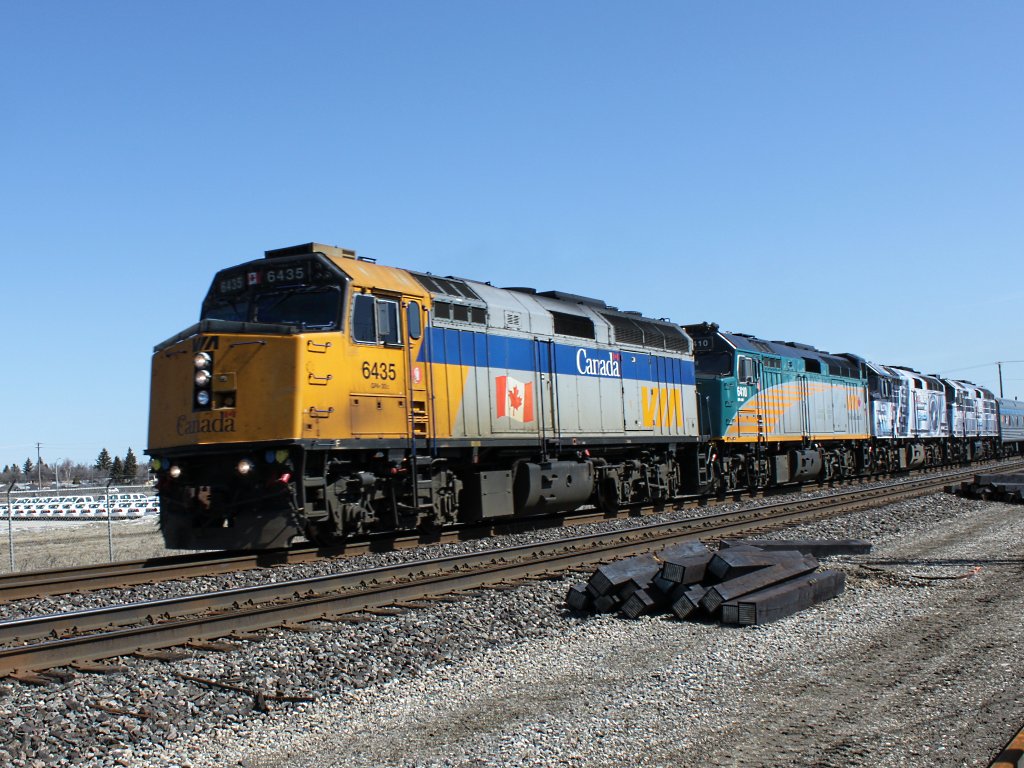
    Depending on how old you are, you might already be learning how to drive a car. How would you like to drive something much larger? One of the biggest vehicles you might ever drive is a train. With experience and education, train (or locomotive) engineers can have good, fulfilling careers.

    Travelling by train is not as common now as it once was, but railways are still very important for carrying grain and other goods and for passenger travel. Every day of the year, trains travel around the country, sometimes for short trips and sometimes for long ones. The kinds of people who work on these trains depends on what the trains are carrying, but one person remains the same. Every train has a person who is called a train engineer or locomotive engineer. These are the people who drive the trains and make sure that they get to the right destinations safely.

    Being a locomotive engineer involves much more than just driving a train from one place to another. A lot of the work happens before the train leaves the station, especially in small towns where there are not many staff members to look after everything. In that case, an engineer might check the equipment to make sure that it is working properly and repair anything that is broken or wearing out. This part of the work often requires a lot of mechanical knowledge and the ability to use tools to repair the different parts of the train. Even when other people do the actual repairs to the trains, the engineer should know what changes are necessary.

    Another part of work as an engineer is doing paperwork. This job might include checking forms to make sure that the right amount of grain or lumber is on the train or filling in the proper documents for driving the train over the border into the United States. This part of the job takes practice, and it also requires a fairly good reading ability with complicated documents. Knowledge of mathematics is also helpful. Learning to read and understand technical documents, such as government forms, is a good way to get started.

    Becoming a train engineer does not usually require any special education, but it requires experience. After completing their high school diplomas, people start by trying to get work as conductors on trains. After about two years, they can transfer to the engineer training program and get a certificate which officially allows them to work as engineers. The training covers topics like how to stop and start the train and how to read the signals which tell engineers which track to take and what dangers to look for.

    Locomotive engineers have a lot of responsibility, and they often work long hours with few days to relax between trips. However, experienced engineers can make $95,000 per year, and the average pay is $78,000. For people who enjoy working with machines and who love to travel, a job as a locomotive or train engineer can be ideal.
  • Cardboard Bicycles: Would YOU Ride One?

    Cardboard Bicycles: Would YOU Ride One?

    Every morning, people around the world get up and take their usual transportation to work or school. But what is their usual transportation? In North America it might be the car, but it’s a different story in many other parts of the world. In most countries, the most common form of transportation is the bicycle. According to National Geographic, people around the planet own 800 million bicycles – which is twice as many as the number of cars. New technology in the bicycle world can affect the lives of millions of people worldwide, just as it did almost two hundred years ago.

    People have dreamed of riding on wheels for centuries. In the 1400’s, the inventor Leonardo da Vinci developed the idea of a machine like our modern bicycles but never made one. In 1840, an inventor from Scotland rode more than sixty kilometres on a two-wheeled machine operated by a foot-powered treadle. Twenty years later, a French inventor developed the idea to include cranks and rotating pedals, much like modern bicycles. In 1860, people first started to use the term “bicycle” for the new machine.

    Air-filled (pneumatic) tires were the next development in the bicycle’s story. Next, people developed different bicycles for all kinds of uses: sleek and lightweight racing bikes, heavy but sturdy all-terrain bikes and much more. The basic structure is the same, however: a metal frame with air-filled rubber tires which help to cushion the rider against bumps in the road. These bikes can be expensive to buy and they need frequent maintenance (especially for punctured tires), but who would think of making them any other way?

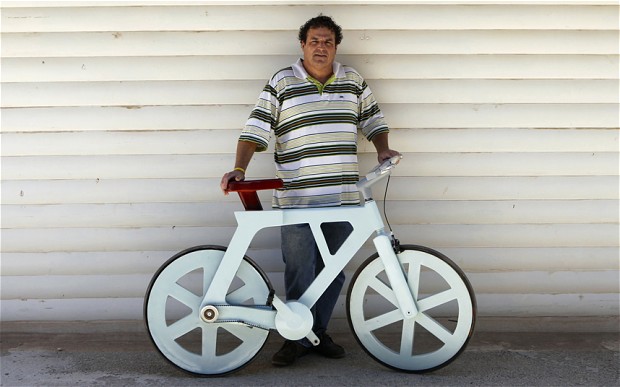
    An Israeli inventor named Izhar Gafni hopes to solve the some of the traditional bicycle’s problems with his new invention: cardboard bicycles with solid rubber tires. The tires, made from recycled rubber car tires, can’t get punctured because they have no air in them. Almost all of the rest of the bicycle is made from recycled cardboard, with a car’s timing belt instead of a chain. The outside of the bicycle is covered with a special coating to make it waterproof and fireproof and is then painted. Each bicycle weighs about nine kilograms instead of the usual fourteen kilograms for metal bicycles.

    The low-cost of the new bicycles could make a huge difference in places like Africa, where people might not be able to afford a traditional bike. Even if the bicycles last only a few years, they could give people the transportation they need to go to school, go to their jobs and maybe even get out of poverty. When these bicycles come into stores, they will likely cost about $20 instead of the hundreds or even thousands of dollars a metal bike can cost.

    If Izhar Gafni’s invention works, it could affect much more than just bicycles. Airplanes or cars made out of cardboard would be much lighter than metal ones and use less fuel, making travel cheaper. It could change the world’s transportation systems forever.