Tag: travel

  • Projects Abroad: Offering Students Short-Term Volunteer Opportunities

    Projects Abroad: Offering Students Short-Term Volunteer Opportunities

    Projects Abroad is a youth-oriented volunteer trip association that can help you plan a volunteer trip to help shape you career, your education and your life.

    The company offers the opportunity to do two weeks to several months of volunteer trips in many of the destinations where they operate. For volunteers who don’t have the time to commit to a month or more of volunteering abroad, but would still like to contribute to the community or their project of choice, then short-term two-week volunteer placements are a great option. These trips are not available in all situations; they have hand-picked only the countries and projects where it is suitable for both the host community and the volunteer to be there for such a short time. To see where these trips are available, check out their prices page – if there is a price listed, then it is possible to go for two weeks.

    Although you will not be able to make quite the impact that our longer-term volunteers make, in your two weeks you will be working intensely within the local community and building relationships. This will impart a level of cultural insight that is not possible for tourists to achieve.

    These trips operate in the same way that normal four-week or longer projects do, with some small adjustments to help you make the most of your two weeks abroad. For instance, they ask that you arrive on the weekend so that they can give you a formal induction to the area and culture before your first day of work on Monday.

    International Volunteer Work: What you get on 2 Week Trips

    Volunteers on 2 Week Trips are given the same benefits as those who join for longer periods of time. Start dates are flexible – just pick any weekend to arrive – and you’ll begin your project quickly after your arrival to maximize the amount of work you can do in country.

    In-country staff will be available to assist you throughout your two-weeks. You will be a part of an extensive volunteer network and meet people from all around the world. In some circumstances, you may be living with a local host family, which will provide you with the opportunity to get completely immersed in the local culture during your stay. On other projects, you may live with volunteers in a community-housing situation.

    Meaningful Volunteer Work in Two Weeks: 2 Week Trips and 2 Week High School Specials

    Short Term Volunteer Opportunities with Children: whether you’re taking time off from school, work, or just need a small career-break, there is always a way for you to squeeze a two week adventure into your schedule.

    For high school students (ages 16-19), we recommend the “2 Week Specials” program. These are group projects that have a high level of structure and central planning by local staff. You will be in a group of students your own age for the entire project. Local staff are always close at-hand. It’s a great way to travel and volunteer abroad for younger people who have never done this before. Staff members are with these groups.

    For ages 20+, we recommend joining projects for a month or longer. Most volunteers go for about two months. But if you can only squeeze in two weeks,  a “2 Week Trip” is worthwhile and productive as well.

    For more information about studying abroad, contact www.projects-abroad.ca
  • Volunteering Abroad – A “Travel Bug” Cure!

    Volunteering Abroad – A “Travel Bug” Cure!

    Imagine what it would be like to travel the world when you finish high school. Just think of walking along the Great Wall of China, seeing the ancient tombs and Pyramids of Egypt, or exploring the Coliseum in Rome. If you have the “travel bug” you might find the idea exciting. Unfortunately, travelling to see these places can also be very expensive and could cost much more than you can afford. However, you might still be able to see the places you want without using up all of your money. One of the best ways of doing this is through going abroad for short-term or long-term volunteer assignments.

    Depending on what you want from travel, a volunteer assignment could be an ideal way of seeing the world. Tourists tend to stay in hotels and to visit the standard tourist sites like historic buildings, museums and monuments. They frequently avoid eating much of the local food in case it makes them sick. Usually they have very little contact with the people of the country, other than tour guides or staff in hotels and restaurants. For some tourists, getting away is not much different from being at home.

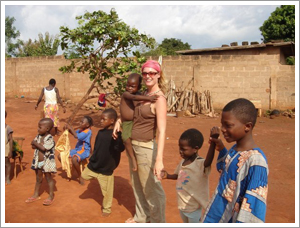
    Volunteers, on the other hand, usually get to know about everyday life in the places they visit. They frequently work together with the local people on projects directly related to the people living in the region. They might help build schools, work with orphans, study the habits of animals, or even help dig up ancient monuments. They might teach English or help with the children at the local school. Special skills might be necessary for some assignments, but strength and the ability to work hard in the sun might be all that’s needed for others.

    Some volunteer assignments might last for a few weeks or be part of an ongoing service to the local people. Many volunteer organizations offer both short-term assignments that last a few weeks and long-term assignments that can last several months or even a few years. A short assignment might fit well during summer holidays, while others might need to wait until you can take a year off to go somewhere for a longer period of time. If you’re thinking of volunteering abroad, it’s a good idea to check with several different organizations to see which one is the best fit for you.

    Another question to consider is the cost. Most short-term overseas volunteer programs involve some payment to cover the costs of expenses such as housing and food. There are often additional costs such as airfare to and from the assignment. In exchange you’ll get far more help and support than you would ever get while travelling alone. The costs might even be lower than for other kinds of travel. If you like the idea of seeing the world but want the safety and comfort of having help from other people, volunteering abroad might be the right choice.

    Does volunteering abroad sound good to you? If so, it’s never too early to start finding out about the possibilities you can consider!

  • Travel by Backpack!

    Travel by Backpack!

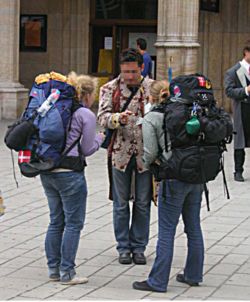
    A friend of mine was going on her first backpacking trip and needed some advice about what to bring. I looked in her backpack and the first thing I found were fake eyelashes. Those definitely wouldn’t be going! Then we looked through her ten-pound bathroom bag and I told her to make some decisions. Did she really need two types of shampoo or three half-bottles of sunscreen? Some things had to stay behind.

    Not everyone is as bad a packer as my friend, but it can be tough to know what to take on a backpacking trip. Taking too much will give you back problems, but leaving something out might get you stuck on the beach in hiking boots. Finding the right balance in your luggage is a matter of sticking to the necessities and knowing what you can find on your travels.

    Stick to the necessities.
    Good shoes are crucial. You’ll be traveling with lots of weight and you don’t want to get so sore you can’t walk by day three. A good pair of running shoes is usually your best bet. Hiking boots get really hot and they’re heavy to carry when you’re not wearing them. Also, most backpacking journeys have some resting time on the beach, so take some flip flops.

    Weather is unpredictable all over, so be sure to have warm and cool clothes. But don’t take much! Three or four t-shirts is enough. If you’re going somewhere hot, you won’t need more than one pair of pants along with your shorts. A sweatshirt or a light jacket is a necessity even in hot countries, and a bathing suit might prove useful even in cold places. Top it off with a few pairs of underwear and some socks, and you’re all set for clothes!

    Next, you need some bathroom supplies. Hostels might not have everything, so you should have the basics: toothpaste, a toothbrush, soap, shampoo and a towel. Sunscreen, bug spray and aloe for sunburns are good ideas, too.

    When in doubt, take less.
    Whether you’re in Brazil, Croatia or England, you can buy toothpaste or an extra pair of socks. Some people actually prefer to buy their clothes on the trip, since they can be much cheaper than they are at home. Also, never forget that where there are travelers, there are laundromats. If you only have four changes of clothes, that doesn’t mean you have to wear the same underwear for three weeks. There will be opportunities to wash them.

    Have money ready.
    You never want to carry around enough cash for your entire trip. You should have a debit card and ideally a credit card, too. These days, you can find ATM’s in pretty much any big city in the world. There are times when your debit card might not work or the bank listed in Lonely Planet isn’t there anymore. In those cases, American money never fails. Virtually anywhere you go in the world, people will take U.S. dollars.

    So keep things light, have some U.S. cash and a debit card and you’ll figure out the rest. If your clothes get a little muddy, that’s all part of the adventure.

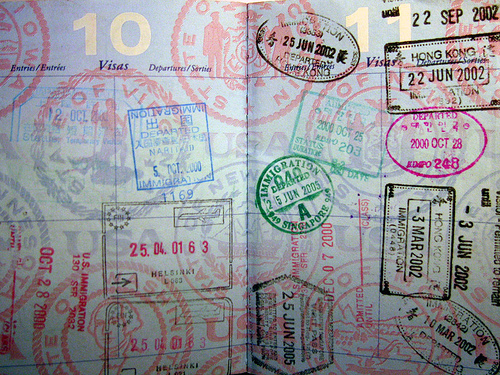
    And of course, don’t forget your passport!

  • Languages Open Doors!

    Languages Open Doors!

    You might wonder what’s the point of learning a language that you don’t need to speak in order to get by. It’s a question worth asking and there’s more than one answer. Languages will help you in some obvious ways and some ways you might not expect, whether it’s opening doors to travel, providing job opportunities or giving you a unique perspective on the world.

    One of the obvious advantages of learning other languages is that they allow you to see places you wouldn’t otherwise see. Nearly every city that people travel to has something called the “tourist circuit.” What that means is there’s an area of the city filled with hotels, restaurants and activities like boat tours that are mostly reserved for tourists. These places are easy to visit, because everyone who works there speaks English. Sure, anyone can appreciate riding an elephant in Laos even if they don’t speak Laotian, but there’s much more to see in a country.

    If you go to Germany and speak German, you can talk to a local on the bus and find a club to see some good live music. If you go to China and speak Mandarin, you can leave the tour group and find out what “Chinese food” really is. More than that, just being able to have conversations with the locals is worth it. There’s a feeling of satisfaction from having worked at learning a language and reaching the point where it can get you more than the ability to read a menu.

    Languages also help with your career. Businesses from video game testing to restaurants to customer service often search for employees who speak a second language. If you’re in sales and you happen to speak Korean, you have a leg up in the industry when dealing with Korean customers. Businesses know that. It might seem strange to be learning Portuguese in an English-speaking country, but that means when an employer needs someone to edit documents written in Portuguese or deal with Portuguese customers, you have a rare skill that gives you a huge advantage in the job market.

    Knowing an additional language will also give you access to another culture. You get a master key to a whole set of books, music and movies that most other people can never see. Even within Canada, English news and French news will give you different points of view on the same issue. If you can read both, or if you can listen to your local Spanish radio station, you’ll know about things that other people will never have heard of and you’ll have more well-rounded knowledge about your city and environment.

    There are plenty of ways to learn a new language. Many people start learning in high school, but you can also attend private classes. Probably the most exciting way to learn is through a foreign exchange to an area that speaks the language. After all, studying a language will give you all the basics you need, but you have to actually use it if you want to understand it and to speak it smoothly.

    So if you happen to find Italian interesting, take your school’s Italian class even if you can’t see how it will help you right now. Follow your gut and you’ll end up in fascinating places.

  • Youth Mobility Visas

    Youth Mobility Visas

    Common belief is that your life follows a certain path – you graduate high school, go to university and then start your career. However, life isn’t always so black and white. Sometimes you don’t know what you want to do, you aren’t ready to decide or you just need a break from school or your hometown to see what life is like somewhere else. Living in a foreign country is a great way to give you an entirely new outlook on the world around you.

    The Canadian government has programs set up to allow young people to stay in a foreign country for a long period of time. These are called Youth Mobility Visas.

    What can I do with a Youth Mobility Visa?
    As a normal tourist without any special kind of visa, you cannot work or go to school in a foreign country and you can only stay for a short period of time. However, with a Youth Mobility Visa you can stay for a period of a year or two, depending on the country. While you’re there, you can work, study or simply travel around without worrying about your tourist visa expiring.

    Many people take the opportunity to immerse themselves in a new culture or to learn a foreign language. Travel can be a great experience, but actually living in a different country is something else altogether. It will forever change the way you view your own society, culture and place in the world.

    What kind of work can I get abroad?
    People living abroad often get jobs in the tourism industry as café employees or as language teachers. If you speak the local language of the place you’re visiting, then there’s nothing stopping you from getting the same jobs you could get at home.

    Will this help my career?
    Absolutely! Experience living in a foreign country is a great asset for a resume. It shows future employers that you are open-minded, willing to face a challenge and have exceptional communication skills. It also helps you stand out when someone is searching through a stack of resumes.

    How do I get a Youth Mobility Visa?
    It is easier than you might expect. You can get yourself set up in a foreign country before you even leave your home soil. You can obtain your Youth Mobility Visa at the embassy for the country you want to visit. The process is different for every country, but it involves a few basic steps such as signing up for international health insurance, getting a few pictures taken and filling out some forms. Some of the countries that have this program set up with Canada include Germany, Australia and the United Kingdom.

    It can be scary to move overseas and you will surely run into problems. You can get lost, you may miss certain foods from home and you may feel homesick at times. But it’s all worth it! It will teach you not only about a new culture, but will show you a different way to view your own.