Tag: women in the trades

  • Women in the Trades: A Must-Have Conversation

    Women in the Trades: A Must-Have Conversation

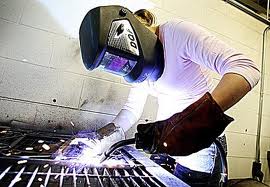
    The trades are hard work. From the strenuous physicality to the intricacies of wiring and plumbing, these jobs are no easy task. There is a healthy demand to get these deeds done, as opportunities in the different fields abound. The hours offer flexible schedules and the pay can be quite promising. Nevertheless, there is a large portion of the population not commonly associated with careers in the trades. Progress has been made, but there is still a drastic shortage of women pursuing work and succeeding in the industry.

    According to Statistics Canada, women made up five percent of all those in the trades in 2012. In comparison, hairstylists and aestheticians were predominately female at 84%. A mere five percent of women received trade qualifications in Canada in 2007. Even more alarming than those numbers is the fact that this is a decrease of 17% from fifteen years prior. There are many theories as to why the numbers are not only so small, but in some cases have apparently shrunk over time. A research report conducted in New South Wales of Australia in late 2015, entitled ‘Ducks on the Pond’, offered two troubling but fixable reasons as to why.

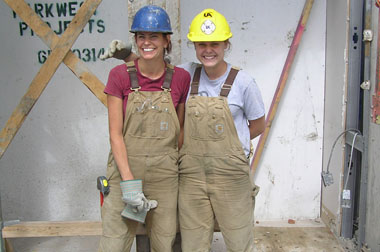
    Practically, women on worksites may face a shortage of toilets and uniforms more typically designed for a man’s body. Beyond the aesthetic issue, wearing gloves or safety glasses that are too loose pose significant safety concerns. When women do make their way into the world of the trades, they are often met with bullying and sexual harassment. Every single woman who participated in the research for ‘Ducks on the Pond’ reported experiencing some form of discrimination or sexual harassment. One quarter of female apprentices felt they were not treated with respect by their boss. Despite these issues, many believe change is inevitable and already underway.

    In Britain, 75% or more of plumbing businesses have had problems recruiting new workers. 60 million pounds was earmarked in 2003 to be devoted to persuading young people to consider the trades as a career path. The Canadian Coalition of Women in Engineering, Science, Trades and Technology (CCWEST) is encouraging women to join professional associations to help them in networking for career success. They are further encouraged to seek out a mentor, as well as scholarships, bursaries, and awards. Tina Kelly, Co-chair of CCWEST, has noted that three or four years of apprenticeship are typically required to gain proficiency in a trade skill. Women may face discrimination when they first embark on that journey, but it is a path with a very achievable goal. Tina Kelly has also stated that companies that have decided to hire female workers always find it to be a positive experience, as the decision tends to make the workforce more active and creative overall.

    Awareness and visibility of women in these careers is vital. As schools provide more opportunities for technical classes, and additional education is offered to teachers and parents, previous stereotypes will slowly erode and pave way to new prospects. With technology changing the way we all work and automation set to revolutionize the workforce, many jobs in the trades will be available for women to pursue. The more we openly talk about the issue, the more inevitable that change becomes.

    Sources:

    Moorhead, Joanna. “Taking the man out of manual.” The Guardian. https://www.theguardian.com/world/2003/jan/17/gender.uk

    Stephens, Clare and Jessie. “The two critical reasons why women don’t enter trades.” MammaMia. http://www.mamamia.com.au/women-in-trades/

  • Challenges for Women Working in the Trades

    Challenges for Women Working in the Trades

    Are you the creative and hands-on type? Do you welcome a challenge? Does the idea of travelling for work appeal to you? If so, you might consider a career in the skilled trades.

    There are many options available, from construction and transportation to manufacturing and service. Trades pay well, the average salary being double that of a retail position. Not to mention, there is a shortage of skilled workers in Canada, meaning plenty of employment opportunities.

    Skilled workers are the backbone of society and the economy. What can be more satisfying than that? That said, like any career, the trade industries are not without obstacles, especially if you’re a woman entering the field.
    These days more women are pursuing skilled trades more commonly associated with men. There are also bursaries, apprenticeships, and training programs geared to women. Companies are even encouraged by the government to hire female workers.

    Nevertheless, women are still underrepresented in the trades, making up less than 10 percent of the workforce according to Statistics Canada. Being a visible minority on a job site often comes with feelings of isolation and alienation. Hypatia, a Nova Scotia women’s organization conducted several focus groups with female skilled workers (Working It Out, 2008).

    Here are some of the issues that were raised:

    • Lack of accessible washrooms for women.

    • Ill fitting work attire and safety equipment.

    • Inappropriate images of women displayed on work premises.

    • Being downright ignored by male co-workers.

    One of the more obvious challenges a woman might face is discrimination. Remember, the skilled trade industries are male dominated.

    Several women have reported discrimination from male co-workers, supervisors and even clients who are more used to dealing with male workers. According to the Hypatia study, discrimination can range from passive criticism, like a male co-worker telling a female co-worker she should pursue a more traditional line of work, to being denied the same rights and privileges given to male workers (i.e. Equal pay). Other women have reported harassment from male co-workers. This can range from insults and intimidation to catcalling and even sexual assault. Remember that under no circumstances are any of these behaviours to be tolerated. It is important to speak up and get help if this happens.

    A company should have a strong policy in dealing with discrimination and harassment. It is their duty and responsibility, by law to provide a safe and supportive environment for all employees. This is a basic human right.
    Of course, many female workers have also reported positive experiences on the jobsite. Before accepting a position, it’s always a good idea to find out about a company’s policies to ensure that they accommodate the needs of a female worker and that they promote safe and supportive work practices.

    It’s important to remember that, with these challenges, comes great support. Female workers can reach out to one another through professional associations, annual conferences, mentorship programs, and even social networking platforms. By taking advantage of these resources you can and will succeed!

  • Benefits of Pursuing a Skilled Trade for Female Workers

    Benefits of Pursuing a Skilled Trade for Female Workers

    In the last article, we explored the challenges for women working in the skilled trades.  It can’t be denied that female skilled workers may face obstacles. But today we are going to examine the reasons why women should pursue the skilled trades.

    Great Pay and Benefits

    The average salary of a skilled worker pays double that of a retail or office position. Not to mention, the employee benefit packages are competitive, as well. Also, there are always opportunities for career growth. For instance, job promotions and free or partially paid education programs for professional development. What’s more, if you take on an apprenticeship, you can earn money while you learn your trade.

    Various Career Options

    You have literally hundreds of career options to choose from.

    Here’s a look at some of the fields you might consider:

    Construction: construction craft worker, mason (bricklayer),

    carpenter, ironworker, heavy equipment/crane operator, etc.

    Industrial: mechanic, draftsperson, electrician, tool and die maker, welder, railway car technician, etc.

    Motive Power  auto-body repairer, agricultural equipment technician, fuel and electrical Systems technician,  automotive painter ,  auto body and collision damage repairer, automotive glass technician, etc.

    Service: hardware, lumber and building materials retailer, horticultural technician, micro electronics manufacturer, utility arborist, etc.

    *See Red Seal Trades, for a complete list of trades that allow you to certify across Canada.

    Skilled Workers in Demand

    In Canada, there is a demand for skilled workers. That means; plenty of employment opportunities.  According to the National Post, it’s predicted that Canada will need one million workers by 2020.

    Canadian Living outlines several in demand occupations, according to Peter Harris, editor-in-chief of Workopolis. Take a look:

    • Construction workers
    • Vehicle repair
    • Maintenance workers
    • Electricians
    • Heavy machine operators

    According to BuildForce Canada, the work force will grow by 42,000 between 2013 and 2021. However, they predict an estimate of 210, 000 workers will be retiring over that same period of time. This is in the construction industry alone.

    Furthermore, women now have access to training programs, apprenticeships, and even scholarships and bursaries.

    Plus, companies are seeing the benefits of hiring female workers. Apart from the obvious shortage of skilled workers:

    “Employers who hire more women report benefits to client relationships and a more inclusive workplace culture, as well as overall improvements to productivity and workplace safety” (Status of Women Canada, 19).

    Career Satisfaction

    Working in the skilled trades offers rewarding challenges, which in turn leads to career satisfaction. Female workers often report higher levels of self-confidence and enjoy the creative and hands-on aspects of the work: “There is great satisfaction in contributing to the infrastructure of one’s community and knowing that the work will stand for many years, even generations, to come” (Apprentice Search, 6).

    Changing Times

    We are seeing a seeing a shift in society’s perceptions and attitudes towards women pursuing careers in the skilled trades. The discrimination women once faced, though it still happens, is slowly diminishing. For instance, women have reported acceptance and equal treatment from younger male colleagues (Working it Out, 30).  If you consider this social change, along with growing training and employment opportunities— there has never been a better time for a woman to pursue a skilled trade.

  • Success in the Trades: A Perspective

    Success in the Trades: A Perspective

    Many people get into the trades and find out that it isn’t for them. If you have never worked in the trades before, it can be a shock to your system- the weather, the physical and technical demand and the work hours. For some, it can be too much to handle. However, there are so many people in Canada excelling in what they do in the trades, and are continuing to push boundaries.

    In Alberta, the trades industries have been thriving. Because of the provinces’ close tie to oil and gas, there are a lot of opportunities to work in the trades. Though the current economic situation in Canada may not be at its best, there are still lots of jobs available in which you can reach success. There are a lot of ways to measure success, but here are 5 factors you can keep in mind when determining it:

    1. You enjoy what you do on a daily basis and are always up for new challenges in your field.
    2. You are able to express your voice, concern and expertise in your job.
    3. You feel welcomed and comfortable in your place of work.
    4. You are financially satisfied in which you can fulfill your needs, and a few wants (not all wants!)
    5. You are able to learn and grow every day in your field, and even move up the ladder.

    The women that have graduated from the WBF (Women Building Futures) are excelling in their careers and seem to live up to all 5 points above:

    Follow this link: http://www.womenbuildingfutures.com/EmployerServices/GraduateStories.aspx

    In the coming months, JobsPeopleDo will be posting success stories about people in the trades. You will get to read about the trades and hear their stories first hand, and maybe, gain advice and encouragement that will help you make your future career decisions!

  • Bridging the Gap: Women in Skilled Trades

    Bridging the Gap: Women in Skilled Trades

    A documentary by Elizabeth Smith, in association with Rogers Communications

    In this awesome documentary, we get to see hardworking, dedicated women working in the trades industry of Canada. It is a helpful summary of women that have made extraordinary leaps in the trades industry, building a great reputation for excellence, accuracy and attitude. The 23 minute documentary goes over the things you have to do, have or acquire in order to become a trades-woman. It sheds a very positive light on women and their future in the trades, and what kind of obstacles you may have to overcome in order to reach your goals. Being a trades-woman is not only a good vocation, but a really great way to make a living, financially.

    Presently, the video states that only 4% of people in the trades are women. An interesting and challenging trade for women is high pressure welding and fitting. In the documentary, you will meet the first woman to work on the pipeline in Canada, Courtney Chard. As it stands, male pipeline fitters make up 99.1% of the trade, where women make up .9%. These numbers can rise if we all learn more about the opportunities available, and “take gender out of the equation”. Courtney presses that if you like hard work and an honest, decent pay check, you can do it. You will face challenges with other male workers, but if you can brush those trivial things off, you will do well.

    You will also meet Lynn Mackinlay, a certified Red Seal Cabinet Maker from Nova Scotia. She presses that if you have an understanding of the oppression issues that women face in the trades, you will be able to accept any challenges faced. Lynn says that it is often a cultural and systemic issue when it comes to women working in the trades, and we need to look past it. This is a strange stigma, because women have been literally working in the trades since the 40s during the war.

    So, check out this Rogers documentary and learn all you can about working in the trades- they’re waiting for you!

    http://rogerstv.com/page.aspx?lid=237&rid=73&gid=220812

  • Women in the Trades, Statistics and Perceptions

    Women in the Trades, Statistics and Perceptions

    When you picture a construction worker, plumber, electrician or pipefitter, what image comes to mind? Most people imagine a burly, middle-aged man, wearing overalls, covered in dirt or grease. Trades jobs have been predominantly dominated by men throughout history. Across Canada women are still under-represented in the industry.

    The Status of Women in Canada factsheet (http://www.swc-cfc.gc.ca/initiatives/wesp-sepf/fs-fi/es-se-eng.html) stated, “In 2014 women represented 47.3 % of the labour force. Women aged 15 years and over were most likely to be employed in sales and service occupations (27.1%).” It also states, “Women continue to have low representation in the skilled trades and other traditionally male dominated professions. For example in 2012, women held just 11.8% of the construction jobs, 19% of forestry, fishing, mining, oil and gas jobs, and 30.5% of agriculture jobs. In 2011 women accounted for only 2% of carpentry apprentices, 1.9% of plumbing apprentices and 1.5% of heavy equipment apprentices.”

    So why are there so few women working in the trades? An article on the website TalentEgg.com (http://talentegg.ca/incubator/2012/03/12/women-working-skilled-trades/) suggests “even in this day and age, women can be discriminated against in the skilled trades workforce. Women are usually in the top 10-15% in their class, but they are almost always among the last 10% to get hired.”

    The Government of Canada Skilled Trades website points out another reason there are fewer people in general working in the industry. It says there is a “negative perception towards skilled trades among youth and their influences, with many believing that these jobs are low paying, involve physical work, are dirty, and are less academically challenging.”

    Though this may be a common perception, it isn’t entirely true. The work may be more physical than an office job, but it can also be rewarding. Imagine being able to drive by a building, knowing you helped construct it. Stats Canada stated on average trades employees make $22.36/hour. Canadianbusiness.com stated in 2014, Electrician and Telecommunications Contractor held the number 10 spot on the Top 10 Best Jobs in Canada, with a median salary of $72,800/ year.

    Many skilled trades’ workers are hard-working individuals. Although a lot of people feel the trades are for students who are less academically inclined; this is also another myth. Trades workers need to have a good academic foundation with knowledge in math, literacy, problem solving and analytical skills. Depending on the type of trade you pursue you could be deciphering complex blueprints on a construction site, operating technical equipment, or installing intricate plumbing systems at an industrial site. There are a number of apprenticeship programs geared toward women. You can search online to see what’s available in your area. In Ontario there is a website with information on Women in Skilled Trades and Information Technology: http://www.grants.gov.on.ca/GrantsPortal/en/OntarioGrants/GrantOpportunities/OSAPQA005168.

    Careersintrades.ca (http://www.careersintrades.ca/) has information on how to get started.

    If you think you might be interested in pursuing a career in a skilled trade, it’s always a good idea to talk to someone who currently works in the field. They will be able to explain the ins and outs of the job, tell you what is involved, and what it is really like to work on a job site. They can also give you an idea of job availability and pay. You could also do a work study or internship, which will provide you with the hands on training and experience. This will be a great way to see if you like the job and the work environment, and to decide if the trades are the right field for you.