Tag: working with animals

  • Working on a Farm

    Working on a Farm

    By Gavin Mercier

    Farm work is hard work- there’s no other way to say it. However, it is also some of the most valuable and rewarding work you can do. Farmers hold one of the most important jobs of our community, but they are also the most underappreciated. Working on a farm not only gives you a sense of what it’s like to be a farmer, but it also teaches you some real- life skills that will be valuable for your future.

    Hard Work, Fun Work, and Responsibility

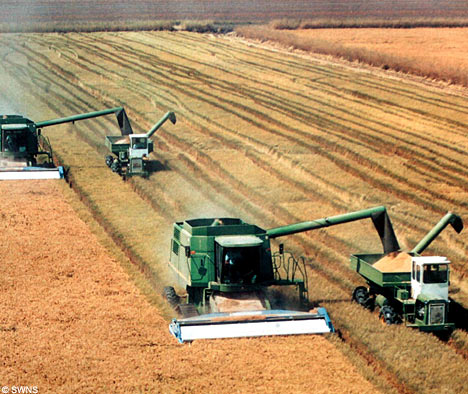
    Yes, working on a farm is hard. But farming is the best example of the phrase “hard work pays off.” With farming, the harder you work the better the end result will be – in this case the end result is crop or cattle. Not only that, all the outdoor work is really great for great for your body. Working on a farm, you get to watch your work develop into something wonderful, whether it’s a crop of corn or a baby calf.

    While farming is hard work, it can also be a lot of fun. There is so much to do on farms you just can’t get bored. From feeding cows on a cattle farm to tending horses on a ranch, there are just so many fun things you can do on a farm – as long as you’re a little bit adventurous.

    Being on a farm isn’t all fun and games though. There is a lot of responsibility involved. Farmers are responsible for taking care of their animals and crops, and that can sometimes be a lot to handle. However, if you like being around animals and taking care of them, then this isn’t much of a chore at all.

    Appreciating Farmers

    Being a farmer is an underrated job – not many people choose to become a farmer anymore. There are also a lot of false facts about farming nowadays that put people off. Working on a farm, you get to see firsthand just how much they really do for us and what it’s really like. You will get a better appreciation for your food and how much work people really put into it. Seeing how your food is produced and being a part of that process gives a better understanding of the world we live in and how it all works for us.

    Appreciating Our Earth

    Not only will working on a farm help you appreciate all that farmers do for us, but it will also teach how to appreciate our planet more. Almost everything about farming is controlled by the weather and the landscape – crops are planted in the best soil around and watered by the rain. If there is no good soil, the crops can’t be planted, and if there is no rain then they cannot be watered. If we can’t take care of the earth, then it becomes harder for it to take care of us. Working on a farm is a great way to learn about the earth and how you can help take care of it.

    Working on a farm is great for so many reasons. I actually used to work on a cattle farm, and I still think it was one of the best experiences of my life. I had so much fun working there and learned so much, from the value of hard work to how I can help our earth. Working on a farm was one of the best things I ever did, and I hope it will be the best thing you ever do, as well.

  • Career Profile: Animal Trainer

    Career Profile: Animal Trainer

    Have you ever taught a dog to sit up and beg or to roll over? Many people train their pets to do simple tricks like that, but some people do even more complicated tasks. Animal trainers work with dogs, horses, dolphins and other animals, teaching them how to behave or act in a specific way. If you have the patience and the ability to work with animals, an animal trainer might be the right career path for you!

    Becoming an animal trainer takes a lot of time and patience. Animals have minds of their own, and they can sometimes be aggressive and difficult. Since they cannot speak a language we directly understand, they communicate their feelings through actions and expressions. The animals can sometimes bite or scratch, but it is the job of the trainer to teach them to be more calm, happy, and manageable.

    If you have your own pet, you know how much work it can be to take care of all of its needs. Animal trainers might not be responsible for every aspect of caring for the animals, but they often have to do the same things as pet owners. They often have to feed and groom the animals and possibly even contact a veterinarian if something is wrong with them. They have to know the signs of a sick animal and when it is hungry or tired.

    Getting to know individual animals is an important part of being an animal trainer. Some animals might already be very well trained in basic behaviour before they come for special training, but others need to start from the beginning. Old injuries, bad experiences with previous owners, and many other factors might influence how difficult or easy it is to train an animal- domestic or wild. Finding out how to get past these kinds of barriers is one of the most important skills that trainers can learn.

    Trained animals are useful in many different areas. People ride horses for fun or to participate in shows. They make movies with dogs and cats and train seeing-eye dogs to help people with vision problems. All of these animals need someone to train them for the special tasks that they need to do.

    Sometimes, the animal trainers can use help, as well. Working with marine mammals like dolphins usually requires a bachelor’s degree in an area like biology or animal science. However, most animal trainers learn their skills by working with animals, sometimes as an apprentice to another trainer. A high school diploma or the equivalent is usually all the formal training that is necessary, although a certificate might be necessary in some cases.

    In Canada, animal trainers make an average of about $23,000 per year, but some can earn much more than that. Jobs can be hard to find, but people in this field can often work in similar areas such as dog walking and pet care. If you love animals, you might want to consider this career as a possibility for your future. There are plenty of opportunities to add to your animal training expertise. Opening up a business would of course raise your income and allow you to keep learning new ways to train and look after animals of all kinds.


    Bibliography:

    Canadian Association of Professional Pet Dog Trainers. “Becoming a Professional Dog Trainer.” http://www.cappdt.ca/public/jpage/1/p/BecomingATrainer/content.do.

    McKay, Dawn Rosenberg. “Animal Trainer: Career Information.” http://careerplanning.about.com/od/occupations/p/animal_trainer.htm.

    Monster.ca. “Animal Trainer: Skills.” http://my.monster.ca/job-profiles/animal-trainer.aspx#Skills.

    Wow Jobs.ca. “Dog Trainer Salary in Canada.” http://www.wowjobs.ca/salary-dog+trainer.