Every day, people in tall buildings go up or down in elevators. How often do they think about the people who make it possible to ride to their offices or apartments in comfort, instead of using the stairs? Without the work of elevator installers, skyscrapers and other tall buildings would never be useful for people.
Elevators are easy for people to use but can be difficult to install. Workers in this field need to understand mathematics and science so that they can make calculations and know the basics of how machines work.
For example, if elevator installers know the physics behind pulleys and other tools for raising heavy objects, they can have a better understanding of how elevators work. Knowing how much stress the materials can take before they crack is also useful for deciding when to replace parts on the elevator or to reinforce them for extra strength. Courses in metal and wood shop work can give people the background and experience that they need for this work.
After getting a basic education in mathematics and the sciences, elevator installers normally complete their learning through apprenticeships. In a good apprenticeship, experienced elevator installers help the newcomers to learn their work on the job, by personally showing them the processes.
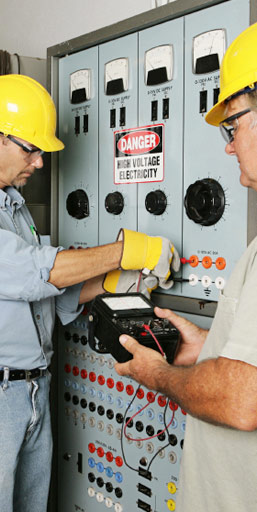
Over a period of about four years, apprentices learn how to read blueprints and how to apply physics to their work. They also learn about electricity and the theory of electronics, and when they know the basics, they learn complicated processes such as installing wiring. Many people in this field do repairs as well as installation of elevators, and they have to know how to find and fix problems when elevators are not running well. This part of the job might involve some evening and weekend hours, since breakdowns can happen at any time.
Besides installing elevators, some people in this trade work with other machines. Escalators, for example, are common in large stores and malls, and they work on many of the same principles as elevators. Some restaurants also have dumbwaiters, which are like small elevators for carrying dishes and food from one floor to another. Elevator installers sometimes work with both of these kinds of machines, which might require special knowledge and skills.
Wages for elevator installers can vary, depending on where they live and what kinds of skills they have. In Canada, the average hourly rate is $37.00 per hour, but it can start much lower than that. However, with experience and skill, elevator installers can earn a good living.
Generally, elevator installers should be good with their hands, work well on their own without supervision, and have enough strength and stamina to work with mechanisms that can sometimes be heavy and hard to use. Does that describe you? If so, you might want to consider learning to work as an elevator operator.
Bibliography:
Careers.org. “Occupation Profile for Elevator Installers and Repairers.” http://www.careers.org/occupations/47-4021.00/elevator-installers-and-repairers.
Payscale.com. “Hourly Rate for Industry: Elevator Installation.” http://www.payscale.com/research/CA/Industry=Elevator_Installation/Hourly_Rate
Salary.com. “Elevator Installer/Repairer Job Description.” http://swz.salary.com/SalaryWizard/Elevator-Installer-Repairer-Job-Description.aspx.
Salary.com. “Elevator Installer/Repairer Salaries.” http://www1.salary.com/Elevator-Installer-Repairer-salary.html.