Tag: writing

  • Resume Writing Tips

    Resume Writing Tips

    Include a Summary
    Everyone wants to make a good first impression. Carefully read the job application summary, highlight keywords and phrases, then think of how you meet or exceed the job expectations and required skills. Tailor your summary for each job you apply for. Don’t make your resume “one size fits all.” You might think it’s more efficient and less time consuming, but employers might think you’re lazy and not ambitious enough to address each position you apply for individually. Also, employers will think you went the extra mile — it will demonstrate initiative and that you really do want this job.

    Choose a Template
    Don’t reinvent the wheel. Browse hundreds of free template options online and choose one that catches your eye. If you can’t find a free template that suits your fancy, you can also purchase several options from various websites. Choose a template that you find attractive and that suits your personality, but don’t try to be too unique or stand out from the crowd too much because — while your resume will surely get noticed — you might get the “wrong” kind of attention. The trick is to express your personality in a subtle way; it’s all about balance.

    Use the Active Voice
    Show power, confidence, and that you mean what you say. Speak like you know what you’re talking about to grab your potential employers’ attention and maintain their interest. The passive voice, while appropriate in many cases, often conveys a sense of hesitancy and is much less powerful.

    Get to the point and don’t beat around the bush. Also, don’t try to sound too smart or sophisticated by using long, complex words. Employers are more interested in your skills, experience, and what you can offer them rather than your extensive vocabulary and sophisticated understanding of the English language.

    Avoid the First Person Pronoun
    Yes, this is about you—but what it’s really about is getting you a job, so avoid using “I” and “me” in your resume. The third person conveys a sense of professionalism, while the first person is too personal and informal for resume writing.

    Less is More
    Make your words and sentences pack a punch. Also, make your resume easy-to-read for the often impatient and overworked person viewing your resume. Avoid flowery language like the plague and don’t embellish your words. Although it might be counter-intuitive, you’ll actually be more convincing if you use less dramatic and descriptive language. Your point can get lost if it’s surrounded by too many adjectives and long, ornate words.

    Look Attractive
    Don’t use fancy font. A sans serif-style font is most appropriate and attractive looking for resumes — examples include Calibri, Arial, and Lucida Sans. Lucinda Calligraphy might be calling your name with her ornate, fancy beauty, but the font will be too difficult to read.

    Add a bit of colour. Use only one colour and choose the tone carefully. Use this colour sparingly. For example, make your name your favourite shade of pink for an added punch that will get you noticed, but wont make your resume look “gaudy” or too flashy.

    Be Conscious of Length
    One to two pages will suffice. Any more than two pages and your employers probably won’t read the whole thing or they will just scan the last part.

  • How To Successfully Write An Essay

    How To Successfully Write An Essay

    Writing essays shouldn’t seem like a massive burden. Just try to follow these five simple steps.

    Step 1: Think
    Ask yourself, “What is the purpose of this assignment? Why is my teacher making me do this particular assignment?” No matter how stressed you feel, he or she is not intentionally trying to punish you. The assignment is meant to assess how much you have learned in class. Keep this in mind constantly from when you begin to write to when you revise your final draft.

    Step 2: Brainstorm
    Depending on the assignment’s requirements, decide what you want to say in the essay. Make a list of what you want to write about and don’t hesitate to write down any and all ideas that enter your mind. The more ideas, the better.

    Step 3: Plan
    Planning your essay might be the most important step. Once you have determined what it is you want to say, you will now need to map out how you’re going to say it. A typical essay format might look something like this:

    Introduction with a thesis statement that says your essay will be about topics A, B and C
    Body paragraph that describes topic A
    Body paragraph that describes topic B
    Body paragraph that describes topic C
    Conclusion that restates the introduction (but does not repeat it verbatim)

    Step 4: Write
    Choose the items on your brainstorm list that you want to use in the essay and write a full sentence for each. These sentences might become the topic sentences for your body paragraphs. It doesn’t matter (yet) exactly how you will say it, but rather that you have included everything your teacher has asked for. Don’t worry about writing formally or even completely logically – just write. You can improve your work later. Sometimes it is helpful to say what you want to write out loud. Tell a sibling, parent or friend about what you are trying to say and then work what you have said to them into sentences in your essay.

    Step 5: Edit
    Edit your work at least three times. Every essay you write should go through several drafts. If you have done a good job of editing, your final draft will likely be significantly different from the first (hopefully you will have completed the first draft early enough to edit and not the night before the assignment is due!) Read your work through once from the beginning to end without stopping to make sure the sentences flow and the paragraphs are logically connected by transition sentences. Read your work through twice to make sure the thesis statement, which explains what your essay is about and which is usually the last sentence of your introduction, describes what you have written in the body paragraphs and vice versa. Read your work through a third time very slowly to check for spelling and grammar mistakes. Then ask someone else to read your work through in case they spot anything you might have missed.

  • A Career In Writing

    A Career In Writing

    Do you enjoy writing? Have you spent years recording your thoughts in a journal? Is that enough to have a career in writing? Many people have dreams of becoming a famous author who is read by the masses, but how achievable is that goal? It all depends on what kind of writer you want to be.

    Print journalism requires a degree, preferably one in media, or writing. However, it is important to note that print journalism is a somewhat archaic career. There are so many changes that have taken place in the field in the last decade involving technology and the internet that it is worth taking a hard look at what these changes mean to the up-and-coming writer.

    Magazine writing is still a viable option, though it is very difficult to break into. Entering contests is a good way to get your name out there and to add something credible to add to a resume. The key to being a successful magazine writer is to continually submit material. Find a topic that you are interested in and that has potential to interest others and go for it!

    Writing a novel is entirely different than any other form of writing. Can anyone do it? Does it require skill or innate talent? The answer is a little of both with a whole lot of perseverance. The only thing holding back someone from being a published novelist is time and patience. It takes a long time to learn the ropes of novel writing and depending on the path you wish to go down, a lot of hard work.

    The online writing market is exploding – it is the future of writing. While the new writer must maneuver through a minefield of scams, there are more and more opportunities for the savvy writer with legitimate skills.

    Becoming a social media expert can also benefit you as a writer. Many potential clients are looking for that writer who can navigate the layers of social platforms. Knowing how to use contacts, how to build a following on Twitter and how to find your way around the multitude of other social media sites is now considered a valuable asset to your resume.

    So if you enjoy writing, keep doing it! Build your resume as much as you can and keep your eyes (and ears) peeled for writing opportunities.

  • The Power of the W’s

    The Power of the W’s

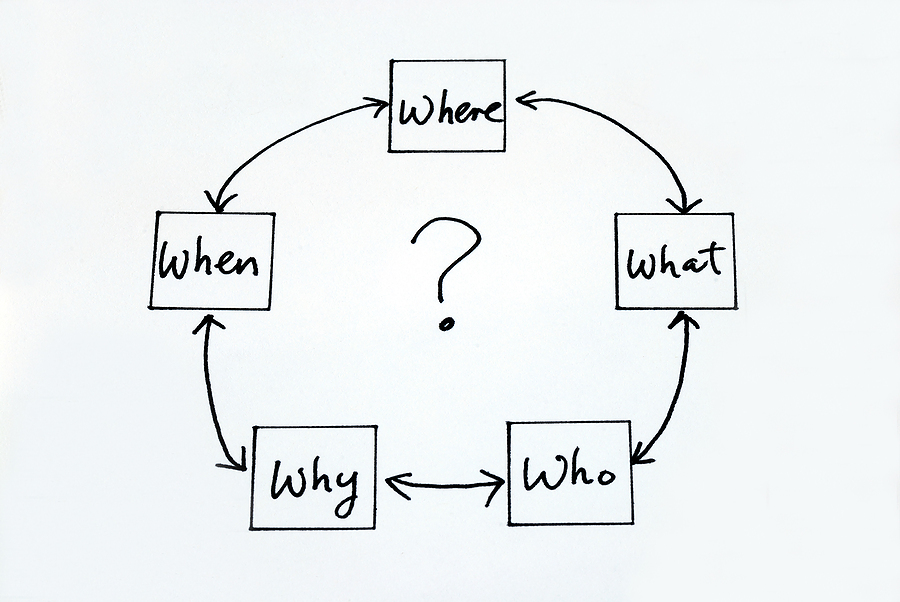
    You’ve probably heard of the five W’s a million times in class. This little family of questions – “Who, what, where, when, why” and their cousin “how” – are memorized by every student who ever has to put together a presentation. But their true power in everyday conversation is never really explained.

    No two people in the world agree on everything. You’re bound to talk to people on a daily basis who think differently than you do. Whether you like it or not, this will be the case for your entire life (unless you want to live alone in a cave in Antarctica!) So you might as well take what you can from these little disagreements.

    If someone tells you that aliens were in the neighbourhood last night, you can say, “You’re crazy” and walk away. Or, instead, you can use those W’s. Ask them “What do you mean?” or “Why do you think that?” or “How did aliens get here?” Your neighbour will tell you about all the evidence they collected. You’ll find out that there’s a thought process behind their opinion. People don’t just come up with wild ideas out of nowhere and fixate on them. They take the evidence around them and put together a case, the same way you or I do. Whether or not you agree, you are learning about your neighbour’s view of the world and giving yourself a broader perspective.

    Maybe you think peanut butter M&Ms are the best candy ever and your friend disagrees. If you just ask why, you might find out he’s allergic to peanuts – which is a great reason not to like peanut butter M&Ms! Or maybe he won’t remember why he thinks that and he’ll give it a second thought.

    So if you’re talking about global warming and someone else tells you it’s a myth, don’t call them an idiot. Ask them, “Why? What’s the point of the myth?” Maybe they’ll have a worthwhile answer or maybe they won’t. But it doesn’t hurt you to ask.

    A conversation is not a chance to prove you’re right. It’s a chance to inform yourself. Two people can sit and fight all day over which hockey player is the best or which prime minister is the best person to lead Canada, but arguing gets you nowhere if you don’t listen to what the other person is saying.

    So just ask questions. It’s easy and it takes you away from an argument and into the world of discussion. Just because all us humans live together, it doesn’t mean we feel the same things.

    Often, after asking these questions, you’ll find that even if you still don’t agree, at least you’ll have a better understanding of the issue as a whole and not just the side you see. Plus, you’ll have more respect for the person you’re talking to, who will be a normal, respectable person you happen to disagree with and not just a lunatic sent here to drive you crazy.

    If you really love asking these questions of other people, it might even lead you down an exciting career path! Journalists, writers, editors and reporters all ask these questions on a daily basis. Even people who work in marketing and advertising ask themselves these questions to determine the wants and needs of their target audience.

  • Finding a Career in Words: Editing as a Profession

    Finding a Career in Words: Editing as a Profession

    What would you do if you found a mistake in something you’d read, like a menu in a restaurant, an online blog or a newspaper? Would you just try to ignore it or would you try to tell someone about it? If you chose the second option, you might want to consider working as an editor someday. Editors are people who love words and writing, and who want writers’ thoughts to be communicated as clearly and effectively as possible, whether on paper or online. Editors are the link between writers and readers.

    Many different jobs can be part of an editor’s work. Some editors work as managers of newspapers, magazines or publishing companies. They decide what materials to publish and what to reject or to send back to the author for rewriting. Others work directly with authors to help them improve their work by making suggestions about the style or content. If a novel has far too many characters for readers to remember or is written in a very difficult style, stylistic or substantive editors can help.

    Near the end of the process, some editors work with the layout of the book or article, deciding how to fit it onto the page and make it look presentable. Others check names, dates and facts to ensure they’re correct. Just before the book or article goes to be printed or put on a website, a proofreader or copy-editor might look at it to check for mistakes in word usage, grammar, punctuation and spelling. If all of these parts work together, the result is a well-written and accurate document.

    To some extent, almost everyone is an editor. Have you ever checked your friend’s school assignment for mistakes? You were acting as an editor then. Have you ever stopped in the middle of a sentence to think of a better way of saying something? You were editing your own words. Professional editors do that kind of thing for a living.

    Generally, editors are not required to have any particular education in order to work. However, a Bachelor’s degree in English literature, creative writing or communications is very helpful. Some editors might also be required to obtain professional certification in areas such as technical communication. They might need to take courses on a variety of topics to keep their knowledge current. For many editors, a good knowledge of grammar is essential. Nouns, verbs, and prepositions are daily concerns for many editors. Reading all kinds of fiction, non-fiction and poetry is another form of training for editors. The more they read, the better prepared they’ll be to work with other people’s writing.

    In some cases, becoming an editor means a steady job with a regular paycheque. In most cases, however, the work is far more uncertain. Freelance editors who work with many different people have to be comfortable with an uncertain income. They have to be willing to work long hours and often to find another job to support themselves. For many editors, however, the enjoyment they get from the work is worth the trouble.

    So if you love words, why not consider becoming an editor?

  • Career Ideas for Those with English Majors

    Career Ideas for Those with English Majors

    You did just the right thing by going ahead and following your dreams of studying English. Your dreams are just going to get rosier! Gone are the days when a degree in English only managed a few sympathetic nods from job recruiters and while those with majors in physics or business got all of the interviews and job offers.

    Times have changed and so has the job market, which is really a reflection of the changed business scenario. Increased industrialization and greater inter-connectedness have led to English becoming the main language used in many businesses around the world. This has increased demand for English writers, teachers and PR specialists who have a command over the language. In addition, communication specialists who can read, write, and speak the language are highly sought after. Those with English majors suddenly find themselves with more than one job offer and almost countless career avenues stretched out in front of them.

    If you too intend to pursue your love of English Literature and the language, then here are some exciting job openings that await you:

    – Writer or a Journalist: A degree in English is the strongest foundation on which you can build a writing career. You can dabble in fiction writing or apply for a content or copywriting job where you can wield your pen (nowadays, the mouse) to create write-ups for the Web or print media. Your degree can also be a passport into an exciting world of journalism where you can use your knowledge of human nature gained from all those hours spent in studying great literature to pen insightful stories.

    – Scriptwriter for Electronic Media: If you have a flair for the dramatics, then along with your English degree you can break into the scintillating world of television, movies or the radio. This is a career ideally suited to those who have a knack of storytelling and would love nothing better than to delve into the nitty-gritties of the plot or get under the skin of a character and pen lines that will be immortalized on the screen or the air waves.

    – Editor: Individuals who hold a degree in English are cherished as editors in the worlds of publishing and commerce. Their mastery over the written word makes them ideal candidates to proofread and edit other people’s work to make these readable, easily comprehensible and enjoyable.

    – Teacher: An individual with a Bachelor’s degree in English can also take up a teaching job in an elementary or a secondary school. If you really love your area of study and want to impart your knowledge and transmit the love of the subject to children, then no job could be better suited to your aptitude.

    – Business Communication Professional: Your degree will be held in high regard in the worlds of high finance and business where there is an increasing demand for professionals who can communicate effectively and research/interpret information correctly to come up with succinct reports.

    An English degree can indeed help you bag a lucrative job where you can have a great time doing something you love while you also earn a steady and decent paycheque.