Tag: youth

  • Stress Management for Youth with Learning Disabilities

    Stress Management for Youth with Learning Disabilities

    Stress is a normal part of everyday life. Sometimes a little stress can be a good thing. Like when you are nervous before a big test or a first date, stress can give you a needed burst of energy. Everyone wants to do well and be successful, and stress in small doses can even help you achieve your goals. There are also times when school or social situations can be overwhelming and the stress can paralyze you rather than push you into action. Be aware of how you feel, because this type of stress can be harmful to your health and emotional well-being.

    Understanding your stress and the things that make you feel “stressed out” can help you navigate through life better. Below are ten easy tips to help you reduce stress when you are feeling overwhelmed, emotionally exhausted, or more nervous and worried than usual.

    1)     What’s on your schedule?
    If you are feeling overwhelmed because you have many responsibilities, review your commitments and activities and decide if you want to do less. Choosing to do less may actually give you the opportunity to do what is left on your list even better than before. You may also want to alternate activities, choosing music lessons one semester at school and drama the next, allowing you to experience, learn and enjoy both activities.

    2)     Be proud of a job well done.
    Aiming for perfection is normal but not the most practical. Learn to feel good about doing a competent job rather than demanding perfection from yourself and others.

    3)     Hey, it’s okay to ask for help.
    If you require help in schoolwork, completing chores at home or at a job, ask someone for assistance. Asking for help is much better than not completing a job because you are not sure what to do.

    4)    Everybody loves sleep! Keep a bedtime schedule.
    Try going to bed at the same time every night. Getting enough sleep can help you both emotionally and physically, and can help you to better cope with any stressful moments that may come up during the day (at school, at work, with friends or parents.) Although it is tempting to stay up late and you don’t really feel tired, it’s important to stay on a schedule and make sure you get enough sleep each night.

    5) Get active and exercise every day.
    It’s true, exercise has been shown to reduce stress and depression. Making sure you get some exercise each day can help you to remain alert and help you focus on your schoolwork–this can help you have more energy for your extra-curricular activities too.

    6)    Eat right (healthy food is good for stress)
    Would you eat pizza every night if you could? That’s pretty normal for most teens, and while pizza is okay sometimes, it’s important that you eat healthy foods as part of a balanced diet. Salads, fresh veggies, fruits and whole grains are good for you! And just like thinking positively, eating healthy food can take some practice. Eating healthy foods can even help you to function better, especially in stressful situations.

    7)    Slow down; try relaxation techniques
    Deep breathing exercises, meditation or visualization techniques to help cope with daily stresses. These type of techniques can be used every day to help your mind stay balanced and can be used in highly stressful situations to help you cope immediately.

    8)    Good friends & family–develop your support network.
    Having people to talk to or people you can connect with when you need support is helpful. If you don’t already have a support system, think about who of your friends and family you can call on when you feel stressed and ask them if you can call them the next time you feel overwhelmed.

    9)    And don’t forget to have fun.
    So often our life can be filled with schoolwork, jobs, chores and tons of other things we “have to do.” Make sure to include activities in your day that you enjoy–being happy can help you relax.


  • Don’t Grow Up Too Fast

    Don’t Grow Up Too Fast

    All throughout school you’ve probably heard time and time again about thinking about your future. Looming college applications and career aptitude tests pressure you into worrying about your future career or post secondary education long before you actually need to. Of course, while it is important to consider these things, you should also take some time and enjoy your youth. These can be some of the best times of your life so don’t stress yourself worrying too much about the future. You still have plenty of time to grow up and deal with these things as they come upon you.

    As a student and young person, you’re under a lot of pressure from a bunch of people; your parents pressure you to behave, your school pressures you to achieve good grades, your friends pressure you to hang out, and (if you have a part-time job) you have to work, go to school, and maintain a social life – all of which can be quite stressful.

     While it is important to consider the desires and opinions of those around you, ultimately you should try to do what makes you the happiest and leaves you feeling the most fulfilled. Youth is a time of exploration, of making mistakes and learning from them. When you get older you’re suddenly obliged to deal with a bunch of adult responsibilities, such buying your own groceries, paying your taxes and hydro bill, working a steady job and paying for a house or apartment.

    When you’re still young, you have plenty of time ahead of you that are without major responsibilities. Youth is a time for having adventures, trying new things, and stepping outside of your comfort zone. So don’t try and grow up too fast – you’ve got decades to be an adult but only a few years to be young and free of adult responsibilities. Take this time to explore your boundaries, learn new things and find out who you are as a person.

    The bonds of friendship that you make when you’re young are strong and lasting, and you’ll often find that some of the people you meet in elementary school, middle school or high school will remain some of your closest friends. Grades are important, but so is having a good and balanced social life. It is no fun to have straight A’s if you don’t get the time to see your friends, relax and pursue your hobbies.

    The key to happiness is keeping a well balanced life. By all means spend time studying or working a part-time job, but remember to leave yourself some free time for socializing and just plain having fun. You want to enjoy your youth, not spend most of it stressed out over assignments and jobs. Do what feels right for you and DO take other people’s opinions into consideration, but always remember that it is your life and in the end it is up to you to decide what to do with it. So spend some time having fun and don’t grow up too soon!

  • Cultural Pressures

    Cultural Pressures

    From birth, North Americans are subjected to a lot of advertisements and messages that teach our cultural values and tell us what our dreams should be. Whether you are female or male, you will experience pressure throughout your lifetime to behave and make choices that are strongly influenced by cultural values. Girls experience a lot of pressure from the media to be thin, have a perfectly proportioned body, have perfect skin, have thick hair and to generally conform to our cultural ideals of beauty. Boys equally feel this pressure to fit into a predetermined shape of what it is to be a man, including pressure to maintain fitness and muscular tone throughout each stage of life, to have thick hair, to be tanned and to be the embodiment of strength.

    This conditioning is extremely harmful to people who do not or cannot fit the “ideal” shape of cultural beauty. The way a person develops can be made or broken by how one feels they measure up to society’s expectations and the cultural standards for beauty. Unconsciously and consciously, there is a need to fit in. This pressure is especially felt when we are young. Going through changes during adolescence involves growth both physically and mentally. There are so many pressures growing up that we face, including excelling in school and sports, that adding the pressure to fit in with the North American ideals of beauty can be exhausting.

    As you become a young adult, you will notice that you will develop a sense of self and hopefully a sense of purpose. It is important to remember that there is no one else like you on Earth. Celebrate the fact that you are unique and embrace who you are. If you are having trouble with self-esteem, reach out and talk to a friend, parent or even use a resource like Kids Help Phone. Being yourself is the best option!

  • Choosing A Trade

    Choosing A Trade

    With more than 200 trades across Canada to choose from, finding the right one can seem challenging. Here are some tips to help you identify what would be a perfect career choice for you.

    Consider a wide range of trades

    Do you like working in the garden, or fixing your car? Do you enjoy home maintenance projects or styling hair? Get familiar with the many trade choices first, and think about what work you like to accomplish.

    Narrow your choices down to 5 or fewer trades

    Keep it manageable by narrowing down your choices. Get as familiar as you can with the work, to see if you’d like it.

    Observe a trade or participate in a youth apprenticeship or pre-apprenticeship program

    Some school boards offer Observe a Trade days, which will give you the opportunity to see what’s involved in your favourite trades. For something more comprehensive, you can also participate in a pre-apprenticeship program, which gives you practical, on-the-job training with hours that are often transferable to your full apprenticeship.

    Talk to people who work in the trade

    See if you can get in touch with a journeyperson who works in the trade you’ve targeted, to see what advice they can give you. This is a great way to learn some tips from those who have already been there.

  • Child Labour: Working For A Living

    Child Labour: Working For A Living

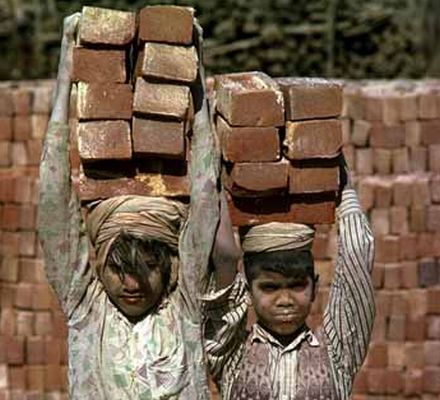
    Do you usually have a lot of chores to do at home when you return from school? Do you have to help cook supper, walk the dog, mow the lawn, or shovel the driveway? If you’re like most Canadians, you probably have to do at least some of that kind of work. You might even have a paid job like delivering flyers or babysitting after school. Does it ever feel that you have to work too much? Many children around the world have to do much more. That’s why people in many countries have been working to end child labour by the year 2016.

    When people talk about child labour, they don’t mean the times when parents tell their children to set the table for supper or to help wash the dishes. They mean work that prevents children from receiving an education or that damages their growth in any way. Sometimes the work even kills them. Young children sometimes work all day in factories or other unhealthy or dangerous places instead of going to school and getting an education.

    Canada has laws that require parents to send their children to school, and most people follow the rules. From the age of twelve, children are allowed to have jobs that don’t interfere with their education or harm them in other ways. In countries like Canada and the United States, rules about child labour usually work fairly well, although there are still many cases of children working long hours in dangerous conditions. Sometimes, the children even die on the job. The official estimate of child labour in wealthy countries is about one percent.

    In poorer countries, however, the situation is worse. Parents have many children to feed and often also have to support their own parents or other relatives. Even with long hours of work, parents might still not make enough money to survive. In some cases, they might not be able to find any work at all. They might need the income their children bring into the family. Also, sending children to school can often be too expensive for them to afford. The highest level of child labour is in Asia, where about sixty percent of children work.

    According to the International Labour Organization, in 2008 about 215 million children around the world had jobs which kept them from going to school or playing. That number was down slightly from 2004, but it actually increased among some groups of children. The problem will continue until people do something about the causes.

    How can you help solve the problem of child labour? You can encourage people in government to make better laws, but a more effective way to end the worst kinds of child labour is to get involved personally in helping the families. Even if the child labourers live in another country, you can donate money to help raise the family income or you can tell your friends and family about the issue. Every bit of help can make a difference!

  • Why Young Workers Fall Behind for a Decade or More

    Why Young Workers Fall Behind for a Decade or More

    Michelle Bucek thought she would be working full-time in her chosen career by now.

    The 24-year-old from Brantford, Ontario, who has a degree in radio and television broadcasting from Ryerson University, recently returned from a one-year stint teaching English in South Korea.

    She subscribes to five different job boards, checks social media, and sends out resumes for three to five postings each day.

    “Over the next couple of months I’m going to do some volunteering and work some retail on the side to keep money coming in, keep pushing, sending out applications, making myself known, hoping something will come through,” Bucek said.

    “A job you get straight out of university doesn’t really exist anymore, and I find that really frustrating.”

    That’s not the only thing at stake, experts say.

    When young people can’t break into the labour market, the risks range from social unrest to mass migration to a wage gap that can persist for a decade, or even longer.

    Long-term unemployment, defined as joblessness that persists for a year or more, can scar young workers for the rest of their lives, the Organization for Economic Co-operation and Development warned Tuesday.

    “It is imperative that governments use every possible means at their disposal to help jobseekers, especially young people, by removing barriers to job creation and investing in their education and skills. The young are at most risk of long-term damage to their careers and livelihoods,” said OECD Secretary-General Angel Gurría, presenting the report in Paris.

    Across OECD countries, those ages 15 to 24 years old had an average unemployment rate of 16.1 per cent in April. That’s just over two times the rate for workers of all ages.

    The U.S., in particular, has recorded an unprecedented increase in the share of long-term unemployed, from around 10 per cent in 2007, to around 30 per cent in the first quarter of 2012.

    “These worrying figures emphasize that a growing number of people, the young in particular, are becoming disconnected from labour markets,” Gurria said. “We need to avoid the risk of a lost generation by all means.”

    It’s not surprising that social unrest is taking hold in Greece, where youth unemployment is running as high as 50 per cent, said Charles Beach, economics professor at Queen’s University.

    Frustrated young men in particular, who are unable to find gainful employment, “tend to get worked up about things and they have a lot of time on their hands,” Beach said.

    Unemployed young people are missing out on opportunities to gain practical work experience to go along with their education. That combination is crucial for eventually moving up the career ladder.

    “If youth aren’t getting that labour market experience, that has a scarring effect which can last a long time,” Beach said.

    Multiply that by thousands of young people, and there are implications for the wider economy, Beach said. “In the economy as a whole, there’s less skill that’s built up. That will have a long-term negative impact on the collective knowledge base and GDP growth.”

    Individuals who have lower income and not as many opportunities may delay marriage and starting a family. Many young people decide to go abroad to find jobs.

    “They have no opportunities as they see it at home. They have to pay higher taxes, and it’s because of nothing they did. Why should they stick around and pay higher taxes on infrequent jobs?” Beach said.

    In Canada, the rate for unemployed youth stands at about 15 per cent, just over twice the national average of 7.2 per cent.

    Professor Philip Oreopoulos, associate professor of economics at the University of Toronto has studied the long-term consequences of youth unemployment.

    Entry level wages tend to be about 10 to 15 per cent lower for a new graduate who finds a job during a recession rather than an economic boom, he said.
    On average, the wage gap persists for about 10 years. But for some people, particularly those in low-paying positions, it never closes.

    The most effective way to close the wage gap is job-hopping, moving from smaller firms to larger ones that offer more opportunities.

    “The good jobs are not there in recessions but if you are patient and wait eventually they become available and if you can grab onto to them, the wages will catch up,” Oreopoulos said.

    But that will likely take longer in the aftermath of the Great Recession, he said.

    “To the extent that we are in a more prolonged recession and it’s taking longer for those good jobs to come back, that would imply a longer time period to catch up,” Oreopoulos said.