
Category: Advice

  • The Connection Between Physical Health and Mental Health

    The Connection Between Physical Health and Mental Health

    By Rabia Khan

    Human beings have a unique and complex system. Both mind and body and soul are interconnected. When one part goes downhill, everything else goes downhill too. What happens to the mind deeply affects your physical health in different ways. Though, men and women both seem to take on the toll differently. There is a strong connection between physical health and mental health that many are not aware of.

    How mental health affects your physical health

    As we share an intense connection between our mind and the body, it also tends to affect us by the way we feel.

    Poor sleep: Too much stress can hamper quality of life and take away all the peace! Your sleep is precious as it prepares you to fully function and wake up for a new day! If you skip a good sleep, it will most likely affect your physical health leading to fatigue, chills, headache, fever, etc.

    High blood pressure: Another proof of mental stress manifesting into physical stress unfolds when you experience your blood pressure bursting into flames and suddenly turns high. If the symptoms worsen overtime, you should seek medical attention as soon as possible.

    Stroke: Most often the connection of mental health and physical health is so strong that certain mental health disorders can cause havoc to the body. Too much stress can cause a heart or a brain stroke. That is why most health practitioners consider mindfulness and meditation good for the mind, body and soul.

    Premature aging: Nobody talks about the fact that increase of stress can lead to premature aging. Your hair would eventually start falling while you’re young, nails will turn brittle and skin will sag and start showing wrinkles. Internal stress easily wears off on your skin making it look old. It’s important to keep yourself hydrated at all times!

    Reproductive health: Many women face tremendous physical issues when they are stressed. One is the reproductive system, taking too much on yourself can lead to major health issues like PCOS, fibrosis, menstruation problems, etc.

    Digestive system: Remember keeping a calm mind leads to a calm internal system, when your mind is thinking too many intrusive thoughts, that alerts your digestive system and causes a weaker immunity functioning. Your physical health is most likely to get affected severely, inviting issues like diarrhea, stomach cramps, bloating, indigestion, constipation, etc. It’s a known fact that mental health disorders lead to poor eating habits.

    Here are some ways you can maintain mental and physical health:

    Meditate: In order to keep your physical health in best shape, your mind needs positive fuel. You can only achieve this by meditating and practicing mindfulness daily.

    Eat healthy: Eating healthy food contributes to a healthy mind and body, always be mindful of what you are eating! Remember, you are what you eat!

  • Post Covid World – Adjusting to Social Activities Again

    Post Covid World – Adjusting to Social Activities Again

    By Natasha Cooper

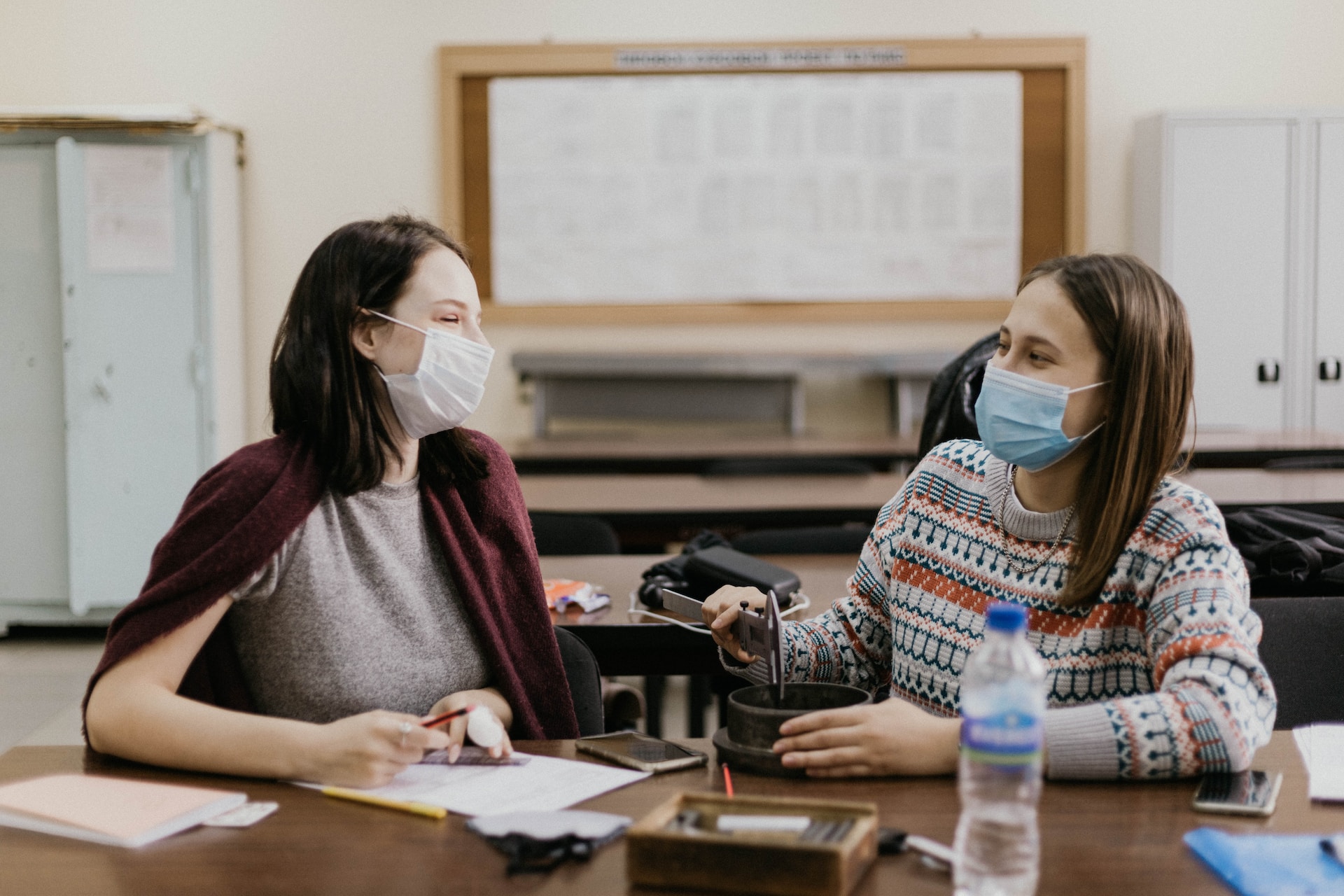
    It’s sometimes hard to think about the time, not that long ago, when it felt like the world was standing still.  In March of 2020, in a matter of a few short weeks practically everyone in the world would say goodbye to life as we knew it before the pandemic.  What might be even harder to recognize is the time lost, and the tremendous impact the Covid pandemic and isolation has had on many people.  Indeed, there’s mixed emotions about it all.  Many might not want to think about it and are grateful that they got through such a tumultuous time and are still healthy, when so many cannot say the same.  However, it is probably not a stretch to say that there are still many that cannot shake this lingering effect of the pandemic.

    Whether you were working, or in school, traveling, it does not matter; isolation protocols certainly had a profound impact on us all. On top of that, those who did experience having Covid would know all too well the fear that surrounded it.  Even if one was not too concerned about their own health, many were petrified of spreading the illness to perhaps loved ones who were more vulnerable to the illness.  While there is still much to be learned about the lingering effects of the Covid pandemic, both mental and physical studies are already suggesting that there are growing numbers of  people reporting an increase in their anxiety.

    Going back to work, or school, traveling again, or re-emerging into social life can be challenging for some right now. It should also be noted that returning to social life after Covid can be a varied experience for any person depending on their personality type.  While extroverts might be getting over how difficult the pandemic was for them, and the kind of effect that had, introverts might have thrived during isolation, and are now dealing with the stress of re-engaging in a social life.  Here are some things to keep in mind while adjusting to life back out in the world again post-pandemic.

    1. The pandemic was an entirely new experience for most people, do not feel alone in still not feeling normal or fully integrated back into social life
    2. It’s okay to take things slowly; this includes going back to social activities or being in big crowds etc.
    3. If possible, find ways of remaining flexible with your work, school, or social schedule. This might help ease some of the anxiety. If this is not possible, try and be creative in coming up with some other strategies to make this transition easier for yourself.
    4. Practice mindful breathing if you find yourself overwhelmed in a large crowd or social setting.  Mindful breathing exercises can generally be done almost anywhere at any time and have been proven to help improve overwhelming feelings of panic and stress.
    5. If at any time you feel like it is all too much and you might need help, reach out.  Phoning friends or reaching out to a professional is never something to be ashamed of, and there are many resources out there for struggling individuals.  Below are just a few.

    As we find the Covid pandemic finally in the rear view, remember we all went through this as a collective society.  A post-Covid world might be a frightening place, but it is filled with new possibilities and objectives to make this a safer, and hopefully more caring world.

  • Making the Most of University Networking Events

    Making the Most of University Networking Events

    By Avreet Jagdev

    Being a university student is a great opportunity, not only to learn, but to build strong connections and build your network. Networking means to build professional or academic connections with others in your industry and is useful for many reasons. Networking may help you find a professional mentor, connect you to your dream job, and can help propel your career goals.

    Universities often hold networking events in which you can connect with professionals from a particular industry, or with people who are alumni of your school. Going to these events is a great way to start building your network! Here are some steps you can take and things to keep in mind so that you can make the most of these events:

    1. Set goals for the event

    Before the event, reflect on what your goals are. What do you want out of the event? Is it to meet new people, find a long-term mentor, or improve your networking and confidence skills? Figuring out your goals beforehand will ensure you approach your event meaningfully and will help you get the most out of it.

    1. Research attendees in advance

    Sometimes, events may release information about key attendees in advance. If you have access to this information before the event, make sure to read through it! You might want to shortlist some people that you’re particularly interested in talking to and try to remember their names and what they do. This will help you walk into the event with intention, and approach conversations more confidently.

    1. Practice introducing yourself

    First impressions matter! Before the event, think about how you’ll want to introduce yourself. It’s a good idea to tell people your name, major, and what you’re interested in pursuing in the future. If you are nervous about introducing yourself, write down what you’d like to say and practice with a friend or with yourself in front of a mirror!

    1. Come up with open-ended questions

    Think of some questions that you are genuinely interested in the answers to, and instead of yes/no questions, come up with questions that are open-ended and encourage meaningful questions. For example, instead of asking someone if they like their field of work, ask what they like about it or what drew them to it.

    1. Show up prepared and as your best self

    Make sure you show up to the event prepared! Give yourself enough time to arrive at the event on time, and wear something that you feel comfortable and confident in! Some events will indicate dress codes beforehand, but if you’re unsure, business casual is always a safe bet.

    1. Be approachable and genuine

    Have open body language, smile, make eye contact, and approach others or join groups that look welcoming! Networking events are about making connections, and the most genuine ones will happen when you are approachable and being yourself. During conversations, make sure you are actively listening and contributing meaningfully.

    1. Collect business cards, contact info, or LinkedIn accounts!

    A key part of networking is staying in touch, so be sure to collect people’s information after you’ve talked to them! They may have business cards, or you can always ask for their email or to connect with them on LinkedIn.

    1. Follow up afterward

    If there is someone you particularly meeting, make sure to stay in touch after the event by following up with them! Send them an email or a message thanking them for their conversation, and opening yourself up to further conversation, or even a chat over coffee!

  • A Crisis in the Construction Industry: How Does This Job Shortage Benefit You?

    A Crisis in the Construction Industry: How Does This Job Shortage Benefit You?

    So many of us young people are facing an uncertain future: enormous debt, skyrocketing rent, job opportunities that are at best part-time purgatory or at worst one casual contract after another. Unlike previous generations, it may be years and years before we experience anything close to stable work with benefits and pensions.

    To all of you students unsure if your chosen major will yield a steady job after graduation, what if I told you, there is a field where the current labour shortage virtually guarantees you a job? To all of you juggling multiple part-time jobs, what if I told you, you could have one full-time permanent job? To all of you working in the gig economy, what if I told you, you could have a job with benefits and bonuses? Let me tell you about a field that will check all these boxes: the construction trade industry.

    The numbers do not lie. This year, Canada’s construction labour force has 1.4 million workers. This sounds like a lot, right? Unfortunately, even with over a million workers, the construction field currently has the second highest job vacancy rate in Canada.

    Moreover, in just nine more years, more than 20% of that 1.4 million group will be eligible to retire. The situation is even more critical in the Maritime provinces: 25% of the construction workers there are expected to retire in a decade.

    Increasing numbers of building projects is also a contributing factor to increased demand for construction professionals. Toronto, for example, has the more number of cranes on the entire continent. Who’s operating them?

    What all this translates to is: “The message is clear: if you want to work in construction, there’s a job out there for you,” as Chris Gardner, CEO of the Independent Contractors and Businesses Association of British Columbia, so succinctly puts it.

    This presents an amazing opportunity for you. The construction labour shortage is current and impending, which means if you start your apprenticeship (which is paid!) now, your job will still be in demand by the time you graduate as a journeyperson. This eliminates the pitfall of discovering your future job is no longer wanted after spending years on the necessary education. Ontario alone needs 170,000 construction workers over the next decade.

    At the beginning of your career, you may expect an annual salary of $37,500, but as you gain more experience and/or join a unionized job, you can expect to earn more than $60,000 a year plus benefits. Salaries go even higher if you specialize in a specific construction trade, such as glazing, pipefitting, and welding.

    If these incomes do not impress you, keep in mind that due to increasing demand and desperate employers, wages for general construction labourers are expected to increase 4.5% this year and again 5.1% in 2019. For more specialized construction tradespeople, wage hikes are even bigger: ironworkers will get a 7.7% increase this year. In addition, firms will want to offer more and better incentives to hire and keep talent.

    Stop dreaming of winning the lottery. If you are looking for job certainty and stability, look no further than the construction industry. The continuing labour shortage will mean you have no difficulty finding jobs—all across Canada! Think of the traveling opportunities! When you are inevitably faced with multiple job offers, you can have your pick of the best pay and benefits.

    References:

    1. https://www.equipmentjournal.com/construction-news/canada-faces-construction-labour-crunch/
    2. https://www.huffingtonpost.ca/2018/03/13/labour-shortage-canada-job-vacancies_a_23384818/
    3. https://www.huffingtonpost.ca/2018/02/05/these-are-the-most-in-demand-jobs-in-canada-in-2018-according-to-randstad_a_23353385/?utm_campaign=canada_dau
    4. https://www.immigration.ca/severe-shortages-in-the-2018-canadian-labour-market/
    5. https://www.cbc.ca/news/canada/british-columbia/bc-construction-industry-survey-1.4535411
    6. https://globalnews.ca/news/4161338/canada-labour-shortage-job-vacancies/
    7. https://www.randstad.ca/construction-jobs/
    8. http://www.careersinconstruction.ca/en/careers/getting-started/apprenticeships
    9. https://globalnews.ca/news/4027263/b-c-construction-jobs-offer-entry-wages-up-to-27-31-hour-and-theyre-growing-survey/

    https://globalnews.ca/news/4027263/b-c-construction-jobs-offer-entry-wages-up-to-27-31-hour-and-theyre-growing-survey/

  • Leaping into the Post-Secondary Unknown

    Leaping into the Post-Secondary Unknown

    Whether your first day of college or university is looming, or you are deep within the trenches of your first year, remember this universal truth: It is scary for everyone. Yes, the reasons for this differ, including social anxiety, increased workload, and more adult-like responsibilities. Yes, some people will overcome their nervousness quicker than you will. For others, such as me and my own social anxiety and depression, university remains a challenge all the way to graduation. But with great challenges also come great opportunities, and focusing on the latter is the key to quelling those first-year jitters.

    If your first classes are still on the horizon, it is a good idea to visit the campus as much as possible to take it all in. There will be far more students than your high school, varying in ages, and all going about in different directions. All you need to do for your first steps on the school grounds is absorb this environment. The only way past that initial shock is to dive right in, and that is much easier to do if you do not have to rush to class. Student orientations are invaluable, but so is a simple walk about campus.

    I had an awful, confusing, lonely first semester. Yours may be occurring many kilometers from home, far from family and friends, with swirling thoughts of life for the next four years and beyond. You do not have to get comfortable, make friends, and figure things out right away. If anything, that period of confusion allows for introspection that will help you figure out who you are and what actions to take. This is the perfect chance to take baby steps and try different things – new groups, friends, study areas, activities, and more. It is so essential that you try, try, and try.

    Start slow and commit to one or two of the following, and then gradually ramp up to more. Hang out in the cafeteria or common room by your dorm. Go to all the society and group meetings you can find at least once. Join every group that catches your eye. You will likely regularly attend only a fraction of all these, but you can only find the ones that click for you by giving as many as you can a try. Having trouble with schoolwork? Make appointments with your professors, teaching assistants, and counsellors. Socially anxious? Join online groups and Facebook pages for your school. Check out small parties and events; commit yourself to at least half an hour for each and only stay beyond that if you are comfortable.

    The freedom of post-secondary life is at once liberating and terrifying for everyone. High school, for all of its milestones, is much closer to elementary life than colleges and universities. For many, they are a sudden thrust into adulthood, and the jolt is overwhelming. But it was your hard work and skills that earned you a place on campus. These same efforts and strengths can propel you into the wonderful opportunities that await and will help shape the adult you are becoming. Take a deep breath, take your time, and do not be afraid to be afraid.

    Sources:

    Rennison, Joe. “My first day: student accounts of their first moments at university.” National Union of Students. https://www.nus.org.uk/en/advice/freshers-and-settling-in/my-first-day-student-accounts-of-their-first-moments-at-university/

    Webster, Lucy. “Nervous freshers: don’t be scared. University has something for everyone.” The Guardian. https://www.theguardian.com/commentisfree/2015/sep/07/nervous-freshers-university-shy

  • Pathways Health Centre for Children: Help for People in Need

    Pathways Health Centre for Children: Help for People in Need

    http://dev.pathwayscentre.org/page/community

    Some websites are destinations in themselves, but others are paths to something else. That’s what the Pathways Health Centre for Children website is: a guide to other resources that people can use when they are in need. If you or someone you know is looking for information on where to find resources for dealing with certain health or developmental issues, this website might be a good place to start.

    Suppose that someone needed access to a children’s hospital or medical services for someone in bad health. The Pathways site has information on all kinds of topics like these. Both the physical and emotional aspects of health are covered on the site, and the focus is on both children and their families.

    Research is the focus of the website, with information on the best treatment and most useful resources. Two of the aspects that the website covers are people who are medically fragile and also a faith-based site called Christian Horizons, which also serves people who have developmental issues. Others deal with treatment centres and other resources, but they all have useful information for people with a variety of needs. Although the organization is based in Sarnia, Ontario, the website includes useful information for people living in other parts of the province.

    Besides the links to various organizations, the website includes information on programs and services available at Pathways, as well as information on the organization and how people can support it, both financially and otherwise. News and events listed at the side of the page give people the chance to learn about arts events, summer programs, and more. Even if the programs themselves are not what you and your family need, something like an art tour or summer camp for children could be a good option.

    Life can be difficult, even without the challenges of a disability in the family. The Pathways Health Centre for Children website attempts to deal with some of these issues by providing information about available programs and services. The website is quite easy to navigate. A history of the organization helps to give a context for the organization, and other information gives useful background information.

    No website can give all possible information for every situation, but the Pathways site does a good job of giving as much information as possible without being cluttered. For people in the Sarnia area and other parts of Ontario, the Pathways site is a good place to check.

  • Pros and Cons of Living in Dorms

    Pros and Cons of Living in Dorms

    Living in a dorm is the cornerstone of a stereotypical post-secondary experience. You can’t watch a movie or show about university without seeing dorms. But media often glosses over the less savoury part of living in dorms, and doesn’t capture the real fun of it. Here are a few real pros and cons about living in dorms.

    Pros

    One of the biggest pros for living in a dorm is the cost. Typically, living in a dorm is much less expensive than living off-campus, especially in high population areas like cities. Also, most of the time you get a meal plan included with the cost, so you don’t have to worry about shopping for groceries and cooking your own meals every day.

    Another great thing about living in dorms is the people you meet. Being in dorms is a great way to make new friends, and introduces you to people that you may want to move out with once your time in the dorms are up. Just don’t be shy! Everyone there is in the same boat as you. The social environment of living in a setting like dorms is very relaxed and fun (albeit distracting at times) and can provide you with an easy way to unwind after writing a stressful paper. There is a sense of community among your flatmates, and having friends that can help you push through some of the harder stretches can be a real blessing.

    Cons

    While the social environment of dorms is immersive and fun, it also doesn’t leave room for a lot of privacy. In most dorms, there is a good chance that you will be sharing a room with at least one other person as well as sharing a bathroom with your floor. Don’t let that put you off too much, though. Male and female bathrooms are still almost always separated, and university/college schedules are so non-uniform that there’s a good chance that your morning routine will still stay private. Another con is that even if you don’t like your roommate or someone on the floor, you’re stuck with that person for the rest of your stay, and you’re probably going to see them a lot, too. Finally, although the social atmosphere is fun, it can get to be distracting. The constant partying isn’t great if you’re trying to wake up for an early class, and it can be distracting if you are trying to get work done.

    Living in a dorm is a really solid idea, especially for first year. Meeting people in your first year can be hard, but if you live in a dorm you should have no trouble making friends. More than just the social aspect, though, is the sense of community with your floor mates. It’s really a unique feeling, and I would highly recommend spending at least a year in a dorm, even just for the experience.

  • Perfecting the Art of the Job Interview

    Perfecting the Art of the Job Interview

    Ah, the job search. Endless applications, emailing resumes…it seems like a never-ending process! However, scoring an interview is just a matter of time and being patient. When you finally do get the call to come in for an interview, you need to be prepared – often you will be called in on short notice.

    And who am I to give advice you ask? Well, I am currently a recruiter for a marketing company and have done full-cycle recruitment for various companies. You’d be surprised at the strange things I hear when I am interviewing potential candidates! Based on this experience, I want to offer you some of my interview “do’s and don’ts”.

    Don’t # 1:
    The most common mistake I find in job interviews is candidates mentioning that they applied to so many jobs that they don’t remember applying to this one. As a recruiter, the first question I usually ask is, “Have you heard of our company before?” Saying that you haven’t because you have applied to so many jobs shows me that you don’t really care about this position, so why should I even continue the interview? By then I’m already turned off.
    Do:
    Do your research! I can’t emphasize this enough. It’s so important and requires little time. There’s really no excuse not to. It’s a matter of Googling a company name and just remembering at least three points about the company that you can talk about. Doing your research will ensure that you appear knowledgeable and it shows that you are actually interested in the position and being a part of the company. In addition, keep track of all the jobs that you apply to. That way, you can easily refer to it when an employer calls you.

    Don’t # 2:
    Don’t be too honest. I’m not saying you should lie in your job interview, but when I ask a candidate, “Why are you interested in this position?” don’t reply back saying that you just need a job, you need to support your family, you need to pay your way through school. This is too much information and shows me as an employer that you are just interested in making money and not interested in the job itself.
    Do:
    So how should you answer that question? Start by explaining why you want that position. Maybe it fits your skill set, you feel you can excel in the job environment, you can hone your sales skills, etc. Name anything that tells me why I should hire you and why you would be good fit for the company. Remember you are trying to sell yourself and trying to show the employer that you are actually interested in the position.

    Don’t #3:
    Don’t dress casually. Jeans, t-shirts and running shoes are definite no-no’s. You are not going for a walk in the park, it’s a job interview! So take it seriously. First impressions are everything and dressing casually shows that you don’t care about this position and, as an employer, I wouldn’t want you to represent my company.
    Do:
    Dress professionally. Suit and tie for men, blazers and business pants for women. Image is everything and an appropriate business look shows that you would be a great representative of the company. Most importantly, you will be taken seriously.

    My final tip: Be patient. You applied to a job and are now waiting for a call from the employer. Do not call the employer that same day to follow-up. In fact, some employers do not like phone calls at all. Be mindful of the fact that employers are very busy – think about how many resumes they receive in one day. There are many people out there in the same boat as you who are looking for work, so patience is key. Consider sending a follow-up email within a week to see if the position has been filled.

    These are only a few do’s and don’ts for job interviewing. Remember, sometimes it’s just a matter of practice. The more you go to interviews, the more comfortable you get. In a matter of time, you will perfect the art of the job interview. I wish you the best of luck! Happy interviewing!

  • The Bullying Dilemma

    The Bullying Dilemma

    Modern technology has brought about an advent of problems never faced by children of previous generations. From screens constantly in faces to the frenzying world of social media, your parents did not deal with anything like these issues at your age. Nevertheless, there are always problems so inherently human that they transcend generations. Bullying is one such dilemma. It may occur in new methods, such as texts or messages, but the crux of the quandary remains very much the same.

    As an elementary student, I was the stereotypical nerd in many ways. I encountered bullying in the schoolyard that ranged from name calling to brief physical altercations. My parents enrolled me in taekwondo lessons to simultaneously provide exercise and self-defence teachings. As an adult, I have attended karate classes with a similar two-pronged goal in mind. Very early on, the sensei imparts valuable advice to new students: If you ever end up in a real fight outside of the dojo, you have most likely failed the class. We were taught that nearly all physical altercations are avoidable. The lessons are counter-intuitive but invaluable; the point of learning karate moves is not to employ them in battle, but to gain the self-confidence and assurance that will allow you not have to use them at all.

    Confidence in lieu of fists is the ultimate self-defence tactic. Projecting positivity and assertiveness starts with effective body language. This includes a straight back, holding your head up, and walking peacefully. For some, this comes naturally. For many others, it needs to be learned through awareness of how you project yourself and how you are feeling in the moment. It takes practice, but it is very much doable.

    This self-confidence helps you gain alertness of your surroundings. You can better detect a negative situation before it escalates. You will be better aware of how to exit a situation – such as where the doors are – and the signs that tempers are flaring and that the exit will be needed. You will also be more prepared to draw attention to someone becoming belligerent, whether that might mean turning to peers or nearby adults.

    There are never any guarantees that this will always work. If you have been a bullying victim, it is important to remember you are far from alone. Finding friends you can relate to and connect with ensures you have a group to support one another. Bullying is usually targeted towards individuals as opposed to groups. Speak up when you notice certain students being excluded from activities or groups. By taking focus away from the bullies and directing that energy towards people that can provide support and be supported, you are taking steps to help solve the issue for yourself and others.

    There is no easy answer to the bullying dilemma. It has always been a part of the human condition and will likely remain so. Even adults deal with it in its different forms. Just like everyone else, bullies have their own difficulties and reasons that have resulted in their behaviour. You may not be able to fix that, but you can take action by starting with yourself. Gaining confidence, seeking support from others, and providing that support yourself are the ultimate forms of self-defence.

    Sources:

    Gordon, Sherri. “9 Self-Defense Strategies Kids Can Use Against Bullies.” Verywell. https://www.verywell.com/how-kids-can-defend-themselves-against-bullies-460789

    Van Der Zande, Irene. “Face Bullying With Confidence: Eight Kidpower Skills We Can Use Right Away.” Kidpower. https://www.kidpower.org/library/article/prevent-bullying/

  • Majors and Minors: How Do I Choose What is Right for Me?

    Majors and Minors: How Do I Choose What is Right for Me?

    Choosing your undergraduate major can feel like a major decision. Majors and minors are programs of study that determine what courses you will take during your four years of university. For example, a student majoring in astronomy would be required to take a certain number of courses (both introductory and upper-level) in this field and ultimately, he or she will graduate with a Bachelor’s degree in astronomy.

    On the other hand, a student wishing to complete a minor in astronomy will take only a few courses in astronomy. Another crucial difference is that you must declare a major while minors are optional. This statement comes with an asterisk though: different schools will have different rules. For example, University of Toronto undergraduates must be enrolled in either two majors or one major and two minors.

    I would be doing you a disservice if I did not mention that the University of Toronto offers a third program option called specialists. This is like a more specialized major. The chart below indicates how many credits a student needs in order to fulfill each type of program. (A credit is earned after passing a course, but note that some courses earn you one full credit while others earn you half a credit.) As you can see, enrolling in a specialist program in astronomy means that over half of all your courses will be in astronomy.

    Minor Major Specialist Number of credits needed to graduate
    4.0 credits 6.0 to 8.5 credits 9.0 to 16.0 credits 20.0


    Now that you have a better of idea of what majors and minors are, the next question is naturally how to choose. Here are some things to keep in mind:

    1. Start with your interests and strengths.

    The first thing you should do is read through the list of undergraduate fields of study, from A to Z. Make sure to read through the program descriptions. The goal of this step is to create a long-list of possibilities based on your interests and strengths. If the list is really long, divide this list into two lists: subjects you are passionately interested in and subjects that you have a more passing interest in.

    1. Familiarize yourself with your school’s selection instructions.

    Not every field of study will be offered as a major or minor (or specialist). Some subjects are only offered as a specialist, while others may only be offered as a minor. For every subject on your list above, indicate if they are offered as a major, a minor, and/or a specialist. A subject you are really interested in, you will probably want to major in it.

    Prerequisites are something else to research. Do not assume there are none. If you are interested in a particularly competitive major, you may even be required to complete an application. This is something you need to take into consideration, and it is naturally a good idea to have back-up choices for your major.

    1. Consider what you will do with your major after graduation.

    This is a really complex issue. Because the workplace now may be quite different in four years when you graduate, it is difficult to say that a certain major will lead to a more promising career than another. It definitely helps to speak to third- and fourth-year students in a major you’re interested in—ask them what they feel their job prospects are like.

    Or you may be considering graduate studies after your undergraduate degree, so you’re not immediately heading into the workplace. When selecting your major, you may want to meet with an academic advisor or mentor. These individuals have a wealth of experience and expertise in these matters.

    Choosing your major is not an easy task. For some students, the choice is easy; for others, you can be stressing over this for months. The good news is that nothing is set in stone, you can change your major later. Also remember that you can probably double-major, so if you’re agonizing between computer science and zoology, why not major in both?

    References:

    1. https://www.utm.utoronto.ca/registrar/academic-support/how-choose-minor-major-or-specialist-subject-post
    2. https://www.washington.edu/uaa/advising/academic-planning/majors-and-minors/choosing-a-major/