
Category: Campus Life

  • The First-Year Flop

    The First-Year Flop

    With the first few weeks of September gone by, college and university students all over the country are getting into the swing of being back on campus.

    For first-year students this is a time to mispronounce your professors name, accidentally sit in on the wrong class, order a tea but get a coffee, and miss your bus to that one class that you promised yourself you would attend no matter what. Beyond that, there is one terrible truth looming over most students that they are blissfully unaware of; the first-year flop.

    Every year students come out of high school with enormous averages, expecting the trend to continue into university without a hitch. For most, September and October are a brisk reality check and a time to realize that you can’t get your mom to write you a note explaining why your first paper is late. If you wrote essays and scored in the 90s back in high school, you can almost guarantee that you won’t see that in your first year. The university grading level is an incredible change from high school, and first year is your bumpy transition into the upper echelon of academia.

    So what does all this mean? Well, prepare to be disappointed. Very few students excel in their first year as they did in high school, and it’s nothing personal. If you talk to any university professor or upper-year student, I would guarantee that they stumbled somewhere along the line when they first arrived at college or university. It happens, and it’s nothing to be afraid of!

    You are in a prime position to learn a lesson from this experience. If you receive a poor grade, go talk to your professor. See your TA, find out where you went wrong, and more importantly, how to fix it. And if it happens again, don’t sweat it. First year is meant for students to gain a foothold. As long as you can keep your grades high enough to enter your program of choice, in all reality, your grades from this year won’t matter too much in the long haul.

    If you’re still sweating it, there is one other thing you should know. For university students, most masters programs only look at your average over the last two or three years of study. If you think I’m getting too far ahead of myself, I’m not (I promise!). You should try to be as aware of your academic path as possible, even while you’re in first year. If you think you may have even the smallest interest in pursuing a masters degree, find out what they’ll be asking of you. While it’s 3 or 4 years off, you’ll be at ease if you can confirm that they don’t care about your first year grades. This isn’t an invitation to slack off because you’ll still need a solid average to get into an honours program if that’s what you’re aiming for, but it’ll definitely ease the tension after your first calculus exam comes back with a 68% instead of an 86%.

    If you can study hard, ask questions, and meet your deadlines, you’ll be ahead of the game throughout college or university. Meet with your professors and TAs, and your grades shouldn’t dip too much!

  • The Dorm: Your Home Away from Home

    The Dorm: Your Home Away from Home

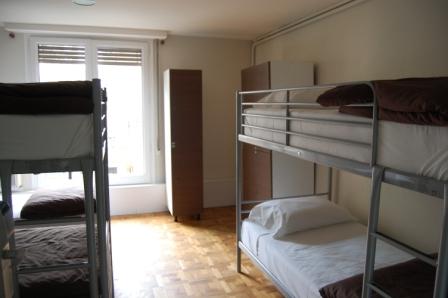
    Almost every university or college has dorms for students to live in while going to school. Dorms come in all shapes and sizes with unique characteristics just like the people who live in them every year. Depending on your school, you probably had/have to fill out a questionnaire type sheet asking you things like your interests, how much time you expect to spend studying, whether you prefer quiet all the time or are comfortable with noise, etc. These sheets are the university version of eHarmony for roommates; based on your answers the school will match you up with someone they think will be a suitable roommate for you for the year. Sometimes it works brilliantly, and other times it might feel like there’ve been a few snags. Before you start panicking though, remember that your on-campus experience is going to be what YOU make of it!

    Here is a quick guideline to two styles of the university/college room:

    The double:

    The room houses two people of the same sex (I’ve never heard of any college or university in Ontario or even Canada having co-ed rooms). Your first day in the room with your new roommate might be an awkward dance of deciding territory – I’ve heard of people putting a line of tape down the middle of the room – or it could be the start of a brilliant bonding experience with your new roommate. As long as you don’t have any gross hygiene habits (you really should try making sure that your dirty underwear makes it to the hamper and not over by the stack of comics that your roommate worships) and don’t hang up any scary posters (it might be nice to ask your roommate what they think of Marilyn Manson before plastering him all over the room) then you should be on your way to beginning a healthy roommate relationship.

    The single:

    A room all to yourself – home sweet home! During my first year at Brock University, I lived in a single room in a five-floor building. The rooms were big enough to be comfortable and despite the concrete block walls, my floor mates and I managed to make our rooms fun and even visitor-friendly. Each person shared a bathroom with one other individual. The bathrooms connected two rooms and if you left both doors to the bathroom open, you and your “broomie” could walk back and forth between your rooms. This was especially handy during long night study sessions or hall parties (with 51 students on each floor of the building, it was pretty tough to jam them all in one room so sometimes a bunch of rooms would be open and your floor friends could wander between them and socialize.)

    The dorm is your home away from home, so be excited! Once you get over your first-year jitters, you’ll probably love on-campus college/university life. Check back for more campus life tips and guides in the future!

  • Show Me the MONEY!

    Show Me the MONEY!

    SHOW ME THE MONEY!

    During your first year of post-secondary education, you might feel like you have a chorus of administrators telling you to SHOW ME THE MONEY! This is probably the least awesome part of your university/college experience but don’t lose hope! You can pay for your education and still have some dough left over if you manage your money.

    There are some great resources for student loans and scholarships that you can check out later but for now, I’m going to share the best money-managing tip that’s saved me some mulahs over four years of university.

    Some students may want to work during their first year, while some might prefer having more time to focus on their studies and soak up the university/college atmosphere. Either way, you’re going to want to have some extra cash handy to buy food, clothes, videogames, hovercrafts, etc. The best way to make sure you’re not broke by October 1st is to…
    (more…)

  • Healthy Eating On Campus

    jobs people do

    Healthy eating is a great way to

    • Have energy all day long
    • Get the vitamins and minerals your body needs
    • Stay strong for sports or other activities
    • Reach your maximum height (if you are still growing)
    • Maintain a healthy weight
    • Prevent unhealthy eating habits, like skipping meals and feeling overly hungry at the next meal
  • Living Off Campus

    Finally you have a shower and bathroom that’s your own, or shared with only a few. You can do in your room whatever you want as loudly or quietly as you want to. You have a lot more personal freedom (and personal peace and quiet) than your friends do back on the campus. You can buy your own groceries, which means you can enjoy some good home cooking

    Be Picky About Your Housemates
    If you’re looking for housemates, look carefully. Don’t assume everyone is honest or fair on the first glance. Make sure you know everyone well, and if you don’t, get references. New roomies shouldn’t care about you asking for references and if they do, think twice!
    Look for someone with a history of being responsible. When the rent comes due, you need someone you can trust to pay up, regularly and on time.  In most cases you will have to sign an agreement with the landlord that says if someone doesn’t pay, you will all have to be responsible for the money your housemate owes.  They may even call your parents to share in this money owed to them.
    Also look for someone who shares your ideas of quietness and neatness or living arrangements in general. Slobs need to live with slobs, and people who like to play heavy rock at midnight need to find roomies who enjoy rock at midnight. (Although, I don’t know when they study)
    If you’re a neat freak, look for another neat person. Otherwise you’re asking for constant conflict with someone who doesn’t mind the smell of beer-soaked carpet, or crusty dirty dishes on the coffee table.
    Before you move in, talk about how you feel about overnight guests, drug and alcohol use and late-night parties. Talk all this stuff out in the beginning, so everybody knows what the house rules are
    Enjoy and have fun!
    Sean,
    Prince Edward Island