Category: College Bound

  • What to Do With a Gap Year

    What to Do With a Gap Year

    A gap year is an idea that many may brush off, may overlook, or may not take seriously. Gap years are often thought of as a ‘fallback’ or an alternative if your initial plans fall through. But it can be so much more than that.

    Taking a year off can let you revitalize and focus you. It allows an opportunity for you to grow outside of the school environment and provide a fresh outlook on what you want to do, what is important to you and how you want to continue your studies.

    You won’t be bored, I promise you. There are countless options for how to spend your year. Some may be more practical than others, but they all will (hopefully) help influence your upcoming decisions concerning what it is you want to do.

    Taking more classes is a common option. Working for those extra credits can give you the opportunity to explore those courses you never had the time for before. Maybe you’ve always had a passion for literature? You could try some offbeat English courses. Film? How about a “History of Western Filmmaking”? Taking additional courses allows the opportunity to boost your average and explore some alternative new fields.

    Then again, education is expensive. Working could be a good idea. You could work full-time or part-time either working as a barista or something totally unique. Your choice. Regardless, experiencing the workforce can be a positive and eye-opening experience and a little extra cash never hurt anyone.

    Maybe you want to see the world before heading back to the library? Traveling is an unforgettable experience. It is one that can broaden your mind, allow you to grow as an individual all while putting a good dent in the money you saved up working for the better part of your year off.

    Each can of course be inclusive of the others and each offers the opportunity to learn new skills, learn about yourself, network and hopefully help you decide which path you want to take or any changes you may want (or not want) to make to the one you’re already on.

    Your education is not a race. It’s your life. The decisions you make and route you choose will make a huge impact on your future so be sure to take your time and make the right decisions. Some people dismiss the idea of a gap year as a ‘wasted‘ or ‘lost‘ year but if you do it right and make the most of it taking a year off can be an extremely rewarding and eye-opening experience. You won’t regret it!

  • The Benefits of Living at Home

    The Benefits of Living at Home

    If you have the opportunity to live at home during school, I strongly suggest that you take up the offer. Even though Hollywood portrays moving away to attend post-secondary as glamourous, the reality is far too often ignored; and those that once held this romanticized view are shocked when they discover how tough it is to live on your own. The benefits of living at home greatly outweigh the cons.

    The big factor for students is finances. Living away from home during school comes with a cost, and unfortunately it is a rather large one. Tuition already costs a bundle, so why add the extra burden of finding the money to pay for living on your own, when you don’t have to? Of course there are certain things that you would still need to pay for (i.e. transportation, food… etc), but in comparison to paying for rent and utilities amongst other things the cost of living at home is miniscule. In the end, more money would go towards school, and you would have less chance of going into debt.

    Many students that live on campus are there for the social aspect. A former student, that had lived on campus, advises “Whether you are into partying or not, studying in your dorm is a challenge.” Although I live at home, I have observed students come to class tired or constantly late, or skip/drop-out of classes, because of the “freedom” living away from home grants them. Is this really freedom? Falling behind in school due to partying is being disrespectful to yourself, and those who support your decision to go to school. Time and money are both wasted when this breach of freedom takes place. Living at home allows you the privacy to properly study, and get a good night’s rest, so you can do well in school. You can still hang out with friends, and have fun, but a healthy balance must be obtained and living at home gives you this opportunity.

    Support from your family is another huge benefit of living at home. They are there to encourage you when you are down, advise you when troubled or confused, and rejoice with you in your times of joy. Even though you may get annoyed by being nagged to study, your parents only want the best for you and want you to succeed; if they didn’t care then they would not be “nagging” you.

    As you can tell, there are many benefits of living at home. I have only outlined a few, but as you continue your journey through post-secondary you will uncover other little things along the way, such as home cooked meals that are hard to come by when living on campus.

  • The Truth About Buying Textbooks

    The Truth About Buying Textbooks

    Can you really put a price on knowledge? College and universities seem to think so.

    Textbook prices in post-secondary institution are climbing everyday. Ironically students learn to think outside of the box and fight injustices such as unnecessarily high textbook costs. While there are viable reasons for Canadian textbook prices to continue to soar, they conflict with current ethic and socio-cultural teachings that encourage students to take a stand against price inflation.

    A Canadian entering post-secondary education can expect to spend between $100 and $1000 on textbooks per year. Typically, math and science students will garner the highest costs, while arts students are paying the least. Regardless of your program, textbook costs are far too high for the quality and quantity of material being provided.

    While students would be better to purchase books online, courses often have required materials that demand textbooks unavailable by any source outside of the school’s bookstore. By disabling students from purchasing online, colleges and universities are holding a monopoly on textbook orders, guaranteeing themselves revenue.

    Maclean’s magazine recently ran an exposé on the Canadian textbook distribution system that reveals why they are so expensive. Unbeknownst to most, a relatively obscure set of provisions to the Copyright Act (1999) known as “book import regulations” is responsible for raising the cost of textbooks by as much as 15 per cent. Maclean’s explains that it gives exclusive rights to Canadian publishers to monopolize textbook sales to Canadian schools, calling it “a form of cultural protection.”

    The Canadian Alliance of Student Associations (CASA) placed the estimated cost of protecting these publishers through the Copyright Act at approximately $30 million a year. $30 million of Canadian students’ money!

    Maclean’s notes that this “private tariff” on books involves no accountability for how publishers use the extra funds. “This money is going to, generally speaking, foreign-owned distributors. They’re collecting it, the author doesn’t get it, the Canadian taxpayer doesn’t get it, and it’s coming out of the pockets of our students.” So there’s the dilemma.

    Is it right to support the Copyright Act in its efforts to preserve and protect Canadian writers and publishers? Is it better to purchase our own books from distributors outside of Canada and be more financially stable? Do we even have a choice?

    CASA is lobbying federal government for a change to the provisions, and until those happen there are a few things you can do to lessen the financial strain of buying textbooks.

    Always look for used books first from a bookstore that’s not officially affiliated with your school, that’s where the best deals can be found. Ask around campus for anyone selling old textbooks and advertise when you’d like to sell yours. If you can read assigned literature right off your computer, do it. Don’t purchase something you can access online option. Be vocal about your textbook price opinions, because awareness on the issues surrounding CASA’s efforts and the Copyright Act may cause the way books are distributed to make as much sense as the priceless material found inside them.

  • Where, When, and Which Class?: A Course Scheduling Guide

    Where, When, and Which Class?: A Course Scheduling Guide

    If you are like many first year students, you have a vague idea of what courses you want to take in college or university. If you liked biology in high school, chances are “Biology 1000” will catch your eye as you browse through the course calendar. Of course, the first thing that should guide your decisions is your interests. For example, if the thought of reading War and Peace is taxing to you, steer clear of Advanced English Lit. But besides what you do and don’t like, how do you decide what courses should fill your schedule?

    The first thing to look at when creating your schedule is your program requirements. The faculty will dictate which courses you must take in first year to be eligible to continue in your program. For some programs, you may only have one mandatory course, or you may have five. To find out what you need to take for your program, look at the academic calendar for your school, usually available both in print and online. Or, go to the faculty page on your school’s website and select your program. Failing that, you can always call in to student services, where a representative will put you in contact with someone from your faculty.

    Once you’re aware of your program requirements, you can decide what to do with your electives. These classes can be anything, and should be guided by your interests and your skills. If the number of choices seems overwhelming, or you’re just plain good at everything, try choosing electives based on their time slots. After scheduling your mandatory classes, you’ll have some space left over. You can then see what electives would fit into the time slots you have, which will help narrow down your selection.

    When it comes to scheduling, lock down your mandatory classes first. Since all the students in your program have to take them, there will likely be some variety in times and professors. Then, put electives where you see fit. If they conflict, take a mandatory class over an elective; you can take an elective any time during your schooling career, but mandatory courses are often prerequisites for upper year classes. If a course you need, or just really want, to take is eluding you, remember that you can take some classes in the summer (sometimes at a different university) or online.

    You won’t always have a say in the timing of your courses, but when you can make decisions, be honest with yourself. If you can’t wake up before noon in the summer, you will have trouble with an 8:30 AM class. With all the freedom that post-secondary classes offer, you’ll be more likely to sleep in and miss class.

    When faced with the daunting task of scheduling your own classes, its easy to lose sight of what an awesome opportunity it is. For the first time, you have complete control over your schedule. When, where, and what courses you take are entirely up to you! Keep that in mind while you choose your classes, and you’ll be sure to come out with a great semester.

  • First Year University Woes

    First Year University Woes

    With August now here and September right around the corner, those of you in your first year of University may be feeling a little nervous. I do not blame you! I was in the same position a few years ago. After taking time off to figure out what I wanted to study I was ready to hit the books again… or so I thought!

    I registered with zeal and could not wait to re enter the world of notebooks, pencils, pens and knowledge! I bought all my books right away, stocked up on school supplies and RSVP’d for Orientation. Yes—I was ready!

    Finally September came and I entered the classroom with dozens of other nervous first years. It was hot, very hot. Maybe it was just my nerves. For the first time I doubted myself. Maybe I was not ready for this yet! What if it was too soon? I had only just begun tasting the world and all it had to offer. Was I ready to give it up for a desk and a textbook? Was I ready to learn rather than explore?

    As it turns out, I was not ready. In fact, I lasted about two weeks in University before I called it quits for the year. I felt like a failure. My friends did not understand. I did not understand! How did this go so wrong?

    I do not write this to scare you. In fact, I am now in my fourth year of University and I love it! I also am not writing this to convince you to leave University- quite the opposite. I wanted to write about how to survive your first year because I had such a tough time with it, and clearly did not make it. But my second pass at “first” year went much better. I’m writing this with the hope that you will learn from my experience and be more aware of what is ahead of you.

    In retrospect, here are a few things I wish I knew:

    1. Do not buy all your books before you start classes! Often, you will change your mind and realize another class may be a better fit. You don’t want the book you purchased to become a paperweight. If you go to the first one or two and think you will stick with it, then go purchase that textbook. Or even better, purchase an e-book if possible! If you do end up with an unnecessary book though, do not panic. Try selling it at the used bookstore and recouping some of your money. Or if you need to feel prepared, just check your bookstore’s return policy. Often if the book is unused they will refund you within an allotted amount of time! Just be prepared to lineup!

    2. You are not a failure if you have to drop a course, or two. It seemed like the end of the world when I dropped my first course. The reality is, it is not! In fact it is more important that you take on what you can handle in your first year of University. You can always make up courses in spring or summer sessions at school. Don’t sweat a few credits. The extra time you have to focus on your other classes will serve you more in the long run.

    3. Be on time. I know that they do not take attendance in several university classes, but out of respect to your professor and classmates, arrive on time. It is quite distracting when you arrive late, especially in the winter months when you have a large coat, and a backpack. That coat seems even puffier and the zipper seems more obnoxious when you are late. However, we all run a bit late sometimes, just try not to make it a habit.

    4. If you are one of the first few people on the waitlist, go to the first class! I did not do this my first year, and because of that am a year behind in my major. I was on the waitlist but thought that meant I was out. What I learned is that the first class they usually ask who is on the waitlist and they will talk to you after class. If they have enough spots for people in the classroom, sometimes they will expand their class list to let you in. I say sometimes because they do not have to. One of my classes this past year, the waitlist students took attendance every class and after about two weeks, those who had come every class were admitted in. It never hurts to try.

    5. If you decide that University is not for you this year that is ok too. I’ve already admitted to leaving University my first attempt at it. You may feel the same way- all the excitement may fizzle and you might realize that this is not what you thought it would be. Do not quit right away though. Look at the rest of your life. Are you working towards your career aspirations and it is harder than you thought? Do you just dislike homework? Are you missing your friends? Then I would suggest that you persevere. It does get easier as you get used to it. The homework becomes more manageable as you acquire time management skills and you will make friends as time passes.

    However, if you really feel lost, or your friends and family notice a change in you (and not for the better) consider if University is the correct next step. Talk to the guidance counselors they have at school or to your family and friends. In my circumstance all it took was a second year off to focus my career path. I needed to know what I was trying to achieve so that I was motivated to work hard. Once I figured that out, school has been so much easier. Sometimes working can really highlight what we love and which careers we may be best suited to. Or it can show us that perhaps we don’t want to work in that area. But that is another article…

    Whichever path you choose, I hope that this coming year is full of adventure, excitement and new memories. These first few years out of high school are amazing. Enjoy them!


  • How to Prepare for the Dorm

    How to Prepare for the Dorm

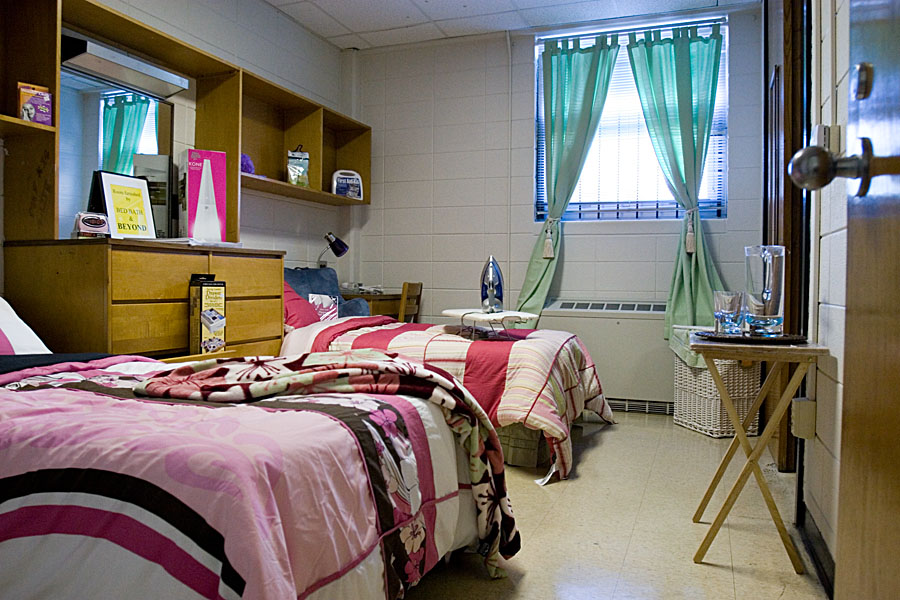
    1. Write a list of the stuff you know you need. A good start can be found below

    * Bedding (sheets, comforter, pillows, mattress pad. A lot of colleges use Twin Extra Long mattresses which are a few inches longer than a regular twin. Do not skip the mattress pad; dorm room mattresses by themselves are not comfortable)

    * Toiletries (shower tote, towels, soap, shampoo, toothbrush, toothpaste, shower sandals, bathrobe)

    * Storage (under-bed plastic tubs, laundry hamper, drawers. Organizing your closet with a shoe rack or sweater organizer is always a good idea.)

    * Personal touches (posters, lamps, Christmas lights, knick-knacks)

    * Clothes (typically bring enough to last you three weeks without having to do laundry; you’re not going to want to do laundry every weekend. A wide variety is good as well so you’re covered no matter what the weather is doing. Remember to bring nice clothes you’d wear to a job interview because you never know if you’ll need to look snazzy.
    * Necessary miscellaneous (fan, alarm clock, refrigerator (optional), bedside lamp, clip-on shelf for your bed frame, laptop, laundry detergent, umbrella)
    2. Take this list to a trusted college graduate who can help you decide what you can do without.
    3. Start thinking about what necessities you need. Those necessities are; a couple pairs of shoes, clothes that are of a wide range (bring summer and winter stuff), shower and bathroom stuff, entertainment stuff.

    Tips

    * Wait until you have moved into your dorm before you begin buying a lot of things. You may find after you get there that that really cool organizer bin will not fit in the room, or the doors are not set up for organizers to be hung from them.