Category: College Bound

  • It’s My First Year of Post-Secondary, What Should I Expect? (French version available)

    It’s My First Year of Post-Secondary, What Should I Expect? (French version available)

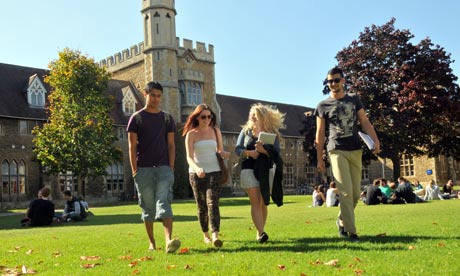
    The first year of post-secondary can often feel very scary and sometimes overwhelming for many students. Post-secondary is such a large leap from the comfort zone of high school; students often feel as though the pressure and work expectancy can be overbearing. This is why it is important to know what to expect before you enter post-secondary, and have a better understanding of how to prepare yourself for the journey ahead.

    So, what does the first year of post-secondary have in store for you?

    The first —and arguably most critical— expectation for post-secondary is: prepare yourself for a heavy course load. I’m sure it’s no surprise post-secondary is more academically challenging than high school. However, with the course load of each semester being much more condensed than that of a typical high school semester, the workload becomes intensified. This is often a big shock for most students, which is when the sense of being overwhelmed begins to come in.  A full course load in high school is not equivalent to that of a full course load in post-secondary, so be sure to prepare yourself for the next level and only accept as many classes as you can handle.

    Although you’ve probably heard it many times before, the next thing you should expect in post-secondary is to study! While of course studying has always been an important aspect throughout your education, now more than ever, you will need to study and learn the proper techniques on how to do so effectively. Gone are the days of cramming for an exam the night before; say hello to learning proper study techniques in order to reach academic success! (You’ll find proper study techniques are a lot less stressful than cramming, anyway!) One of the most effective study tips is to review your notes from each class every day. That way, when exam season rolls around, you won’t have to re-teach yourself any of the material; you’ll already have all of the knowledge memorized, and a quick refresher should be all you need!

    Despite taking all the right steps for academic success, expect some amount of stress. With new surroundings, unfamiliar professors, and a new level of academic pressure, some stress is going to arise. However, there is no need to fear, just prepare yourself and you’ll get through it! When you feel stress starting to take over, remember to make time for yourself to recharge before you burn yourself out! Exercise is a key aspect of staying physically and mentally healthy in post-secondary. Remember to give yourself breaks while studying, and try to exercise as much as possible! Remember, if you’re ever feeling too overwhelmed, there are resources available to help guide you. Seek your institution’s counselling services if you find your stress levels unmanageable.

    With classes, assignments, exams and any potential out-of-school obligations, expect to be busy in post-secondary! Time management is key to maintaining your stress levels while still reaching academic success. Use a day planner, agenda, or calendar to keep track of important deadlines and exam dates, and plan your days accordingly. Ensure you are always giving yourself an adequate amount of time for studying and assignments, in order to avoid the “cramming the night before stress,” and are always handing in the best representation of your capabilities.

    Expect to meet some awesome new people! While post-secondary might feel slightly intimidating at first, remember you are not alone! There are plenty of other first-year students who feel exactly the same way as you do. Post-secondary institutions offer a variety of clubs, sports teams, and programs that cater to a wide variety of different interests and talents. Get involved in different school activities that interest you; chances are you’ll meet some other great students who share similar interests. Remember, new friends can be found within the classroom, too! While you may feel shy or intimidated at first, remember the students in your class are in the very same position as you. Reaching out to students in your classes helps you break the ice, find new study-buddies, and potential lifelong friends.

    So, while post-secondary will undoubtedly be quite a change from anything you’re used to, remember you’re there for a reason! Just keep in mind what to expect when you walk through those doors, understand how to prepare yourself, and before you know it, you’ll be handling your first year of post-secondary like a pro.


  • May 2025 Scholarships – Apply now!

    May 2025 Scholarships – Apply now!

    Charles B. Staats Memorial Foundation Scholarship
    Scholarship Value: $12,000
    Awards Available: 1
    Award Deadline:  May 27, 2025

    Voice for Animals High School Scholarship
    Scholarship Value: $500
    Awards Available: 21
    Award Deadline:  May 31, 2025

    Luke Santi Memorial Award
    Scholarship Value: $1,000
    Awards Available: 1
    Award Deadline:  May 31, 2025

    MADD Canada Youth Bursary Fund
    Scholarship Value: $10,000
    Awards Available: 3
    Award Deadline:  May 31, 2025

    Pet Food Association of Canada Martha ‘Marty’ Wilder Honorary Scholarship
    Scholarship Value: $5,000
    Awards Available: 1
    Award Deadline: June 1, 2025

    Electro-Federation Scholarships for Women
    Scholarship Value: $3,500
    Awards Available: 19
    Award Deadline:  June 7, 2025

    Opterus Valerie Ann Arts Award
    Scholarship Value: $5,000
    Awards Available: 1
    Award Deadline:  June 13, 2025

    Villa Charities Undergraduate Student Scholarship
    Scholarship Value: $1,500
    Awards Available: 5
    Award Deadline:  June 30, 2025

    Algonquin College Tuition Contest
    Scholarship Value: $5,000
    Awards Available: 1
    Award Deadline: June 30, 2025

    Charles Labatiuk Scholarship
    Scholarship Value: $1,000
    Awards Available: 1
    Award Deadline: June 30, 2025

    Brian Fudge Memorial Scholarship
    Scholarship Value: $2,500
    Awards Available: 1
    Award Deadline: July 15, 2025

    Durham College Tuition Contest
    Scholarship Value: $5,000
    Awards Available: 1
    Award Deadline: August 29, 2025

    Castagra Roofing Scholarship
    Scholarship Value: $1,500
    Awards Available: 2
    Award Deadline: August 29, 2025

    Great Clips Scholarship Program
    Scholarship Value: $5,000
    Awards Available: 20
    Award Deadline: September 1, 2025

    Western Continuing Admission Scholarship of Excellence for Black Students
    Scholarship Value: $6,000
    Awards Available: 30
    Award Deadline: Ongoing

    Western Continuing Admission Scholarship of Excellence for Indigenous Students
    Scholarship Value: $6,000
    Awards Available: 30
    Award Deadline: Ongoing

  • Indigenous Student Scholarships for May 2025

    Indigenous Student Scholarships for May 2025

    Calgary Foundation First Nations, Métis (Metis) and Inuit Graduate Bursary
    Scholarship Value: $3,000
    Awards Available: 2
    Award Deadline: May 15, 2025

    First Nations, Métis and Inuit Undergraduate Bursary
    Scholarship Value: $3,000
    Awards Available: 6
    Award Deadline: May 15, 2025

    Yukon First Nations Heritage
    Scholarship Value: N/A
    Awards Available: 1
    Award Deadline: May 31, 2025

    James Bartleman Indigenous Youth Creative Writing Awards
    Scholarship Value: $2,500
    Awards Available: 6
    Award Deadline: May 31, 2025

    Innovation Place Scholarships for Indigenous Students in the Sciences
    Scholarship Value: $5,000
    Awards Available: 1
    Award Deadline: June 1, 2025

    Petro-Canada Award for Indigenous High School Students
    Scholarship Value: $750
    Awards Available: 8
    Award Deadline: July 1, 2025

    Algonquin College Tuition Contest
    Scholarship Value: $5,000
    Awards Available: 1
    Award Deadline: July 31, 2025

    BluEarth Renewables Scholarship Program
    Scholarship Value: $3,000
    Awards Available: 3
    Award Deadline: September 15, 2025

    Dr. & Mrs. G.B. Gowd Bursary for First Nations Women
    Scholarship Value: $1,000
    Awards Available: 1
    Award Deadline: October 15, 2025

    Western Continuing Admission Scholarship of Excellence for Indigenous Students
    Scholarship Value: $6,000
    Awards Available: 30
    Award Deadline: Ongoing

  • Indigenous Student Scholarships for March 2025

    Indigenous Student Scholarships for March 2025

    ii’taa’poh’to’p Indigenous Student Access Program Award
    Scholarship Value: $2,000
    Awards Available: 20
    Award Deadline: March 20, 2025

    First Nations, Métis, Inuit, Women’s Scholarship – Women’s Program (Elementary Teachers’ Federation of Ontario)
    Scholarship Value: $1,250
    Awards Available: 4
    Award Deadline: April 30, 2025

    First Nations, Métis, Inuit, Women’s Scholarship – Women’s Program
    Scholarship Value: $12,500
    Awards Available: 2
    Award Deadline: April 30, 2025

    Kenneth R. Good Family First Nations Student Award
    Scholarship Value: $7,000
    Awards Available: 1
    Award Deadline: May 1, 2025

    Calgary Foundation First Nations, Métis (Metis) and Inuit Graduate Bursary
    Scholarship Value: $3,000
    Awards Available: 2
    Award Deadline: May 15, 2025

    First Nations, Métis and Inuit Undergraduate Bursary
    Scholarship Value: $3,000
    Awards Available: 6
    Award Deadline: May 15, 2025

    Yukon First Nations Heritage
    Scholarship Value: N/A
    Awards Available: 1
    Award Deadline: May 31, 2025

    Innovation Place Scholarships for Indigenous Students in the Sciences
    Scholarship Value: $5,000
    Awards Available: 1
    Award Deadline: June 1, 2025

    Petro-Canada Award for Indigenous High School Students
    Scholarship Value: $750
    Awards Available: 8
    Award Deadline: July 1, 2025

    Dr. & Mrs. G.B. Gowd Bursary for First Nations Women
    Scholarship Value: $1,000
    Awards Available: 1
    Award Deadline: October 15, 2025

    Western Continuing Admission Scholarship of Excellence for Indigenous Students
    Scholarship Value: $6,000
    Awards Available: 30
    Award Deadline: Ongoing

  • Some Differences Between College and University

    Some Differences Between College and University

    If you’re thinking of applying to either college or university, it’s important to understand the differences between the two. In Canada, college and university are two separate pathways. However, in other countries like the United States, college and university are considered the same thing and are one pathway altogether. There are many differences between college and university, and it’s encouraged to understand each before applying to make sure it’s the correct option for you. The main differences between the two options are the degrees, the amount of time it takes to earn those degrees, learning styles, pricing and of course, content.

    Depending on the job you hope to acquire when you’re older, these pathways can determine your likelihood of getting a job based on the degree you get, and the suggested pathway for that specific field. In college, students typically spend 2-3 years earning either an associate’s degree or a bachelor’s (undergraduate) degree. In university, students typically spend anywhere between 3 and 8 years earning a PhD, doctoral, master’s or bachelor’s degree.

    It can take:

    • up to 8 years for a PhD ( doctoral degrees are 4-6 years)
    • master’s degrees are 1.5-2 years on top of the amount of time it takes to earn your bachelor’s
    • bachelor’s degrees usually take 3-4 years.

    Depending on your field of interest, you may be spending a lot of time in school, or maybe, a little amount. For example, if you want to become a doctor, either a doctoral degree or a Ph. D is required. If you want to go into one of the trades such as an electrician, an associate’s degree from college is recommended.

    Another important thing to keep in mind while choosing your pathway is the learning style; are you hands-on? Or more book-worm oriented? Colleges and universities have separate teaching styles and provide information in different ways to help students learn. In high school when selecting courses for grades 9-10, you are required to choose either applied, academic, workplace and open level courses. Applied typically leads to college, academic usually leads to university, workplace sometimes leads to community college or other pathways, and open leads to any of the above. However, if you take these courses, it doesn’t mean you can’t apply or be accepted into the other pathways, it just limits your likelihood. These types of courses also use different learning techniques. Applied uses hands-on learning while academic students are taught using books and listening to someone speak. Open level courses are often trades, arts and phys-ed courses in high school which can use any of the teaching techniques to accept all students and their learning styles. Workplace courses are courses such as Cooperative Education (CO-OP) to give students a better understanding of what it’s like to choose the workplace as their pathway after high school. Depending on your high school, these types of courses and levels may vary. After grades 9-10, many high schools switch from applied and academic to college and university so students are better able to understand and plan the courses they are choosing based on their pathway.

    Along with this, colleges and universities have a price difference. While attending both, the main costs are tuition, books, and transportation/housing if that applies to you. The price of books ranges from course to course. Transportation also depends on a variety of things; whether you have a car, are using public transportation, where you live, where your campus is, etc. Housing prices are typically the same at colleges and universities. However, the biggest price difference is tuition. The type of degree and course you choose to learn will determine the tuition price but universities are typically more expensive than colleges. For both, there are scholarships and financial aid available to students who are suited for it.

    Despite all of these differences listed above, try to avoid choosing a pathway based on economic convenience. You need to do what makes you happy and what can lead to an independent lifestyle.  Instead, choose the pathway best suited for you and the career you hope to achieve.


    References:

    https://settlement.org/downloads/didl/english/difference-college-university-en.pdf

    https://www.franklin.edu/blog/what-is-a-doctorate-degree

    https://www.geteducated.com/career-center/detail/what-is-a-bachelors-degree/

    https://www.bestmastersdegrees.com/best-masters-degrees-faq/how-long-does-it-take-to-receive-a-masters-degree

    https://www.geteducated.com/career-center/detail/what-is-an-associate-degree/

  • Preparing for College Applications: A Comprehensive Guide

    Preparing for College Applications: A Comprehensive Guide

    High school can be a very eventful time. From choosing your courses and meeting new people to securing long-lasting friendships and exploring extracurricular opportunities, students do a lot during these years. Another undertaking, particularly involving those in upper grades, is prepping to apply for colleges/universities. It may be exciting but also stressful to think about as doing so means beginning the process of taking the next big step in your academic career. If this describes your situation and you’re wondering about measures you could take to prepare for college applications, here are a few tips:

    Read Ahead on Prospective Schools and Their Application Requirements

    Do research as well as read ahead on post-secondary schools you’re considering and their requirements for applications. This will give you the best understanding of what you should do specifically to prepare. In particular, look up what grades and/or grade point average you must have to qualify for programs you’re interested in pursuing. If you find that you come across difficulties with courses that count toward the grade point average calculation, seeking help or trying other study strategies would likely be the most beneficial course of action.

    Have An Updated Resume to Refresh Your Memory of Accomplishments

    Keep your resume updated as this can refresh your memory regarding what you’ve accomplished and/or participated in thus far. It will help refer back to if you plan on applying to any schools that require writing a personal profile such as the University of British Columbia. These usually involve describing what various experiences you’ve had entailed as well as how they have broadened your horizon. Additionally, try getting as many references as you can. Contact previous supervisors, coordinators, or anyone in a similar position who can attest to what you’ve done and ask if you could add them as a reference. If you have the time, visiting them in person to ask, talking about what you did, as well as telling them your plans remain great options.

    Assume More Roles that Will Look Good on Applications

    Are there roles you’d like to take on that would look good on applications? This especially pertains if you’re currently in grade 11, not long before you’re applying. Some ideas would be requesting to assume any leadership positions available within clubs you’ve already joined or volunteering outside of school.

    Know Where and How to Access Your Transcript

    For applications, a current transcript is needed. Most Canadian high school students can access transcripts through their provincial government’s official website. When the time for applying nears, follow the site’s instructions on creating an account for this if you don’t already have one.

    Getting ready to apply for college/university can be daunting. Nonetheless, there are several positive, associated implications as well. It could give you opportunities to challenge yourself productively, enjoy new experiences, create meaningful connections, and even provide you with a sense of accomplishment. Overall, if you consider the pointers above, you’re on the right path toward successfully preparing for college applications.

  • A Guide to Scholarships and Aid for Career College Students

    A Guide to Scholarships and Aid for Career College Students

    Navigating the world of financial aid can seem like an overwhelming task, especially when you’re eager to start your career education journey. However, understanding the scholarships and financial support available can make all the difference. Let’s dive into the financial options specifically tailored for students at career colleges.

    First things first: What kinds of financial aid can you tap into? From loans and grants to scholarships and bursaries, there are various ways to fund your education. For instance, many students at career colleges in Canada benefit from programs like the Ontario Student Assistance Program (OSAP) which provides tailored financial support​ (CTS Career College)​.

    Did you know many career colleges offer unique scholarships just for their students? These scholarships might be based on academic achievements, financial need, or specific career interests. For example, CTS Canadian Career College provides a range of scholarships and an interest-free payment plan, making education more accessible​​.

    Applying for scholarships might seem daunting, but it’s easier than you think! Start by visiting websites like Scholarships Canada, where you can filter scholarships that are relevant to career college students. In BC, Vancouver Career College offers a number of financial options for students. Always check the eligibility criteria carefully and gather all necessary documents before the deadline​​.

    A little bit of planning can go a long way. When you budget for college, consider all your potential income sources, including scholarships, part-time work, and family contributions. Discuss your options with a financial aid officer at your college—they’re there to help you plan your education funding smoothly.

    Need some inspiration? Many students before you have successfully navigated the maze of financial aid to achieve their educational goals. These stories not only inspire but also show practical ways students have leveraged financial aid to minimize their educational expenses.

    Exploring financial aid options is crucial for any student stepping into the world of career education. With the right information and a bit of strategic planning, you can unlock numerous opportunities to fund your studies. Remember, the earlier you start your search and application process, the better prepared you’ll be. So, dive in, explore your options, and take control of your educational journey today!

  • From Student to Startup: How Career Colleges Propel Aspiring Entrepreneurs into Business Tycoons

    From Student to Startup: How Career Colleges Propel Aspiring Entrepreneurs into Business Tycoons

    Ever dreamt of turning your million-dollar idea into reality or pitching your startup on a big stage? It’s a thrilling journey many aspire to, and career colleges across Canada are turning these dreams into reality. Let’s dive into how these institutions are not just teaching students but are actively sculpting the next generation of entrepreneurs.

    Career colleges are buzzing with programs tailored to spark the entrepreneurial spirit. Take, for example, the Business Management – Entrepreneurship and Innovation program at Conestoga College, which arms students with the necessary tools and strategies to launch and sustain successful ventures​​. Or, check out the Entrepreneurship/Small Business courses at Ontario Colleges that walk students through the nuts and bolts of starting a business, from securing finances to navigating market challenges​​.

    Imagine having access to a media production lab or a 3D printer while brainstorming your next big product. The Longo Centre for Entrepreneurship at Humber College offers just that, with state-of-the-art facilities designed to help students experiment and innovate​​. This kind of support system puts aspiring moguls right at the heart of action, turning theoretical plans into tangible successes.

    It’s not just about what you know, but who you know! Career colleges understand this well, often facilitating invaluable networking opportunities with seasoned entrepreneurs and investors. This community support helps students find mentors, secure investments, and maybe even snag their first client.

    There’s no better teacher than experience. Career colleges like Vancouver Career College incorporate practicum placements, allowing students to dive into the business world head-first, apply classroom knowledge in real-world scenarios, and hone their skills under the watchful eyes of industry veterans​​.

    Every year, alumni of these programs burst onto the scene, ready to disrupt markets with innovative ideas and fresh business models. Their stories of transforming classroom lessons into boardroom discussions serve as a beacon for incoming students, illustrating the potent blend of education and real-world application.

    For those wired with the drive to lead and innovate, career colleges offer more than just education—they are a launchpad for future business leaders. By providing the right tools, networks, and opportunities, these institutions are crucial in nurturing the entrepreneurial dreams of students ready to take on the business world.

    Embark on this exhilarating path and who knows? The next big business headline might just have your name on it!

  • Jobs Robots Do: Changes in the Workforce

    Jobs Robots Do: Changes in the Workforce

    The Industrial Revolution saw amazing changes to the world of manufacturing. It also saw many trained, capable people lose their jobs. In a world of automation, self-driving cars, and increasingly complex artificial intelligence, we stand on the cusp of another revolution. In Canada, almost 42% of labourers are at a very high risk of losing work due to these changes within the next two decades. The idea of work and having jobs has been around in human civilization for millennia. What will happen when the very foundation of this concept is shaken to its core?

    In the United States, three million people can expect to lose their jobs as self-driving vehicles take care of deliveries and transportation. Fleets of self-driving trucks have already made treks across Europe. The fields of accounting, health care, policing, education, and more are expected to soon utilize artificial intelligence in increasingly significant ways. Unlike the Industrial Revolution, it could be much more difficult for people to simply transition into other lines of work. Despite the dystopian vibes that this future brings about, there is the potential for humans to enter a whole new era of work.

    For the first time in human history, it will not be necessary for the vast majority of people to work long hours. One very likely situation, and a possibility already being discussed in Ontario, is to provide a basic income to everyone that would replace all current welfare programs. Some may criticize this simplistic form of welfare as encouraging laziness, but it could do just the opposite. Creative, artistic, and socially-driven jobs will be in high demand. With our basic needs met through a guaranteed income, we will be free to pursue jobs out of passion as opposed to pressure. The need for creators, teachers, and social workers will continue for many years to come.

    Many other lines of work are not expected to disappear entirely. Instead, humans will work alongside ‘cobots’. These robots will perform the less ideal tasks in many lines of work, including the dull and the dangerous. The work left for humans will be more specialized and far less monotonous. It also allows for more free time outside of one’s career. According to the Canadian Occupation Projection System, high-skilled and low-risk careers are expected to become a significant part of the workforce. Approximately 712,000 new jobs are expected between 2014 and 2024 amongst occupations unlikely to be fully automatized.

    The idea of jobs, which was remained essentially the same throughout the history of civilization, could be about to undergo a major shift. This is definitely scary, and there will be those who suffer because of it. However, we are on the verge of creating a world of work driven by passion instead of working just to survive. This would be a world full of specialized jobs, in which we use utilize our strengths as humans to our full potential with the assistance of robots. Jobs people do will never be the same.

    Sources:

    Cixin, Liu. The Robot Revolution Will Be the Quietest One. The New York Times. http://www.nytimes.com/2016/12/07/opinion/the-robot-revolution-will-be-the-quietest-one.html

    Lamb, Creig. The Rise of Robots: Why the Future of Jobs in Canada Isn’t All Doom and Gloom. Brookfield Institute. http://brookfieldinstitute.ca/


  • High School Graduation Requirements in BC

    High School Graduation Requirements in BC

    Getting into high school can be an exciting time, with more independence than in earlier years and the idea of planning for future work or studies. Even with extra freedom to choose their path, however, students in British Columbia should remember to keep the province’s graduation requirements in mind.

    Schools in British Columbia, like in other provinces, can vary widely. Some offer mainly academic subjects like history and mathematics while others offer courses in subjects like electronics or construction. However, all high school students must complete eighty credits to graduate, including fifty-two credits for required courses and at least twenty-eight credits for elective (optional) courses.

    In high school, a credit is the value of a course in counting towards graduation. For example, a language arts or mathematics course counts as four credits towards the eighty that students must reach, and many other courses count for the same amount. Students can choose to work very hard in the first part of high school so that their final year can be easier. However, at least sixteen credits must be at the Grade 12 level. One course must be in language arts, and another must be a career-life connections course.

    High school students are supposed to learn about a variety of subjects so that they can have a balanced education. The required courses include language arts, mathematics, social studies (which might be divided into geography and history), science (including biology, chemistry, or physics), physical and health education, arts or applied design, career life education, and at least four credits in an Indigenous-related course.

    Elective courses vary, depending on the school’s ability to offer courses beyond the basics. Many schools have courses in music, whether in singing or in learning to play an instrument. Some places might offer theatre courses or classes in public speaking or debating. Others might have computer programming classes or automotive topics. Most schools offer courses in at least one language such as French or German, and some might offer classes in languages such as Tagalog or Swahili, depending on what the people in the neighbourhood want.

    Besides the coursework, students are required to pass at least three standardized tests that the province has developed, the Grade 10 Literacy Assessment, the Grade 10 Numeracy Assessment, and the Grade 12 Literacy Assessment. These tests are designed to show that students can read well and that they are able to do basic mathematical calculations such as adding and subtracting. These are important skills for almost any job. Career courses also help to prepare students for finding work when they graduate.

    The requirements for graduation are designed to ensure that every student finishes high school with basically the same level of education, but this does not always work. Some schools have trouble offering more than the basics, while others might have so many electives that students can become overwhelmed.

    When choosing high school courses in BC, as anywhere else, it is important to keep long-term goals in mind. If possible, students should also consider the job market and try to take courses that fit with what employers are likely to need. Meeting the high school graduation requirements can help students meet their own needs and prepare for the future.


    Bibliography

    BC for High School. “Graduation Program.” https://bcforhighschool.gov.bc.ca/offshore/bc-curriculum-assessment-overview/graduation-program/.

    North Delta Secondary. “Graduation Requirements.” https://nd.deltasd.bc.ca/course-selection/bc-graduation-requirements/.

    Province of British Columbia. “Graduation Requirements.” https://www2.gov.bc.ca/gov/content/education-training/k-12/administration/legislation-policy/public-schools/graduation-requirements.

    Vancouver School Board. “BC Secondary School 80 Credit Graduation Program Requirements.” https://media.vsb.bc.ca/media/Default/medialib/bc-grad-requirements.b897c761003.pdf.