
Category: Community

  • Indigenous Perspectives on AI Ethics

    Indigenous Perspectives on AI Ethics

    Jobs People Do | JobsPeopleDo.com

    Have you been keeping up with all the crazy advancements in Artificial Intelligence (AI)? It’s cool stuff, like a super-powered brain learning and doing all sorts of things. But with all this new tech, there are questions about how to use it right, especially for folks with different backgrounds and traditions.

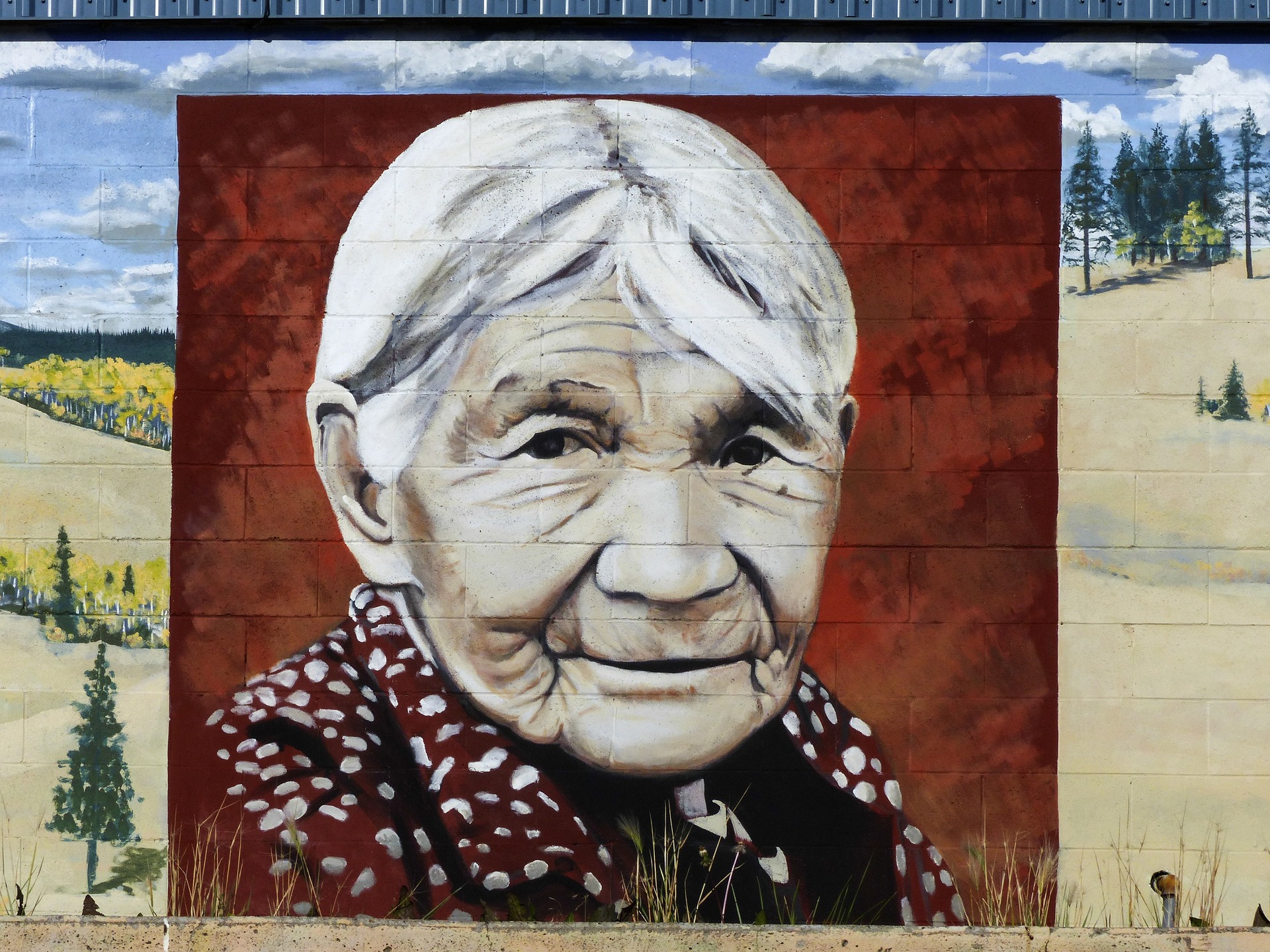
    That’s where Indigenous communities come in. They’ve been around for a long time, connected to the land and each other in deep ways. Their knowledge can teach us a lot about developing AI ethically.

    Think about it — if an AI system is helping with healthcare or even how our communities are run, wouldn’t it be awesome if it worked for everyone, not just some? Including Indigenous voices in these discussions is key to making sure AI reflects a range of experiences and values.

    Here’s the thing: Indigenous perspectives on AI ethics are unique. They focus on a few key areas:

    1. Respecting Your Space: Imagine having full control of your photos or what people know about you online. That’s what autonomy is all about. Indigenous communities emphasize this, and in the world of AI, it means making sure these systems don’t take over our choices.
    2. Community First: Remember that big family gathering you loved? That’s the kind of community spirit many Indigenous cultures have. AI shouldn’t break that up, right? Instead, it should help people connect and make things stronger, not widen any gaps.
    3. Honouring the Land: The land isn’t just dirt for Indigenous communities, it’s like a wise old friend and a source of knowledge and identity. AI shouldn’t push people away from their land, but instead help us take care of it for generations to come.
    4. Thinking Long Term: Imagine looking out for your grandkids, making sure they have a good world to grow up in. That’s intergenerational equity. When building AI, we need to think about how it will affect people way down the line.
    5. Fairness Matters: Imagine helping someone out and getting a thank you in return. That’s reciprocity. Just as Indigenous communities emphasize giving back to the water, plants, soil, and animals that provide life, if their knowledge helps develop AI, it’s only fair they get something back, not taken advantage of.

    Here’s the kicker: talking to Indigenous communities about AI ethics isn’t enough. We need to work together, share ideas, and build this AI thing right from the start. This way, AI becomes something that works for everyone, not just a select few.

    Sure, there might be some bumps along the road when putting ancient wisdom together with fancy new tech. But there’s also a huge chance to use AI for good: protecting languages, keeping traditions alive, and building tools that address specific needs in Indigenous communities.

    By embracing these perspectives, we can create AI that’s not just smart, but also respectful and fair. Pretty cool, right? That’s how we build a digital future where everyone has a seat at the table.


  • Remote Learning for Post-Secondary Students with Disabilities: Is It Helpful? (French version available)

    Remote Learning for Post-Secondary Students with Disabilities: Is It Helpful? (French version available)

    Jobs People Do | JobsPeopleDo.com

    Several years after the COVID-19 pandemic in Canada, different forms of learning provide students with a simultaneous feeling of accessibility and restriction. Some people may prefer online learning, and some may prefer in-person learning, but it is not usually a choice left up to the students.

    For students with disabilities, whose experiences with school may already need pre-existing accommodations, the shifting class environments add to more troubles. However, for some students, the introduction of a remote option can be beneficial.

    This begs the question: what exactly are the pros and cons of remote learning for students with disabilities?

    How Do Students with Disabilities Navigate Remote Learning?

    Students with disabilities experience remote learning differently, and not only in contrast to students without disabilities. Experiences with remote learning depend on the type and severity of disability.

    For example, a person who is only affected by a physical disability will have a different experience with remote learning compared to a person who is only affected by a learning disability. Therefore, the vast spectrum of people and experiences means that the pros and cons will be different for everyone.

    Advantageous Situations of Remote Learning

    For students with physical disabilities or chronic pain, the lack of a commute to school is helpful. For some students they may have to skip or drop classes because the in-person environment might be inaccessible. Additionally, there can be cases where their disabilities prevent them from attending in-person classes consistently. Depending on the course, consistent attendance can be the key to success, but this is not always achievable.

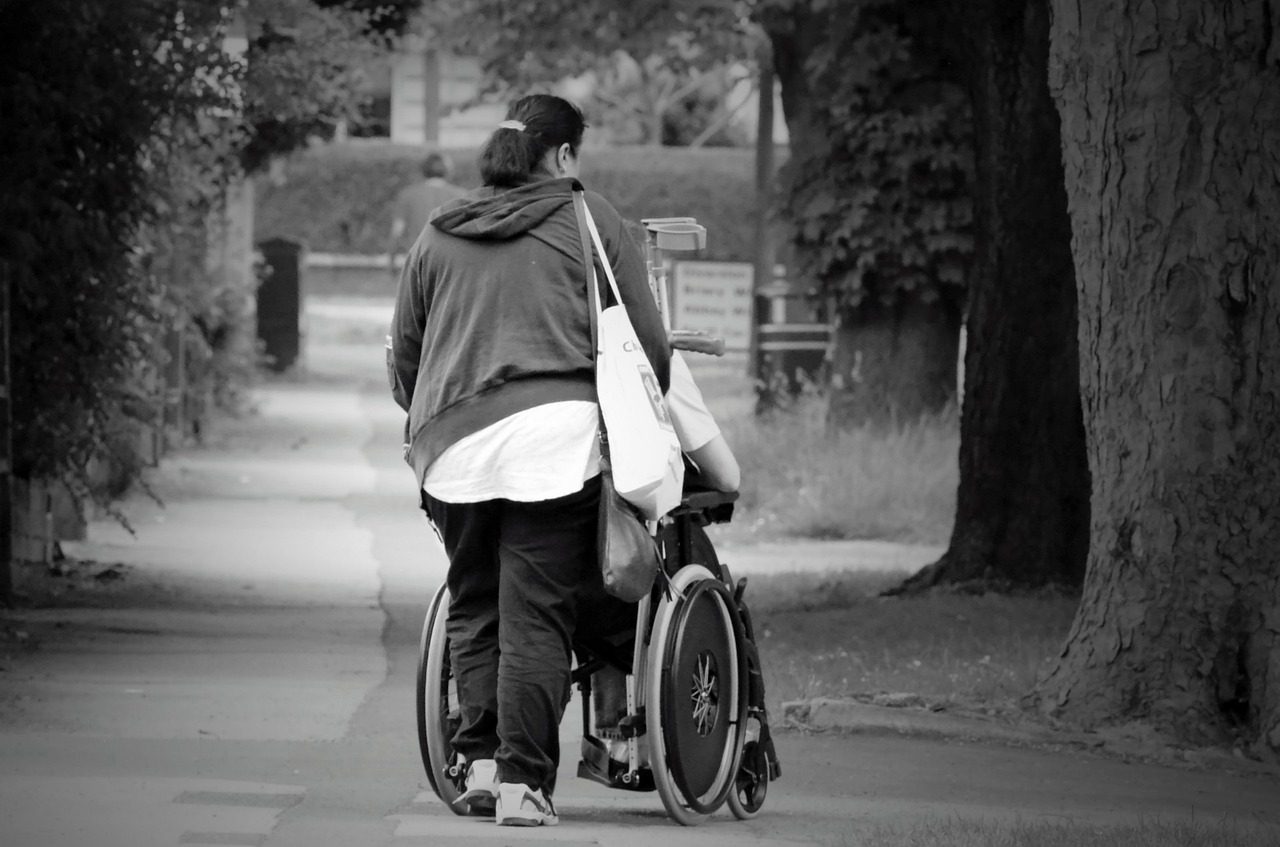
    Attending class through a computer screen means that students with physical disabilities can manage their health on their own terms, without sacrificing their education. Potentially inaccessible buildings and tiring commutes are no longer issues that can stop people from pursuing an education.

    Disadvantageous Situations of Remote Learning

    For students with learning disabilities, remote learning may not be helpful. Many students require a repetitive schedule that stays the same: any changes from their norm can be hard to adapt to. Additionally, remote learning unfortunately means a lack of support. For students that may require more personalized support, one-on-one support is harder to provide in an online environment.

    Some students, those with ADHD for example, may receive accommodations such as the ability to write tests in a separate, quiet room, as distractions interfere with learning. For those who must do schooling at home, a quiet environment is not guaranteed. The option to attend class in person is a good solution for this.

    The Future of Remote Learning

    Remote learning existed prior to the COVID-19 pandemic. It existed as an option for post-secondary students, albeit on a smaller scale.

    Many post-secondary institutions around the country have reintroduced in-person classes, with varying conditions. Currently, there is no one form of learning that satisfies everyone, but hopefully, some sort of balance can be found.


    Sources:

    “COVID-19: Updates for Canada’s Universities.” University Affairs. https://www.universityaffairs.ca/news/news-article/covid-19-updates-for-canadas-universities/.

    Loeppky, John. “With the Shift to Online Learning, Students with Disabilities Face New Barriers.” Macleans.ca. https://www.macleans.ca/education/with-the-shift-to-online-learning-students-with-disabilities-face-new-barriers/.

    Wotherspoon, Jennifer. “How Can Educators Support Students with LDs While Hybrid Learning?” LD@school: Learning Disabilities Association of Ontario. https://www.ldatschool.ca/ate-hybrid-learning/.

  • Merry Christmas in October: From Celtic Festival to “Queer Christmas” (French version available)

    Merry Christmas in October: From Celtic Festival to “Queer Christmas” (French version available)

    Jobs People Do | JobsPeopleDo.com

    When September comes, students get ready to head back to school. When October comes, everyone gets ready for Halloween. From walking among spirits to seeking candy from neighbours, the day certainly changed over thousands of years.

    For many people, Halloween remains a spooky holiday: children get dressed up in scary costumes, carve pumpkins, and collect candy. For the LGBTQ+ community, Halloween means Christmas comes early as “Queer Christmas”: a time of year when dressing up provides freedom of expression.

    The Origins of Halloween

    Halloween started out with a Celtic connection 2,000 years ago. Celtic people held festivals on Samhain, a period between October 31 and November 1. It marked the end of the harvest season, meaning that people would harvest their crops and hold feasts with their loved ones.

    During this time, they believed that spirits were able to walk among them, as the barrier between the living and the dead weakened for these two days. Since the Celtic people considered Samhain dangerous, dressing up as spirits and fairies, the act of “guising”, helped protect against evil forces.

    Guising combined with another tradition, souling, to create trick-or-treating. Souling involved poor, often young children going door-to-door asking for “soul cakes.” These soul cakes represented the release of trapped souls. Who knew that something so haunting would come in the form of a sweet bun?

    The Origins of Queer Christmas

    As the tradition spread to places like North America, Halloween slowly drifted away from its original Celtic roots. Not all Halloween costumes needed to be scary, and all sorts of candy replaced soul cakes.

    Even before Halloween became widely known as a trick-or-treating day, the LGBTQ+ community also transformed Halloween into their own unique day that celebrated dressing up and being around friends.

    Halloween parties were all the rage among LGBTQ+ communities in New York and San Francisco during the 1960s. As many American states still had laws against cross-dressing (dressing in clothing traditionally associated with other genders), Halloween provided a safe way to express oneself without breaking any laws.

    The Christmas aspect comes from sharing a space with like-minded people. Like Christmas in December, it involves being surrounded by family. The LGBTQ+ community is a family, where they support and relate to their shared experiences.

    Halloween Today

    The tradition of Samhain festivals continues to be celebrated in separate ways by children and adults of the 21st century. For the ghouls and witches out collecting candy, they celebrate dressing up as fellow spirits while sharing delights with their friends.

    For the partygoers, Halloween gatherings remain huge for the adult crowd. Among this crowd lies the LGBTQ+ community, a group who continues to embrace a holiday that allows them to experience their true selves, surrounded by their found families.

    2,000 years changed a lot of aspects about Halloween, but it has never changed the idea of people celebrating an evening together. Happy Halloween, or should I say, Merry Christmas to all!


    Sources: 

    Atkin, Elizabeth. “How Did Trick or Treating Become a Halloween Tradition?” Metro. https://metro.co.uk/2021/10/30/how-trick-or-treating-became-halloween-tradition-15508512/.

    CBC kids team. “Samhain — the Original Halloween!” CBC Kids. https://www.cbc.ca/kids/articles/a-history-of-halloween.

    D., Katherine. “Happy Gay Christmas! A History of Halloween and the LGBTQ+ Community.” Richland Library. https://www.richlandlibrary.com/blog/2021-10-19/happy-gay-christmas-history-halloween-and-lgbtq-community.

    “Halloween.” LGBTQ Foundation. https://www.lgbt.foundation/halloween.

    “How Trick-or-Treating Became a Halloween Tradition.” History. https://www.history.com/news/halloween-trick-or-treating-origins.

    Schmidt, Samantha. “Halloween Is ‘Gay Christmas’ for Many in the LGBTQ Community. This Year, It Has Been Canceled.” Washington Post. https://www.washingtonpost.com/dc-md-va/2020/10/15/halloween-is-gay-christmas-many-lgbtq-community-this-year-it-has-been-canceled/.

  • The National Day of Truth and Reconciliation was September 30th: Reflecting on what’s been done and what more needs to happen (French version available)

    The National Day of Truth and Reconciliation was September 30th: Reflecting on what’s been done and what more needs to happen (French version available)

    Jobs People Do | JobsPeopleDo.com

    By Avreet Jagdev

    September 30th marked Canada’s National Day for Truth and Reconciliation. It is a day dedicated to remembering the children who were never able to return home from residential schools, the survivors who did, and their families and communities. It is a day on which we reflect on Canada’s history, and learn from it.

    The National Day for Truth and Reconciliation coincides with Orange Shirt Day, which has been celebrated in Canada since 2013. On September 30th, we wear orange to remember the story of Phyllis Jack Webstad. When Phyllis was six years old, her grandmother bought her a new orange shirt before she left for a residential school. When she arrived at the school, Phyllis was stripped of her clothing and her orange shirt was taken away. She was never able to wear it again.

    Phyliss’ story represents the hundreds of thousands of Indigenous children who were harmed by Canada’s residential school system. And although the last federally-run residential school closed in 1996, the long–term effects are as rampant as ever.

    So what has been done thus far, in an effort to reconcile?

    In 1986, the United Church of Canada apologized for its part in the residential school system, followed by the Anglican Church in 1992. However, many consider these apologies to be hollow, as residential schools existed for years thereafter.

    In 1991, the Royal Commission on Aboriginal Peoples (RCAP) was established in order to “investigate and propose solutions to”  the relationship between Indigenous communities and the rest of Canadian society, including the Canadian government and non-Indigenous Canadians.

    After the RCAP’s first report was published, the government made an official statement of reconciliation and established the Aboriginal Healing Foundation. This foundation is not-for-profit, Indigenous managed, and dedicated to “responding to the legacy of residential schools in Canada and the associated community health impacts”.

    In 2008, Prime Minister Harper apologized for the residential school system on behalf of the Canadian cabinet, and created the Truth and Reconciliation Commission of Canada. This commission is dedicated to uncovering what really took place in residential schools.

    In 2015, it released its report stating that residential schools were a “cultural genocide”: they resulted in a poorly-educated and low-income Indigenous population, as well as long-term generational trauma due to the emotional, physical, and sexual abuse that took place at these schools.

    In 2021, after the bodies of thousands of Indigenous children were found at sites of old residential schools, Canada made National Day of Truth and Reconciliation a statutory holiday.

    What needs to be done moving forward?

    Even today, many Indigenous communities across the country don’t have access to things as basic as clean drinking water. These communities must resort to boiling tap water, or relying on expensive shipments of bottled water. In a country as prosperous as Canada, this is absolutely unacceptable.

    For more information on the Indigenous water crisis and how you can help, check out the JPD article on the issue.

    Another example of Canada’s neglect of Indigenous communities is Grassy Narrows, which has been through a number of traumas. These include:

    • “forced attendance in church-run residential schools”
    • “coerced relocation away from their traditional living areas”
    • “hydro damming flooding sacred sites and wild rice beds”
    • “clearcut logging of their forests”
    • mercury contamination
    • mining

    Many of these issues, particularly the mercury contamination, are ongoing and causing active harm to the Indigenous peoples.

    Instances such as these have been continually swept under the rug, despite the fact that they are actively damaging Indigenous communities. It is important that Canada acknowledges them and takes action towards resolving them.

    Reconciliation consists of a lot more than creating commissions and statutory holidays. It is about listening to Indigenous communities, considering their needs, and taking appropriate action. Although Canada has taken steps in the right direction, we have quite a way to go.

  • Career Profile: Developmental Services Worker (French version available)

    Career Profile: Developmental Services Worker (French version available)

    What the Job Is 

    Everyone needs help at some point, including people with various kinds of developmental disabilities. They might have difficulty keeping up at work, school, or other aspects of life. The best people to help with these types of issues are developmental services workers. This field involves working with people who have differing levels of ability to try to help them achieve the best life possible. If you like to help people, this career might be a good choice for you.

    Physical, mental, or intellectual disabilities can make life difficult. These are very different types of disability, but they can all be part of a developmental services worker’s job. The worker might help someone with a physical disability buy groceries or find ways to open doors and climb stairs. They might assist someone with intellectual or mental disabilities to find work or a good place to live. Depending on what people need, many different tasks can be part of a development services worker’s job.

    Education and Skills Needed

    Learning to work in this field can give the necessary background for jobs as personal support workers, registered practical nurses, registered nurses, and personal care workers. Normally, people in this field have at least a high school education, and often a post-secondary degree or diploma from a college or university. In high school, courses in English are useful for reading complicated documents, and anything related to psychology or social studies can be helpful in learning about people.

    Because workers in this job often work with vulnerable people, being prepared for emergencies is important. Knowing CPR and First Aid is necessary for most jobs in this field. Being able to give medication or shots can be very useful. If someone has severe allergies, for example, being able to give an injection could save the person’s life. Besides having the technical knowledge to deal with these situations, people in this field need to be calm and to be able to deal with crises effectively.

    How to Develop Necessary Skills 

    One way to develop the right qualities for the job is to volunteer in a hospital, group home, or other setting where it is possible to learn while gaining practical experience. Schools might set up opportunities for high school students to go help, or they might have information on community organizations that make these kinds of connections. Going to volunteer alone can be overwhelming, but joining with a friend or two can make the volunteer work much easier.

    Work Environment and Salary 

    Working in development services can be stressful and sometimes physically demanding, but many people can spend their entire career in this work. Salaries start at about $48,000 per year and can rise to more than $52,000 per year. 

    Most jobs for development services workers are in health care or social assistance services, including individual and family services, nursing, and residential care facilities. Some people can also work in public administration, deciding on policies, budgets, and other matters that affect the care of people who need these services.   

    If you are a helpful person who likes to make people’s lives better, the job of a developmental services worker could be a good fit. Why not explore the idea further?


    Bibliography:

    Job Bank. “Development Services Worker in Ontario.” https://www.jobbank.gc.ca/marketreport/outlook-occupation/5069/ON;jsessionid=8D50683C21C67D74E00A9A6B04B6070B.jobsearch76.

    Ontario Colleges. “Developmental Services Worker / Special Needs.” https://www.ontariocolleges.ca/en/programs/education-community-and-social-services/developmental-services-worker-special-needs.

    Payscale Canada. “Average Developmental Service Worker Hourly Pay in Canada.” https://www.payscale.com/research/CA/Job=Developmental_Service_Worker/Hourly_Rate.

    Talent.com. “Developmental Service Worker average salary in Canada, 2022.” https://ca.talent.com/salary?job=developmental+service+worker.

  • The Inclusivity of Young People’s Theatre

    The Inclusivity of Young People’s Theatre

    The Young People’s Theatre in Toronto, Ontario, was formed in 1966 with the goal of bringing high-quality productions to the stage for children to enjoy. Since then, they have brought a variety of great stories to the stage. Theatre is a powerful form of art for all ages that incorporates storytelling, music, and dance in a live setting to provide an experience unlike anything that a screen can offer. But the nature of live performance can also exclude large groups of individuals. The storytelling is lost on blind children who cannot see the onstage action. The music is nonexistent to those who are deaf. The entire experience can be overwhelming to those on the autism spectrum. Young People’s Theatre is aware of this and has found an ingenious solution.

    The theatre has strived to offer presentations of their shows with these specific groups in mind. The intention is not to dilute the art, but rather to increase inclusivity. For the deaf or hard-of-hearing, Young People’s Theatre offers interpreted performances. The play is presented as it usually is, but with the addition of interpreters who “shadow” the actors by following them as they move about the stage. These interpreters use American Sign Language to translate what the character they follow is saying. In 2018, this was utilized to bring the Frances Hodgson Burnett novel The Secret Garden to life, as well as a translation of Selfie, which was originally in French.

    Bringing theatre to the blind or partially sighted is another challenge. On television, audio descriptions can help describe the action. Yet this would be a distraction for others in the audience in a theatre setting. Young People’s Theatre utilizes technology to circumvent this. These performances feature live audio description provided by professionals, but done through earpieces and small receivers for audience members who will benefit from it. The information shared includes set pieces, costumes, and physical action onstage. This was done for The Secret Garden in 2018.

    For children with Autism Spectrum Disorder, the loud noises and high energy of the theatre can negatively affect them and tarnish any of the positives that the art provides. Young People’s Theatre presents relaxed performances in which the plays themselves remain intact, but the performances are subdued with a more relaxed attitude. Noise and movement are reduced, and the lighting is adjusted so that the room is not as dark as usual. A relief area is provided for those who need a break during the play. In addition to The Secret Garden and Selfie, Young People’s Theatre presented six other plays this way in 2017 and 2018.

    The theatre continues to strive to be an inclusive environment for kids of all ages. Their production of One Thing Leads to Another had babies and their parents sit on the floor and were encouraged to play during the performance. The performers utilized colours, sounds, and movement catered to those babies, who became as much performers as the professionals. In another example, Arabic interpreters were used at performances welcoming children of Syrian refugee families. Amber Ebert, the School and Community Programs Manager, stated that they “are not just welcoming people in,” but also “making people feel welcome when they are here.”

    The Young People’s Theatre has been around for over 50 years, and is not going anywhere anytime soon. That means more and more plays are being presented in new ways to encourage inclusivity. Instead of looking at it as an obligation, the company employs creative techniques that enhance the plays and bring them to life with new and exciting methods. This taps into the universality of the art of theatre, which brings stories to audiences in ways that no television, laptop, or phone screen ever could.

    Sources:

    Fields, Sabrina, and Andrea Pothiboon. “Young People’s Theatre: Building community and learning through play.” Neighbourhood Arts Network. http://www.neighbourhoodartsnetwork.org/learning-room/learning/young-people-s-theatre-building-community-and-lear.

    Young People’s Theatre. https://www.youngpeoplestheatre.ca/.

  • Grieving the Loss of a Family Member/Loved One: How to Cope, and How to Incorporate Their Memory into What You Do Going Forward (French version available)

    Grieving the Loss of a Family Member/Loved One: How to Cope, and How to Incorporate Their Memory into What You Do Going Forward (French version available)

    Without a doubt, losing a family member/loved one is one of the most difficult experiences a person can endure. Life will never be the same without them and the grief you feel right now may seem overwhelming.

    If this is what you’re going through, here is some advice on how to cope and incorporate their memory into what you do going forward:

    Spend Time With Those Who Support You And Take Time For Yourself

    Though everyone deals with this type of loss differently, it would be best to spend time with others you can depend on for emotional support, as well as take time for yourself. Temporarily stepping back from certain activities is also encouraged, especially for those who have busy schedules involving extracurriculars.

    What’s Most Important Is Actually Allowing Yourself To Process Your Loss

    Facing grief is challenging and it’s understandable if you’re afraid to do so. Nonetheless, it’s still crucial that you truly allow yourself to process this loss. Often times, some find it easier to throw themselves into their work or find other means of staying distracted in an attempt to avoid these emotions, which can be harmful. Another similar strategy that’s also unhealthy is keeping your feelings bottled up inside. It’s absolutely fine if you enjoy staying busy, but if you’re doing so because you’re avoiding the process altogether, there will be a good chance of your negative emotions pouring out when you least expect them to.

    Obviously, dealing with a situation like this takes time, so be patient with yourself.

    How To Incorporate Their Memory Into What You Do Going Forward…

    …In School

    Writing about the person and/your experience with them can be incredibly therapeutic. For those who are in their later high school years, many English teachers assign students prompts/compositions that allow for this kind of freedom. They also tend to appreciate the amount of thought and emotion put into these assignments.

    …In Your Personal Life

    Of course, you could also write essays or stories about them in your personal life. It would be beneficial for future generations, and if they’re curious about this person and would like to know more, they could always refer to these documents.

    Another option is photos. Do you have any pictures of this loved one that could be organized in a photo album? Would you consider creating a collage or scrapbook with some of these pictures so you can document their memorable/joyful moments? This is a great way to celebrate them and provide yourself with time to reminisce, especially if you played a part in the moments you’d like to highlight.

    …In Other Work

    Another potential endeavour could be starting a club or holding a fundraiser for a cause that your loved one was passionate about. There might be something you could coordinate with those you know, e.g. friends, co-workers, family members, etc.

    Overall, acknowledge what you’re feeling and trust that you’ll be OK. If you take the advice above, you’ll more than likely cope as best as you can and successfully incorporate your loved one’s memory into all the main areas of your life.

  • How a Hybrid Office Benefits People with Disabilities (French version available)

    How a Hybrid Office Benefits People with Disabilities (French version available)

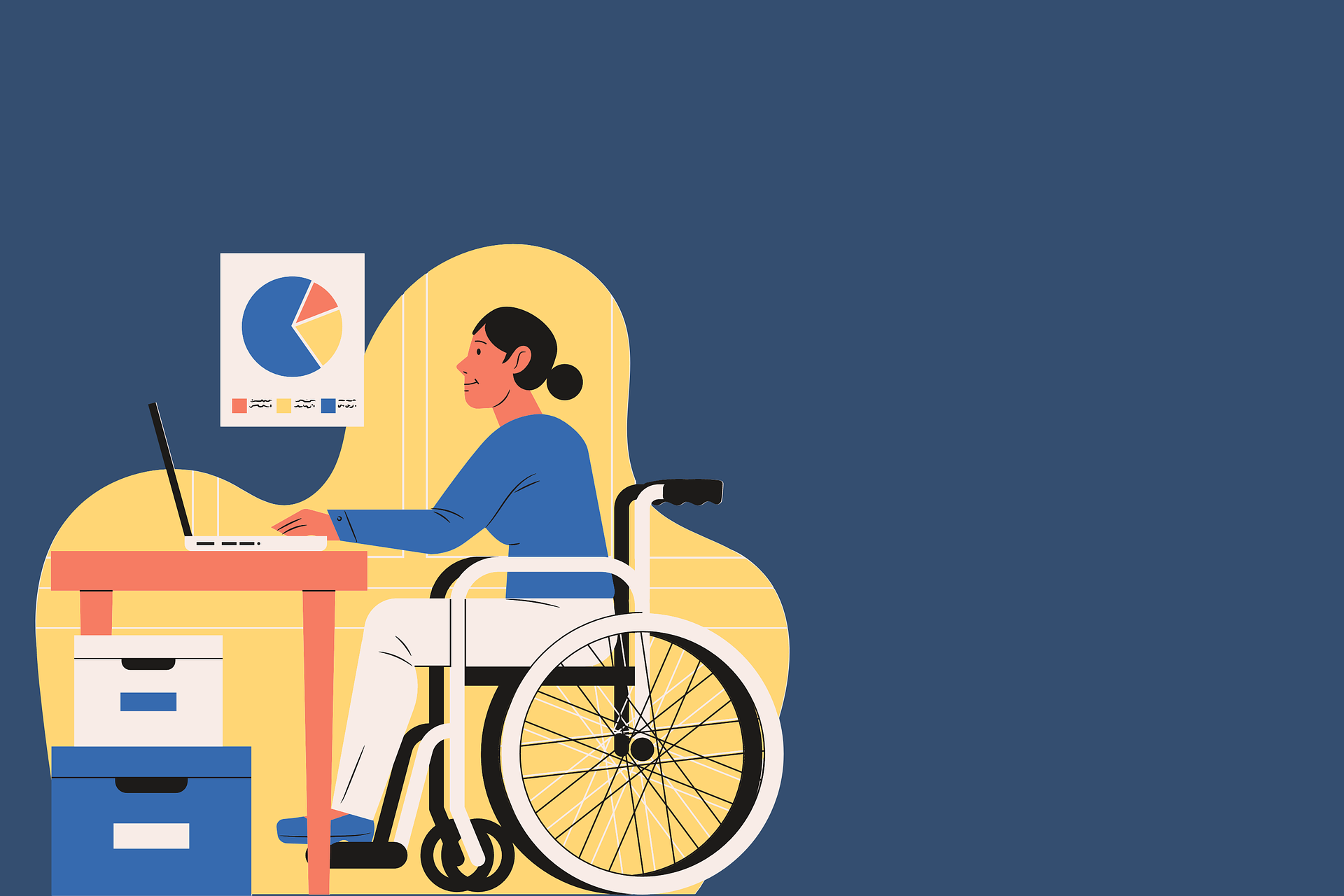
    When the pandemic began, thousands of workers switched from working in an office to working from home. Although many people are returning to office work, other employers and employees are choosing a hybrid model of working both from home and from the office. For many disabled workers, a good hybrid model could be the best system for giving both the flexibility and the support they need.

    The pandemic forced many people to change the way they did their jobs. Sometimes, they worked entirely from home, but at other times, they would have a hybrid schedule of going to the office for a day or two each week. Over half of knowledge workers like writers and researchers have worked this way for years, but a hybrid arrangement was new to many people. Some of them found the adjustment difficult.

    For people with disabilities, a hybrid office arrangement can be helpful. In some cases, chronic conditions can make it difficult to get to work. For example, certain conditions like anemia or migraines drain people’s energy and make it hard for them to concentrate. If they can work from home instead of going to the office, they are less likely to miss work because of their condition. They can choose when and where to work, matching their schedule to their energy level.

    Other disabilities can also make a hybrid work schedule beneficial. Someone who has trouble walking, for example, might prefer not to go to the office for a day or two after a snowstorm to make sure that the roads and sidewalks are as clear as possible. A person with arm or wrist troubles might have voice activation software at home to make it easier to write long reports and prefer to work from there rather than the office.

    Back trouble can make it difficult to sit for hours. At home, people can use their own chairs and cushions to make the day as comfortable as possible. They might even choose to work longer hours but take breaks to stretch their backs whenever necessary. In a traditional office setting, this could be very difficult to do if the office closes at a set time. Working from home, people can take the time they need to avoid pain.

    Other disabilities can also make office work difficult. Someone with social anxiety, for example, might find it stressful to be among people all day and need time alone to help with concentration. Mental health problems can become much worse if people are forced to be among others all the time.

    Even with the advantages of working from home, many people still need some time in the office. Sometimes, their home life makes it difficult to get work done, such as when family members are noisy, when cooking or cleaning needs to be done, or when a television program is on. Learning the discipline to keep on working despite distractions at home takes time.

    A hybrid work arrangement can help. With a well-organized hybrid job, people with disabilities can work from home when they need the time away from the office but still get help from their colleagues when necessary. Hybrid offices can be a good solution for many workplaces.


    Bibliography:

    Caldwell, Andrew James. “Remote Work vs Hybrid Work: The Complete Pros & Cons List.” https://peninsulacanada.com/blog/employer-advice/return-to-work-should-you-consider-a-hybrid-work-model/.

    Farrer, Laurel. “Accommodating Disabilities in Remote And Hybrid Work.” https://www.forbes.com/sites/laurelfarrer/2022/03/30/accommodating-disabilities-in-remote–hybrid-work/?sh=42bb00f32c17.

    Lightfoot, Diane. “Are Your Hybrid Working Plans Inclusive of Disabled People?” https://www.hrzone.com/lead/strategy/are-your-hybrid-working-plans-inclusive-of-disabled-people.

    Siddall, Kim. “Expert Panel: Considerations for Disability Management in a Hybrid Work Environment.” https://www.benefitscanada.com/expertpanel_/kim-siddall/expert-panel-considerations-for-managing-disabilities-in-a-hybrid-work-environment/.

  • How to Get a Great Start to the Day

    How to Get a Great Start to the Day

    Your days can begin in several different ways. It can begin fast-paced and stressful, or even slow and calm. Your mornings depend on you. You don’t have to rush your morning routine and dash out the door every morning. With these five tips, you can learn how to change your routine for you to get a great start to the day; every day!

    Wake Up Early

    Waking up early, especially when you have somewhere to be, can help you start your day in high spirits. There are several benefits to waking up early. These benefits include: being able to get through your morning routine without being rushed, the ability to enjoy the quiet morning hours, and getting a head start on your daily goals and tasks. One tip to get yourself out of bed earlier is to set your time about 5 minutes behind. This tricks you into thinking that you have less time to get ready.

    Drink Water

    It is important to drink water at all times of the day, but it is also very important to start your day with a glass of water. If you’d like, you can add some lemon into your water to change it up a bit. Adding some lemon to your water can cleanse and stimulate the liver and kidneys, provide you with some Vitamin C, and keep your skin looking healthy!

    Complete a Quick Exercise

    Completing a quick exercise can help get your blood flowing. Exercise helps release chemicals called endorphins (happy hormones) and will help you feel happy and prepared for the day. Doing a stretching routine can help you loosen your muscles after sleeping and increase blood flow to your muscles. If you’d like to do something more calming, you can take that time to meditate. Meditating can help you reduce stress and feel calmer.

    Have a Good Breakfast

    Breakfast is known as the most important meal of the day but not all of us have breakfast every morning. When you eat a well-balanced breakfast daily, it benefits you in many ways. You will be less hungry throughout the day, you’ll be able to concentrate better, and have much more energy! A healthy breakfast consists of all four food groups. Try to include all of the four food groups in your breakfast daily.

    Plan and Prepare the Night Before

    To reduce the stress during the morning, planning and preparing the night before is a good option. The night before, you could write a to-do list, pack your bags, pack your lunch, and keep your belongings in a spot where you can quickly get them before you leave. This is very helpful if you have somewhere to be the next morning.

    Now that you’ve discovered 5 ways to help you get a great start to the day, all you have to do is include them into your routine! Doesn’t that seem easy? It may not be at first, but as you stick to your new routine, it’ll become much easier. Begin your new routine tomorrow morning if you want to wake up with a smile and get a great start to the day from now on!

    Resources

    https://www.themuse.com/advice/16-better-ways-to-start-your-day-that-have-nothing-to-do-with-breakfast

    https://www.twinings.co.uk/about-twinings/latest-news-and-articles/top-10-tips-for-a-great-start-to-your-day

    https://www.positivityblog.com/great-start-to-your-day/

    https://daringtolivefully.com/morning-habits

  • Staying Positive When Everything Seems Negative

    Staying Positive When Everything Seems Negative

    By Erin Rebello

    It’s pretty clear that we’re in an increasingly unusual situation and that nothing seems to be normal at all. What is normal? As a result, it can be easy to allow negative thoughts to creep in and control the way you think. One way to forget about everything that’s going on is to focus on the positive side, and to help others see the positive too. How can you do that? Well, listed below are several examples of how to brighten someone else’s day during this dark time.

    1. Plan a fun event with your family. An easy way to brighten your family’s day is to set up a fun event that everyone can enjoy. For example, you might want to plan a family game night with all the board games in your closet. Another great idea is a dance party, with all your favourite tunes. One thing that my family did during quarantine that really made everyone happier was a family movie night. My sister and I set up a tent in our basement and the entire family spent the night watching movies and eating popcorn!
    2. Treat someone. If anyone in your family is an essential worker, and has been working a lot lately, think of ways you can treat them. Chances are, they’re extremely stressed out, and have to work long and weird hours due to the recent furloughs and layoffs. You could give them a spa day to help them relax, or cook a delicious meal for them after work. Even something as simple as making them breakfast could make all the difference.
    3. Cook or bake together. One thing that always makes a situation better is bonding with your family. A great way to do this is by cooking or baking a dish together. There’s no better time than the quarantine to break out your mom’s cookbook and get to work on the home recipes! Chances are that you’ll already have most (if not all) the ingredients that you need to cook/bake something.
    4. Donate money or supplies. In this hectic time, a lot of hospitals are running out of crucial supplies, and are in desperate need of sterile medical supplies. Although on your own you may not be able to mass produce supplies like gowns and n95 masks, you can still do your part to help the situation. A lot of hospitals are accepting donations of hand sewn supplies. In my area, hospitals are accepting scrub bags, caps, and ear savers to give to staff to prevent the spread of infection. Hospitals are also accepting monetary donations, so if you’re a business-minded person, consider starting a fundraiser to help  a good cause!
    5. Be kinder. Although some of the previously mentioned ideas require a lot of work and planning, there are a lot of little things you can to improve the lives of others. Something as simple as smiling at a stranger, or holding a door open for someone else can do a lot. Regardless of how you contribute, making an effort (no matter how small) makes all the difference!

    Whatever you do to brighten the lives of others, no matter how big or small, is an act of kindness. During these difficult times, it’s important that we show our love and support for one another, and make an effort to make the world a better place.