Category: Elementary

  • Career Profile: Photographers

    Career Profile: Photographers

    Taking pictures can be fun and can help people remember interesting events. For some people, photography is more than just a hobby. Professional photographers work with cameras and other instruments to produce pictures of people, buildings, scenery, and much more. For artistic and detail-oriented people, the job of photographer can be a good choice.

    Almost anyone can take pictures, but professional photographers have special training to help them take the best pictures possible. Many people in this field have a bachelor’s degree in visual arts with courses in photography.

    Other options are to train for the work in high school, college, or other schools. Art classes in high school, as well as English and mathematics, can be helpful.  Training on the job is also a possibility in some cases. After training, people can work in photographic studios, universities, or businesses such as real estate companies. Some photographers are self-employed, but they all need a portfolio of work to show to potential employers.

    Creativity is an important part of being a photographer, but it is also essential to have technical knowledge of aspects such as lighting, film versus digital photography, picture composition, and more. Some photographers choose to specialize in certain types of work, such as school pictures, nature photography, or other types of picture-taking.

    Depending on where they work, photographers can earn between $17 and $38.46 per hour. Finding full-time work can be difficult in some parts of the country, but photographers can begin with a few projects and gain experience for more difficult work. Part of the process is learning to use equipment like scanners, computers, and tripods, and sometimes to use delicate instruments such as optical microscopes.

    The field of photography includes many specialties. Some people concentrate on wedding photography or taking pictures of other special events like graduations or anniversaries. Taking pictures of homes to show to potential buyers can give people a good income, and nature photography can be a good choice for people who enjoy being outside. Making connections with people who can help with finding work is always a good idea.

    Different types of jobs require different equipment. Photographing flowers or other small plants, for example, often involves using special lenses on the camera and using special techniques to make sure that the subjects of the picture are in focus. Having good vision is helpful in this work, but people can learn to adjust the cameras to suit their level of eyesight. Steady hands are essential for the job in many cases, although tripods and other devices can help keep the camera steady so that the images will not be blurred.

    Sometimes, special effects and individual touches can help make a picture more interesting. Many photographers develop a special style that people can recognize. It might be a certain colour combination or a way of including animals or items like books or candles. Developing a special style could take several years, but photographers can already begin to consider their tastes and abilities early in their careers.

    Working as a photographer can be a good choice for people who are creative and able to work with both equipment and other people. You can already start to prepare for this interesting career.


    Bibliography:

    Government of Canada. Photographer in Canada. https://www.jobbank.gc.ca/marketreport/summary-occupation/5514/ca.

    Professional Photographers of Canada. “Accreditation.” https://www.ppoc.ca/membership/accreditation.php

    University of Manitoba. “Photographer.” https://umanitoba.ca/career-services/career-planning/explore-occupations/photographer


  • Careers and Jobs That Help the Homeless and Those Living in Poverty

    Careers and Jobs That Help the Homeless and Those Living in Poverty

    Most cities and towns have at least some people who are homeless or living in poverty, or both. People in this situation might have been going through a difficult time in their lives, or they might just have grown up that way. Many different factors can lead to poverty and homelessness. If you want to try to change that, you might want to consider a job or a career that helps the homeless and those living in poverty.

    People in Canada can fall into poverty for many reasons, such as low wages or a disability that makes it difficult to find work, and homelessness can often follow. About fourteen percent of Canadians live in poverty, and up to 300,000 people experience homelessness each year. They might be homeless for a few weeks, months, or years at a time. This situation is difficult for them, but it is also expensive for the government and the rest of society. Working with the homeless and people in poverty can help everyone.

    One option is to work directly with the people in need at a homeless shelter or food bank. This work could involve checking people in and out of the shelter, organizing meals, filling food orders, or other tasks. Some people in this type of work have no special training, but others might be qualified social workers or other professionals.

    Providing a place to stay and making food available to people are two essential first steps for working with the homeless and people in poverty. Unless these two needs are filled, people are unlikely to be able to concentrate on anything else they need. However, people in these situations need other kinds of help, as well. Once they have a place to stay and enough to eat, they can start to work on their education, career, and more.

    Counsellor, teachers, and nurses can also work with these kinds of people. Counsellors help people work through personal problems or advise them on choices about careers and other questions. Teachers can help them learn what they need to know for a high school diploma or other educational program. Nurses can help them if they are ill or need help with health questions. Government employees and politicians can make new laws, or they can fund programs to make a difference in the people’s lives.

    These professions normally require at least a bachelor’s degree, and sometimes a master’s degree or more. Getting a bachelor’s degree normally requires at least three or four years of education after high school. This length of commitment might be somewhat long for people to choose unless they are sure of what they want. However, volunteer work is a good place to start before deciding on a profession to pursue.

    Writing is another career where people can help the homeless and people living in poverty. Articles or books about issues of inequality and people’s needs can keep the public informed. This can prompt action from others. Writing a few articles each month or working as a full-time writer can be very rewarding for people who enjoy working with words.

    If you care about poverty and homelessness, you can find many different ways of using your skills to help. In these jobs or others, you can be useful in working with people in need.


    Bibliography:

    Become with Lantern. “Careers for Poverty Aid: Lifting up the Poor Through Jobs and Community Service.” https://www.learnhowtobecome.org/make-a-difference-careers/poverty/.

    Indeed.com. “Drop-in Support Staff.” https://ca.indeed.com/Homeless-Support-jobs?vjk=b3b9f3023e1be47b.

    Student Training & Education in Public Service. “Careers Helping the Homeless.” https://www.publicservicedegrees.org/careers/working-with-the-homeless/.

  • Job Profile: Launching a Career as an Astronaut in Canada

    Job Profile: Launching a Career as an Astronaut in Canada

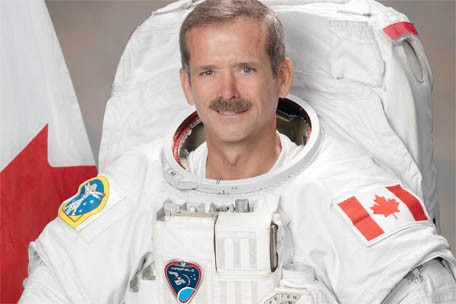
    Enjoy science and wonder what’s out there in space? Exploring the stars as an astronaut can be an out-of-this-world dream turned into a reality.

    The Canadian Space Agency (CSA) seeks out new recruits every decade, and it could be you. From the classroom to the over-the-moon feeling of being at NASA, an astronaut studies and works hard.

    Basic Requirements

    Over 18,000 people applied during the past four recruitment periods, and 14 applicants were selected. The CSA held these recruitment periods in 1983, 1992, 2009, and 2017: this occurs every 8-10 years.

    Canadian permanent residents and Canadian citizens worldwide can apply. However, the CSA gives preference to Canadian citizens.

    The job also requires fluency in either English or French, but both are an asset.

    Educational Requirements

    Astronauts need:

    • A bachelor’s degree in engineering or science fields (such as biology, chemistry, computer science, geology, or math) or a Ph.D. in medicine or dentistry
    • To be a licensed medical professional in Canada or have at least three years of relevant professional experience: a master’s degree is one year of experience and a Ph.D. is three years.

    Physical Requirements

    Astronauts undergo medical examinations by the Canadian Space Agency (CSA), that require certain medical requirements in areas such as:

    • Height
    • Weight
    • Sight
    • Hearing
    • Blood pressure

    Skill Requirements

    Astronauts need skills such as:

    • Communication
    • Integrity
    • Judgement
    • Reasoning
    • Resourcefulness

    Astronaut Training

    After selection, Astronauts train for two years. The basic training includes:

    • Flight training
    • History and fundamentals of space flight
    • Human behaviour and performance
    • Learning Russian
    • Life, space, and materials and fluid science
    • Media relations
    • Parachute jumps
    • Robotics
    • Survival and physical training, first aid, and CPR
    • International Space Station Systems

    Astronauts’ Duties

    Although the CSA is Canadian, Canadian astronauts work in Houston, Texas, at NASA’s Johnson Space Centre.

    After two years of training, astronauts wait for their space mission. During this time, their duties include:

    • Supporting astronauts in space as a Capcom, a “capsule communicator,” that communicates with teams on Earth and in space
    • Choreographing spacewalks, when astronauts do activities outside of the spacecraft
    • Training other astronauts

    Astronauts’ mission duties include:

    • Performing installations, repairs, and maintenance on space crafts and equipment
    • Launching and recapturing satellites
    • Piloting or commanding other crewmates, or being another member of the team

    How Much Astronauts Make

    Depending on the type of astronaut, the salary level varies from $91,300 – $178,400 annually:

    • Entry level astronauts, who need to train
    • Qualified level astronauts, who finish the NASA Astronaut Training Program and wait for an assignment
    • Senior level astronauts, who have finished a space mission before

    How Students Can Prepare

    Younger students can prepare for a career in space by:

    • Studying science, technology, engineering, and mathematics (STEM)
    • Joining STEM clubs in school
    • Volunteering at space-related organizations, like museums, observatories, or planetariums

    Becoming an astronaut is a tough task, but if you stay persistent, study hard, and keep your body in shape, you may join the 14 Canadian astronauts in history to explore this career.

  • Career Profile: Museum Technicians and Conservators

    Career Profile: Museum Technicians and Conservators

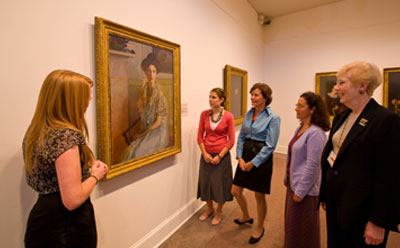
    Visiting a museum can be fun. Learning about history and different cultures through the exhibits is a good way of making the past real. Have you ever thought about the people who put the exhibits together? Museum technicians and conservators help to educate the public about the past. Working in this field can be a good career choice.

    Putting together a museum exhibit involves more than just finding empty spaces in the building. Museum technicians and conservators might have to clean and repair objects first. For example, a piece of cloth with a tear in it might need repair or a picture might need cleaning. Outside experts might need to do this, but often the local museum technicians and conservators do the work themselves.

    Normally, people in this field have a bachelor’s degree in a field like history, special collections, or natural history. This education qualifies them to work in museums, zoos, aquariums, and universities.

    Students learn about the kinds of documents or artifacts to include in each collection and how to describe them to visitors. They learn about the kinds of information that they need to gather and what they need to include in what they give to the public. In high school, students can prepare by taking courses in history, geography, and related topics.

    Suppose that a museum has an exhibit on South African history. The decisions on what artifacts to include would likely come from the curators and other museum officials. Still, the museum technicians and conservators could give advice on how to transport the materials and what to do with them when they arrive. Some materials have to be kept in a cool, dry spot to keep them from becoming mouldy or falling apart. Technicians and conservators can help make those decisions.

    With an exhibit on South Africa, another decision would be about translations. People in South Africa speak a language called Afrikaans, which is related to Dutch. Museum technicians and conservators might decide to translate entire documents or just give summaries of what they say. The same thing can happen for exhibits on all kinds of other subjects at museums and universities. At zoos and aquariums, technicians and conservators might help with exhibits that explain types of animals or how to help keep natural areas safe.

    Museums, universities, and other places where technicians and conservators work often share their exhibits. This is where technicians and conservators can help. Some of their work involves organizing items for display or storage and giving numbers to each one. This helps in keeping track of the items and making sure that the don’t get lost along the way. Often, technicians and conservators photograph the items before they ship them to the new place. Technicians and conservators might help with research, lead tours, and teach courses.

    Salaries for people in this field are normally between about $15 to $31 per hour, with a median of $20 per hour, but it depends on the location and size of the institution. The work can sometimes be physically difficult, but usually, it is a busy but otherwise fairly comfortable job. It might be the right one for you.

    Bibliography:

    ALIS—Government of Alberta. “Museum Technician.” https://alis.alberta.ca/occinfo/occupations-in-alberta/occupation-profiles/museum-technician/.

    CFNC.org. “Museum Technician & Conservator.” https://www1.cfnc.org/Plan/For_A_Career/Career_Profile/Career_Profile.aspx?id=ogUwN6XAP2BPAXKJTUU8a3TSWuRpAXAP3DPAXXAP3DPAX.

    Government of Canada. “Museum Technician in Canada.” https://www.jobbank.gc.ca/marketreport/summary-occupation/16240/ca.

    Study.com. “Museum Technician: Career Information and Background.” https://study.com/articles/Museum_Technician_Career_Information_and_Requirements_for_Becoming_a_Museum_Technician.html

  • Careers & Jobs That Keep You Close to Nature (French version available)

    Careers & Jobs That Keep You Close to Nature (French version available)

    Do you enjoy spending time in nature? Are you curious about which jobs or careers keep you close to nature? If so, the following are a few jobs and careers that may interest you, along with a short description of each. If any of these jobs interest you, do not hesitate to research them some more!

    Marine Biologist

    Marine biologists study the ocean and its relationship with the many organisms living within it. This includes coral reefs. They collect specimens and examine them, and conduct experiments in laboratories.

    Park Ranger

    Park rangers manage parks. These parks could be local parks or even national parks. They are responsible for protecting the wildlife in the park as well as those that are visiting. Park rangers also give tours and guide people throughout the park. They show the many beautiful parts of the park during their tours. A majority of their day is spent outside in nature.

    Nature Photographer

    Nature photographers do exactly what it sounds like. They are photographers who observe and photograph nature without disrupting it. They often travel and spend their time outdoors in nature. Their photos can be used for educational purposes or just to show off the beautiful environment.

    Wildlife Biologist

    Wildlife biologists study wildlife and different animals to understand how they interact with their environment. They study animals’ physical characteristics and behaviours. They also research the impact humans have on wildlife and their natural habitats. Wildlife biologists collect specimens to later analyze in laboratories.

    Environmental Geologist

    Environmental geologists research solutions to issues in the environment. They closely observe and study floods, earthquakes, pollution, and natural hazards. Human interactions with the Earth are also studied. Environmental geologists have to collect samples of soil and rock, conduct surveys, and record information from reports.

    Agriculture and Food Scientists

    Agriculture and food scientists look into crops and farm animals. They find ways to improve the safety and quality of our food. This could be by developing better methods to process, package, and deliver food in ways that won’t negatively affect our health.

    Conservation Scientist

    Conservation scientists work with farmers, foresters and mining companies to determine the safest way to extract natural resources from the Earth without causing damage to the environment. They also analyze damaged forests, usually caused by forest fires and the area’s soil quality.

    Meteorologist

    Meteorologists study the weather. They look into how the weather changes and how it affects everyone on Earth. They spend time in nature collecting data and afterwards analyze the data to understand the weather.

    Wildlife Forensics Specialist

    Wildlife forensics specialists are scientists who investigate wildlife crimes. They collect evidence from animals and their environment to later investigate in laboratories. The evidence collected and examined will help identify crimes that were committed.

    Environmental Engineer

    Environmental engineers use their engineering principles, biology, chemistry, and soil science to evaluate and find solutions to environmental problems. They can work on improving recycling, waste disposal, controlling air pollution, and even climate change. Environmental engineers are often consulted to advise agencies on procedures to clean up contaminated areas.


    Resources

    CareerExplorer. “What does a conservation scientist do?” https://www.careerexplorer.com/careers/conservation-scientist/.

    CareerExplorer. “What does a geologist do?” https://www.careerexplorer.com/careers/geologist/.

    Environmental Science. “What is a Wildlife Forensics Specialist?” https://www.environmentalscience.org/career/wildlife-forensics.

    Kolmar, Chris. “10 Best Jobs for People Who Love Nature.” Zippia. https://www.zippia.com/advice/jobs-nature-lovers/.

    NewScientist. “What Does a Marine Biologist Do?” https://jobs.newscientist.com/article/what-does-a-marine-biologist-do-/.

    Renzulli, Kerri Anne. “15 high-paying jobs for people who love to be outside.” CNBC. https://www.cnbc.com/2019/04/18/15-high-paying-jobs-for-people-who-love-to-be-outside.html.

  • Inspirational Leaders Worth Mentioning

    Inspirational Leaders Worth Mentioning

    When celebrities dominate the news and social media, it can be difficult to narrow in on inspirational leaders, specifically for kids. Whether you are into sports, science or computers, or feel like life offered you a harder hand than your friends, there are people out there to look up to. Here are a few:

    Bill Nye – The Science Guy!
    Bill Nye may be on your radar because of his work on children’s television networks, but he is so much more than that. A Cornell University graduate and real-life super science guy, Nye has worked as a mechanical engineer and co-developed MarDial—a sundial created for the Mars Exploration Rover missions. Meaning, that he has worked for NASA! While his accomplishments are many, it is also inspiring that Nye managed to combine his love of stand-up comedy and performance with his love of science. Using these attributes to teach children about science has been so influential, and he has reached every generation since the early 1990s with ease. The bow-tied super scientist never falls out of obscurity, tackling the issues that are most important to the current day like the most recent climate change debate.

    Bethany Hamilton – Surfer Extraordinaire
    The 25-year-old professional surfer survived a shark attack in 2003, but the incident left her with her left arm bitten off. Not letting that stop her career, Hamilton returned to the professional surfing world and reigned. Her autobiography Soul Surfer: A True Story of Faith, Family, and Fighting to Get Back on the Board is a true tale of perseverance, the deep love of surfing and facing obstacles with a positivity that is hard to achieve. The story of Hamilton proves that no matter what happens to you throughout your life, there is always a way to achieve your dreams and goals. This comes with a lot of hard work and at times, forced positivity- but life is hard and a true judge of character is how you choose to approach it.

    Bill Gates – The Computer Whiz
    Another Bill! You cannot have an inspirational leaders list without an entrepreneur and billionaire. Having co-created Microsoft, Gates has led a long career that has stayed at the forefront of technical creativity and business. His wealth has steadily grown since the 1980s, and he is currently the wealthiest person in the world with a net worth of $77.3 billion US. That is a lot of money, but life isn’t about wealth—Gates has been consistently involved in philanthropic and charitable practices, putting a lot of his money into making the world a better place. Often criticized for not being competitive in the field of software—unlike Steve Jobs etc.—Gates’ calm approach to marketing and capitalism is refreshing in a world that moves too fast at times and to the beat of a very greedy drum.

    Nick Vujicic – Living without Limits!
    This is especially inspiring for those who suffer from disabilities. Vujicic was born with tetra-amelia syndrome; this rare disorder means that he has none of his four limbs. In an age of YouTube, Vujicic testified to a life without limits and working past obstacles, bullying and thoughts of suicide. If you ever feel limited—even without disabilities—just remember that no matter how hard it is there is always hope. You can take control of your life no matter the home situation, financial situation, personal relationship or physical limitations. Vujicic is now an international motivational speaker and author. Check out his YouTube videos to get inspired and add a push to your day.

    BONUS – The people in your own life!
    Let’s not forget about parents, siblings and teachers…the everyday heroes that inspire you and provide guidance. Believe it or not, these people will have the most long-lasting effect on you. Often times the person you wish to become will mirror the adult in your life that you respect the most.

  • Find Your Musical Inspiration! (French version available)

    Find Your Musical Inspiration! (French version available)

    Having a deep-seated love of music is one of life’s simplest and yet greatest pleasures. Whether you have an appreciation for hearing and supporting music, or you have a passion for creating it yourself, there will be few things as rewarding. If you grow to love music as a kid, it will follow you throughout your whole life.

    If you are anywhere between grades one and six, chances are you have met the recorder: a simple way to learn basic notes and songs. Maybe you love playing it, or maybe you find it boring. Whatever you feel, in a bit we’ll talk about ways to get the most out of your time with the instrument. When I was in grades five and six—along with being introduced to the recorder—my elementary school provided classes with a ‘music period’. This was my absolute most favourite class, and I was not alone. Our teacher Mr. B would sit on a wooden stool in front of the class with a guitar balanced on his knee. We would sing along to songs like “If I Had a Million Dollars,” “House of the Rising Sun” and “Puff the Magic Dragon.” There is something about collaborating and creating that makes school so meaningful and—dare I say it—Fun!

    Depending on your school, typically band classes will be offered starting in grades six or seven. Here, you’ll get to choose an instrument (like the flute, saxophone, percussion etc.) For some, this part of school isn’t fun because it seems like homework…like you’re being forced to do it. Don’t let the school have that kind of power over you. This is YOUR time. YOU get to pick the instrument, and maybe your teacher decides what you play at school—but at home…YOU’RE the conductor.

    Ways to find your own musical inspiration:

    • If you play an instrument (even if it’s the recorder!) find some sheet music outside of school. Songs you love! Google search free sheet music or buy some with your allowance. Do you love The Beatles? The internet is full of free sheet music and if you’ve learned basic music reading skills at school, you can definitely play “Here Comes the Sun.” Find a way to link up your personal taste and the tools your school has provided. If you find the recorder boring, play your favourite songs on it—or better yet, create your own.

    • What is your favourite movie, TV show or video game? All of these are scored—meaning they all have music specially written or handcrafted for them. Make them your obsession and they will become the soundtrack to your life.

    • Get your parents to take you to middle and high school band concerts. See what the older kids are playing and maybe something will call out to you.

    • Ask a role model what their favourite album is and listen to it. Associating someone you admire with music may mean a lot to you one day.

    Who knows- maybe you’ll love playing musical instruments so much, you’ll choose it as a career. A lot of bands/ solo artists need what you call “session players”; musicians that come into the studio to record on an album. For example, if there is a solo artist who needs a saxophone player on his album, he can contact a recommended saxophone session player.

    “Usually such musicians are not permanent members of a musical ensemble with the singers that they are accompanying and they often do not achieve individual fame in their own right as soloists or bandleaders.” (https://en.wikipedia.org/wiki/Session_musician)

    Whether you just want to play music for fun or make it a career somehow, music is always needed in the world. If you have a passion for music and are inspired enough by other musicians, get playing!

  • Loneliness in the Age of Social Media

    Loneliness in the Age of Social Media

    By Rabia Khan

    Loneliness is increasing in youth at the speed of a thunderbolt. Where social media is consumed to fill the dark void inside our souls, it is also contributing to feelings of immense loneliness and this cannot be avoided easily at this time and age.

    While social media transmits useful information, at the same time the digital world fuels dark energies into our lives unwillingly. Loneliness is one of the worst feelings ever and social media enhances it more.

    For some people, embracing self-isolation mode is easy because they are so used to being alone all the time, but for people who constantly sit on their phones every day, a cloud of loneliness can unwrap their mind, body and soul. Loneliness can take over the lives of people and put their mental health on the edge. Watching Instagram reels daily and scrolling Instagram feeds can become highly addictive and can lead to unhealthy coping mechanisms. Escapism feels overwhelming when you become lonely and lost in the age of social media.

    At times, people tend to become fragile and vulnerable, and it is during these sensitive times, that they feel an increasing need to consume social media. It feeds the mind in the most unhealthy ways and some don’t even realize it.

    The pressure often gets to people, to be ‘perfect’ in a public setting, and to escape such situations, social media becomes the only way to avoid reality and the present moment. The majority of youth is hyper-dependent on social media just to ignore the outside world or inhibit any sort of human interactions.

    Loneliness has become the new social norm in the age of social media and the youth are adjusting to feeling lonely quite well. The high rate of suicide is increasing due to self-isolation among young people. However, with that being said, substance use and drug/alcohol addiction have also been increasing due to loneliness. The consequences of being addicted to social media come with many cons and fewer pros.

    The current generation seems to be lost, yet comfortable in their loneliness. We cannot mix loneliness with being self-sufficient and independent. A lot of people misinterpret and misunderstand being alone all the time with their phones.

    Limiting the use of social media can make people feel less lonely, only if they treat their mental health disorders and learn to interact and mix with the outside world. Many young people are prone to experiencing identity crises because of self-isolation. Mental health is at risk due to excess consumption of social media, which pulls the youth into various pressures. This in return, forces them to become lonely. Social media is a form of escapism that puts many at risk of suicide.

    Self-care tip: Give yourself a social media detox, and become conscious about your current surroundings. Practicing new habits and unlearning old ones can inhibit feelings of loneliness and help control excessive social media consumption.

  • Career Profile: Architect

    Career Profile: Architect

    Looking around your town or city, you will see many different buildings and infrastructure: houses and stores, schools and community centers, shopping malls and places of worship.  These buildings can be plain, or they can be beautiful works of art.  Regardless of the type of building, however, it needs to be designed.  This type of building design work is done by professionals called architects.

    What Does an Architect Do?

    Architects are responsible for designing buildings and making sure that they look nice, that they are safe, and that they are functional.  Architects will use both artistic skills and technical knowledge to create drawings and plans of a building’s interior and exterior, and these drawings will be used to create the blueprints that are used for construction.  They will also oversee projects from beginning to end, which involves working with the company that wants the building, the city or town where it is being built, and interacting with the construction teams who are doing the day-to-day work.

    What Skills Do Architects Need?

    Architects need a wide variety of skills to be effective in their work.  This includes artistic abilities to imagine and draw illustrations of the buildings they are thinking of, drafting skills to draw technical layouts and blueprints, and a strong understanding of physical sciences including engineering and math.  They also possess knowledge about building codes, environmental regulations, local and provincial laws regarding construction, and much more.

    Architects work closely with clients and construction crews, so they need to have strong communication skills to explain their ideas, and strong interpersonal skills to work with others. Most architects work in offices, either as part of an architecture firm or as individuals who work independently.  They can be hired by private companies, the military, or the government.

    To work as an architect, you need to study architecture and earn a degree from a college or university.  You will also need to complete an internship under a registered architect and take an architect registration exam.

    The average yearly salary for architects working in Canada is around $71,800. Depending on where they work and how many years of experience they have, architects can make anywhere from about $50,000 to $104,000 per year,

    Where Do Architects Work?

    There are jobs for architects all across Canada and around the world, for projects large and small.  No matter what kind of architectural projects you want to work on, from huge skyscrapers and impressive artistic designs to houses, schools, hospitals, and more, there is no end to the opportunities in an architect’s career.  This also means as an architect you may have the option to travel to other cities and countries.

    A lot of an architect’s work will be done in an office environment, such as when working on creating drawings and blueprints or building example models of a building design, and can involve long hours sitting at a desk and working at a drafting table or computer.  Architects will also regularly work on-site during the construction and finishing stages of a project, which can involve a significant amount of standing and walking.  Some architects may even work remotely from home, only visiting offices or job sites occasionally.

    Architecture is a very important part of the many buildings that make up a town or city. Architects are the people who help make them happen. If all of this sounds fun and exciting, then architect might be the job for you!


    Sources

    CareerExplorer. “What does an architect do?” https://www.careerexplorer.com/careers/architect/

    Job Bank. “Architect in Canada.” https://www.jobbank.gc.ca/marketreport/requirements/17867/ca

    PayScale. “Design Architect.” https://www.payscale.com/research/CA/Job=Design_Architect/Salary

    StudentScholarships.org. “What do architects do?” https://studentscholarships.org/salary/556/architects.php

  • Bringing in the New Year Positively and Progressively!

    Bringing in the New Year Positively and Progressively!

    There are lots of New Year resolutions that many people break within half of a year, or less. If the resolutions work for you, great! You can find something that you want to work on for school: better grades, for example. How would you accomplish this? Would it be developing more effective studying habits, getting additional help from a tutor, your teacher, or a classmate to help you understand the material better? If it’s due to lack of time, scheduling your time wisely can help. You can create blocks of time that cannot be moved: school, sleep and work. Those are the things that you must do- after that, you can maneuver your schedule to make other things fit. Make sure to keep some breaks for yourself after finishing the day’s must-do’s- you deserve it!

    You don’t have to make resolutions if you don’t want to, of course. Instead, you can choose instead to bring in the New Year doing something positive in your student life. Things can always be turned around for your grades which are very important for senior year, but what happens if you’ve had a really lousy year?

    It can happen. Today is a brand new day.

    You can turn things around if you want to, and if you try hard enough. You can focus on your grades if that’s a weak spot. You can focus on doing something you want to do, whether that means your grades, your confidence (a new haircut, maybe?), volunteering (this can help with university and college, but also future job prospects), or even a new team sport (soccer, lacrosse?). This is all progressive thinking: new ideas can help you think creatively in both your academic and personal lives.

    When it comes to bringing in the New Year positively and progressively, you are looking to help yourself first. You want to be the best person you can be. Don’t compare yourself to others, because we all have our strengths and weak spots. Look for ways to improve. Look for ways that will help you develop your future: volunteering, getting better grades or expanding your knowledge and range of experiences with something not taught in your school.

    Making new friends is another possibility. It’s intimidating to consider that when you’ve grown up with same group of people, but think of it this way: it’s a new chance to make a new friend, and you may have a lot in common. It could be someone new who can help you have a great year!