
Category: Elementary

  • The Health Benefits of Swimming and Tips for Practicing Swimming (French version available)

    The Health Benefits of Swimming and Tips for Practicing Swimming (French version available)

    Jobs People Do | JobsPeopleDo.com

    Swimming is an activity that people of all ages can do. It has many health benefits, and it is great for your body as well as your mind.  If you don’t swim regularly, maybe this article will convince you to hop in the pool more often!

    So, what are some of the benefits of making swimming a habit?

    It Can Reduce Stress

    Like other exercises, swimming can reduce your stress. It can help you keep your mind off of things that could be stressing you. When you exercise, your body reduces the stress hormones and releases endorphins. Endorphins are natural “feel-good” chemicals that help boost your mood. If you’re feeling stressed, go for a swim and you will feel better by the time you get out.

    It Works Out Your Entire Body

    Swimming works out your entire body. It may seem like your arms and legs do most of the work, but that is not the case. Swimming can strengthen your core, tone muscles, build strength and endurance, and also increase your heart rate. When swimming, you will feel a burn in your body in as little as 20 minutes. There are many different strokes you could do. Each of these strokes focuses on different muscle groups. These strokes include breaststroke, backstroke, sidestroke, butterfly, and more.

    It Has a Lower Impact on Your Joints

    Most workouts are either high intensity and hard on your joints or low intensity and easy on your joints. Swimming has a lower impact than other cardio exercises. This is because water holds you up and will reduce the stress and the impact on your joints. Since you are being held up by the water, your chances of injury are reduced.

    Tips for Practicing Swimming

    • Don’t Waste Your Breath

    You may end up inhaling water if you gasp for air every time your head reaches the surface. Instead, you should exhale all the air from your lungs before taking another breath. Beginners usually need to take a breath more often, but as you build endurance, you’ll be able to control your breath much better. When taking a breath, make sure to alternate sides. This will reduce the strain on your neck and shoulders.

    • Keep Practicing

    When you watch professional swimmers swim, you may think that they make it look easy and relaxed. This is because they have been practicing for a very long time and still continue practicing. In order to improve your swimming skills, it is important to keep practicing.

    • Get Feedback

    Receiving and listening to feedback is a good way to know what you are great at doing and what you need to work on. If you can, try to get a coach or a friend to watch you swim and later give you feedback. Another option is to record yourself swimming. The next time you swim, make sure to keep the feedback in mind.

    If you’re looking for a low-impact, stress-reducing workout for your entire body, then go hit the pool!


    Resources

    Bean, Matt. “Seven Steps To Better Swimming Technique.” Runner’s World. https://www.runnersworld.com/uk/training/triathlon/a764520/seven-steps-to-better-swimming-technique/.

    Berry, Jennifer. “Endorphins: Effects and how to increase levels.” Medical News Today. https://www.medicalnewstoday.com/articles/320839.

    House, Lydia and Morgan Fargo. “12 major benefits of swimming that’ll convince you to take it up, from better sleep to weight loss.” Women’sHealth. https://www.womenshealthmag.com/uk/fitness/g27268961/benefits-of-swimming/.

    Marcin, Ashley. “What Are the Top 12 Benefits of Swimming?” Healthline. https://www.healthline.com/health/benefits-of-swimming#get-started.

    Petty, Amber. “13 Reasons to Just Keep Swimming.” Greatist. https://greatist.com/health/benefits-of-swimming.

    Poirier-Leroy, Olivier. “Swimming Tips: The 7 Fundamentals of Faster Swimming.” YourSwimBook. https://www.yourswimlog.com/swimming-tips/.


  • Careers & Jobs That Keep You Close to Nature (French version available)

    Careers & Jobs That Keep You Close to Nature (French version available)

    Jobs People Do | JobsPeopleDo.com

    Do you enjoy spending time in nature? Are you curious about which jobs or careers keep you close to nature? If so, the following are a few jobs and careers that may interest you, along with a short description of each. If any of these jobs interest you, do not hesitate to research them some more!

    Marine Biologist

    Marine biologists study the ocean and its relationship with the many organisms living within it. This includes coral reefs. They collect specimens and examine them, and conduct experiments in laboratories.

    Park Ranger

    Park rangers manage parks. These parks could be local parks or even national parks. They are responsible for protecting the wildlife in the park as well as those that are visiting. Park rangers also give tours and guide people throughout the park. They show the many beautiful parts of the park during their tours. A majority of their day is spent outside in nature.

    Nature Photographer

    Nature photographers do exactly what it sounds like. They are photographers who observe and photograph nature without disrupting it. They often travel and spend their time outdoors in nature. Their photos can be used for educational purposes or just to show off the beautiful environment.

    Wildlife Biologist

    Wildlife biologists study wildlife and different animals to understand how they interact with their environment. They study animals’ physical characteristics and behaviours. They also research the impact humans have on wildlife and their natural habitats. Wildlife biologists collect specimens to later analyze in laboratories.

    Environmental Geologist

    Environmental geologists research solutions to issues in the environment. They closely observe and study floods, earthquakes, pollution, and natural hazards. Human interactions with the Earth are also studied. Environmental geologists have to collect samples of soil and rock, conduct surveys, and record information from reports.

    Agriculture and Food Scientists

    Agriculture and food scientists look into crops and farm animals. They find ways to improve the safety and quality of our food. This could be by developing better methods to process, package, and deliver food in ways that won’t negatively affect our health.

    Conservation Scientist

    Conservation scientists work with farmers, foresters and mining companies to determine the safest way to extract natural resources from the Earth without causing damage to the environment. They also analyze damaged forests, usually caused by forest fires and the area’s soil quality.

    Meteorologist

    Meteorologists study the weather. They look into how the weather changes and how it affects everyone on Earth. They spend time in nature collecting data and afterwards analyze the data to understand the weather.

    Wildlife Forensics Specialist

    Wildlife forensics specialists are scientists who investigate wildlife crimes. They collect evidence from animals and their environment to later investigate in laboratories. The evidence collected and examined will help identify crimes that were committed.

    Environmental Engineer

    Environmental engineers use their engineering principles, biology, chemistry, and soil science to evaluate and find solutions to environmental problems. They can work on improving recycling, waste disposal, controlling air pollution, and even climate change. Environmental engineers are often consulted to advise agencies on procedures to clean up contaminated areas.


    Resources

    CareerExplorer. “What does a conservation scientist do?” https://www.careerexplorer.com/careers/conservation-scientist/.

    CareerExplorer. “What does a geologist do?” https://www.careerexplorer.com/careers/geologist/.

    Environmental Science. “What is a Wildlife Forensics Specialist?” https://www.environmentalscience.org/career/wildlife-forensics.

    Kolmar, Chris. “10 Best Jobs for People Who Love Nature.” Zippia. https://www.zippia.com/advice/jobs-nature-lovers/.

    NewScientist. “What Does a Marine Biologist Do?” https://jobs.newscientist.com/article/what-does-a-marine-biologist-do-/.

    Renzulli, Kerri Anne. “15 high-paying jobs for people who love to be outside.” CNBC. https://www.cnbc.com/2019/04/18/15-high-paying-jobs-for-people-who-love-to-be-outside.html.

  • Find Your Musical Inspiration!

    Find Your Musical Inspiration!

    Jobs People Do | JobsPeopleDo.com

    Having a deep-seated love of music is one of life’s simplest and yet greatest pleasures. Whether you have an appreciation for hearing and supporting music, or you have a passion for creating it yourself, there will be few things as rewarding. If you grow to love music as a kid, it will follow you throughout your whole life.

    If you are anywhere between grades one and six, chances are you have met the recorder: a simple way to learn basic notes and songs. Maybe you love playing it, or maybe you find it boring. Whatever you feel, in a bit we’ll talk about ways to get the most out of your time with the instrument. When I was in grades five and six—along with being introduced to the recorder—my elementary school provided classes with a ‘music period’. This was my absolute most favourite class, and I was not alone. Our teacher Mr. B would sit on a wooden stool in front of the class with a guitar balanced on his knee. We would sing along to songs like “If I Had a Million Dollars,” “House of the Rising Sun” and “Puff the Magic Dragon.” There is something about collaborating and creating that makes school so meaningful and—dare I say it—Fun!

    Depending on your school, typically band classes will be offered starting in grades six or seven. Here, you’ll get to choose an instrument (like the flute, saxophone, percussion etc.) For some, this part of school isn’t fun because it seems like homework…like you’re being forced to do it. Don’t let the school have that kind of power over you. This is YOUR time. YOU get to pick the instrument, and maybe your teacher decides what you play at school—but at home…YOU’RE the conductor.

    Ways to find your own musical inspiration:

    • If you play an instrument (even if it’s the recorder!) find some sheet music outside of school. Songs you love! Google search free sheet music or buy some with your allowance. Do you love The Beatles? The internet is full of free sheet music and if you’ve learned basic music reading skills at school, you can definitely play “Here Comes the Sun.” Find a way to link up your personal taste and the tools your school has provided. If you find the recorder boring, play your favourite songs on it—or better yet, create your own.

    • What is your favourite movie, TV show or video game? All of these are scored—meaning they all have music specially written or handcrafted for them. Make them your obsession and they will become the soundtrack to your life.

    • Get your parents to take you to middle and high school band concerts. See what the older kids are playing and maybe something will call out to you.

    • Ask a role model what their favourite album is and listen to it. Associating someone you admire with music may mean a lot to you one day.

    Who knows- maybe you’ll love playing musical instruments so much, you’ll choose it as a career. A lot of bands/ solo artists need what you call “session players”; musicians that come into the studio to record on an album. For example, if there is a solo artist who needs a saxophone player on his album, he can contact a recommended saxophone session player.

    “Usually such musicians are not permanent members of a musical ensemble with the singers that they are accompanying and they often do not achieve individual fame in their own right as soloists or bandleaders.” (https://en.wikipedia.org/wiki/Session_musician)

    Whether you just want to play music for fun or make it a career somehow, music is always needed in the world. If you have a passion for music and are inspired enough by other musicians, get playing!

  • Career Profile: Hotel Front Desk Clerk (French version available)

    Career Profile: Hotel Front Desk Clerk (French version available)

    If you go on a trip, you will likely stay at a hotel at some point. The person you meet first at any hotel is the front desk clerk. People in this job have a very necessary role in keeping hotels organized and welcoming places. If you enjoy meeting people and keeping information available, the job of hotel front desk clerk could be right for you.

    When people go to a hotel, they need to pay for their stay, find their rooms, and receive their keys. Sometimes they need information about tours, restaurants, and places to visit. Front desk clerks can help with all of that.

    Basically, front desk clerks greet new guests, take payments, and help guests with whatever they need. They respond to guests’ complaints or questions. These clerks answer phones and take messages for others if necessary, make or cancel reservations, check people in or out of the hotel, keep a record of where and how many guests are staying at the hotel, and sometimes help with cleaning or maintenance. The job might be more complicated at a large hotel than at a small country inn, but the main tasks are the same.

    Educational requirements for hotel front desk clerks vary, but a high school diploma is normally required, as well as basic computer skills. A two- or four-year college diploma in hotel management or hospitality can also be very helpful, as well as a trade certificate in guest services. If possible, completing an internship at a hotel or similar place related to the hospitality industry is a good idea. Check the requirements for a particular hotel or chain of hotels, since these conditions can vary.

    In general, job prospects for hotel front desk clerks tend to be very dependent on the economy and other factors. When the economy is good, people tend to travel more often, and hotels need more staff to keep up with their needs. Like in many other industries, the demand for hotels has decreased during the pandemic, making it more difficult to find work.

    Hotels still need to stay open for business travellers and others who need a place to stay. However, job prospects will likely be moderate in the next year or two, although openings will always be available if people are willing to move to other cities or provinces for jobs.

    Generally, the job of a front desk clerk at a hotel is not very physically demanding, but it can be tiring and stressful. Hotel guests can be difficult, and sometimes the clerk must attend to their needs while also answering phones and taking care of other tasks. People in this role might sometimes supervise other staff, and they need to be good at dealing with others. Some experience in dealing with people from other countries is also useful since guests could come from anywhere in the world.

    People who are calm, friendly, and well-organized can do well as front desk clerks. The hours can be long, and people in this role should have a certain degree of stamina. Although people can continue in this job for many years, they generally move into other roles as they age. In most cases, wages in this role start at just over $13 per hour and can rise to more than $20 per hour or between about $28,000 and $43,000 per year. More jobs are likely to be available in large cities than in small towns, but even a small country inn would need a front desk clerk.

    The hotel industry can be difficult but also rewarding. If you like to help people feel good about their travels, the role of front desk clerk might be right for you.


    Bibliography:

    Glassdoor. “Hotel Front Desk Clerk.” https://www.glassdoor.ca/Job-Descriptions/Hotel-Front-Desk-Clerk.htm.

    Job Bank. “Hotel Front Desk Clerk in Canada.” https://www.jobbank.gc.ca/marketreport/outlook-occupation/6545/ca.

    Indeed. “Hotel Front Desk Clerk.” https://ca.indeed.com/hire/job-description/hotel-front-desk-clerk.

    Payscale Canada. “Front Desk Clerk: Hourly Rate.” https://www.payscale.com/research/CA/Job=Front_Desk_Clerk/Hourly_Rate.

  • The Pros and Cons of Hybrid Learning (French version available)

    The Pros and Cons of Hybrid Learning (French version available)

    By Avreet Jagdev

    COVID changed the world in more ways than we can count – from the way that we shop, to the way we work and go to school. When the pandemic first hit, educational institutions switched primarily to online learning. As people became more accustomed to a world with COVID in it, things slowly began to switch back to in-person.

    Even now, years after the outbreak, many schools and post-secondary institutions are hybrid instead of fully in-person. This means that learning is partly online and partly in-person. Many students have gotten accustomed to learning in this way, but what are the pros and cons of the hybrid learning model?

    Pros:

    1. Flexibility

    One of the biggest pros of hybrid learning is the flexibility that it offers. Many courses are delivered asynchronously, meaning you can work on coursework whenever it works best for you. If you are a morning person, you can wake up early to get things done. If you are most productive after a meal, you can schedule your school time accordingly.

    1. Accommodates various learning styles

    Hybrid learning gives students more of an opportunity to study using learning styles that work for them. For example, if you learn better by reading, you can turn on the captions or read the transcript of your lecture instead of simply watching it. Visual learners can take their time studying slides, and auditory learners have the freedom of rewinding, fast-forwarding, slowing down or speeding up their lectures.

    1. Work at your own pace

    A large advantage of hybrid learning is that it allows students to work at their own pace. You don’t have to rush writing your notes because you can pause when needed. If you want to spend more time doing a reading or a class activity, you’re not restricted to the one- or two-hour block that your in-person class would be. If you want to spread work out over several days instead of getting it done in a single day, you’re free to do so!

    1. Access to a larger community of students

    A great thing about hybrid learning is that you can do it from your own home! This means that students who live further away from their schools can still access their education without having to travel too far, as often. This makes the hybrid model more inclusive and accessible to a variety of students.

    Cons:

    1. Reduced face-to-face interactions

    One of the most obvious drawbacks of hybrid learning is that it lessens the frequency of face-to-face interactions with teachers and peers, which can be instrumental in a student’s learning.

    1. Requires strong organization and self-motivation

    With the additional flexibility hybrid learning brings, it also brings the need for organization, self-motivation, and time management. It is easier to let things pile up when you don’t need to physically be somewhere in the morning, or when you have the opportunity to do it at your own pace.

    1. Requires a good study space and technology

    Lastly, hybrid learning requires access to reliable technology as well as a space you can study in. For students from lower-income or larger families, this isn’t always possible. Some learners might have to share a device with a sibling or study in an area with the rest of their family, which can be less than optimal.

  • American Sign Language Interpreter

    American Sign Language Interpreter

    By Helena Wright

    American Sign Language (ASL) is known as a language that uses various hand gestures to symbolize words and meanings. Sign language interpreters essentially translate the gestures that individuals use into a vocal language, whether it be English, French or any other. Though sign language is a visual language and could be seen as “common sense,” the gestures used are much more complex and difficult. People who practice ASL also move much quicker, and those who are uneducated in the language would have trouble keeping up or even recognizing the words that they are saying. That is why we have interpreters, because, like any other language, there are barriers.

    ASL is usually used for individuals who are hard of hearing, deaf, or non-verbal. Those who go into this profession would need to be educated on deaf culture and studies. It is said that just over 350,000 Canadians would be linguistically or culturally deaf. Meaning that many people in Canada don’t speak either English or French, but still have to communicate with others who do not sign. Interpreters, like translators, have a whole spectrum of varying jobs they can do. All of which have different hours, job descriptions and salaries. Interpreters must also be good at communication, quick thinkers and have a deep understanding of both ASL and the other languages. An example of contrasting positions would be as a child’s aid worker helping integrate a kindergarten student into their class or in a courtroom, in translating a testimony. There are universities such as Carlton and provincial colleges that allow individuals to learn academically, earning credits and, in some cases, degrees.

    The average salary is $84,000 for an interpreter; with more experience and proficiency, the opportunity for growth and advancement arises. The field of interpretation usually, though not always, leads to different fields of social work. Social work is mentally and emotionally straining and requires some discretion and support. Physically, the movement of sign language can be very difficult for those who do not have optimal mobility in their hands and wrists. Overall, sign language interpreters are seen as those who allow and help those who are unable to communicate their thoughts into words.


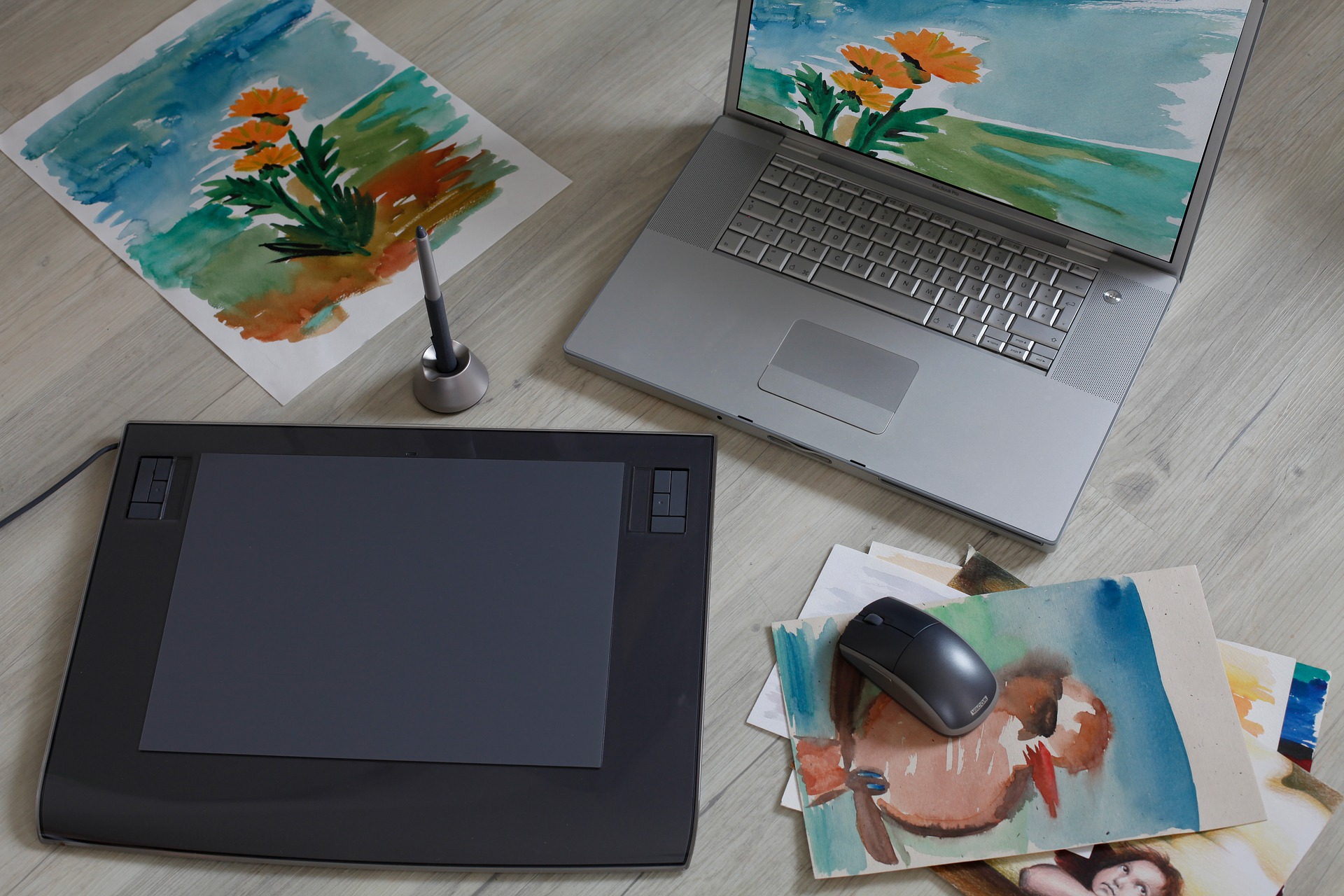
  • From Paper to Screen: A Beginners’ Guide to Virtual Drawing

    From Paper to Screen: A Beginners’ Guide to Virtual Drawing

    When you think of drawing, the first image that probably comes into your mind is a pen and paper. However, did you know that in the mid-1950s, there was a French electrician who serendipitously found an alternative to the good ol’ pen and paper to show of one’s talent for illustrations? One day, Andre Cassagnes was simply installing a light switch plate and peeled off its translucent decal, making pencil marks on it. He realized then that he could make a drawing toy.

    This invention would eventually be known as the Etch A Sketch, and with the help of business partner Paul Chaze and accountant Arthur Granjean, the man who filed and paid for the patents, Cassagnes’ drawing toy has sold 175 million units worldwide since it hit the market in 1960. Today, surprisingly, it remains a well-loved toy despite the popularity of video games, gaming consoles, and mobile game apps.

    Etch A Sketch has helped countless artists develop their drawing skills. There has been a slew of impressive artworks created through this modest playing device, from the Mona Lisa to Mount Rushmore. This proves that honing your sketching skills doesn’t necessarily have to involve a pen and paper. It can be done through an Etch A Sketch or, if you’re tech-savvy, a tablet. If you’re interested in virtual drawing, here’s a guide to get you started.

    Get the right tools.

    Just as carpenters need the right tools to build, artists need to be well-equipped to create. Virtual drawing tools abound – you can use different types of tablets, pencils, or styluses to sketch your masterpiece. Tablets can range from graphic tablets, display tablets, or all-in-one tablets. The costs for these devices can vary, and the all-in-one tablets carry the highest price tag out of the three types. However, as the name suggests, you can use this type of tablet more as it’s a hybrid of a tablet and a computer.

    Choose the right software.

    There’s a plethora of apps you can put to the test, like Adobe Photoshop Sketch, Adobe Illustrator Draw, Inspire Pro, Procreate, Pixelmator Pro, Inkist, Sketch Club, and plenty of others. Make sure to take the time to look into the costs involved for these applications as some are free, while others entail fees, usually in the form of a monthly subscription. In addition, there are apps that are compatible with specific operating systems. It’s truly up to you to decide which you’ll be most comfortable with.

    Learn with the professionals.

    What’s great about virtual drawing is that there are various opportunities to learn without having to step out of your home. There are paid classes where professionals can teach you about techniques, and there are free ones which can offer you the same thing. If you want a more methodical approach, an actual class requiring enrollment seems like the ideal choice, but if you’re looking to expand your knowledge without necessarily spending anything, virtual drawing tutorials are available on YouTube.

    Connect with fellow virtual drawers.

    Building a connection with people with similar interests can also help you enhance your sketching skills since you can exchange tips and suggestions. It’s also a great way to learn about different types of artists, and this can help you figure out your own style. Plus, you can arrange for meet-ups like museum trips, where you can get inspired and get your creative juices flowing.

    While pen to paper will never die, it’s great that artists now have an option to doodle with their tablets and make it easily accessible to others. So it’s time to start drawing!


    Sources

    Belliveau, David. “Digital Painting: The Ultimate Beginner’s Guide.” Paintable. https://paintable.cc/digital-painting-the-ultimate-beginners-guide/

    Eisley, Will. “The Benefits of Digital Drawing.” TechCrunch. https://techcrunch.com/2016/02/24/the-benefits-of-digital-drawing/#:~:text=The%20benefit%20of%20drawing%20with,from%20scratch%20on%20the%20desktop

    Fawcett, Kristin. “11 Well-Drawn Facts About The Etch A Sketch.” Mental Floss. https://www.mentalfloss.com/article/71947/11-well-drawn-facts-about-etch-sketch

    Hilder, Rosie. “The best online art classes in 2022.” Creative Bloq. https://www.creativebloq.com/features/online-art-classes

    HuffPost. “15 Amazing Etch-A-Sketch Creations.” https://www.huffpost.com/entry/etch-a-sketch-anniversary_n_3581395

    Mudgal, Amrish. “45 Best Drawing Apps and Art Apps in 2022 (Free & Paid).” Pixpa. https://www.pixpa.com/blog/drawing-apps

    Ravenscraft, Eric. “Can the iPad Replace a Professional Drawing Tablet?” PCMag. https://www.pcmag.com/news/can-the-ipad-replace-a-professional-drawing-tablet

    Rosenfeld, Laura. “A Brief History Of The Etch A Sketch: Why We’re Still Fascinated By The Toy After 55 Years.” Tech Times. https://www.techtimes.com/articles/67257/20150710/etch-a-sketch-history.htm

  • Why Should I Take French Classes?

    Why Should I Take French Classes?

    French might not be your favourite subject. I mean, it might be – and if it is, you should definitely take it. Keep learning and improving, discover new words, and build on what you already know. But it probably isn’t your favourite subject, or you wouldn’t be having a hard time deciding whether or not to take it!

    If you struggle with French, why should you continue to take it?

    It’s always better to start early. I can’t tell you how many people I’ve heard, as adults, say that they wish they’d paid more attention to French while they were in school. Some have tried to learn French later, but it’s always easier to build on what you’ve known for years than to start from scratch.

    Knowing French will help you to learn other languages. Even if you aren’t interested in knowing French, learning it anyway will make it much easier for you to learn languages in the same “family.” For example, you will have an easier time learning Italian, Spanish, or Romanian if you already know French.

    Your job choices will double – at least – if you speak French. No matter what you want to do when you’re older, you will have many more opportunities to do it if you speak French. Most jobs in Ontario actually require people to speak and understand both English and French.

    You’ll be able to watch and read some pretty cool stuff. If you like reading comic books, your library will double. You’ll be able to read things that French kids enjoy, like Astérix and Obélix. You can watch movies like Le Roi et L’Oiseau. That has the added bonus of being little brother or little sister-proof, so when you feel like a break, you can pop in a French DVD – they won’t understand! Voilà – instant alone time.

    Before you decide to stop taking French, think carefully about whether or not you might one day wish that you hadn’t. Make a pro/con list. Talk to your parents, or do some French research online. If you decide that you definitely don’t want to keep learning French, fine – but make sure that you don’t stop just because it’s difficult. It’s usually the harder things in life that end up being most worthwhile.

  • Artistic Director Career Profile

    Artistic Director Career Profile

    An event like a play or a ballet can seem very simple to the people in the audience, but a lot of work goes into putting everything together. Many people are part of the process, but one of the most important is the artistic director. People in this job work with playwrights, directors, managers, and others involved in a production to help make it all come together. If you enjoy the performing arts and are good at dealing with people, this job could be a good choice.

    Many artistic directors work with theatre companies, where the first task is to choose what to perform with the group. This aspect can be difficult since the artistic director needs to consider the abilities of the performers, the cost of setting up the stage, and much more. An artistic director might choose a play that has already been written or commission someone to write a new one, depending on the theatrical group and what kinds of plays are available. The selection of plays might follow a theme or be based on other criteria.

    Once the schedule is set, the artistic director begins to make arrangements for the season. This part involves hiring managers, set and costume designers, performers, and anyone else who is needed for the show. Dealing with the budget is also an important part of an artistic director’s job, and being able to speak with people at charities, government agencies, and other funding groups is important.

    As with many jobs, being able to read and write well is important for artistic directors. In high school, courses in English and mathematics are useful. Theatre courses are also good, and business courses could also be valuable. Over half of artistic directors have a bachelor’s degree and some have a master’s degree. However, in some cases, someone with high school or a GED can find work as an artistic director. Generally, salaries start at $40,000 and can rise to $109,000 per year.

    Working as an artistic director normally does not involve much physical strength, but it can require endurance to manage long days. Normally the work is indoors, although some people might work in outdoor theatres. Being able to work with people, including possibly spending long periods on the phone, is important.

    Artistic directors require patience, persistence, and the ability to make good choices. A bad choice of play or a wrong theatre could cost the group large amounts of money. Thus, artistic directors need to be sure to gather their information carefully and to find the best options for what they need. Much of this kind of information comes with experience, but even young artistic directors can find a good group of people to help them.

    Normally, an artistic director will personally direct at least one performance each year. This task involves knowing about acting, movement on the stage, special effects, costumes, and anything else that is part of the performance. The artistic director should have a wide range of knowledge about the theatre and different styles of acting. For some productions, the artistic director might need to know about music, dancing, sword fighting, or other special skills.

    Working as an artistic director can be a challenging job, but it can also be exciting for people who enjoy the performing arts. It could be the right job for you.


    Bibliography:

    American Association of Community Theatre. “Artistic Director.” https://aact.org/artistic-director.

    Glassdoor. “Artistic Director Salaries in Canada.” https://www.glassdoor.ca/Salaries/artistic-director-salary-SRCH_KO0,17.htm.

    IESA: Arts & Education. “Artistic Director: Job Description.” https://www.iesa.edu/paris/news-events/artistic-director.

    Payscale Canada. “Average Artistic Director Salary in Canada.” https://www.payscale.com/research/CA/Job=Artistic_Director/Salary.

    Zippia. “How To Become an Artistic Director.” https://www.zippia.com/artistic-director-jobs/.

  • Learning on the Job: My Experience as A Fast-Food Worker

    Learning on the Job: My Experience as A Fast-Food Worker

    During the summer after grade 10, I got a part-time job in fast food, where I worked five-hour shifts, Monday through Friday. My tasks were what many normally associate with these kinds of positions. When I started, cleaning was my main responsibility. I’d wipe down tables, sweep and mop the floor, wash trays, replenish dining room supplies, and take out the garbage just before leaving for the day. After that, helping with food preparation, like making sandwiches, became another regular task. The last was using the cash registers.

    As mentioned above, I started off with cleaning and ended up creating a comfortable routine for myself. Nevertheless, it was all I did for the first five weeks, so I didn’t have many direct interactions with customers throughout that period of time, other than some approaching me to either ask a question or express a complaint/concern. I would then pass these on to my more senior co-workers unless I could assist them on my own, which happened occasionally. The same applied to when I also prepared food.

    I’m very introverted, so I wasn’t eager to handle the cash register because this evidently meant speaking with customers face-to-face on a regular basis. Of course, I did eventually, but didn’t spend as much time doing so as I should have due to this initial hesitation. I remember being quite nervous while people told me their orders, especially on days when the restaurant was busy. However, luckily for me, my circumstances were mostly ideal as my manager as well as co-workers were instructive, but also showed a lot of support while I was learning how to carry out transactions and deal with customers. I recall one occasion where a co-worker kindly told me that I should have put a customer’s change into their hand after I just slid their change across the counter toward them. I appreciated all the helpful pointers they provided and how understanding they were.

    Overall, I learned how important it is to take the initiative. Though working in fast food was definitely a good experience as my very first job, I could have made the experience even better by being more assertive and willing to take on responsibilities that intimidated me. Oftentimes, feeling discomfort in this regard remains necessary while gaining certain skills. It was also a reminder that even though mistakes will be made, these mistakes can lead to growth if introspection is involved. It’s a difficult undertaking without a doubt, but having that positive perspective makes a huge difference.

    As I reflect on my time there, I would say the most valuable takeaway was, rather than worrying so much about what might go wrong, focusing on how acquiring various skills (particularly interpersonal ones in this case) could be beneficial, long-term. Remaining aware of the positive possibilities can act as an incentive and a way to increase self-confidence. Stepping out of your comfort zone is crucial if you know there’s a possibility of enhancing existing skills and/or learning something new.