Category: Elementary

  • Career Profile: Radiation Therapy

    Career Profile: Radiation Therapy

    Radiation therapy is a major method of cancer treatment, where high-energy radiation is used to destroy cancer cells. Radiation therapists treat over half of all those diagnosed with cancer, as this treatment is amongst the four most common cancer treatments (along with surgery, chemotherapy, and hormonal treatment).

    What is the role of a radiation therapist?

    Radiation therapists are responsible for the entire radiation treatment, from designing a personalized plan to delivering carefully calculated doses of radiation. They also counsel patients (and their families) throughout the treatment, so patients know what to expect and how to minimize any side effects of radiation. Patients often require multiple treatments over several weeks, allowing radiation therapists to develop close relationships with their patients.

    Where do radiation therapist work?

    Radiation therapists work in hospitals as clinical specialist radiation therapists, but their career opportunities are not limited to hospitals. Opportunities are available in research, education, management, and sales. It is also worth noting that radiation therapists may further specialize in magnetic resonance imaging (MRI) and computed tomography (CT).

    How do you become a radiation therapist?

    In Ontario, the Michener Institute for Education at UHN offers two joint programs in radiation therapy, one with the University of Toronto and the other with Laurentian University. Both programs have received accreditation by the Canadian Medical Association. Upon graduation, students must pass the national certification exam set by the Canadian Association of Medical Radiation Technologists. Because this organization is national, students who successfully pass this exam may work anywhere in Canada.

    Radiation therapy is an ideal health care profession for those interested in oncology, have strong interpersonal skills, and enjoy working with both technology and people.

    References:

    1. http://michener.ca/radiation-therapy/
    2. http://michener.ca/program/radiation-therapy-university-toronto/
    3. http://michener.ca/program/radiation-therapy-laurentian-university-joint-program/
    4. http://www.radonc.utoronto.ca/radiation-therapy
    5. http://www.camrt.ca/
  • Career Profile: Teacher Assistant

    Career Profile: Teacher Assistant

    Teachers have rewarding careers in which they help groups of students learn, grow, and fulfill their potential. But with classrooms full of children and a big curriculum to work through, they cannot do it alone. Teacher Assistants, or Teacher Aides, play a very important role in helping to ensure students get the most out of their education. The road to becoming a Teacher Assistant is a little simpler than the Teacher role itself, but offers plenty of its own rewards.

    Teacher Assistants perform various roles in and outside of the classroom. Whether they are preparing visual aids for lessons, or supervising students in the cafeteria, schoolyard, or on field trips, they are giving the Teacher more time to prepare tests and the curriculum. An Assistant will often be tutoring individual students, and may be assigned to children with special needs. It is a necessary role to ensure students are always being taken care of, by working as a team with the Teacher to complete the many things that need to be done.

    To become a Teacher Assistant, one can take many different courses in educational programming or child development. This college or university education, coupled with tutoring and teaching experience in different capacities, can help with getting hired at a school. It does not necessarily lead to becoming a Teacher, which requires specialized training and a Bachelor’s in Education. An Assistant can expect to make a starting salary of about $26,000, and this could go up to approximately $42,000. This also depends on the region and type of school. There can be a significant amount of competition, similar to people looking to become Teachers. Fortunately, there are many schools and opportunities as long as one is willing to travel a bit to get there.

    Teacher Aides need to have sensitivity and lots of patience to complete their duties. They work with a variety of children in different situations, such as large groups, one-on-one, and those with special needs. This can be extremely stressful. On top of the direct work with students, there is also a lot of paperwork to complete, such as lesson materials and grading student submissions. Assistants work during normal school hours and during the regular school year. They will have to take some of that paperwork home to complete. Besides getting to have a huge impact on children’s lives, Aides also have the benefit of the flexibility of the school schedule. They can pursue other goals or work during the summer months, which can help balance out the stress from the school year.

    Being a Teacher Assistant could lead to becoming a Teacher, but it could also pave the way to other roles in the field of education. One may want to focus on writing or editing classroom materials, or work in the office at a school. There are even many cases of people from other industries becoming a Teacher Aide later in life. These people bring years of experience from a specific field, and they can use this background to become a Teacher Assistant in that subject in a high school setting.

    Teacher Assistants help make the classroom possible. They take on a lot of the responsibilities a Teacher does and acts as a necessary support. Those interested in the career can start by volunteering as a tutor and consider what age group of students they prefer. Education has its stresses and challenges, but the rewards are plentiful.

    Sources:

    OCAS. “Education / Teaching / Teaching Assistant.” https://www.ontariocolleges.ca/en/programs/education-community-and-social-services/education-teaching-teaching-assistant

    PayScale. “Teacher Assistant Salary.” https://www.payscale.com/research/CA/Job=Teacher_Assistant/Hourly_Rate

  • The Importance of Reading in Every-Day Life

    The Importance of Reading in Every-Day Life

    All learning is important, but some areas are more important than others. Suppose that you needed to do a math problem or a science experiment. Both of those tasks would involve reading. Being able to read well is an essential skill in school and later in life.

    Most people learn to read early in life, either before they start school or in the first year,

    but not everyone reads much outside their classes. When they graduate and go to work, they might read even less as life gets busy for them. However, people need a lot of practice

    in reading so they can continue to learn and to understand more about themselves and the people around them.

    People read all the time, even if they do not think about it. Reading comes in many forms, including medicine bottle instructions, street signs, and cookie recipes. For some people, an ability to read well can make the difference between passing or failing a course, or possibly getting a job or not.

    The need for reading in a career like teaching is obvious, but even many very physically active fields need a certain level of reading. Truck drivers, for example, need to read highway and street signs to know what road to take, and they need to be able to fill out government forms and other documents. Gardeners need to be able to read the labels of weed killers or fertilizers to avoid harming the plants.

    People might think that the only important reading is whatever relates to their own fields, but that is a mistake. A wide range of reading, including fiction, can help build up people’s vocabulary and make it easier for them to learn what they need to know.

    For example, suppose that you wanted to become a doctor. You would need to know technical terms like fibula and capillaries, but you would also need to know a lot of other words that join the technical terms together. If you become a historian, you will need to know many different words that might not be directly related to your field but which are important for understanding a text.

    Still, not all reading is equally helpful. Reading a cereal box or a comic book is a good start, but people are unlikely to learn much vocabulary or to explore new ways of expressing themselves from them. Magazines can be good, but the length of books can often be helpful in teaching people to concentrate for longer periods of time. Most university students and many workers need to have this kind of ability to focus, and reading books can help.

    Do you have a special interest like reptiles or trees or maybe spies and codebreaking? You can use these interests to practice your reading skills. If you come across new words, you can write them down and then look them up in a dictionary or ask someone about them later on. However you practice your reading skills, it will help you now and in the future.

    Bibliography:

    Cohen, Kat. “The Truth About Outside Reading: Why It’s Important and What to Read.”
    https://www.huffingtonpost.com/kat-cohen/the-truth-about-outside-r_b_5997698.html.

    Green, Tim. “17 Reasons Why Reading is Important for Children and Adults.”
    http://timgreensyracuse.org/17-reasons-why-reading-is-important-for-children-and-adults/

    Mississippi College. “Importance of Reading for Elementary Students.”
    https://online.mc.edu/articles/education/reading-for-elementary-students.aspx.

    PBS.org. “The Importance of Reading.” http://www.pbs.org/parents/education/learning-disabilities/types/reading/the-importance-of-reading/.

    Pearson.com. “Why Reading is Important.”
    https://www.pearson.com/uk/learners/primary-parents/learn-at-home/help-your-child-to-enjoy-reading/why-is-reading-so-important.html

  • Feeling Rejected: How to deal.

    Feeling Rejected: How to deal.

    Suppose that everyone in your class except you got an invitation to a party. You would probably feel rejected. Maybe your mother or father had a job interview but the employer gave the job to someone else. How long did it take you or your parents to get over the feelings of rejection?

    Everyone experiences rejection at some point in their lives. Adults experience rejection in their work or families, and younger people might be rejected by their friends or others. Rejection can be difficult, but it is important to deal with it well. Learning to handle rejection might be one of the most important things to help you in the future.

    When you experience rejection, people might tell you not to think about it. Still, most people need some time to grieve and to think about what has happened. Then talk to an adult that you trust, whether that is a teacher, parent, or grandparent. The person you talk to might be able to give you some good advice, but you also need to know yourself and what you need to get past the rejection.

    Something that might be helpful is to think back to another time when you experienced rejection. How did you handle that time? Did you talk to your friends or spend time walking your dog? Maybe you just need a bit of time away from people so that you can calm your mind and decide what to do next.

    Rejection can hurt, but it is important to remember that your character is more important than what you achieve. Rejection can help people learn about life and decide what they value the most. If you fail a test, you could decide to work harder the next time but at the same time not worry about getting top marks. If your friends reject you, maybe you could spend some time helping the homeless or working at another project where you can meet people.

    Exploring new options and adapting to your situation is important. Suppose that you tried to join a club but weren’t allowed in. You could start your own club or decide to start walking dogs or doing something else that you enjoy.

    If you can restore the relationships that are broken, that can help a lot. Even if that might not be possible, you can learn new ways of coping and become stronger through that. People who never experience difficulties might not be very emotionally strong, but people who have successfully dealt with problems will normally be even better at handling rejection the next time.

    Sometimes, people have special ways of dealing with rejection. They might write a story, read books that help them to understand themselves and other people better, or go outside to get some fresh air when they feel sad. If possible, they might want to go talk to the people who rejected them. What are some of the ways that that you deal with problems in your life?

    Rejection is never fun, but learning to deal with it is an important part of life. If you can find creative ways of dealing with it, you will have a valuable skill to help you later in life.
    Bibliography:

    Goss, Heather Vale. “How to Help Your Child Overcome Rejection.” https://www.education.com/mag azine/article/child-overcome- rejection/.

    Kidspot.com. “Teaching Your Kids to Handle Rejection.” http://www.kidspot.com.au/parenting/parenthood/parenting- style/teaching-your-kids-to- handle-rejection/news-story/a3 e31b135a4677660a900093abfd5ecb.

    Prudente, Katherine. “How to Help Kids Deal With Rejection.”  https://childmind.org/ article/how-to-help-kids-deal- with-rejection/.

    Wikihow.com. “How to Handle Rejection.” https://m.wikihow.com/Handle- Rejection.


  • Tips to Give Your Math and Science Grades a Boost

    Tips to Give Your Math and Science Grades a Boost

    As students, we aspire to be excellent in every subject as much as possible and always get straight As so our parents can put our report cards right on the fridge and anyone who sees it will give us compliments.

    However, everyone has their strengths and weaknesses when it comes to academics. You might be good in reading comprehension but may be facing challenges in physical education or one might be good in arts but may be having difficulties in history. If you think you are underperforming in math and science, you can use strategies to reach your maximum potential. Keep these surefire tips in mind:

    Think math and science in practical situations.

    We’ve all been there when we have our notebooks or textbooks in front of us and we’ve been staring at a tough math equation for a long time without any idea on how to solve or we find ourselves at wits’ end trying to figure out the science theories. When we are under pressure to accomplish these tasks, we tend to become stressed that we end up ultimately not learning anything.

    What you can do is to think of math and science in practical applications, and you would be surprised on how this can help you. For example, if you are at the mall and you went into a store that’s having a sale, try to compute what the percentage of the discounts are equivalent in terms of actual amount. Say, 25% off a new pair of sneakers that is originally priced at $200. Do your own calculations without relying on any apps on your phones or other mobile devices or asking the sales staff. This is a good exercise to get that math brain cells into work.

    In terms of science, think of any household chore where there is a science behind it. For example, when your mom asks you to boil water for her tea and she says to use cold water instead of lukewarm water because cold water boils faster. Is this true? You can find out yourself with a simple experiment and discover the wonder yourself.

    Use visuals.

    Have you noticed that a lot of companies these days make use of infographics to impart information, whether it will be on their websites or brochures or flyers? This is because we are ultimately visual beings, and you can actually apply this practice when you are trying to figure out tough math or science problems.

    You don’t have to be a daVinci to rely on visuals. Just draw what you understand, and it can help you in your comprehension. For example, you are reading on heat energy and are trying to get acquainted with different heating systems at home. You are trying to understand why it is said that the heat exchanger is the heart of the furnace. Draw it and you can get a good grasp.

    If you are trying to figure out how much faster Worker A can paint a whole house for 6 hours a day than Worker B for 10 hours a day, then draw the situation, and you will find out.

    Join a study group.

    No man is an island, and that is true if you really want to get your grades up for your math and science subjects. Remember it is nothing to be ashamed of to ask for help, and you’d be surprised how many of your classmates or schoolmates are struggling like you too and by working together, you can achieve your goals.

    For a study group to be truly effective, make sure you are all on the same page and that everyone gets a chance to have their concerns addressed. It also helps if everyone understands you are all working towards the same goal and it is all about teamwork! For example, there might be ones in your group who are better in geometry than trigonometry or vice versa. So the ones who are more knowledgeable in geometry can guide the ones who are not and vice versa.

    No one is born a math and science genius, but it does not hurt to try to be better at these subjects. Follow these tips and you will be on your way!

    SOURCES:

    https://www.thoughtco.com/steps-to-doing-well-in-math-2312095

    https://www.oxford-royale.co.uk/articles/improve-underperforming-grades.html

    https://www.mathgoodies.com/articles/improve_your_grades

    https://www.privateschoolreview.com/blog/7-ways-to-improve-your-math-scores

    https://www.education.com/magazine/article/maximize–performance-science/

  • Philosophy for Beginners

    Philosophy for Beginners

    Philosophy is something that everyone practices without giving much thought to. Here are a few ways philosophy takes a huge part in our society and why it is very important.

    Philosophy has different schools that have left an impact on the world

    Outside of the schools of philosophy that inspired general beliefs that people still hold to this day, there are many other modern fields that were directly inspired by ancient philosophers. Take, for instance, the field of physics. Now, when we think of physics, we usually think of long, complicated formulas that help us design engines for vehicles or create power grids across entire cities. But none of this would be possible if it were not for Aristotle and his thoughts on matter and what materials constructed the universe. His belief was that matter was made up of the “classical elements” like earth, fire, water, and air. Of course, our knowledge of the field is more complicated now than it was before, but without that initial study, there would not be a history of inspired scientists studying physics. The same is true for psychology, general medical studies, economics, as well as different forms of theism or atheism.

    There are many prominent philosophers who have changed the world

    We’ve mentioned Aristotle and his work that helped forge the modern state of philosophy as well as many other fields. Here are a few other philosophers you will want to get to know who have had lasting impacts in the field:

    Plato: Active in the times of Ancient Greece around 400-300 AD, this philosopher was credited for laying the foundation of modern Western philosophy. His biggest contributions involved introducing the world to metaphysics (the study of what we know to be real and what we can’t know to be real), epistemology (which explores where knowledge came from), and a governing state (which is what makes up Western democracy).

    Niccolo Machiavelli: Well-known during the Italian Renaissance, Machiavelli’s biggest philosophical advice was to stay in power at all costs. This came as the opposite to what most people believed that rules should be: good and generous.

    Voltaire: He was a French philosopher who often mocked high members of government and religious groups and tried to bring more attention to the suffering of others.

    Thomas Hobbes: As an English philosopher during a time of civil war, it was his idea that authority should be obeyed at all times to avoid conflict.

    Simone de Beauvoir: She was a French intellectual who was a strong voice for feminism and had many ideas of existentialism (the idea that people are responsible for giving their own life meaning, not in taking that idea from another person’s philosophy.

    These ideas are still relevant today

    If these teachings from these prominent philosophers seem familiar, it’s probably because many of them are still relevant today. You probably think of the meaning of your own life, have seen politicians cling to power at all costs, live in a governed province, and have wondered what is truly real and make-believe. With this introduction to philosophy, you should go out and see what other great minds think and determine whether or not you agree with them.

  • From the Classroom to the Real World

    From the Classroom to the Real World

    Mathematics, social studies, and science are all great for improving your knowledge and exercising your brain. Yet it is not always obvious how to apply them to the real world. How can equations, historic events, and the water cycle possibly help you outside of the classroom? The answer is in many indirect ways. You can take a lot of what you learn in school to help not only yourself, but others who could really benefit from it.

    Research, and likely your own personal experience, has shown that tests and exams are not the best way to discover how learning can help elsewhere. They are great for testing your memory and skills. But schooling is really about the “transfer of learning,” the term for taking what you learn and using it in a different situation. There are “near transfers” for situations that are nearly the same, such as using writing skills in English class to help you with social studies. “Far transfers” are for two very different events. For example, you could take a history lesson about hundreds of years ago and use it to think about things happening in the world today.

    Those “far transfers” can happen in different ways. When you are learning something in school, try to think if you have already learned something like it in a different class. Also try to focus on how these things can help elsewhere, even if your teacher does not say anything about that. Maybe some of the math you learned could help your family or friends add up the cost of items at the mall. The book you read in English class could have some good themes and lessons that would be perfect for a friend.

    Ask yourself some important questions. What have you learned about yourself from your classes? You may have discovered some strengths that could help others – if you can easily explain tricky topics like the water cycle to your friends, try tutoring to help out younger, struggling students. Ask how you could take what you learn into different situations, and who could benefit from it. Learning the events of history could help you connect with your grandparents. They may have even lived through those events, and you could build a better relationship with them.

    This takes practice. Every day you are at school, try to take note of at least three new things you learned that day. They can be very big ideas, new skills, or even very little facts. Then try to think of one way each of those things can help others. Once again, these can be big or small. You can use those ideas or skills in volunteer work, as well as tutor students or entertain your friends with facts. Even the smallest of acts can help brighten someone’s day.

    Some days of school go better than others. Sometimes you learn great new things, while other times you are frustrated or even bored. Focusing on how you can use what you learn outside of school will help you get through the bad days and make the good ones even better.

    Sources:

    Glulloni, Julie Winkle. “Putting Knowledge into Practice: From Knowing to Growing.” SABA Blog. https://www.halogensoftware.com/blog/putting-knowledge-into-practice-from-knowing-to-growing

    Strauss, Valerie. “The real stuff of schooling: How to teach students to apply knowledge.” The Washington Post. https://www.washingtonpost.com/news/answer-sheet/wp/2015/03/24/the-real-stuff-of-schooling-how-to-teach-students-to-apply-knowledge/?utm_term=.7964b6c74e7b

  • An Explorer of Worlds: A Librarian Career Profile

    An Explorer of Worlds: A Librarian Career Profile

    Books are filled with ideas. They share stories from the past, new knowledge, and adventures in the future. If you love all that books have to offer, and also love helping other people discover this for themselves, becoming a librarian might be the career path for you. It is a very rewarding, challenging, and unique way of life.

    Different librarians work at different libraries. You may be at a reference desk, answering the many different questions people have about different subjects. You may spend a lot of time searching for information online. You will always be giving someone an answer, leading them to an answer, or looking for answers yourself. Changing technology can make this harder, so it is a good idea to stay up-to-date with the modern world. Sometimes, the people you help will be less than pleasant. Learning how to deal with angry or upset library visitors is very important.

    Those just starting their career as a librarian can expect to make around $34,382 each year. As you work more and more, you can expect this to go up. After many years, you can earn around $81,573 annually. As more information becomes available, and as older librarians retire from their jobs, you can expect there to be more jobs for you to get in the field. Over 80 percent of librarians are women, but this should not stop men from this career path. There are about 13,000 libraries in Canada, which means many work opportunities.

    You can start exploring these opportunities with an undergraduate degree. This can be in any field that you are passionate about. From there, you will want to obtain a master’s degree in either library science or information science. More and more librarians have a second master’s degree or even a PhD. Be prepared to be in school for a number of years. A part-time job can be very helpful with university expenses. If you are passionate about learning, then both the schooling and career that follows it will make you very happy.

    You can seek out internships and programs at the many different types of libraries throughout the country – whether it be at a school or public library, or a specialized library in areas like medicine or law. From there, you could end up in a library, or maybe even in a job you may not expect. In a children’s library, you can be a part of literacy programs that encourage children to read, and you can play a very important role by helping parents work with their children to help them learn. In bigger companies, you can help corporations find the data they need and manage all of it. In smaller towns, you can play an important role in the community by helping those who are struggling, senior citizens, and students with finding the information they need.

    The career of the librarian is filled with many paths and many rewards. Changing technology, large amounts of information, and difficult customers can be big challenges. Yet you will get to make a huge difference in the lives of people both old and young. Librarians are the guide to endless data, and they get to explore this data as well. Books are filled with worlds of wonder, imagination, and ideas. As a librarian, you get to be an explorer and master of those worlds.

    Sources:

    Bouw, Brenda. “I want to be a librarian. What will my salary be?” The Globe and Mail. https://beta.theglobeandmail.com/report-on-business/careers/career-advice/life-at-work/i-want-to-be-a-librarian-what-will-my-salary-be/article18989560/?ref=http://www.theglobeandmail.com&

    PayScale. “Librarian Salary.” https://www.payscale.com/research/CA/Job=Librarian/Salary

  • Career Profile: Meat Cutter

    Career Profile: Meat Cutter

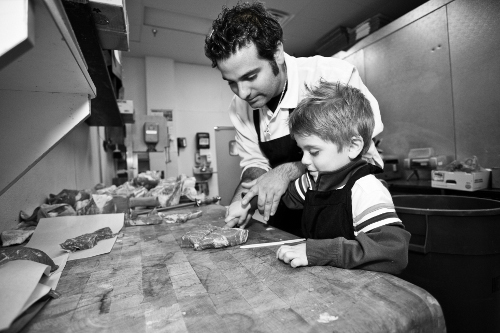
    One of the easiest lunches to make is a sandwich with sliced meat. Many people have meat at least once or twice a day, but they might not think of how it comes to them. Retail meat cutters, also known as butchers, are the tradespeople who help to make these meals possible.

    Almost seventy-five percent of meat cutters work in grocery stores, and others work in processing plants or places like restaurants. Many of them work long hours, often early in the morning. They sharpen and adjust cutting equipment, cut or grind meat and take out the bones, and sometimes prepare special requests from customers. Meat cutters need enough physical strength and stamina to deal with heavy pieces of meat and to get through bones with their tools. They have to know how to store meats and clean the equipment to avoid spreading diseases. Meat cutters also work with packaging, pricing, and displaying meat in stores.

    Many meat cutters need to know how to deal with customers but also how to work alone. Some of them might work at a meat counter at a grocery store where they deal with customers all day, or they might work at a processing plant and see only their coworkers.

    Meat cutters need a certain amount of manual dexterity to deal with the machines, and they should be able to work in cold conditions. Even though they normally work indoors, they need to be able to handle the cool temperatures necessary to keep meat from going bad. Often, they go in and out of meat freezers where they have to wear special gloves to protect their hands. Meat cutters also need to be able to deal with the sight of blood and the inner organs of animals, as well as other things that they might find unpleasant.

    Depending on where they work and how much experience they have, retail meat cutters can earn between $29,000 and $48,000 per year. Normally, jobs in this trade require a high school education with courses in mathematics, English, and science, and also an apprenticeship of at least four thousand hours. However, you can already get started on your career by learning as much as possible about different types of meat.

    Being a retail meat cutter requires a special set of skills that might not easily transfer to other work, but people in this field can normally find work even when they are older and not very strong. Having special abilities such as cutting meat according to Jewish or Muslim religious guidelines can also help people find work, since not everyone would know how to do this. A wide set of skills can be very helpful for people in this trade.

    As long as people eat meat, they will need meat cutters, but large cities are more likely than small towns to have work in this field. If you prefer to work with a few people, a small deli or butcher’s shop might be a good place to go. However, if you like lots of activity, a large grocery store might be better. Wherever you go, people will appreciate your work at mealtime.

    Bibliography:

    Apprentice Search.com. “What Does a Retail Meat Cutter Do?” http://www.apprenticesearch.com/AboutTrades/GetTradeDetails?tradeId=60&TradeName=retail-meat-cutter.

    Government of Alberta. “Occupational Profile: Meat Cutter.” https://alis.alberta.ca/occinfo/occupations-in-alberta/occupation-profiles/meat-cutter/.

    Payscale.com. “Meat Cutter, Retail Salary (Canada).”

    https://www.payscale.com/research/CA/Job=Meat_Cutter%2c_Retail/Hourly_Rate.

    Truity.com. “Butcher or Meat Cutter.” https://www.truity.com/career-profile/butcher-or-meat-cutter.

  • Career Profile: Arborist

    Career Profile: Arborist

    Many students have the chance at some point in their early years to plant a tree. They might not do much with their trees after that, but taking care of trees and other woody plants as an arborist can be a good job for people who enjoy outdoor work.

    Growing healthy trees involves more than just planting them in the ground. Many trees require pruning to get rid of dead branches or to keep them looking nice and growing properly. Arborists examine trees and bushes for disease and apply treatments to help get rid of caterpillars, flies, and anything else that might cause problems. They might take soil samples to see if that is the issue. If necessary, they might remove entire trees to keep them from infecting others.

    People who want to become arborists usually get either a technical diploma or a university degree as part of their training. Courses in fields such as botany, forestry, horticulture, and environmental sciences are good for people entering this type of work, and experience in growing plants at home can be helpful.

    Some special skills can also be part of the job description of arborists. Anyone in this field who wants to be able to apply pesticides to trees has to be licensed because of the dangerous chemicals that are involved. The job of arborist can also include examining dead trees to see what killed them, and taking courses in plant pathology is useful for people in this field of work.

    The job of arborist varies a lot from one place to another, and it can have regular hours or be very unpredictable. Many arborists spend at least part of their time doing office work, but they also have to respond to emergencies, such as when trees are knocked down during storms. They might conduct research either in the office or outdoors and later give presentations about their discoveries. Arborists usually start at about $15 per hour, but they can eventually receive about twice as much later in their careers.

    The work of arborists is both an art and a science, and many types of people can enjoy a career in this field. They might end up working at a tree nursery, a park, or even a university or other kind of school. They might be involved in planning what a garden should look like or just look after one that has already grown. Arborists need to know what trees will look good together, when they blossom if they are fruit trees, how tall or wide they grow, and anything else that might affect the health and appearance of the place where they are working. A lot of this knowledge also depends on what part of the country they live in, since the trees are not the same everywhere.

    Some arborist jobs involve a lot of physical activity, but there are also opportunities for people who are older or who prefer office work rather than outdoor labour. If you like to study how trees and bushes grow and what makes them thrive, becoming an arborist might be the right choice for you.

    Bibliography:

    Eco Canada. “Career Profile: Arborist.” http://www.eco.ca/career-profiles/arborist/.

    International Society of Arboriculture. “Careers in Arboriculture.”http://www.isa-arbor.com/certification/benefits/careerpaths.aspx

    Payscale.com. “Arborist Salary (Canada). https://www.payscale.com/research/CA/Job=Arborist/Hourly_Rate.

    Study.com. “Arborist: Job Description, Duties and Requirements.” http://study.com/articles/Arborist_Job_Description_Duties_and_Requirements.html