Category: Elementary

  • Occupational Therapists

    Occupational Therapists

    What the job is:

    • Occupational therapists, depending on the organization they work for, help people deal with injury, illness or health disorders to return back to work or leisure. The activities may vary depending on the age and initial physical condition of the patient. They create individual strategies to help you regain or improve your health.
    • There are different fields within this industry, so there are several options for what you want to focus on or what you would like to provide to the public.

    Pros of this Job:

    • Can be self-employed instead of through a company or a hospital in order to set your own hours.
    • Being part of a team dedicated to getting people back into as normal a life as possible.
    • Satisfaction of knowing that you’ve made a big difference in someone’s life.
    • Professional certification is required, and shows the public you are trained and have met a high standard
    • High demand for qualified therapists means many job opportunities.

    Cons of this Job:

    • There are multiple strategies needed in order to help people effectively, and sometimes the first plan does not work and may require long hours of research in order to find the best, most effective plan for the patient.
    • There are also evolving technology and strategies, which requires you to keep up to date with new information.
    • High education qualifications needed – A Master’s degree plus ongoing training.
    • Long periods of physical activity, from walking to standing to sitting, but more variety as compared to other jobs with standing periods.

    Salary:

    • The salary starts at $28 per hour, with a high of up to $44 per hour.
    • Outlook for the industry is very good, as there’s always a demand.
    • These positions are usually full-time positions, but part-time positions do exist.

    Education requirements:

    • Master’s degree required for occupational therapists since 2010 according to the College of Occupational Therapists of Ontario (COTO).
    • Bachelor’s degree required before the Master’s – usually in sociology or biology. (There are other options depending on the Master’s degree programs, so I would consider doing some research first for what school you would like to enroll in for a Master’s, and do some “back” research – i.e. Masters > Bachelors > High school requirements.)
    • Membership in the College of Occupational Therapists of Ontario (COTO) is required, which may be an option through your Master’s degree program of study.

    Tips to get started:

    • Decide early, since this is an education-heavy career, but rewarding in helping people.
    • Volunteer or apprenticeship opportunities may be available; ask if there is a connection you can utilize either through your high school, college or university counselor for advice or questions they may be able to answer.

    Other points of interest:

    • The industry is generally female according to the Canada Job Bank.
    • Creativity is encouraged, as people respond to different strategies, and people have their own personalized recovery or therapy plan.
  • Career Profile: Anthropologist/Archaeologist

    Career Profile: Anthropologist/Archaeologist

    When you look around your house, or walk through your city, do you ever wonder about the people who lived there before you? Are you fascinated with how humans lived hundreds or thousands of years ago? Do you want to learn the ancient history of human civilization?

    It’s possible to find the answers to these questions if you become and archaeologist or anthropologist. These are the people whose job is to research and search for the ancient remnants of both nature and humanity, or study current human civilization and interaction.

    Archaeologists study historical artifacts in order to learn how people lived in the past, such as their economy, social structures, politics, and intellectual experiences.  These artifacts include things as small as a shard of pottery, coins, ancient jewelry, or old papers, and as large as human skeletal remains, statues or buildings.  Archaeologists are also responsible for surveying sites of historic interest, oversee excavation projects, and fundraise to support their research projects.  Many archaeologists also learn ancient languages, in order to read and interpret writing and symbols found on ancient artifacts.

    Anthropologists study living people in order to learn about recent and current human civilization.  They aim to discover the origins, development, customs, and religions of cultures and societies.  They also examine human evolution and how human characteristics, both physical and intellectual, have changed over the course of history.  Anthropologists will often also learn to read and speak multiple languages, and will study both long-term modern societies and newly discovered or isolated human groups.  Certain branches of anthropology can include studying primates as well as humans, to examine similarities and differences in behaviour and evolution.

    Both anthropology and archaeology are fields which offer exciting opportunities for travel to locations around the globe, where you could participate in excavation of ancient sites, live in unique cultures, studying isolated human societies, and collaborate with other researchers in the social science, history, and scientific fields.  There are many areas of specialization possible in both anthropology and archaeology, such as specific time periods or geographic regions, linguistics, medicine, religion, warfare or funeral practices, to name only a few options.

    Working entry-level jobs in either of these fields requires a minimum of a 4-year college or university bachelor’s degree in anthropology, archaeology or a related social science, such as history.  These positions include jobs such as research assistant or lab technician.  However, to move up to more experienced positions, and depending on the requirements of your employer, you are likely to need a Master’s degree in either archaeology or anthropology.  If you wish to be a professor or researcher at a university, a Ph.D. will be required.

    In terms of salary, it is important to note that much of the work in archeology and anthropology is project-based, with these projects depending on being funded. This can mean earnings are not always regular, and when a project finishes, goes on seasonal hiatus, or fails to receive funding will affect when and how much you are paid.  Most professionals in this field earn around $20 per hour for entry-level and low-funded projects, while experienced workers and those attached to a university or college faculty can earn up to around $50 per hour on average.

    Sources:

    https://www.jobbank.gc.ca/report-eng.do?area=9219&lang=eng&noc=4169&action=final&ln=n&regionKeyword=Toronto%2COntario&s=1&source=2&titleKeyword=anthropologist#report_tabs_container2

    https://www.academicinvest.com/arts-careers/anthropology-careers/how-to-become-an-archaeologist

    https://www.academicinvest.com/arts-careers/anthropology-careers/how-to-become-an-anthropologist

  • Career Profile: Fire Investigator

    Career Profile: Fire Investigator

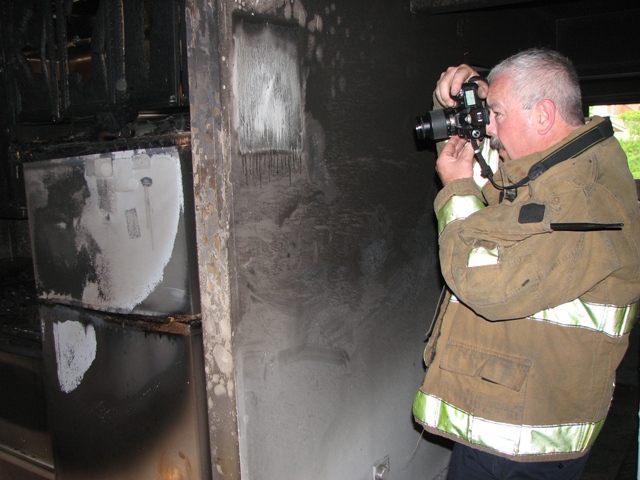
    When there is a fire at a home or business, it is important to learn the cause.  Fire investigators are professionals who are specially trained to examine the site of a fire and be able to determine what happened.  If you like to do detective work, are scientifically minded, and enjoy solving puzzles, then a career as a fire investigator could be right for you.

    Fire investigators are related to law enforcement, and are responsible for examining fire damage, determining the cause, and documenting information about the origin, behaviour, and whether a fire was accidental or deliberately set.  They will make this information available to police and fire department officials, lawyers and judges, city or regional government, and will offer recommendations on safety or criminal responsibility.

    This work requires a strong knowledge of building materials and structures, the effects of fire on these materials, the effects of fire suppression methods, and an understanding of burn patterns and fire behaviour. Many fire investigators are involved in preventative inspections, as well, to ensure buildings are up to code for fire safety.  Fire investigators will also often participate in public outreach in their community, to advise on safety and fire prevention strategies for homes, schools, and businesses.

    Fire investigators work closely with other members of fire departments and police departments and can come into a fire investigator role from either of these backgrounds.  While they can start as police officers, firefighters, most fire investigators will need additional education specific to the job.  You will need to complete a college degree in firefighting, fire science, fire protection technology, or a related field.  A background in civil, mechanical or chemical engineering, chemistry or another scientific field can be beneficial, especially for future career advancement.  It is also a good idea to become a member of industry associations, such as the Canadian Association of Fire Investigators, which will give you access to training, mentorship, and career networking opportunities.

    Most fire investigators work for municipal entities, such as local police and fire departments, government offices.  They can also work for the private sector, such as for insurance companies, engineering and construction firms, or forensics and accident investigation firms.  Because fire investigation is part of law enforcement, investigators will be subject to detailed credit and criminal background checks, psychological evaluations, and other personality or behavioural assessments.

    Salary ranges from around $35,000 per year for entry-level and early career positions, up to as much as $100,000 per year for experienced investigators who are highly specialized.  However, the average salary for a fire investigator in Canada is around $78,000 per year.

    Sources:

    https://www.glassdoor.ca/Salaries/canada-fire-investigator-salary-SRCH_IL.0,6_IN3_KO7,24.htm

    https://www.cafi.ca/content/mission

    https://neuvoo.ca/salary/fire-investigator/

    http://www.interfire.org/features/become_fire_investigator.asp

    https://www.thebalancecareers.com/fire-and-arson-investigator-career-profile-974830

  • Career Profile: Paralegal and Legal Assistants

    Career Profile: Paralegal and Legal Assistants

    Paralegals and legal assistants are two very different careers depending on the firm’s need for them. Paralegals can make up to $25/hr. Legal assistants are at the same pay level as paralegals, showing that there are similarities between the two jobs. For one, the biggest difference is the educational level required. As compared to a lawyer, becoming a paralegal requires a higher standard of education by going for an undergraduate degree in university first as it is a graduate degree. Paralegals are also required to take the admissions test for the Law Society of Ontario to practice and can take on the same opportunities while working for a wider legal field as a lawyer can, but with different responsibilities. Paralegals do the research and the legal requirements in order to file the case with the courts that are needed in accordance to the restraints demanded of paralegals.

    Paralegals can work within several areas of the law, not limited to  family, criminal, housing employment, immigration, human rights.  New emerging legal fields that new paralegals can consider include cyber-related law, immigration law (especially with more refugees and others seeking citizenship), and entertainment / copyright law. There are a wide variety of areas of law, I’ve only just included a couple of the more well-known fields, so you can see the wide range of possibilities.

    Important information, answers to common questions and the path towards the paralegal career path can be found on the Law Society of Ontario (formerly known as Law Society of Upper Canada) paralegal website: https://www.lsuc.on.ca/licensingprocessparalegal/. They also have a Frequently Asked Questions page in order to help you decide if you want to become a paralegal and what college program you want to consider applying to. The page is as seen here: https://www.lsuc.on.ca/with.aspx?id=2147503988.  This document is the best guide to tell you what you can and cannot do: http://www.lsuc.on.ca/with.aspx?id=1072.

    On the other hand, legal assistants, have a different set of skills. Also known as legal office assistants, they have to know the same areas of law as a paralegal or a lawyer, but unlike the other two careers, the legal assistant does not take the Paralegal Licensing test and does not deal with the public. Instead, they support the legal team by dealing with various tasks: legal research, archiving and retrieving files, and most importantly, time management – deadlines are an essential part of this career. For these reasons, a legal assistant is often described as a legal clerk (the job responsibilities overlap quite a bit). The role is similar to an office administration position. Even so, it is important to know the difference between a legal assistant and a paralegal.

    Computer skills are a necessity for these two career positions. Becoming a paralegal and a legal assistant are not easy, and require a lot of legal, records management and research knowledge and a lot of work time and education, but can be a very rewarding career.

    “Job Vacancy and Wage Survey, Second Quarter 2017.” Government of Canada. Government of Canada, 7 Dec. 2011. https://www.jobbank.gc.ca/LMI_bulletin.do. Accessed 06 Jan 2018.

  • Career Profile: Lawyer

    Career Profile: Lawyer

    If you’re looking towards the future to see if you want to become a lawyer, this can help. The job outlook is very good throughout the country, particularly as there is always a demand for access to the law, not to mention that new types of law are emerging all the time. With the highly specialized educational demands required, the starting wage is approximately $37,000; with a medium being more than $100K per year. But note one very important point: this happens only after a lot of education. First comes high school graduation, then an undergraduate degree in almost anything, passing the LSAT (Law School Admission Test), acceptance into law school;

    You need an extensive education to pass the Bar exam; then you can figure out which field of law you would like to practice. There are many different kinds of law, so you have some flexibility. You can work in corporations or the financial services industry. In the public sector, choices are as diverse as charities or government. Types of law are quite varied: environmental, business, family, criminal, housing (or real estate, which is a different thing compared to housing rights), tax (personal, estate and financial), employment, immigration, human rights in regards to health and disability rights in housing, employment and in public interactions; and income assistance.  New fields include cyber-related law, immigration law (especially with more refugees and others seeking citizenship), and entertainment / copyright law.

    The Law Society of Ontario (formerly the Law Society of Upper Canada) offers numerous resources to help you figure out if this is a career path you might like to pursue, and outlines the options available to become fully licensed as a lawyer. You can see this information on this webpage: https://www.lsuc.on.ca/licensingprocesslawyer/.

    Whatever path you choose to follow, there are ways you can do something you care about (to help the public, financial gain, or society as a whole); and find the purpose that best meets your needs and goals. This can also be a determining factor when you start on an undergraduate degree: find a sector you’re interested in – say, history; you can then focus on the elements you find interesting to follow as a lawyer: going into environment law, employment law, even human rights in regards to discrimination.

    In addition, there are several requirements that are commonly seen within the job postings to become a lawyer: attention to detail, communication skills (especially if the type of law you want to practice requires you to be in Court regularly), organizational skills; and a strong work ethic. The rest depends on the sector of the law and the demands of the profession. Law and medicine are very difficult careers: they require a lot of education, time, and self-discipline.  Expect to work long hours in the beginning. They are also very rewarding professions, but make sure of your career goals and the requirements they place on you and your family and friends.

    “Job Vacancy and Wage Survey, Second Quarter 2017.” Government of Canada. Government of Canada, 7 Dec. 2011. https://www.jobbank.gc.ca/LMI_bulletin.do. Accessed 06 Jan 2018.

    “Lawyer Licensing Process.” Law Society of Ontario. Law Society of Ontario. https://www.lsuc.on.ca/licensingprocesslawyer/. Accessed 06 Jan 2018.

  • A Closer Look at a Career as an Interpreter

    A Closer Look at a Career as an Interpreter

    If you’ve been able to see a foreign language film – you know, those ones with subtitles – you probably can get an inkling of how interpreters work. Most TV programs and films are accessible in different languages these days, and we have interpreters to thank for that.

    However, some words or phrases are not easily translatable to English, but you have to consider what is being said and ensure the intended message is loud and clear, and this is where the interpreters’ challenge begins. As the word suggests, interpreters do more than translate the language – they have to make sure what they translate is understandable and easily comprehensible.

    Interpreters – What You Need to Know

    Interpreters are the main instruments for breaking down a language barrier, and they are employed by various sectors, both public and private. For example, government agencies that deal with immigration may employ an interpreter to facilitate discussions between a client and the consultant, while private individuals may also employ an interpreter if they are visiting a foreign land whether for business or for pleasure.

    While interpreters are the major players for a smooth communication, their roles today usually encompass language translation and interpretation. In most cases, they also act as cultural experts for clients, providing them with education on rules and etiquette and ensuring that none of these are broken. They should also be highly sensitive not just on verbal cues but also non-verbal cues, making certain that their clients are well-aware of them.

    Salary

    According to PayScale.com, an Interpreter can earn as much as $32,083 – $63,358 a year.

    Skills

    If a career as an interpreter is what you have in mind, you have to have advanced fluency in the target language. You have to have good analytical skills to ensure accurate message delivery. As you will have to work with people from a wide variety of cultural backgrounds, you have to be well-versed in cultural norms and practices.

    To be an interpreter in Canada, you need to obtain certification from the member body that exists in the province or territory you intend to settle or work. There are three different mechanisms used, namely certification on dossier, certification exam, and certification by mentorship, each of which have their own set of requirements in terms of education and work experience.

    Pros and Cons

    The main advantage of interpreters is they get to work with individuals or companies with different needs, making their regular day at work exciting. There are travel prospects involved too so this is especially beneficial for those with the travel bug.

    The main disadvantage is that it is a profession that is on per-need basis, which means most of the time, they will have to be on-call.

  • Career Profile: Real Estate Broker

    Career Profile: Real Estate Broker

    Have you ever wondered how someone goes about buying or selling their house or condo?  Real estate brokers are the professionals who work to assist home buyers and sellers to list their home for sale, take offers, and arrange the final sale of a house.

    Real estate brokers can work either independently, or under the umbrella of a real estate brokerage firm which employs real estate agents, which is a slightly different role.  A real estate broker oversees the agents working for the firm, and usually requires additional certifications for the additional responsibilities involved.

    Responsibilities of a real estate broker include soliciting real estate listings from potential vendors and clients, taking care of selling-related tasks such as setting prices, listing and advertising the sale property, and conducting open houses to show the property to potential buyers.  They also act on the buyer’s side, by advising clients on market trends, mortgages, prices, and legal requirements.  Along with buying and selling properties, real estate brokers also assist homeowners who want to rent out their properties to make the rental arrangements.

    While the residential housing market has one of the largest groups of real estate brokers, professionals in this industry can also specialize in industrial, commercial or rural real estate.

    There are no specific degree requirements for working as a real estate broker, but it is a regulated profession that requires completion of a real estate training course and licensing exam in the province you wish to work in.  These training courses and licensing exams are available through your provincial real estate association or council.  Generally, you will get certified as a real estate agent first, and once you have gained some work experience you can take additional courses and apply to be certified as a real estate broker.

    Working as a real estate broker is a great career path for people who want to be self-employed, as the hours you work can be flexible, and real estate offers high earning potential, as brokers will earn a commission on each sale they complete.  However, the nature of real estate means that while your overall earning potential is high, it is often a “feast or famine” industry where you will make a sum of money at a time upon the completion of a sale, but have no other income between sales.

    This means you need to be organized and dedicated to maintaining both a personal and professional budget to ensure you are able to cover your essential expenses such as rent or mortgage payments, food and medical bills, and utilities during the low-income times, and to enable you to put away money in savings during times you earn a large amount from a sale.

    The average salary for real estate brokers in Canada can be around $50,000, but this amount will vary greatly depending on how many sales you complete in a year, what the value of the sale is, and what portion of the sale is paid to you as your commission.

    Because of these variable earnings, many real estate brokers pursue this job as a secondary career path in addition to other full-time or part-time employment. However, this means that you will often have to work on evenings and weekends from your home or a brokerage firm office to do paperwork, show houses to prospective buyers, or meet with sellers who are only available outside of their own regular work hours.

    Sources:

    https://www.monster.ca/career-advice/article/careers-in-real-estate-ca

    https://realestatelicensehq.ca/real-estate-agents-vs-real-estate-broker-2/

    https://careers.workopolis.com/advice/whats-it-like-being-a-real-estate-agent/

    https://www.jobbank.gc.ca/report-eng.do?area=9219&lang=eng&noc=6232&action=final&ln=n&s=2

    https://www.royallepage.ca/en/realestate/join-our-team/new-agent-page/how-do-i-get-started/

    http://comparerealestateagents.ca/real-estate-agent-vs-broker/

  • Career Profile: Geologist

    Career Profile: Geologist

    For some people, one rock or bit of earth is a lot like another. Geologists, however, know that each area of the world has different types of rocks and soil. If you become a geologist, your job will be to study the world around you and to use that knowledge to help make life safer and better for others.

    Suppose that you live in an area that has a lot of avalanches. As a geologist, you could study the mountains to find out where the most dangerous places are. Then people could know where to put their houses, schools, and other buildings where they will be safe.

    Geologists spend a lot of time collecting samples of rock or soil and also finding out as much as they can about the earth. They create maps and diagrams of what they find and then use them to help others who need information for projects that they are working on. They might assess the impact of a mining project on the environment or work with a power company to see how an oil pipeline or hydro project might affect the environment.

    Geologists need a lot of education. The sciences like chemistry and physics are important in their training. They also need to know mathematics to be able to make calculations about distances or other factors. They should know how to read maps and be able to draw. These are some of the things that you can already start to practice now. If you have a chance to take courses in the sciences, that can be a good way of getting a background in the kinds of things you will need to know.

    In most cases, university training is necessary for geologists. The minimum requirement is a Bachelor’s degree, but a Master’s or PhD might be needed, especially for anyone who wants to teach. Geologists can find work in universities, research centres, and maybe even weather centres or private companies. Salaries usually start at about $36,000 per year, but they can rise to $75,000 as people get more experience. People generally stay in this field for about twenty years, but some stay much longer.

    Part of being a geologist is going outside to collect samples. This can be unpleasant when the weather is bad, but it is necessary. Working in a laboratory to analyze the samples and then writing reports can be tiring, but it is necessary to make the information available to others. Geologists might have to go to conferences and present papers on their research. They might be part of a large team of scientists or be one of only a few in their area.

    Working as a geologist can be physically demanding when it involves going out collecting samples, but otherwise it is normally a fairly quiet office job with a lot of reading and writing. Geologists need to be sure that they keep up with the latest research, and they might need to keep on taking courses throughout their careers. For people who love to learn, this could be the perfect job.

    Bibliography:

    Career Planner.com. “Geologists.” https://job-descriptions.careerplanner.com/Geologists.cfm

    Eco Canada. “Environmental Geologist.” http://www.eco.ca/career-profiles/environmental-geologist/

    Learn.org. “How to Become a Geologist in 5 Steps.” https://learn.org/articles/Geology_How_to_Become_a_Geologist_in_5_Steps.html.

    Payscale Canada. “Geologist Salary.” https://www.payscale.com/research/CA/Job=Geologist/Salary.

  • Career Profile: Police Chief

    Career Profile: Police Chief

    They put their lives on the line every day as they uphold provincial and federal laws. To become the chief of police is to be put into a role that requires the utmost amount of responsibility. What the chief does is he or she will oversee all police department operations, such as departmental conflicts, plans out policies for the force and procedures that everyone will abide by, maintain a good face for the force by meeting with public officials and making public statements, oversees investigations and court procedures, as well as other managerial duties.

    Becoming the chief of police takes years of experience operating as a police officer and working your way up through the ranks. To get to that first step, you first need to graduate high school and attain a driver’s license (although, many departments are looking for an applicant that has a bachelor’s degree in criminal justice if the applicant hopes for promotion). After that, any 19-year-old applicant must undergo a series of physical tests and some questioning. Also, a background check is mandatory since a felony conviction may disqualify the applicant. Once they are on the force, they must begin going above-and-beyond what is expected of them in order to make an impression and one day rise to the rank of chief. It takes a long time for most people to become the chief (in fact, it’s a career-long pursuit), but the rewards are well worth the efforts.

    What are the perks of the job?

    The largest perk of the job is the startlingly high annual salary which can range from approximately $160,000 (reported by Winnipeg’s chief of police in 2016) to as much as about $349,000 (reported by Toronto’s chief of police in 2015), largely depending on the size of the department and the area served. This stands well above the Canadian salary average of $51,000. The police chief can also expect to be in a position of high authority and must make many important decisions that affect that rest of the department, truly making an impact on the community around them.

    What are some of the setbacks?

    A large con to this job could be the difficulty in securing the job in the first place, especially since the chief of police will likely be competing with other people in their department. Also, the entire career in the police academy comes with a large amount of stress and risk to your health. However, the large role the police chief plays in the community and their ability to make a difference in their town.

    How can I grow with this career?

    The chief of police role is actually the highest provincial rank you can achieve. When you enter the force, you begin as a cadet, then you’re promoted through all classes of police constable, sergeant/detective, staff sergeant, sergeant major, inspector, staff inspector, superintendent, staff superintendent, and deputy chief of police.

    That’s all great, but could I be hired for other careers?

    A chief of police can be hired on for other careers in justice depending on their education level. For example, if the police chief has a bachelor’s degree in criminal justice, they could apply for a position as the commissioner or the chief constable.

    Reference:

    Society for Human Resource Management: https://www.shrm.org/resourcesandtools/tools-and-samples/job-descriptions/pages/cms_001116.aspx

    Truity: https://www.truity.com/career-profile/police-officer-or-detective

    Global News: https://globalnews.ca/news/2573145/winnipeg-police-chiefs-salary-one-of-lowest-in-country/

    Toronto Star:

    https://www.thestar.com/news/city_hall/2015/03/16/half-of-toronto-police-workforce-earned-100000-last-year.html

    Police Rank:

    https://ipfs.io/ipfs/QmXoypizjW3WknFiJnKLwHCnL72vedxjQkDDP1mXWo6uco/wiki/Police_rank.html

  • Career Profile: Massage Therapy

    Career Profile: Massage Therapy

    What a massage therapist generally does is they see clients who are looking for treatment with muscle pain and stress and they knead, massage, and put pressure on certain nerve points of the body. This job requires much more than just tenderizing someone’s shoulders until they’re happy, it also requires some schooling and licensing! So, what goes into becoming a registered massage therapist? The most common course of pursuing a career in massage therapy is by completing a trade school and earning a certification in the field. Some of the skills you will need include: great people skills (since you will be interacting with many clients throughout the day), have basic medical and anatomical knowledge, and dexterity with your hands and fingers.

    What are the perks of the job?

    What attracts many people to this job are the flexible hours and soothing work environments, and for people who are looking forward to a career of helping people, this may be the career for them. There is also more of a demand for this job as well, with a project job growth of 19% between 2009 and 2019, according to Ontario Massage Therapy. The job opening average is around 40 openings at any given time. For those with the entrepreneurial spirit, there is a strong potential for self-employment and starting your own salon.

    What are some of the setbacks?

    The biggest setback of the job would be the below-average salary for the position, which is approximately $42,642 in Canada as of January 2018. The average salary can be kicked up a bit with bonus pay, overtime work, commission, tips, etc. Another setback includes the fact that there aren’t too many ways to be promoted with this career aside from becoming a salon manager or beginning a practise of your own. Finally, finding full-time work in this career can be a challenge as only one in three working massage therapists were actually full-time workers. Once you get into the field, you can expect to be working on a part-time basis for a while.

    How can I grow with this career?

    Many massage therapists begin their careers as part-time workers in local salons before finding full-time work there. Working a few shift hours a week is common at the outset of the position before being promoted to 15 to 35 hours a week (which is considered full-time). Like mentioned before, an experienced massage therapist can either manage their own salon in a franchise or go on to begin their own business with the help of a business degree.

    That’s all great, but could I be hired for other careers?

    The registered massage therapist can expect to be hired for other careers in physical therapy if they are looking for a small career change-up. Unfortunately, this career does not prime a massage therapist to climbing into another professional medical career requiring a Ph.D., but it can help someone who is looking for jobs like: jobs relating to home healthcare services, jobs relating to nursing and residential care facilities; physical therapy jobs in hospitals or hospice care services; and many other jobs in therapy offices.

    Reference:

    College Grad: https://collegegrad.com/careers/physical-therapists

    Massage Therapy Ontario: http://www.massagetherapyontario.net/demand-massage-therapists-canada/

    My Plan: http://www.myplan.com/careers/massage-therapists/summary-31-9011.00.html

    Payscale: https://www.payscale.com/research/CA/Job=Registered_Massage_Therapist/Hourly_Rate

    Snagajob: https://www.snagajob.com/job-descriptions/massage-therapist/

    Truity: https://www.truity.com/career-profile/massage-therapist