Category: Elementary

  • Daylight Saving Time: Should We Keep It or Toss It?

    Daylight Saving Time: Should We Keep It or Toss It?

    For many Canadians, autumn means the mesmerizing colour changes of leaves, but also Daylight Saving Time or DST. DST is the practice of moving the clocks forward one hour from Standard Time in the spring and turning them back again in the fall. Thus, the famous adage, “Spring forward, fall back.” The goal of this practice is to maximize the natural daylight we receive during the days when they are shorter and the nights are longer, which typically happens during the winter months.

    We have Englishman William Willett to thank for the idea of DST. Willet was inspired to lead the first-ever campaign for DST while on an early morning horseback ride in London in 1905. Thinking that UK people should have more time for sunlight during the months of April until October, he published a brochure titled “The Waste of Daylight” and made an effort for the rest of the UK to embrace the adoption of “summer time.” Unfortunately, the British Parliament never got on board, and even upon Willet’s death in 1915, the idea never came to fruition.

    While it was an Englishman who had thought of DST first, it was actually in Germany when it was first implemented. In an effort to conserve electricity, Germany embraced DST in 1916, just a year shy of Willet’s death.

    Today, fewer than 40 per cent of countries maintain the practice of DST, though at least 140 countries have tried to implement it at some point. However, it’s safe to say that people are torn whether to continue practicing DST or scrap it. Below is a look at the pros and cons of DST.

    Pros

    You get more natural sunlight.

    With DST in place, you have a bigger chance of basking in the sunlight since by the time of sunrise, it usually means you start getting ready for your school or work. Thus, when you’re on your way, whether you’re driving, walking, or taking transit, you get a much-needed dose of Vitamin D.

    It keeps us in line with the U.S. and Europe.

    Because these countries practice DST, we are in good company. If Canada opts out, then most likely it will have a negative effect on our social and economic ties with them.

    Cons

    It’s confusing.

    Not all provinces and territories practice DST in Canada. For instance, the Yukon territories have completely abandoned the idea. Thus, time differences coupled with time changes can lead to confusion.

    It causes many accidents.

    When the clock has to spring forward, a lot of people end up being sleep-deprived, and thus, overall affecting their attention span. As a result, there is an uptick in car accidents.

    It affects religious observations.

    In some religions, prayers are dependent on the times of sunrise and sunset and changing the clocks twice a year can definitely have an effect on how they do their prayers.

    The debate over whether to keep or toss DST may continue for a while, and until that time when it is abandoned or made permanent, we all have to remember when to spring forward and fall back.


    Sources

    https://www.macleans.ca/society/life/debating-the-pros-and-cons-of-daylight-savings-time/

    https://globalnews.ca/news/5885735/pros-cons-daylight-saving/

    https://www.cnet.com/news/politics/when-does-daylight-saving-time-end/

    https://www.statista.com/chart/24473/countries-changing-clock-daylight-savings

    https://www.history.com/news/8-things-you-may-not-know-about-daylight-saving-time
    https://www.almanac.com/content/when-daylight-saving-time

  • Career Profile: Botanist

    Career Profile: Botanist

    Botanists are critical to environmental conservation, as their research helps to determine how different plants can and will react to climate change. The job of many botanists is to supply the research for protecting native species from invasive species. Meanwhile, agricultural botanists offer extremely important research in food concerns, medicines, timber supply and fibres. In short, the field is widespread and crucial; that means that the job market is large and high-paying.

    Getting educated

    Botanists must first have a Bachelor’s degree in science—they take courses in biology, chemistry, genetics, taxonomy, plant anatomy and physics. Those with Master’s degrees can pursue higher-paying opportunities, and most botanists indeed have this credential. Botanists do not have necessary apprenticeships, although they will often work as assistants to full-fledged botanists. Volunteer work and university work-learn positions are key to competing in the field. Like any science degree, the more experience, the more valuable you are to potential employers.

    Salary

    Botanists with a bachelor’s degree and those starting out can make about $61,000 per year, whereas those with a graduate degree or many years of experience can make up to $77,000 per year. Salaries tend to be pretty high, and work can happen almost anywhere because, anywhere you go, there is an environment to study. This is extremely attractive to those who want an easily transferable job, and one that will provide for a family and a comfortable lifestyle. Above-average growth is expected in the field of botany—the need for plant biologists increased by around 20% by the year 2022. Because there are so many jobs, competition isn’t terribly high. But even though that is the case, talented and well-educated botanists are the ones that are able to innovate within the field. While botany has so many pros, a large con is that research positions nearly always require a PhD, and therefore being successful as a botanist requires a great deal of education, and thus, a great deal of money. But it pays off and then some. Pressures are high, but the rewards are great.

    Room to grow

    Plant biologists’ careers are always evolving. Opportunities to change niche specialties happen often. A botanist’s currency is plants—everything plants. They study their physiological processes—like molecular-level photosynthesis—the evolutionary history and relationships of plants, and plants’ relationships with their environments. Botanists study plants’ responses to stresses from disease, pests and climate change and variations. Botany is a very active field, and one that becomes all the more important with the current growing concern of climate change. Improving ecosystems is at the core of botany, and it can therefore be an extremely rewarding yet demanding field. Many botanists work to develop safe ways to control weeds and diseases, and experimentation is a large part of that. Many botanists choose to focus on plants’ molecular level—researching uses for medicines, raw materials, fabrics and biofuels. What all of this means is that those in botany never have to be bored. They can constantly change specialties and take on jobs that span a wide landscape of research and practical application.

    Sources: www.eco.ca, www.healthresearchfunding.org, www.environmentalscience.org, www.payscale.com/research/CA/Job=Botanist/Salary


  • STEM Career Profile: Astronomer

    STEM Career Profile: Astronomer

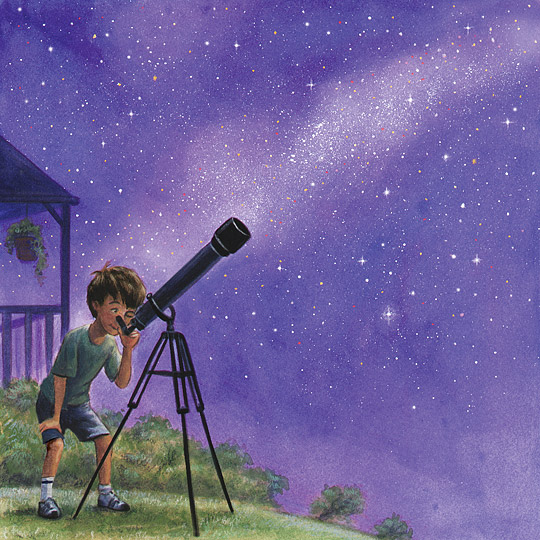
    The darkness of the night sky illuminates the countless stars, planets, and more that populate our universe. But have you wondered how we know all this? How can we measure their size, distance, movement, and history when we are so small and so far away? Part of the answer is the field of astronomy. Astronomers use the science and math that you study in class and point it skywards. They use equations, laws of physics, and more to figure out the universe.

    Becoming an astronomer is far from an overnight task. Earning a Ph.D. in astronomy can take five to seven years to complete. On top of that, graduates spend another two to three years researching under the guidance of more experienced astronomers. Those wanting to enter this field should work on their research skills and ability to analyze data. They should work hard at math and science in school, and also be able to work in a team.

    Astronomers do not typically work alone. They are usually working within a team composed of scientists in an office environment. They also use observatories to gaze up at the skies via telescopes. Most are hired to work at colleges and universities, where they conduct research in the field. Those are not the only places you will find astronomers, however. The federal government hires astronomers, too, and departments of private research and development may also rely on astronomers.

    In Canada, base salaries for astronomers range from $50,000 to $108,000, with the median salary at $90,000. With bonuses, profit sharing, and commission, total salaries can be up to $131,000.

    The field is filled with excitement and opportunity. The advent of new technologies and discoveries makes this a very exciting time to pursue the subject. Astronomers work hard to develop theories related to our universe and write proposals for research. It can be a thrilling challenge to find ways to test these ideas. This can be followed by extensive analysis and writing scientific papers that are read and reviewed by other experts. This ensures that ideas are accurate and can lead to groundbreaking discoveries. These newfound concepts and understandings of our universe have a profound impact on our lives.

    From planets to black holes, from in-depth mathematical formulas to childlike stargazing, astronomy is filled with wonder and awe. By putting greater effort into your math and science studies now, you can lay the foundation for your future career. The field pushes humanity’s knowledge beyond its supposed limits and helps us realize how vast existence really is. As an astronomer, you can be a part of that grand journey.

    Sources:

    Lindzon, Jared. I want to be an astronomy. What will my salary be? www.theglobeandmail.com/report-on-business/careers/career-advice/life-at-work/i-want-to-be-an-astronomer-what-will-my-salary-be/article24512769/

    National Careers Service. Astronomer. https://nationalcareersservice.direct.gov.uk/advice/planning/jobprofiles/Pages/astronomer.aspx

    PayScale.com Astronomer. https://www.payscale.com/research/CA/Job=Astronomer/Salary

    Study.com. Astronomer: Job Info & Career Requirements. http://study.com/articles/Astronomer_Job_Information_and_Requirements_for_Students_Considering_a_Career_in_Astronomy.html

  • Changing Responsibilities: The Leap From Elementary School To High School

    Changing Responsibilities: The Leap From Elementary School To High School

    The transition between elementary or middle school to high school is a big one. As you grow older and move into high school-level classes, your responsibilities will change as well. Don’t be nervous, though! High school is not as scary as it seems, and you might find that you meet a lot of new friends and try a whole bunch of new things. It’s one of the most exciting times of your life!

    So what are some of these new responsibilities? For one, most schools don’t tolerate lateness, and some teachers even lock their doors to late students, so it’s very important to get to your classes on time. It might be difficult to find your way around in the first few weeks of high school, but you’ll soon get the hang of it. Be sure to bring a copy of your timetable with you so you know where and when your classes start.

    Secondly, you will be expected to be much more independent than in the earlier grades. Teachers don’t hound students for homework or assignments and often penalize late essays. That’s why you need to keep track of when everything is due. The best way is to get a separate binder for each class (one in every colour) so you don’t get papers mixed up. An agenda, notebook or calendar is also vital in high school. You’ll want to be able to keep track of when tests are, when assignments are due and when the holidays start.

    You will have a locker where you can store your books, binders, sports equipment and any other assortment of pens, paper and articles of clothing. You are responsible for keeping your locker clean – or at least presentable.

    Meet some new people! While not necessarily a responsibility, you’ll find that if you reach out to other students, you might end up making friends you’ll have for years to come. Remember, this is a new experience for everybody in your classes.

    Work hard! Now that you’re in high school, you can’t slack on grades. These marks can affect which classes you take in the following years, and may even limit your options for college or university programs. If you pay attention to your teachers, show up on time, do your homework and hand in your assignments, then you’ll do fine in your classes. Just make sure to keep organized and on top of tests and assignments.

    Going from elementary into high school is a big leap, and with it comes new responsibilities and new freedoms.  If you work hard, show up on time and meet a few new friends, you might even find that you want to go to school in the morning. It’s a big adjustment to make, but soon you’ll be just as comfortable in your new school as you were in your old one.

  • How to Make Reading Books a Fun Habit (And Not Just for School!)

    How to Make Reading Books a Fun Habit (And Not Just for School!)

    Have you ever thought of making reading books a fun habit? Just because you may not have fun reading books for school, doesn’t mean you won’t have fun reading on your own. Reading doesn’t have to be boring. If you’re interested in making reading a fun new habit, then these tips are just for you!

    Find Books You’re Interested In

    In school, you may have to read and complete assignments on books you would never willingly pick up. To make up for that one boring book, you could read several books that you enjoy. There are so many genres to choose from! When starting to read your book, one good tip is to read the first 50 pages. If you don’t find it interesting, don’t waste your time and find another book.

    Read Several Books

    Are you the type of person who gets bored while reading just one book? If you prefer, you could read several books at once. You can keep one in your room, another in your living room, and even a third in your bathroom. Whenever you’re in one of those rooms and feel like reading, you can simply pick up that specific book and read it. Having several books to read at once can be challenging, but it can keep you from getting bored.

    Read a Book Before Bed

    Reading before bed is a good way to help you wind down and relax before going to sleep. Picking up a book is a good alternative to watching television or using other technology. The blue light from technology can keep you from feeling tired. Reading can help you sleep better. If you read before bed, you might even have your favourite book characters sneak into your dreams at night!

    Download E-Books

    You may be the type of person who falls asleep while flipping through the pages of a physical book. If that sounds like you, you could always download e-books instead. There are several apps and websites online that allow you to download books from any genre of your choice. Also, if you are having trouble finding a specific book at a bookstore or a library, you could always go online to look for that book.

    Read With Your Friends

    Instead of reading alone and keeping your thoughts and opinions to yourself, you could get your friends to read the same book. Create a little book club! You and your friends could pick a book you’d all enjoy reading. After every chapter, you could all talk about your favourite part and your least favourite part so far. If there happens to be a specific part you didn’t understand, you can ask your friends to explain it to you. Making reading social will also encourage you to read regularly.

    With these new tips you’ve just learned, you’ll have a much easier time making reading a fun habit. I promise that once you pick up a book you enjoy, you won’t want to put it back down! Go grab an interesting book and see for yourself!


    Resources

    https://www.lifehack.org/articles/featured/14-ways-to-cultivate-a-lifetime-reading-habit.html

    https://happyyouhappyfamily.com/how-to-develop-reading-habit/

    https://www.inc.com/john-rampton/25-ways-to-read-a-lot-more-books-this-year.html

  • High School Horror Stories: Surviving the Monstrous Math Class (French version available)

    High School Horror Stories: Surviving the Monstrous Math Class (French version available)

    Like everything else, high school has its ups and downs. However, one thing I’ve noticed about high school is that it has this way of making something feel much worse than it actually is. You’re at an awkward age where everything is changing: your friends, your life, your interests. Nothing is static. Plus, you’re forced to take a bunch of classes that you don’t really like at all. As a result, high school builds the perfect foundation for difficult situations. As a university student, I can now look back on my high school experiences and laugh at them. But at the time, there were many moments where I did not see a way out of my situation. The prime example of this being my math classes.

    As I am writing for a website that produces journal articles, you can make many assumptions about me. One of the first being that I like to write. If you guessed that, then you guessed right! I have liked to write ever since I was in elementary school. That said, when I got to high school, I hoped that there would be more opportunities to exercise my love for writing, but this was not the case. In elementary school, I had been really good at science and even math. As a result, my teacher enrolled me in the STEM (now STEAM) program at my high school. Honestly speaking, this may not have been the best choice for me. I stayed in the program because I thought that’s what I was supposed to do, plus at least I’d be getting a certificate for it, and that would look good, right?

    Getting that certificate was not an easy journey. Let me tell you, elementary school math and high school math are two very different things. As I took grade 9 math, I began to realize how difficult it could be, and I struggled immensely. However, my grade 10 math class felt much worse than the previous year because I already knew that I was not good at it.  On top of that, I was surrounded by other kids who were exceptional at math – they made it look easy. And of course, the cherry on top of math that semester was that it was the second period right after science. As a result, I ended up suffering from massive burnout after just the first half of the day.

    I used to spend hours on my math homework; I was always the kid who had to stay for extra time to work on tests, or go to class during lunch for extra help or get extra homework because I needed to boost my grade. I was one of only three other students who got called on for this. Of course, there’s nothing wrong with any of these. But at the time, it honestly felt humiliating. When I asked my friends for help, they tried their best, but it always took me a long time to even begin to understand what they were saying. And god, what made the fear worse was the thought of the final exam and how I already knew how lost I was going to feel during it. I believe the exam was only worth 15% of my grade, but back then, that number felt unattainable. Even so, I tried my absolute best throughout the semester. I always did the extra work, I went during lunch, I paid very close attention in class, and I got help from wherever I could.

    And then the time finally came for the final. At that point, I came to terms with the fact that it was okay not to be good at everything and that math simply was not my strongest subject. On the inside, I had done some re-evaluating: I knew that I wanted to be a writer. And I also knew that math was definitely not required to be one. So, I kept my head up and I walked into that exam calmly and confidently, knowing that I did everything that I could. I ended up passing the class with a B! It wasn’t as high as any of my friends’ marks, but that didn’t bother me at all. I had set my own standards.

    If you’re reading this, and you’re having a class that you’re struggling with, remember one thing: progress doesn’t always make itself obvious. Just because you do everything right doesn’t mean your mark is immediately going to boost from a C to an A. You must be patient. Even though I powered through the class until the end, it was not easy at all. Math took a lot out of my self-esteem because it wasn’t like the whole class was struggling either; in my mind, that meant that it was my fault that I wasn’t doing very well. The main thing that kept me going was taking a step back and realizing how hard I was trying. Like I said, I did everything I could to get help: did extra work, reached out, and spent extra time in class.

    Remember to consider the class in the broader context of things; in my case, I don’t need math to help me with my current area of study. In your case, you may, so try and find help wherever you can, whether it be through video tutorials or study sessions with friends. Also, keep in mind that everybody’s brain works differently; I am just catered towards the humanities. You may be the opposite; you can be good at math but not the best at English. Who knows, maybe you’re good at both. The point is that you should always put your best foot forward in anything you do. Always try your best!

  • Setting Goals to Help Guide Your School Year (French version available)

    Setting Goals to Help Guide Your School Year (French version available)

    With the end of summer and the start of the new school year, it’s back to class schedules and studying.  Whether it’s your first year at university or college, or you’re further along in your degree, the start of a new year is always exciting—but it can also be intimidating.  You may feel like everyone expects you to have your life planned out, while you’re busy facing the constant changes that come with growing up, learning, and experiencing more of the world.

    That being said, setting goals for yourself can be a helpful way to create some structure through the school year and ensure you make the most of your time at school both academically and personally. Having goals also helps you improve yourself and enjoy each day while also working toward your future.

    Short-Term vs Long-Term Goals

    Short-term goals are smaller, focused, and achievable in the span of a few days, weeks, or at most a couple of months.  These help structure your daily tasks and function as stepping-stones to completing larger and longer-term goals.

    Long-term goals are often broader or more complex and are intended to be pursued and achieved over a longer period of time, such as over a semester or the whole school year.

    Short-Term Goals

    Short-term goals can be personal, academic, or professional; in fact, it’s a good idea to have some of each.  The important thing is to choose goals that you’re interested in achieving, and which will make you happy or benefit your education or career development.

    Personal goals for the short term can include things like making a new friend in every class, dedicating time each week to spend with your friends, as well as explore your campus and city, or setting aside time for self-care. You could also join a sports team, take up a new hobby, or join a new club each semester.  Any of these activities will help you experience new things, build new skills, and grow as a person.

    Academic short-term goals are a great way to push yourself during school, to ensure you’re getting the most out of your classes and your education.  These goals can include achieving a specific grade in a course or finding a mentor to support you through your studies.

    Professional short-term goals could be finding a part-time job or internship that supports your education or one of your long-term goals.

    Long-Term Goals

    During your education, long-term goals serve to keep you on track toward the big picture of your future.  Ideally, many of your short-term goals will serve as the steps you take toward achieving these long-term goals.  For example, academic long-term goals can be aiming to enter graduate school after your undergraduate degree is complete, or to graduate with a certain grade or with honours.

    A long-term goal, more on the professional side, could be to target a specific job or field that you want to work in after school.  This would help you structure your education to work toward this goal when choosing courses and summer or part-time jobs.

    Grow Toward Your Future

    Goals for both the short term and the long term will help you plan and focus your efforts, and will give you specific things to work toward in your personal and academic life.  Just remember that there is no one-size-fits-all set of goals you must choose; you’re the only one who can decide what success looks like for your own life, and then you decide which goals will help you get there.


    Sources

    Betts, Jennifer. “Actionable Long-Term Goal Examples for College Students.” Your Dictionary. https://examples.yourdictionary.com/actionable-long-term-goal-examples-for-college-students.html.

    Booz, Nicole. “50 Short Term Goals for College.” GenTwenty. https://gentwenty.com/short-term-goals-for-college/.

  • Setting up good habits for the school year

    Setting up good habits for the school year

    By Maryam Sheikh

    And just like that, it’s October! Summer seems like it flew by, like it always does. Settling back into a routine for the fall can be both exciting and daunting. In reflecting on my first couple of weeks back, here’s some advice on setting up good habits for the school year.

    I have realized over the years that motivation, unfortunately, is not the only tool you can rely on to propel yourself to success. Life throws many obstacles your way – oftentimes, you may find yourself unmotivated to complete your work, take care of yourself, and find time for hobbies and friends. This is where a little bit of self-discipline will go a long way.

    Rest and preparation are key. In order to perform at your best, it’s crucial to prioritize getting enough, good-quality sleep. This looks like scheduling your day so that you slowly unwind and prepare to rest. For example, you can incorporate some tasks that require low effort, such as reading, journaling, or meditating in the last hour before bed. This is also a good time to get rid of distractions such as your cell phone or laptop. This can help calm your mind down, mentally prepare for tomorrow, and focus on some alone time before the next day. Investing in your sleep will ensure that you are attentive and present throughout the day.

    Rest shouldn’t turn to stress once your alarm goes off. If you find yourself rushing or stressing out in the morning, this is also a great time to create a to-do list for the next day, set out your clothes, and pack a lunch. This will ensure that you can start your next day calmly, taking time to eat well before heading out.

    Preparation also applies to other tasks, such as schoolwork, chores, or other responsibilities. By intentionally dedicating time to these duties in advance, you can chunk your work into sections. During this time, focus exclusively on getting those tasks completed; this will help curb procrastination, reduce stress, and ensure that you can still prioritize your hobbies and social life without falling behind. Remember to set aside time daily to develop your passions and hobbies. I, for example, use my commute to unwind by listening to a podcast or reading a book. This habit can help anchor you during the day, especially when life gets busy.

    Start small, then build up. If you try to build too many new habits at once, you might feel overwhelmed and drop them all. Instead, focus on incorporating one or two habits at a time. See how you can adjust your schedule to accommodate them and reflect on the results. If you are unable to practice a habit for a day, don’t get discouraged! Pick up the next day and continue building a healthy routine for yourself.

    Self-discipline can seem intimidating, but in the right way, it can become a tool to help you become a better version of yourself and set yourself up for success mentally, physically, and emotionally. This school year, make a commitment to taking care of yourself through creating and sticking to healthy habits. To a great year ahead!

  • High School Horror Stories: My Experience with Pre-Calculus 11

    High School Horror Stories: My Experience with Pre-Calculus 11

    Many in (or who have already finished) high school are aware that grade 11 is when general subjects branch out into courses focusing on specific areas of each. In my case, for example, Math branched (and still branches) out into Pre-Calculus, Foundations of Mathematics, and Apprenticeship and Workplace Math.

    Grade 11 was when things got particularly difficult for me, especially regarding math. It’s never been one of my strengths, and this was evident more than ever when I decided to take Pre-Calculus. The school year also got off to a rough start, as I initially decided on taking Foundations of Mathematics but was convinced by people around me to transfer to Pre-Calculus three weeks into the school year, as this course is a way to keep your options open for university programs. As a result, not only did I struggle with the material, I was also behind everyone else.

    I caught up eventually and someone briefly tutored me for my very first test in the class, but it didn’t help much. As stated above, I had experienced challenges with math in the past. The difficulties I encountered with Pre-Calculus, however, were on another level. It became a constant source of anxiety, and each time I opened the textbook, it almost seemed like I was experiencing a recurring nightmare. I recall staying up to the wee hours of the morning doing my Pre-Calculus homework and studying for the course’s exams throughout the year. I also remember even dreading having to physically step foot into our classroom. All in all, the only motivating aspect of the class for me was being able to see a few friends on a regular basis.

    While Pre-Calculus 11 was probably one of the most challenging courses (if not the most challenging course) I’ve ever taken, the experience did teach me a valuable lesson. I made a decision based on what others thought was best for me and not what I knew was right. I definitely wasn’t going to pursue a career that involves a lot of math and should have done more research on university programs that catered to my strengths and/or I was interested in, as well as their required prerequisites beforehand. I just felt overwhelmed at the time and wanted to please others, so I simply went along with what was recommended.

    I learned that truly listening to myself while engaging with course selection was essential. Sure enough, I wasn’t required to take Pre-Calculus in order to get into the program I eventually took in university, so I didn’t have to stay up all those nights thinking this math would somehow be helping with my future plans.

    Despite everything, I did feel proud of myself for persevering and finishing the course. It clearly wasn’t ideal to take Pre-Calculus 11, but I ended the year knowing I tried my absolute best, and that’s all I could’ve done. Overall, I overcame a challenge, and, though in a difficult way, I most importantly learned my lesson about making decisions that are a better fit for me.

  • Teaching Indigenous History in Canadian Elementary Schools

    Teaching Indigenous History in Canadian Elementary Schools

    Teaching Canada’s history is useful for understanding the way people think and act. An important part of this education is learning Indigenous history. For Canadian elementary school students, learning Indigenous history with good teachers can be a useful experience.

    For many years, Indigenous stories were only a minor part of history classes in Canadian schools. Recently, however, people have become aware of the need to learn about Indigenous history. Part of the change came because of the Truth and Reconciliation Commission, which published its report in 2015.

    Among other things, the report recommended correcting the way that many people ignored or minimized Indigenous history in education. Even when teachers talked about these people, they tended to focus on the history of exploration and settlement. They tended not to talk about what happened before European explorers and settlers came to live in what later became Canada.

    Many people now agree that including Indigenous history in Canadian elementary schools is important. However, knowing how to do this can be difficult. The University of Victoria has information and suggestions for how to incorporate this kind of education. Some of the suggestions, such as fostering respect, are useful for any kind of learning. Students cannot learn about another culture if they are afraid of being bullied by their classmates for speaking up.

    Another suggestion is to include storytelling and sharing circles. Although every culture has some element of storytelling in its background, this feature is especially important for Indigenous cultures, which might not have as many written records as people of European backgrounds.

    Bringing in subject matter experts is another suggestion that could help students understand Indigenous culture better. A subject matter expert is someone who has studied a particular subject, such as transportation or food and can give people detailed information about that topic. Having someone come in to talk about farming or cooking in traditional Indigenous cultures could help students understand more about everyday life for the people.

    One of the major points that participants in the Truth and Reconciliation Commission considered was the effects of residential schools on Indigenous children. For many years, Indigenous children were taken from their families and forced to go to residential schools, where they lived in dormitories and were sent to classes. Conditions could be very bad in some of these schools, and many children died or lost their connection to their families and communities.

    Learning about residential schools should be an important part of every student’s education because it is part of Canadian history. Students need to know what happened in the past so that they can understand how these events are still affecting the present. If they can also use this information to help them find solutions for the problems people are facing now, that will help make their education especially valuable.

    Indigenous history is an important part of Canada’s past, but it can also help people understand the present. If people teach it sensitively and in the context of other events in Canada and around the world, Indigenous history can be a valuable tool for students to use in their careers and their daily lives.


    Bibliography:

    Amin, Faiza. “Calls Grow to Overhaul Indigenous Studies Taught in Canadian Schools.” https://toronto.citynews.ca/2021/06/14/calls-grow-to-overhaul-indigenous-studies-taught-in-canadian-schools/.

    Kabatay, Jasmine and Rhiannon Johnson. “Charting Progress on Indigenous Content in School Curricula.” https://www.cbc.ca/news/indigenous/indigenous-content-school-curriculums-trc-1.5300580.

    Mandewo, Alexandra. “The Importance of Teaching Indigenous History in Education.” https://www.theindigenousfoundation.org/articles/the-importance-of-teaching-indigenous-history-in-education.