Category: Finance

  • Grants for Students with Disabilities

    Grants for Students with Disabilities

    Am I eligible?
    You are eligible if you:
    – apply and qualify for a Canada Student Loan;
    – are enrolled in a full-time or part-time program (minimum 32 weeks) at a designated post-secondary institution;
    – meet the criteria for students with permanent disabilities; and
    – include one of the following with your loan application as proof of your disability: a medical certificate, a psycho-educational assessment, or documentation proving receipt of federal or provincial disability assistance.

    What’s available?
    $2,000 per academic year (August 1 to July 31).
    This grant is available for each year of post-secondary studies, provided you continue to meet the eligibility criteria. This includes post-secondary studies beyond the undergraduate level. Grant money is issued by your province or territory of permanent residence at the beginning and in the middle of the school year.

    Since grant amounts are fixed, the amount you receive may exceed your assessed need.
    Example: If you qualify for the grant and you have an assessed need of $1,400, you will receive a $2,000 grant. In this case, the grant would cover your assessed need, so you would not need a student loan.

    How do I apply?
    The application process for this grant differs in each jurisdiction. To make sure you meet all the application requirements, contact your province or territory’s student financial assistance office.

  • Scholarships and Bursaries for Aboriginal Students

    Scholarships and Bursaries for Aboriginal Students

    Bursaries and Scholarships
    The Aboriginal Financial Officers Association of Canada is dedicated to helping Aboriginals reach the highest standard of excellence in finance and management. AFOA’s initiatives in the development of Awards and Scholarships are examples of that commitment.

    See link below for scholarships and bursaries:
    http://www.metisnation.org/programs/education–training/education/bursaries–scholarships

    Want even more options? Check out the scholarships and bursaries for Aboriginal students that we found:

    The Aboriginal Canada Portal
    Offers an online Aboriginal funding tool that offers a way to search for scholarships, bursaries, loans & grants according to your needs.

    Canada Post Aboriginal Education Incentive Award
    The Aboriginal Education Incentive Award is part of Canada Post’s nation-wide scholarship program and commitment to furthering individual potential. Each of Canada Post’s eight regions across the country will grant three awards annually: Two $1,000 scholarships for the return to and successful completion of one full year of high school and One $1,000 scholarship for the return to and successful completion of one full year of post-secondary education, including vocational or trade skills training.

    FAAY (Foundation for the Advancement of Aboriginal Youth)
    FAAY is a scholarship program operated by the Canadian Council for Aboriginal Business. CCAB is dedicated to developing the future generations of Aboriginal leaders. They have scholarships for high school or post-secondary students.

    AMMSA (Aboriginal Multi- Media Society)
    Large listing of scholarships and bursaries available to Aboriginal people (including youth) in a variety of educational programs. You can look up educational institutions and find the awards available to their Aboriginal students only.

    Royal Bank of Canada Aboriginal Scholarships
    Royal Bank offers scholarships to all Aboriginal people and also has a summer placement program as an award to qualified applicants. Royal Bank has employment opportunities for Aboriginal students in grade 9-12 for summer employment.

  • September Scholarships of the Month – Apply Now!

    September Scholarships of the Month – Apply Now!

    Is the financial reality of post-secondary education starting to settle in? Never fear – free money is here in the form of scholarships and bursaries! Get applying and help ease the financial constraints of your educational dreams.

    1. Johnson Scholarship – open to children and grandchildren of Johnson Affinity group members and/or Home-Auto clients. Students must be completing high school in 2014 and beginning post-secondary education in the fall of 2014. Amount: 50 awards of $1000. Deadline: October 15, 2014.

    2. Tronia Systems Scholarship – open to all students enrolled in an agribusiness or related program. Amount: 2 awards of $1000. Deadline: October 3, 2014.

    3. Scotiabank Customer Scholarship  – open to students enrolled in the 2014/2015 academic year at a Canadian post-secondary school who are Scotiabank customers. Amount: 6 awards of $1000. Deadline: November 5, 2014.

    4. CN Diversity Scholarship Program – open to students who meet specific criteria: please visit their website for complete eligibility requirements. Amount: $3000. Deadline: December 31, 2014.

    5. CBC Literary Prizes – These prizes recognize the best original, unpublished writing by Canadians in poetry, short story & creative nonfiction. Amount: $6000. Deadline: Varies depending on competition. Please consult website for specifics.

    6. Government of Canada Grant for Part-Time Studies – open to part-time students who have applied for a student loan through the Government of Canada. Amount: $1200. Deadline: Varies depending on your program start date. Please consult website for specifics.

    7. Traditional Fulbright Student Awards – open to Canadian citizens who are graduate students, prospective graduate students, or promising young professionals who wish to study and/or conduct research in the United States. Amount: $15,000. Deadline: November 15, 2014.

  • Financial Help for Students

    Financial Help for Students

    Whether you’ve landed a part-time job or are looking into a student loan, money is a part of everyday life. Especially during back-to-school season, it’s important to start thinking about how to handle the money you’re making (or spending). Financial matters may seem complicated and intimidating—but if you’re looking into a post-secondary program (or have already begun to invest in one), understanding how to manage money is one of the most important things you’ll have to learn this year.

    There are key steps you can take to make sure you’re truly getting your bang for your buck: consider the following tips the next time you’re headed to the bank.

    Outline basic expenses.
    What are you going to need, and when? Establish some weekly, monthly and annual expenses and see what you can do to stick by your budget. For example, if you’re living on your own, you’ll probably be spending roughly the same amount of money on groceries each week and will have to make monthly payments on rent. Make sure these recurring bases are covered before you put your cash towards something else.

    Shop smart.
    Draw up lists – and make sure you’re specific. Set out to buy only what you’ve established you need first before you spend all your money on more “fun” things. It’s also a good idea to research before you shop. Are certain stores having sales you can take advantage of? Is a certain brand more expensive than another? Be informed about what you’re spending your money on and be prepared to justify expensive investments.

    Prioritize—or compromise.
    If you’re going out to eat one day, pack a lunch the next. If you don’t spend most of your wages one week, treat yourself with something special the next. You can have fun and be money-smart at once; it just requires a bit of calculated give and take. What’s most important is that you make sure you can afford what you’re spending. Consider looking into cheaper alternatives for the things you want if you can’t make room for them in your budget.

    Save something.
    Make the decision to put aside a portion of your earnings every payday (for example, a third of every cheque can go into a savings account). Work around these savings—spend whatever you need to, but don’t touch the money you’ve set aside. It’s smart to reserve some cash for special occasions or emergencies because things happen. You never know when you’re going to need it.

    When you’re doing financial planning, try these tips out—and as you go, incorporate some of your own strategies. Customize your student budget to suit your personal needs and get ready to reap the payoffs.

  • Money Management

    Money Management

    If you are anything like me, you will often find yourself thinking, “Just one more small purchase won’t matter.” And if you’re even more like me, you will soon realize that maybe that small purchase did matter when you discover that your bank account is now empty. It would be silly to think that one small coffee made you broke, but when you figure out that maybe having one every day is a little excessive, you have the first step toward money management down: awareness.

    Take stock of your funds. Figure out how much you will earn each month, and write it down. Next, find a little notebook and start keeping track of everything you buy. Write down where you bought it, on which date, and how much you spent. This serves the purpose of telling you where all the money goes. It might even serve the extra purpose of telling you that you have a caffeine addiction, and maybe you should cut back a little. Starbucks four days in a row, five dollars each time? There are twenty dollars, gone. Kind of scary, isn’t it?

    Keep that spending diary for three months so that you can get a good idea for the average you spend on each kind of purchase. Doing so will then assist you to start making changes in your lifestyle: this is where you have to start limiting yourself and have self-control.

    Trust me; I know it is not easy to break a spending habit. When you do something so often that it becomes routine, breaking that routine throws off the rest of your day. That being said, it is now time to break out a coloured pen or highlighter. Circle or highlight every habitual purchase you made in the last three months, and calculate the total cost. Then think of how many hours it took to earn that money. A little sobering, right? Once you realize that your time equals money, it becomes a lot easier to make good decisions regarding your spending.

    Now that you have figured out what you can cut back on, it is time to make a budget. Figure out the main categories your purchases fall under. For some, those might be their cell phone bill, car payments and gas, entertainment such as movies, music, and video games, going out to eat, savings, and so on. Certain bills will always remain the same, such as car payments and your cell phone bill. Some put 10% of their entire paycheque into a savings account which they do not use under any circumstances. With everything else, though, allocate a certain percentage of your remaining funds to each category.

    For example: let’s say that you make $750 per month. 10% of that is $75 which goes into your savings. Your car insurance payment costs $100, so now you have $575. Your cell phone bill costs $50, and the remainder is $525. Now you can assign a percent to everything else. You may calculate it so that you have extra money left over for emergencies or unexpected nights out. As long as you never go over your allotted limits for each category, then you won’t find yourself with an unexpectedly empty bank account again.


  • Grants for Students with Disabilities

    Grants for Students with Disabilities

    Am I eligible?
    You are eligible if you:
    – apply and qualify for a Canada Student Loan;
    – are enrolled in a full-time or part-time program (minimum 32 weeks) at a designated post-secondary institution;
    – meet the criteria for students with permanent disabilities; and
    – include one of the following with your loan application as proof of your disability: a medical certificate, a psycho-educational assessment, or documentation proving receipt of federal or provincial disability assistance.

    What’s available?
    $2,000 per academic year (August 1 to July 31).
    This grant is available for each year of post-secondary studies, provided you continue to meet the eligibility criteria. This includes post-secondary studies beyond the undergraduate level. Grant money is issued by your province or territory of permanent residence at the beginning and in the middle of the school year.

    Since grant amounts are fixed, the amount you receive may exceed your assessed need.
    Example: If you qualify for the grant and you have an assessed need of $1,400, you will receive a $2,000 grant. In this case, the grant would cover your assessed need, so you would not need a student loan.

    How do I apply?
    The application process for this grant differs in each jurisdiction. To make sure you meet all the application requirements, contact your province or territory’s student financial assistance office.

  • Scholarships for Aboriginal Students

    Scholarships for Aboriginal Students

    Bursaries and Scholarships
    The Aboriginal Financial Officers Association of Canada is dedicated to helping Aboriginals reach the highest standard of excellence in finance and management. AFOA’s initiatives in the development of Awards and Scholarships are examples of that commitment.

    See link below for scholarships and bursaries.
    http://www.metisnation.org/programs/education–training/education/bursaries–scholarships

  • August Scholarships of the Month – Apply Now!

    August Scholarships of the Month – Apply Now!

    Sure, the dog days of summer are in full swing and you’re probably only thinking about what you are going to do with your friends tonight. If you’re heading to college or university starting in September, however, the time is now to apply for your scholarships and bursaries to help fund your education. In many cases, the application process only takes a few minutes. Just think – you’ll have FREE money to help you pay for your tuition, books and lodging, giving you extra breathing room come fall. Now that is truly priceless.

    1. Bill 7 Award – Open to individuals who meet ALL of the following criteria: individuals who are attending a Post-Secondary Educational Institution in the Province of Ontario; who have demonstrated financial need; who are pursuing their FIRST post-secondary program of study; and who identify as lesbian, gay, bi-sexual, transgender, transsexual, two-spirited, and/or queer (LGBTTTQ2S). Amount: $2000. Deadline: August 8, 2014.

    2. 2014 Linda Lael Miller Scholarships for Women – Open to female residents of the United States or Canada who are 25 years old or older. Amount: $1000. Deadline: August 29, 2014.

    3. Jeremy Dias Scholarship – Open to Canadian citizens/residents who are high school or CEGEP students entering accredited post-secondary institutions, or students currently enrolled in a post-secondary institution. Amount: Depends on need. Deadline: August 15, 2014.

    4. Justice Centre for Constitutional Freedoms Essay Contest – This contest is open to those who were students at a Canadian university or college during this past 2013-14 school year (including full-time and part-time students) and to those who will be commencing studies (full-time or part-time) at a Canadian college or university this September 2014. Amount: $250 – $1000. Deadline: September 15, 2014.

    5. Canada Student Grants – Canada Student Grants provide money for college or university that you don’t need to pay back. It is easy to apply for them. These grants are given to students at the beginning and in the middle of the school year. Canada Student Grants are available to students from most provinces and territories except those from the Northwest Territories, Nunavut and Quebec. These governments have their own programs. Amount: Depending on need/eligibility. Deadline: Generally, your eligibility is assessed automatically when you apply for student loans. Please consult the website for further information.

  • Credit Cards: The Good, The Bad and The Ugly

    Credit Cards: The Good, The Bad and The Ugly

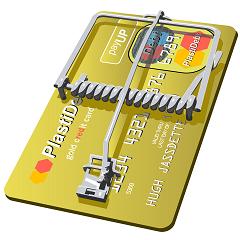
    “Charge it!”  It may feel great to just swipe a plastic card and that brand new shiny Michael Kors purse is now yours to enjoy.  But by the time you are at the next party  showing off your purse, the credit card bill is in the mail and soon you will have to pay for the purse.  You have following options; to pay your bill in full, make a partial payment or  pay the “minimum” payment.  But beware – once you start paying only a portion of your credit card bill, you will be charged interest the next month and this is where financial hardships can begin! The word “debt” is one that many students are familiar with because often they are already dealing with student loans due to high tuition costs.  Once students get into a habit of “charging” their purchases, they can easily fall into the debt trap and this is one of the risks associated with carrying a credit card.

    Risks:
    -may damage your credit score if your payments are late or you don’t pay the balance owing.
    -high interest rates.
    -you may carry an on-going debt that you find difficult to pay off.

    However, there are many benefits of credit card usage if the card is used for the right reasons and in a responsible manner!

    Benefits:
    -lets you borrow money instantly to make purchases.
    -allows you to carry less cash.
    -helps you establish a good credit history and earn a good credit score.
    -provides a free form of credit if you pay the balance in full and on time.
    -the card may provide a rewards program which can be used towards free travel or other items.

    In summary, it is beneficial to get a student credit card only if you plan to use it responsibly by not letting the risks outweigh the benefits. Try to find a card in which you obtain points on every purchase made.  This may lead you to a free trip of your choice! Think of being on the sunny beach forgetting about the books, all thanks to redeeming the points on your credit card. But remember that you won’t be able to enjoy that beach trip if your debt load and interest charges are accruing. Credit cards are the ultimate test in your new adult responsibilities.

  • Grants for Students with Disabilities

    Grants for Students with Disabilities

    Am I eligible?
    You are eligible if you:
    – apply and qualify for a Canada Student Loan;
    – are enrolled in a full-time or part-time program (minimum 32 weeks) at a designated post-secondary institution;
    – meet the criteria for students with permanent disabilities; and
    – include one of the following with your loan application as proof of your disability: a medical certificate, a psycho-educational assessment, or documentation proving receipt of federal or provincial disability assistance.

    What’s available?
    $2,000 per academic year (August 1 to July 31).
    This grant is available for each year of post-secondary studies, provided you continue to meet the eligibility criteria. This includes post-secondary studies beyond the undergraduate level. Grant money is issued by your province or territory of permanent residence at the beginning and in the middle of the school year.

    Since grant amounts are fixed, the amount you receive may exceed your assessed need.
    Example: If you qualify for the grant and you have an assessed need of $1,400, you will receive a $2,000 grant. In this case, the grant would cover your assessed need, so you would not need a student loan.

    How do I apply?
    The application process for this grant differs in each jurisdiction. To make sure you meet all the application requirements, contact your province or territory’s student financial assistance office.