
Category: Jobs and Apprenticeships

  • Carpet Installers (French version available)

    Carpet Installers (French version available)

    In many homes, some floors have tile or wood, and others have carpet. The carpet might seem like a natural part of the room, but someone has to install it. For people who are precise and enjoy working with their hands, a job as a carpet installer could be a good choice. It might be the right job for you.

    Like many similar jobs, the trade of carpet installer is closely tied to the construction industry. After the main part of a house or office is built, someone needs to make the building comfortable to live or work in. For some rooms, this includes installing carpets to help keep the floors warm in winter and soft on the feet. With a carpet or other floor covering, rooms feel finished and ready to live in.

    Flooring installation is very exact work. If the carpet is too big for the space, it might bunch up on one side or otherwise not fit properly. If the carpet is too small, it can leave the edges of the room without any covering. Making accurate measurements is very important in this job, since making mistakes can cause many problems. If the carpet needs to be reinstalled, it can be very expensive and time-consuming.

    Besides making correct measurements, carpet installers need to understand the differences between various types of floors and carpets. Some types of carpet might require stronger glue than others to stick to the floor. Carpet installers need to be able to assess the floor and the covering to choose the right type that will stick together properly.

    Preparing the floor and the carpet is important. Otherwise, the glue on the back of the carpet might not stick to the surface. Carpet installers might need to sand down rough patches of wood or glue down any loose surfaces before they start to put the carpet in place.

    Most flooring installation work is indoors, except for a few balconies or decks. Weather is not generally a factor in carpet installation, but the bulk of the work still takes place in the warmer months when building construction normally happens. In winter, when the job is slower, carpet installers might want to find other work to do if possible. At the peak construction times, these tradespeople might need to work overtime, but generally, the job is forty hours, five days a week.

    Becoming a carpet installer normally requires the completion of an apprenticeship, although some people can learn on the job. Apprenticeships are six-thousand hours long, broken down into six equal terms. About ninety per cent of that time is work experience, and the rest is classroom training.

    Applicants for the apprenticeship need at least a Grade 10 education or the equivalent and be at least sixteen years old. Good mathematics and English skills are important for this job, as they are for many careers. A strong back for bending over and reasonably good vision with or without glasses are important for this job.

    Wages for apprentices begin at about $21 per hour and rise to about $42 by the final year. Fully trained carpet installers generally earn $37,000 per year at the beginning of their careers and can earn $122,000 per year by the end. The work can be quite physically demanding, and people might want to move into administrative or supervisory roles as they age.

    Job prospects in carpet installation depend on the economy and other factors. Large cities are likely to have more jobs than in smaller places, but work is likely to be available almost anywhere. As older workers retire, more jobs will become available. Carpets wear out and need to be replaced even when construction is slow, but that type of work can be limited.

    Carpet installation can be difficult but interesting work. If you like to work with your hands, it could be right for you.


    Bibliography:

    Careers in Construction. “Floor Covering Installer.” https://www.careersinconstruction.ca/en/career/floor-covering-installer.

    College of Carpenters and Applied Trades. “Floor Covering Apprenticeship.” https://www.theccat.ca/floor-covering-apprenticeship/.

    Job Bank. “Floor Covering Installer in Canada.” https://www.jobbank.gc.ca/marketreport/outlook-occupation/21553/ca.

    Payscale Canada. “Carpet Installer: Hourly Rate.” https://www.payscale.com/research/CA/Job=Carpet_Installer/Hourly_Rate.

  • Working on a Farm

    Working on a Farm

    By Gavin Mercier

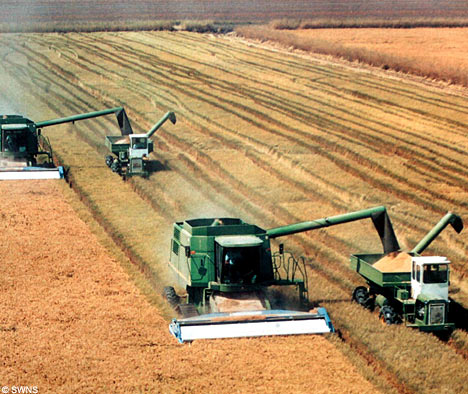
    Farm work is hard work- there’s no other way to say it. However, it is also some of the most valuable and rewarding work you can do. Farmers hold one of the most important jobs of our community, but they are also the most underappreciated. Working on a farm not only gives you a sense of what it’s like to be a farmer, but it also teaches you some real- life skills that will be valuable for your future.

    Hard Work, Fun Work, and Responsibility

    Yes, working on a farm is hard. But farming is the best example of the phrase “hard work pays off.” With farming, the harder you work the better the end result will be – in this case the end result is crop or cattle. Not only that, all the outdoor work is really great for great for your body. Working on a farm, you get to watch your work develop into something wonderful, whether it’s a crop of corn or a baby calf.

    While farming is hard work, it can also be a lot of fun. There is so much to do on farms you just can’t get bored. From feeding cows on a cattle farm to tending horses on a ranch, there are just so many fun things you can do on a farm – as long as you’re a little bit adventurous.

    Being on a farm isn’t all fun and games though. There is a lot of responsibility involved. Farmers are responsible for taking care of their animals and crops, and that can sometimes be a lot to handle. However, if you like being around animals and taking care of them, then this isn’t much of a chore at all.

    Appreciating Farmers

    Being a farmer is an underrated job – not many people choose to become a farmer anymore. There are also a lot of false facts about farming nowadays that put people off. Working on a farm, you get to see firsthand just how much they really do for us and what it’s really like. You will get a better appreciation for your food and how much work people really put into it. Seeing how your food is produced and being a part of that process gives a better understanding of the world we live in and how it all works for us.

    Appreciating Our Earth

    Not only will working on a farm help you appreciate all that farmers do for us, but it will also teach how to appreciate our planet more. Almost everything about farming is controlled by the weather and the landscape – crops are planted in the best soil around and watered by the rain. If there is no good soil, the crops can’t be planted, and if there is no rain then they cannot be watered. If we can’t take care of the earth, then it becomes harder for it to take care of us. Working on a farm is a great way to learn about the earth and how you can help take care of it.

    Working on a farm is great for so many reasons. I actually used to work on a cattle farm, and I still think it was one of the best experiences of my life. I had so much fun working there and learned so much, from the value of hard work to how I can help our earth. Working on a farm was one of the best things I ever did, and I hope it will be the best thing you ever do, as well.

  • Fighting for the Future a Plant at a Time: An Arborist Career Profile

    Fighting for the Future a Plant at a Time: An Arborist Career Profile

    Our world continues to grow increasingly industrialized and urbanized. It is more important now than at any point in our history to take care of the trees and plants still rooted in our planet’s fragile ecosystem. Does that important role intrigue you? Then consider a career as an arborist. Your work would focus on maintaining, trimming, and planting trees to ensure their health and longevity. It is a way to remain connected to nature in an increasingly technological world.

    Arborists work within a specific area to trim, prune, hedge, remove, and plant trees. This is done via hand tools or heavy machinery. The area could be as small as a backyard or garden, or as large as a public park or golf course. Arborists strive to keep plants and trees healthy and active. The work can also entail landscaping, evaluation of trees for diseases, managing nutrients and water, and more. Be prepared to spend much of your time in the field, working on your client’s property and ready to respond to emergency calls. You will also need to complete paperwork in offices and sample processing in labs. Arborists get to spend plenty of time outdoors and work in a variety of locations. It is physically demanding work with constant pressure applied to maintain the health of the greenery in your client’s area.

    The average hourly rate for arborists in Canada is $22.72. This can range from about $18 hourly to approximately $30. The annual wage depends on years of experience, with an average of $37,000 for those with fewer than five years of work. After a decade or more, arborists can expect to make $74,000 annually. Canada’s vast land, filled with large regions of greenery, allows for many job opportunities. Those looking for better prospects and higher salaries will find preferable wages further west in Canada, particularly in Calgary, Alberta and Vancouver, British Columbia. Pay is comparably lower in Toronto, Ontario.

    Those looking to pursue a career in this field should have educational or volunteer experience in fields such as physical education, chemistry, and biology. Apart from a high school diploma, you will need to obtain a minimum of a technical diploma in programs such as botany, forestry, ecology, environmental studies, and horticulture. You can also become a member of certified bodies, such as the International Society of Arboriculture. As you gain experience, you can progress into other related careers ranging from agriculture specialist, botanist, crop and livestock producer, soil scientist, wetland biologist, ecologist, and beyond.

    It is arduous and demanding work to protect nature. Many of our day-to-day activities do plenty of harm via pollution and waste. People such as arborists, who dedicate their professional lives to protecting our natural world, are playing a vital role in our present and future. No matter how urbanized or technologically advanced, humanity is still dependent on the Earth’s delicate ecosystem. When you choose a career as an arborist, you are playing an important part in ensuring that gardens are healthy, parks stay beautiful, and life remains sustainable.

    Sources:

    ECO Canada. “Arborist.” https://www.eco.ca/career-profiles/arborist/

    PayScale. “Average Arborist Hourly Pay.” https://www.payscale.com/research/CA/Job=Arborist/Hourly_Rate

  • It’s A Job Hunt Life: How To Stay Positive and Productive During the Job Search (French version available)

    It’s A Job Hunt Life: How To Stay Positive and Productive During the Job Search (French version available)

    Job searching can be exhausting, especially if you’ve never done it before. It can be tedious to scroll through job listings, tinker with your resume, and fill out application forms – only to never hear back from the hiring manager. Everyone has felt discouraged, anxious, or frustrated with the process at some point, but there are steps you can take to ensure that your experience is productive and positive. Use this article as a guide to a more active, results-oriented job search that will help you expand your professional network, secure more interviews, and feel more confident as a job candidate.

    Create a Professional Online Presence

    Many teenagers use social media to chat with friends and share pictures, stories, and personal updates. But did you know that 70 percent of hiring managers use social media to screen job applicants? That means that for every ten companies you apply to, 7 of them will review your social media and assess whether you’re right for the role based on what you post.

    During your job search, spend some time cleaning up your social media profiles. Imagine yourself sitting in a job interview with a hiring manager scrolling through your Instagram, TikTok or Twitter accounts. What would they think about you? How would you explain the decision-making that went into each post? Be sure to use professional profile pictures and avoid potentially offensive language. And remember that once something is on the internet, it’s out in the world forever.

    You may also want to create a LinkedIn page. LinkedIn is a professional platform that can help you meet people in a field or academic program of interest, review personalized job listings, and highlight your skills to potential employers. Include a link to your profile on your resume and cover letter to allow hiring managers to find you more quickly. Use the platform to connect with people you know and send personalized requests to people you want to know. You never know who could present you with a great job lead.

    Build Your Resume

    The more experience you have, the easier it is to land your dream job. This situation can seem frustratingly paradoxical; it’s like you need to have a job already, just to get a better one. But paid work isn’t the only way to build your resume. Volunteer work, extra-curricular activities, unpaid internships, and training courses can help you stand out from other job seekers. In addition, you can use volunteer opportunities to experiment with different industries, fields, and job roles before fully committing to paid work.

    In short, whether you’re in high school or just starting university, it’s a good idea to get involved by joining clubs, participating in school events, and volunteering on campus.

    Start Networking

    Only 20 percent of jobs are advertised through official job listings. The remaining 80 percent are promoted by word-of-mouth within personal and professional networks. If you want to expand your job search opportunities, you need to build your network.

    As previously mentioned, social media and LinkedIn can be invaluable networking tools. You can use status updates to show that you’re actively looking for work and apply directly to companies and hiring departments from your phone or computer. In addition, you can reach out to previous employers or volunteer supervisors to ask for a reference.

    The concept of networking may seem intimidating, but it’s just a matter of talking to people. Who do you know? What do they do for a living? What resources can they provide? Let people know that you’re looking for work and ask whether they have any advice for you. You’d be surprised at how willing people are to share insights, give recommendations, and facilitate meetings with other professional contacts. Show interest in their careers, and they’ll likely return the favour by helping you out.

    It’s a Long-Term Process

    Although job searching can be stressful, it’s a skill that will serve you throughout your life. Finding the right opportunity – that is, one that meets your goals, matches your skillset, and brings you happiness – is often a long journey. But these steps can help you feel confident and productive while you figure things out. To recap:

    • Present yourself as someone that you would want to hire.
    • Get involved and learn new things.
    • Talk to people, and don’t be afraid to ask for help.


    References

    Demers, J. 10 Things You Should Do While You’re Looking for Work. Inc. https://www.inc.com/jayson-demers/10-things-you-should-do-while-you-re-looking-for-work.html.

    Faires, L. Do Potential Employers Look at Your Social Media Accounts Before Hiring? Liberty Staffing Services. https://www.libertystaffing.ca/blog/do-potential-employers-look-at-your-social-media-accounts-before-hiring#:~:text=According%20to%20a%20recent%20study,job%20candidates%20before%20hiring%20them.

  • Career Profile: Singer (French version available)

    Career Profile: Singer (French version available)

    By Julia Skoczypiec

    Do you enjoy singing? Whether you put on stadium-worthy performances in the shower or hum along to your favourite tunes in the car, everyone’s a little bit of a singer in one way or another. But have you ever considered a career as a singer? If so, it is not as daunting as many make it seem.

    Singers are trained musical professionals who perform at various venues in many different styles. Some singing styles include opera, jazz, pop, hip-hop, and country. While many often associate singers with celebrity status, there are career opportunities for singers in Canada that pay the bills without having to walk the red carpet. From larger live events like wedding receptions, musicals, orchestras, and outdoor festivals, to more private performances at birthday parties and restaurants, singers work in many diverse locations to entertain vast audiences.

    Most of the time, singers work on their own schedules and travel to different locations every week. These are the main pros of the career. However, a self-made schedule comes with a lot of responsibilities. Singers constantly market themselves through social media, interviews, and websites to find and book singing ‘gigs’ (or performances). Many singers also work in studios to record songs for distribution by record labels. While working hours vary, singers usually perform on weekdays, holidays, and at night. These can be cons to the career as hours are irregular. Also, finding performance venues and audiences can become challenging and impact a singer’s overall income.

    Singers can also work as music teachers. In this way, singers often avoid self-employment and work in one location — such as a school, a music academy, or privately in their own homes. In doing so, a singer’s income and working hours become more regular. Those who work as teachers are required to know proper singing techniques and music theory. As a result, a bachelor’s degree in music from a college or university is often required.

    While postsecondary education is not essential for singers who perform in venues like restaurants and weddings, further education is necessary for those who perform in orchestras, classical music choirs, or in plays and musicals put on by professional theatre companies. Some bachelor’s degrees and diplomas in music are more theory-based, meaning you study sheet music reading and high-level techniques. These are great for classical and jazz-style singers. Other programs are more performance-based. These often include singing, dancing, and acting all in one program.

    The average hourly rate for singers in Canada is $52. Annually, this equates to approximately $107,000. However, this amount can vary depending on the number of gigs a singer performs during the year. For singers who are music teachers, the average salary is $60,000.

    Singers often work closely with instrumentalists, composers, producers, and other singers. This means that before any performances, singers must set time aside for rehearsals. While rehearsing is often time-consuming and tiresome, it is through collaborations with other artists that singers are able to advance in their careers and connect with broader audiences. Through continuous practice, singers are able to challenge their own vocal abilities and meet personal goals that only come from the joys of performing.


    Sources

    Economic Research Institute. “Singer Salary in Canada.” https://www.erieri.com/salary/job/singer/canada.

    Indeed. “What Is a Singing Career? 11 Careers in the Singing Industry.” https://www.indeed.com/career-advice/finding-a-job/singing-career.

    Talent.com. “Music Teacher average salary in Canada 2022.” https://ca.talent.com/salary?job=music+teacher.

    Your Free Career Test. “What does a Singer do?” https://www.yourfreecareertest.com/singer/.

  • Profiling a Career as a Teaching Assistant (French version available)

    Profiling a Career as a Teaching Assistant (French version available)

    If you enjoy learning, sharing knowledge, and working with children, you’ve probably considered a career in education. But you may not be aware of the wide range of opportunities available in that field. Many administrators, librarians, advisors, and assistants support teachers in their daily duties. Perhaps the specific role of a classroom teacher isn’t appealing to you. That’s okay! And it certainly doesn’t mean a career in education is unattainable. Use this profile to gain insight into another great option: a career as a teaching assistant.

    Roles and Responsibilities

    Teaching assistants support teachers with a variety of classroom duties (e.g., creating lesson plans, facilitating learning activities, evaluating students, etc.). They can work in public and private school boards, special education centres, and other educational settings.

    As a teaching assistant, you may be responsible for any of the following tasks:

    • Preparing the classroom (e.g., setting up equipment, operating assistive technology, etc.)
    • Grading assignments, tests, and/or presentations and recording student progress
    • Supervising students during lunch, recess, and other breaks

    Required Training and Education  

    To be a teaching assistant, you must complete a secondary school diploma and a college program ranging from 10 months to 2 years in length (depending on your province and local institutions). Some schools may also request First Aid and CPR certification or Nonviolent Crisis Intervention training.

    If you want to work specifically with students with disabilities, additional training may be required. For example, it could be beneficial to pursue courses in Applied Behaviour Analysis (ABA) or Developmental Support Services. You may also require additional training depending on the level of education you want to work at (i.e., in primary or secondary school).

    Benefits of A Career as a Teaching Assistant

    If you’re easily bored by a repetitive routine, this career is perfect for you. For a teaching assistant, every day is a little different. You might support students with academic subjects like maths and science one day and work on art projects the next. Sometimes you might help in the school library, while other times you could be asked to supervise field trips. Each day will bring a change of focus and pace.

    Another significant benefit is the emotional satisfaction that can come from this job. If you like working with children, this career could be ideal. You will have the opportunity to participate in learning and recreational activities without the pressure of being a classroom teacher. Rather than taking the lead during lessons and projects, you can take a step back and spend your time providing extra support to the students who need it. It can be very rewarding to bond with them and know that you’re making a difference in their school experience.

    Earnings and Career Prospects

    The starting salary for teaching assistants is about $45,000 per year. With more experience and education, your salary can increase. The average teaching assistant in Canada earns approximately $58,400 annually, while the most experienced workers make more than $69,200.

    The demand for teaching assistants is expected to stay consistent over the next few years. By 2028, there will be almost an even number of job seekers compared to job opportunities, which means that the field may be slightly competitive. As the world of education continues to grow and evolve, teaching assistants will remain a valuable resource to the school system.

    Drawbacks and Challenges

    There are drawbacks to this career choice. As a teaching assistant, you will likely be responsible for supporting students with emotional and behavioural challenges. It can be a strain when children act out or refuse to follow instructions. It can also be emotionally draining to support students with troubled families, mental health problems, or other sources of stress in their lives. While it may be rewarding to help students, teaching assistants can burn out if they push themselves too hard.

    This career can be particularly difficult for someone who likes a consistent schedule. Teaching assistants often fill multiple roles at once – teaching, supervising, navigating classroom technology, distributing learning materials, etc. The environment is fast-paced and requires a strong ability to multi-task and adapt. If you want a calm, predictable career, this one may not be for you.

    What Are My Other Options?  

    While training to be a teaching assistant, you will likely develop competencies in teaching and facilitating, multitasking, time management, and organization. You may also gain functional knowledge related to disabilities, developmental psychology, assistive technology, and school subjects like math and science. You could apply these skills and areas of knowledge to the following career paths:

    • Developmental services worker
    • Child and youth worker
    • Administrative assistant
    • Classroom teacher
    • Librarian or library clerk

    Additional training and credentials may be required.


    Sources

    Government of Canada. Canadian Occupational Projection System (COPS). http://occupations.esdc.gc.ca/sppc-cops/occupationsummarydetail.jsp?tid=151&

    Indeed for Employers. How to Write a Teacher Assistant Job Description: Top Duties and Requirements. https://ca.indeed.com/hire/job-description/teacher-assistant?gclid=Cj0KCQiA9OiPBhCOARIsAI0y71DUPhFoo33wqXDW6GsZEQuxzBZ6F_Eo1THOo2GfXw6voPEBoKpmxKMaAqQbEALw_wcB&aceid=

    OCAS. Education/Teaching Assistant. Ontariocolleges.ca. https://www.ontariocolleges.ca/en/programs/education-community-and-social-services/education-teaching-teaching-assistant

    Talent.com. Teaching Assistant average salary in Canada. https://ca.talent.com/salary?job=teaching+assistant

    The Training Room. 7 Perks of Being a Teaching Assistant. https://www.thetrainingroom.com/blog/education-and-teaching/november-2018/7-perks-of-being-a-teaching-assistant#

    Training.org. Stresses and strains of being a teaching assistant. https://www.1training.org/blog/stresses-strains-teaching-assistant/

  • Career Profile: Agricultural Fruit Growers

    Career Profile: Agricultural Fruit Growers

    If you have cereal in the mornings, you might put a few berries or a banana on top. Maybe you eat an apple with lunch or some fruit as a bedtime snack. Have you ever thought of where that fruit comes from?  Some might come from your yard, but a lot of it probably comes from farms. The people who help bring this food to you and your family are agricultural fruit growers.

    Growing large amounts of fruit can be complicated. Agricultural fruit growers analyze the soil to make sure that it is healthy enough for the plants and decide where to put each kind of plant. Apple trees, for example, need much more space than raspberries. Some types of fruit grow in black soil and others in different kinds of soil. In Canada, two of the major fruit-growing areas are British Columbia and southern Ontario, but other parts of Canada also grow fruit in smaller amounts. The warm areas with long summer seasons can grow fruit like peaches, cherries, and plums.

    Fruit grows for only part of the year, but the work can be very busy even during the winter. For example, fruit growers might need to thin out raspberry bushes or prune apple trees to make them healthier the next spring. They might have to add fertilizer to the soil or dig in new areas to find better areas to plant the next year. Owners of fruit-growing businesses have a lot of responsibility to make sure that they do whatever they can to help ensure a good crop for the next summer.

    Depending on what kinds of fruit they grow, people might be busy early or late in the season. For example, strawberries tend to be an early summer fruit, but peaches and nectarines come much later, close to fall. Many commercial fruit growers are likely to have several different kinds of fruit so that they can have something to sell throughout the season. Studying botany in university or completing an apprenticeship can help, although anyone can work in this area.

    Growing fruit can be very risky because bad weather can ruin an entire crop or badly damage delicate fruit. Owners of the businesses might do very well one year and not sell anything the next year because of frost or hail damage. The employees who work on the farm to pick the fruit are likely to earn minimum wage, but their work also depends on weather conditions. If a crop is ruined, they might be out of work for the rest of the season.

    Another factor that agricultural fruit growers have to consider is who buys their fruit. Some farmers who live close to cities or towns might have U-Pick fields where people come to get fresh fruit. Others might take their fruit to farmers’ markets, but that also means that they have to be close to the cities. Supermarkets and other large stores are also important places to sell fruit, but the prices that the growers get are not always very high. Sometimes, it might be very hard to make a profit in this business.

    Still, for people who love the outdoors and enjoy working with plants, being an agricultural fruit grower can be a very good option.

    Bibliography:

    Durham Workforce Authority. “Agriculture Fruit Grower.” https://durhamworkforceauthority.ca/wp-content/uploads/2014/03/Agriculture-Fruit-Grower1.pdf.

    Indeed.com. “Farm Worker Salaries in Canada.” https://ca.indeed.com/salaries/Farm-Worker-Salaries

    Ontario Fruit and Vegetable Growers’ Association. “About the OFVGA.” http://www.ofvga.org/aboutofvga

  • Career Profile: Communications Equipment Operators

    Career Profile: Communications Equipment Operators

    Have you ever been talking with someone on the phone when the sound suddenly cut out? Maybe you were listening to the radio or watching television when it stopped working. Those situations are frustrating, but communications equipment operators can help. These people have an important role in helping people to communicate with each other over long or short distances.

    Communications equipment operators install and maintain equipment for radio and satellite communication, as well as maintain records for their work. When something goes wrong, they investigate to find the problem and then repair or replace the equipment. Many people in this field work for radio or television stations, but others work for the military or other agencies.

    Depending on the job, communications equipment operators might do most of their work in offices. However, outdoor work might be required in some cases, especially when repairs need to be done. Being able to work in the cold, rain, or heat is very important. Many people in this job work regular hours, but others might work at special events in the evenings or on weekends. Troubleshooting can also happen at odd hours.

    Some communications equipment operators work with very complicated machines, including communications systems, computers, weapons systems, and even vehicles. They may be responsible for developing the communications systems, or they might work with a system that is already in place. Having a good knowledge of computer coding, applications, and troubleshooting is useful.

    Educational requirements for communications equipment operators vary. A high school diploma is normally the basic requirement. High school students can begin to prepare for this job with English and mathematics courses, besides anything related to communication or technology.

    Most employers provide short-term on-the-job training. Some people in this trade take courses to get a certificate that takes a year or two to complete. The certificate includes practical training, as well as courses to teach students about the theory behind the techniques.

    Communications equipment operators can work in a variety of settings. Besides radio, television, and the military, people in this field might be able to find work in schools, career colleges, and even universities. Some jobs might include teaching or working in administration as well as operating communications equipment.

    Salaries in this type of work can vary, depending on many factors. Generally, salaries begin at about $51,000 per year and can rise to $72,000. Some people in this job might begin as an assistant to the main communications equipment operator. In this case, they are likely to receive a relatively lower salary than others. Job prospects vary with the economy and location, but at least some work is likely to be available in this field. Large cities like Toronto or Vancouver, which have movie industries, are the best places to find work, although opportunities are also available elsewhere.

    The ability to concentrate is important in this job since it often involves listening carefully to the people who are talking and adjusting the equipment for background noise, louder or softer voices, or anything else that might affect the quality of the sound. If the recording includes video, communications equipment operators also need to adjust the settings for different levels of light.

    Working as a communications equipment operator is not usually physically difficult, although it can be tiring if a recording session takes a long time. However, as people age, their hearing and vision can begin to fail, and they might find the work too hard to continue. For many people, however, working as a communications equipment operator can be a good career choice.


    Bibliography

    Career Planner. “Communications Equipment Operator.” https://job-descriptions.careerplanner.com/Communications-Equipment-Operators-All-Other.cfm.

    Glassdoor. Equipment Operator Salaries in Canada. https://www.glassdoor.ca/Salaries/equipment-operator-salary-SRCH_KO0,18.htm.

    Indeed. “Communications Operator Salary in Canada.” https://ca.indeed.com/career/communications-operator/salaries.

    Zippia. “What Is a Communications Equipment Operator and How to Become One.” https://www.zippia.com/communications-equipment-operator-jobs/.

  • Job Shadowing for a Day with a Skilled Trade

    Job Shadowing for a Day with a Skilled Trade

    So, you are getting close to the end of your schooling, and you have decided to go into one of the skilled trades for your career. You may even already have an idea of what trade industry you want to work in – that’s great!
    Whether you have already decided on a career path or are still looking at options, a great way to learn more about what it’s like working in a specific trade is to do a job shadow with someone in that field.

    Job shadowing is when you accompany a professional during their workday to see what sort of tasks and activities their job involves. When you are learning about a prospective career, internet research, books, and other resources are very useful, but there are always some aspects of a job that need to be seen and experienced in person to give you a real sense of what it would be like to work in a specific trade.

    Spending time with a working professional makes it easier to get accurate, first-hand information about the job responsibilities and the industry itself. You also have the opportunity to ask questions one-on-one with someone who is an expert in the field. As well, even though you will be shadowing with one person, you will have the opportunity to meet other people working other positions and in other departments. This is a great chance to network and make connections in the company and trade industry, which can be valuable contacts later on when you are looking for an internship or other career opportunity. Seeing how the employees of a company interact will also give you an idea of the company culture and dynamics.

    Not sure how to find and arrange a job shadow opportunity? Your first option is to check with your school guidance counsellor or careers teacher, as they likely have a good idea of people or companies suitable for hosting a student job shadow. You can also ask someone you know personally, such as a family member or family acquaintance, if they or someone they work with would be interested in taking a job shadow with them for a day. You may also feel more comfortable spending the time with someone you are familiar with, and therefore be more relaxed and willing to ask questions or participate in work activities.

    Lastly, you can approach someone at the company directly, such as through their human resources department, to inquire if they have done job shadowing opportunities before. Many companies in the trades also have co-op and youth apprenticeship programs, and so are likely to have someone willing to take you as a job shadow- don’t be afraid to ask!

    Most importantly, when you are out on your job shadow, remember to be enthusiastic and interested. Whomever you shadow with, they are willing to spend valuable time in order to share their job, their experience, and their interest with you, so be sure to return the favour. Have fun shadowing!

  • How Working in the Trades can Apply to Your Every-Day Life

    How Working in the Trades can Apply to Your Every-Day Life

    You may not have thought of it, but working in a trade can help you in your everyday life. The skills you develop in a trade can be practical, technical, and useful. When you think about working in the trades, keep in mind all that it could bring to your personal life, alongside a great career.

    Here are some trade career examples that have the potential to help you in your personal life:

    Carpenter: Being a carpenter is about putting together projects and mainly building things. If you have ever dreamed about building your own home, being a carpenter would cut labour costs for you, making it easier to afford in the long run. Carpenters have a general sense of how to fix practical things. For example, if you have a door that won’t close in your house, you would be able to examine the problem, take the door off and put it back on properly. Even if you don’t build your own house, but are still a carpenter, you would be able to fix things that are broken within your house. How cool would it be if you could build a tree fort for your kids?

    Chef: Being a professional chef has its perks. When you train to be a chef, you learn about safe food practices, nutrition, and the importance of cleanliness, before and after cooking. These things can be applied at home. You can impress your friends and family with your culinary skills by hosting social events and parties. If you have children, you will be aware of what nutritious food is best, and you could even teach them how to prepare it. You could also lend your skills and knowledge to places like shelters and food banks. We can’t live without food; so naturally, being a chef will always be a part of your personal life, alongside your career.

    Electrician:
    We use electricity almost every moment of every day. If it isn’t powering the lights on in our house, it is charging our phones or laptops. Electricians have exciting jobs, for every day is different. You could be doing commercial wiring in a big building to setting up power cables in a residential home (depending on what company you work for and what your specialty is). If you are an electrician, you could fix faulty wires in your house or your friend’s house, possibly fix your electronics, install solar-power within your house, and maybe fix the radio wires in your car. The opportunities to bring your electrical know-how into your everyday life are endless.

    Auto Mechanic:
    The perk of being an auto mechanic is simple: You can fix your own vehicle. People spend thousands of dollars a year on their cars and trucks. If you become an auto mechanic, you will be able to fix your own vehicle problems without anyone trying to hustle you for more money. Most auto mechanics have a garage at home and work tools on hand, just in case they have any problems with their own vehicles. You could even help your family or a friend in determining what their car problem is before they go into the shop, reducing the chances of them being taken advantage of.