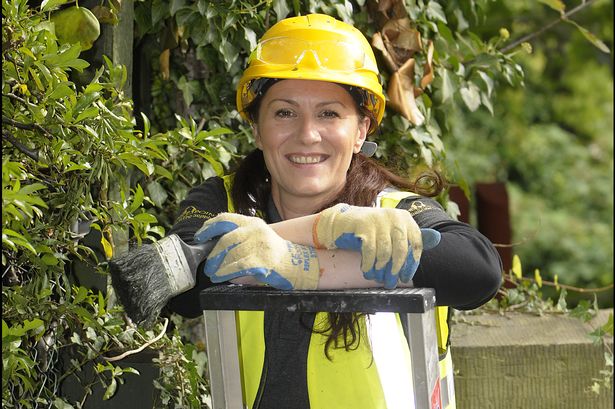
Category: Trades

  • Career Profile: Chef

    Career Profile: Chef

    Everyone needs to eat, but some meals are better than others. Chefs are highly trained cooks who help to make meals special with the ingredients they use and how they prepare the food. If you like to help people experience new and special tastes, a career as a chef might be right for you.

    Many people learn to cook basic dishes like bacon and eggs or macaroni and cheese, but chefs learn to make much fancier meals than that. Most chefs need a certificate or diploma from a culinary school like Le Cordon Bleu in Ottawa or the Pacific Institute of Culinary Arts in Vancouver. Different lengths of programs are available, and students can choose to focus on a certain type of cooking, such as French or Italian. Finding a school with a Red Seal designation is important, since most employers will require that.

    Learning to be a chef involves becoming familiar with many different topics, such as the safe handling of food, how to cook dishes from different parts of the world, and other subjects. People can also choose whether to study to become a head chef or to specialize in something like sauces or desserts.

    With this training, people can find jobs in all kinds of places, such as restaurants, conference centres, and even cruise ships or catering businesses. Teaching cooking at a trade school or community college might also be a good option for some chefs.

    Salaries for chefs depend on their level of responsibility and where they work. Generally, chefs begin at about $12 per hour or over $26,000 per year and can rise to almost $21 per hour or over $50,000 per year. Over half of Canadian chefs work full time, but many people work part time and then possibly take another job as well.

    Being a chef is not an easy job. In restaurants, there might be slack times when almost no one comes to eat, but then it might be extremely busy when mealtimes come. Some foods can be prepared an hour or more in advance, but many others need to be made just before they go out to the table. Chefs can be on their feet, busily making food without much of a rest for hours at a time. Sometimes, things go wrong and a chef has to make a last-minute change to a dish to make it work.

    Creativity is a very important quality in chefs. Being able to create new dishes or to figure out what to do with limited choices will help chefs find work wherever they live. Communicating well with other people is also important, since chefs often have to work with kitchen staff who have little or no training and still be able to get meals prepared and out on time.

    Job prospects for chefs in Canada are not very good right now, but openings come up quite often. Big cities are likely to have more opportunities but also more competition for jobs. You can already start to get experience as a chef by studying cookbooks and practicing your skills. You might become a great chef someday!

    Bibliography:

    Culinary Schools.org. “Find a Top Cooking School in a Canadian Province.” https://www.culinaryschools.org/international/canada-cooking-schools/#context/api/listings/prefilter.

    Government of Canada. “Cook in Canada.” https://www.jobbank.gc.ca/marketreport/outlook-occupation/6225/ca.

    Payscale.com. “Kitchen Chef: Hourly Rate.” https://www.payscale.com/research/CA/Job=Kitchen_Chef/Hourly_Rate.

    Work BC. “Chefs (NOC 6321). https://www.workbc.ca/careers/6321.

  • Trades: Why You Should Be Part of the Construction Industry

    Trades: Why You Should Be Part of the Construction Industry

    Many towns and cities across Canada are seeing unprecedented growth in size and population, which means a growing need for both and private buildings and public infrastructure–everything from single-family homes to multi-unit apartment buildings, commercial retail spaces to parks and sports arenas.  What these all have in common is the need for skilled tradespeople working in the construction industry to build and maintain these structures.  With over 50 different trades within the construction industry, anyone can find their perfect fit.

    So why should you pursue a career in the construction industry?  Here are four great reasons:

    Job Security

    In an economy often marked by employment uncertainty in many fields, the skilled trades in the construction industry offer young workers the opportunity to begin a secure career with a high level of job security.  Between the need for maintenance on existing buildings and infrastructure, and the continuing growth in new construction and infrastructure projects, tradespeople can build long and satisfying careers.  In addition, over the next ten to fifteen years a high number of workers will reach retirement age and leave the workforce, which will open up many positions for younger tradespeople.

    While construction is often matched up with thoughts of summertime, in reality the construction industry operates year-round: outdoor projects during good weather and the summer months, and indoor projects during the winter.  This means that construction industry tradespeople can reliably work any time of the year.

    Entrepreneurship

    Trades careers in the construction industry are also great choices if you want to start your own company and work for yourself, rather than for someone else.  Once you have completed an apprenticeship, college program, or Red Seal certification, you’ll be well situated to start planning to open your own construction trades business.  This gives tradespeople the opportunity to build their own company the way they want — whether that’s a one-person operation or a small team; an independent contractor, or a company that takes on and completes entire jobs.

    Great Earning Potential

    Like many skilled trades, trades careers in the construction industry often offer high salaries as tradespeople grow more experienced or train to specialize in specific skills or types of projects.  Depending on the trade, salaries can average $60,000 to $80,000 per year, with certain trades or having many years of experience leading to salaries as high as the $100,000 range during the later stages of a tradesperson’s career.

    As a tradesperson, you can also often start earning money right away, as many trades use paid apprenticeships as the primary method of training a person in a trade.  Even if the trade you want does require some post-secondary education, a college or trade school program is almost guaranteed to be more affordable than most four-year college or university degrees.  This means tradespeople can get the education they need without building up a lot of student debt.

    Work Anywhere in Canada with a Red Seal Certification

    Formally known as the Interprovincial Standards Red Seal Program, this certification is designed to ensure that tradespeople possess the skill level and capabilities in their trade to match the national standard.  Many of the construction industry trades are designated as Red Seal trades, with set requirements for completion–including apprenticeship hours, in-class training, and the final Red Seal examination.

    One of the benefits of completing a Red Seal certification is that these tradespeople can then work in their trade anywhere in Canada without needing to pursue other provincial certifications.  This can be especially appealing to younger tradespeople who want to visit or live in different parts of Canada, either long term or for shorter contracts.  Being Red Seal certified also increases employability and chances of promotion, as well as commanding a higher salary.

    Sources:

    https://www.careersinconstruction.ca/en/why-construction/8-good-reasons

    http://www.red-seal.ca/about/pr.4gr.1m-eng.html

    https://buildingtrades.ca/union-careers/trades/

    https://careersintrades.ca/what-are-the-skilled-trades/construction/

  • Why Are There So Few Young People in the Trades, and How Can We Fix This?

    Why Are There So Few Young People in the Trades, and How Can We Fix This?

    The trades, like many other fields of employment, expect to see a large number of workers leaving the workforce in the next ten to fifteen years as the Baby Boomer generation reaches retirement age.  However, currently there is a lack of young tradespeople in the workforce available to step forward and fill this gap.  It’s imperative that more young people get into the trades, but why are there so few to begin with?

    Unpleasant Myths About the Trades

    Unfortunately, there are some unpleasant myths about trades careers that are hard to dispel, such as the idea that working in the trades means being poorly paid, working unskilled labour, and enduring dirty or unsafe working conditions. These misconceptions are often reinforced by movies and television, leading many young people to decide they don’t want to work in the trades.

    How can we correct these misconceptions?

    While there’s no easy way, spreading positive information about the trades is the best way to show young people what a trades career is truly like.  None of those unpleasant myths are true of modern trades.  Tradespeople are highly skilled and highly trained professionals who are vital to every industry, from manufacturing and construction to childcare, hairdressers, and culinary experts.  Many tradespeople possess a combination of college education and on-the-job apprenticeship training, which gives them both a strong knowledge base and expertise in hands-on skills.

    Trades careers are also very well paid, often with average salaries higher than the national average for all employment.  Some trades careers can earn more than $80,000 per year, though it will depend on how many years of experience the tradesperson has and in which part of the country they are employed.  Modern trades also operate under strict workplace regulations for employment, and health and safety, subject to regular inspections by certification bodies and governmental organizations.

    Young People Don’t Know What Trades Are Out There

    Many young people simply aren’t aware of how many trades careers there are, or what these trades involve, and end up overlooking the opportunities offered by skilled trades.  Though well-intentioned, many elementary and secondary schools put the greatest emphasis on encouraging students to attend college or university to earn three and four year bachelor’s degrees.  While there’s nothing wrong with this, the result of often that schools miss out on presenting detailed information about trades careers to students at the same time.  This means that many students who are trying to decide what to do after high school may not realize how many opportunities exist in the trades.

    How can you learn about working in the trades?

    Learn the truth about the trades from another tradesperson.  If you know someone who works in a trade, such as a parent, family member, or friend, you can take some time to ask them about their work to learn what their trade involves.  Ask about the workplace, health and safety, what kind of skills they use on a day-to-day basis, and what the future of their career path looks like.  This is the best way to learn the truth about working in the trades, to help you decide if a trades career is right for you.

    No matter what you’re interested in, somewhere in the long list of skilled trades will be a trades career that is the perfect fit.

    Sources:

    https://settlement.org/ontario/employment/professions-and-trades/regulated/myths-about-the-skilled-trades-as-a-career-option-in-ontario/

    https://www.collegeoftrades.ca/

    https://oyap.com/en/about_oyap/why_the_trades/

    https://oyap.com/en/skilled_trades/myth_busters/

  • Career Profile: Stone Cutters and Carvers

    Career Profile: Stone Cutters and Carvers

    In 2014, stone cutters and carvers in Ontario went to work at restoring a section of the Parliament Buildings in Ottawa. Not everyone in this trade gets to work on such important projects, but becoming a stone cutter and carver can be a good choice for people who like to work with their hands and often be creative.

    Stone cutters and carvers work mainly on buildings with marble, stone, brick, and other hard surfaces. Sometimes, people in this field might design the patterns themselves, or they might follow a preset pattern to make flowers, pictures, and more. Some designs are very simple, but others can be complicated.

    Often, people in this field first draw the outlines of a design on the stone or other materials, and the stone cutters and carvers use power tools to shape the stone or other materials to make it look beautiful and interesting. Cutters use sandblasters for larger surfaces, but tools like that are not always useful. In some cases, like at the Parliament Buildings, stone cutters and carvers use hand tools for very delicate work. They also need to be able to work with mortar and other materials that join stones and bricks together.

    People who work as stone cutters and carvers generally need a high school education, and no certification is required in Canada. Many employers require people to have two years of experience. Many people learn the work on the job. Another way to learn about this trade is to take courses at Algonquin College in Ottawa, the only place in Canada that offers courses in the field.

    The trade of stone cutting and carving started to die out soon after the Parliament Buildings were first built in the 1860s. However, the number of jobs are beginning to increase again. These days, job prospects are not as good as they once were, but opportunities are available, especially in larger cities. Because it is a rare skill these days, you might not have as much competition for jobs as in other trades.

    People in this field need to be strong enough to lift heavy slabs of stone if necessary. They need to stand, bend, and kneel down to do their work. These tradespeople should also be able to listen to instructions and carry them out. Good reading skills are also important since stone cutters and carvers need to be able to follow directions and to keep records of what they have done. Patience and an ability to work on very delicate tasks can help people in this field. Dealing with dust and dirt is part of the job.

    Like many trades, the job of stone cutter and carver can be a fairly solitary job, but it also requires skills in working with people. In small businesses, these tradespeople have to be able to deal with customers and be able to deal with invoices, ordering supplies, and other tasks for keeping the business going.

    Specializing in a particular design or kind of carving can help. For example, working with tombstones can be a good option for people who are interested in steady employment. A career in stone cutting and carving can be a good choice for people who enjoy creating beautiful designs that last for years.

    Bibliography:

    Career Planner. “Stone Cutter and Carver.” https://job-descriptions.careerplanner.com/Stone-Cutters-and-Carvers.cfm.

    Owl Guru. “Manufacturing Stone Cutters and Carvers.” https://www.owlguru.com/career/stone-cutters-and-carvers-manufacturing/job-description/.

    Payne, Elizabeth. “Carved in Stone: How the Restoration of the West Block is Helping to Revive an Ancient Trade in Canada.” https://ottawacitizen.com/news/local-news/carved-in-stone-how-restoration-of-the-west-block-is-helping-revive-an-ancient-trade-in-canada.

    Payscale Canada. “Stone Mason Salary.” https://www.payscale.com/research/CA/Job=Stonemason/Hourly_Rate.

  • Career Profile: Surveyors

    Career Profile: Surveyors

    If you ride or walk down city streets often enough, you’re likely to see people looking through yellow machines that look a bit like cameras. These people are surveyors, who help determine property boundaries, elevations, and other features important to builders and others who need the information.

    Surveyors gather information about the land to help deal with questions that people might have about land ownership or its suitability for building. To do this, they take measurements using special instruments and then put the information onto maps and sketches and report on what they have found. They calculate height, depth, and whatever people need to know. Having good mathematical skills is important for this job.

    Being a good organizer is important in this career when surveyors plan and direct projects. Often, surveyors work for the government to check property lines and to solve problems that people might have. Suppose that two neighbours had a question about where one person’s property ended and the other began. A surveyor could find the answer. If government officials need information on an area intended for a park or other public area, the work of a surveyor can help them find what they want. Knowing what different clients need can help surveyors find jobs.

    Working as a surveyor involves some outdoor work but also office work to record the information and make calculations. Generally, the work is not physically difficult, but it can be tiring to stand for long periods of time or to sit at a desk for hours. Surveyors often have to work with other people, but they should also be able to work alone. Sometimes surveyors have to work long hours, but at other times, they can count on fairly regular hours.

    Requirements for surveyors vary from one employer to another, but in general people need either a four-year bachelor’s degree from a university or a two-year diploma in geomatics from a community college. In most areas of Canada, land surveyors need a license from the Association of Canadian Land Surveyors. Local employers might also have special requirements, and it is a good idea to talk with people who can give good advice on what courses to take.

    If this job sounds interesting, you can already begin to prepare for work in this field. Mathematics and computer courses are useful to take in high school, and skills in measuring and calculating are also good for preparing people for work as surveyors. Sometimes, surveyors advise other people on legal issues related to property. In that case, some knowledge of the law is useful.

    Salaries for surveyors vary in different parts of Canada, with the highest wages currently in Calgary and the lowest in Ontario. The most common wages for land surveyors are between $50,000 and $75,000, but most surveyors in Canada earn between $26,000 and $66,000. For experienced surveyors, salaries can rise as high as $114,000 per year.

    If you are a careful and precise worker and would like to help governments and others keep accurate records, the job of surveyor might be right for you.

    Bibliography:

    Academic Invest. “How to Become a Land Surveyor.” https://www.academicinvest.com/engineering-careers/environmental-engineering-careers/how-to-become-a-land-surveyor

    Career Planner. “Land Surveyor.” https://dot-job-descriptions.careerplanner.com/LAND-SURVEYOR.cfm.

    Careers in Construction. “Surveyor.” http://www.careersinconstruction.ca/en/career/surveyor.

    Living in Canada. “Land Surveyor Salary Canada.” https://www.livingin-canada.com/salaries-for-land-surveyors-canada.html.

    Payscale Canada. “Professional Land Surveyor.” https://www.payscale.com/research/CA/Job=Professional_Land_Surveyor/Salary

  • I Want to Work for Myself: How to Start a Business at a Young Age

    I Want to Work for Myself: How to Start a Business at a Young Age

    You might not like the idea of sitting in a cubicle from nine to five, typing away at investment reports or calling back a list of customers to ask them if they’re ‘happy with their service’ (ugh). How great would it be if you could be your own boss? It would probably be fantastic, you might think. It’s not all sunshine and rainbows and it requires a lot of hard work – especially if you want to start this business at a young age. It’s not impossible though, you can definitely do it if you use the right tools and plan the right way. It all starts with a good idea.

    Do your research and Draft a Business Plan

    The business plan is arguably the most important part of beginning your business. This plan will draft what your business is, the product or service it offers, and how you plan to grow your business. It also looks at an analysis of the market you’re working in (whether it’s a baking company, a computer repair service, etc.), funding plans, and financial projections. This is why you need to do a lot of research while drafting your plan, create a focus for the plan and for your business. Investors are going to ask about your business plan, so you’ll want to make this your strong first step forward that documents every aspect of your business with great detail. Try to anticipate pitfalls and investor questions and include the solutions and answers into your plan. Since your customer base may change over the next five years, ten years, etc., your business plan should be adaptable and try to anticipate these possible changes.

    Secure Funding for your Business

    Now that you have your business plan in place, you need to get a couple sources of funding to get it off of the ground. Upfront costs of starting a business can be pretty steep, depending what market you’re trying to break into. Luckily, you have quite a few options in the start-up-loving world of business. You can persuade investors to purchase a stake in your company or fund your startup costs (if investors see that you have a solid business plan with a thought-out exit strategy, then they will be more likely to invest in your business). You can also rely on a small business loan which is offered across Canada. These are funds you will have to pay back, however, so it’s not a good idea to think of it as ‘free money’. If you have a good idea that would be of interest to the general public, crowd-funding may be a good option to help get your business off of the ground.

    Get All of the Necessary Paperwork

    Depending on which kind of business you’re looking to break into, you will need certain licenses and permits. Do research in your respective industry and make sure that you’re operating legally and have all of the paperwork necessary. Register your small business within the province you plan to operate in and make sure that everything checks out.

    Promote your business

    We live in a time where connecting with your customer base has never been easier. Establish a client base and then keep growing with promotion, promotion, promotion. This means getting a logo together, advertising in different content streams, etc. Make sure that your business is reaching out to the right people and that you’re getting your name out there.

    After you complete these steps, the rest is trial and error. Operate leanly on a modest budget and assess what your client base will be. Once you get going, begin expanding your business and trying different things to stay relevant.

  • Career Profile: Network Cabling Specialist

    Career Profile: Network Cabling Specialist

    Every day, people use computers, televisions, phones, and other devices for work or entertainment, or to communicate with each other. Without the work of network cabling specialists, none of that would be possible.

    When you use a cell phone, you see only a small part of the structure behind the technology. Cell phone towers, cables for landlines, and wires for Internet connections, and many other cables and wires are part of what makes it possible to use all of these machines. Network cabling specialists install wires and cables that these systems need to function.

    Becoming a network cabling specialist takes a combination of training and work experience. A high school education is a requirement for many jobs, and courses are also available at post-secondary schools like the Northern Alberta Institute of Technology and Ontario’s Humber College.

    An apprenticeship takes about two and a half years, with four thousand hours of on-the-job training and another six hundred hours of classroom study. Through this training, aspiring network cabling specialists learn to install cables and the infrastructure necessary for keeping the systems working. Sometimes this involves splicing cables together and troubleshooting when things go wrong.

    Working as a network cabling specialist requires the use of both hand and power tools. People in this field label the cables, test them, and record their findings. Often, people find employers willing to train them, and once they are ready, they take a certification test to get their journeyperson status. Salaries in this field can vary widely, but generally they start at about $44,000 per year and can rise to about $85,000.

    Network cabling specialist jobs are available in almost every part of the country. More jobs are likely to be available in large cities than in small towns, but even towns and rural communities need network connections, and jobs are likely to be available there, as well. Making connections with companies that do this kind of work can be good for taking care of the future. Taking courses in mathematics or business methods can help, especially for people who want to start their own companies.

    Working conditions depend on many factors, including the size of the company where people work. Working alone is a possibility, but many people work in an established company. Both indoor and outdoor work are part of the job, and people in this field should be prepared for dealing with bad weather, possibly even snow, cold, or rain. Working hours in this field can be unpredictable, although customers generally make appointments except in emergencies. When these emergencies happen or when many people need new connections, network cabling specialists might need to work in the evenings or on weekends.

    Generally, the work of a network cabling specialist is not very physically difficult, but it can be tiring. Often, it involves bending down to work with small wires while trying to avoid breaking or tearing anything. Network cabling specialists have to work carefully to make sure that they make as few mistakes as possible. Being able to work with others is important, as well as dealing with the public. If that describes you, why not check it out?

    Bibliography:

    College of Trades. “Network Cabling Specialist.” https://www.collegeoftrades.ca/wp-content/uploads/TFS_Network_Cabling_Specialist-_Oct2015.pdf.

    Humber College. “Network Cabling Specialist Apprenticeship.”

    https://appliedtechnology.humber.ca/programs/network-cabling-specialist-apprenticeship.html.

    Network Telecom. “What Do Network Cabling Specialists Do & How to Become One.” http://network-telecom.com/what-do-network-cabling-specialists-do-how-to-become-one/.

    Northern Alberta Institute of Technology. “Network Wiring and Troubleshooting.” http://www.nait.ca/course_cctm116.htm.

  • Power to the Trades People: How Unions Make a Difference

    Power to the Trades People: How Unions Make a Difference

    Work in the trades can be demanding and dangerous. The hours, physical labour, and work conditions can be very taxing on the human body. Trade unions play a vital role in addressing problems in trades jobs and ensuring there are proper wages, safe environments, and the enforcement of legal rights. These organizations are based on membership and act independently in order to negotiate on behalf of trades people. They have had a huge impact on trades professions, and will continue to do so for a long time to come.

    Trade unions provide a voice for workers. A single trades person might be too nervous to express concerns regarding the workplace. They could struggle to get any traction if they tried to fix a problem on their own. Members of a union, on the other hand, elect a representative to talk to management on behalf of all the workers. This allows for negotiations referred to as “collective bargaining.” As new employees join that workplace, they are encouraged to join their respective union. Each member pays a financial contribution towards the union to keep it going, and that money goes a long way.

    Before unions came along, it was common for trades people to work 12 hours a day, and even seven days per week. Children were made to work at factories and placed in dangerous situations. Unions have allowed for tremendous progress, but there are still major issues to address in the modern era. Many employers utilize tactics such as part-time work to avoid providing benefits, hiring foreign workers to pay them less, and internships to avoid paying people at all. Unions are a powerful tool in challenging these corrupt practices

    By fighting for equality and challenging discriminatory practices, unions also help workers with their emotional and mental well-being. Management and employees are less likely to waste time arguing, and staff retention will be high. Trades people are more likely to put in a better effort when they feel appreciated and cared for. This is not only for their benefit, but the benefit of the entire organization.

    Beyond working conditions, unions also play a role in developing training programs for workers. This improves the efficiency of the company and ultimately benefits the employers. Unions often have a reputation for the opposite effect. In extreme cases, unions can organize strikes when an agreement cannot be reached. However, about 95% of labour agreements are negotiated without resorting to a strike. Workers only strike when the issues matter enough that they are willing to forego a regular paycheck and start picketing. This is a powerful asset provided to workers through unions to ensure they are not taken advantage of.

    A trade union acts as a singular force on the behalf of every worker. By paying their dues and actively engaging with their union, trades people are giving themselves a powerful voice against corruptive policies and abusive practices. This leads to greater efficiency and improved output, which in turn boosts related industries and the economy as a whole. Ultimately, we all benefit from the valiant efforts of trade unions. They are an undeniable example of the power and influence we all can have regardless of our position. We are stronger when working together.

    Sources:

    Canada’s Building Trades Unions. “Myths and Facts about Unions.” https://buildingtrades.ca/union-careers/myths-and-facts-about-unions/

    Ethical Trading Initiative. “Working with trade unions to improve working conditions: The benefits for retailers and suppliers.” https://www.ethicaltrade.org/sites/default/files/shared_resources/benefits_of_working_with_trade_unions.pdf

    Union Plus. “How do Unions Work?” https://www.unionplus.org/page/how-do-unions-work

  • Baker: Career Profile

    Baker: Career Profile

    You’ve always had a passion for baking. Ever since you held your first rolling pin, you knew you wanted to do something more with your talents. If you’re considering a career path as a baker, here’s a quick look at what to expect:

    Overview

    A baker is someone who will combine ingredients in order to create a variety of goods, including bread, cake, cookies, muffins, and the like. These goods can be sold in grocery stores, restaurants, or a bakery.

    Schooling

    Believe it or not, baking belongs in the trades. Though many often categorize technicians or engineers as tradespeople, bakers and chefs fall into this category as well.

    In order to pursue a career in baking, you’ll need to complete high school. Employers are more likely to

    hire candidates who can accurately read ingredients, understand basic math, write well, and take inventory. However, depending on the bakery, some employers may require additional schooling such as post-secondary programs in bakery and pastry arts management or the culinary arts.

    Duties

    You’ll have lots of duties as a baker, including but not limited to:

    • Creatively decorating baked goods
    • Lift heavy items
    • Thinking of new recipes or improving old favourites
    • Preparing dough and placing them on baking sheets or trays
    • Accurately measuring ingredients to ensure a good end result
    • Ordering supplies and monitoring inventory
    • Maintaining a clean work station
    • Standing for long periods of time
    • Responsibly handling machinery and heat sources

    Salary

    The average entry-level baker in Canada earns minimum wage. Typical wages range from $14/hr to $15.75/hr.

    Though, as you advance through your career, you may climb the ranks to head baker, which earns anywhere from $22/hr to $25/hr.

    Hours

    Your hours as a baker depend on where you work. If you work alongside a head baker in his shop, your day may be a typical 9-5 deal. However, if you work in a grocery store or coffee shop, your shifts could range from eight to ten hours throughout the day.

    Keep in mind that some employers may ask you to work an early morning shift. Some bakeries may require you to arrive at 3:00 or 4:00 in the morning and work until the afternoon. Others may require you to work from the evening in the wee hours of the morning. Chances are, if you’re just starting out, you’ll need to make a serious adjustment to your schedule.

    Pros and Cons

    Baking can be a very rewarding career. You’ll be able to spend your day doing what you love, working hard, and creating something that people can enjoy. It’s not often people can say that they love their jobs.

    On the flip side, some people just can’t handle the crazy hours, how difficult it is to advance in the industry, and the relatively low pay.

    If you’re interested in joining the culinary career path, don’t let the irregular hours scare you away. At the end of the day, if you love your work, your schedule will be the last thing on your mind.

  • Trades Career Profile: Computer Numerical Control (CNC) Programmer

    Trades Career Profile: Computer Numerical Control (CNC) Programmer

    Manufacturing is a growing industry, and modern manufacturing relies on sophisticated technologies such as automation and high-tech machining.  Computer Numerically Controlled (CNC) machines are a backbone of production, used to cut, shape, and finish a wide variety of materials used in mass production and custom prototyping, such as metal, plastic, wood, or composite materials. CNC machines are used to create parts for other assemblies, customized prototypes, and many other products based on digital drawings produced by engineers and architects.

    CNC machines are precision instruments that use numerical computer code to precisely cut these parts, and require highly skilled technicians to write the code, and to program and operate the machines.  The job of a CNC Programmer requires the programmer to understand engineering blueprints, and write the code the CNC machine needs to run. CNC programmers will also test their code, perform troubleshooting, and revise the machine code according to changes in the engineering requirements.  They are also responsible for determining estimates for cost and time requirements to produce a part, select the correct cutting tool for the material being used, and compare finished parts to the original blueprints to ensure the parts are accurate.

    For people with an interest in both computers and manufacturing, becoming a CNC programmer is an ideal career path.  It requires workers who are detail oriented, skilled with computers and coding, able to concentrate for long periods of time, and have strong problem solving abilities.

    Most CNC Programmers will work in factories, including large manufacturing and mass production facilities, as well as small job shops, machine shops, or prototyping companies.  Because much of the work is done on computer, often CNC Programmers will be in office environments. However, there can be requirements to work directly on the floor of a factory, which can include high temperatures, dust, and the requirement to wear safety and personal protective equipment.  This can also require a certain amount of moderate to heavy lifting, pushing and pulling to operate machinery or move parts, and standing for long periods of time.

    CNC Programmers require some post-secondary education in engineering technologies, manufacturing technologies, including specific courses and training in CNC programming, computer-aided design (CAD) and computer-aided machining (CAM) software programs, machining, fabrication, metalworking, or other related areas.  This can be a combination of college or trade school diploma, and apprenticeships or on-the-job training.  Depending on the province, certification may be required with the provincial trade association.

    Wages for CNC Programmers start around minimum wage, $15 – $17 per hour for entry-level and apprenticeship positions.  With experience, this trade earns wages up to around $30 – $40 per hour.  This is an average yearly salary range from $39,000 for early career up to as high as $75,000 for middle to late career earnings.

    Sources:

    https://www.payscale.com/research/CA/Job=Computer_Numerically_Controlled_(CNC)_Programmer/Hourly_Rate

    https://www.ontariocolleges.ca/en/programs/professions-and-trades/cnc-cad-cam

    https://www.jobbank.gc.ca/marketreport/wages-occupation/22617/ca