Category: Trades

  • Becoming an Airline Pilot in Canada

    Becoming an Airline Pilot in Canada

    By Neha Vyavahare

    Working as an airline pilot is considered to be quite a respectable profession; however, the potential hazards that one must be ready for as an airline pilot come hand in hand with the respect.The understanding of weather and climate patterns, the engineering, design, and structure of a plane, and extreme safety measures, an airline pilot needs to be adaptable to the ever-changing scenarios of climate and have the ability to multitask in situations where  stress is high. The following is the education one requires to pursue a career as an airline pilot, as well as further information about the profession:

    To begin one’s journey, you must obtain a license in order to begin your  journey in becoming a pilot. Such licensing is controlled by Transport Canada.

    Training

    There are multiple options on where to obtain flight training. There is no initial flight experience necessary in order to go to a flight school. A basic understanding of math and physics will do. Here are 3 options to choose from:

    • Flight school
    • College program
    • The Air Force

    The differences between costs will not be insurmountable. One must select a school that aligns with the individual’s needs, desires, and long-term goals.

    Licensing

    Although there are multiple pilot licenses, each with their own rules and steps, the commercial pilot license is the license one needs in order to fly professionally. This license is compulsory if one’s goal is to pursue a career as a pilot. The main requirement for this license is the private pilot license.

    The average cost of obtaining this license is approximately $30,000-$40,000. Indeed, the prices vary by schools, and how quickly one retains knowledge.

    One must be at least 18 years old of age in order to get this license.

    One also needs an Aviation Medical Certificate provided by an Aviation Medical Examiner, without one, you cannot practice as a pilot. You must have a Class 1 Medical Certificate valid for a commercial pilot license (and a Class 3 valid for the private pilot license) , and pass a colorblindedness test  (Pseudoisochromatic Plates Colour Vision Test/Farnsworth Lantern Test), as your  health is arguably the most important aspect of becoming a pilot.

    More Info

    • complete 80 hours of private pilot ground school instruction.
    • achieve a minimum score of 60% on the written exam
    • complete a minimum of 200 hours of flying time
    • pass a flight test as pilot-in-command within 12 months after when you apply for the commercial pilot license

    Pay

    The average Air Canada pilot is paid around $150, 000.

    Lifestyle

    The lifestyle of a pilot is unique, as one is constantly on the move around the globe. This may be the desires of one’s heart, to wake up in one country and fall asleep in another; however, one must accept the irregular sleep patterns and minimal time one can spend with his/her family along with the adventurous, never-ending journey of a pilot.


  • Trades Profile: Special Events Coordinator

    Trades Profile: Special Events Coordinator

    Everyone loves a party, from weddings to birthdays to corporate business events.  But parties and other special events don’t magically happen; they require lots of planning and preparation work ahead of time, as well as a lot of hard work immediately before the event starts and after it ends.

    Special events coordinators are professionals who plan and organize any and all kinds of events, such as small events for meetings, lectures or seminars, and large events for conferences, conventions, festivals, or trade shows.  Since nearly any event needs a coordinator, there are opportunities in many different fields and topics, so no matter what you’re interested in you can pursue an event coordinator job in that area.  For example, if you enjoy music, you can become an expert in planning music festivals, and booking individual performers or a whole orchestra.  Or, if you are interested in technology, you can coordinate manufacturing trade shows, skill seminars, or technology showcase exhibitions.

    Many special events coordinators will own and operate their own business, and most of their work will come from being hired by an event or company to plan and run an event.  This means you can choose to specialize in one type of event (like wedding planners) or a specific theme (like book fairs and literary talks).  Alternately, special events coordinators can be employed within a company or venue, and be responsible for planning and coordinating all different types of events — basically, whatever event books time at the venue.

    Interpersonal skills and a strong attention to detail are the two most important skills a special events coordinator needs.  Much of the job involves communicating with and working directly with other people, such as venue or company owners, service and cleaning staff, caterers, marketing and promotion teams, and many others.  This means networking and building professional relationships with others people is essential, as you never know what you will need for an event so it’s useful to build a large address book of people you can hire or ask for advice.

    Coordinators also need to keep track of many details simultaneously, including budgets, names of staff, timelines and schedules, and all the information about the event.  Depending on the type of events you coordinate, you can work mostly indoors, mostly outdoors, or have a mix of both.  While some types of events will require some physical work, such as lifting or lots of walking, others will mostly be working from your desk.

    Salaries for special events coordinators just beginning their career will start around minimum wage, $11 to $14 depending on the province you work in.  As you build your reputation and gain experience, salaries can reach as high as $35 to $40 per hour, again depending in your province.  This is approximately $30,000 per year up to as much as $60,000 per year.

    Most special events coordinators need a combination of education and apprenticeship hours.  Colleges and universities across Canada offer the necessary degrees in tourism, hospitality management, and business.  Other education or work experience in event planning, administration, or public relations may be required.    Depending on the province you live and work in, you may need to be certified by the provincial regulatory body, which can involve an apprenticeship program with requirements for a certain number of hours to be worked in order to become certified.

    Sources:

    https://www.jobbank.gc.ca/marketreport/requirements/12559/ca

    https://www.payscale.com/research/CA/Job=Special_Events_Coordinator/Salary

    https://oyap.com/trades/?fuseaction=Profile&appnum=101

  • Trades Career: Micro Electronics Manufacturer

    Trades Career: Micro Electronics Manufacturer

    Every electronic device is comprised of many smaller components, and each of these components needs to be assembled by either a machine or a human being.  These small electronics are called microelectronics, and are especially important for high-tech devices including smartphones, laptop and desktop computers, cars and trucks, and video game consoles — to name only a few.

    Because microelectronics are so important to our lives, there are many career opportunities in the micro electronic manufacturing industry.  Micro electronic manufacturers are tradespeople who use machines and tools to build or assemble tiny electronic components.  They can either operate and monitor the large automatic or semi-automatic manufacturing equipment that makes these components, or perform manual assembly themselves.

    Most micro electronics manufacturers will work within a factory, whether it is a small independent technology company, or a large high-volume mass-production factory.  This means most of the time, you will be working indoors and in a clean room environment.  These jobs may involve physical labour such as lifting, bending, pushing, and pulling, and they require strong manual dexterity to learn how to use the tools and perform delicate assembly work.  Micro electronics manufacturers also require a strong attention to detail, as many assembly tasks involve fine details, following complex instructions, and being able to test and troubleshoot machinery and assembled components.

    This job involves tasks such as soldering, chemical etching, working with microscopes and magnifiers, baking components, troubleshooting defective devices, repairing or replacing defective components, and performing quality control assessments.

    In terms of education, while having a highschool degree is required, whether you also need post-secondary education will depend on whether it is required for where you want to work.  Most places will only need on-the-job training or an apprenticeship leading to certification.  However, some companies or specializations will also require some college or trade school training courses in electronics theory, component testing, fabrication and assembly, or electronics design.

    The electronics manufacturing industry offers dependable careers with great salaries.  Entry level positions start at minimum wage, usually $12 to $15 per hour, up to $40 to $50 per hour with experience or a high skill level or complex specialization.  This makes for a yearly salary starting at $35,000 up to around $65,000.  Most factory positions will offer regular hours arranged on shifts, though while usually shifts will be during regular daytime hours, there may be jobs that require evening, overnight, or weekend shifts, as well as overtime hours.

    Sources:

    https://www.jobbank.gc.ca/marketreport/wages-occupation/18692/ca

    https://www.collegeoftrades.ca/wp-content/uploads/MICRO-ELECTRONICS-MANUFACTURER-630A-SOT-EN.km_.pdf

    https://oyap.com/trades/?fuseaction=Profile&appnum=071

  • Career Profile: Traffic Technician

    Career Profile: Traffic Technician

    Anyone who rides in a car or bus in a Canadian city has likely been in a traffic jam. Even smaller towns can have busy times when so many cars and trucks are out on the road that it can be hard to get anywhere. Traffic control technicians cannot always prevent these problems, but they can help people get to their destinations as quickly and easily as possible.

    Have you ever bumped into anyone and been knocked over while you were out skating or playing soccer? When many different people are making their own decisions about where to go, they can easily crash into each other. Traffic technicians study the roads and traffic patterns to try to make things run as smoothly as possible, helping to reduce accidents as well as getting people home faster.

    For rush hour when many people are going home from work, for example, traffic technicians might set the green lights to be much longer on the main roads than on the side roads. They might suggest different speed limits around schools and construction zones or more lighting in certain areas.

    Generally, traffic technicians need bachelor’s degrees in a field like civil engineering. Sometimes, people can start their careers in low-level jobs and work their way up. Often, traffic technicians work with engineers who supervise the work that they do. High school courses in mathematics and physics are useful for learning the kind of work that traffic technicians do.

    People in this field spend much of their time collecting statistics on the number of vehicles on a certain street or the busiest time of day in one part of the city. Traffic technicians should know how to use automatic counters for tracking the number of vehicles and be able to conduct surveys and analyze the information they receive. They write out reports for the company or the government that they are working for and make recommendations on how to improve efficiency. Traffic technicians in the army need to be physically fit to help with tasks like loading or unloading cargo or operating military equipment.

    Starting salaries for traffic technicians are generally just under $41,000 and can rise to over $68,000 per year. The work is often indoors, using computer programs to analyze data and to map out new routes or write out work orders. Sometimes, however, traffic technicians might spend a lot of their time outside, checking for the accuracy of counters or seeing the traffic patterns for themselves.

    Many traffic technicians are part of a larger group of staff dealing with various issues. They might work with engineers, city planners, mayors, and others to find a solution to traffic problems. Engineers are normally in charge of the work that traffic technicians do. People in this job can sometimes have a lot of responsibility for making sure that everything gets done. Traffic technicians need to be detail-oriented and to be well organized so that they can get the work done in the right places without making too many mistakes.

    Working as a traffic technician can be a good choice for people who enjoy numbers and statistics. If that describes you, why not consider training for this job?

    Bibliography:                                                                                                                         

    Career Planner. “Traffic Technician.” https://job-descriptions.careerplanner.com/Traffic-Technicians.cfm.

    Government of Canada. “Traffic Technician Job Description.” https://www.canada.ca/en/department-national-defence/services/caf-jobs/career-options/fields-work/administration-support/traffic-technician.html.

    My Plan.com. “Traffic Technicians.” https://www.myplan.com/careers/traffic-technicians/description-53-6041.00.html

    Neuvoo. “Traffic Technician Salary in Canada.” https://neuvoo.ca/salary/?job=Traffic%20Technician

    Study.com. “Become a Traffic Technician.” https://study.com/become_a_traffic_technician.html

  • Career Profile: Railway Yardmaster

    Career Profile: Railway Yardmaster

    Moving anything from one place to another requires organization. Imagine what the roads would be like with no traffic lights or signs to tell people what to do. When people travel or ship goods by train, the yardmaster is a lot like traffic lights for the railway. If you like to organize schedules and keep things moving, the job of railway yardmaster might be right for you.

    Railways yardmasters can work with all kinds of rail transportation, such as long-distance trains, subways, and light rail transit. Most of the jobs are in cities and large towns, but almost every part of Canada except the far north has train yards where people can find jobs in this field. Generally, salaries are between $92,000 and $100,000, or about $44-48 per hour.

    A high school education is normally all that people in this job need, but getting more education is always useful. Studies in engineering, physics, or even business administration can be helpful. Most of the training happens on the job, and it is good to know as much as possible about how trains work. Often, people in this field start with another job on the trains and then work their way up to being yardmaster.

    Basically, railway yardmasters are supervisors for people working with trains. Organizing trains can be very complicated, especially in larger cities or towns where there might be five or ten rail lines, or even more, for the yardmaster to look after.

    Often, workers have to take one or two cars off of a train if they have arrived at their destination and maybe put others on the end. A railway yardmaster supervises this work and helps out if necessary. The work can be difficult and dirty, and it can be unpleasant in bad weather. Sometimes the job requires physical strength, but mostly it requires an ability to organize.

    For passenger trains, a yardmaster might have a very public role, greeting passengers and making sure that they get to the right places with their luggage. At other times, yardmasters work only with a few colleagues or maybe with businesspeople or farmers at the beginning and end of the line. An ability to keep good records is also important, especially when several trains are coming in from different directions and all need unloading.

    Railway yardmasters need to be able to keep good records and be aware of any changes to train schedules. Sometimes this job includes working late into the evening. If a shipment of grain is a few hours late, for example, the yardmaster will have to be there to supervise. Another yardmaster might be available in larger centres, but anyone working at a small train station might have to be ready to work at odd hours, even during the night.

    Checking for cars or parts of the track that need repair is also part of the railway yardmaster’s work. Often, this involves calling technicians to repair the problem, although some yardmasters might be able to fix the problems themselves.

    Job prospects for railway yardmasters depend very much on the economy and what other types of transportation are available. In some parts of North America, jobs in this area are decreasing. Still, the job of railway yardmaster is a good choice of career.

    Bibliography:

    Glassdoor. “CN Yardmaster Hourly Pay.” https://www.glassdoor.ca/Hourly-Pay/CN-Yardmaster-Hourly-Pay-E4455_D_KO3,13.htm.

    Job Monkey.com. “The Job of a Railway Yardmaster.” https://www.jobmonkey.com/railroadjobs/yardmaster/.

    Study.com. “Railroad Yardmaster: Job Description, Duties and Requirements

    https://study.com/articles/Railroad_Yardmaster_Job_Description_Duties_and_Requirements.html.

    Work BC. Supervisors, Railway Transport Operations (NOC 7304). https://www.workbc.ca/careers/7304.

  • Career Profile: Gas Fitter

    Career Profile: Gas Fitter

    In a cold country like Canada, all buildings need heating in winter. Air conditioning in summer also helps to make life more comfortable. Gasfitters help to bring both heating and cooling to buildings, making it possible for people to work and live comfortably, no matter what the weather is like. If you like working with your hands and putting things together, this might be the job for you.

    Gasfitters work closely with the construction industry. They might work mainly on commercial buildings like stores and offices or mainly on people’s houses, or a combination of both. They read blueprints, cut pipes to the right lengths, and install them in all parts of the building. Working with furnaces and industrial boilers is also a common part of the job. Gasfitters need to know what type of pipe to use in each situation and to maintain and repair pipes.

    Besides working with pipes inside the walls of buildings, gasfitters often work with a variety of machines and appliances. Stoves, clothes dryers, barbecues, and space heaters can all be part of a gas fitter’s work. Sometimes, gas fitters help to convert appliances or even vehicles to different fuels. Suppose that someone wanted to change a stove from electric power to gas or a car from gasoline to vegetable oil fuel. A gasfitter could help with that.

    Working as a gasfitter involves working with a variety of tools. Welding or using power tools is a regular part of the job, and many gasfitters need to know how to use jackhammers and other tools like saws and drills. Having a certain amount of strength and manual dexterity is important, especially since accidents can easily happen when people use these kinds of tools.

    Gasfitters generally fall into two categories. In most areas of Canada, first class gasfitters need at least a grade 9 education and either need to pass an entrance exam or already have their second-class qualifications. They usually train for three twelve-month periods and have at least 4500 hours of on-the-job training.

    Second class gasfitters are normally certified plumbers, steamfitters, or pipefitters. They need two twelve-month periods of classroom training and also three thousand hours on the job. In Alberta, British Columbia, Nova Scotia, the Northwest Territories, and the Yukon, second class gasfitters also need certification. For all gasfitters, a two- or three-year apprenticeship is useful and might be required for some employers.

    Many different colleges and technical institutes offer training in gasfitting. Algonquin College in Ottawa, Saskatchewan Polytechnic in Saskatoon and elsewhere, the British Columbia Institute of Technology in Vancouver, and the Northern Alberta Institute of Technology are only a few of the places where students can lean how to be a gasfitter.

    Accuracy is very important in this type of job, since a small mistake could end up poisoning people or causing an explosion. Sometime the work hours can be long, but the work can be unpredictable. Summer is normally the busiest time for gasfitters because most construction happens then, but repairs can happen at any time of the year. Salaries start at about $15 per hour and can rise to more than $37 per hour, or $32,000-81,000 per year.

    If you enjoy working with your hands and helping others on large projects, the job of gasfitter might be right for you.

    Bibliography:

    Careers in Construction.  “Gasfitter.” http://www.careersinconstruction.ca/en/career/gasfitter.

    Georgian College of Applied Arts and Technology. “Gas Technician.” https://www.georgiancollege.ca/academics/full-time-programs/gas-technician-gast/.

    Payscale Canada. “Gas Fitter.” https://www.payscale.com/research/CA/Job=Gas_Fitter/Hourly_Rate.

    Trade Secrets Alberta. “Gasfitter Class A.” https://tradesecrets.alberta.ca/trades-occupations/profiles/0081/.

  • 4 Canadian Trades With the Highest Earning Potential

    4 Canadian Trades With the Highest Earning Potential

    A lot of people think of the trades as being low-skill, low-paying jobs.  However, this isn’t true.  Tradespeople are some of the most highly skilled workers in the workforce, and because of their expertise and capabilities, tradespeople are always in demand and able to command high salaries.

    Below are a few of the trades that have the highest earning potential:

    Oil and Gas Drilling

    The oil and natural gas industry historically has high earnings potential, and this is especially true for the skilled trades.  The specialized nature of much of the work means that those working in this field require a great deal of training, which leads to higher wages over time as you gain experience and skills.  Specific positions can vary, such as Rig Technician, Driller – Oil & Gas, Well-Testing Operator, Downhole Tool Operator, and more. Currently, the highest demand region is the Alberta oilsands.

    Most of these jobs start out with wages around $20 per hour, but with age and experience can reach $60 per hour or more, for a yearly salary ranging from $49,000 to $149,000.

    Electrician

    Whether you choose to work as an industrial electrician, or a residential and commercial electrician, this essential trade is always in demand since every new building, factory, or house needs the attention of an electrician during the construction process.  Electricians can also troubleshoot problems and repair electrical systems in buildings, machinery, or vehicles.

    Thanks to high demand, electricians earn high salaries starting around minimum wage, but rising over time to reach $45 or more per hour.  This is a salary range between $35,000 up to $102,000 per year.

    Construction Management

    Jobs which have a managerial component tend to earn higher wages, and construction management careers are no exception. These tradespeople oversee construction projects of all sizes, manage contractors and workers, work with architects, and maintain budgets.  While becoming a construction manager requires a bit more in the way of education and experience than some trades, the potential earnings more than make up for the extra effort.

    Most construction manager position wages start around $20 per hour, with potential earnings reaching $60 to $90 per hour. This means the annual salary starts around $57,000 and can reach as high as $142,000.

    Steamfitter or Pipefitter

    These are essential tradespeople who are responsible for planning, laying out, fabricating, installing, and repairing the piping systems that carry water, steam, oil and gas, chemicals, and other liquid or gaseous compounds.  Pipefitters are vital to many industrial and commercial projects, including fire suppression systems, mechanical equipment, factory machinery, and more.

    Wages begin around $20 per hour for entry level positions, up to $50 per hour with experience, which makes for an annual salary range between $39,000 and $147,000.

    These are only a few of the trades careers available across Canada, and many trades are high paying with lots of room to build your skills and advance in responsibility.  Whatever you’re interested in, from machines to cars, the outdoors to something artistic, there’s a great-paying trades career waiting for you.

    Sources:

    https://www.jobbank.gc.ca/marketreport/occupation/20135/ca

    https://www.jobbank.gc.ca/marketreport/summary-occupation/20684/ON

    https://www.jobbank.gc.ca/marketreport/summary-occupation/16887/ON

    https://www.trade-schools.net/ca/articles/trade-jobs.asp

    https://www.payscale.com/research/CA/Job=Driller/Hourly_Rate

    https://www.payscale.com/research/CA/Job=Electrician/Hourly_Rate

    https://www.jobbank.gc.ca/marketreport/summary-occupation/24325/ca

    https://www.jobbank.gc.ca/marketreport/summary-occupation/21465/ca

    https://www.payscale.com/research/CA/Job=Construction_Manager/Salary

    https://www.payscale.com/research/CA/Job=Pipefitter/Hourly_Rate

    https://careers.workopolis.com/advice/6-skilled-trades-that-can-pay-more-than-75000-and-even-200000/

  • Career Profile: Sprinkler and Fire Protection Installer

    Career Profile: Sprinkler and Fire Protection Installer

    Fire protection systems are an essential part of every building, from homes and apartments, to factories and office skyscrapers.  These systems ensure that the people living or working in a building are alerted to the risk or existence of a fire, so that they can evacuate or otherwise respond accordingly.

    Fire protections systems aren’t a general construction task, however.  Instead, specially trained tradespeople called Sprinkler and Fire Protection Installers are responsible for designing, installing, testing, and maintaining the sprinkler and alarm systems required for all homes, businesses, and buildings.  Fire suppression systems can include both water-based systems, and chemical-based systems that use carbon dioxide or fire retardant foam compounds.

    Sprinkler and Fire Protection Installers have an excellent knowledge of local and provincial fire codes, and will read and interpret diagrams and blueprints to plan and install the system.  Measuring and cutting pipe, installing sprinklers, valves, alarms, pumps, and control equipment, then testing systems for safety and reliability are all part of the job.  Determining costs, developing a budget, and providing estimates to clients may also be required.

    Most fire protection tradespeople require at least a high school diploma or GED, as well as 4 or 5 years in an apprenticeship, or some college-level technical training courses in pipefitting, steamfitting, plumbing, or sprinkler system installation.  A trade certification in pipefitting or sprinkler installation is required in several provinces, while it is voluntary in the rest of the country.  Red Seal certification is also available under Steamfitter/Pipefitter and Sprinkler System Installer with the completion of the interprovincial exam.

    As a highly skilled trade that is also in high demand anywhere there is infrastructure commercial, or residential construction, fire protection tradespeople earn wages starting around $20 per hour. With age and experience, hourly wages can reach up to $45 or more.  This makes for a salary range between $39,000 and $140,000 over the course of your career.

    Those who work as fire protection tradespeople have a high degree of understanding the needs of people who need to be protected from fire and given warning to evacuate. This means they are very detail oriented, safety-conscious, conscientious, and willing to put in extra effort to be sure that everything is done correctly.  They also need to work well in a team, as well as be able to work independently on assigned tasks without requiring constant supervision.

    Most work hours will be regular daytime shifts, though some overtime on evenings or weekends may be required in order to complete projects on deadline, fix unexpected problems, or run tests under specific conditions.

    Sources:

    https://www.collegeoftrades.ca/sprinkler-and-fire-protection-installer-classification-change

    https://www.collegeoftrades.ca/wp-content/uploads/TFS_SFPI_Feb2016.pdf

    https://www.payscale.com/research/CA/Employer=Fire_Sprinkler_Installers/Hourly_Rate

    https://www.jobbank.gc.ca/marketreport/wages-occupation/21485/ca

  • Career Profile: Cafeteria and Institutional Cooks

    Career Profile: Cafeteria and Institutional Cooks

    Many families have at least one person who cooks or bakes. That way, the family can have good, fresh food without having to eat out all the time. In school, hospitals, and other institutions, the cooks try to make sure that people have good food to eat even away from home. Working as a cook in these places can be difficult, but it can be a rewarding job, as well.

    Cooking for a family of four or five people can be difficult with all of the vegetables to chop, noodles to cook, and onions to fry. Imagine cooking for fifty people or more!  Cooks who work in institutions and cafeterias have to plan menus, buy the ingredients, and do all of the preparation while also making sure that the food is ready at the right time. Often, several people will work together so that it doesn’t depend on one person, but one person is normally in charge of the decision-making.

    Cafeterias and other institutions often have fairly limited, usually relatively simple menus. Cooks in these places probably will not need to know how to make fancy sauces or luxury foods like lobster. Still, they need to know how to make a variety of dishes so that people can find something that they are able to eat and enjoy. This is especially important in institutions like hospitals or nursing homes, where people have no chance to cook or buy their own meals.

    Most cafeterias have standard items like muffins or sandwiches that are the same every day. Some might also have the same five or six hot meals every day for people to choose from. In institutions like seniors’ homes or schools, however, that might be too complicated. Instead, the cooks might have just one or two choices for each meal to make cooking simpler. Still, the cooks need to make sure that there is enough variety so that people still want to eat the food. A weekly schedule of different dishes can work, or the cooks might prefer to choose the menu based on what ingredients are on sale that week.

    Some people who want to become cooks go to culinary school, where key learn how to make food and also gain skills in budgeting, management, and other aspects of working with food. Schools like the Southern Alberta Institute of Technology in Calgary and Red River College in Winnipeg offer one- or two-year certificate courses which can help people learn what they need to know. Still, a certificate is not a requirement at many workplaces, and many people prefer to learn on the job.

    Knowing how to cook meat or use spices is essential, but people also need to learn how to keep food from going bad and how to keep the kitchen clean. Depending on the job, people in this area might work very regular hours or they might have to work overtime or overnight. Often, they have to be up early to get breakfast ready for the people.  Salaries start at about $25,000 per year and can rise to about $44,000, but some people can earn more.

    If you love to cook, this might be the job for you.

    Bibliography:

    Career Planner. “Institution and Cafeteria Cook.” https://job-descriptions.careerplanner.com/Cooks-Institution-and-Cafeteria.cfm.

    Liu, Caron. “Coast to Coast: These Are Canada’s Best Cooking Schools.” https://www.macleans.ca/work/coast-to-coast-these-are-canadas-best-cooking-schools/.

    Mintz, Corey. “Is Cooking School Worth the Time and Cost?” https://www.thestar.com/life/food_wine/restaurants/2016/02/03/is-cooking-school-worth-the-time-and-cost.html.

    Payscale Canada. “Cooks, Institution and Cafeteria.” https://www.payscale.com/research/CA/Job=Cook%2C_Institution_and_Cafeteria/Hourly_Rate.

  • Mobile Crane Operators

    Mobile Crane Operators

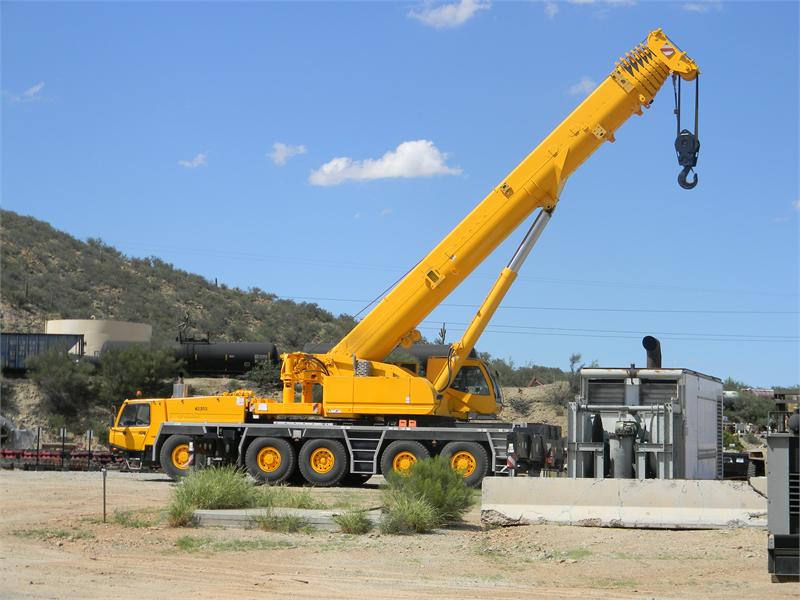
    Mobile crane operators operate mobile cranes to lift, move, position and place materials and equipment. They perform pre‐operational inspections. They calculate crane capacities, determine load weight, and set up, position and stabilize the crane before the lift. Mobile crane operators have the additional responsibilities of disassembling, traveling and transporting mobile cranes. They may also participate in rigging procedures. They also perform some routine maintenance and housekeeping of the crane equipment such as lubricating and cleaning.

    Mobile cranes are used in many industry sectors. They are very commonly used in the construction of buildings and the assembly of large equipment. They are used in locations such as construction sites, warehouses, factories, mines, oil rigs, refineries, railway yards, ships, windmill farms and ports. Mobile crane operators may be employed by rental companies, construction firms, manufacturers, public utilities, transport sector companies, ship builders, cargo-handlers, airports, railways and mines.

    Mobile cranes come in different types such as crawlers, truck-mounted, rough-terrain and all‑terrain. The boom of the crane may be lattice or telescopic. Some mobile cranes are fitted with equipment, including piledriver, clamshell, dragline, wrecking ball, magnet and personnel basket, which can perform specialized functions. They may be outfitted with heavy lift attachments, tower attachments and luffing jibs.

    Some mobile crane operators specialize in different crane functions. In some cases, an operator may work for years on a single large site, operating a single type and size of mobile crane. Mobile crane operators working for rental companies may rarely work on the same site more than once and may routinely perform a variety of tasks with different types and sizes of mobile cranes.

    The majority of the work in this trade is outdoors. Key attributes for people entering the trade are strong communication skills, mechanical aptitude, mathematical ability, excellent visual and depth perception and a high degree of hand-foot-eye coordination. The operation of some mobile cranes is physically demanding as is the handling of accessories.

    Mobile crane operators interact with other tradespeople, contractors and customers.

    The skills of mobile crane operators are transferable to operating other heavy equipment. With experience, mobile crane operators may move into careers such as business owners, supervisors, trainers and job coordinators.