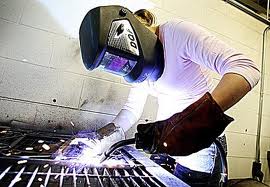
Category: Trades

  • Job Shadowing to Decide on a Trades Career

    Job Shadowing to Decide on a Trades Career

    Before you even finish high school, you might already know that you want to go into a trades career, and which trade you are interested in.  On the other hand, you may still be unsure about which career path or specific trade will be a good fit for you.

    There are lots of resources online that will tell you about the different trades, what’s involved and what you need to know.  Doing your research is essential – but getting up close and personal is even better.

    Job shadowing offers students who are thinking about a career in the trades some valuable opportunities to learn about prospective jobs. You will get the chance to experience what it’s like to work in a trade before you commit yourself to a college program, trade school, or apprenticeship.

    There are some specific benefits you can get from job shadowing while you decide on your trades career.

    Learn From an Expert

    One of the main benefits to a job shadow is the fact that you get to learn from an expert in that trade.  They can share their experiences, how they got into the trade, and can tell you about the pros and cons to watch out for in this career path.

    Hearing this information directly from an experienced professional, and having the opportunity to ask questions, means you can gain a deeper understanding of the expectations and responsibilities that come with a career in that trade.

    See What’s Involved in the Day-to-Day

    It can be hard to know each and every task involved in a specific job, especially in the trades where there is often lots of variety depending on the jobsite or project you’re working on. Participating in some job shadowing can help you learn about the different daily tasks involved in a specific job or trade.

    You can also see a bit of what is involved in other roles and areas of the trade, because you will meet other tradespeople who work at different aspects of the job – and most people are more than willing to answer any questions you may have.

    Try Several Trades to Find the Perfect Fit

    Many trades are very different, which means job shadow opportunities can let you experience several different potential careers to find a trade that suits you best, before you make your final decision on what trade to pursue.

    Job shadowing is probably the best way to make sure you like and are interested in what the trade entails, before you commit your time and money to school or an apprenticeship, only to discover that you are bored or uninterested.

    Sources:

    https://www.livecareer.com/quintessential/job-shadowing

    https://www.thebalance.com/job-shadowing-is-effective-on-the-job-training-1919285

    https://content.wisestep.com/top-advantages-disadvantages-job-shadowing

  • Community and Social Service Workers

    Community and Social Service Workers

    Community and social service workers administer and implement a variety of social assistance programs and community services, and assist clients to deal with personal and social problems.

    Outlook
    Over the past few years, the number of community and social service workers has risen very sharply. This growth is attributable to the large increase in the range and intensity of social service needs, and the handling of a growing proportion of these needs by community organizations. Since the community network is now well established, higher government spending in the health and social services sector should be more conducive to the hiring of members of other occupations and the number of income security claimants should continue, the number of community and social service workers is expected to grow sharply over the next few years, but at a more moderate pace than before.

    Sources of employment
    Openings will arise first from employment increase and from the need to replace community and social service workers who will be retiring or entering jobs in other occupations. In fact, with appropriate training, quite a large number of them will find positions in other occupations, for instance as social workers. Turnover is actually quite frequent within the occupation. For instance, many community and social service workers start their careers in community organizations, and move on after a few years to better paid positions in the public and parapublic sectors.

    Industries
    According to census data, in 2006 approximately 62% of community and social service workers worked in the health care and social assistance sector. About 15% worked in public administration, primarily as income security program administrators, mainly in the provincial civil service, but also in municipal government. Another 14% worked in associations, especially civil and social organizations (8%) and social advocacy organizations (4%).

    Education and Training
    To enter this occupation, it is generally necessary to have a diploma of college studies (DEC) in social work technology, special care counselling or correctional intervention, or a Bachelor’s degree in a field related to social services, such as social work, social service, psychoeducation, psychology, criminology or sexology. Experience of the social services sector as a volunteer or even as a former beneficiary, such as a former drug addict, alcoholic or pathological gambler, may in some cases be accepted in lieu of the academic requirements.

  • Manitoba Trade Scholarships

    Manitoba Trade Scholarships

    Tuition Fee Income Tax Rebate

    Manitoba graduates from apprenticeship programs can apply to receive 60% income tax rebates on tuition fees based on their specific studies. That is a HUGE amount of money, and a sure-fire way to relieve financial stress and focus on studies and some series career goals. The amount varies, as do deadlines, so hopeful applicants are encouraged to contact Manitoba Finance for more information.

    http://www.gov.mb.ca/tuition/index.html

    Bursary for Final-Year Apprentices

    An annual bursary for apprentices in their last year of technical training, this one is quick to apply for and offers $1,000. It is only available to those who demonstrate financial need, can provide employer references, can provide a voluntary employment equity declaration and possess a technical training transcript disclosure. Applications are due yearly in August.

    http://www.gov.mb.ca/wd/apprenticeship/pdfpubs/pubs/general/finance/final_year_apprenticeship_bursary.pdf

    Tim McLean Memorial Fund Bursary

    This annual bursary is available to Aboriginal apprentices in financial need. They must provide references and proof of that financial need. The bursary applications are assessed on the grounds of industry demand for the applicant’s specific certified trade. Applications are due yearly in May.

    http://www.gov.mb.ca/wd/apprenticeship/pdfpubs/pubs/general/finance/tim_mclean_apprenticeship_bursary.pdf

    Journeyperson Business Start Program

    Are you ready to venture into the business world? This scholarship is for newly certified journeypersons seeking to begin their very own full-time trade related business. $2,500 is nothing to shake a hammer at, and every little bit counts. Apply within one year of starting your business. This program will provide contribution to certain business purchases including equipment, tools, supplies, buildings and leasehold and building improvement.

    http://www.entrepreneurshipmanitoba.ca/programs-services/357/journeyperson-business-start-programindex.html

  • Financial Aid for Ontario Students in the Skilled Trades

    Financial Aid for Ontario Students in the Skilled Trades

    Education is increasingly expensive. It is well worth the time you spend researching and applying to scholarships, grants, and other financial aid. If you are a student in Ontario and studying a skilled trade, you should definitely look into the following scholarships.

    Apprenticeship Grants

    The federal government offers two Apprenticeship Grants: an Apprenticeship Incentive Grant and an Apprenticeship Completion Grant. Apprentices have many expenses: tuition, travel, and tools—these grants can help you cover any of these costs. The AIG is a maximum $2000 grant to help apprentices get started, while the ACG is a $2000 grant that helps apprentices transition into the next stage of their career, as journeypersons. Note that these grants are only for Red Seal trades.

    Apprenticeship Completion Bonus in Non-Red Seal Trades

    After reading about the federal Apprenticeship Grants, you may be wondering: well, what if the trade I’m interested in pursuing is not a Red Seal trade? You’re in luck! The Ontario government offers an Apprenticeship Completion Bonus in Non-Red Seal Trades. As the name implies, you are eligible for this bonus of $2000 if you have completed your apprenticeship training and received the corresponding Certificate of Apprenticeship and if available, Certificate of Qualification.

    Apprenticeship Scholarship

    The Ontario government offers a $1000 Apprenticeship Scholarship. This is intended to assist aspiring apprentices, who may use the money to help them attain the necessary academic credentials to start their apprenticeship. The successful scholarship applicant will receive the first $500 when registered in the courses necessary for upgrading. The remaining $500 will be released when the student has become a registered apprentice.

    Women in Skilled Trades and Information Technology Training

    This Ontario grant aims to increase the number of women entering the skilled trades and information technology fields. The Ontario Women’s Directorate funds unemployed or underemployed women, giving them the opportunity to gain pre-apprenticeship training. Completing this program in the skilled trades stream allows these women to enter various apprenticeships in this industry.

    Note that the above grants and scholarships do not need to be paid back. That is like free money! Every dollar of financial aid will help you succeed as you embark on or continue your career in the skilled trades.

    References:
    ⦁ http://www.servicecanada.gc.ca/eng/goc/apprenticeship/index.shtml
    ⦁ http://www.tcu.gov.on.ca/eng/employmentontario/employers/apprenticeship_bonus.html
    ⦁ http://www.tcu.gov.on.ca/eng/apprentices/app_schol.html
    ⦁ https://www.conestogac.on.ca/trades/apprentices/appincentive.jsp
    ⦁ http://www.grants.gov.on.ca/GrantsPortal/en/OntarioGrants/GrantOpportunities/OSAPQA005168

  • Non-Physical Trade Jobs

    Non-Physical Trade Jobs

    Right after leaving high school many students are looking into possible college and university options. Though, for many graduating high school students, jobs in the trades are a great opportunity to work with your hands, earn a good salary, and help those around you.

    For some students, however, getting involved in the trades means having to work too much with your hands, dealing with physical labour, and doing jobs that have been stigmatized over the years. While it’s true that many trades jobs involve labour and tougher working conditions, there are plenty of trades jobs that are on the non-physical side.

    A construction manager is one particular job in the trades industry that requires more planning and coordinating various construction projects. In order to achieve the title, you’d need to earn a Bachelor’s degree, achieve certification and work your way to the top by going back for a Master’s degree. While a Master’s isn’t required, it has the potential to help boost your career. It’s worth noting that at least five years’ experience in construction is required in order to become a manager. Though, if you accomplish all you need to, you could be making close to $90,000 a year.

    Construction experience can also lead to becoming a home inspector. Much like a manager, a degree and experience in the field is required. You’ll also need to know regulation codes and knowledge in real estate practices also comes in handy. Salaries can range from $30,000 – $80,000.

    Various technicians don’t require too much physical labour but there’s still a bunch of responsibility involved. For example, a manufacturing production technician ensures the quality of products and making sure that they live up to health and safety regulations. One of the first steps to becoming a manufacturing technician is to earn your GED. In some companies, if you have your GED and manufacturing experience, that’s all the experience required to get your foot in the door. Manufacturing technicians can earn anywhere from $40,000 – $60,000 a year.

    There are also plenty of jobs available in the industrial trades. Computer programming is a viable field for those interested technology. One of the first steps to becoming a programmer is to earn a degree. Some companies may only require an associate degree but many places ask that an applicant have a degree from a four-year college. Like any job, it’s suggested that you continue to enhance your skills and learning in order to further your career and skills as a programmer. The average salary for this career is near $70,000.

    While the trades may not be for everyone, educating yourself on the various jobs available opens plenty of doors for entering the field. You also don’t need to get involved in a trades career that is too physical and looking into the multiple careers available is your best way to learning about what’s out there.

    Sources:

    http://study.com/articles/How_to_Become_a_Certified_Construction_Manager.html

    http://www.trade-schools.net/articles/trade-school-jobs.asp

    http://www.wisegeek.net/how-do-i-become-a-production-technician.htm

    https://www.recruiter.com/salaries/manufacturing-production-technicians-salary/

    http://www.learnhowtobecome.org/computer-programmer/

    http://www.home-inspectors.com/busopp.htm

    https://www.theworkingcentre.org/types-trades/393

  • Is the Oil Industry a dying field?

    Is the Oil Industry a dying field?

    The oil industry can be a touchy subject for different people all over Canada. In some provinces, the oil industry is favoured and seen as a strong economic symbol; other provinces and people tend not to see it that way. There can be very specific positives and negatives of the industry and as time goes by, they become clearer.

    Climate change is forcing a limit on the emissions that we humans create. From some politicians, scientists and activists, there is focus on limiting the sources of pollution, particularly on what are called ‘greenhouse gases’ like carbon dioxide (CO2). This is a rather controversial line of thought depending on your view of environmental science, but it is climate change that is driving research into other alternative methods of fuel – that of solar and wind, for example.

    Oil is still necessary to the economy at the moment, but “job stability” is not a secure statement anymore. The oil industry is tied tightly with the price of oil – and therefore, when the oil price swings upward, the amount of jobs increase; on the other hand, this can mean more job loss. It’s not uncommon – this can be applied to other economic sectors as well, but the oil industry is particularly seen as ‘unstable’ in recent years, because of the lack of stability in gaining and providing that oil. Alberta has seen tough times in recent years due to changes in the price of oil.

    In addition to the price versus demand shift for oil, there are increasing technological advancements being made. Just like all other fields, this means that less people are required in order to complete the same job that would have taken more people in the past. Renewable energy is another sector that is relatively new – as technology advances, so will the demands of the public – and therefore, a different range of jobs will be available. Oil is not going to be around forever and it will be beneficial for the newer generations to invest in learning more about industries like wind and solar- it is inevitably the future of energy and power in our world.

    Now, all of the above does not mean that the oil industry is not worth considering a career in; but these are factors to consider. The reason I say this is because oil is a limited resource – and the weather (solar, wind, water) will be around a lot longer than oil; therefore, it is recommended to research career options that offer more opportunities for job growth and advancement. This thought is not just for your generation, but future generations. If you are curious about the science of where oil comes from, how it is derived from the earth, and how much we have on earth, do your research and find out if it is the career choice for you.

  • Occupational Hazards of Construction Skilled Trades

    Occupational Hazards of Construction Skilled Trades

    Carpenters, ironworkers, locksmiths, and welders—what do they all have in common? These are all skilled trades under the umbrella category of construction. Canada has more than 200 skilled trades, roughly divided into four categories. The construction category is the biggest: almost 50% of all skilled trades are considered construction trades.

    Construction skilled trades are many and varied, ranging from plumber to painter, cabinetmaker to construction electrician, metal fabricator to mobile crane operator. These jobs are found wherever building construction and maintenance is happening, in both urban centers and rural communities. The plentiful opportunities can be enticing, but if you are seriously considering this career path, you need to be aware of the occupational hazards.

    Physical and Chemical Hazards

    Constructing a building is an enormously complex process, and everyone on a construction site is exposed to a certain degree of risk. Almost all construction tradespeople are at risk for physical hazards. These include noise, heat and cold, radiation, vibration, and barometric pressure. Noise, for example, is dangerous in a few different ways. The roar from all the machines a construction site needs can cause hearing loss, and it can mask communications such as safety instructions.

    Chemical hazards are another significant risk to construction workers, who may inhale, ingest, or touch various dangerous substances. This can lead to serious illnesses. Painters exposed to lead can develop neurologic disorders, and tradespeople who work with cement may develop skin allergies.

    General and Specific Hazards

    Musculoskeletal disorders and stress are considered general hazards: they are common to almost all employees on a construction site, from low-level part-timers to supervisors.

    More specific occupational hazards are determined by the specific trade. For example, electricians may be exposed to heavy metals in solder fumes and asbestos dust, and they may be forced to work in awkward positions and to carry heavy loads.

    In addition to the general and specific hazards of a construction skilled trade, construction workers must deal with bystander risk. This is the additional risk that comes from working close to another skilled tradesperson in the relatively small spaces of a construction site. For example, asbestos dust inhalation is not a hazard associated with roofers, but they are at risk if an electrician is working nearby.

    A certain degree of risk is inherent in every occupation. If you are looking for a job entirely without risk, you may be better off trying to win the lottery. The construction skilled trades are not without their own risks, general and specific. For any readers considering this career path, you are now equipped to make a more informed decision.

    References:

    1. http://www.careersintrades.ca/why-the-trades/what-are-the-trades/construction/
    2. http://www.careersintrades.ca/why-the-trades/what-are-the-trades/
    3. http://www.elcosh.org/document/2022/d000279/Encyclopedia%2Bof%2BOccupational%2BSafety%2B%2526%2BHealth%2B%253A%2BChapter%2B93%2B-%2BConstruction.html?show_text=1
  • The Trades Stigma

    The Trades Stigma

    For students entering university or college, many have their sights set on a specific major. With endless options available, one may think that the trades would be just as viable an option as say, a major in economics or biology. But, many students seem to be veering away from the trades, which is an issue that’s been around for a while. Why are so many students turning their backs on the trades?

    The trades have always been attached to an unfair stigma that they’re a last resort. A plan Z for students who couldn’t make it in the field that they actually wanted. However, in the midst of sneering at the trades, people seemed to have overlooked just how viable an option they are for a lot of people. The trades is anything but a last resort.

    Much of the stigma surrounding the trades comes from being uneducated ( and sometimes ignorant) on the jobs available, and what it actually takes to do them. Some students hear the word “plumber” and think that it’s beneath them. But, this is an obvious fallacy. Electricians, plumbers, construction workers, and computer programmers are all the kinds of jobs that require skill and education, just like anything else. Not to mention, you can immaturely laugh at someone who wants to be a plumber but that doesn’t negate the fact that they’re saving your butt when you need them and they also make a lot of money.

    In order to get people more interested in the trades, the stigma needs to end. Educating students about the time and effort that goes into these jobs could very well paint them in a better, well-deserved light. Portraying trades workers as the hardworking and educated members of society that they are lets young people know that they worked just as hard to get a career.

    Understanding more about what the work entails is another way to encourage young people to join the trades. Trades jobs need specific certificates, a specific skill set, and lots of training. For example, according to https://nationalcareersservice.direct.gov.uk/job-profiles/welder , welders usually need to accomplish an apprenticeship first before applying for a trainee welder position. They need to be detail-oriented and well-versed in math and measuring. In addition, there are also several places within the city to attend a certificate program for welding.

    Welding is just one example. There are countless job opportunities for people who want to engage in a hands-on environment. However, there is also a misperception that all trades are “hands on”; this is not true. There are many trades that are not considered “hands on” (see our articles in the Trades section on “Non-Physical Trades”).

    Young people are often taught that trades jobs are merely for people who couldn’t get “real” jobs. But, through education and open discussion, students can learn that trades jobs are as real as they get.

  • The Loss of Jobs in The Trade Industry – How the Economy Affected the Trade Industry

    The Loss of Jobs in The Trade Industry – How the Economy Affected the Trade Industry

    After a boom that lasted over a decade, thousands of trade jobs disappeared from across Canada with Alberta being the epicenter. Trades such as carpenters, electricians, ironworkers, labourers, millwrights, operating engineers, pipefitters and sheet-metal workers are feeling the effects of the bad economy. Along with the oil and gas industry, construction was hit very hard.

    BuildForce, the construction industry association, projected that the number of construction jobs in the oil sands could fall by 15 per cent or more with most of the losses tied to engineering jobs with the losses also occurring in residential construction. The association also forecasted that construction hiring won’t start to rebound in Alberta until 2018 and will grow by just six percent over the next decade.

    In the past 10 years, the construction industry created over 62,000 jobs across Canada in the past three years; but with the slowdown, it is only expected to add 81,000 jobs over the next decade. Construction work is expected to shift from the resource sector toward infrastructure projects with British Columbia leading the country with 22,000 non-residential construction jobs over the next 10 years due to hydroelectric and LNG projects. Manitoba and Saskatchewan are projected to follow with mining, pipelines and utilities projects, and Ontario with transportation projects such as Toronto’s subway expansion.

    Some experts believe the job losses are caused by the North American Free Trade Agreement (NAFTA) and The Canada-EU Comprehensive Economic and Trade Agreement (CETA). Under NAFTA, the manufacturing sector has suffered in both Canada and the US, with Canada losing more than 23 per cent of its factory jobs since 2000 or 500,000 manufacturing jobs. With CETA expected to be NAFTA on steroids, over 100,000 people demonstrated in Europe due to fears of job cuts, lower wages and worse inequality. The Global Development and Environment Institute (GDEI) at Tufts University’s projection for Canada was not so bright. They forecasted a net loss of 23,000 jobs in the first seven years of CETA and a fall in the average income by up to $2,650 by 2023.

    Other experts blame job losses on technology improvements, robots and automation. The Oxford University Carl Frey and Michael Osborne 2013 study estimated that 47% of US jobs could be replaced by robots and automation in the next 10 to 20 years. In 2016, the World Bank estimated that about two-thirds of jobs in developing nations, including Canada, are at risk of being replaced by automated technology. While new technologies eliminate some jobs, it creates new ones – but this transition takes time. Technological advances disrupt labour markets and hurt people whose skills become obsolete. Even if workers remain in their occupation, new technologies demand new skills due to the transformation of their jobs.

    So what can you do to prepare for such a disruptive market? Watch the trends and learn about emerging economies. As the world changes, the types of jobs will change and the skills required for these jobs will also change. One new trend is the green economy where electricians will be in demand. If you’re interested in becoming an electrician, you may do well to learn about solar PV, wind turbines, energy auditing and Building Management Systems (BMSs) or becoming Leadership in Energy and Environmental Design (LEED) certified. By getting prepared and understanding changes in the labour market, you can still have a promising career despite global economic disruptions.

    Giselle Mazurat received her designation as a Certified Resume Strategist from the Career Professionals of Canada. She also writes technical and business content for government and private companies.

    References:

    Alberta building trades to get paid less for maintenance work due to bad economy
    http://www.cbc.ca/news/business/alberta-building-trades-to-get-paid-less-for-maintenance-work-due-to-bad-economy-1.3780820

    Alberta’s construction industry facing three years of job losses
    http://www.theglobeandmail.com/report-on-business/economy/jobs/albertas-construction-industry-facing-three-years-of-job-losses/article23469238/

    Canada-EU trade deal will result in job losses, lower wages, and worse inequality
    http://behindthenumbers.ca/2016/09/16/canada-eu-trade-deal-will-result-job-losses-lower-wages-worse-inequality/

    Do Trade Agreements Kill Jobs?
    https://www.forbes.com/sites/stevedenning/2016/03/08/should-we-blame-trade-agreements-for-loss-of-jobs/#2949f16210d6

    In the Green Economy, Electricians Are in Demand
    http://globalwarmingisreal.com/2012/07/26/in-the-green-economy-electricians-are-in-demand/

    Manufacturing in Canada Fading Much Faster Than In U.S. Since NAFTA
    http://www.huffingtonpost.ca/2016/11/22/manufacturing-canada-usa-nafta_n_13151136.html

    Some jobs are going but it’s automation, not free trade, that’s the problem
    https://www.theguardian.com/business/grogonomics/2016/nov/24/some-jobs-are-going-but-its-automation-not-free-trade-thats-the-problem

    The real reason for disappearing jobs isn’t trade—it’s robots
    http://www.cnbc.com/2016/11/21/the-real-reason-for-disappearing-jobs-isnt-trade-its-robots.html

  • What Trades Careers are Available in the Oil and Gas Industry?

    What Trades Careers are Available in the Oil and Gas Industry?

    The oil and gas industry in Canada is growing, and offers many great careers in the trades for those who are interested in the petroleum sector.  Tradespeople working in oil and gas typically perform the hands-on, day-to-day tasks involved in running the equipment and facilities necessary for the drilling, mining and refining of petroleum and natural gas products.

    Some of the trades careers available in oil and gas production include:

    Boilermaker

    Also known as Boiler Fitters or Pressure Vessel Fabricators, these tradespeople build or repair heat exchange systems, stationary steam boilers, and metal tanks or other vessels using skills such as welding, metal fabricating and pipefitting.

    Crane Operators

    Crane operator tradespeople can specialize in a number of crane types, including boom truck cranes, bridge cranes, tower cranes, hoists and hydraulic cranes. They will use these cranes to move and position large loads, equipment or vehicles involved in the operation of oil and gas facilities.

    Heavy Equipment Mechanic

    All the machinery and equipment in the oil and gas industry needs to be maintained and repaired, which is where heavy equipment mechanics are vital. These tradespeople use skills such as welding and soldering, and work with computer electronics to troubleshoot machinery.

    Industrial Electrician

    Electricians are needed at drilling sites and processing facilities to install and repair electrical systems and equipment, including controls, sensors, transmitters and lighting or heating.

    Machinist

    Tradespeople working as machinists operate machine tools such as drills and milling machines in order to produce the parts and instruments needed for the petroleum industry. They also use computer programs to design and operate these machine tools.

    Welder

    Much of the oil and gas industry relies on metal machinery, tanks, pipes and building facilities.  Welders are the tradespeople who can install and repair all types of metal equipment, using blow torches, hand welding, flame cutters, and even computerized tools for highly precise work.

    Carpenter

    Carpenters in the oil and gas industry assist in construction of facilities, build scaffolds and braces, and install windows, doors and flooring for temporary and permanent structures.

    These are just a few of the trades employed in the oil and gas industry.  If one of these isn’t quite to your interest, there are also jobs in transportation, mining, site remediation and cleanup, and working within refineries and other production facilities, as a few examples. Take a look around and you’re sure to find a trades career in the oil and gas industry that will be right for you!

    SOURCES:

    http://www.careersinoilandgas.com/explore-job-categories

    http://www.trade-schools.net/trades/oil-gas.asp