Category: Trades

  • Career Profile: Plumber

    Career Profile: Plumber

    Plumbers in Ontario install and repair water supply lines, waste disposal systems, and sometimes related appliances and fixtures. A plumber is a physically demanding job that requires strength, stamina, and the ability to work in different environments.

    The environment in which a plumber may work can vary from more comfortable office-esque areas to wedging one’s self into a crawl space to fix a broken drainage line.

    There are times when a plumber will be dispatched for scheduled maintenance or installation however, for many plumbers, urgent work is where they receive the majority of their compensation.

    If a plumber works in construction, they may be required to develop blueprints for pipes and fixtures, and may be required to familiarize themselves with building codes, budget restrictions, and any relevant provincial legislation guiding this work.

    As a plumber, you may work more than 40 hours per week, and may be on call during evenings, nights, and weekends. The type of urgent work that plumbers do though is oftentimes very appreciated, pays well, and provides strong job security. If the late hours bother you, there are similar jobs – including pipefitting and related skilled trades.

    Education or Experience required

    Though some plumbers do learn on the job via apprenticeships, many seek out certifications beforehand to provide them with the basic tenants of the job.

    Most provinces require plumbers to be licensed. To accomplish this, apprenticeships are required.

    It is commonly recommended to seek additional education or experience as a plumber. For example, those who are certified with welding experience are highly sought after in many provinces.

    Though not all employers seeking a plumber will require these skills and certifications, many prefer them.

    Pay/Salary

    Plumbing is a strong, dependable trade that labor statistics predict will continue to grow in the coming decade.

    Many current plumbers in Ontario are expected to retire in the 2020s, leaving room for skilled plumbers – including those with welding experience and/or environmentally friendly certifications – to be in high demand.

    The job market of plumbers in Ontario is expected to grow by as much as 21 percent in the next decade, faster than average for occupations. There are some employers who are already experiencing a shortage of qualified applicants and are in need of plumbers.

    The lowest pay offered in plumbing is in the $29,000-$30,000 range. The average annual salary for plumbers range from $49,000 to $55,000. More experienced plumbers may earn as high as $84,000 and higher. Many apprenticeships offer a lower wage, with standard pay increases scheduled as a plumber learns to do more.

    Roughly 11 percent of plumbers are considered self-employed. As an independent contractor, you can set your own schedule. However, in the world of plumbing, being self-employed can mean having to deal with more after-hours emergencies.

    Despite building activities rising and falling in accordance with the national economy, plumbing is an area where there tends to be more stable employment. Even in tough times, plumbers are still needed.

  • Career Profile: Ironworker

    Career Profile: Ironworker

    Ironworkers in Ontario install steel and iron beams during the construction of buildings. Ironworkers are commonly required to work at great heights, requiring them to be harnessed. Another word for an ironworker is a ‘steel worker’ or ‘structural iron worker’.

    This is a very important job in the development and construction of buildings, bridges, and numerous other structures. For example, erecting a tall structure like a skyscraper, an ironworker is required to assemble the cranes and derricks to move structural steel, to reinforce the bars, concrete, lumber and other materials. Though the majority of the work is to build, sometimes ironworkers are sought to assist in the demolition, decommissioning, or rehabilitation of older buildings and bridges.

    Some ironworkers are also trained in assembly and fabrication. Among ironworkers in Ontario, nearly half work in the foundation, structure, and building with exterior contractors. Roughly 23 percent are employed in non-residential building construction. The work is physically demanding and, at times, dangerous. They work outside the majority of the time and an ironworker must be accustomed to working under different weather conditions.

    Education or Experience required

    Most ironworkers learn on the job through apprenticeships however some certifications are recommended, particularly those in welding and rigging which can be helpful in securing employment. Due to the nature of working at such a height, these are integral to an ironworker.

    Apprenticeships can last as long as three or four years. Almost all apprenticeship programs fixate on reinforcing and structural ironworking. Through an apprenticeship, expect to learn how to use the common tools and equipment of the trade; measuring, cutting, and laying rebar; and how to construct metal frameworks. There is some technical training required in the form of basic mathematics, blueprint reading, general construction techniques, safety practices, and a First Aid certification requirement.

    Certifications in welding, rigging, and crane signaling increase an ironworker’s employment opportunities.

    Pay/Salary

    The job outlook for an ironworker shows an industry that continues to experience massive growth. Job opportunities are expected to grow by as much as 22 percent in the next decade.

    This job growth is largely driven by the need to replace older highways and bridges, as well as the willingness of provincial and federal governments to fund these type of infrastructure projects. Ironworkers are also required in the construction of commercial and industrial buildings, creating additional demand for ironworkers.

    The lowest pay offered to ironworkers is in the $26,000-$28,000 range. The average annual salary for ironworkers ranges from $46,000 to $50,000. More experienced ironworkers may earn as high as $83,000 and above. Many apprenticeships offer a lower wage, with standard pay increases scheduled as an ironworker learns to do more in their designated category.

    As with most jobs involved in construction, being employed as an ironworker is sensitive to the time of year as well as the economy. When the levels of construction fall, an ironworker may experience a period of unemployment. On the other side of the coin, there may be shortages of ironworkers during peak periods.

  • Career Profile: Industrial Painter and Decorator

    Career Profile: Industrial Painter and Decorator

    Industrial painters in Ontario apply paint, varnishes, and other coatings to a range of materials and surfaces, as instructed by their employer. They work primarily in construction and manufacturing, painting structures or industrial commodities according to specification.

    Most industrial painters come trained or experienced in a specific area of the industry, such as residential home painting, automotive painting, or machinery painting. Typically, an industrial painter works part of a team, though this does depend on where in the painting industry one is located.

    Due to painting being applied to a wide variety of structures, an industrial painter will work in a variety of different working conditions. As an industrial painter, it can require climbing, bending, kneeling, and stretching.

    It is common to work in dry, warm weather, and to experience long days. At times, it may require working at extreme heights and in uncomfortable positions, sometimes suspended by ropes or cables as work is completed.

    Education or Experience required

    Industrial painting does not require prior education or experience. Most painters learn their trade on the job however others learn through an apprenticeship opportunity. These types of apprenticeship opportunities can last as long as four years, though local unions may have other requirements.

    An apprenticeship can help instruct how to use and care for tools and equipment, how to prepare surfaces, mix and match paint, how to read blueprints, different application techniques, characteristics of different finishes, and safety practices.

    Not all employers seeking an industrial painter and decorator will require these skills, many seem to prefer them – any type of industrial training and certification, experience mixing colors, and a valid driver’s license. Above all else, one must be able to physically do the work.

    Pay/Salary

    The industrial painter job market is expected to grow by as much as 20 percent in the next decade. This is higher than average for other occupations. In Ontario, industrial painting continues to be a growing field, consistently in demand as it pertains to construction, renovation, and maintenance work for both residential and commercial customers.

    The lowest pay offered in industrial painting is in the $22,000-$24,000 range. The average annual salary for industrial painters ranges from $35,000 to $40,000. More experienced painters earn as high as $61,000 and higher. Many apprenticeships offer a lower wage, with standard pay increases scheduled as an industrial painter learns to do more. Industrial painters who specialize in specific areas of painting, such as painting bridge structures, tend to be provided with a higher pay than others.

    Roughly 41 percent of all industrial painters are considered self-employed. As an independent contractor, you can set your own schedule. Job prospects continue to be good due to the growing industry. Due to the fact that there are no formal education requirements, the barriers to entry are low.

  • Career Profile: Saddlery

    Career Profile: Saddlery

    Do you love horses? Chances are that if you do and you’ve done even a little riding, you know the importance of a good saddle. Horses are shaped in a very curved way, which means that making a saddle is a very technical and labored process. Saddle makers—or saddlers—create apparatuses that support the weight of the rider, provide comfort to both the horse and the rider, and show off some beautiful artwork. Saddlers have to be both technical in their work, and creative; they are artists.

    Making saddles

    Saddlery involves working with molds, cutting and sawing, sewing and stitching both on a machine and by hand, and creating designs that set you apart from other saddle makers. Saddlers join together leather parts—the higher quality the leather, the better—and follow specifications. Often, customers will have very specific requirements and requests concerning their saddles, and it is the job of the maker to meet those requirements while making a high-quality apparatus. The size of the saddle, grain of leather and colour must always be taken into consideration. Cushioning materials like cotton batting, mohair and foam rubber are added before the leather, and the saddler needs to know how to put in the right amount in order to achieve a well-balanced saddle.

    Education

    Saddlers must have graduated from high school or have the grade 12 equivalent. They must complete 5,440 hours of on-the-job and in-school training; this makes up the apprenticeship. Usually the in-school component is about 560 hours. A formal apprenticeship is not required, but it will help you when competing for jobs. This means working under an experienced saddler for on-hand training and experience. As saddlery is considered to be a Voluntary trade, the apprenticeship component is completely up to you. Just remember that experience is always best.

    Saddlers must be reliable, detail oriented, and keen on business deals. Many saddlers end up managing their own business, so sometimes business classes can come in handy.

    Salary

    Harness makers in Canada can make a minimum wage of $20,378 to start, and up to $43,875, depending on working for a company or independently.

    Source:

    www.apprenticesearch.com

    https://neuvoo.ca/salary/harness-maker/

  • Career Profile: Blacksmith

    Career Profile: Blacksmith

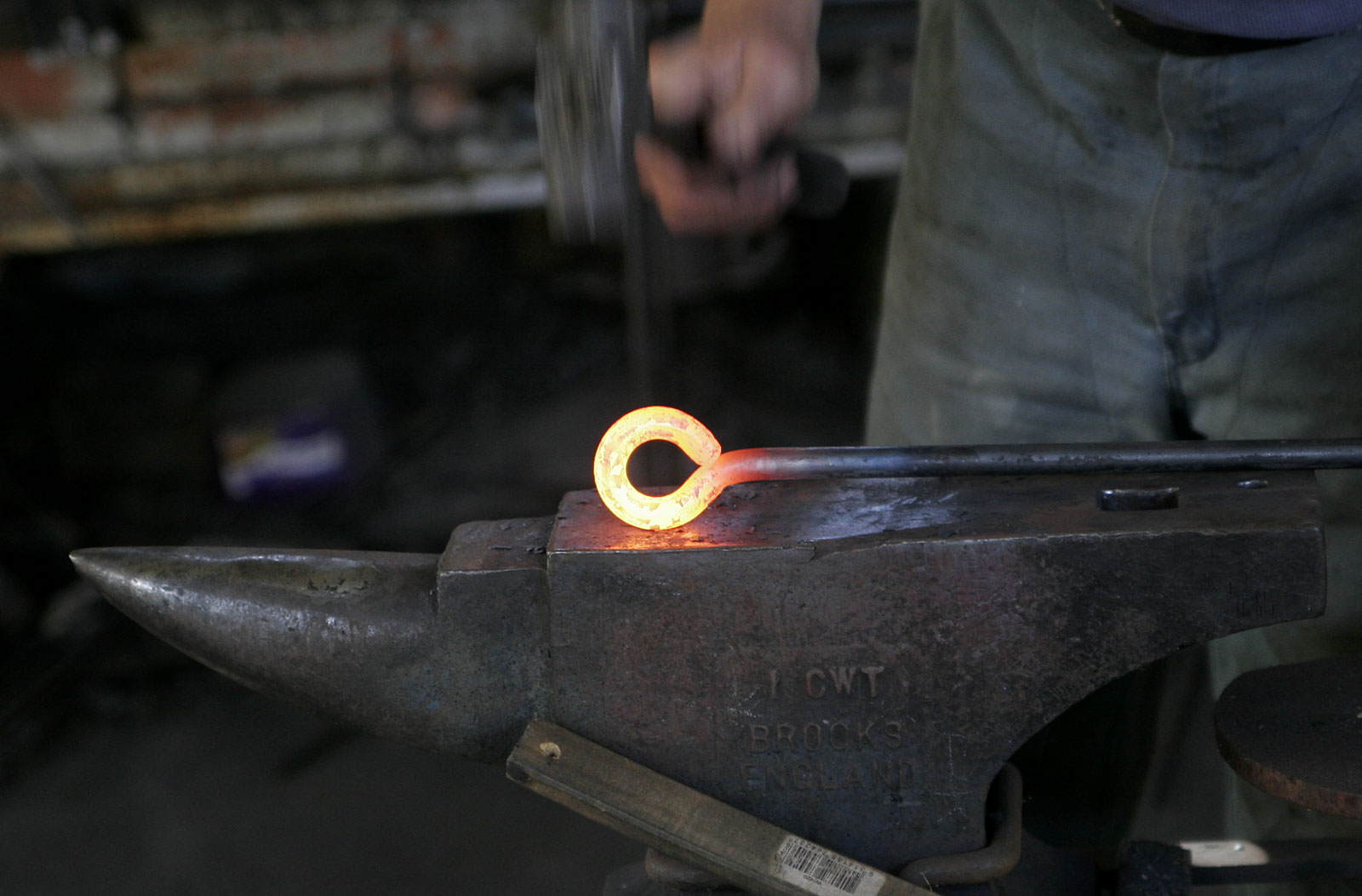
    When you think of a blacksmith, you probably think of an antiquated trade that you only read about in fantasy novels. The truth is that blacksmithing is still very relevant today. Many industrial items are still forged by blacksmiths, or are repaired and maintained by their talents. Decorative metal adornments on fences, buildings, and other structures are made by forges as well.

    What does it take to become a blacksmith? Right off the bat, you need a few basic skills: decent hand-eye co-ordination, exceptional problem-solving skills, and an eye for creativity. With these skills and the passion for shaping metal, it’s time to start taking classes. A few colleges or vocational schools offer a blacksmithing course that allows you to learn your way around the forge, practice safety measures, and work with different tools and techniques. If there are no classes in the colleges in your area, you could benefit from online classes and invest in your own blacksmithing setup.

    Once you excel in these courses, you’re set for advanced metal-working courses where you will learn about more modern blacksmithing techniques and build on your portfolio. Some of these advanced techniques include plasma cutting (using an accelerated jet of hot plasma to cut through electrically conductive metals) and different kinds of welding.

    It’s important to get a decent blacksmith studio together and practice different techniques. You will be working with a heating forge, tools (tongs, clamps, hammer and a vice), an anvil, and safety equipment. With the education, the tools, and the certification, you’re ready to join the blacksmithing community. There is a wealth of organizations that you can join, such as the Artist-Blacksmith’s Association of North America (ABANA) and other provincial associations.

    Now you can start finding work as a commercial blacksmith or as a demonstrator of the trade at fairs and museums. Experts in the trade believe that blacksmithing is experiencing a resurgence, but also warn that many blacksmiths, especially freelance, will have difficulty earning a living in this full-time job. The average salary for a blacksmith is roughly $35,000, though some experienced blacksmiths claimed to make around $40,000. There’s also no shortage of work for a commercial blacksmith shop.

    Being a blacksmith has other benefits, especially for those who favour the self-employed route. Trades generally have the perk of being in high demand as far as their workers go. Being a blacksmith in the modern age is still a viable career path, although making a living may be difficult for people starting out in the field.

  • Career Profile: Mobile Crane Operator

    Career Profile: Mobile Crane Operator

    Mobile Crane Operator is a career within the trades that is not talked about much. If you like to use tools and equipment, this could be a career for you!

    Description

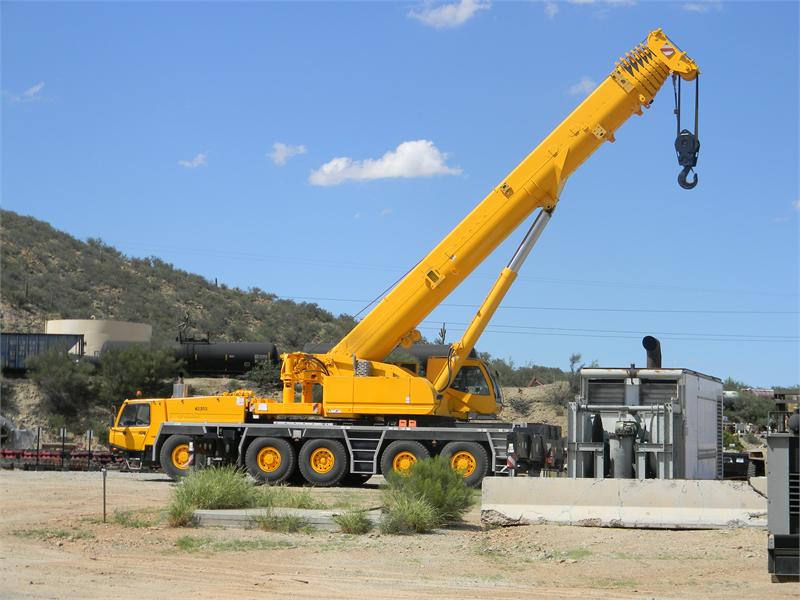
    A mobile crane operator operates mobile cranes and moves large materials. They calculate the weight load and adjust the crane accordingly. A mobile crane operator will also clean the cranes and perform maintenance. Mobile cranes are often used at construction sites, shipyards, mines, and warehouses to name a few. Some cranes have specialized functions such as wrecking-balls and magnets. The conditions of this career includes working outside, mostly. Someone interested in this career should have good hand-eye coordination, good communication skills and math skills. As well, this career typically works 40 hours a week with overtime depending on the job.

    Education and Training

    To become a mobile crane operator, you must complete an apprenticeship ( or at least it is recommended). Through this, there are both in-class training and working under the supervision of a journeyperson. Wages begin at half of the journeyperson’s wage and increase from there until full wage is reached. In order to enter the apprenticeship program, it is required by most provinces and countries to complete grade ten education. There are also high schools that allow you to work towards an apprenticeship while in high school. This program length varies because it depends on the type of equipment being trained. It can take anywhere between one and three years. Certification is required in some provinces, but not all. Certification requires completion of apprenticeship. As a certified crane operator, you can work anywhere in Canada.

    Salary

    Salary depends on the contract, company, location, etc. As well as experience. Salary can vary anywhere between $34,000-$77,000.


    Overall, a career as a mobile crane operator is a very interesting and great choice if you are interested in working at heights and working with your hands.

    Sources:

    http://www.careersinconstruction.ca/en/career/crane-operator

    https://bc.tradesinfo.ca/trade-information/mobile-crane-operator/description?at=4330844

    https://bc.tradesinfo.ca/trade-information/mobile-crane-operator/description?at=306786

  • Career Profile: Elevator Inspector

    Career Profile: Elevator Inspector

    No one wants to be stuck in an elevator for hours or to have to walk up a broken escalator. Tall buildings would be difficult to use without an easy way to get from one floor to another. Elevator inspectors help to keep people moving by making sure that these machines for moving up and down are working properly.

    Working as an elevator inspector involves a lot of responsibility for people’s safety and comfort but not necessarily a lot of education. Some positions require a bachelor’s degree, but many elevator inspectors learn their trade on the job after finishing high school. In many parts of Canada, official certification through workshops and other training programs is also necessary.

    Elevator inspectors normally leave the actual repairs and upgrading to other people, but they should know enough about the repair process to tell what needs to be done. Suppose that the cables at the top of an elevator are starting to wear out, for example. Elevator inspectors have to know what is normal wear and tear and what is dangerous, because people could be seriously injured if the cables break.

    On escalators, inspectors have to make sure that the stairs and the railings move at the same speed or people could lose their balance and fall down, and they have to make sure that the stairs move evenly. Both old and new elevators and escalators need regular inspections, and knowing what problems can occur at each stage can be important.

    Many jobs related to construction are seasonal in cold countries because the winters are too cold to pour concrete or do many of the other tasks. Inspecting elevators, however, is a year-round job because once an elevator or escalator is in place, it needs to be maintained. Especially in big cities, elevator inspectors can be busy throughout the year, but even small towns could have enough work.

    Depending on their education and level of experience, elevator inspectors can earn between $47,000 and about $90,000 per year. Working conditions are normally quite good, but depending on how they like to function, these tradespeople might have to deal with oil and grease from the machines they are inspecting, and they could injure themselves on sharp metal. The job can also be stressful, especially when the work needs to be finished quickly.

    If you enjoy finding problems with mechanical objects, the job of elevator inspector might be worth

    exploring.

    Bibliography:

    Careers.org. “Career Occupational Profile for: Elevator Inspector.” Http://www.careers.org/occupations/25633/elevator-inspector.

    NAESA International. “News and Information.” https://www.naesai.org/.

    Salary.com. “Elevator Inspector Salaries.” http://www1.salary.com/Elevator-Inspector-Salary.html.

    Study.com. “Elevator Inspector: Job Description, Outlook, Duties and Requirements.” http://study.com/articles/Elevator_Inspector_Job_Description_Outlook_Duties_and_Requirements.html.

  • Trade Career Profile: Bricklayer

    Trade Career Profile: Bricklayer

    If you are good with your hands and can work with precision using tools, being a bricklayer, also known as a stonemason, may be the career for you.

    Description

    Bricklayers build and repair a variety of different things from building floors to fireplaces to chimneys. They use a variety of different materials such as bricks, blocks, stones, mortar, and more. They use levels to measure for accuracy and to keep everything in line. It is said, “A good bricklayer can lay around 750 bricks in a single day.” (careersinconstruction.ca).

    Typical working day

    Like most other careers, bricklayers work 40 hours a week. They work 8 hours a day, 5 days a week. However, depending on the season, there may be the requirement to work overtime. This career is mostly outdoors, dependent on the project. This includes hot summers and cold winters where there are protective enclosures or heaters used to continue working despite the weather conditions. This career is physically demanding and requires team-work as a group even when working on a single project. Luckily, people in this career are properly trained and must wear personal protective equipment (PPE) because of the potential danger on the job.

    Education and Training

    Unlike common schooling where you go to school to study, bricklaying does not require this type of education. Rather, you must go through an apprenticeship. This includes being both in the classroom and working under supervision. As you go through apprenticeship, you earn money while working. You begin earning 50% of what your journeyperson (supervisor) earns per hour; your rate increases as you work until you reach the full wage. To enter an apprenticeship, you must be at least 16 and have your grade 10 education. Some provinces and territories offer apprenticeship programs to allow you to work towards your career.

    The apprenticeship program is usually three, twelve-month periods but it varies across Canada. As well, you must achieve at least 1,600 hours of training, three, eight-week blocks of technical training and a final certification exam. You must complete the apprenticeship program and the requirements to become a certified bricklayer.

    Salary

    The salary for a bricklayer depends on a variety of different factors such as experience-level, contract, company and location, to name a few. Salary can be anywhere between $32,000 and $75,000.

    Overall

    A career as a bricklayer is physically-demanding but with a good outlook for jobs of 15% growth rate between 2014 and 2024. If this job appeals to you, it is an excellent career to consider.

  • Career Profile: Heat and Frost Insulator

    Career Profile: Heat and Frost Insulator

    Canada’s weather can be extreme, making it hard to heat or cool the buildings where people live and work. Heat and frost insulators can help by making sure that the temperature inside buildings is as comfortable as possible. This trade is very important in a county like Canada, and the job is a good choice for people who like to work with their hands.

    Being to cold or too hot can be very uncomfortable, and it can also make people sick. Insulation provides an extra layer between the walls of a building helps to keep the temperatures even so that people don’t use as much heat or air conditioning. This can help save energy, which reduces the amount of money that people have to spend on heating and cooling, and it also helps to preserve the environment.

    Putting insulation into buildings is an important job, and people in this field can be well paid. Some people even earn close to $75,000 per year, although most people earn less than that. Heat and frost insulators measure the spaces that need to be filled, remove the old insulation, and then cut the new insulation to fit. They also put special waterproof layers of cement or other material to keep the space dry and clean.

    The work is not physically difficult, although sometimes the old insulation can cause health problems, and even cancer, when people breathe in small pieces of it. Cuts are also quite common from working with knives or box cutters, and falling from ladders is another danger.

    Becoming a heat and frost insulator usually involves learning on the job, but some people go through an internship program. This is especially common for mechanical insulators, who work with pipes. Have you ever heard of water pipes bursting on a very cold day in winter? Mechanical insulators can help keep this from happening if they do their job well.

    Northern Canada has special opportunities for mechanical insulators. Because the ground is frozen all year long, the pipes are all above the ground in long, covered lines called utilidors. However, most parts of Canada still need insulated pipes to protect them from the cold.

    Work opportunities for heat and frost insulators depends mainly on new construction, although people can usually find some work in replacing old insulation. When the economy is doing well, people buy new houses and need insulation. A slow economy means that people buy fewer houses, and work for insulators decreases. Having a second skill is a good idea so that you will always have work to do.

    If you like the idea of working with your hands to help keep people comfortable, becoming a heat and frost insulator might be a good choice.

    Bibliography:  

    Heat and Frost Insulators.ca. “Job Description.” http://www.heatandfrostinsulators.ca/job-description

    International Association of Heat and Frost Insuators.org. “About Us.” http://www.insulators.org/about-us/history.

    Living in Canada.com. “Insulator Salary Canada.” http://www.livingin-canada.com/salaries-for-insulators-canada.html.

    Truity.com. “Career Profile: Insulation Worker.” https://www.truity.com/career-profile/insulation-worker.

  • Career Profile: A Closer Look at a Career as a Landscape Designer or Architect

    Career Profile: A Closer Look at a Career as a Landscape Designer or Architect

    When it comes to the launch of residential or commercial spaces, most of us think of architects or builders or engineers. Often, landscape architects or designers are an afterthought or wholly ignored.

    However, think of the most profitable hotels or malls or the homes that you admire in your neighbourhood, and you would realize they share something in common. They have landscape design that draws your attention, and as a result, the aesthetics of those structures stand out even more. Just imagine for a moment a building that always entices you to take a picture whenever you pass by it. Now imagine that structure is surrounded by dead trees and weeds and pergolas that are falling apart. Are you still inspired to still take a photo of it? Of course not.

    It is for this reason that landscape design should not be underestimated. In commercial spaces, they help establish the brand and ensure they complement the brand’s aesthetics. In residential spaces, they contribute to the overall pleasantness of the homeowner’s abode. If you are looking into a career as a landscape designer or architect, here is a closer look to further enlighten you:

    Landscape designer vs. Landscape architect

    It is important to differentiate between a landscape designer and a landscape architect, although there is a common misconception that these two are one and the same. However, architects, as the name suggest, bear a lot more responsibilities than designers as they have to deal with drainage systems, slopes management, and elevation issues. They also have to earn their license to be able to practice legally and claim to be landscape architects. On the other hand, landscape designers do not require a license to operate, and they are typically focused on aesthetics, working with the foliage, etc.

    Education

    The best way to get your foot in the door if you want to be a landscape architect is to acquire education from an institution accredited by the CSLA or the Canadian Society of Landscape Architects. These schools are all throughout Canada, including University of British Columbia, University of Guelph, University of Manitoba, and the University of Toronto. You can find out more information on their website at https://www.asla.org . Aspiring landscape designer, meanwhile, can look into certificate programs offered by institutions like Ryerson University’s Chang School of Continuing Education.

    Skills and Qualifications

    To have a career in landscaping, you need to be creative and practical at the same time as they would always be expected to have designs that are not only pleasing to the eyes, but also functional. It helps to have horticultural knowledge too as there are certain plants or flowers that do not grow well in certain areas. A career in landscaping also requires one to be IT savvy as there are numerous software programs available now to help them see their vision in digital form. Of course, this is not to say that the ability to design on pen and paper has gone out the window. Of course they would need to know the principles and elements of design on paper first if they want to maximize the use of applications. Meanwhile, while they can always hire soil scientists and arborists, it would be an advantage for landscape designers or architects to have basic knowledge of soil sampling and tree maintenance.

    Team or Independent

    Landscape designers and architects can work either as a part of a team, which means they would have landscape workers under them, or independently, which means they do the work themselves or at least hire contractors per project basis. Working independently is common for those who do landscaping for homes, but most of them work with a big team when it comes to big projects such as doing landscape for schools and other institutions.

    Design or Maintenance

    Landscaping is not just creating designs as it often involves the following tasks – sod laying, grass mowing, bush and hedge trimming, planting, watering, fertilizing, digging, raking, sprinkler installation, and installation of decorative elements such as fountains, pergolas, etc. At times, they are also expected to do the maintenance, which is ideal since this way, they establish a long-term relationship with their client. Design along with maintenance tasks are often stated in the service level agreements with the property owners when contracts are first signed. Here, they agree on mutually beneficial terms, such as once-a-month mowing for a fixed price for two years.

    One-off Project or Portfolio

    Landscape professionals who work with homeowners can expect one-off projects, but it is always possible for them to be called upon when the homeowners feel a need to have a renovation or upgrade. On the other hand, commercial property owners often have more than one property, and as part of maintaining their brand, it is expected that the landscape are consistent and carry a unified design. As such, most landscape designers can expect to design and maintain a portfolio of spaces.

    A career in landscaping is exciting and can be a sustainable if you have the skills and qualifications for it. Read more about it or ask an expert in your area, and who knows, you might have just found your calling.

    SOURCES:

    https://www.thespruce.com/difference-between-landscape-architect-and-designer-2736682

    https://job-descriptions.careerplanner.com/Landscaping-and-Groundskeeping-Workers.cfm

    http://creativepool.com/articles/jobdescriptions/landscape-architect-job-description

    http://lifehacker.com/career-spotlight-what-i-do-as-a-landscape-architect-1687759850

    http://www.hortweek.com/career-profile-landscape-architect/landscape/article/1431425

    https://www.asla.org/contentdetail.aspx?id=21636

    http://www.theglobeandmail.com/report-on-business/careers/career-advice/life-at-work/i-want-to-be-a-landscape-architect-what-will-my-salary-be/article23197945/