Category: Trades

  • Career Profile: Window Washer

    Career Profile: Window Washer

    When you look out a window, you see many different things. You might see trees and flowers or maybe tall buildings. Your windows at home might face a soccer field or tennis courts, where you can see people playing together. You might have a wonderful view from your window, but what you can see depends on the glass being clean or not. In many offices and other tall buildings, window washers help to keep windows clean so that people can look out and see the world around them.

    Windows get dirty for many reasons. People sometimes touch them and get fingerprints on them, but often, it happens just because of the weather. Windows become dusty after the wind blows through or they get spattered in the rain. Many windows are difficult to wash because they are too large or too high off the ground for people to reach without special equipment, and they would never be clean without help.

    Cleaning large or hard-to reach windows is what window washers do. Have you ever seen people standing on small platforms on the sides of tall buildings? Window washers clean the windows of buildings that can include anything from small houses to huge skyscrapers with hundreds of floors. They have to be able to get windows clean and streak-free while hanging from ropes and harnesses hundreds of metres in the air. Anyone who is clumsy or afraid of heights should never apply for work as a window washer.

    Getting up to the top floors of buildings requires special equipment, and window washers need to be able to work with ropes, pulleys, and anything else that they need to use. The work can be dangerous at such great heights, and accidents can often be very serious. Knowledge and practice can help window washers increase their safety.

    Even with the best preparation, however, working as a window washer has its difficulties and dangers. Birds sometimes attack the workers, and sudden gusts of wind can blow platforms over or set the window washer off balance. Quick reflexes are important for avoiding danger, and window washers should also be aware of weather forecasts and changing conditions throughout the day.

    Becoming a window washer normally doesn’t require any special education, but training in how to use ropes and tie knots is very useful. Some employers might also have other requirements for their employees, and it is important to check with them before applying for jobs. Salaries can vary, depending on the location and other factors, but the average is about $28,000 per year. You could work fulltime or part-time.

    Careful work is an important part of the job because no one likes to look through a window with streaks or lines of dust on it. Even if the clean windows last only a day before they become spattered by rain or covered by dust, window washers should make sure that they do the best job they can



  • Career Profile: Drywall Finisher

    Career Profile: Drywall Finisher

    Before there was drywall, entire walls were finished with lathe and plaster; a labor and time intensive process. During WW2 when labour was hard to come by on the home front, they began manufacturing drywall. Drywall, or gypsum board , alleviated the need for using hand powered manual tools to create a smooth, fire resistant, acoustically sealed, and durable wall surface. So plasterers are out a job, right? Wrong. In today’s construction industry a plasterer usually refers to someone who does exterior coatings (stucco, etc.) but it could also refer to what is more commonly known as “tapers” or drywall finishers.

    Being a drywall finisher is like being a magician to other trades within interior construction. Although it technically falls under the trade of ISM (interior System Mechanic) there is no formal training provided in the curriculum. Most people learn the trade by studying under someone who has many years of experience on the job, or through an unofficial apprenticeship. Because of this ambiguous learning and certification process, drywall finishers that produce a quality finished product at a consistently fast pace, are greatly valued.

    The pros of working in this trade include: working inside and in a climate controlled environment (the materials you work with require it); not a tremendous amount of heavy exertion on your body, and because of the lack of quality people in your trade, you will always have work if you commit yourself. The cons are: potential repetitive motion strains, some days are dusty (especially when you are first learning), and it can be difficult to find resources to learn the trade.

    There are many things to consider when entering into any trade. My suggestion is for you to roll up your sleeves and try the ones that interest you until you find the one that feels the best. Unlike many career paths, when you learn this trade you will be trained on the job. That means you can skip the high tuition costs and put some cash into your pocket. In western Canada, a 1st year drywall finisher should bring home no less than $40,000 per year. After 4 years of working, the same person could potentially earn $90,000, and that by no means is a ceiling; many drywall finishers start their own small businesses and can make much more than that.

    Drywall finishing is a trade that requires a strong attention to detail and a determination for quality. It can be a messy job at times, but that’s part of the fun! If you’re interested in a career in drywall finishing, try reaching out to some local contractors and give it a go.

  • Career Profile: Welder

    Career Profile: Welder

    Welding is a growing trade with many opportunities across both construction and manufacturing industries. In Canada welding is a certified trade with a three year registered apprenticeship.

    With Canada’s oil based economy, welders are in high demand in the western provinces. Some of the highest paid welders in the world work in pipeline construction. Working in pipeline construction as a welder requires you to have your Journeyman certification as well as a B pressure certificate. There are many opportunities when you enter the trade, to partner up with a seasoned welder as a helper to gain experience and hours towards your apprenticeship. Following this career path (pipeline welder) you can expect to make $200,000+ per year. You must have your own tools for this profession, and also your own vehicle to carry them (they can be heavy and road access can be rough). A pipeline welder usually works at remote sites and can spend 30+ days away from home. In this case, temporary accommodations are provided by your employer.

    The construction of buildings now relies greatly on qualified welders. As the future progresses, this will be needed more and more because of fast development growth and the economy. Almost every part of the construction process now requires welding on commercial and even some residential projects, from structure to plumbing. A journeyman welder working for a union plumbing contract can expect to make approximately $100,000 per year plus benefits and pension. Generally, working in building construction, you do not have to work out of town to stay busy.

    Other opportunities in welding can be in manufacturing. Many things, you may notice, are made of metal; all of those items require a welder at some point on the production line.

    A welder must have a steady hand and an attention to detail; some welder’s work is under much scrutiny especially when dealing with high pressure gas or liquids. A pipeline welder’s works is regularly X-rayed to ensure its quality. Hazards of the trade include toxic gases that can be very harmful over prolonged exposure. If you have steady hands, don’t mind hard work and feel welding may be a good fit, join the many welders in Canada for your electrifying future!


    Resource:

    https://www.cwa-acs.org/ 

  • Career Profile: Special Effects Technician

    Career Profile: Special Effects Technician

    Think of a movie or television program that has good special effects. They might be fires, explosions, or something less dramatic like breaking a table apart or creating a scar on someone’s face. Special effects technicians help to make these kinds of effects look real and help make movies and television programs better.

    Special effects technicians work with almost every stage of a production. They begin by looking at the script of a show, which says what the actors do and what they say. For each part of the show, they decide what special effects are needed and how to create them.

    Some special effects technicians work in companies that specialize in that kind of thing. Others work in television and film companies, but most work as freelancers. The work depends mainly on the location of the movie and television industry, although some people work in small theatres. Most special effects technicians in North America work in Vancouver, Toronto, New York, Chicago, and San Francisco.

    Becoming a special effects technician generally does not require any special education. However, taking courses in welding, lighting and other techniques can help special effects technicians to advance in their work.

    Special effects technicians can become specialists in working with fire or with other types of materials. Technicians also have to know about safety and how to keep people from being injured. When something goes wrong with the special effects, technicians also need to check all of the equipment and anything else that might have gone wrong.

    Keeping detailed records is important for special effects technicians. They write down what works and what they need to change the next time. These records can also be very valuable for other special effects technicians, who can learn new techniques for making everything work together.

    One of the benefits of working as a special effects technician is being able to think creatively and to solve problems as they work. Suppose that you had to find a way to make it look like a character flies through the air. How would you do that? If you can find ways to make something like that look real and natural, you might have the skills to be a special effects technician.

    Computers have helped to change the way that special effects technicians work. In the past, all special effects had to be done manually. Designing the effects and making them work could be a very complicated and time-consuming. With computers, however, special effects technicians can do many things that were impossible in the early years of the profession.

    Working as a special effects technician can involve long days during times of filming. Some technicians work regular hours and can earn over $21.00 per hour. Others work only when they can find short-term jobs, but often they can earn more money during those periods than others can earn at a full-time job.

    If you have a creative mind and enjoy movies and television, the job of special effects technician might be right for you.

  • Get a Move On!

    Get a Move On!

    Most people move at some point in their lives, either from a house to an apartment or the other way around. Some people also move from one office building to another or need new furniture or other equipment. Often, moving companies help these people to move their belongings from one place to another. If you are physically strong and enjoy working with a lot of different people, it might be a good job for you.

    Almost anyone who is physically capable of lifting heavy objects can be a mover. However, some people make that their specialty and learn methods of doing their job quickly and efficiently. Professional movers often work in companies that offer these services, but some movers work alone or in small groups.

    When people move from one home to another, they usually have furniture like tables and chairs, as well as boxes full of dishes, books and other objects which might require special care. People in offices might have computers, photocopiers and other large and breakable machines. Movers have to be strong but also very careful as they move objects that could easily be ruined if they fall onto the ground. Being able to pack a truck efficiently is also useful so that the movers have to make as few trips as possible.

    Becoming a mover does not normally require any special education, but gaining experience is useful. Learning special techniques from other movers is a good way to become an efficient mover. Some companies also provide training for their employees, especially for people who want to drive the moving trucks or perform other parts of the job. Most movers work in pairs or small groups, but it is also possible to work alone with the right equipment.

    Although much of the work is physical, movers should be able to talk to customers and to discuss what they need. Employees of moving companies might also need to fill out forms and to complete inventories to make sure that everything has arrived safely. They might accept payments and write out receipts, and they might also work in the offices of small companies. Sometimes, movers might have to put furniture back together and possibly work with electronic equipment to make sure that it is connected properly.

    Wages for movers depend a lot on experience. Most movers start at about minimum wage, but they can move up to about $35 an hour after they have worked in the job for several years. One of the challenges for movers is that the work tends to be seasonal. Although people can move at any time of the year, many of them prefer not to move in winter when the weather is very cold. Movers can be very busy in the warmer months and have little work to do during the winter.

    Moving is a hard job, but it can be good for strong people who like to work with their hands and to meet new people. Why not consider being a mover either full-time or part-time?

  • Rig Technician

    Rig Technician

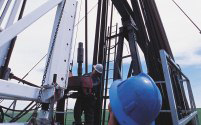
    Drilling is an important phase of oil exploration and extraction in Canada. Drilling is one of the methods used to access hydrocarbon formations. Rig technicians work on drilling rigs and other specialized equipment to drill holes to retrieve these hydrocarbons.

    Drilling rigs are owned by companies specializing in drilling, called drilling contractors. Some contractors are larger than others and some specialize in certain types of operations. However, all contractors offer their drilling equipment and the services of their employees to exploration companies on a contract basis.

    A rig crew’s operational structure is organized by a clearly defined set of duties and responsibilities. After gaining entry level experience as a leasehand and floorhand, workers in this trade must progress through the ranks of motorhand (level 1) and derrickhand (level 2) in order to become fully qualified rig technicians/drillers (level 3). The division of duties in the levels of skilled workers on a rig crew is:

    Motorhands: maintain drilling rig engines, transmissions, heating systems, diesel electric generators and motors, hydraulic systems and other mechanical equipment; maintain equipment logs and records; monitor fluid and supply levels; participate in rig mobilization (rig up) and demobilization (rig out); supervise and are able to do all duties performed by floorhands and leasehands.

    Derrickhands: operate drilling fluid systems and pumps during drilling; mix chemicals and additives; handle sections of the drill string assembly from the monkeyboard during tripping operations; monitor and record volume and properties of drilling fluids; supervise motorhands, floorhands and leasehands; and are able to do all duties performed by motorhands.

    Rig technicians (drillers): operate the drawworks, rotary equipment and pumps; inspect rig; maintain records of drilling operations; are able to perform all duties performed by any crew member; and are responsible for the safety, training and supervision of the crew members.

    Rig technicians report directly to the drilling rig manager. The scope of the rig technician for this analysis covers the duties of motorhands, derrickhands and drillers.

    A rig crew works with a variety of hand and power tools, as well as motorized equipment, lifting and hoisting equipment, and personal protective equipment (PPE) and safety equipment. Computers are an important tool in this trade to maintain operational records and interpret data related to drilling activities.

    The rig is set up and transported to different sites resulting in the rig crew often travelling to remote locations. The work is performed in all weather conditions and workers should be prepared to work in all types of weather and environmental conditions (example: cold, hot, noisy, dirty, dusty, wet and muddy). Drilling activity peaks during the winter months when the ground is frozen. The work pressures and demands may fluctuate depending on world oil and gas supply and demand.

    Important attributes for rig technicians are good hand-eye coordination, mechanical inclination, the ability to work well in a team and with third-party service providers, and strong leadership, communication, and organizational skills. Good physical condition is important because the work often requires considerable lifting, long hours and repetitive movement.

    Drilling is a 24-hour operation, requiring rig technicians to work shifts and often long hours. The job requires mental alertness due to the inherent work hazards such as moving equipment, exposure to chemicals, risks of explosions and working at heights. Rig technicians work outdoors in all kinds of weather, often in remote and isolated areas away from home.

    Rig technicians are expected to perform supervisory duties and training of apprentices and other less experienced crew members. Experienced rig technicians may move into other positions such as rig managers, instructors, well site supervisors, sales representatives or other technical positions within the industry.

  • Child and Youth Worker

    Child and Youth Worker

    Child and youth workers help young people with various challenges. They help children and youth who have learning, social, emotional, or behavioural issues. They can work in residential, institutional, or community-based settings. They often work in schools and hospitals as well.

    Certification Requirements
    • The Child and Youth Worker apprenticeship consists of 6,240 hours of on-the-job training.
    • Apprentices must also complete 32 weeks of in-class technical training.
    • Once you have successfully completed the apprenticeship requirements, you receive a Certificate of Apprenticeship and are certified as a journeyperson in the trade.
    • A person with at least 7,200 hours of related work experience is eligible to apply for a Trade Equivalency Assessment (TEA) and, if successful, becomes certified as a journeyperson in this trade.
    Educational Prerequisites

    Grade 12 or equivalent.

  • Cabinetmaker

    Cabinetmaker

    Cabinetmakers build, repair, finish and install residential and commercial cabinets (including hardware), wooden furniture and architectural millwork using a variety of woods, laminates and other products. Cabinetmakers read drawings and specifications, and prepare layouts. They also set up and operate woodworking equipment, both power and computerized, to machine wood products and composite materials. Cabinetmakers use various power tools and precision woodworking tools to perform their work. Cabinetmakers sand and finish the surfaces either before or after assembly in some shops. They also apply finishing products.

    Cabinetmakers are employed by millwork contractors, furniture manufacturers and general contractors. They may also be self-employed. The products they produce may be production or custom-made pieces. Production pieces are made in large quantities and according to a standard design. Custom-made pieces are often from one-of-a-kind designs and are not mass‑produced. Some cabinetmakers specialize in a specific type of product, such as custom‑made furniture, stairs or cabinet doors. In large cabinet making shops using high-tech, computer-controlled equipment, cabinetmakers may specialize in one or two functions. A working knowledge of the design principles, functional requirements, and traditions associated with furniture building is also advantageous in many areas of the cabinetmaker trade.

    Cabinetmakers primarily work in a shop environment, but they may also work at locations where the products are installed. While the working environment varies according to employers and locations, cabinetmakers are often exposed to workplace health and safety risks such as high noise levels, sawdust and chemicals. There are risks of injury involved in working with woodworking machinery, portable power tools and hand tools.

    Key attributes for people in this trade are good eye-hand coordination, manual dexterity, mathematical aptitude and good conceptual skills. Cabinetmakers require a high degree of accuracy, and good eyesight to select woods and look for imperfections. The work may require lifting of heavy materials.

    This analysis recognizes similarities or overlaps with the work of carpenters and painters/decorators.

    With experience, cabinetmakers may act as mentors and trainers to apprentices in the trade. They may advance to supervisory or design positions or may set up their own shop. Some may choose to specialize in areas such as stairs, veneering or finishing.

  • Careers In Trades

    Careers In Trades

    The trades sector in Canada is constantly growing and changing. So how do you know which career path is right for you? Here at Jobs People Do, we’ve assembled a list of some of the hottest jobs in the trades industry that will be in high demand for years to come. Take a look at just some of your options and then click on the link to be taken directly to career information. Find out what kind of education you will need and how much you can expect to be paid.

    Aboriginal Child Development Practitioner
    Agricultural – Dairy Herdsperson
    Agricultural – Fruit Grower
    Agricultural – Swine Herdsperson
    Agricultural Equipment Technician
    Alignment and Brakes Technician
    Appliance Service Technician
    Arborist
    Architectural Glass and Metal Technician
    Assistant Cook
    Auto Body and Collision Damage Repairer
    Auto Body Repairer
    Automotive Electronic Accessory Technician
    Automotive Glass Technician
    Automotive Painter
    Automotive Service Technician
    Baker
    Baker-Patissier
    Bearings Mechanic
    Blacksmith
    Brick and Stone Mason
    Cabinetmaker
    Cement (Concrete) Finisher
    Chef
    Child and Youth Worker
    Child Development Practitioner
    Composite Structures Technician
    Computer Numerical Control (CNC) Programmer
    Concrete Pump Operator
    Construction Boilermaker
    Construction Craft Worker
    Construction Millwright
    Cook
    Developmental Services Worker
    Die Designer
    Draftsperson – Mechanical
    Draftsperson – Plastic Mould Design
    Draftsperson – Tool and Die Design
    Drywall Acoustic and Lathing Applicator
    Drywall Finisher and Plasterer
    Educational Assistant
    Electric Motor System Technician
    Electrical Control (Machine) Builder
    Electrician – Construction and Maintenance
    Electrician – Domestic and Rural
    Electrician (Signal Maintenance)
    Electronic Service Technician
    Elevating Devices Mechanic
    Entertainment Industry Power Technician
    Exterior Insulated Finish Systems Mechanic
    Facilities Mechanic
    Facilities Technician
    Fitter – Assembler (Motor Assembly)
    Floor Covering Installer
    Fuel and Electrical Systems Technician
    Gemsetter / Goldsmith
    General Carpenter
    General Machinist
    Hairstylist
    Hardware, Lumber and Building Materials Retailer
    Hazardous Materials Worker
    Heat and Frost Insulator
    Heavy Duty Equipment Technician
    Heavy Equipment Operator – Dozer
    Heavy Equipment Operator – Excavator
    Heavy Equipment Operator – Tractor Loader Backhoe
    Hoisting Engineer – Mobile Crane Operator 1
    Hoisting Engineer – Mobile Crane Operator 2
    Hoisting Engineer – Tower Crane Operator
    Horse Groomer
    Horse Harness Maker
    Horticultural Technician
    Hydraulic / Pneumatic Mechanic
    Industrial Electrician
    Industrial Mechanic Millwright
    Information Technology – Contact Centre Customer Service Agent
    Information Technology – Contact Centre Sales Agent
    Information Technology – Contact Centre Technical Support Agent
    Information Technology – Hardware Technician
    Information Technology – Network Technician
    Institutional Cook
    Instrumentation and Control Technician
    Ironworker – Generalist
    Ironworker – Structural and Ornamental
    Light Rail Overhead Contact Systems Lineperson
    Locksmith
    Machine Tool Builder and Integrator
    Marine Engine Technician
    Metal Fabricator (Fitter)
    Micro Electronics Manufacturer
    Motive Power Machinist
    Motorcycle Technician
    Mould Designer
    Mould Maker
    Mould or Die Finisher
    Native Clothing and Crafts Artisan
    Native Residential Construction Worker
    Network Cabling Specialist
    Optics Technician (Lens and Prism Maker)
    Packaging Machine Mechanic
    Painter and Decorator – Commercial and Residential
    Painter and Decorator – Industrial
    Parts Technician
    Pattern Maker
    Plumber
    Pool, Hot Tub and Spa – Installer
    Pool, Hot Tub and Spa – Service Technician
    Powered Lift Truck Technician
    Powerline Technician
    Precast Concrete Erector
    Precast Concrete Finisher
    Precision Metal Fabricator
    Pressure Systems Welder
    Process Operator – Food Manufacturing
    Process Operator – Power
    Process Operator – Refinery, Chemical, and Liquid Processes
    Process Operator – Wood Products
    Pump Systems Installer
    Railway Car Technician
    Recreation Vehicle Technician
    Refractory Mason
    Refrigeration and Air Conditioning Systems Mechanic
    Reinforcing Rodworker
    Relay and Instrumentation Technician
    Residential (Low Rise) Sheet Metal Installer
    Residential Air Conditioning Systems Mechanic
    Restoration Mason
    Retail Meat Cutter
    Roll Grinder / Turner
    Roofer
    Saddlery
    Saw Filer / Fitter
    Sheet Metal Worker
    Ski Lift Mechanic
    Small Engine Technician
    Special Events Coordinator
    Sprinkler and Fire Protection Installer
    Steamfitter
    Surface Blaster
    Surface Mount Assembler
    Terrazzo, Tile, and Marble Setter
    Thin Film Technician
    Tire, Wheel and Rim Mechanic
    Tool / Tooling Maker
    Tool and Cutter Grinder
    Tool and Die Maker
    Tool and Gauge Inspector
    Tractor-Trailer Commercial Driver
    Transmission Technician
    Truck and Coach Technician
    Truck-Trailer Service Technician
    Turf Equipment Technician
    Utility Arborist
    Water Well Driller
    Welder
    Wooden Boat Rebuilder


  • Skilled Trades: The Basics

    Skilled Trades: The Basics

    In Canada, the skilled trades industry has had steady employment growth since the mid-1990s. It’s an industry that has attracted many unions and has also paved the way for self-employed workers. It is an industry that keeps growing, as there will always be a demand for skilled trade workers.

    The average wage for workers in skilled trades is $22.36 per hour, which is twice the amount of the Ontario’s $11.00/hour minimum wage for adult workers. Within the next two decades, 40% of the jobs created will be in skilled trades. This means that employment will be steady, plentiful and secure. As many skilled trades’ workers are unionized, their wages tend to be higher than that of a non-unionized worker.

    Ontario, in particular, has been improving the industry by investing more $165 million dollars to support apprentices. The Ontario Ministry of Training, Colleges and Universities offers plenty of information on how to obtain apprenticeships and educational programs that lead into skilled trades. They also assist in providing loans and grants to individuals who qualify.

    With the skills of a tradesperson, you are not limited to one location. You’re free to employ yourself anywhere. Western Canada has a high demand for trade workers and many workers from Ontario move all over Canada and work on contracts through corporations.

    The skilled trades industry has great opportunities and flexibility for its employees. It’s an industry that offers great pay, great security and great amount of work now – and in the future.