Tag: animals

  • Career Profile: Dog Walker/Pet Sitter

    Career Profile: Dog Walker/Pet Sitter

    Do you like animals? You and your family might look after your pet if you have one. However, did you know that people can earn a living by walking dogs and looking after pets? When people go away, or just when they need extra help, they might want to call on a pet sitter or dog walker for help. It might even be the right job for you someday.

    Pets can be fun, helpful, and good company, but they can take a lot of work. They need to be fed every day, and dogs need to go out for walks several times during the day and maybe at night. Cats tend to need less care, but they also need to have food and water in their bowls and to have their litter boxes cleaned out. Other kinds of pets, like fish, hamsters, and birds all need different levels of care.

    Not everyone has the time to take care of their pets themselves. They might work or go to classes during the day and need someone to take their animals out. Many people who go away on holidays prefer to leave their pets at home instead of taking them to a kennel or other places where animals can stay. However, that means that someone has to take care of the pets while the owners are away.

    Almost anyone who likes animals and has the patience to look after them can become a dog walker or pet sitter. The first step is to get to know as much as possible about animals. Part of learning about pets comes from experience, but it can also be helpful to read books and websites about them. The first step is to decide what kinds of animals you want to look after. Once you know that, you can find the right sources of information to tell you what you need. If you have a pet and go to the Vet often, ask them questions about how you could provide the best care to pets.

    Anyone can look after a pet for a friend or a relative. However, many cities have rules about how many dogs that people can walk at one time. If you want to become a professional dog walker in the future, you should check to see what permits you might need to get. You should also try to find the parks where dogs can be off of their leashes for a while.

    Working as a pet sitter or dog walker can be a full-time job for anyone who is willing to work to get new clients. Payment can vary from minimum wage to twice as much or even more, but it depends on the employer and type of animal. You might not earn much money yet as a dog walker or pet sitter, but this is the type of job that can grow with you as you get older. If you enjoy looking after animals, the job of dog walker or pet sitter might be right for you.

    Bibliography:
    Canine Club Academy. “Dog Walker Salary — What Can You Make?.” http://canineclubacademy.com/careers-with-animals/dog-walker-salary-can-make/.
    Floofins & Co. “Job Description: Pet Care Specialist – Dog Walker.” http://www.floofinsandco.com/about-floofins-co/job-opportunities/dog-walker-job-description/.
    Newman, Alex. “For Dog Walkers, the Walk in the Park is Hard Work.” http://www.thestar.com/business/small_business/2010/03/08/for_dog_walkers_the_walk_in_the_park_is_hard_work.html.
    Pet Caretakers.com. “Pet Sitting and Profitability.” http://www.petcaretakers.com/business/pet-sitting-and-profitability/.


  • Career Profile: Animal Trainer

    Career Profile: Animal Trainer

    Have you ever taught a dog to sit up and beg or to roll over? Many people train their pets to do simple tricks like that, but some people do even more complicated tasks. Animal trainers work with dogs, horses, dolphins and other animals, teaching them how to behave or act in a specific way. If you have the patience and the ability to work with animals, an animal trainer might be the right career path for you!

    Becoming an animal trainer takes a lot of time and patience. Animals have minds of their own, and they can sometimes be aggressive and difficult. Since they cannot speak a language we directly understand, they communicate their feelings through actions and expressions. The animals can sometimes bite or scratch, but it is the job of the trainer to teach them to be more calm, happy, and manageable.

    If you have your own pet, you know how much work it can be to take care of all of its needs. Animal trainers might not be responsible for every aspect of caring for the animals, but they often have to do the same things as pet owners. They often have to feed and groom the animals and possibly even contact a veterinarian if something is wrong with them. They have to know the signs of a sick animal and when it is hungry or tired.

    Getting to know individual animals is an important part of being an animal trainer. Some animals might already be very well trained in basic behaviour before they come for special training, but others need to start from the beginning. Old injuries, bad experiences with previous owners, and many other factors might influence how difficult or easy it is to train an animal- domestic or wild. Finding out how to get past these kinds of barriers is one of the most important skills that trainers can learn.

    Trained animals are useful in many different areas. People ride horses for fun or to participate in shows. They make movies with dogs and cats and train seeing-eye dogs to help people with vision problems. All of these animals need someone to train them for the special tasks that they need to do.

    Sometimes, the animal trainers can use help, as well. Working with marine mammals like dolphins usually requires a bachelor’s degree in an area like biology or animal science. However, most animal trainers learn their skills by working with animals, sometimes as an apprentice to another trainer. A high school diploma or the equivalent is usually all the formal training that is necessary, although a certificate might be necessary in some cases.

    In Canada, animal trainers make an average of about $23,000 per year, but some can earn much more than that. Jobs can be hard to find, but people in this field can often work in similar areas such as dog walking and pet care. If you love animals, you might want to consider this career as a possibility for your future. There are plenty of opportunities to add to your animal training expertise. Opening up a business would of course raise your income and allow you to keep learning new ways to train and look after animals of all kinds.


    Bibliography:

    Canadian Association of Professional Pet Dog Trainers. “Becoming a Professional Dog Trainer.” http://www.cappdt.ca/public/jpage/1/p/BecomingATrainer/content.do.

    McKay, Dawn Rosenberg. “Animal Trainer: Career Information.” http://careerplanning.about.com/od/occupations/p/animal_trainer.htm.

    Monster.ca. “Animal Trainer: Skills.” http://my.monster.ca/job-profiles/animal-trainer.aspx#Skills.

    Wow Jobs.ca. “Dog Trainer Salary in Canada.” http://www.wowjobs.ca/salary-dog+trainer.

  • Why Do We Want to Protect the Environment?

    Why Do We Want to Protect the Environment?

    Protecting the environment, natural resources and wildlife is something that is not only supported by people who are environmentalists. Everyone can take part in helping to improve the health of the planet.

    When you walk outside, you may not realize it, but you are depending on fresh air to survive. In Canada, we are fairly lucky as our levels of air pollution are not nearly as high as those in more heavily populated countries like China or India. The health effects of bad air quality have been researched and it is proven to cause a number of diseases and illnesses. Improving the quality of the air is something that can be accomplished via grassroots efforts; That is, through individual efforts to emit less carbon into the atmosphere. Reducing carbon emissions can also be accomplished through the efforts of large companies and corporations, who emit the most carbon of all.

    The quality of the water is also something that is important to consider since we all depend on clean water to survive. Maintaining clean water is something that can be accomplished through individual efforts like not flushing hazardous chemicals down the drain or toilet and trying to conserve water to reduce the demand on the water treatment facilities – an operation that requires a lot of water to conduct. Big businesses could also pitch in to conserve water by investing in water saving initiatives and partaking in water conservation efforts.

    Wildlife also needs our protection. With more and more urbanization, spaces where wildlife are safe is decreasing at alarming rates. Deer, moose, cougars and bears are all often reported in the news as having caused car accidents due to the decline in their natural habitat and their subsequent wandering out onto developed land transformed into highways or suburban neighborhoods. In order to protect wildlife, we must invest in protecting Canada’s natural spaces.

    If you support clean air, water and having a wide range of wildlife in Canada, see if there is a way you can get involved in your community. Help to clean up your local park or visit a wildlife sanctuary to see how they take care of animals.

  • Working with Nature: Park Rangers

    Working with Nature: Park Rangers

    Every year, people across Canada go to visit national or provincial parks. They go hiking or camping, and they spend time walking in the forests or swimming in the lakes. Have you ever thought of the people who help keep those parks going? Someday, you might be able to look after the animals and people in these places if you decide to become a park ranger – also called a warden.

    Park rangers or wardens are people who help to keep parks running smoothly, helping both the animals that live there and the people who come to visit. If you love the outdoors and want to help preserve it for the future, working as a park ranger might be the job for you.

    Many different activities can be part of a park ranger’s job. Rangers have to know how to deal with both large and small animals and to be able to work with them safely. They have to know about the different types of animals in the area and to be able to help them when they are sick or injured. This work can often be dangerous. Moving animals from one place to another spot inside or outside the park is also a dangerous but important part of the job.

    Knowing about the plants in the area is also important for park rangers. If they know the locations of poison ivy, for example, they can tell people what areas to avoid and where they need to be careful. They can take people on nature tours to teach them all about the animals and plants they might see.

    Learning all about the plants and animals in the park takes a mixture of education and experience. Normally, park rangers have four-year degrees in areas such as wildlife biology or botany (the study of plants). Having a general knowledge is important, but park rangers can also become specialists in one or two areas, like bears or insects.

    In some cases, the work of park rangers is close to law enforcement, especially when they work with people who come to visit the park. Park rangers help to enforce the rules, such as the regulations about when people can build fires or what they can do in campgrounds. They might also have to search for people who are lost or help anyone who has been injured or is feeling sick. Park rangers have to know basic first aid and to be able to deal with whatever happens.

    If you decide to become a park ranger, you should be prepared to live in a small community instead of a city so that you can be close to your work. You should be comfortable with working alone but also be able to work with people and to talk with the public. If this kind of job sounds good to you, maybe you should consider becoming a park ranger.

  • Jobs with Animals: Dog Groomer

    Jobs with Animals: Dog Groomer

    I interviewed Kelly Booth, a local dog groomer. We talked about dog grooming as a career, some challenges she faces at work, and what she enjoys about her job.

    M: Being a dog groomer isn’t a typical occupation. When and how did you decide to pursue it as a career?
    K: I knew I wanted to work with animals, so I just started applying to pet stores and veterinary clinics. I dropped off my resume at PetSmart where the manager explained the process of becoming a groomer. I would start as a bather and, if I showed potential, they would send me to the grooming “academy” which is run by PetSmart. So this is what I did, and I’ve been doing it for about three years now.

    M: What kind of schooling is required, and how long does it take?
    K: The training I received was pretty basic. I just went to an “academy certified” PetSmart store where I was trained how to groom. This lasted about a month and we learned how to do the different cuts on the main breeds of dogs.

    M: What are some typical challenges that you face at work?
    K: As you can imagine, working with dogs is not always easy. They can be temperamental and unpredictable. The most common challenge I face is grooming dogs that are just generally uncooperative, i.e.: pulling their legs when I’m trying to brush them or groom them, not standing, squirming when I’m trying to do their nails, etc. I get bit and scratched quite a lot. It can be frustrating and scary because I’m dealing with sharp objects and it can be dangerous.

    It’s also really hard on your body. A lot of groomers end up getting carpal tunnel and back and leg problems.

    M: What is the career path for someone who has just completed their schooling?
    K: I started as a bather/brusher, which is basically just bathing and brushing out the dogs, clipping their toenails, and cleaning their ears. After about six months, I started my training. After that, I had to do a 100-dog “apprenticeship”, in which I had to groom twenty shave-downs, twenty sporting dogs, twenty short-legged terriers, twenty long-legged terriers, and twenty hand-scissor cuts. When I was finished that, I became a commissioned groomer.

    M: What are the typical earnings per dog?
    K: The earnings vary depending on the cut that the pet parent wants. For example, a simple shave down ranges from $55-$65 or $80-$90 for a hand-scissored poodle. Some larger dogs, like a Newfoundlander or an Old English Sheepdog, can be $100-$120. Commissions are typically 50-70%.

    M: What is your favourite thing about your job?
    K: I love working with animals. Sometimes we get dogs that like to give hugs and kisses. And the little puppies are always so much fun! I also really like being able to use my hands to create something. Helping the dogs feel better after being all matted is really rewarding.

  • Career Profile: Veterinarian

    Career Profile: Veterinarian

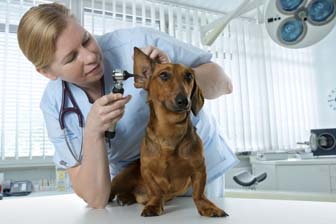
    When people get sick, they go to a doctor. Do you know where they take animals that are sick? The doctors who look after animals, whether they are pets like cats and dogs or farm animals like sheep, are called veterinarians, or vets. Just like doctors for humans, veterinarians are experts in health and diseases for their patients. Becoming a veterinarian takes a lot of hard work, but it can be an enjoyable and rewarding profession for people who like helping animals.

    Taking care of animals can be complicated, especially since, unlike human patients, animals are unable to tell their doctors about any problems they are having. Veterinarians have to be able to diagnose problems just by doing tests and by looking at the animals for signs of illness or injury. They need verbal skills to be able to talk with the animals’ owners, but they also need to know about animal behavior, such as what it means when a horse lies down on the ground or a dog hides under the furniture. Problem-solving is an important part of the work. Veterinarians have to look at how the animal is acting and use their knowledge of diseases to determine the issue and decide on treatment. Someone who loves animals and spends time with them is likely to have some of these necessary skills for veterinary work.

    Besides an understanding of animals, veterinarians need formal education. Usually people start out with at least two years of studies in an area such as agriculture or general science. Next, they take about four years of studies at a university to get a Doctor of Veterinary Medicine degree. This degree teaches them about illnesses, medications, regular care, and anything else they need to know. Once they finish, they have to take an exam to receive a certificate of qualification.

    Veterinarians can follow one of two basic streams. Many veterinarians work with pets, such as dogs, cats, and hamsters. Others work with farm animals, where they might have to deal with large animals like cows and horses or small animals like chickens. Veterinarians for pets can often work out of offices since the animals they treat are small enough to bring into buildings. However, veterinarians who work with large animals normally have to travel to see the animals in barns or stables. Some veterinarians work in government departments, teaching, or research.

    Working as a veterinarian can be a stressful job. The animals can be difficult to handle, especially when they are in pain or are afraid of what is happening to them. For people who really love animals, it can also be difficult to give their patients painful treatments or vaccinations. Because of stresses like these, many veterinarians change professions after about twenty years, although some stay in their work for an entire career. On average, veterinarians make about $70,000 per year, although the salary varies according to where they work and the types of animals they treat.

    Do you want to help animals? Maybe you should consider becoming a veterinarian.

  • Jobs with Animals: Dog Groomer

    Jobs with Animals: Dog Groomer

    I interviewed Kelly Booth, a local dog groomer. We talked about dog grooming as a career, some challenges she faces at work, and what she enjoys about her job.

    M: Being a dog groomer isn’t a typical occupation. When and how did you decide to pursue it as a career?
    K: I knew I wanted to work with animals, so I just started applying to pet stores and veterinary clinics. I dropped off my resume at PetSmart where the manager explained the process of becoming a groomer. I would start as a bather and, if I showed potential, they would send me to the grooming “academy” which is run by PetSmart. So this is what I did, and I’ve been doing it for about three years now.

    M: What kind of schooling is required, and how long does it take?
    K: The training I received was pretty basic. I just went to an “academy certified” PetSmart store where I was trained how to groom. This lasted about a month and we learned how to do the different cuts on the main breeds of dogs.

    M: What are some typical challenges that you face at work?
    K: As you can imagine, working with dogs is not always easy. They can be temperamental and unpredictable. The most common challenge I face is grooming dogs that are just generally uncooperative, i.e.: pulling their legs when I’m trying to brush them or groom them, not standing, squirming when I’m trying to do their nails, etc. I get bit and scratched quite a lot. It can be frustrating and scary because I’m dealing with sharp objects and it can be dangerous.

    It’s also really hard on your body. A lot of groomers end up getting carpal tunnel and back and leg problems.

    M: What is the career path for someone who has just completed their schooling?
    K: I started as a bather/brusher, which is basically just bathing and brushing out the dogs, clipping their toenails, and cleaning their ears. After about six months, I started my training. After that, I had to do a 100-dog “apprenticeship”, in which I had to groom twenty shave-downs, twenty sporting dogs, twenty short-legged terriers, twenty long-legged terriers, and twenty hand-scissor cuts. When I was finished that, I became a commissioned groomer.

    M: What are the typical earnings per dog?
    K: The earnings vary depending on the cut that the pet parent wants. For example, a simple shave down ranges from $55-$65 or $80-$90 for a hand-scissored poodle. Some larger dogs, like a Newfoundlander or an Old English Sheepdog, can be $100-$120. Commissions are typically 50-70%.

    M: What is your favourite thing about your job?
    K: I love working with animals. Sometimes we get dogs that like to give hugs and kisses. And the little puppies are always so much fun! I also really like being able to use my hands to create something. Helping the dogs feel better after being all matted is really rewarding.

  • I Want to Work with Animals

    I Want to Work with Animals

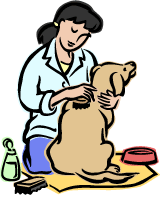
    Some people love animals and want to spend as much time as possible with them. They might decide to become veterinarians, looking after sick animals. How else can people care for animals as a career? One way is to become a pet groomer and to help animals look their best. For people who like animals, a career as a pet groomer can be a good choice.

    If you have your own dog, you probably give it a bath and brush its fur regularly. Some dogs, such as poodles, need haircuts occasionally, but dogs that shed their fur also need help with keeping their coats clean and untangled. Cats usually clean themselves up, but even they sometimes need help. You might be able to take care of your pet at home, but sometimes animals need more care. That’s where pet groomers can help. They bathe animals, dry and brush their fur, and give haircuts if necessary to dogs, cats, and other animals. About half of Canada’s trained groomers work with people’s pets, but others work with farm animals and sometimes even with the animals in zoos.

    Because their work can vary widely, animal groomers need many different types of training. Graduation from high school is a basic requirement, and many groomers need to complete a training course in their field. For pet groomers, this training might include special techniques for keeping animals quiet and calm without hurting them, as well as practice in grooming styles. Many people also complete an apprenticeship, in which they work together with an experienced groomer and learn what they need to know for their careers. When they have finished their training, they are ready to look for work.

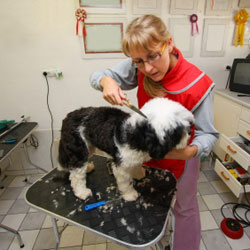
    Working with animals can sometimes be challenging. Pet groomers often have to lift heavy dogs onto tables and deal with animals that dislike the whole process. Has your dog or cat ever run away when you tried to give it a bath? Pet groomers have to deal with the same types of problems, and being bitten or scratched is common. Just keeping an animal on the grooming table requires patience and a certain amount of strength. Pet groomers need to understand how to keep animals calm and how to deal with the problems that they encounter.

    For many groomers, the chance to work with the animals that they love is what counts the most. Would you like to work with animals every day?

  • Interview with a Dog Groomer

    Interview with a Dog Groomer

    I interviewed Kelly Booth, a local dog groomer. We talked about dog grooming as a career, some challenges she faces at work, and what she enjoys about her job.

    M: Being a dog groomer isn’t a typical occupation. When and how did you decide to pursue it as a career?

    K: I knew I wanted to work with animals, so I just started applying to pet stores and veterinary clinics. I dropped off my resume at PetSmart where the manager explained the process of becoming a groomer. I would start as a bather and, if I showed potential, they would send me to the grooming “academy” which is run by PetSmart. So this is what I did, and I’ve been doing it for about three years now.

    M: What kind of schooling is required, and how long does it take?

    K: The training I received was pretty basic. I just went to an “academy certified” PetSmart store where I was trained how to groom. This lasted about a month and we learned how to do the different cuts on the main breeds of dogs.

    M: What are some typical challenges that you face at work?

    K: As you can imagine, working with dogs is not always easy. They can be temperamental and unpredictable. The most common challenge I face is grooming dogs that are just generally uncooperative, i.e.: pulling their legs when I’m trying to brush them or groom them, not standing, squirming when I’m trying to do their nails, etc. I get bit and scratched quite a lot. It can be frustrating and scary because I’m dealing with sharp objects and it can be dangerous.

    It’s also really hard on your body. A lot of groomers end up getting carpal tunnel and back and leg problems.

    M: What is the career path for someone who has just completed their schooling?

    K: I started as a bather/brusher, which is basically just bathing and brushing out the dogs, clipping their toenails, and cleaning their ears. After about six months, I started my training. After that, I had to do a 100-dog “apprenticeship”, in which I had to groom twenty shave-downs, twenty sporting dogs, twenty short-legged terriers, twenty long-legged terriers, and twenty hand-scissor cuts. When I was finished that, I became a commissioned groomer.

    M: What are the typical earnings per dog?

    K: The earnings vary depending on the cut that the pet parent wants. For example, a simple shave down ranges from $55-$65 or $80-$90 for a hand-scissored poodle. Some larger dogs, like a Newfoundlander or an Old English Sheepdog, can be $100-$120. Commissions are typically 50-70%.

    M: What is your favourite thing about your job?

    K: I love working with animals. Sometimes we get dogs that like to give hugs and kisses. And the little puppies are always so much fun! I also really like being able to use my hands to create something. Helping the dogs feel better after being all matted is really rewarding.

  • Incredible Eyes

    Incredible Eyes

    Did you know that tuna have a third eye? Or that shrimp can see colours we can’t even imagine? We humans rely so much on our eyesight that it’s hard to imagine there are things it can’t do. At least your eyes can help you read a few strange facts about vision in the animal kingdom.

    Three-Eyed Beasts!
    Though it’s hard to see, many fish, reptiles and amphibians have a third eye called the parietal eye. It’s smaller than the other two and often covered by a layer of skin. It usually appears as a small, grey oval between their other eyes. The parietal eye can’t see the same way other eyes do, but it has a small lens and retina that allows it to detect light and dark. It helps animals keep track of the time of day and regulate their body temperature.

    That Creepy Glow
    Everyone’s seen that creepy Halloween image of a black cat in the middle of the night, invisible except for its shining green eyes. Why do cats have that unsettling trait and we don’t? Actually, it’s not just cats. Lots of animals can do this, particularly ones that are active at night (nocturnal). This includes horses, cows, dogs and hyenas. These animals have a layer at the back of their eye called the tapetum lucidum. When light shines at them from a bright source, they reflect it back like a mirror. This helps them see in the darkness.

    Seeing Heat
    Infrared vision – the ability to see heat – is something we think of superheroes having. Well, snakes have it, too! Pitvipers, as well as some boas and pythons, can all see heat. This actually has nothing to do with their eyes, but it’s still a sort of vision. It takes place in a “pit organ” between the eyes and the mouth, which functions differently in different kinds of snakes. Since many snakes have poor vision, this helps them to find warm-blooded prey. It’s so powerful that it even allows a blind rattlesnake to strike at the vital organs of its prey. Scientists have recently discovered that this pit organ is not just for hunting, it’s also a survival tool. The snakes that have it are better at finding a place to warm themselves up than other snakes who don’t.

    Expanding the Rainbow
    We have something in our eyes called cones that allow us to see colours. Our eyes have three cones: red, green and blue. By combining them, we see all the colours that we think of in a rainbow. But we’re missing out. Some other animals have far more cones than we do. The mantis shrimp takes the prize, with sixteen cones in their eyes! This means they see colours that we can’t even dream of. Scientists have also speculated that some women have a fourth yellow cone that allows them to see more variations in colour than the rest of us. So maybe you or your sister is privileged with seeing a wider rainbow than the rest of us.

    It’s easy to think of us humans as being the most evolved species on the planet. Sometimes we forget that even a cow sees things in a way that we can’t!