Tag: animals

  • A Trip to the Vet

    A Trip to the Vet

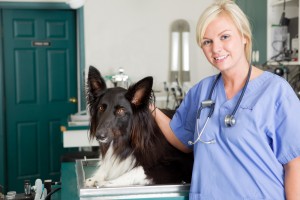
    Just like people, sometimes animals get sick or injured and need to see a doctor. A doctor that specializes in taking care of animals is called a veterinarian, or a vet for short.

    Most vets work in clinical practices, meaning they work directly with animals. However, some vets work doing research, teaching or work for the government.

    Dr. Jaime Buchanan is a veterinarian at the Kingston Veterinary Clinic in Kingston, Ontario. Her job is to treat animals for diseases and injuries and to inform owners of how to prevent their animals from getting sick.

    Doctor Buchanan says animals go to the vet most often because they are sick or injured. She says, “the most common problems are vomiting, diarrhea and skin problems. And some of the common injuries include: lameness (limping) and wounds or cuts.” She also says, like people, many animals have regular check-ups to make sure they are healthy. They have vaccinations, which are needles with medicine that help prevent diseases, flea treatments and de-worming.

    However, unlike people, animals can’t tell someone when they aren’t feeling well. Doctor Buchanan says, “it can be very difficult to diagnose animals because they can’t tell you how they are feeling or where they are hurt.”

    In order to figure out exactly what the problem is, she says the vet, “starts by taking a thorough history of the problem from the owner. They do a physical exam, checking the animal from head to tail. This includes looking at their teeth and gums, listening to their heart, taking their temperature and feeling their abdomen, among other things.” If the problem is not obvious, the vet may need to do further tests like blood work or X-rays to determine why the patient is sick.

    Depending on what is wrong, treatment for the animal may include going home and taking medication, like pain pills or antibiotics. Or, if they are very sick, they may need to stay in the hospital and have an IV (intravenous fluids) and be closely watched to ensure the treatment is working.
    Doctor Buchanan says some of the symptoms pet owners should watch out for are, “vomiting, diarrhea, breathing problems, skin and ear problems, and changes in water intake or urination.” She says if your animal is not eating or drinking or if they seem to have less energy than usual, call your veterinarian.

    When you take your pet to the vet, Doctor Buchanan says you can expect to see “other animals and people in the clinic. You may also see the receptionist and veterinary technician in the waiting room. In the exam room, you can watch while your pet is examined. And you may even get to listen to the animals’ heart with the stethoscope or help hold and comfort your pet.”

    The vet will explain everything step by step while they are completing your animals check-up, and Dr. Buchanan says don’t be afraid to ask questions because the Doctor will be more than happy to answer them.

    If you love animals, maybe becoming a veterinarian would be your dream job!
  • Career Profile: Marine Biologist

    Career Profile: Marine Biologist

    Every year, humpback whales travel 4000 kilometres from the ocean around Alaska and British Columbia to the water near Hawaii. Soon afterwards, they turn around and make the return journey. Throughout the entire journey, they eat little or nothing until they return to their northern feeding grounds. While they swim, they make musical sounds that sound like singing. Sometimes, humpback whales can stay underwater for half an hour or more without breathing. When they swim near the surface, they often throw themselves out of the water and then crash back into the depths.

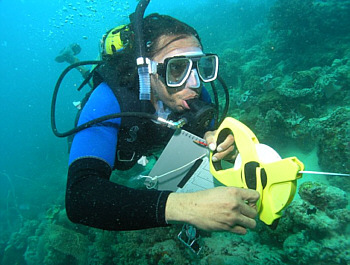
    Do facts like these or about other ocean animals interest you? If so, you might want to consider becoming a marine biologist. These scientists work to understand the fish, birds, and other animals that live in the world’s water, especially saltwater animals like whales or crabs.

    If you choose to become a marine biologist, you will need to take as many science courses as you can in high school and university. These courses could be in chemistry, biology, conservation, or oceanography (the study of oceans). Later on, you can to choose a specialty like the life cycle of crabs or the effects of pollution on sea turtles. Your work might end up being much very general, but having a specialty will help you find work. Volunteering at an aquarium or pet shop now might help you choose a field.

    Most marine biologists have at least a Bachelor’s degree, and many have Master’s or PhD degrees as well. If you prefer not to study for such a long time, you can decide to get a technical certificate instead and then work mainly with the daily care of animals instead of conducting studies and writing academic papers. As a biologist, you might collect and analyze samples of various animals. As a technician, you might clean fish tanks or feed the animals. Depending on what you do, you might make anywhere from $30,000 to $100,000 as you work to help people understand the world in which they live.

    Besides helping people understand the world, marine biologists help alert others to problems in the natural world. As they watch the animals in the world’s oceans and seas, for example, they can tell how water and soil quality affects these animals and humans. They see the connections between people’s health and the world around them.

    Do you love to explore streams and lakes to find out what lives in them? Do you have an interest in preserving the natural world? Maybe a career as a marine biologist is right for you.

  • Careers with Animals: Horse Groomer

    Careers with Animals: Horse Groomer

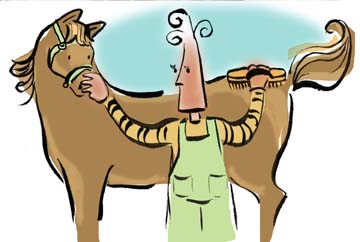
    If you’ve spent any time at all around stables, you’ll know horses require a lot of care to keep them groomed, healthy and happy. Looking after a horse’s needs can sometimes be a full-time job – and, in fact, it is! Horse groomers or equine grooms are the people who maintain a horse’s nutrition, grooming and overall health. If you love horses, the great outdoors, and working with your hands, this could be the job for you.

    Skill Requirements
    First and foremost, a horse groomer should be very comfortable with touching horses and being in their vicinity for extend periods of times. Horse grooming involves a lot of time spent with the horses tending to their needs. Brushing, feeding, watering, tacking, untacking, cleaning the stalls, and exercising the horses is all part of a groomer’s daily routine. Rain, shine, or snow, groomers are expected to perform these tasks. A groomer should also be able to read and understand horse documentation and take care of prescriptions and medications a horse may need at the instruction of a veterinarian.

    Groomers also require patience and strong observation skills. Changes in behaviour or signs of physical injury can only be detected through maintaining a strong bond with the horses and a watchful eye.

    Qualifications and Apprenticeships
    The qualifications needed for grooming can vary and entirely depends on the employer. Some employers won’t require an entry level groomer or an apprentice groomer to have official qualifications. That said, previous experience with horses is almost always a must. Volunteer experience in a stable or barn can help your chances when applying for paid work.

    If you are looking to get certifiable experience, look into basic horse care programs at colleges in your area. There are also universities in Ontario, Nova Scotia and Alberta that offer undergraduate programs in equine studies suitable for those looking for a more technical career in the same field.

    Hours and Salary
    Horse grooming typically involves early mornings and a 40-hour work week. Entry level groomers will earn minimum wage at first, gradually earning raises as they gain more experience. More experienced groomers will earn a starting rate at anywhere from $15-$20 dollars an hour. Depending on the employer, there may also be benefits provided.

  • Working As A Vet Tech

    Working As A Vet Tech

    Nature of the Work
    Pet owners, zoos and aquariums expect excellent care from their veterinarians and thus to provide the optimal services, veterinarians use veterinary technicians and technologists to assist them, much as doctors use nurses in the medical field. Job duties vary depending on the employer, but generally technicians and technologists complete similar tasks for their employers even though there are differences in the formal education and training of the two titles. Most technicians work in private veterinary practices; but because of their additional education and training, technologists can choose to work in jobs that are more advanced research related.

    Job Description of a Veterinary Technician and Technologist
    Veterinary technicians and technologists usually work under the supervision of a licensed veterinarian. They are often required to perform skills such as venipuncture, or skin scrapings to treat and diagnose health concerns of the animals as well as performing various medical tests. Tests they conduct include blood work ups, urinalysis, and taking tissue samples. They may assist in dental care and surgeries and may be required to perform and maintain anesthesia. Other duties might include taking patient histories, expose and develop X-rays and radiographs, dressing wounds, applying splints, and taking vital signs. There are a variety of diagnostic tests which the veterinarian may rely on the technician or technologist to conduct. Experienced veterinary technicians may be expected to train new personnel in the clinic or discuss a health issue with a pet’s owner. In some practices they may be required to assist in administrative tasks such as maintaining treatment records and inventory records of supplies, equipment and pharmaceuticals.

    In most clinical private practices, the technician and technologist will assist in the care of small animals such as cats and dogs, but also may perform duties with animals such as cattle, horses, sheep, birds, mice and lizards. It is rare for a technologist to work in practices that care for both small pets and large wild animals.

    Another area of work for technologists and technicians is research facilities. In these facilities veterinary technicians and technologists work under the supervision of veterinarians as well, but they may also be supervised by a physician. The job duties in this area of the field may include administering medications, and recording information about the animals such as diet, genealogy, food intake, and weight. They may be required to monitor and record signs of pain and distress in animals, sterilize surgical equipment and provide postoperative care. Veterinary technologists may be required to give an animal a vaccination or euthanize an animal.

    In some instances, veterinary technologists assist in research projects that involve other scientists in medical-related fields. They can work in biomedical research, livestock management, pharmaceutical sales or wildlife medicine. There are increasing opportunities for technologists in the biosecurity and disaster preparedness jobs.

    Job Outlook
    The job outlook for veterinary technicians and technologists is excellent as there is a need to replace those leaving the field and there are limited numbers of qualified technicians graduating The demand for the positions is not expected to be met in the period of 2008-2018 as the field is expected to grow at a much faster rate than the average.

    The biggest factor in the expected growth rate of 36 percent is the attitude of pet owners. Pets are often considered part of the family and pet owners are becoming more affluent, knowledgeable and more willing to pay for advanced veterinary services for their pets. This is expected to continue to increase the demand for veterinary services and thus the increase in veterinary clinical practices that will need assistants.

    It is expected for the number of pet owners utilizing veterinary services to grow and increase job opportunities. Advanced services such as surgical procedures or preventive dental care will provide more opportunities for those technicians and technologists who specialize in those areas. Demands for feline services and medicine are expected to rise as the number of cats as companions is steadily growing. It is expected animal shelters, humane societies, animal control facilities, boarding kennels, animal hospitals and clinics will want to replace veterinary assistants with highly skilled technicians which will further the demand for workers who are specialized in specific areas.

  • Incredible Eyes

    Incredible Eyes

    Did you know that tuna have a third eye? Or that shrimp can see colours we can’t even imagine? We humans rely so much on our eyesight that it’s hard to imagine there are things it can’t do. At least your eyes can help you read a few strange facts about vision in the animal kingdom.

    Three-Eyed Beasts!
    Though it’s hard to see, many fish, reptiles and amphibians have a third eye called the parietal eye. It’s smaller than the other two and often covered by a layer of skin. It usually appears as a small, grey oval between their other eyes. The parietal eye can’t see the same way other eyes do, but it has a small lens and retina that allows it to detect light and dark. It helps animals keep track of the time of day and regulate their body temperature.

    That Creepy Glow
    Everyone’s seen that creepy Halloween image of a black cat in the middle of the night, invisible except for it’s shining green eyes. Why do cats have that unsettling trait and we don’t? Actually, it’s not just cats. Lots of animals can do this, particularly ones that are active at night (nocturnal). This includes horses, cows, dogs and hyenas. These animals have a layer at the back of their eye called the tapetum lucidum. When light shines at them from a bright source, they reflect it back like a mirror. This helps them see in the darkness.

    Seeing Heat
    Infrared vision – the ability to see heat – is something we think of superheroes having. Well, snakes have it, too! Pitvipers, as well as some boas and pythons, can all see heat. This actually has nothing to do with their eyes, but it’s still a sort of vision. It takes place in a “pit organ” between the eyes and the mouth, which functions differently in different kinds of snakes. Since many snakes have poor vision, this helps them to find warm-blooded prey. It’s so powerful that it even allows a blind rattlesnake to strike at the vital organs of its prey. Scientists have recently discovered that this pit organ is not just for hunting, it’s also a survival tool. The snakes that have it are better at finding a place to warm themselves up than other snakes who don’t.

    Expanding the Rainbow
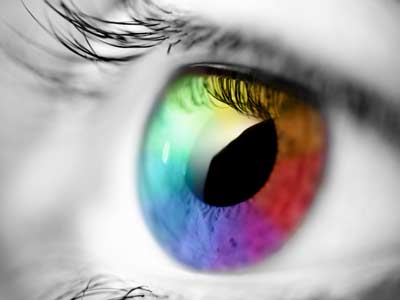
    We have something in our eyes called cones that allow us to see colours. Our eyes have three cones: red, green and blue. By combining them, we see all the colours that we think of in a rainbow. But we’re missing out. Some other animals have far more cones than we do. The mantis shrimp takes the prize, with sixteen cones in their eyes! This means they see colours that we can’t even dream of. Scientists have also speculated that some women have a fourth yellow cone that allows them to see more variations in colour than the rest of us. So maybe you or your sister is privileged with seeing a wider rainbow than the rest of us.

    It’s easy to think of us humans as being the most evolved species on the planet. Sometimes we forget that even a cow sees things in a way that we can’t!

  • Endangered Animals of Canada

    Endangered Animals of Canada

    The vast, wondrous beauty of Canada is enriched with incredibly diverse wildlife. From the smallest insect to the largest mammal, the country proudly hosts some of the most beautiful creatures on the planet. But with great beauty comes great responsibility, and as the dominate species on the planet we have been charged with the task of caring for these animals. There have been times throughout history when we as a people failed in this and a species was lost. Today, despite watch groups and dedicated scientists, our wildlife continues to disappear. At present there are over 600 animals and plants in the At Risk Public Registry.

    We are considered to be living during a time of great threat to our wildlife. Never before has there been so many humans populating the world and our activity is continually threatening the ecosystems and upsetting the balance of nature. We build shopping centres, residential developments and parking lots all the while not paying much attention to the habitats that are destroyed in the process.

    There are five different classifications that the Government of Canada uses to keep track of this growing problem:
    Extinct –a species that no longer exists in Canada or elsewhere.
    Extirpated – a species that no longer exists in Canada’s wild but lives elsewhere in the world.
    Endangered – a species that may become extinct or extirpated.
    Threatened – a species at risk of endangerment in Canada if the nothing is done to stop the problem.
    Vulnerable – a species, who because of declining numbers (or other reasons), is at risk.

    Nine species are currently extinct in Canada: Dawson’s Caribou, Sea Mink, Great Auk, Labrador Duck, Passenger Pigeon, Deep-water Cisco, Longjaw Cisco, Banff Longnose Dace, and the Blue Walleye.

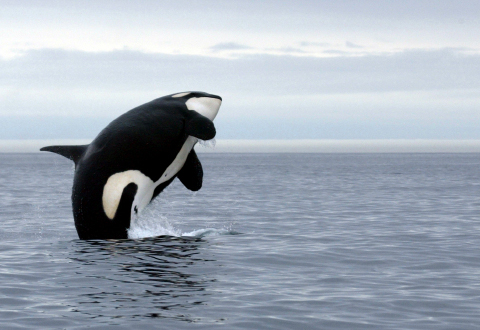
    The Woodland Caribou is on the endangered list because of the destruction of the Boreal Forests. The Golden Eagle lives in Ontario but is endangered because of loss of habitat. Chemical dumping in the ocean has put the Killer Whale on the list as well. Pollution has killed so many Spotted Turtles that they too are now on the list. Amphibians represent the largest animal group threatened with endangerment and extinction. One third of the world’s population of amphibians are threatened and, if they were to become extinct, it would be an event as epic as the loss of dinosaur life on the planet.

    A common factor in all of these creatures is the fingerprint of humanity. More must be done to protect Canada’s wildlife. In 2003 the Species at Risk Act was introduced, and yet many delays in implementing the Act have had a direct impact on threatened species. Awareness plus action is the only hope for our vulnerable, threatened and endangered species.

  • How Animals Survive the Arctic Tundra

    How Animals Survive the Arctic Tundra

    The Arctic tundra, a snowy biome that is housed within the Arctic Circle, is characterized by freezing temperatures, strong winds and permafrost. Yet, despite being one of harshest environments on earth, many animals call the Arctic home. So how do animals living in the Arctic, a place that has months of continuous light followed by months of continuous darkness, survive in such a harsh habitat?

    Only a limited number of animal species in the Arctic do not migrate or hibernate during the winter months. The ones that do brave the winter have become well adapted to the extreme conditions and are able to survive year round. Some notable adaptations include the following:

    Bigger is Better
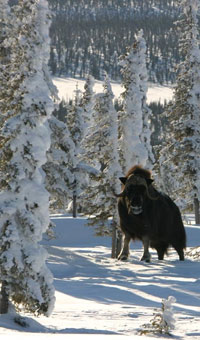
    Polar animals seem to be larger in size, have shorter limbs, denser fur and more fat and blubber than their counterparts in more temperate climates; these characteristics help reduce heat loss. It is also important to note that only larger animals, like the muskox, roam the Arctic in winter and huddle in herds to keep warm.

    Dig for Cover
    Smaller animals, such as the collared lemming, go under the snow for warmth, shelter and protection. These smaller animals dig elaborate tunnels under the packed snow and live on the roots of plants during the winter months.

    Fur Better, not Fur Worse
    As the temperature dips, animals replace their summer coats with thicker, longer coats. The snowy owl, for example, is covered in fluffy white feathers from head to toe These feathers are overlapped with more feathers to ensure the owl will remain warm in cold weather. The Arctic fox replaces its brown coat with a heavier white coat that not only keeps it warm, but also provides camouflage. The muskox grows plenty of shaggy, coarse hair that covers everything but its feet.

    Tick Tock
    A research team in Alaska studied the heart rates of two types of Arctic rodents exposed to continuous daylight, nocturnal porcupines and the Arctic ground squirrel. Despite having no time cues, the animals seemed to respond to something that provided them with regularity and allowed them to retain a normal day/night, 24-hour cycle and a biological clock. So what was the one constant factor that kept the animals’ cycle on schedule in Alaska? It was the sun, which moves overhead in a circular motion and, at midnight, is tipped to the north. The animals are aware of the position of the sun in the sky, and the nearness of the sun to the horizon can act as a clue to animals to maintain a 24-hour cycle.