Tag: budget

  • Frugally Fashionable

    Frugally Fashionable

    One of the hardest parts about being a student – especially a fashionable one – is budgeting. Some students are not always privy to the deals and steals of the trade. Just because it’s an expensive article of clothing doesn’t mean that  you automatically have style. The key to being stylish and keeping some pocket money is to pay attention to what is around you. Look at fashion and style news and look through “look books” of your favourite stores online. You will see that there are some things you can recreate for a lot less.

    For example, I took a look at my favourite fashion bloggers – yes, they wear Chanel, Yves Saint Laurent and Dolce & Gabbana – all things that I certainly cannot afford. However, I also took note of a lot of the pieces I liked the most – then went on a thrift shop day!  The biggest trend I have been noticing this winter season is over-sized wool and cashmere coats, and on my outing to Salvation Army I found the most beautiful, Italian-made, cashmere and wool coat in my size for only $7.99!

    Not stopping there, I also left with a wonderful oversized winter coat (durable, water resistant, fleece removable insulation) for $19.99 and a blue knitted sweater (originally from H&M) for $7.99. To top it off, the cashier also notified me that every Friday is half-off everything in the entire store – imagine all the savings!

    It is not hard to find frugal ways to stay fashionable, as long as you are able to recreate what you like from the runways and what suits you best. You can even find DIY fashion blogs that help you add some kick to an old thrift shop garment. You will be surprised of the results you get!

    Remember – the best way to be fashionable is to be true to yourself. No matter what you wear, you will look stylish because you are uniquely you!

  • Making Peace with Debt

    Making Peace with Debt

    Debt is a four letter word that should not be feared.

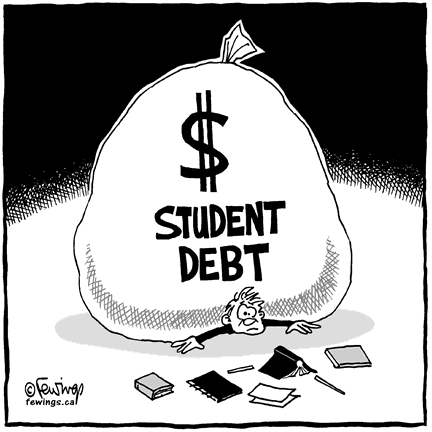
    Students who learn how to manage debt during university are paying themselves a great investment. You may be hearing horror stories of friends of friends who are paying off student loans years after graduation. Even the media pitches in and tells tales of students with debt so large that it seems unlikely they will ever pay off.

    No one wants to start out in life saddled with debt, but this could really be the best thing you do for yourself.

    Good Debt vs. Bad Debt

    A $1000 handbag or watch from your favourite designer is bad debt. $1000 towards books and supplies is good debt. Debt that goes towards something that will benefit you in the future is fine. Using borrowed money to earn your degree will only guarantee yourself a chance to earn much more than someone without a degree or diploma.

    Dr. Richard Settersten and Barbara E. Ray’s book Not Quite Adults highlights this fact, “taking on a little debt for a bigger payoff down the road is smart”. Settersten and Ray also shared Nobel laureate, Milton Friedman’s advice: people should borrow the most early on when their earnings are the smallest, save a lot when they are in their highest earning years in midlife, and then start spending all those savings after they retire.

    Be Realistic

    BMO Financial Group surveyed students across Canada and found that half believe that they will graduate with zero or less than $10,000 debt. This doesn’t quite match up with the findings from Statistics Canada, which states the average student graduates with $18,800. Be realistic when you’re borrowing money and always know how much you’ve taken out and how much you’re spending.

    Be Strategic

    Arthur Chan, who took out Canada Student Loans for fives years at Carleton University to complete his engineering degree, graduated with a debt of $21,000. He wasn’t able to find a job in his field until 8 months after graduation. Now, 2 years in a full time position with the government of Canada, that massive loan is all but a distant memory. How did he do it?

    Just because you’re able to borrow a large amount of money, doesn’t mean you have to spend all of it. Arthur lived at home during university and took public transportation everyday to keep costs low. He also worked part time retail jobs during summer vacations. When he wasn’t able to find a job right away, he applied for interest relief on his student loans. Once he was able to secure a job, he used his earnings to get rid of the debt as quickly as possible. The key is to learn how to save as much as you’re able to borrow.

    With tuition costs rising across Canada, sometimes adding everything up really discourages prospective students. Don’t let debt deter you from getting the education you want. Remember: education is a right, not a privilege.

  • Money Management

    Money Management

    If you are anything like me, you will often find yourself thinking, “Just one more small purchase won’t matter.” And if you’re even more like me, you will soon realize that maybe that small purchase did matter when you discover that your bank account is now empty. It would be silly to think that one small coffee made you broke, but when you figure out that maybe having one every day is a little excessive, you have the first step toward money management down: awareness.

    Take stock of your funds. Figure out how much you will earn each month, and write it down. Next, find a little notebook and start keeping track of everything you buy. Write down where you bought it, on which date, and how much you spent. This serves the purpose of telling you where all the money goes. It might even serve the extra purpose of telling you that you have a caffeine addiction, and maybe you should cut back a little. Starbucks four days in a row, five dollars each time? There are twenty dollars, gone. Kind of scary, isn’t it?

    Keep that spending diary for three months so that you can get a good idea for the average you spend on each kind of purchase. Doing so will then assist you to start making changes in your lifestyle: this is where you have to start limiting yourself and have self-control.

    Trust me; I know it is not easy to break a spending habit. When you do something so often that it becomes routine, breaking that routine throws off the rest of your day. That being said, it is now time to break out a coloured pen or highlighter. Circle or highlight every habitual purchase you made in the last three months, and calculate the total cost. Then think of how many hours it took to earn that money. A little sobering, right? Once you realize that your time equals money, it becomes a lot easier to make good decisions regarding your spending.

    Now that you have figured out what you can cut back on, it is time to make a budget. Figure out the main categories your purchases fall under. For some, those might be their cell phone bill, car payments and gas, entertainment such as movies, music, and video games, going out to eat, savings, and so on. Certain bills will always remain the same, such as car payments and your cell phone bill. Some put 10% of their entire paycheque into a savings account which they do not use under any circumstances. With everything else, though, allocate a certain percentage of your remaining funds to each category.

    For example: let’s say that you make $750 per month. 10% of that is $75 which goes into your savings. Your car insurance payment costs $100, so now you have $575. Your cell phone bill costs $50, and the remainder is $525. Now you can assign a percent to everything else. You may calculate it so that you have extra money left over for emergencies or unexpected nights out. As long as you never go over your allotted limits for each category, then you won’t find yourself with an unexpectedly empty bank account again.

  • The Dangers of Student Credit Cards

    The Dangers of Student Credit Cards

    For many young people, the temptation of their first credit card is too much to resist. That is why credit card companies will often set up booths on college and university campuses across Canada to tempt you with free gifts and low interest rates for signing up with them. While credit cards can be an excellent way to build your credit rating, the responsibility that comes with owning one cannot be overlooked.

    When I first entered college, I saw a booth on campus advertising free NHL hockey blankets for signing up. Not only that, but acceptance was virtually guaranteed. For someone fresh out of high school, a credit card makes you feel important and like an adult. Being able to use it whenever you want to buy clothes, electronics, make-up and more is a thrill. The thrill will soon wear off when you realize that you have used up most of your credit limit in only a few months and have no way to pay it off.

    Credit cards should not be taken lightly. While the company may advertise an interest rate of 1.99%, this is often only an introductory offer and the rate will skyrocket to 18% or higher after your first month. This means, on a $100 purchase, you will be paying $18 in interest directly to the credit card company. Over several months of not paying off your balance in full, this quickly adds up. Soon you will owe hundreds of dollars that you didn’t even spend!

    If you do decide to sign up for a credit card, there are several things you can do to reduce the temptation of overspending. The first, and most important, is to make sure you have the funds needed to pay off your balance before you even use your credit card. Paying off your balance in full each month is an excellent way to build a credit rating, as you are showing the bank that you are responsible and have a steady income. The second is to leave your credit card at home and do not carry it with you in your wallet. This tactic helps to eliminate the temptation of overspending and using the card for purchases you do not need.

    Of course, there is always online shopping. Online shopping should only be done when absolutely necessary (for Christmas gifts, for example). It is also advisable to get a credit card with a low credit limit – $1000 should be your absolute maximum. Anything higher and you run the risk of using it frivolously.

    Credit cards can be an excellent tool for building your credit rating and establishing yourself, if used responsibly. If you decide to sign up for a credit card, ensure you take the steps outlined above to reduce overspending and, ultimately, reduce your stress level. After all, who needs extra stress during exams?

  • Your Credit Rating Begins Now

    Your Credit Rating Begins Now

    You begin to establish credit the day you get your first credit card, apply for a student loan, or sign a contractual cell phone plan. How you handle the credit afforded to you has a direct impact on the products and rates offered to you for years to come.

    What is a credit rating?
    Your credit rating is a measure of responsibility. It demonstrates to banks and other lending institutions that you’re consistently able to pay your minimum balance on time. Your credit score represents a track record, and where you’re at now.

    The strength of your credit history is what determines if you qualify a credit card, a loan, or a mortgage, and can affect the interest rate you’re offered. If your credit rating is low, you will be deemed high risk, and the interest rate will be much higher, if you’re even offered credit.

    How do I establish credit?
    For new or young borrowers, this can be challenging, if you don’t have any credit history.

    Some lenders will allow someone with an established credit history, such as a parent or guardian, to co-sign a credit application with you. Though remember, this means that both parties are responsible for timely repayment. If your mother co-signs your credit card application, and you fail to pay, this will negatively impact both credit scores.

    Most credit cards are unsecured, meaning you haven’t put down a deposit or secured it against property. However, if you don’t have any credit history, you can look into getting a secure another option is to apply for a secured credit card, where you have collateral backing up the line of credit. Often this is a deposit, which will be returned to you when you cancel the card. Some secured cards carry higher interest rates and have fees associated with them.

    What affects your credit rating?
    Consistently paying down credit on time, at least the minimum balance or more, builds or maintains your credit rating. Each late, missed, or incomplete payment negatively affects your score. Regularly miss or make late or incomplete payments, and this could negatively affect your credit score for years.

    Your credit score is also based on the length of time you’ve maintained a credit account with a lender, and how long that account has been in good standing.

    Credit reports only track funds that you’ve borrowed. They don’t include information about whether you pay your bills or rent on time.

    How do I maintain good credit?
    Always pay your minimum monthly balance on time. Better still, pay more than your minimum balance, and pay it early, as it can take a few days for transactions to clear.

    Each time you apply for credit, it shows up on your credit history. Requesting too much credit in a short period of time can lower your score.

    Request a credit history from Equifax or TransUnion annually, and review the report. If you find incorrect information, contact Equifax or TransUnion immediately so they can begin the dispute resolution process.

  • Tips for Scoring a Scholarship

    Tips for Scoring a Scholarship

    Let’s get real. Post-secondary education is expensive and very few people have thousands of dollars casually lying around the house. Most of us are in search of cash — the type that you don’t have to pay back. In other words, we’re all searching for those illustrious scholarships. If you’re new at this whole “applying-for-scholarships-because-I-need-money-to-pay-for-school-which-suddenly-isn’t-free-anymore” thing, then you’ve come to the right place.

    Here are seven helpful tips that could help you score some extra cash!

    1. You do not get scholarships for simply existing. Almost every scholarship application that you come across is going to inquire about your extracurricular activities and community involvement. You need to do something, be a part of something, or participate in something. You don’t necessarily need to be the three-time reigning champion of every competition you compete in, or the newly-elected President for every fancy club that you’re a part of. You simply need to get out there and participate.

    2. One of the hardest parts of getting free money is finding free money. Luckily, there are people who dedicate themselves to doing it for you! Make sure to check out websites like Scholarship Canada. They have information on hundreds of scholarships— both large and small. Also, take a glance at your school’s website. The majority of Guidance Councillors will actually post a list of scholarships that they’ve come across. But don’t stop there. Go the extra mile and go digging through the websites of other schools. You’re guaranteed to come across a fresh new list filled with new opportunities.

    3. Keep your eye out for obscure scholarships offered by smaller organizations. This may require an advanced Google search and some serious digging but this very well might be the key to your first scholarship. Most students set their targets on big scholarships offered by well-known companies. There’s no harm in applying for those, but your chances quickly diminish when you’re facing so much competition. However, with the lesser-known scholarships that might be sitting on page 17 of a Google search, your chances of standing out in the significantly smaller crowd are far higher.

    4. Your best bet to scoring a scholarship is to apply to as many as possible. This may sound frighteningly obvious but you would be surprised by how many people lay all of their eggs in one basket. Yes, it’s time-consuming and painstakingly tedious but you need to apply, apply, and apply some more!

    5. If a scholarship application sounds too long, too boring, or too overwhelming, there’s a pretty good chance that other students are going to think the same thing and avoid it all together. This, of course, means that you should go ahead and do it! The more tedious the application is, the less competition you’re going to have. So suck it up and get writing!

    6. Never lie. Don’t lie about your qualifications, achievements, activities, awards, or anything of the sort. Just don’t! If you get caught, you’ll suffer from third-degree embarrassment and, even worse, you may sever some really important connections.

    7. Most organizations will release profiles of the previous year’s winner. Take a look at those to find out what kind of people they’re looking for. This might give you some ideas on what to include in your own application.

  • September Scholarships of the Month – Apply Now!

    September Scholarships of the Month – Apply Now!

    Preparing to enter college or university next year? Applying for scholarships now ensures you are ahead of the curve! Many scholarships and bursaries take applications well in advance, so students will be able to budget their scholarship prize money into their school finances. There is a scholarship for everyone, so don’t hesitate to apply. After all, every little bit helps when it comes to paying for your college education!

    1. Tronia Systems Scholarship – for students entering their first year of university who demonstrate an involvement in their community. Amount: $1000. Deadline: October 4, 2013.

    2. Larry Campbell Milton Memorial Scholarship – for current 4-H members planning to attend a Canadian University in a Food Science, Meat Science or Animal Science discipline. Amount: $2500. Deadline: October 23, 2013.

    3. AgriVenture 4-H Adventure Opportunity 2014 Scholarship – for 4-H members from every province that will be traveling with AgriVenture within one year of award. Amount: $3000. Deadline: November 1, 2013.

    4. Study and Go Abroad Fair Scholarships – open to students from across Canada in any field of study. Amount: $1000. Deadline: September 28, 2013.

    5. Canada’s Luckiest Student 2 – open to Canadian high school students and post-secondary students who are 16+. Amount: $30,000. Deadline: January 23, 2014.

    6. The National and Arbor Scholarship Program – by nomination from your secondary school, based on overall grades. Amount: $35,000 – $50,000, based on tuition needs. Deadline: November 8, 2013.

    7. Communications Nova Scotia Diversity Bursary – for Nova Scotian students from designated groups (Aboriginal Peoples, persons with disabilities, African Nova Scotians, racially visible people) enrolled in a post-secondary education program. Amount: $1000. Deadline: October 31, 2013.

    8. UBC Entrance Award – for students entering their first year of studies at UBC in 2014. Amount: up to $40,000. Deadline: January 31, 2014.

    9. Peter Corley Memorial Scholarship – candidates must be a member of SAC, have made at least one solo glider flight in the 12 month period preceding the application, and be attending a university or community college full-time or be accepted and scheduled to attend within six months of the date of the application. Amount: $2300. Deadline: October 1, 2013.

    10. Jump Canada Bursary – for students who are active members of the Equine Canada community. Amount: $2000. Deadline: September 30, 2013.

  • Tips on Student Finances

    Tips on Student Finances

    1. Start planning your finances early. Figure out how much money you’ll need as soon as possible (tuition, ancillary fees, books and supplies, living expenses) so you’ll know how much financial support you’ll need. Include a realistic monthly budget for transportation, laundry, groceries, toiletries, entertainment, rent, etc.

    2. Use free money first if you have access to it (money from parents, money saved for your education including RESPs, scholarships and bursaries, etc.). If you need to borrow money, use low interest or no-interest options first, with OSAP being the best example. If you need to borrow money on top of that, try and get a cheap student loan. Stay away from credit cards if you can.

    3. Check out the OSAP Access Window at http://osap.gov.on.ca. The OSAP Access Window was developed by the Ontario government to help students make informed decisions when planning for their post-secondary education. It provides approximate costs by post-secondary institution, OSAP funding estimators, repayment tools and lots of other useful information.

    4. Explore early the scholarships, awards and bursaries offered by the university. There may be some program-specific or special interest awards that you may be eligible for. Many scholarships, awards and bursaries have deadlines and require applications.

    5. Don’t miss an application deadline. Include deadlines for financial support applications in your calendar and make sure you apply in time to be considered.

    6. Investigate getting a job as a source of income. If you need to work, work as much as possible in the summer period, rather than during the school year. If you need to work during the school year, try to avoid working a great deal in your first semester or in any semester that you expect to be particularly challenging. If you expect to be pressed for cash, consider postponing your studies for a year and saving some money, or consider reducing your course load from five or six courses to three or four courses per semester.

    7. Look into various means of saving money:
    • Brown bag it. Packing your own lunch is cheaper and healthier.
    • Buy new to you. Whether it’s used books, secondhand clothing or garage sale furniture, you can find what you need at a fraction of the cost.
    • Shop online to browse, create budgets, compare prices and take advantage of online savings.
    • Take advantage of student discounts. Be sure to flash your student ID at entertainment venues, on public transportation and anywhere else that will take it. Check out special deals through your student union.
    • Pick up the free weeklies to see what entertainment is going on in the city for free. Also check out free events hosted by the university.
    •Maximize public and active transportation (walking, cycling) to keep commuting costs down.
    • Avoid the latte effect and buy a coffeemaker or a kettle to make your own.

    8. Resist the temptation to sign up for a student credit card. If you end up falling into the “this-is-my-only-credit-card” crowd, make sure you get one with a low interest rate and ask them to fix the credit level at $500. Then be sure to use it only for emergencies. When credit cards are the only accepted methods of payment, as in online transactions, save the money you will need before you make the purchase. Then pay off your credit card immediately after charging it.

    9. A line of credit typically has a much lower interest rate than credit cards. A line of credit can be a cost-effective, convenient way to borrow money for a short period of time. Most financial institutions have a student line of credit that offers a lower interest rate, no annual fee and fairly lenient terms and conditions.

    10. Monitor your expenses. Keep all your receipts and track your expenses. This will force you to write down how much you’re spending, prompting you to think about whether you really need to spend that money or not. This will also definitely let you know if you need to change your spending habits and/or increase your income before it’s too late.

    11. If you find you’re running into financial difficulties, immediately speak to a student financial assistance advisor on campus or at your bank. They will look at your budget and give you some good advice before you get in over your head.

  • August Scholarships of the Month – Apply Now!

    August Scholarships of the Month – Apply Now!

    Just because it’s August doesn’t mean you should not be applying for scholarships and bursaries. There is always something out there – so go get that free money!

    1. SecureReset Fall 2013 Scholarship – Open to all students. Amount: $300. Deadline: November 1, 2013.

    2. CrossLites Essay Scholarship – Open to all students. Amount: $2000. Deadline: December 15, 2013.

    3. Ipsos i-Say Survey – Open to all students. NOTE: This is a contest. Amount: $5000. Deadline: None listed.

    4. Equals6 Top-Talent Scholarship – July-September 2013 – Open to all students. Amount: $250. Deadline: September 30, 2013.

    5. Bill Kehler Memorial Awards– For students pursuing Broadcasting or Agriculture. Amount: Four awards worth $2500. Deadline: August 30, 2013.

    6. Justice Centre for Constitutional Freedoms Essay Contest – Open to students commencing studies in September 2013. Amount: 1st Prize $1,000, 2nd prize $500, 3rd prize $250. Deadline: September 1, 2013.

    7. Tronia Systems Scholarship – Open to students enrolled in an Agribusiness program (or related field). Amount: Two worth $1000. Deadline: October 7, 2013.

    8. CBC Literary Prizes – Open to Canadian citizens who submit original, unpublished writing. Amount: $6000, secondary prizes worth $1000. Deadline: Open for submissions on September 1, 2013.

    9. Terry Fox Humanitarian Award – Open to all students across Canada pursuing their first undergraduate degree. Amount: 20 awards worth $7000. Deadline: February 1, 2014.

    10. Jeremy Dias Scholarship – Open to all students. Amount: Varies depending on need. Deadline: August 15, 2013.

  • Grants for Students with Disabilities

    Grants for Students with Disabilities

    Am I eligible?
    You are eligible if you:
    – apply and qualify for a Canada Student Loan;
    – are enrolled in a full-time or part-time program (minimum 32 weeks) at a designated post-secondary institution;
    – meet the criteria for students with permanent disabilities; and
    – include one of the following with your loan application as proof of your disability: a medical certificate, a psycho-educational assessment, or documentation proving receipt of federal or provincial disability assistance.

    What’s available?
    $2,000 per academic year (August 1 to July 31).
    This grant is available for each year of post-secondary studies, provided you continue to meet the eligibility criteria. This includes post-secondary studies beyond the undergraduate level. Grant money is issued by your province or territory of permanent residence at the beginning and in the middle of the school year.

    Since grant amounts are fixed, the amount you receive may exceed your assessed need.
    Example: If you qualify for the grant and you have an assessed need of $1,400, you will receive a $2,000 grant. In this case, the grant would cover your assessed need, so you would not need a student loan.

    How do I apply?
    The application process for this grant differs in each jurisdiction. To make sure you meet all the application requirements, contact your province or territory’s student financial assistance office.