Tag: budget

  • Managing Your Money Wisely

    Managing Your Money Wisely

    It’s not fun being broke and it’s definitely not fun living paycheque to paycheque! Learning how to manage money wisely is a skill that should be taught in school. Unfortunately, most students aren’t taught this skill in school or at home and, as a result, rack up a lot of debt by the time they enter adulthood. If you want to learn how to manage your money wisely and avoid getting into debt, here are some simple rules to keep in mind:

    1) Don’t spend more than what you have – It sounds so simple, but you’d be surprised at how many people don’t follow this logic. So I’ll repeat it again – don’t spend more than what you have. Or, more accurately, only spend what you can afford. For example, if you only have $100 in your bank account, don’t go out and buy the latest iPhone for $800. If you really want to get a brand new iPhone, then save up $800 for it. It may sound painful, and it may feel like it will take you an eternity to do so, but doing this will actually save you money in the long run!

    2) Use cash – Why? Because when you use cash you can only spend what you have (see rule #1). So if you only have $100 in your bank account, you are only going to have $100. Using cash keeps you in check. It’s a good idea, too, to keep your receipts and write down what you spent your cash on so you know where the money went.

    3) Avoid credit cards – Some people cannot handle credit cards. The act of swiping or tapping a card to pay for purchases means that some people use their credit card to pay for things they can’t afford (thereby breaking rule #1). This means that when the credit card statement arrives a few weeks later, they are only able to pay the minimum payment required and end up incurring interest charges; interest charges which are ridiculously high — 19.5% and higher! Paying interest on credit cards actually costs you more in the long run. You end up paying much more than the original cost of the item you bought. For these reasons, stay away from credit cards! If, however, you do insist on having a credit card, then at least make sure you can pay off your statement in full (i.e. don’t spend more than what you have)!

    4) Put aside money into a savings account/emergency fund/rainy day fund – Life is unpredictable. You never know when you will need to have some extra money in your account for expenses you didn’t foresee. For example, let’s say your car badly needs a $200 repair job. Do you have some money saved up to pay for the repair and still pay the rent? What if you fall sick and can’t go to work for a few weeks – do you have some money in your bank account to tide you over until then? Put a little money aside from your paycheque each month into a savings account or other emergency fund. Do not use the money in this account unless you have to! The best part is that if you keep putting money into this account and don’t touch it for a while, your savings will actually grow thanks to interest! Your money can earn you money without you having to do anything. (In this same way, a credit card statement not paid in full can incur interest charges that will cost you more in the long run.)

    Following these 4 simple rules will allow you to manage your money wisely and avoid getting into debt. Good luck!


  • May Scholarships of the Month – Apply Now!

    May Scholarships of the Month – Apply Now!

    It’s difficult to believe, but May is already upon us. Chances are you’ve already applied to – or are about to apply to – your post-secondary schools of choice. But what about your finances? Don’t put off thinking about them! Student loans certainly are not your only options when it comes to paying for your education. Scholarships and bursaries can be found in droves – you just need to go out there and apply for them! Check out some of the great scholarships we were able to find for this month!

    1. 2013 ECO Canada Scholarship – For students entering any field of study at any school across Canada. Amount: $2000. Deadline: May 21, 2013.

    2. The Kitchener Sports Association Scholarships (KSA) – For students living in Ontario entering any field of study in any school across Canada. Amount: $2000. Deadline: May 21, 2013.

    3. Education Awards for Brain Tumour Survivors – For students across Canada entering any field of study in any school, who are survivors of a pediatric brain tumour (diagnosed with a brain tumour before the age of 18). Amount: $5000. Deadline: May 17, 2013.

    4. MyUnited Student Award – For students living in Ontario entering any field of study in any school across Canada. Amount: $3000. Deadline: May 17, 2013.

    5. ACLS Foundation Geomatics Scholarship – For students across Canada entering a Geosciences/Geological and Earth Sciences program at any school. Amount: $1500. Deadline: May 15, 2013.

    6. Brock University Council of International Schools CIS Scholarship – For international/Visa students entering their first year of study in any program at Brock University. Amount: $3000. Deadline: May 15, 2013.

    7. Credit Valley Horticultural Society Scholarship – For students in any field of study at the University of Guelph. Amount: $1000. Deadline: May 15, 2013.

    8. The Dr. John M. and Regina Riffel Entrance Bursary – For students in any field attending Campion College in Regina. Amount: $750. Deadline: May 15, 2013.

    9. The Epilepsy Association of N.S. Memorial Scholarship/Bursary – For students from Nova Scotia, Prince Edward Island and New Brunswick who have been diagnosed with epilepsy. Amount: $500. Deadline: May 15, 2013.

    10. Lupus Canada Scholarship – For students across Canada entering any field of study at any school who have been diagnosed with Lupus. Amount: $1000. Deadline: May 15, 2013.

  • Doing Scholarships the Right Way

    Doing Scholarships the Right Way

    Like getting a ton of free money? Of course you do!

    Those lines might sound like the beginning of an un-reputable online advertisement, but the truth is there are plenty of scholarships aiming to do just that – hand you free money to support your education.

    So how do you score some of this free cash? Start by applying to any and all scholarships that you can. The more you apply to, the higher your odds of receiving an award.

    If you’re not sure of your eligibility for a scholarship, apply anyway. Many scholarships are not given out due to lack of applicants. Even if your eligibility is hazy you may be the lucky winner by default. This was the case when Sandro Rocco, Niagara College Photonics alumni, applied to the Walker Technology Grant.

    “I wasn’t entirely sure if I qualified but I thought – why not give it a shot? A lot of people don’t bother,” he commented.

    “It turned out I was the only person to apply for the scholarship so I won. The award was really helpful and got applied directly to my tuition,” Sandro continued.

    Some students shy away from scholarship applications because they feel their grades aren’t high enough. However, plenty of scholarships are handed out as a result of achievement in other areas, including extracurricular involvement, athletics or charity work. Financial aid and area of interest are also taken into consideration when handing out scholarships.

    Take time out of your schedule to make great applications. Prioritize and spend time on scholarships that are most applicable to your skills and experiences.

    Remember that scholarship application is not limited to your first year of studies. Many students stop applying after their first year thinking that the majority of scholarship funding is reserved for new students. This is not the case, as many awards are reserved for students in their second, third and fourth year of studies.

    Students are sometimes intimidated by the amount of work involved in applying to scholarships, but by using an incremental approach and developing decent time management (yes, it is possible) you will be able to handle the stress and hopefully reap the benefits of scholarship application.

    Many online scholarships allow you to save your work in their own word processors, making it easy to finish one or two parts of the application at a time.

    Having a stock application template done in advance is another easy way to save time and minimize stress while scholarship hunting.

    Have a thorough list of your skills, past experiences, awards and academic achievements on hand as part of your application template. This go-to list will make a world of difference in the quickness of your application process.

    Also, prepare a general and flexible essay that highlights your personal qualifications and that can be tweaked to fit specific scholarship criteria.

    Keep your audience in mind when filling out applications.

    If you are applying to an academic scholarship, be sure to use academic language and keep the tone of your writing as professional as possible.

    In contrast, some scholarship review panels are looking to see a more personal response. For these, don’t be afraid to use a less formal language and be sure to highlight your own opinion, giving judges a better understanding of your personality.

    Just like that summer job, it is never too early to start the search for scholarships! So good luck and happy applying!

  • The Cost of Education

    The Cost of Education

    Don’t let college and university be a costly mistake.

    Avoid the lure of a big paycheck for a diploma or degree that you really don’t love.

    It’s hard to make a decision at the tender ages of 16 and 17 regarding the career you’ll have for the next 30 years. Yet this is what parents, teachers and guidance counselors are hoping you would do when it’s time to apply for post-secondary. A Gallup and Sallie Mae survey titled How America Pays for College found that more than half of high school seniors spent more time planning for prom than thinking about university.

    CBC reports that the average cost of tuition in Ontario rose 207% from 1990 to 2007 – it would now cost Ontario students $5,160 a year. It’s the cheapest in Newfoundland and Labrador at only $2,606, and the most expensive tuition fee goes to Nova Scotia where students fork over $6,571.

    With tuition fees on a meteoric rise, pressure is placed on the students and often for the wrong reasons. Parents who are weathering the recession and stock market crisis may advise their son or daughter about choosing professions that offer stability and a large paycheck. Accountant? Programmer? Nurse? Sure, they all sound interesting – why not give it a try?

    Valentina (not her real name) started off going to university to pursue a Bachelor in Public Administration. It became evident that this really wasn’t for her. She then tried switching into Pharmaceutical Studies, only to finally graduate in Sociology. A year after receiving that degree, she enrolled in college for Event Management. Still unhappy, she is now halfway through an Optician program. She feels confident that she has found her true career and even landed a student optician position during her studies.

    College and university can be very expensive, especially if you’re still unsure of what you would like to do. Not everyone can afford to switch around majors like Valentina did. It’s worse still if you stay in a program that you know you’re not suited for. Erica Cervini’s recent article for The Age found that, “If students don’t feel they belong to their university, the odds are high that they will drop out”. The greatest price to pay for education is an incomplete one.

    It’s okay to take your time and not rush into university or college when you’re not sure of what you would like to do. Volunteer during high school, talk to other adults, explore sites like JobsPeopleDo.com or even consider taking a gap year to think about what would you be happy to do. Treat your future career like finding your soul mate. If you meet a big shot executive who makes loads of cash, would you be with him/her if your heart just isn’t into it?

  • Can Anyone Get a Scholarship?

    Can Anyone Get a Scholarship?

    Sometimes when we are thinking about who does and doesn’t get a scholarship, we begin to hypothesize that it is only “brainiacs” who get them. We start thinking that you have to be a genius and exceptional in some way in order to get your hands on one of these monetary gifts. This is entirely false! You don’t actually have to be exceptional in any capacity to get a scholarship. In fact, the most important things are to be dedicated, persistent and organized. If you set goals at the beginning of the year, and put in consistent effort to achieve these goals, there is no reason why you shouldn’t be able to land yourself a scholarship. In this situation, we must refer ourselves to the SMART goals formula. We want to set Specific, Measurable, Achievable, Realistic and Timed goals. By setting goals before the time starts to perform, we are able to really get down to work without getting distracted or forgetting what it is that we are doing.

    An example of a SMART goal related to getting yourself a scholarship is to fulfill all the requirements by the end of the year. This is a smart goal because it specifies exactly how many of the requirements you want to fulfill – all of them. It is measurable because you are specifying how many requirements you want to fulfill – you can count them. It is achievable and realistic because you have read through the requirements and know that you are able to do what is asked. Finally, it is timed because you want to fulfill all of the requirements by the end of the year. When we set goals in advance, we are better able to tackle the requirements ahead of us. We know what we want and we can work steadily towards attaining that end.

    An important thing to keep in mind with goals and getting scholarships is that there will always be setbacks whenever we are attempting to achieve anything. If you think that it will be easy and a piece of cake, you are probably kidding yourself. There will be times when you will want to give up, and it is at these times that you need to remember to persist and, if necessary, make some changes. There will also be setbacks which can come in the form of failures and/or losses. This is a natural part of the process and the important thing is to keep on going, stay committed to your goals and try for the best outcome.

    Getting a scholarship is like playing soccer. Think of yourself as the lead forward; You are trying to score as many points as is possible. You may set a goal to get 8 goals, and you will try as hard as you possibly can to get 8, but if you end up with 6 or 7 you will still have done a great job. The important thing to remember is that setting goals before we begin a task will help enormously to secure a positive outcome. Good luck!

  • Money Management

    Money Management

    Times are rough and life will throw you costly curve balls. You need to know how to manage your money and maximize your saving skills so you are ready for any financial emergencies you may have to face.

    If you’re receiving any kind of financial help, you may be thinking, “I don’t really need to worry, I have help if something were to happen”. The truth is these options may not always be there. Learning how to fend for yourself will make costly times a lot easier to handle and give you a rewarding sense of independence. So let’s get to it by prioritizing where your money goes:

    Housing and Rent
    Food
    Transportation
    Credit and Banking
    Utilities and Telephone
    Health Care
    Pets
    Recreation

    Housing and rent. If you’re working, a good way to budget yourself would be to split your paycheques up to make sure you’ll have your rent ready for the end of the month. If you get paid bi-weekly, every two weeks split your rent into two and save that amount from each pay. So if your rent is $500, save $250 per pay. This is a safe way of ensuring you are saving for rent and can also budget for other things during the month.

    Transportation. Take advantage of bus tickets and bus passes depending on the amount of traveling you do and try to be productive in your travels. If you drive, that applies to you too. Make a plan before you leave and go from point A to point B strategically to save gas. If you’re one of those good people who are always giving lifts to your friends, it’s okay to ask your friends to pitch in a bit of gas money from time to time. Give them the opportunity to be a good friend, too.

    Credit and banking. Bank fees aren’t too bad these days (especially if you are a student) – it’s your credit card you have to be frugal with. Having a credit card at such a young age is one of my biggest regrets. Ince you have got yourself into credit card debt, its really hard to get out. We are living in a material world and it is very tempting to go shopping and buy things we really don’t need and could very well live without. Try your best to be smart in these times. Credit cards are for emergencies only – you don’t want to have to use them unless you really need to.

    Health care. In Canada we are lucky that most things are covered by our government health plan. But some things may not be, such as dental appointments. Many post-secondary institutions offer health plans with your tuition to help cover these types of costs. If you are under a certain age, you may still be covered by the health plan your mom or dad has through their employer. Be sure to check into both of these options.

    Utilities and telephone. Be energy smart: if you don’t need a light on, turn it off. If you don’t need the water coming from the tap, turn it off. I admit I used to leave the water running while I brushed my teeth for three minutes. Once I stopped doing it, I saw a huge difference in my utility bill just from not running my water senselessly for six minutes a day. As for your cell phone, there are plenty of good plans out there – but also plenty of rubbish ones. Make sure whatever plan you’re choosing is really working for you and that you’re not paying any more than the amount you agreed to. If you are, it is time to change your plan or service provider.

    Pets. Dogs and cats are adorable, I know. We all see them and instantly want them. But if you’re in school and working, you usually don’t have time for them. They are costly and require their own food, medical attention, and grooming. Make sure you’re making the right decision for you AND your furry loved ones.

    I hope this has given you a bit of an eye-opening incentive to be smart with your spending so you can live a less stressful life and be ready for any sudden expenses that might come your way. Happy saving!

  • Being Happy On a Budget

    Being Happy On a Budget

    Do you want to be rich or poor after you finish school? You might think the answer is obvious. Very few people actually choose to be poor. Being poor means constantly being careful about money and often giving up a lot of things you might want. It means living on a limited budget, but it doesn’t have to mean the end of fun.

    Most people have to live on a budget at some point in their lives. These days even highly educated people, who have traditionally earned high incomes, often have to survive on very low salaries in positions such as fast-food servers or cleaners. In difficult economic times, it can be hard to make enough money to pay the bills. In that case, how can you ever earn enough to have fun?

    Even on a tight budget, however, life doesn’t have to be bleak. With creativity and careful planning, you can still have fun even while watching your pennies. The most important thing when you design your budget is to remember what’s important to you and to plan around that. After you pay for the basics like housing, food, and clothes, you have to decide how to spend or save the money you have left.

    How you spend money depends on your situation and what you consider important. Living with your parents or with several roommates can help save a lot of rent money, or you can look after other people’s houses. If you live on your own, learning to like inexpensive foods like beans and lentils can help cut down on your grocery bills. Using coupons, looking for sales, and buying food in bulk can also help. If you find interesting recipes and know how to use spices, you can make good food without spending a lot of money. You can also allow yourself to have an occasional steak or restaurant meal to make it easier to stick to your budget.

    Entertainment can still be part of life on a budget. Instead of going to the movies on Friday evenings, you can spend time at a park or the zoo or attend a free cultural event like a concert. You can make gifts for people instead of buying them and you can turn a trip to the dollar store into a fun outing with friends. You can share your belongings with others and borrow from them, and maybe make new friends at the same time.

    Learning to live on a budget might even help you get a good job. Employers who are looking for people to manage budgets, for example, might be impressed if you know how to get the most out of a small amount of money. The leadership and cooperation skills you learn while living on a small amount of money might also be valuable. Even if that doesn’t work, you can still use the skills you’ve learned throughout the rest of your life.

    Living on a budget doesn’t have to mean the end of fun; it can be a beginning of something new and exciting. With creativity and determination, you can make a low income work for you.

  • Cash Advance Loans and Students – A Dangerous Mix

    Cash Advance Loans and Students – A Dangerous Mix

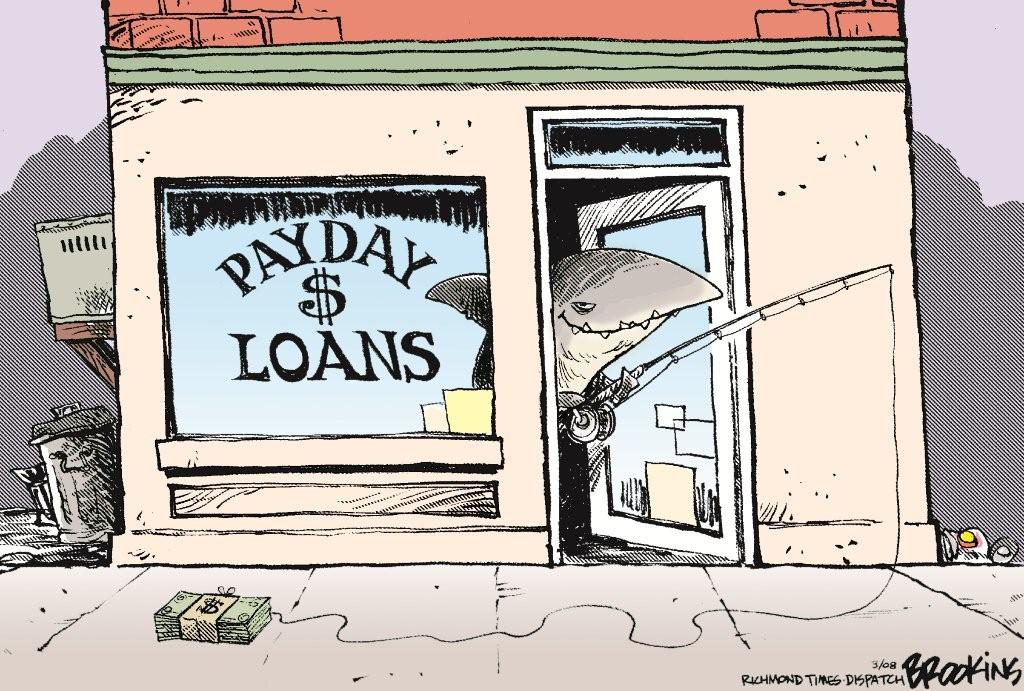
    Are you a college student wondering how online cash advance/payday loans fit into your finances? If you are a smart college student, then you will know online payday loans are only for emergencies. The payoff comes in just a few short weeks, so steady income is a must in order to pay it off without putting more damage into your finances.

    Here are five tips for college students who are looking to get their finances off on the right foot.

    1. Take your time getting new credit. For every creditor you apply with, there will be a mark left on your credit score. Hard inquiries to your credit done by potential creditors looking up your history will take a few points off your score for a year or two at a time. When your finances are just starting, this could bring you low really fast. Low credit scores will be denied. Too many creditors applying at once is also a warning sign for potential creditors that the applicant is desperate for cash. New creditors may take a different approach and offer incentives for the new debtor to spend more. A college student is an easy target for many marketing campaigns. Newcomers to finances are often attractive to reward programs which can trap the debtor into spending more than intended.

    2. Don’t spend your credit on frivolous things then leave yourself no room for emergency costs. Emergency costs do not need to be funded by online cash advance loans when you have room on your credit card to lighten the load. When you use and manage your credit account wisely, they are a great source of third party money to help you get by and build your credit at the same time. Make your payments on time and keep the balance below 30% whenever possible.

    3. If you are having trouble finding a creditor to approve you, you can fall back on being an authorized user on one of their accounts or have them be a co-signer to start you out on your own. The issue here is that your parents, or whomever you choose as your co-signer, will be responsible for any debt you accrue. They will also be privy to what you charge, when you charge it and where. This may not matter to some people but if you are one who may not be the best manager of money, it could be a sticky point in the relationship. If you are going to take this route, make it work for you so your credit will build into something helpful when you graduate.

    4. Are you coming out of college and are finding your student loan debt to be financially draining? Don’t default on these loans. The federal government is not a creditor you want to have after your money. Before you miss a payment, look into finding a way to defer the starting date if you still have not gotten full-time work. Ask about reduced payments or changing your payment dates to better fit your pay cycle. If you have multiple loans, try to consolidate them for a lower monthly payment. Managing your money by making on time payments may best be done with automatic payments. Some people are not organized enough to make on time payments even when they have the cash in the bank.

    5. Look into your options, which include deferring payments for a short amount of time, making reduced payments, or re-configuring your current payment schedule. Also consider consolidating multiple loans into one new loan. This often results in a lower monthly payment. Have the loan amount directly withdrawn from your bank account so you never pay late.

    Cash advance loan lenders offer emergency cash for those times when there is no other place to turn. College students often do not have the income needed to support an approval. A responsible lender will not want loan to someone without a certain income. College students have it tough in the beginning but will have great financial success when managed correctly.

  • Earning An Academic Scholarship

    Earning An Academic Scholarship

    With rising costs of education, the competition for academic scholarships is increasing, too. Paying for your education through a scholarship you earn is an impressive way to study. You don’t need to be a “genius” in order to secure a scholarship for your education. All you need to do is search for sources and apply at the right times to the right places. There are numerous organizations that work to ensure that the people who actually deserve a chance, get it. However, if you’ve never applied for a scholarship before there’s a chance that you do not know where to begin. This article is meant to give you some tips that should make your basics clearer.

    •There are college scholarships and grants that could be anywhere between a few hundred dollars per semester to those that cover all your education expenses. If you manage to get a complete scholarship it would cover your boarding and tuition fees and even cover the costs of your books.

    •There are a few scholarships that are only available to selected schools. Before you take up admission in an educational institution, make sure that you check out the various kinds of scholarships as well as the different kinds of expenses they cover.

    •So as to increase the probability of being selected for a scholarship in the educational institution of your choice, and in the course you prefer, apply at all the places possible.

    •Use all sources of information. It is really important to find the right information at the right time. Use all search engines available to you!

    •Make sure you read the fine print before you sign up for anything. There are various kinds of assistance, including loans:
    1.Some student scholarships are merit based and may be totally free.
    2.Some scholarships need to be repaid without any interest accumulating on the principle amount.
    3.Some companies dole out merit based scholarships which are actually contractual in nature – these imply that you will work for these companies once you have finished your education. There may be a bond period specified, after which you are free to join other companies.

    College scholarships, grants, and fellowships are available from federal, provincial and private organizations for students in undergraduate and graduate degree programs and vocational and technical schools. There are also scholarships for high school seniors available for those just entering post-secondary education. There are even scholarships and grants available to students for primary and secondary education.

    Whatever reasons you may have to apply for a scholarship, whether it is to re-enter educational studies, to advance your career, to change careers, or to re-enter the work force, you have the right to apply for a scholarship. Some funding organizations may require you or your family to have moderate to low income or for you to have achieved a certain GPA. However, not all agencies require these standards to be met. Look into all of your options and find the perfect scholarship for you!

  • Living On A Budget

    Living On A Budget

    As a young person, your parents are probably paying for most, if not all, of your expenses. Perhaps you have a job, in which case you may be making some of your own money. However, because of the time that school takes up, you probably are only able to work part-time. This means that your income is limited to what your parents give you and what small amount of money you can make at your job. Learning how to budget your money is an invaluable skill that will help you to learn the value of money and make important decisions about what you need and what you can live without.

    Budgeting starts by thinking about your expenses and what you can and cannot afford to buy. It also involves setting goals for what purchases you would like to make in the coming years, which can be very exciting and rewarding. Your parents may already be paying for your “big” expenses like rent, food and transportation costs (bus pass, car, etc.). They might also pay your phone and internet bill. In turn, you would then be responsible for paying for your clothing, hygiene products (like shampoo and conditioner) and your entertainment costs. All of these amenities add up and you will eventually have to pay for all of these things yourself.

    Setting goals about when you will be able to afford a certain purchase is a really good way to initially ease yourself into a budget. If, for example, you currently work part-time hours (20-30 per week) and you want to buy a car within the next 4 years, you can calculate how much money you will have to put away in your savings account. Knowing this will help to set you up for success and encourage you to spend your money responsibly. It will help you to make tough decisions about what you really need and what you don’t (do you NEED that new Xbox game?).

    Depending on your financial situation, you might also be responsible for paying your university or college tuition. These costs can reach into the tens of thousands of dollars and definitely require budget planning. You will need to factor in all of the above mentioned cost in addition to the cost of school. This is where applying for student loans and scholarships becomes vitally important. Remember – student loans you are required to pay back. Scholarships are essentially free money. Ensure you have applied for as many scholarships as possible!

    All of this responsibility can tend to weigh down on you and make you feel trapped. But don’t worry! Everyone has a budget. Some are more restricted than others, but with a little creativity and organizational skills, you will be able to manage perfectly well and become a better person for it. Money comes and goes, but as long as you are doing your part to earn an income and to actively plan and manage your money, you will be fine.