Tag: career

  • What’s an Apprenticeship?

    What’s an Apprenticeship?

    Apprenticeship is a form of post-secondary training that teaches the skills and competencies necessary to perform tasks to an industry standard. Apprenticeship training provides the opportunity for hands-on learning under the direction of a certified journeyperson, with the ability to earn while you learn. The training combines alternating periods of on-the-job (80 to 85%) and technical training (15 to 20%). Technical training can occur at a college, a union training centre, a private trainer or online. Once the apprentice has completed the required hours and/or modules for the trade, the apprentice can write a certification exam. Apprenticeship is regulated by the provinces and territories, creating 13 unique systems geared to the labour market needs and conditions in each region of Canada.

    Canada also has a standard of excellence known as the Interprovincial Standards Red Seal Program. It is offered in 55 trades. Through the Program, tradespersons obtain an endorsement on their provincial/territorial certificates by successfully completing an interprovincial exam, making it easier for them to move between provinces or territories and employers.

    How long does it take to complete an apprenticeship program and become a certified tradesperson?
    The length of the training varies depending on the trade, but generally takes between 2 and 5 years. Most of the training is provided in the workplace. Normally, an apprentice works for 40 to 44 weeks a year and goes to school for a six-to-eight week “block” of training.

    How much does it cost to complete an apprenticeship?
    Apprenticeships cost very little compared to most post-secondary training options. Tuition costs vary depending on the trade and the province/territory. There may be additional costs for books, equipment, tools and living expenses. However, apprentices are paid during their on-the-job training. There are also a number of grants and tax credits available to reduce the cost of apprenticeship training. Consult your local apprenticeship office to learn more about both federal and provincial/territorial supports.

    Another big benefit of apprenticeship training is that it allows apprentices to “earn while they learn,” significantly reducing student debt loads. University undergraduates left school with an average debt load of $25,000 in 2005, with much higher rates of debt in the eastern provinces. As paid employees, apprentices are generally able to cover their costs without substantial student debt.

    Does an apprentice receive an income while attending a technical school?
    If apprentices have been employed for long enough to qualify, most are eligible for Employment Insurance (EI) while they are in school. Some employers pay their apprentices while they’re in school or “top up” EI benefits so apprentices continue to receive the equivalent of their wages while they’re in school. It is recommended that apprentices have this discussion with their employers upfront. Apprentices serve only one two-week waiting period per apprenticeship and are not generally required to wait in subsequent training periods. It is important to understand the regulations surrounding Employment Insurance eligibility, so be sure to contact Service Canada for more information.

    Are apprenticeships regulated by the government?
    Apprenticeship programs are regulated by provincial and territorial governments. Each province and territory is responsible for deciding whether a trade is designated “compulsory” or “voluntary.” If a trade is compulsory, legislation generally requires someone working in that trade to be a qualified journeyperson or an apprentice working under the supervision of a journeyperson. This typically comes into play in areas involving public safety (i.e. an electrician). Check with your provincial/territorial apprenticeship authority to learn more about designated trades in your jurisdiction.

  • Am I Employable Yet?

    Am I Employable Yet?

    Taking on a post-secondary degree is an important decision that many students make. However, though this education is challenging and eye-opening, sometimes it can be difficult to translate what you learn in class to the workforce. This is particularly true of many university undergraduate degrees, which, due to their strict academic and theoretical nature, often prepare students for careers in research and academia, but sometimes do not provide much information on how to apply their skills in other fields.

    Since post-secondary is such a grand investment, you should have at least a rough idea of what kind of work you’d like to get into once you graduate. It’s important to consider whether you are building up the skills that will be necessary to secure and maintain a job in that field. Unfortunately, good grades don’t always guarantee an easy job hunt.

    Here are some employability skills that are transferable to many work environments, and what you can do now to start developing them.

    Critical thinking. Problem-solving, open-mindedness, and mental flexibility are all part of this skill, and all of these things can come in handy in the workforce. Having an employee who can always see the other side of an issue, and analyze any problem down to its core, is an asset in fields from law to business to engineering.

    What can I do now? Read and evaluate academic papers, solve logic puzzles, and voice your opinion in classroom discussions.

    Organization and time management. In many cases, large projects in the workforce no longer come with a “late-penalty” safety mechanism. That said, staying organized and on top of things is key to actually accomplishing those tasks. Procrastination may have worked in undergrad, but it won’t fly for long; think about how embarrassing it would be for a company project to fall because you didn’t hand in your work on time.

    What can I do now? Categorize your notes and course materials, plan ahead for deadlines, and keep a to-do list.

    Perseverance. Good employees don’t give up after their first try—in fact, they often keep going, trying to find alternative solutions, after a number of small failures. By doing this, you’re showing the employer that the work matters enough to keep trying. This is important in the workforce because you are often faced with competing projects and difficult group dynamics, obstacles you must work to overcome.

    What can I do now? Evaluate yourself when you make mistakes, push yourself to complete extra credit, and speak to your professors and teaching assistants for advice.

    Improvisation. The power to think on your feet is an absolutely underestimated skill. Presentations aren’t always going to go the way you want, or you might discover information that may compromise the value of the project you’re working on. Go with it. Employers will be impressed if you are able to make the best of any situation.

    What can I do now? Challenge yourself by asking “what if” questions, engage in debates, and broaden your knowledge by learning concepts from different fields.

  • Becoming a 911 Operator

    Becoming a 911 Operator

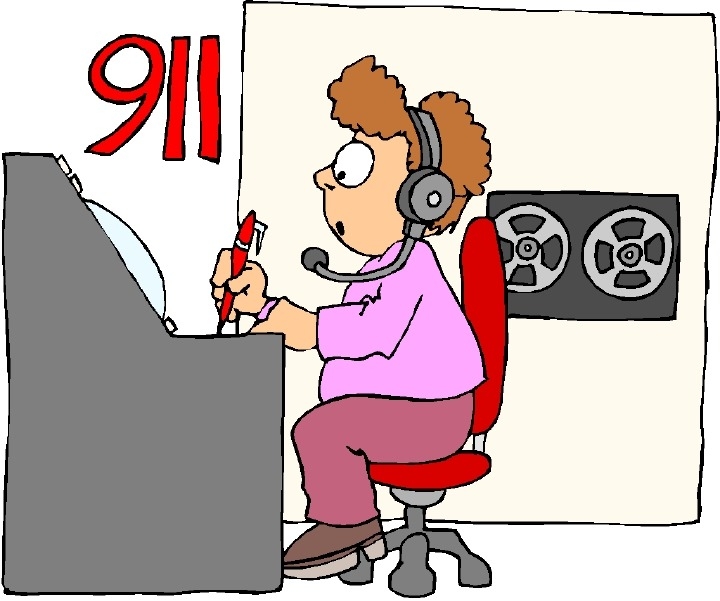
    You and your friends probably know that when someone is injured or in danger or otherwise needing assistance, they can call 911 and someone will come to help. It might be the police, paramedics in an ambulance or firefighters in a fire truck. The people who answered the phone and sent the help will not be there, however. Emergency operators for the 911 system don’t respond to crises themselves, but they work in call centres to help organize help for whatever people need.

    Imagine dealing with emergencies without a 911 system. If you saw a fire, you would have to call the fire department, but if you saw a store being robbed, you would have to call the police. A bad accident might require a call for an ambulance, and other situations might need all three. That could be very confusing and waste time as people tried to decide what number to call. The job of 911 operators helps to make the process easier.

    Basically, 911 operators take emergency calls and pass on the information to the right people. Sending the best help involves finding out as much as possible about the situation before doing anything else. The response for a fire, for example, will not be the same as the response to a heart attack.

    Before they send out help, operators need to find out what they can about the type and seriousness of a situation. They have to remain very calm, even when people are upset. If someone’s life is in danger, 911 operators have to be sure to send out the right type of help as quickly as possible.

    In Canada, most 911 operators work with the RCMP, although they work from call centres rather than in police stations. Canada has twenty-two federal or provincial call centres spread out around the country. They are the connection between people in need and the places that can send help.

    If you love to help people, you might want to become a 911 operator when you grow up!


  • Making a Living in Poetry

    Making a Living in Poetry

    If you read about the lives of famous poets like John Milton and William Shakespeare, you might notice something they had in common. They wrote great poetry which is still popular hundreds of years later, but they also had other jobs. William Shakespeare made only eight pounds for writing each of his plays and even less for his sonnets. He had to work as an actor to make a living. John Milton wrote political pamphlets to help pay his bills. Marianne Moore, a twentieth-century poet, worked as a librarian. Making a living as a poet has never been easy, but is it possible?

    Working as any kind of writer can be difficult. Novelists often have to go through many rejections before they can get their books published. Even then, making a living through writing can be hard to make much money. It can be even harder for poets. Their work is often less popular than novels and other types of writing, and they are often unable to sell many copies of their work. Often, they must teach classes or find some other way to make a living while writing poetry on the side. The Manitoba poet Sarah Klassen, for example, taught English for many years while she was writing and publishing.

    Being flexible and inventive can help poets make money through their writing. The traditional method of publishing books of poetry is likely to be difficult, but poets can make money in other ways. Magazines in print or online often include a few poems, and literary contests can also be good places for new poets to get their work published. In some cases, poets can even get fulltime work in advertising, producing greeting cards, or other fields where the skills of a poet are useful.

    Being able to communicate is an important part of being a poet. Some poets are good at telling stories and others are better at showing emotions. However, all poets learn to use language in new ways. Poetry is a very brief and sparse way of communicating. Often, a few words have to communicate complete thoughts in poetry, and poets have to choose their words carefully.  Even in narrative poems that tell stories, using the fewest words possible can be the most effective. Developing good writing skills is an essential part of becoming a poet. The first step is often to read a lot, learning from poets of the past and present. Courses in English literature or in writing techniques can help new writers develop their skills.

    Poets also need to develop their own styles. Some poets like to use complete sentences in their work. Others like to use as few words as possible to say what they mean. Another important factor is what publishers and readers want. Different styles of poetry appeal to different types of people, and publishers’ guidelines can give you a good idea of what works best in each situation. Learning to adapt your writing style will help you become successful as a poet.

  • Career Profile: Economist

    Career Profile: Economist

    You might sometimes wonder why you have to study mathematics at school. What’s the use of all of those percentages and averages that you have to calculate? These concepts might not be useful in many jobs, but they are essential for economists. Every day, economists use complex mathematical skills to help governments and businesses plan for the future.

    In 2011, Canada had about 15,000 economists working in a variety of places, including government offices, businesses, and other organizations. In some ways, economists do the same kinds of work as accountants often do. They work with budgets, prices, and how to make money. However, economists tend to work on bigger issues than these.

    For economists, the issue that people face is not just how much money to charge for a product or service but also how that fee might affect other aspects of the economy. For example, an economist might analyze how an increase in fuel prices can affect the cost of transporting food from farms to the cities and how that might affect food bank usage and other parts of society.

    Economists work with the trends that influence how people spend money and what affects factors such as prices and resource use. They use statistics to analyze trends in society and to predict what might happen in the future. They also have to know how laws might change various aspects of the economy. Economists might study public transit usage before and after a price increase or analyze how salaries in certain jobs affect house purchases. Economists need to understand numbers, but they also have to be able to see the larger trends.

    Becoming an economist involves knowing a lot about mathematics but also about how people and the economy work together. Most economists have at least a bachelor’s degree in their field, but most have a master’s or Ph.D. Even after they graduate, economists have to keep on learning. They read magazines and other publications related to their work and they find out what other economist think. Reading statistics on how Canadians live is an important part of their work, since that gives them the information they need to make accurate predictions about the future. This can sometimes be a challenge, especially when the information is difficult to find or is unavailable.

    Many economists work for the government, but they also work for large businesses to help the owners plan for the future. The average salary for an economist in Canada is $80,000 to $100,000, but most jobs start at a lower level and some can rise to a higher level. Experience is very important in this field, since it can be very important to learn about how different factors work together. Job prospects in this profession are limited, but there will likely be some openings in the next few years.

    If you love numbers but you also enjoy seeing how everything works together, you might want to consider becoming an economist. Your work might affect Canadians for years to come.

  • Career Profile: Addictions Counselor

    Career Profile: Addictions Counselor

    Addictions counselors are specialists trained to help counsel or talk through people’s problems with addiction. This includes drug and alcohol addiction, substance abuse problems, gambling addiction and more. Each case that an addictions counselor receives will be different. Your job is basically to help support people with problems and try to help them learn to understand and cope with their addictions, as well as finding out and addressing the root cause of the addictive behaviour and developing a plan to help the client to overcome it.

    Addictions counselors may be hired to work in a number of different facilities, but the job remains to help people deal with their addiction problems. Some places where addictions counselors are commonly hired include: hospitals (especially in mental health wards), drug/alcohol and gambling rehabilitation centres (both private and public), as well as harm reduction centres and homeless shelters, such as those operated by the Salvation Army.

    It is not easy to become qualified as an addictions counselor, but you’ll find that the job is rewarding and well worth the work if it is something that you are truly passionate about. Most counselor positions will require you to have at least a bachelor’s degree in the fields of either human resources, social sciences or psychology. You will also most likely be required to get a certificate in counseling as well. This can be obtained at most colleges after a one year course on counseling.

    Dedication is perhaps the most important quality for an addictions counselor to possess. Many of the cases will be difficult and the hours are often odd and long, but the reward comes in the satisfaction of knowing that you’re helping out fellow people with their problems. This job will require you to have very good problem solving skills, patience, excellent communication skills and, above all, a strong sense of empathy.

    When you’re in college and university, it’s best to focus on courses that will help you towards achieving your eventual goal of an addictions counseling job. Some classes that will help you on your way include: anything to do with sociology or psychology, law, education, administration, anthropology, and philosophy and ethics. Many centres vary in the qualities they are looking for in their counseling staff, so you may find that you’re more comfortable working in a shelter or rehab centre than in a more formal hospital setting.

    Much like the employment requirements, the rate of pay for counselors can vary widely from centre to centre, so do a bit of research to find out which sort of place you’d like to work and check out the centres in your area to get an idea of what sort of salary to expect. Seniority is often based on which counselor is the most experienced, so counselors that have been doing the job for years will often be paid more than staff who have just been hired.

    Addiction counseling is a tough field to get into and the work is not easy. Expect long hours and irregular shifts when you start out. You’ll need to be able to converse with and help people of all walks of life, so good people skills are a must. A thick skin is also required; Much like paramedics, addictions counselors may have to face moral dilemmas and hear tragic stories. However, if you do pursue addictions counseling, it is one of the fastest growing career fields out there. It will leave you with a sense of satisfaction from having helped people.

  • Career Profile: Museum Curator

    Career Profile: Museum Curator

    People often say that an interest in history has little relation to any kind of paying work. How can anyone get a job by knowing when King Henry VIII lived or what people ate in the fourteenth century? However, museum curators are different. They get to work with books, papers and objects that show a region’s history and culture. Do you love history? Are you good at organizing things? You might want to consider becoming a museum curator when you finish school.

    Curators work in many different places, from traditional museums and historic sites to zoos and botanical gardens. They might work with ancient Egyptian pottery or with recent videos and DVDs. Sometimes the objects they work with are tiny and light, such as rings and other pieces of jewelery. At other times, the exhibits are massive and heavy, such as ancient coffins or stone monuments.

    What curators do every day depends on where they work. Much of the work requires strong organizational skills as curators take in new exhibits, label them, and decide what to display and what to leave in storage. Sometimes curators have to arrange for travelling shows to come to the museum. If an exhibit of Leonardo Da Vinci’s inventions is moving from place to place, for example, a curator might want to arrange to have it as a temporary exhibit in the local museum.

    Curators have to make sure that items are properly displayed and stored. This is especially important for delicate exhibits that require special treatment, such as climate control or protection from insects. Curators have to be very careful to take good care of museum exhibits that are in their charge.

    Besides taking care of the exhibits, museum curators need to be able to talk to people. They need to keep the people on the museum boards and committees informed about what is happening in the museum. They also need to make sure that members of the public know about which exhibits are being shown. They might help arrange school trips or community visits. If curators do their job well, they help other people become excited about history.

    Most curators need more than just an interest in history to get a job in their field. A master’s degree in history or administration is helpful, but a university degree in museum and curatorial studies is even better. With that education, museum curators can make salaries between about $27,000 and $69,000 per year. Job prospects are often better in a big city than in a town, but a small, local museum might be a good place to gain experience.

    History can come alive when the curators of museums work together with the boards, committees, staff, and the public to display interesting and meaningful exhibits. Do you have an interest in history? Do you love to explain your love of the past to others? You might want to consider pursuing a career as a museum curator.

  • Job Profile: Data Entry Clerk

    Job Profile: Data Entry Clerk

    Most people are very familiar with the keyboards of computers and other electronic devices.  They might be able to send a message to their friends or post a comment on social media sites within seconds.  Are you like that? You might be able to send texts to your friends and family, but can you type information into a computer for hours at a time? If so, you might have a future in data entry.

    Everyone who uses a computer is a data entry clerk in a sense. Whenever you send a message to your friends to arrange an activity, the information you send is a form of data. Most of the people who work in data entry, however, deal with a different type of material. They might type out tax information or send out requests for payment. They might work in a university, keeping track of the courses that people are taking and how many students are studying. Almost any kind of information can be part of a data entry clerk’s job.

    Other types of work might also be part of careers in data entry. Besides entering information into the computer, data entry clerks might file papers or organize the offices where they work. They might answer telephones or deal with customers’ questions. They might need to write down what happens during meetings and send the notes to others in the office. Almost any office job can be part of a career in data entry.

    Working in data entry varies from one place to another. Some data entry clerks have full-time jobs in offices, but others work in many different places on short-term projects. For data entry clerks with full-time jobs, salaries range from about $22,000 to $41,000. Experience is an important factor in moving up in salary.

    Becoming a data entry clerk is also closely related to experience. Most data entry jobs require a high school diploma but no other formal education. However, knowledge of various computer programs, including word processing, is helpful. People with certificates in a variety of computer programs are more likely to find work than those who have completed only their high school studies.

    The main skill that data entry clerks need is a rapid typing speed. Most jobs require a speed of at least forty words per minute or more, using both the main part of the keyboard and the numbers on the right side. Being able to type even faster than that will help data entry clerks do their work more quickly and efficiently. A typing speed of eighty words a minute or more is common among data entry clerks. Speed is not as important as accuracy, however. Everyone makes mistakes, but data entry clerks need to be as accurate as possible.

    Practice can help data entry clerks become good at their jobs. If the job appeals to you, you should start practicing your typing and office skills whenever you have the chance.

  • Career Profile: Florist

    Career Profile: Florist

    One of the very nice parts of spring is the time when the flowers begin to bloom again. When the snow melts, the return of crocuses and daffodils is a sign that spring has finally arrived and that the cold weather is almost over. During the short summer season, many people grow gardens with daisies, roses, and many other kinds of flowers to enjoy before the winter comes again. Do you like the spring and summer flowers? What if you could work with flowers all year? As a florist, you could work at arranging and selling flowers to people for all kinds of occasions.

    If you ever buy flowers, you probably know a bit about what florists do. Many florists work in shops where they sell flowers to customers and advise them about what kinds of plants look nice together. However, being a florist can involve much more than that.

    Many people who want to work with flowers attend classes at a place like the International Florist Academy and School in Montreal. Students learn how to put together flower arrangements and learn about topics like European floral design and balloon art. They learn the basic techniques of wrapping flowers but also work with colour and design to produce the best possible arrangement, and also learn about basic care of flowers. Having a natural ability with flowers is good, but a program like this helps students to gain a broader knowledge of their work.

    Even for people with formal training, working as a florist often means beginning with sales and learning on the job. Contacting various flower shops and grocery stores is a good way to find work. Pay for jobs in florist shops often starts at minimum wage and can go up to about $17.00 per hour.

    At first, the job might involve tasks like talking to customers in person or on the phone, wrapping up flowers and sweeping up fallen leaves and branches from the floor. As employees learn more about the work, they might progress to flower arranging and later to ordering flower shipments from other countries. Many of the flowers that people in Canada buy come from warm countries in the Middle East or Africa. Learning to arrange shipments of flowers is an important part of working as a florist.

    Special occasions are important times for florists. Weddings, graduations, funerals and Mother’s Day traditionally involve flowers, and florists have to be ready to fill their customers’ orders. Different occasions require different types of flower arrangements, and florists need to be prepared for whatever customers want. Knowing what people normally like for these occasions is helpful, since then florists can have the right flowers ready to arrange.

    Creativity is often very helpful. Florists who can produce unusual and beautiful arrangements, using flowers that people rarely buy, might find it easier to attract customers than florists who stay with the traditional arrangements and colour combinations. If you love flowers and can combine tradition and innovation, a career as a florist might be right for you.

  • Transmission Technician

    Transmission Technician

    Transmission technicians specialize in the maintenance and repair of automatic transmissions. They must be skilled at examining a vehicle and estimating the repair costs, using computerized diagnostic equipment, taking apart the transmission and replacing damaged parts, and testing the vehicle’s performance. Transmission technicians also perform routine inspections and preventative maintenance.

    Certification Requirements
    • The Transmission Technician apprenticeship consists of 6,000 hours of on-the-job training.
    • Apprentices must also complete two 8-week in-class technical training sessions.
    • Once you have successfully completed the apprenticeship requirements, you receive a Certificate of Apprenticeship and are considered a journeyperson candidate. You must challenge the Certificate of Qualification exam and pass to become certified as a journeyperson and be legally allowed to work in the trade in Ontario.
    • A person with at least 6,480 hours of related work experience is eligible to apply for a Trade Equivalency Assessment (TEA) and challenge the Certificate of Qualification exam to become certified as a journeyperson in this trade.
    Educational Prerequisites

    Grade 12 or equivalent.