Tag: career

  • A Career In Writing

    A Career In Writing

    Do you enjoy writing? Have you spent years recording your thoughts in a journal? Is that enough to have a career in writing? Many people have dreams of becoming a famous author who is read by the masses, but how achievable is that goal? It all depends on what kind of writer you want to be.

    Print journalism requires a degree, preferably one in media, or writing. However, it is important to note that print journalism is a somewhat archaic career. There are so many changes that have taken place in the field in the last decade involving technology and the internet that it is worth taking a hard look at what these changes mean to the up-and-coming writer.

    Magazine writing is still a viable option, though it is very difficult to break into. Entering contests is a good way to get your name out there and to add something credible to add to a resume. The key to being a successful magazine writer is to continually submit material. Find a topic that you are interested in and that has potential to interest others and go for it!

    Writing a novel is entirely different than any other form of writing. Can anyone do it? Does it require skill or innate talent? The answer is a little of both with a whole lot of perseverance. The only thing holding back someone from being a published novelist is time and patience. It takes a long time to learn the ropes of novel writing and depending on the path you wish to go down, a lot of hard work.

    The online writing market is exploding – it is the future of writing. While the new writer must maneuver through a minefield of scams, there are more and more opportunities for the savvy writer with legitimate skills.

    Becoming a social media expert can also benefit you as a writer. Many potential clients are looking for that writer who can navigate the layers of social platforms. Knowing how to use contacts, how to build a following on Twitter and how to find your way around the multitude of other social media sites is now considered a valuable asset to your resume.

    So if you enjoy writing, keep doing it! Build your resume as much as you can and keep your eyes (and ears) peeled for writing opportunities.

  • Career Profile: Concept Artist

    Career Profile: Concept Artist

    What is Concept Art?
    Your passion for sketching and drawing may lead to a career path you might not realize exists. Concept art is a term applied in many different industries. Generally, it refers to the conceptual stage of production where drawings and sketches or any other form of visual representation is created to express design choices and flesh out ideas. It’s used most frequently in fashion, video games, movies, animation and graphic novels. Depending on your interests, there is a lot room for stylistic expression and individuality.

    What is a Concept Artist?
    A concept artist is responsible for creating illustrations of characters, objects and settings that don’t exist using the initial parameters and ideas set by the writers and other members of the creative team. The level of involvement required of the concept artist may vary depending on the project. That said, these artists are typically an integral part of creating the preliminary artwork and are oftentimes required to work with the next level workers that use the preliminary artwork to model the end product. These workers include graphic designers, animators or builders.

    Tools You’ll Need
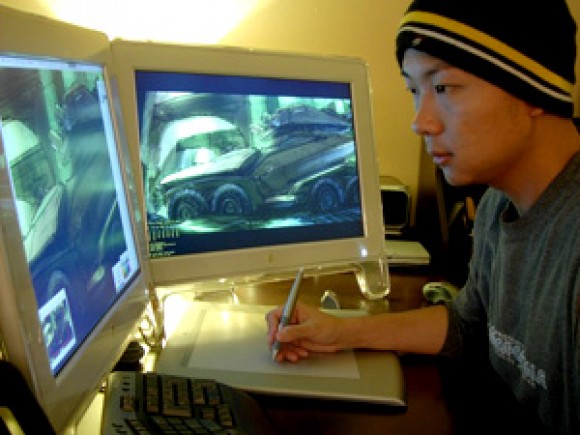
    Concept artists have been known to use a variety of tools for their artwork. Some prefer using traditional drawing materials like pencils, sketch books, charcoals and acrylic and oil paints, while others favour a strictly digitized approach. Most will combine the two approaches. The recent development of software and technology, namely graphic design programs, colour blending features and hardware like graphic tablets, have led to an increase in digitized content.

    What Kind of Content will you Produce?
    The majority of concept artists find work in the film and video game industries, with the content created typically staying within the science fiction and fantasy themes. Naturally, there is room for a wide spectrum of artistic styles, from photorealistic to highly stylized work that more closely resembles cartoon animations.

    Who Can Become a Concept Artist?
    Concept artists come from a variety of backgrounds including the fine arts, graphic design, special effects design, architecture and more. There are many paths to becoming a conceptual artist making a degree like studio art a much more viable option for employment than it has been in the past.

  • A Career in Trades – From Insiders

    A Career in Trades – From Insiders

    With a plethora of career paths available to students once they leave high school, it can sometimes be difficult to determine where you should turn. You can go to university and spend four years gaining a Bachelors degree, you can obtain a diploma through college, or you can decide to study a trade. Increasingly, the latter option is becoming more and more popular with young people. But why?

    According to Line Breton, counsellor with the Ministry of Training, Colleges and Universities, a job in a trade is a stable career path. “Trades will always be needed in any economy,” she told us, “and your certification will always be recognized.”

    While going to school to obtain your certification, you will have the opportunity to work as an apprentice in your chosen field. JobsPeopleDo.com spoke with Bob Benner, owner of Hamill Machine Shop in Niagara Falls, Ontario. Benner has been regularly hiring apprentices for over 14 years and gave us the scoop on why the experience is so valuable.

    “An apprentice has the benefit of watching how the job is done and being able to go back to class with that experience,” said Benner. “They go to school to learn the right way to do things, but then get the practical experience and learn new methods while on the job.”

    Another often-overlooked benefit of a career in the trades is your ability to move up quickly and earn more money.

    “Once you start working, it gives you a chance to prove your worth,” says Benner. “In our shop, you may start at $14 per hour but can move up to as much as $27 per hour. If you work hard and keep your certification up-to-date, there is really nothing holding you back from earning more money. That is a big incentive for many students interested in trades.”

    The trades cover a wide array of different career paths, from mechanics to hairdressers, electricians to carpenters. No matter what path you decide on, both Benner and Breton agree that you need to follow your natural instincts.

    “Spend a semester working in a trade that interests you. It will expose you to both the positive and negative aspects of the job,” says Breton. This will help you to decide if this is the right trade for you.

    “Love what you do,” says Benner. “If you like working in trades, there will always be a place for you if you have your papers.”

    So why not discover the different options available to you in the trades sector? Check out all of the editorials and career profiles that we have lined up for you right here on the NEW JobsPeopleDo.com trades page!

  • Why the Trades?

    Why the Trades?

    When people think about the skilled trades, several immediately spring to mind – electrician, plumber, welder, carpenter. But opportunities in the skilled trades are much more extensive. From hairstylist to cook, painter to landscaper, automotive service technician to crane operator – and so many more. Learn more about the trades.

    Why consider a career in skilled trades?
    The data is in! Canadian Apprenticeship Forum research shows that apprenticeship completers fare better than their counterparts it comes to wages, job security and employment satisfaction. When compared to non-completers and graduates of other technical programs, those who complete an apprenticeship have:

    – Better employment outcomes, both immediately and several years after being certified
    – Better earning potential – in the short and longer term
    – Higher levels of job satisfaction and job security

    Apprentices also get:

    RESPECT
    Skilled trades play an important role in our economy and our society. Think about it … skilled trades workers touch almost every aspect of our lives. They build and maintain the homes we live in and the cars we drive. They work in manufacturing, mining, oil and gas, hospitality and tourism. They build and maintain the electrical systems that power our computers and heat our houses. Canada depends on the work of skilled tradespeople working in the designated trades to keep our country working.

    OPPORTUNITY
    With hundreds of skilled trades careers to choose from, there are opportunities available to suit almost any interest. As an apprentice, you participate in a post-secondary education like no other. By combining on-the-job training and in-school learning, apprentices get the best of both worlds – certification that comes with real world experience, providing the skills to work virtually anywhere.

    Skilled tradespeople are in demand and, as the baby-boom generation retires, that demand is only going to increase. Shortages of skilled trades workers are being reported across sectors and across Canada, and the competition to attract talent is growing.

    GOOD PAY
    People in skilled trades are rewarded for their efforts with good pay. In fact, according to Statistics Canada, the wage gap between workers with bachelor degrees and trade certificates is declining. Between 2000 and 2011, the average weekly wages of full-time workers aged 25 to 34 with trades certificates grew by 14%, while bachelor degree holders saw their wage growth slow to 1%. And, apprentices begin to make money right away, earning a wage from their first day at work.

  • Career Profile: Fashion Buyer

    Career Profile: Fashion Buyer

    You might have heard of the term “buyer” referenced on TV or in movies. He or she is usually fashionable dressed and always in a rush to find the next big thing clothing designers have to offer. Admittedly, in this case, fiction is not that far off from the truth. Fashion buyers are usually employed by clothing retailers, both big and small, to stock their shelves with products that are most likely to keep the customers walking through the front door. Though the term isn’t exclusively used with the fashion industry, the fashion buyer is the most popular incarnation of the job.

    Where does a buyer work and who do they work with?
    Oftentimes, a buyer will find him or herself attending runway shows, wholesale markets and special showcases put on by designers to present new products lines. Buyers are expected to take notes and keep a look out for the next trend destined to hit the market. Every buyer’s ultimate goal is to have the retailer they work for be one of the first retailers on the market to promote the next trend in time to scoop up the majority of the sales.

    Along with designers, buyers work closely with sales department representatives and clothing suppliers to ensure the products stocked are marketed in the best way and that they are no discrepancies with the products received. The majority of a buyer’s job involves negotiating the terms of a stock order with the supplier.

    Specializing
    Depending on the size of retailer, which varies from large department chain to privately owned boutique, there may be individual buyers responsible for specific products – like women’s shoes or men’s pants. Larger retailers will also have multiple levels of seniority determined by experience and responsibility given. Securing a position as an assistant buyer, for example, will allow new graduates and those who have been around for less time in the industry to gain experience and exposure under the wing of a senior employee.

    Certification
    Colleges focused on fashion education will offer certification for students interested in buying and merchandising. Some community colleges will also offer similar programs, but for those seeking opportunities right out of school, attending a program known for its fashion centric education might be a better option – particularly for networking and gaining contacts.

  • Discovering Marine Science in The Maritimes

    Discovering Marine Science in The Maritimes

    New Brunswick is the second largest aquaculture producing province in Canada (behind British Columbia). Each year the province earns hundreds of millions of dollars as a result of aquaculture production. There are currently over 2000 people in the province working as direct employees in various capacities in the aquaculture industry. Due to the important part the industry plays in the province, it is important the public has the opportunity to become educated and engaged in the subject.

    The Huntsman Marine Science Centre and Fundy Discovery Aquarium located in St. Andrews, New Brunswick provides a unique and educational aquaculture experience for all ages. The 20,000 square foot facility first opened in 1972, but was re-built and re-opened in September 2011. The centre has a research facility, including labs, where research is being done to find a way to sustain and develop the aquaculture industry.

    There are two harbour seals that call the centre home, Snorkel and Loki, who love to entertain the crowds of people who come by to see them. Harbour seals are found in the coastal waters of the Northern Atlantic and Pacific Oceans, as well as the Baltic and the North Seas. They are brown, tan or gray in colour with v-shaped nostrils and small ear canals. There are an estimated five to six million harbour seals worldwide. The seals at the aquarium are fed twice a day and enjoy eating fish such as menhaden, anchovy, sea bass, herring, mackerel and cod. They also know a variety of tricks, which they have learned since being in captivity.

    There are two touch tanks – one that houses a variety of interesting creatures including sea cucumbers, which are rubbery and slimy and hard to hold on to; clams, which can spit water; and starfish which are hard and prickly. There are an estimated 1800 different species of starfish worldwide. They have a central disk and five arms, though some species have many more. There is also a touch tank designated for skates. There are more than 200 different kinds of skates (and I don’t mean hockey or speed skates!). The skates found at the aquarium are similar to sting rays; they are flat and shaped like a kite and have their eyes located on top of their head. They are found in the Atlantic, Pacific and Indian oceans, and they have a row of spines on their back that can stab and tear if they feel threatened by predators.

    Other interesting sights to see at the aquarium include a large sturgeon tank, a yellow lobster named Fiona and a blue lobster named Lily. Only one out of every two million lobsters is blue, and one out of every thirty million lobsters is yellow.

    If you enjoy learning about marine life, why not consider becoming a Marine Biologist?

  • Working As A Vet Tech

    Working As A Vet Tech

    Nature of the Work
    Pet owners, zoos and aquariums expect excellent care from their veterinarians and thus to provide the optimal services, veterinarians use veterinary technicians and technologists to assist them, much as doctors use nurses in the medical field. Job duties vary depending on the employer, but generally technicians and technologists complete similar tasks for their employers even though there are differences in the formal education and training of the two titles. Most technicians work in private veterinary practices; but because of their additional education and training, technologists can choose to work in jobs that are more advanced research related.

    Job Description of a Veterinary Technician and Technologist
    Veterinary technicians and technologists usually work under the supervision of a licensed veterinarian. They are often required to perform skills such as venipuncture, or skin scrapings to treat and diagnose health concerns of the animals as well as performing various medical tests. Tests they conduct include blood work ups, urinalysis, and taking tissue samples. They may assist in dental care and surgeries and may be required to perform and maintain anesthesia. Other duties might include taking patient histories, expose and develop X-rays and radiographs, dressing wounds, applying splints, and taking vital signs. There are a variety of diagnostic tests which the veterinarian may rely on the technician or technologist to conduct. Experienced veterinary technicians may be expected to train new personnel in the clinic or discuss a health issue with a pet’s owner. In some practices they may be required to assist in administrative tasks such as maintaining treatment records and inventory records of supplies, equipment and pharmaceuticals.

    In most clinical private practices, the technician and technologist will assist in the care of small animals such as cats and dogs, but also may perform duties with animals such as cattle, horses, sheep, birds, mice and lizards. It is rare for a technologist to work in practices that care for both small pets and large wild animals.

    Another area of work for technologists and technicians is research facilities. In these facilities veterinary technicians and technologists work under the supervision of veterinarians as well, but they may also be supervised by a physician. The job duties in this area of the field may include administering medications, and recording information about the animals such as diet, genealogy, food intake, and weight. They may be required to monitor and record signs of pain and distress in animals, sterilize surgical equipment and provide postoperative care. Veterinary technologists may be required to give an animal a vaccination or euthanize an animal.

    In some instances, veterinary technologists assist in research projects that involve other scientists in medical-related fields. They can work in biomedical research, livestock management, pharmaceutical sales or wildlife medicine. There are increasing opportunities for technologists in the biosecurity and disaster preparedness jobs.

    Job Outlook
    The job outlook for veterinary technicians and technologists is excellent as there is a need to replace those leaving the field and there are limited numbers of qualified technicians graduating The demand for the positions is not expected to be met in the period of 2008-2018 as the field is expected to grow at a much faster rate than the average.

    The biggest factor in the expected growth rate of 36 percent is the attitude of pet owners. Pets are often considered part of the family and pet owners are becoming more affluent, knowledgeable and more willing to pay for advanced veterinary services for their pets. This is expected to continue to increase the demand for veterinary services and thus the increase in veterinary clinical practices that will need assistants.

    It is expected for the number of pet owners utilizing veterinary services to grow and increase job opportunities. Advanced services such as surgical procedures or preventive dental care will provide more opportunities for those technicians and technologists who specialize in those areas. Demands for feline services and medicine are expected to rise as the number of cats as companions is steadily growing. It is expected animal shelters, humane societies, animal control facilities, boarding kennels, animal hospitals and clinics will want to replace veterinary assistants with highly skilled technicians which will further the demand for workers who are specialized in specific areas.
  • Follow Your Instincts

    Follow Your Instincts

    There is pressure to know what career you ought to settle on for the rest of your life, even well before you are finished high school. Students are guided toward a career at a young age and are expected to follow the direct path counselors and parents present to them. Decisions about the future can be made for a variety of reasons including salary, job availability and aptitude, but there is no better reason than natural inclination and passion to help you determine your future employment.

    When it comes to how to choose what to do for the rest of your life, it is most important to take your time and really consider what it is that you enjoy. Is there something you love to do and learn about? Why not consider investing in education to make it your profession? If you follow your passion and interests you will find yourself working in a field that allows you to build continuing joy in your life. Take a closer look at your hobbies and investigate whether or not you could see yourself making a living in a relatable field. Work does not need to be mere labour; it has the potential to be a labour of love.

    The next step is confirmation. Can you turn your interests into a profession? Investigate, research and do your homework. What kinds of jobs are available in your area of interest? Is it really feasible or should you continue to search other avenues?

    Now that you have found something you think you would love to do, take the next step and offer your time as a volunteer. Be bold and assertive. Talk yourself into a place of business that you can learn from and experience the tangible reality of your choice. If you do this and discover you are not suited to the trade or craft, do not be afraid to change paths. Perhaps a pivot rather than a jump is in order. You may not need to change directions completely but simply tweak the dream a little to suit your needs.

    It is important to lean on your intuition when it comes to your future. Do not decide on a career solely based on numbers. To do that is a potential set up for burn out and early disenchantment. Take the time to understand what you really enjoy and trust that you have the skill set to see your dreams realized. It takes more than hard work to be successful – there is a necessary component of happiness and contentment that not only sets the course, but helps define just what success means to you.

    When you follow your instincts and choose a career path based on something you enjoy, life becomes an exploration of your interests and the anticipation of each new day lingers well into the future.

  • Career Profile: Architectural Technician

    Career Profile: Architectural Technician

    Job Summary
    Preparing documents in construction and architectural design and constructional standard. Strong emphasis is placed on protecting the environment, energy conservation, sustainable design and construction strategies.

    Is it for me?
    This program is for those who like to be challenged and to be creative. If you like to design things or enjoyed building houses in the popular game “Sims”, this may the right path for you! A job as an Architectural Technician would guarantee you an exciting and rewarding career in the construction and design field.

    Summary of Duties
    Architectural technicians are responsible for:
    – The working of drawings
    – Construction design
    – Construction methods
    – Construction materials
    – Building science
    – Computer assisted design
    – Drafting and building information modeling
    – Protecting the environment and energy conservation through design

    General Information about the Position
    As an architectural technician, you will have career in the construction industry, working with architects, engineers, builders, contractors and municipal building departments. Using state of the art computer technology, you will prepare designs, construction drawings and specifications needed to communicate with the clients, construction professionals and approving authorities.

    The challenges of being an Architectural Technician
    Challenges vary from having tight deadlines (although you always manage to find a way to get there!) and coming up against unforeseen problems on site, which can vary from minor to major redesigns of a building. You will also be tasked with keeping up-to-date with the latest and most current legislation.

    If this sounds interesting to you, why not check out some of the career colleges and universities that offer this program? You can find them on our Education tab right here on JobsPeopleDo.com!

  • Finding a Career in Words: Editing as a Profession

    Finding a Career in Words: Editing as a Profession

    What would you do if you found a mistake in something you’d read, like a menu in a restaurant, an online blog or a newspaper? Would you just try to ignore it or would you try to tell someone about it? If you chose the second option, you might want to consider working as an editor someday. Editors are people who love words and writing, and who want writers’ thoughts to be communicated as clearly and effectively as possible, whether on paper or online. Editors are the link between writers and readers.

    Many different jobs can be part of an editor’s work. Some editors work as managers of newspapers, magazines or publishing companies. They decide what materials to publish and what to reject or to send back to the author for rewriting. Others work directly with authors to help them improve their work by making suggestions about the style or content. If a novel has far too many characters for readers to remember or is written in a very difficult style, stylistic or substantive editors can help.

    Near the end of the process, some editors work with the layout of the book or article, deciding how to fit it onto the page and make it look presentable. Others check names, dates and facts to ensure they’re correct. Just before the book or article goes to be printed or put on a website, a proofreader or copy-editor might look at it to check for mistakes in word usage, grammar, punctuation and spelling. If all of these parts work together, the result is a well-written and accurate document.

    To some extent, almost everyone is an editor. Have you ever checked your friend’s school assignment for mistakes? You were acting as an editor then. Have you ever stopped in the middle of a sentence to think of a better way of saying something? You were editing your own words. Professional editors do that kind of thing for a living.

    Generally, editors are not required to have any particular education in order to work. However, a Bachelor’s degree in English literature, creative writing or communications is very helpful. Some editors might also be required to obtain professional certification in areas such as technical communication. They might need to take courses on a variety of topics to keep their knowledge current. For many editors, a good knowledge of grammar is essential. Nouns, verbs, and prepositions are daily concerns for many editors. Reading all kinds of fiction, non-fiction and poetry is another form of training for editors. The more they read, the better prepared they’ll be to work with other people’s writing.

    In some cases, becoming an editor means a steady job with a regular paycheque. In most cases, however, the work is far more uncertain. Freelance editors who work with many different people have to be comfortable with an uncertain income. They have to be willing to work long hours and often to find another job to support themselves. For many editors, however, the enjoyment they get from the work is worth the trouble.

    So if you love words, why not consider becoming an editor?