Tag: college

  • How to Pick a School that Works for You

    How to Pick a School that Works for You

    Deciding which post-secondary institution to attend is easily one of the most difficult decisions you may face in your lifetime. If you find yourself scattered and unsure of where to begin, just think of PED: Program, Environment, and Distance. This is a useful technique that can help you organize your thoughts and carefully lay out the important factors.

    Program: The very first thing you should do when picking a school is question whether they have the program that is right for you. A common mistake that students tend to make is to pick a school based on its overall reputation as opposed to the reputation of its programs. A school could be ranked at the top of all the major lists but that doesn’t necessarily mean that they’re the best for whatever program you intend on enrolling in. If you’re the type of person who refers to ranking lists, make sure these lists are program specific. If you can find a way to do so, talk to students who are actually enrolled in the programs you’re considering and discuss any concerns you may have. They’re likely to be very honest with you and you can get some insider-info that you won’t find in the fancy brochures.

    Environment: Believe it or not, your surroundings can have a major impact on how well you do in university or college. I’m the type of person who needs a refreshing walk when I get stressed so it was important for me to choose a school that had a beautiful campus. For some, old-style traditional buildings and scenic walkways will do the trick. For others, modern buildings and high-tech facilities are a must. Keep in mind that many schools have a good balance of both! Also take a look at the environment outside of the school’s campus and ask yourself if you’d prefer to be located in a big city or something with more of a suburban feel. If you plan on living off campus in upper years, this could be a bit of a deal-breaker for you.

    Distance: One of the most difficult things about going away for school is being away from your family and friends. If you’ve got tight-knit relationships, going too far away from your support system may be too much to handle. And that’s ok. You might not even have to leave home if you’d prefer to commute. However, if you’re determined to leave the nest you should always pause to consider how often you intend to visit home (if at all). If you’re making many trips, things can become quite costly if you live hours away from home. The important thing here is to speak to your parents or guardians and figure out a system that works best for everyone. Before you do this, though, have an honest think-session with yourself and decide what’s most important for you. If independence is key, be prepared to negotiate and do quite a bit of reassuring.

    Each school you consider is bound to have its pros and cons. The best you can do is weigh all of your options and choose a school that you’re most comfortable with. Others may input their opinions but the choice is ultimately yours to make!


  • Second Time Around

    Second Time Around

    It can be discouraging to look back at a portion of your life and realize that you were totally lost, not focused or, even worse, focused on things that really didn’t matter. Sometimes we can get down on ourselves because of this, blame ourselves for our failures and generally experience low self esteem because of mistakes made in the past. It is important to realize that your past mistakes are just that – mistakes that you’ve made in the past. If you are able to realize that they are just mistakes, you are on the right track.

    Mistakes are good because they are not regrets, but rather lessons. Mistakes are not the same thing as regrets. Mistakes are meant as a lesson about the right way to do something. For me, my lesson was going through a university undergrad degree without a sense of purpose and a secure sense for the rewards that come from hard work. During my undergraduate degree, I experienced at first a real sense of purpose and determination to do well, but this feeling gradually faded over the course of my five years in university. Whether due to a lack of rewards along the course of my years or a lack of feeling recognized for my efforts, I slowly lost the feeling of satisfaction from working hard and I lost sight of my goals.

    I know now, after having experienced my first mistake, that I can do better and that I can really and truly accomplish what I want to accomplish by setting goals and going about a second degree in a different way than my first degree.

    A good starting place when you are looking to re-do a mistake is to identify the areas of weakness in the past and make solid plans for improving upon those areas for success in the future. For me, I identified three weaknesses from my first undergraduate degree:

    1) Too much at once – My first undergraduate degree was a double major in French immersion, while working for the university, running a committee and trying to stay in great shape by working out every day. This overload created a depression in my mood and in my motivation to achieve my academic goals. I got to the point where I lost focus because I was trying to do too much at once. The second time around, I will be sure to have a manageable load of work and extracurricular activities.

    2) Choice of subject – My first undergraduate degree was a selection based on virtually no career plan. I chose something that I would find interesting and that would have enough substance to keep me interested for the length of the degree. When I chose my subject of study, I didn’t think about what I would do with the degree and there was not much thought about the future. This time around, I will be sure to plan my career and exactly what I will do with the degree.

    3) Clear academic goals – The first time around I lost track of what I wanted to achieve and why. I didn’t really have a career plan and didn’t motivate myself to achieve high grades because I didn’t have an end result in mind. This time around, I am looking to the career I want and educating myself on what it takes to get into that career. I want to get great grades in order to successfully continue my educational journey.

    Overall, it is important not to get down on oneself for having made mistakes in the past. It is important to look at mistakes as guides, teachers and lessons in what you want and how you can do better. Using mistakes in this manner will allow you to realize your dreams in a conscious way that you control.

  • How to Choose Your Classes

    How to Choose Your Classes

    You’ve gone to university fairs, read the websites, explored your options, submitted your applications and have finally chosen your new university or college. That’s the hard part. Now you just have to choose your first year classes and you will be ready to go. For many this is the fun part, though you should give serious consideration to your course selection as it may shape the next few years of your post-secondary education. You don’t want to find yourself forced into summer school or an extra year of your undergrad just because you are missing those few extra prerequisites. Sometimes it is easy – you may know exactly what you want to do or have selected a program that has your classes laid out for you. Regardless, don’t be afraid to be a little adventurous.

    You want to cover your bases, that’s a given, but this is also your opportunity to explore alternative subjects, different ideas and new concepts. If you have an idea of what subject you want to pursue, maybe try some to help compliment that. Want to study English? Try taking a Sociology or Art History class as well. It’s always good to test the waters. First-year courses are often (though not always) designed to give students a taste of what could be in store for them if they decide to pursue that subject further. Or, if you are still set on studying English, then these classes may give you a unique perspective or could turn into an interesting minor that makes your degree distinct and stand out from the pack.

    You never know, you could surprise yourself and end up going a completely different route then you would ever have imagined. Just remember to think ahead. There is
    nothing worse than seeing that history class on the course list that so speaks to your own personal interests and would compliment your degree so well only to find out that
    you don’t have the necessary prerequisite. At the end of the day, it’s your degree and your choice. There are an infinite array of course, degree and specialization combinations out there that can reflect your individual interests and aspirations and you should make decisions that reflect that. Just remember to cover your bases and don’t be afraid to be a little adventurous – your post-secondary education can surprise you.

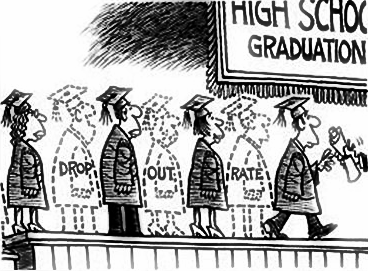
  • I Dropped Out – But I Want to Go to College!

    I Dropped Out – But I Want to Go to College!

    For whatever reason, you didn’t make it through high school. That doesn’t mean that higher education is out of reach. There are a variety of options still available to you. You may not be able to get into every program at every school, but everyone has a shot at getting into a post-secondary program with any academic background, with or without a high school diploma.

    Getting Your GED

    GED stands for General Educational Development, and refers to the set of tests taken to obtain a high school equivalency certificate. In order to take the tests, you must be at least 18 years of age, have not graduated from high school, and must have been out of high school for at least a year.

    The tests provide a means for those who did not complete a formal high school program to show high school-level knowledge and skills. They cover reading, writing, mathematics, social studies and science.

    A GED is typically used to provide evidence of a high school-level education, and is commonly accepted in the work force as equivalent to a high school diploma. It’s not always accepted by universities as an academic assessment for university-level studies, however.

    Apply to an Open University

    Open universities are universities which do not require a high school diploma or GED as a prerequisite for enrolling in courses. Anyone can apply at any time.

    After a year’s worth of courses from an open university, a student is considered to be a transfer student and can then transfer to a conventional university on the basis of these marks as opposed to high school grades.

    Apply as a Mature Student

    Each college or university has their own standards on what qualifies one as a mature student, but typically a mature student is one who has reached a certain age, which might be anywhere between 19 and 21; who has been out of school for a certain amount of time, generally 1-2 years; and who does not possess the academic prerequisites expected of recent high school graduates, meaning a mature student may or may not have a high school diploma or GED.

    Mature students may be admitted on the basis of life or work experience, regardless of past academic performance. Some programs will require entrance tests to place the student at the right level, others will admit mature students on a trial basis, and others can forge ahead at full speed.

    Remember  that learning is more important than schooling. It may be that completing a degree or diploma program isn’t the right fit right now. Also consider certificate programs which are often shorter, and carry immediate, real-world applications.

    It’s never too late

    Once you know what programs you’re interested in, pick up the phone and call the admissions office. Speak to someone who can walk you through the process, as specific requirements are going to be different for each school. Make an appointment to speak with someone one-on-one to sort out your options.

    You may have to jump through a few hoops, but that determination can pay off. Remember, most university admissions are governed by a general policy, not law. Rules can be bent or broken if you’re able to show why you should be there.

    Good luck!

  • Why Students Should Join Professional Associations

    Why Students Should Join Professional Associations

    Once you’ve entered university and have started on your path towards your chosen career, you can look at joining professional associations. Students who join the associations in their related field do well for several reasons:

    1)      They are well connected with people who share a common interest. Having a social network of people who you can talk to about stresses and successes in your program is a huge coping resource. If you have any complaints about professors or courses, or are looking for information about textbooks or course notes, you have an easy access group of people at your disposal. There are also opportunities to share your opinion which is often a useful outlet as you undergo the stresses of university or college life.

    2)      Having a strong sense of belonging within a group will allow you to fulfill one of your most basic needs in a really easy and accessible way. This is super important because you will be busy in university or in college, so making time for social activities may present a problem for you. Having a group that you belong to will help to reassure you and let you focus on more important things, like your studies.

    3)      It looks good on a resume. Being a part of your chosen professional organization will help you to bulk up your resume. Employers and academics will be impressed with any work that you did within this organization because it shows that you have a strong work ethic and are able to work well on a team. It also shows that you are engaged in your academic life in a way that exceeds the minimum expectations. Whenever possible, you want to gain experience that goes above and beyond to put yourself ahead of others who will be competing for the same jobs as you.

    4)      It provides you with networking tools. When you are a part of an organization, you can more easily get in touch with people who can get you jobs or volunteer positions.  You want to have these connections so that your life is made easier when it comes time to finding a job. This may not seem important since you are in school and may not want a job immediately, but if you plan on being employed sometime in the future, then you will need to have connections.

    5)      There are more opportunities when you are a part of something then when you aren’t. When you are a part of your professional organization, you have opportunities for social gatherings and charity drives and other such events that you otherwise may not know about. Taking part keeps you in the loop.

    Overall, the most important reason to join a professional organization is to have the beginning of a social network.  When you start university or college there are often competing demands on your time. This means that you may not have time to do the social networking that you should be doing. This aspect should not, however, be neglected, and by joining a professional organization you are immediately put in touch with people with common interests and have access to opportunities that are likely of interest to you and that will look great on your resume. Also, any way to make networking with employers easier should be acted upon because, as the common adage says, having connections is your most useful tool for getting employed, no matter how spectacular your experience is.

  • The Value of a College Graduate

    The Value of a College Graduate

    Let’s face it; the professional world is incredibly fast paced. Because of this, employers are looking for new ways to keep up. One resource they are turning to is the infinite pool of recent college graduates. Mass amounts of qualified graduates hunt for entry level jobs that they can begin immediately following graduation. Employers are finding that young college grads can bring specific skills to the table that some experienced veterans can’t.

    Young people fresh out of college are hungry for success. They have spent years absorbing the knowledge and skills they need for their specific career path, and they can’t wait to put what they learned to use. The eagerness and enthusiasm of a young graduate could possibly outshine the experience of someone who has been in the professional world for a few years. In interview situations, sometimes personality and attitude determine whether or not a company will hire a candidate. Experience is good to have under your belt, but most college grads are trying to land their first big job, and therefore lack the professional experience the position may be requiring. In the competitive professional world, it is important to show employers all of your best attributes, which includes your personality, and make a good first impression.

    Another positive skill that new graduates have is their ability to grasp and apply new information. While in school, students are constantly learning, processing, and logging new information. Because graduates have just left that environment, they will carry on those skills to their new place of employment. This means that as new employees, graduates will be able to learn quickly and shorten a company’s valuable time spent training a new employee. Also, because of a new graduate’s professional blank slate, they can be molded to the company’s specific policies and standards. They don’t come with any bad habits or negative baggage from another company that needs to be changed.

    Of course big companies may not want to admit it, but many new and innovative ideas come from recent college graduates. This concept makes sense because graduates have been taught the most updated information, and they are used to using critical thinking skills. Their motivation to succeed eliminates their fear of speaking up, and they are eager to contribute their ideas. Seasoned veterans of a company may be so used to current procedures that they are unable to think outside of the box and contribute new ideas. This is where the fresh new ideas of recent college graduates come into play.

    Employers that utilize the talents of new graduates are setting their companies up for success. Companies who are willing to hire and fine-tune graduates are companies worth working for. The enthusiasm of a young employee can’t be beat, and has been proven to contribute to company success and growth. The potential and value of a person with a college degree, even those who are fresh out of college, should never be underestimated.

  • Study What Interests You

    Study What Interests You

    Going to college or university is a pretty big deal and the program or courses you choose can impact your future success, both financially and in terms of doing something that excites you.

    You may already know exactly what you want to major in, or you may not. Either way, don’t panic. Many students begin college or university without a clear idea of what they want to study or what kinds of jobs they’ll be qualified for at the end of their studies.

    The perfect mix
    We take courses to expand our knowledge, hopefully in things we’re interested in, so we can find ways to enjoy what it is we do for a living – however far on the horizon that may be.

    The perfect job covers three main points. It’s: 1) something you’re good at, 2) something other people will to pay you to do, and 3) something you’re interested in or excited about. The sweet spot is right at the center of all three.

    Study what you’re good at
    If you’re good at something, it may be because you’ve spent a lot of time doing it because you enjoy it or simply because it comes naturally to you. Either way, taking courses where you’re likely to get good marks can beef up your transcript and you may find that these courses lead to new opportunities. They may be requirements for another course, or you may discover new aspects of the course that lead to something you’re more interested in.

    Study what other people will pay you to do
    Long term, you probably want a career you’ll enjoy where you have opportunity to do new and interesting things, but there are few jobs available playing video games or ultimate frisbee (though they do exist).

    Check out career fairs and look online for jobs related to what you like to do and see how other people are able to make money in related fields. You’d be surprised by the variety of jobs available, and it helps to have something to work towards.

    Study what you love
    School’s expensive, both in money and the time it takes to complete the coursework, so you might as well spend it doing something that you find inspiring. The best courses are sometimes the most difficult because that’s where you find room to grow, expanding your knowledge and skills.

    You may be able to take electives in subjects that are outside the scope of your larger program, but ones that are fun and teach you things you never knew you were interested in. Don’t be afraid to take advantage of these opportunities when they arise.

    Explore your options
    Look for programs or courses that complement your strengths, attributes and interests – it can make all the difference. Choosing a path you feel comfortable with, that builds confidence and challenges you to accomplish more, can be incredibly rewarding.

    The earlier you begin, the easier it is to create a map of where you want to go. And don’t worry about making wrong decisions; you can always change track if something more suitable comes up.

    While the sweet spot may be where these three things collide, also consider courses which only hit two of these points. Take a look at course catalogues for different universities and see what’s out there.

  • Where, When, and Which Class?: A Course Scheduling Guide

    Where, When, and Which Class?: A Course Scheduling Guide

    If you are like many first year students, you have a vague idea of what courses you want to take in college or university. If you liked biology in high school, chances are “Biology 1000” will catch your eye as you browse through the course calendar. Of course, the first thing that should guide your decisions is your interests. For example, if the thought of reading War and Peace is taxing to you, steer clear of Advanced English Lit. But besides what you do and don’t like, how do you decide what courses should fill your schedule?

    The first thing to look at when creating your schedule is your program requirements. The faculty will dictate which courses you must take in first year to be eligible to continue in your program. For some programs, you may only have one mandatory course, or you may have five. To find out what you need to take for your program, look at the academic calendar for your school, usually available both in print and online. Or, go to the faculty page on your school’s website and select your program. Failing that, you can always call in to student services, where a representative will put you in contact with someone from your faculty.

    Once you’re aware of your program requirements, you can decide what to do with your electives. These classes can be anything, and should be guided by your interests and your skills. If the number of choices seems overwhelming, or you’re just plain good at everything, try choosing electives based on their time slots. After scheduling your mandatory classes, you’ll have some space left over. You can then see what electives would fit into the time slots you have, which will help narrow down your selection.

    When it comes to scheduling, lock down your mandatory classes first. Since all the students in your program have to take them, there will likely be some variety in times and professors. Then, put electives where you see fit. If they conflict, take a mandatory class over an elective; you can take an elective any time during your schooling career, but mandatory courses are often prerequisites for upper year classes. If a course you need, or just really want, to take is eluding you, remember that you can take some classes in the summer (sometimes at a different university) or online.

    You won’t always have a say in the timing of your courses, but when you can make decisions, be honest with yourself. If you can’t wake up before noon in the summer, you will have trouble with an 8:30 AM class. With all the freedom that post-secondary classes offer, you’ll be more likely to sleep in and miss class.

    When faced with the daunting task of scheduling your own classes, its easy to lose sight of what an awesome opportunity it is. For the first time, you have complete control over your schedule. When, where, and what courses you take are entirely up to you! Keep that in mind while you choose your classes, and you’ll be sure to come out with a great semester.

  • First Year University Woes

    First Year University Woes

    With August now here and September right around the corner, those of you in your first year of University may be feeling a little nervous. I do not blame you! I was in the same position a few years ago. After taking time off to figure out what I wanted to study I was ready to hit the books again… or so I thought!

    I registered with zeal and could not wait to re enter the world of notebooks, pencils, pens and knowledge! I bought all my books right away, stocked up on school supplies and RSVP’d for Orientation. Yes—I was ready!

    Finally September came and I entered the classroom with dozens of other nervous first years. It was hot, very hot. Maybe it was just my nerves. For the first time I doubted myself. Maybe I was not ready for this yet! What if it was too soon? I had only just begun tasting the world and all it had to offer. Was I ready to give it up for a desk and a textbook? Was I ready to learn rather than explore?

    As it turns out, I was not ready. In fact, I lasted about two weeks in University before I called it quits for the year. I felt like a failure. My friends did not understand. I did not understand! How did this go so wrong?

    I do not write this to scare you. In fact, I am now in my fourth year of University and I love it! I also am not writing this to convince you to leave University- quite the opposite. I wanted to write about how to survive your first year because I had such a tough time with it, and clearly did not make it. But my second pass at “first” year went much better. I’m writing this with the hope that you will learn from my experience and be more aware of what is ahead of you.

    In retrospect, here are a few things I wish I knew:

    1. Do not buy all your books before you start classes! Often, you will change your mind and realize another class may be a better fit. You don’t want the book you purchased to become a paperweight. If you go to the first one or two and think you will stick with it, then go purchase that textbook. Or even better, purchase an e-book if possible! If you do end up with an unnecessary book though, do not panic. Try selling it at the used bookstore and recouping some of your money. Or if you need to feel prepared, just check your bookstore’s return policy. Often if the book is unused they will refund you within an allotted amount of time! Just be prepared to lineup!

    2. You are not a failure if you have to drop a course, or two. It seemed like the end of the world when I dropped my first course. The reality is, it is not! In fact it is more important that you take on what you can handle in your first year of University. You can always make up courses in spring or summer sessions at school. Don’t sweat a few credits. The extra time you have to focus on your other classes will serve you more in the long run.

    3. Be on time. I know that they do not take attendance in several university classes, but out of respect to your professor and classmates, arrive on time. It is quite distracting when you arrive late, especially in the winter months when you have a large coat, and a backpack. That coat seems even puffier and the zipper seems more obnoxious when you are late. However, we all run a bit late sometimes, just try not to make it a habit.

    4. If you are one of the first few people on the waitlist, go to the first class! I did not do this my first year, and because of that am a year behind in my major. I was on the waitlist but thought that meant I was out. What I learned is that the first class they usually ask who is on the waitlist and they will talk to you after class. If they have enough spots for people in the classroom, sometimes they will expand their class list to let you in. I say sometimes because they do not have to. One of my classes this past year, the waitlist students took attendance every class and after about two weeks, those who had come every class were admitted in. It never hurts to try.

    5. If you decide that University is not for you this year that is ok too. I’ve already admitted to leaving University my first attempt at it. You may feel the same way- all the excitement may fizzle and you might realize that this is not what you thought it would be. Do not quit right away though. Look at the rest of your life. Are you working towards your career aspirations and it is harder than you thought? Do you just dislike homework? Are you missing your friends? Then I would suggest that you persevere. It does get easier as you get used to it. The homework becomes more manageable as you acquire time management skills and you will make friends as time passes.

    However, if you really feel lost, or your friends and family notice a change in you (and not for the better) consider if University is the correct next step. Talk to the guidance counselors they have at school or to your family and friends. In my circumstance all it took was a second year off to focus my career path. I needed to know what I was trying to achieve so that I was motivated to work hard. Once I figured that out, school has been so much easier. Sometimes working can really highlight what we love and which careers we may be best suited to. Or it can show us that perhaps we don’t want to work in that area. But that is another article…

    Whichever path you choose, I hope that this coming year is full of adventure, excitement and new memories. These first few years out of high school are amazing. Enjoy them!

  • How to Prepare for the Dorm

    How to Prepare for the Dorm

    1. Write a list of the stuff you know you need. A good start can be found below

    * Bedding (sheets, comforter, pillows, mattress pad. A lot of colleges use Twin Extra Long mattresses which are a few inches longer than a regular twin. Do not skip the mattress pad; dorm room mattresses by themselves are not comfortable)

    * Toiletries (shower tote, towels, soap, shampoo, toothbrush, toothpaste, shower sandals, bathrobe)

    * Storage (under-bed plastic tubs, laundry hamper, drawers. Organizing your closet with a shoe rack or sweater organizer is always a good idea.)

    * Personal touches (posters, lamps, Christmas lights, knick-knacks)

    * Clothes (typically bring enough to last you three weeks without having to do laundry; you’re not going to want to do laundry every weekend. A wide variety is good as well so you’re covered no matter what the weather is doing. Remember to bring nice clothes you’d wear to a job interview because you never know if you’ll need to look snazzy.
    * Necessary miscellaneous (fan, alarm clock, refrigerator (optional), bedside lamp, clip-on shelf for your bed frame, laptop, laundry detergent, umbrella)
    2. Take this list to a trusted college graduate who can help you decide what you can do without.
    3. Start thinking about what necessities you need. Those necessities are; a couple pairs of shoes, clothes that are of a wide range (bring summer and winter stuff), shower and bathroom stuff, entertainment stuff.

    Tips

    * Wait until you have moved into your dorm before you begin buying a lot of things. You may find after you get there that that really cool organizer bin will not fit in the room, or the doors are not set up for organizers to be hung from them.