Tag: jobs

  • Five Surprising Careers

    Five Surprising Careers

    The following are five careers that you probably did not know existed – or, at the very least, you didn’t realize they were real options for you.. When choosing a career, the first thing that people usually do is to start with “conventional” ideas – doctor, lawyer, that sort of thing. But the objective isn’t to choose the most popular career; instead, you’re looking for something that you would enjoy doing. It’s your life, and sometimes it pays to think outside the box.

    1. Underwater Construction Worker / Salvager
    Have you ever wondered how companies fix their structures once they’ve been put underwater? Here’s your answer. These professionals work on projects building and repairing structures like bridges, docks, pipelines, cables – the list is endless. The training involves completing a program, like Seneca College’s 34-week “Underwater Skills” at King Campus – and, of course, becoming a certified diver. If this sounds like something that might interest you, take a look at http://www.senecac.on.ca/uws and www.mcmarine.ca.

    2. Public Health Inspector
    Have you ever considered what a Public Health Inspector actually does? Health and public safety professionals solve problems, communicate with people, and keep the public safe from food-borne illnesses. Their tasks may involve conducting on-site inspections of food processing plants (or even day care centres, schools, etc.), responding to written complaints on behalf of a company, or conducting workshops educating people about proper food handling. For more information, take a look at http://www.uoguelph.ca/oac/academics/food.

    3. Aviation Technician
    “Aviation technician” is a title given to someone who performs aircraft repair and maintenance. Technicians learn to inspect aircraft, diagnose problems, repair the components of an aircraft, and perform tests to ensure that planes operate according to industry standards. If you have always loved both planes and mechanics, you might look into one of the following programs: http://goo.gl/HmVko. You can read more about this career option this month on our Trades page!

    4. Video Game Artist
    As the video game industry expands, so does the amount of digital artwork to be done. Video game artists design and create the visual elements in games, from environments to moveable objects to characters. Aspiring artists learn skills like 3D modeling, life drawing, texturing, and game engine production. Programs are offered at Seneca College http://www.senecac.on.ca/fulltime/GAA.html as well as Centennial College http://goo.gl/GMeQB.

    5. Chef
    If you enjoy cooking and think you might like to become a professional chef, you can take courses which will take you from baker to culinary creator. Every restaurant, every hotel, every catering company and spa has a chef; if this is your passion, there is certainly great potential for employment. Take a look at George Brown’s 1-year program in Culinary Skills: http://www.georgebrown.ca/H112-2012-2013.


  • Career Profile: Cartographer

    Career Profile: Cartographer

    What is a Cartographer?
    When was the last time you looked at a map? Though you may not realize it, it probably wasn’t that long ago. Cartographers (or map makers) are usually associated with the paper incarnation of the navigation tool – the professional has learned to adapt to rapidly developing technologies. If you’ve looked up directions online, chances are a cartographer is responsible for building and updating the digital map you used.

    Traditionally, a cartographer would draw the lay of the land on paper. Depending on the nature of the map and what its intended use was, maps would typically depict important markers like major landmarks and cities. Aerial photography, computer programming and worldwide networks have forever changed how members of this profession complete their work. For instance, have you ever seen the Google Maps car or used the ‘street view’ function? Using onsite photographs, cartographers are able to reconstruct locations around the world. Another crucial tool is satellite imagery; Aerial pictures taken by satellites allow cartographers to keep maps up-to-date, preserving accuracy.

    Education and Skills
    There are a variety of ways to become a cartographer, but a having an interest in geography, math and science is key. Cartographers usually have a bachelor’s degree in cartography, geography, surveying, engineering, forestry, computer science, or earth sciences. With the advent of digital information sources, a strong aptitude for computer programming is highly desirable.
    Cartographers must be technically-minded and able to easily solve discrepancies in logic. Creating and maintaining geological and statistical data can be tedious work, making patience and endurance invaluable skills.

    Salary
    Most cartographers earn between $50,000-$60,000 annually.

    Day-To-Day
    Cartographers tend to spend the bulk of their time in offices working on computers. Much of their time is spent collecting, analyzing, interpreting and publishing data. Most of their work involves interpreting multiple factors, including but not limited to: landscape, law, climate conditions and changes in population and cultures. Mechanical drawing and map composition remains a fundamental part of the job, but these tasks are usually completed in a digital capacity.

  • How to Handle Competition

    How to Handle Competition

    Competition.

    You are going to deal with it at every stage of life. Whether you are applying for a retail job at the Gap, signing up to be a summer camp counsellor, applying for a job at your neighborhood Taco Bell or even applying to university or college, you will face competition.

    Competition is a good thing, depending on how you look at it. Competition allows an employer to pick the very best person out of all the people applying for a given job. Competition allows an admissions committee to choose the brightest student out of the pool of applicants applying for a particular university or college program.

    On the flip side, competition means that the more people applying for a given spot, the tougher it will be for any one person to get that spot. Often times, there is only one or a limited number of spots available which everyone seems to be fighting for. (This is the part most people don’t like about competition!)

    Interestingly, there are some people who thrive on competition. To these people, the thought of competing among other individuals for the same spot drives them to be the best of the best. It pushes them to excel farther beyond their potential. It pushes them to improve so they stand out from the rest.

    Other people, however, find competition daunting and even debilitating. The thought of so many individuals vying for one or a few spots scares them so much that they may not even bother to compete. They may also feel that the competition is far better or has much more to offer than they do, so they worry that they aren’t good enough and bring themselves down. If you fall into this group, rest assured you aren’t alone. There are a lot of people who find competition nerve-wracking. Since you can’t avoid competition (it’s part of life, after all), here are three tips that can help you handle it better:

    1. Forget about the competition — This may sound crazy to you at first, but hear me out. Focusing on who your competition is can sometimes negatively affect you and bring you down. Don’t think about all the people applying for a job at the Gap, for example. Instead, focus on you and what you have to offer to the Gap store manager.

    2. Do the best you can — The key word in this statement is “you”. Everyone’s best will differ. Don’t focus on trying to be better than someone else – it can be stressful and hard to match. Instead, focus on being the best you can be. For example, do whatever you can do to be the best applicant for the camp counsellor position this summer or to be the best candidate for the college/university program you are applying for.

    3. Keep pushing forward — If you got the job or university/college spot you were applying for, then great! If you didn’t, that’s okay too. Unfortunately, you can’t win them all in life. Every successful person knows this. Every successful person also knows that it doesn’t mean you stop trying – you have to keep pushing forward. Apply for a job at another retail store or fast food outlet, apply to another school or apply next year to the same program. Always pick yourself up and keep pushing forward!

  • Two Jobs Are Better Than None!

    Two Jobs Are Better Than None!

    My first year of university officially ended on the 21st of April and the time arrived for me to finally think about getting a summer job. As I am an international student with a ears almost as big as my fiscal expenses, I would need to work at least 65 hours per week in order to cover my tuition for the coming school year. That is the equivalent of working one full-time and one part-time job. Now, who would have thought that going to school was the fun part of the year?!

    Luckily, I had already landed one job at a certain casual Canadian restaurant; the second job came soon after at a local convenience store thanks to the efforts of a well-built network of friends. The first thing I was grateful for is that both the jobs I landed required the same base skill set. I worked as a cashier at both the restaurant and the convenience store and my job required me to do the following tasks on a day-to-day basis:
    1) Take customer orders
    2) Manage any and all numerical transactions
    3) Talk to customers and solve their problems
    4) Clean the restaurant/store from time to time
    5) Do not spill anything on the boss’s pants( one of my co-workers had the unfortunate pleasure of doing so)

    Much to my surprise, I had mastered the base skill set in under a week without much difficulty. My first job had me working mostly overnight shifts and, as bad as it may sound, it was actually the ideal situation for me to work. This is because I would work from 11 pm to 7 am every night (or day; honestly working overnight really messes up your perspective of time), go home, have breakfast by 8, take a 2 hour nap and go to my second job (which would start at 11 in the morning and would go on until 3 pm).

    So the days passed and I continued with my daily exploits. I will not lie to you – it was hard. But the work itself was not bad and I enjoyed most of it. I made some great friends and went through some very hilarious experiences.

    So here is my final pieces of advice for anyone who wants to make the most out of working two jobs:
    1) Find two jobs that essentially are similar in nature and require the same basic skill set. Doing so will allow you to improve on those required skills and perfect them.
    2) Find jobs that are close to your house. Doing so will save you a long commute to work and will also save you time that you can utilize to do other things – like sleep!
    3) Make the most out of every situation. As clichéd as this may sound, it does work. Try and make new friends at work. Broadening your horizons will also widen your network of contacts that may help you later in life.
    3) You do not want to physically and mentally over-exert yourself. If you cannot handle two jobs then it is better to just have one. You will avoid making mistakes and potentially being let go from both your jobs this way. Instead, focus your energy on looking for scholarships/bursaries/loans to help pay for school. Also, ask your employer for help as many companies have educational benefit plans for student workers.

    Working two jobs is a strenuous task but it is possible. So if you find yourself in a situation like this sometime in the future then hopefully you shall remember my advice for you!

  • Education Options for Registered Nurses

    The Canadian Nurses Association believes that the knowledge, skills and personal attributes that today’s health system demands of its RNs can be gained only through broad-based bachelor’s nursing programs.

    With the exception of Quebec, all Canadian provinces/territories require a bachelor’s in nursing (BN or BScN) to enter the profession. In most cases, more career opportunities will be open to nurses with degrees.

    How long is the program?
    Bachelor’s programs can be completed in two to four years. Accelerated, condensed and advanced entry programs are in place in all jurisdictions.A growing proportion of nursing students have already completed a degree in another discipline; many of these students can access two-year bachelor nursing programs. Degree programs are offered in universities and in some university college institutes.

    What will I learn?
    Nursing students will study psychology, child development, sociology, anatomy and physiology. The nursing courses include theory and clinical practice. In addition to learning social and physical sciences, university programs generally offer additional studies in leadership, health teaching, research and other disciplines. You will be supervised and supported in the clinical setting to ensure the safety of clients, as well as your own safety.

    What are the entrance requirements?
    Entrance requirements differ from one school to another. Generally, the admission requirements are high school graduation with senior level English or French, mathematics, chemistry, physics and biology. You can contact your provincial/territorial nurse’s association or individual schools for their specific requirements and information on funding.

    Is there funding?
    Contact your relevant school of nursing for possible contacts regarding funding, student loans, or scholarships. For more information, consult the Canadian Nurses Foundation.

    Are there graduate studies in nursing?
    Canada has 32 master’s programs available all across Canada and a total of 15 doctoral programs are available in British Columbia, Alberta, Saskatchewan, Manitoba, Ontario, Quebec and Nova Scotia. Some schools are offering graduate courses by distance. To learn more, consult Nursing education programs in Canada.

    For more information
    Canadian Association of Schools of Nursing
    Association of Community Colleges of Canada

  • Getting a Head Start on Your Future Career

    Getting a Head Start on Your Future Career

    The concept of career planning can send some students into nervous fits, rocking in the corner, curled into the fetal position. It isn’t pretty. For others, it means spending countless happy hours on the Internet, excitedly researching every job they’ve ever been interested in. Regardless of which category you fall under, it’s always a good idea to weigh your options early. Getting a head start will not only help you build experience, but it’ll help you make a solid decision when it comes to planning your career.

    1. Make a list of potential career options. Base them on things that you’re already good at and enjoy. Do you like to write? You could consider journalism or creative writing. Are you good at math? You could investigate engineering or maybe finance. Do you love sports? Think about coaching or even teaching physical education. Don’t limit yourself to one “type” of job; keep the ideas flowing and options open.

    2. Investigate your options. Google is your friend; a wealth of information is literally at your fingertips. Research job descriptions to get a general idea of what your career options involve. Do they still appeal to you? Take a look at job postings. Do the lists of responsibilities make you excited or do they make you cringe?

    3. Work on your skills. If writing is your objective, work on it. If math is your goal, work on it. If sports are your aim – you guessed it – work on it. Now is the time to hone your skills so that later you’ll be that much farther ahead in the race for professional positions.

    4. Test the waters. If you still aren’t sure what you’d like to do, try a few different things. Start volunteering or even working part-time. If you volunteer for just one hour each week, you can try several different things without eating up too much of your time. This will help you to decide which options to eliminate and which you should explore further.

    5. Try new things. Don’t limit yourself to one particular career option, especially if you aren’t sure what you’d like to do. Get involved in a few different areas – for example, you could volunteer at an animal shelter, an environmental non-profit organization and a municipal government office at the same time. The best part about volunteering is that you aren’t signed up for life; you’re free to explore and find out what working feels like.

    Don’t feel pressured to pick a career right away; instead, think of high school as an opportunity to explore your options. Without the obligations of a full-time job, you have time to try different “jobs” in a relaxed and fun way.

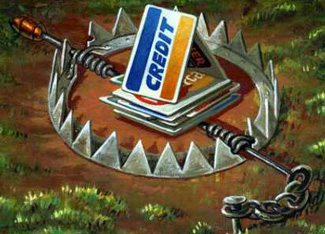
  • Student Debt: Your New BFF

    Student Debt: Your New BFF

    Debt is a four letter word that should not be feared.

    Students who learn how to manage debt during university are paying themselves a great investment. You may be hearing horror stories of friends of friends who are paying off student loans years after graduation. Even the media pitches in and tells tales of students with debt so large that it seems unlikely they will ever pay off.

    No one wants to start out in life saddled with debt, but this could really be the best thing you do for yourself.

    Good Debt vs. Bad Debt
    A $1000 handbag or watch from your favourite designer is bad debt. $1000 towards books and supplies is good debt. Debt that goes towards something that will benefit you in the future is fine. Using borrowed money to earn your degree will only guarantee yourself a chance to earn much more than someone without a degree or diploma.

    Dr. Richard Settersten and Barbara E. Ray’s book Not Quite Adults highlights this fact – Taking on a little debt for a bigger payoff down the road is smart. Settersten and Ray also shared Nobel Laureate Milton Friedman’s advice: people should borrow the most early on when their earnings are the smallest, save a lot when they are in their highest earning years in mid-life and then start spending all those savings after they retire.

    Be Realistic
    BMO Financial Group surveyed students across Canada and found that half believe that they will graduate with zero or less than $10,000 debt. This doesn’t quite match up with the findings from Statistics Canada, which states the average student graduates with $18,800 in debt. Be realistic when you’re borrowing money and always know how much you’ve taken out and how much you’re spending.

    Be Strategic
    Arthur Chan, who took out Canada Student Loans for fives years at Carleton University to complete his engineering degree, graduated with a debt of $21,000. He wasn’t able to find a job in his field until 8 months after graduation. Now, 2 years into in a full-time position with the Government of Canada, that massive loan is all but a distant memory. How did he do it?

    Just because you’re able to borrow a large amount of money doesn’t mean you have to spend all of it. Arthur lived at home during university and took public transportation everyday to keep costs low. He also worked part-time retail jobs during summer vacations. When he wasn’t able to find a job right away, he applied for interest relief on his student loans. Once he was able to secure a job, he used his earnings to get rid of the debt as quickly as possible. The key is to learn how to save as much as you’re able to borrow.

    With tuition costs rising across Canada, sometimes adding everything up really discourages prospective students. Don’t let debt deter you from getting the education you want.

    Remember: education is a right, not a privilege.

  • Types of Careers in Trades

    Types of Careers in Trades

    Are you wondering what types of careers are available to you in the trades sector? There is literally thousands to choose from. Check out just a few of the careers we found on CareersInTrades.ca!

    Construction
    Construction and Maintenance is the best known skilled trades sector. These jobs are available across Canada in both urban and rural areas. Some of its apprenticeable trades are:
    – Bricklayer
    – Heavy equipment operator
    – Painter and decorator
    – Ironworker
    – Mechanic
    – Plumber
    – Welder

    Transportation
    Transportation trades cover vehicles ranging from automobiles and motorcycles to airplanes and cranes. These jobs are anywhere vehicles can be found, which can be a farm, an airport, a harbour or any street! Some of the apprenticeship trades include:
    – Agricultural Equipment Technician
    – Aircraft Maintenance Mechanic
    – Auto Body Repairer
    – Motorcycle Mechanic
    – Transport Trailer Technician

    Manufacturing
    Manufacturing trades can lead to careers in many different sectors, including cars, textiles and even food production. These careers can secure a job in many manufacturers and bring you to the root of product development. Some of the apprenticeable trades include:
    – Automotive Machinist
    – Graphic Arts (Pre-Press, Press and Bindery)
    – Industrial Electrician
    – Power System Operator
    – Sawfiler/Fitter
    – Tool and Die Maker

    Service
    The service sector offers jobs for those interested in working more closely with the public. From chefs to hairstyling, this sector offers many career opportunities. Some of the apprenticeable trades include:
    – Arboriculturist
    – Baker
    – Barber
    – Graphic Arts Technician
    – Hairstylist
    – Jeweler and Goldsmith
    – Upholsterer

  • Why Young Workers Fall Behind for a Decade or More

    Why Young Workers Fall Behind for a Decade or More

    Michelle Bucek thought she would be working full-time in her chosen career by now.

    The 24-year-old from Brantford, Ontario, who has a degree in radio and television broadcasting from Ryerson University, recently returned from a one-year stint teaching English in South Korea.

    She subscribes to five different job boards, checks social media, and sends out resumes for three to five postings each day.

    “Over the next couple of months I’m going to do some volunteering and work some retail on the side to keep money coming in, keep pushing, sending out applications, making myself known, hoping something will come through,” Bucek said.

    “A job you get straight out of university doesn’t really exist anymore, and I find that really frustrating.”

    That’s not the only thing at stake, experts say.

    When young people can’t break into the labour market, the risks range from social unrest to mass migration to a wage gap that can persist for a decade, or even longer.

    Long-term unemployment, defined as joblessness that persists for a year or more, can scar young workers for the rest of their lives, the Organization for Economic Co-operation and Development warned Tuesday.

    “It is imperative that governments use every possible means at their disposal to help jobseekers, especially young people, by removing barriers to job creation and investing in their education and skills. The young are at most risk of long-term damage to their careers and livelihoods,” said OECD Secretary-General Angel Gurría, presenting the report in Paris.

    Across OECD countries, those ages 15 to 24 years old had an average unemployment rate of 16.1 per cent in April. That’s just over two times the rate for workers of all ages.

    The U.S., in particular, has recorded an unprecedented increase in the share of long-term unemployed, from around 10 per cent in 2007, to around 30 per cent in the first quarter of 2012.

    “These worrying figures emphasize that a growing number of people, the young in particular, are becoming disconnected from labour markets,” Gurria said. “We need to avoid the risk of a lost generation by all means.”

    It’s not surprising that social unrest is taking hold in Greece, where youth unemployment is running as high as 50 per cent, said Charles Beach, economics professor at Queen’s University.

    Frustrated young men in particular, who are unable to find gainful employment, “tend to get worked up about things and they have a lot of time on their hands,” Beach said.

    Unemployed young people are missing out on opportunities to gain practical work experience to go along with their education. That combination is crucial for eventually moving up the career ladder.

    “If youth aren’t getting that labour market experience, that has a scarring effect which can last a long time,” Beach said.

    Multiply that by thousands of young people, and there are implications for the wider economy, Beach said. “In the economy as a whole, there’s less skill that’s built up. That will have a long-term negative impact on the collective knowledge base and GDP growth.”

    Individuals who have lower income and not as many opportunities may delay marriage and starting a family. Many young people decide to go abroad to find jobs.

    “They have no opportunities as they see it at home. They have to pay higher taxes, and it’s because of nothing they did. Why should they stick around and pay higher taxes on infrequent jobs?” Beach said.

    In Canada, the rate for unemployed youth stands at about 15 per cent, just over twice the national average of 7.2 per cent.

    Professor Philip Oreopoulos, associate professor of economics at the University of Toronto has studied the long-term consequences of youth unemployment.

    Entry level wages tend to be about 10 to 15 per cent lower for a new graduate who finds a job during a recession rather than an economic boom, he said.
    On average, the wage gap persists for about 10 years. But for some people, particularly those in low-paying positions, it never closes.

    The most effective way to close the wage gap is job-hopping, moving from smaller firms to larger ones that offer more opportunities.

    “The good jobs are not there in recessions but if you are patient and wait eventually they become available and if you can grab onto to them, the wages will catch up,” Oreopoulos said.

    But that will likely take longer in the aftermath of the Great Recession, he said.

    “To the extent that we are in a more prolonged recession and it’s taking longer for those good jobs to come back, that would imply a longer time period to catch up,” Oreopoulos said.

  • Diploma vs. Degree – What’s Best For Me?

    Diploma vs. Degree – What’s Best For Me?

    Deciding where to continue your educational journey after high school can be difficult.

    With countless options available, including different credentials, areas of study and employment prospects, it may feel like there’s no right choice. Proper research, knowledge, and contemplation can ease insecurities by guiding you toward your best option.

    One of the first decisions to make regarding post-secondary education is whether to pursue a diploma, degree, or both. It’s important to first understand the difference between the two credentials.

    In Ontario, for example, there are two types of diplomas – a two-year Ontario College diploma and a three-year Ontario College Advanced Diploma. A diploma program helps develop the foundational knowledge and skills required for success in a variety of applied positions by utilizing hands-on, real-world experiences.

    Diploma programs cover a wide-range of subject areas including Dental Hygiene, Broadcasting, Human Resources, Computer Programming, Web Development, Lab Technician, Culinary Management, and more.

    Colleges also offer apprenticeship certificates, one-year introductory or general certificates, and graduate certificates, which offer accelerated hands-on learning for applicants with previous education or significant work experience.

    Universities offer a variety of undergraduate degree-completion opportunities for students entering direct from high school, including a Bachelor degree, three years, and an Honours Bachelor Degree, four years.

    A three-year Bachelor degree helps develop a broad theoretical knowledge in at least one area of study. An Honours degree, four years in length, allows students to build a more specialized knowledge which can be applied toward research studies and final papers and projects.

    Examples of university programs include Kinesiology, Business Administration, Engineering, Veterinary Medicine, Anthropology, Astronomy, Psychology, and more.

    Following completion of a Bachelor Degree, students can enter the work force or continue to earn a Master or Doctoral degree.

    Some colleges also offer Bachelor Degrees, but they are generally offered in more applied areas that a university does not typically offer programming in, such as Interior Design, Advertising and Fashion.

    Most areas of study can be offered at both a college and university level. To investigate the best option for you, research career prospects and investigate what credentials are required for your desired career. You can also visit job boards and fairs or speak with people in the industry.

    One of the biggest differences between post-secondary studies at a college or university level is cost. Tuition typically ranges from $3000 to $4000 per year in a college compared to $5000 to $8000 per year at a university.

    To overcome the obstacle of finances and stand above the competition in the job market, many students pursue both a diploma and degree through established agreements developed between colleges and universities. This means transferring their completed diploma to receive advanced standing with a university, ranging from several courses to more than a year. This allows you to earn both a diploma and degree in less time than normal and at less cost.

    There is no generic right answer. To choose whether a diploma or degree is best for you, research the options available and know that you’re never stuck. You can always pursue further credentials.