Tag: learning

  • History Is Fun!

    History Is Fun!

    Not only can we learn from history, but history makes us who we are!

    There are people who think history is boring – and sometimes it is.  For some people, history is just about remembering a lot of dates.  What happened on the 10th of July in 2003?  Who knows?  But history is more than just a bunch of dates.  History is also the story of the world. How do we know who we are without it?

    Think about it: what would your answer be if someone asked you,“who are you?”  Would you tell them you are a human who lives in North America on the planet Earth?  Or would it be a little more personal?  Maybe you would say, “I’m Anna.  I’m Brad and Janet Duffy’s daughter.  I am in the 6th grade at Sir John A. MacDonald Elementary School.”  I think most people would say something like that if they were asked who they were – and that is history!  History is simply a story and it can be as short as what you did last night or as long as all the books in the library combined.

    Now that we know what history is, the next thing we need to figure out is: why is history important?  Well, just like how knowing your own history tells you who you are, the history of a country tells us who the people of that country are and world history tells us who the people of Earth are. History gives people a shared story, one they can gather around and celebrate.  For example, your family may have its own traditions and heritage, but on Canada Day we are all celebrating the same thing.

    You may still be wondering, however, why history is an important subject to study in school.  Along with teaching us who we (and others) are, history also teaches us many important lessons.  You have probably heard the old saying that we learn from our mistakes and it is true – everyone learns from their mistakes!  Well, you can consider history a record of some of the greatest mistakes and successes ever made.  Imagine if your parents never taught you to look both ways before you crossed the road?  I bet you’re glad they did!

    Humanity has come as far as it has thanks to our unique ability to learn from the past.  And that is not just from our mistakes, but from the mistakes of others, too. This is something we should never stop doing!  So whether it is the story of your summer or ancient history, remember that history is our story and we can learn from it.
  • Why Should Girls Get Involved with STEM?

    Why Should Girls Get Involved with STEM?

    In our society, girls seem to be underrepresented in fields related to science, technology, engineering, and mathematics. Even more interesting is that in contrast to girls, boys seem to be actively involved in all of these fields. So what’s the deal? Why are girls not participating in these fields as much as boys? These are questions that are stumping researchers and other experts.

    There is a stereotype that has been circulating around, that maybe girls just aren’t as good at these subjects as their male counterparts. However, research suggests that there isn’t any evidence to support this claim. We all know girls are just as capable and smart as boys. Researchers have found that, when tested, girls are equally as successful in any of these subjects as boys. However, as long as this negative stereotype continues to persist it can cause real harm. It can actually cause girls to believe that they aren’t good at these subjects before even trying them. There is a natural bias for people to assume that science and math are fields best suited to males and that the arts are better suited to females. Why not disprove this theory?

    People also believe that maybe girls aren’t involved in STEM because there aren’t enough female role models in these fields to look up to. Seeing women who are thriving and successful in these fields could make them more enticing to younger females. People like Bill Gates and Mark Zuckerberg have made their fortunes in fields related to STEM. However, there still seems to be lacking female equivalents. It would be great to see females who have invented or developed ideas related to STEM in our society. The women that are contributing and involved in STEM should be given more visibility in order to promote these fields.

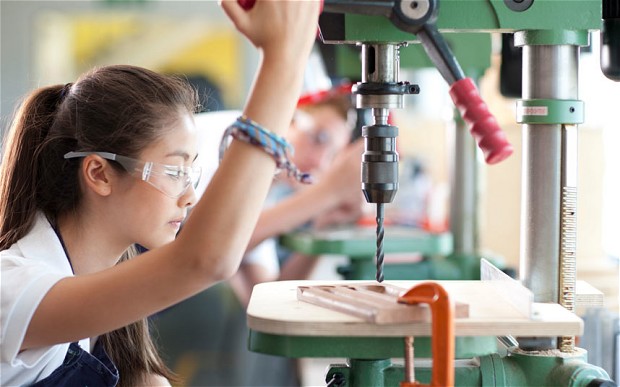
    There are many reasons why girls should get involved in STEM. Firstly, positions related to these fields are abundant. Why not make contributions to them and stand out from others? Scientists are trying to solve some of the most difficult questions in our time. Engineers are designing different things that we can use to better our lives and make things easier. With the internet and other forms of communication becoming more popular, there are a wide variety of job opportunities relating to technology.  People in these professions are doing creative and innovative things. In addition to this, these positions provide a person with a really great income (who doesn’t like money?). Helping the world and making great money doesn’t sound like a bad thing to me!

  • Lending a Helping Hand: Learning Disabilities

    Lending a Helping Hand: Learning Disabilities

    A learning disability is a general term used to identify a variety of learning problems. Many students are affected by learning disabilities, and this can have a great impact on their educational experiences.

    Having a learning disability does not at all mean that a student is unintelligent or lazy. Instead, it is likely that the student just perceives things differently, or the way that they learn and acquire information is different from others. There is nothing wrong with this—it is to do with a difference in brain activity and it is not a question of some students being “worth” more than others.

    There are many different types of learning disabilities that can affect any part of the educational process. For example, a common condition, dyslexia, causes difficulties for students when reading. Dyslexic students may have difficulty with clearly distinguishing between letters or words, understanding ideas in written passages, or gathering a complex vocabulary.

    Similarly, dyscalculia is a learning disability that has to do with numbers, sequences, and mathematical concepts. Students with dyscalculia may have trouble with memorizing number sequences, distinguishing between operations, or organizing calculations in a logical way. Other conditions that could cause difficulties for students include ADD/ADHD and visual or auditory impairments.

    These are just two examples of learning disabilities—in fact, there are many more conditions that can affect a student’s learning process. Knowing this, it is important to provide students with learning disabilities with resources and support so that they can reach their full potential when learning. It is crucial that all students have the opportunity to learn at their own pace, on their own terms, and in a way that suits their individual needs. In this way, no student is left behind.

    There are resources available to students with learning disabilities within the educational network. Guidance counselors, social workers, and youth psychologists are professionals to contact in order to determine the solution that works best for the student in question. An open line of communication between the teacher and the family is also crucial: it is important that the teacher knows about the student’s learning disability and takes steps to be inclusive and engaging.

    There are also many organizations and online resources that are dedicated to helping individuals with learning disabilities. The Learning Disabilities Association of Canada (http://www.ldac-acta.ca/) has excellent information on their website, and they provide a variety of services across Canada, in person (with offices in 10 provinces and 1 territory), as well as online. Furthermore, LD OnLine (http://www.ldonline.org/index.php), as the leading website on learning disabilities, disorders, and differences, provides extensive information and resources for all types of conditions that could affect a student’s educational progress.

    Finally, as an individual, it is important to be compassionate, understanding, and accommodating towards these students. Whether or not you are affected by a disability yourself, you must recognize the importance of treating others with respect, and ensuring that everyone has a fair opportunity to succeed, and feels part of the community.

    Sources:

    http://www.helpguide.org/articles/learning-disabilities/learning-disabilities-and-disorders.htm

    http://www.ldac-acta.ca/

    http://www.ldonline.org/index.php

  • Different Ways to Learn

    Different Ways to Learn

    GROUP WORK! It’s a popular form of instruction and it’s not going away. But it can be one of the most frustrating things about school. It can be difficult to work with people sometimes, but maybe there’s a reason for that. Consider that everyone learns and applies learning in different ways.

    People tend to develop a way of learning that works for them, and each way has weaknesses and strengths. Different styles of learning were categorized in the Learning Style Inventory, developed by educational psychologist David Kolb and his colleagues. He identified four learning styles that correspond with a person’s preference for learning behaviours. Of course these aren’t the only ways that people learn, but it offers a neat system of labels that may help when you are landed with yet another group project.

    Kolb’s Learning Styles

    • Converger: These learners do best when they can apply what they learn in a practical setting. They like to work with “what if’s” and with things rather than people. Often these types of learners will choose to specialize in a technical subject like engineering.
    • Diverger: People who draw from this learning behaviour like to see complicated scenarios from many viewpoints. They can draw from imagination, empathy, and an interest in people. These learners often head towards the humanities in careers like counselors, or sociologists.
    • Assimilator: People who use this learning style are very good at creating theoretical models of problems. Like convergers, they are concerned with the practical application of a model, but they’re more interested in making sure the theory fits the facts logically. This style is more characteristic of people in mathematics, or theoretical physics.
    • Accommodator: Here we see learners who prefer to learn by doing things, often by trial and error as the situation arises. They get fully involved in new experiences, and if the theory doesn’t fit, they discard it in favour of a new one. This style of learning will be seen often in people who move into sales, marketing or entrepreneurship.

    If you look around the group you’re assigned with, you can probably find each kind of learner. Is there someone who loves to jump right in to a situation without a plan? Accommodator! How about the person who acts as mediator in arguments, seeing both sides of the situation? Diverger! Who else can you think of that fits into these learning styles? Sometimes people will fit into more than one, or all four. You can still identify their strongest style.

    Using your knowledge of each kind of learning style, you can begin to apply it in the next group project. Perhaps the diverger will be best suited to brainstorming and taking minutes. How about assigning the accommodator to be the presenter? This is just a broad overview of the theory behind learning behaviours, but opening your mind to the idea that everyone learns in their own way, you can begin to understand how to work with others; a skill that will follow you through your entire life.

    Reference: The Art of Teaching Adults: How to Become an Exceptional Instructor and Facilitator by Peter Renner, 2005.

  • Why Do I Have to Take Social Studies?

    Why Do I Have to Take Social Studies?

    Why do cars in Canada drive on the right side of the road while cars in England drive on the left? Why does Canada have a Prime Minister while the United States has a President? Why does an ice cream at one shop in my neighbourhood cost more money than the same ice cream at another shop? All the answers to these questions can be found when you learn about social studies.

    Social studies is made up of many different topics like history, politics, geography and economics. While these courses are taught in high school and university, students learn the very important basics of social studies in elementary school.

    A “society” is a community of people who live in the same geographical area and share the same cultural customs and laws. Because a society is made up of families, students of social studies first learn about how the family works within a community.

    Families are like mini societies because they are made up of people who live in the same place and share the same traditions and rules. Family members learn to work together as a team. By sharing and caring for each other, family members can more easily achieve their goals. In the same way, members of a society must learn to cooperate and understand each other so that the society’s goals can be achieved. In a very diverse society like Canada, it is important to learn about the people who live in your community so that you can learn how to get along. Students of social studies thus learn how to appreciate diversity within their communities and around the world.

    As students learn how to cooperate with others, they also learn how to be involved in their communities. They learn about the different ways that decisions are made by community leaders and they learn about what they can do to impact these decisions. For example, in social studies, students learn about why it is important to vote. They learn about how governments work and what politicians do. They also learn how to make decisions that will help to influence society the way they think would be best.

    Topics taught in social studies show how humans can achieve more when they work together. Students who learn the subject can actually learn how they can make the world a better place.

    In that way, social studies might just be the most important subject of all!

  • I Like History Because…

    I Like History Because…

    Not only can we learn from history, but history makes us who we are!

    There are people who think history is boring – and sometimes it is.  For some people, history is just about remembering a lot of dates.  What happened on the 10th of July in 2003?  Who knows?  But history is more than just a bunch of dates.  History is also the story of the world. How do we know who we are without it?

    Think about it: what would your answer be if someone asked you,“who are you?”  Would you tell them you are a human who lives in North America on the planet Earth?  Or would it be a little more personal?  Maybe you would say, “I’m Anna.  I’m Brad and Janet Duffy’s daughter.  I am in the 6th grade at Sir John A. MacDonald Elementary School.”  I think most people would say something like that if they were asked who they were – and that is history!  History is simply a story and it can be as short as what you did last night or as long as all the books in the library combined.

    Now that we know what history is, the next thing we need to figure out is: why is history important?  Well, just like how knowing your own history tells you who you are, the history of a country tells us who the people of that country are and world history tells us who the people of Earth are. History gives people a shared story, one they can gather around and celebrate.  For example, your family may have its own traditions and heritage, but on Canada Day we are all celebrating the same thing.

    You may still be wondering, however, why history is an important subject to study in school.  Along with teaching us who we (and others) are, history also teaches us many important lessons.  You have probably heard the old saying that we learn from our mistakes and it is true – everyone learns from their mistakes!  Well, you can consider history a record of some of the greatest mistakes and successes ever made.  Imagine if your parents never taught you to look both ways before you crossed the road?  I bet you’re glad they did!

    Humanity has come as far as it has thanks to our unique ability to learn from the past.  And that is not just from our mistakes, but from the mistakes of others, too. This is something we should never stop doing!  So whether it is the story of your summer or ancient history, remember that history is our story and we can learn from it.

  • Why Do I Have to Take Social Studies?

    Why Do I Have to Take Social Studies?

    Why do cars in Canada drive on the right side of the road while cars in England drive on the left? Why does Canada have a Prime Minister while the United States has a President? Why does an ice cream at one shop in my neighbourhood cost more money than the same ice cream at another shop? All the answers to these questions can be found when you learn about social studies.

    Social studies is made up of many different topics like history, politics, geography and economics. While these courses are taught in high school and university, students learn the very important basics of social studies in elementary school.

    A “society” is a community of people who live in the same geographical area and share the same cultural customs and laws. Because a society is made up of families, students of social studies first learn about how the family works within a community.

    Families are like mini societies because they are made up of people who live in the same place and share the same traditions and rules. Family members learn to work together as a team. By sharing and caring for each other, family members can more easily achieve their goals. In the same way, members of a society must learn to cooperate and understand each other so that the society’s goals can be achieved. In a very diverse society like Canada, it is important to learn about the people who live in your community so that you can learn how to get along. Students of social studies thus learn how to appreciate diversity within their communities and around the world.

    As students learn how to cooperate with others, they also learn how to be involved in their communities. They learn about the different ways that decisions are made by community leaders and they learn about what they can do to impact these decisions. For example, in social studies, students learn about why it is important to vote. They learn about how governments work and what politicians do. They also learn how to make decisions that will help to influence society the way they think would be best.

    Topics taught in social studies show how humans can achieve more when they work together. Students who learn the subject can actually learn how they can make the world a better place.

    In that way, social studies might just be the most important subject of all!

  • Apprenticeships: Finding An Employer

    Apprenticeships: Finding An Employer

    Finding an employer is the first and often most difficult step in an apprenticeship. If the employer you’re interested in approaching doesn’t employ apprentices, check out our list of resources for employers and know your facts when you go meet with them. They might be willing to consider hiring an apprentice, once they are aware of the business case that supports apprenticeship training.

    Network
    Just like any job seeker, talking with people who are already employed in the trade for a good source of information about becoming a skilled tradesperson. Some apprentices find employers through family and friends. Another good place to meet potential contacts is through organizations such as trade unions, professional association or training institutions. Don’t forget to consider local employment offices, programs and agencies, especially those that specialize in trades-related training and employment. You may also want to consider approaching an employer or training instructor to ask for an informational interview. This is a great way to learn about job opportunities and connect with potential employers.

    Upgrade your job
    Some skilled tradespeople start working for an employer in a different capacity, then apply for a trades position when one becomes available. For example, one man began working as a general delivery person for a construction company. After a year or two, he decided to approach his employer about hiring him as a plumbing apprentice. Today, several years later, he is a fully qualified journeyperson plumber working for the same construction company and earning more than twice the pay.

    Search job boards/internet
    Job leads can also be found on major job boards, such as Monster.ca, Workopolis and working.canada.com. Search using terms such as “trades,” “construction” and “manufacturing” or go to sections designed for jobs in these fields. While you’re there, check out their resources for résumé and interview tips.

    Once you’ve found an employer, you still have to:
    – Register at your local apprenticeship office
    – Apply for grants and supports

  • Stay Productive this Summer!

    Stay Productive this Summer!

    As soon as school is over, it’s very tempting to launch straight into “summer mode.” The school year is highly structured – you need to be in class at a certain time each day, which means you have to go to bed and get up at a certain time. When summer starts, that’s all out the window. Suddenly you have lots of free time and you’re going to want to use some of this time to recharge and relax. But taking a little bit of time each day (or even each week) can help to keep you in the habit of being productive and get you ahead not only in school but in life.

    Start Small
    As soon as summer vacation starts, set aside a little bit of time each day to do something productive. This can vary from person to person – it might involve going through your school notebooks and reviewing the ones you think will be useful in the next year, or it might mean spending some time learning Spanish online if that’s something you’ve always meant to do. Setting aside even 30 minutes each day will help you to establish some kind of routine. This will make it much easier to stay in the habit of getting work done.

    Stay Current
    Reading the newspaper, listening to the radio, reading blogs and staying up on current events is a great habit to get into. Knowing what’s going on in the world from a young age will serve you very well by the time you’re finished high school. If your family subscribes to a newspaper, that’s a great way to start. Otherwise, the library carries more newspapers than you could hope to read, and every major newspaper has an online publication and even a Twitter feed.

    Work or Volunteer
    This is especially useful if you think you’ve chosen your future career. For example, if you know that you’d like to go into medicine, you might want to look for volunteer opportunities at local hospitals or clinics. If you want to work in architecture, you could look for a job handling reception for an architectural office. The Ontario government also has a great resource for students looking for job, co-op, or internship opportunities: http://www.gojobs.gov.on.ca/JumpStart.asp

    Here’s wishing you a happy and productive summer 2013!

  • “Esperanto” – The Beginning of a New Language

    “Esperanto” – The Beginning of a New Language

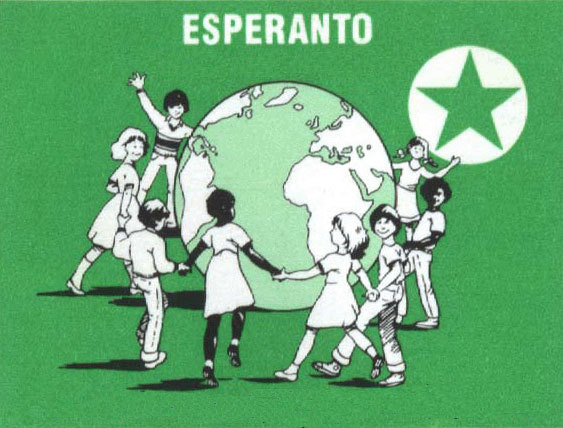
    Invented languages can be fun. Have you ever used a language like Pig Latin with your friends and watched as other people struggled to understand you? When you use these kinds of invented languages, your purpose is usually to keep other people, such as your parents, from understanding what you say. However, what if an invented language could actually help strangers from around the world to understand each other? That’s what a man named L. L. Zamenhof hoped when he invented the Esperanto language in the late nineteenth century.

    L. L. Zamenhof was born in the city of Bialystok, Russia (now Poland) in 1859. He later moved with his family to Warsaw, the capital city. When he was growing up he learned several languages, including Russian, Polish, and Latin. He became a doctor but dreamed of inventing a world language that would allow people of all countries to speak with each other. In 1872, he began to invent a language which he called Esperanto or Eo; the name “Esperanto” means “hope”. Zamenhof hoped that Esperanto would eventually overtake all other languages and gave it a third name, “La Lingvo Internacia” or “the international language.”

    In 1887, Dr. Zamenhof published a book outlining the grammar and vocabulary of his new invention. To make his new language easy to learn, L. L. Zamenhof designed it to be as simple as possible. He used many of the words that already existed in languages like German, French, and Spanish but simplified the spelling and pronunciation. He used the same alphabet as these languages (with a few additional letters) but reduced the number of words in the vocabulary.

    Instead of having a different word for everything, Esperanto uses a smaller number of basic words. These words then have extra letters called affixes added to the beginning or end of the word for different meanings. For example, “mi” means “I” and “mia” means “my.” “Mal” means “bad” and is used to change almost any word to its opposite. For example, “granda,” meaning “big,” becomes “small” with the word “mal” at the beginning. The language also has its own rules for how to put sentences together, much like English and other languages. It has fewer rules than most other languages, and the rules are generally easy to learn and follow.

    The idea behind Esperanto was to make sure that everyone has an equal chance to learn and use the language of communication. So far, Esperanto has spread to 115 countries, including Poland, where it first started. Eastern Europe has the largest population of Esperanto speakers, although many parts of Asia and South America also have people who use the language, and some in North America. By 1999, about two million people had learned to understand and speak Esperanto.

    Why would anyone want to learn a language like Esperanto? The language has never reached the kind of acceptance that its inventor hoped it would. However, if more people begin to learn it, who knows what might happen in the future?