
Tag: learning

  • A Career in Trades – From Insiders

    A Career in Trades – From Insiders

    With a plethora of career paths available to students once they leave high school, it can sometimes be difficult to determine where you should turn. You can go to university and spend four years gaining a Bachelors degree, you can obtain a diploma through college, or you can decide to study a trade. Increasingly, the latter option is becoming more and more popular with young people. But why?

    According to Line Breton, counsellor with the Ministry of Training, Colleges and Universities, a job in a trade is a stable career path. “Trades will always be needed in any economy,” she told us, “and your certification will always be recognized.”

    While going to school to obtain your certification, you will have the opportunity to work as an apprentice in your chosen field. JobsPeopleDo.com spoke with Bob Benner, owner of Hamill Machine Shop in Niagara Falls, Ontario. Benner has been regularly hiring apprentices for over 14 years and gave us the scoop on why the experience is so valuable.

    “An apprentice has the benefit of watching how the job is done and being able to go back to class with that experience,” said Benner. “They go to school to learn the right way to do things, but then get the practical experience and learn new methods while on the job.”

    Another often-overlooked benefit of a career in the trades is your ability to move up quickly and earn more money.

    “Once you start working, it gives you a chance to prove your worth,” says Benner. “In our shop, you may start at $14 per hour but can move up to as much as $27 per hour. If you work hard and keep your certification up-to-date, there is really nothing holding you back from earning more money. That is a big incentive for many students interested in trades.”

    The trades cover a wide array of different career paths, from mechanics to hairdressers, electricians to carpenters. No matter what path you decide on, both Benner and Breton agree that you need to follow your natural instincts.

    “Spend a semester working in a trade that interests you. It will expose you to both the positive and negative aspects of the job,” says Breton. This will help you to decide if this is the right trade for you.

    “Love what you do,” says Benner. “If you like working in trades, there will always be a place for you if you have your papers.”

    So why not discover the different options available to you in the trades sector? Check out all of the editorials and career profiles that we have lined up for you right here on the NEW JobsPeopleDo.com trades page!

  • Professional Associations: Editors and More

    Professional Associations: Editors and More

    What kind of job do you want after you finish your education? Do you want to work in a profession like teaching, law or editing? If so, you can already start to find out more about how you can prepare for your future job. One way of doing that is by joining a professional association. Through the association you might be able to find good contacts, learn what you need to know to work in your field, and gain many good insights into your chosen profession.

    Most jobs have some kind of group that helps to connect people with each other and to give them the information on improving their work. In some professions, membership in these associations is required before people can begin their careers. These associations help to make sure their members work at a high standard and often offer training courses to help keep each member’s knowledge is as up-to-date as possible. Doctors’ and nurses’ associations are some examples. In other professions, membership is voluntary.

    Whether membership in a professional association is voluntary or required, it can be worth the time and effort to join as soon as possible. Meeting with others and having the chance to discuss professional questions can be a very valuable experience. Editors, for example, frequently work alone and often need people in a professional association for support and information.

    Many professional associations provide courses and short workshops on topics related to the work for people to maintain their skills and to learn new techniques. The Editors’ Association of Canada and the Manitoba Editors’ Association, for example, offer a variety of seminars and workshops on writing, editing, and computer skills. Many associations also give members a chance to discuss specific questions they have regarding their work.
    Through a professional association, you can learn a lot about what it takes to work in that field. Do you think you might want to be a lawyer or an engineer someday? Before you commit to a long and expensive university program, it might be a good idea to learn as much as you can about the work. A professional association is also a good place to start to make contacts with people who might be able to help you find work in the future. In some cases, what you learn about the advantages and disadvantages of the profession might even help you decide between two different careers.

    How soon can you join a professional association? It depends on the group, but you’ll probably need to finish high school and maybe even a few years of university before you can become a member. However, you can probably still attend some of the association’s events, such as the annual general meeting, before becoming a member. Another thing to consider is the association’s membership fees. Most associations require payment for membership, but these are usually lower for students than for other members.

    Being part of a professional association might seem expensive, but the experience can be very rewarding!

  • The Power of the W’s

    The Power of the W’s

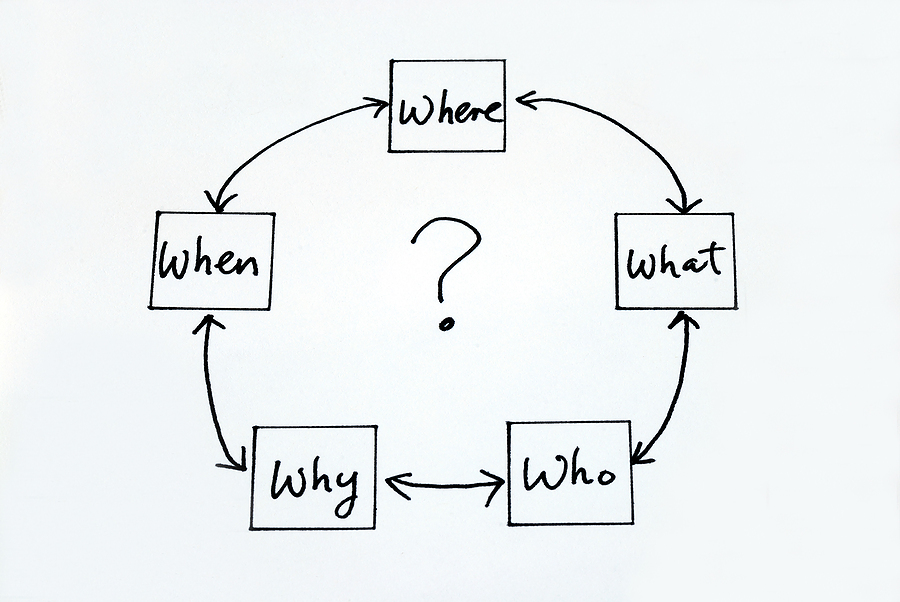
    You’ve probably heard of the five W’s a million times in class. This little family of questions – “Who, what, where, when, why” and their cousin “how” – are memorized by every student who ever has to put together a presentation. But their true power in everyday conversation is never really explained.

    No two people in the world agree on everything. You’re bound to talk to people on a daily basis who think differently than you do. Whether you like it or not, this will be the case for your entire life (unless you want to live alone in a cave in Antarctica!) So you might as well take what you can from these little disagreements.

    If someone tells you that aliens were in the neighbourhood last night, you can say, “You’re crazy” and walk away. Or, instead, you can use those W’s. Ask them “What do you mean?” or “Why do you think that?” or “How did aliens get here?” Your neighbour will tell you about all the evidence they collected. You’ll find out that there’s a thought process behind their opinion. People don’t just come up with wild ideas out of nowhere and fixate on them. They take the evidence around them and put together a case, the same way you or I do. Whether or not you agree, you are learning about your neighbour’s view of the world and giving yourself a broader perspective.

    Maybe you think peanut butter M&Ms are the best candy ever and your friend disagrees. If you just ask why, you might find out he’s allergic to peanuts – which is a great reason not to like peanut butter M&Ms! Or maybe he won’t remember why he thinks that and he’ll give it a second thought.

    So if you’re talking about global warming and someone else tells you it’s a myth, don’t call them an idiot. Ask them, “Why? What’s the point of the myth?” Maybe they’ll have a worthwhile answer or maybe they won’t. But it doesn’t hurt you to ask.

    A conversation is not a chance to prove you’re right. It’s a chance to inform yourself. Two people can sit and fight all day over which hockey player is the best or which prime minister is the best person to lead Canada, but arguing gets you nowhere if you don’t listen to what the other person is saying.

    So just ask questions. It’s easy and it takes you away from an argument and into the world of discussion. Just because all us humans live together, it doesn’t mean we feel the same things.

    Often, after asking these questions, you’ll find that even if you still don’t agree, at least you’ll have a better understanding of the issue as a whole and not just the side you see. Plus, you’ll have more respect for the person you’re talking to, who will be a normal, respectable person you happen to disagree with and not just a lunatic sent here to drive you crazy.

    If you really love asking these questions of other people, it might even lead you down an exciting career path! Journalists, writers, editors and reporters all ask these questions on a daily basis. Even people who work in marketing and advertising ask themselves these questions to determine the wants and needs of their target audience.

  • Online Learning: The Best Sites On The Web!

    Online Learning: The Best Sites On The Web!

    Finding information on any given subject is as easy as clicking a button on a search engine. Gone is the need for rows of encyclopedia’s, dictionaries and tangible books. Everything is available online at your discretion. Wading through the options, however, can take the shine off of the ease of accessibility. If you are looking for something specific, you still need to wade through your choices until you find a reliable source. This is not as easy as it sounds. Wikipedia, the wonderful, epic, online encyclopedia, is not considered a trustworthy website as it is user-generated. Literally any one can add and edit information at their discretion.

    Yet the World Wide Web is an amazing resource of quality material, knowledge from experts and an educational smorgasbord at your fingertips. It is argued that a quality education should not cost as much as some private universities are charging and that influential change makers are creating ways to offer learning opportunities through the internet that are solid and authentic. So how can you navigate your way through the dead ends, cobwebs and arm chair educators to find what you need? With a little research and a lot of time you can hunt out the best, but I have compiled a list of quality geography, history and science sites to get you on your way.

    Seterra is a geography program that offers a free download for a multiple level map game. Players choose their continent and go from there with either a wide focus, such as labeling the countries, or a more narrow one, such as finding the capital cities. The great thing about Seterra is the fun factor. It is easy to become addicted to improving your score and to forget that you are learning!
    www.seterra.net

    National Geographic is a trusted name and the organization has done a fabulous job of utilizing the internet to engage students of all ages with a variety of learning strategies that often come under the guise of games and videos.
    www.nationalgeographic.com
    http://kids.nationalgeographic.com/kids/

    The History Place is a gift to those who appreciate the past and love to dig deeper. It is a website filled with detailed information and pictures. The site has also won numerous awards.
    www.historyplace.com

    Ted Talks is an amazing website with hundreds of video presentations about ideas worth spreading by innovative change makers from around the world. You can find just about anything worth knowing about on this website.
    www.tedtalks.com

    Khan Academy is a free world class education that changed the way people learned online. It recently got a grant of money which has resulted in a lot more lessons and a lot more exposure.
    www.khanacademy.org

    BBC history section is an incredible source of material, both compelling and richly informative. Anyone who visits this website leaves with a better understanding of the world we live in.
    http://www.bbc.co.uk/history/0/

  • Languages Open Doors!

    Languages Open Doors!

    You might wonder what’s the point of learning a language that you don’t need to speak in order to get by. It’s a question worth asking and there’s more than one answer. Languages will help you in some obvious ways and some ways you might not expect, whether it’s opening doors to travel, providing job opportunities or giving you a unique perspective on the world.

    One of the obvious advantages of learning other languages is that they allow you to see places you wouldn’t otherwise see. Nearly every city that people travel to has something called the “tourist circuit.” What that means is there’s an area of the city filled with hotels, restaurants and activities like boat tours that are mostly reserved for tourists. These places are easy to visit, because everyone who works there speaks English. Sure, anyone can appreciate riding an elephant in Laos even if they don’t speak Laotian, but there’s much more to see in a country.

    If you go to Germany and speak German, you can talk to a local on the bus and find a club to see some good live music. If you go to China and speak Mandarin, you can leave the tour group and find out what “Chinese food” really is. More than that, just being able to have conversations with the locals is worth it. There’s a feeling of satisfaction from having worked at learning a language and reaching the point where it can get you more than the ability to read a menu.

    Languages also help with your career. Businesses from video game testing to restaurants to customer service often search for employees who speak a second language. If you’re in sales and you happen to speak Korean, you have a leg up in the industry when dealing with Korean customers. Businesses know that. It might seem strange to be learning Portuguese in an English-speaking country, but that means when an employer needs someone to edit documents written in Portuguese or deal with Portuguese customers, you have a rare skill that gives you a huge advantage in the job market.

    Knowing an additional language will also give you access to another culture. You get a master key to a whole set of books, music and movies that most other people can never see. Even within Canada, English news and French news will give you different points of view on the same issue. If you can read both, or if you can listen to your local Spanish radio station, you’ll know about things that other people will never have heard of and you’ll have more well-rounded knowledge about your city and environment.

    There are plenty of ways to learn a new language. Many people start learning in high school, but you can also attend private classes. Probably the most exciting way to learn is through a foreign exchange to an area that speaks the language. After all, studying a language will give you all the basics you need, but you have to actually use it if you want to understand it and to speak it smoothly.

    So if you happen to find Italian interesting, take your school’s Italian class even if you can’t see how it will help you right now. Follow your gut and you’ll end up in fascinating places.