Tag: science

  • Why is Drinking Water Important?

    Why is Drinking Water Important?

    Society constantly promotes the importance of drinking water and how vital it is to human life. Yet, a lot of us don’t really know why it is so important and often don’t include enough water in our diets. Water, otherwise known as H2O is composed of two hydrogen atoms bonding to one oxygen atom.

    Without water, humans would not survive. On average we can only live without drinking water for three days! This is because water hydrates our bodies and helps our bodies to function optimally. In fact, the human body in itself is made up of about 60% water. Many other animals also rely on water in some way or another for survival.

    Some of the benefits of drinking water include keeping your skin hydrated and looking healthy and improving the function of your kidneys and helping bowel movements. Drinking water also enhances muscle performance and makes you feel less tired. Your brain can especially reap the benefits because water can help you stay more alert and focused. Another benefit that a lot of people don’t know is that you can find relief from a headache by drinking water; they are often caused by dehydration.

    The recommended amount of water for humans is about 6-7 glasses of water per day or about 2 liters. This amount depends on the level of activity that you are participating in every day. If you are very active and play a lot of sports, drinking more water would be necessary. However, you should keep in mind that water is also found in the food we eat, so don’t count that out! For example one cup of yogurt is made up of about 85% water.

    A lot of us have a hard time including water in our diets. I can relate to this and also have difficulties drinking a lot of water. I think it lacks taste and is a bit boring compared to drinking juice or pop. If you also find it to be super tasteless then consider adding some fruit to your water in order to add some flavour. These fruit infused water creations are easy to make and will motivate you to include more water in your diet. Some of my favourite combinations are: raspberry-lime, pineapple-mint and strawberry-cantaloupe. You can be creative by experimenting with your own favourite fruits and maybe come up with a winning combination of your own!

  • STEM Jobs of the Future

    STEM Jobs of the Future

    Most of you probably know who Albert Einstein and Thomas Edison were, but you might not have heard of the famous mathematicians, John Nash or the ancient Greek scholar, Archimedes. Do you know what these people have in common? They were all part of a field of work often known as STEM, which includes science, technology, engineering, and mathematics. Work in these fields has always been important, and they are a good choice for anyone with a creative but disciplined mind and the ability to see how far their work can go.

    People like Albert Einstein and Thomas Edison are famous for a very good reason. They knew a lot of theory, but they also helped to change people’s everyday lives. Long winter evenings would be very different without Edison’s light bulb, for example. The value of work that mathematicians do is less obvious, but their discoveries make all kinds of other work possible. Without mathematics, for example, engineering would be impossible. Without engineers, we would have no bridges or tall buildings. Their calculations make it possible to build many of the towers and other structures we now have.

    Training for work in STEM jobs normally involves a high level of education. A minimum of a bachelor’s degree is normally necessary for work in these fields, and usually a master’s degree or PhD is required. The most specialized training is in engineering, where students learn to apply their education to building bridges and other structures. Other STEM fields of study lead to work in areas such as computer sciences, statistics, and agriculture. For many people, this involves further studies beyond a basic bachelor’s degree. With this training, they can become qualified to work in many different areas of society.

    Workplaces for people in STEM jobs can be in offices, universities, and laboratories. They might work with test tubes inside a building or travel around the country, collecting samples of soil or testing the water for anything that might harm the environment. Many people with training in STEM fields also become teachers or university professors, where they pass on their knowledge to others.

    STEM training can help in many areas of life. In biology and biomedical sciences, for example, research results can affect how doctors treat illnesses. Studies in mathematics can lead to work in gathering and analyzing statistical information, which can help people in government and many other fields to plan for the future. With so much variety in workplaces, salaries also vary. Low-level STEM jobs start at about $36,000 per year, but high-paid jobs can reach over $120,000 per year.

    What kinds of people work in STEM jobs? In the past, men tended to take most of the jobs in this field, and that can still often be the case. However, women are starting to become more involved in the work, and many of them are becoming well known in their fields.  Do these kinds of jobs appeal to you? Working towards a career in STEM fields can be a good choice for the future.

  • We Can Make Canada’s Reality Match Its Image

    We Can Make Canada’s Reality Match Its Image

    Canada is blessed with some of the last vestiges of pristine nature on Earth — unbroken forests, coastlines and prairies, thousands of rivers, streams and lakes, open skies, abundant fresh air. Many of us live in urban areas, but our spectacular landscapes are embedded in our history and culture. They define and shape us as people.

    We are also defined by our Constitution, which is far more than a set of legal prescriptions. It embodies our highest aspirations and values. As our nation’s top law, one would expect it to reflect our connection to the land, air, water and wildlife that keep us alive and healthy. Our Constitution’s Charter of Rights and Freedoms gives us freedom of expression, equal protection from discrimination and the right to life, liberty and security of the person. But it doesn’t mention the environment. How can we fully enjoy our freedoms without the right to live in a healthy environment?

    Some Canadians are further ahead than others. Quebec’s Environmental Quality Act and Charter of Human Rights and Freedoms both include environmental rights. Other provinces and territories — including Ontario, the Yukon, Northwest Territories and Nunavut — provide limited environmental rights. Worldwide, 110 countries enjoy constitutional rights to a healthy environment, and 181 of 193 UN member countries support recognition of such a right. Canada and the U.S. are among the exceptions.

    The sad truth is that Canada fares poorly among wealthy nations on environmental performance. A recent ranking by the Washington-based Center for Global Development puts Canada last of 27 industrialized nations. The Conference Board of Canada rated our country 15th out of 17 industrialized nations for standards on air pollution, climate change, water and other environmental factors. And the World Health Organization reports that 36,800 premature deaths a year and 13 per cent of illnesses and injuries in Canada are related to exposure to environmental hazards — costing us tens of billions a year in health-care expenses and lost productivity.

    The benefits of constitutional protection of the environment are many and the drawbacks few. In places with such a right, people have legal avenues to protect them from activities that pollute the environment and put human health at risk.

    For example, Argentina’s constitutional environmental-rights protection was used in a case where industrial pollution was seriously affecting the health of people along the Matanza-Riachuelo River. After residents sued the national, provincial and municipal governments and 44 corporations, Argentina’s government established clean-up, restoration and regional environmental health plans. It has increased the number of environmental inspectors in the region from three to 250, and created 139 water, air and soil quality monitoring points. There’s still much to be done, but three new water-treatment plants and 11 new sewage-treatment plants mean millions of people now have access to clean water and sanitation. Many garbage dumps and polluting industries were shut down. And the local economy benefited.

    A legal right to a healthy environment is not about hamstringing corporations; it’s about ensuring they’re run responsibly and that people’s health and well-being come first. It’s also about ensuring laws are enforced and penalties imposed when they’re violated. The total amount of fines imposed under the Canadian Environmental Protection Act from 1988 through 2010 (about $2.4 million) amounted to less than what the Toronto Public Library collected in overdue-book fines in one year, 2009 (about $2.7 million)! And it’s not a right-versus-left political issue. Jacques Chirac, France’s conservative president from 1995 to 2007, made constitutional recognition of the right to a healthy environment one of his priorities. More than 70,000 French citizens attended public hearings on the issue andFrance’s Charter for the Environment was later enacted with broad support from all political parties.

    Evidence suggests that stronger environmental regulation spurs innovation and competitiveness, so the right to a healthy environment can benefit the economy. In the aftermath of the Walkerton disaster, Ontario strengthened its drinking-water legislation, which stimulated development and growth of the water-treatment technology sector. Countries with constitutional environmental protection, such as Norway, often enjoy high economic and environmental standards.

    It won’t be easy to get the right to a healthy environment enshrined in Canada’s Constitution. But with public support and small steps along the way — such as encouraging legal protection from municipal, regional and provincial governments —we can make it happen.

  • Incredible Eyes

    Incredible Eyes

    Did you know that tuna have a third eye? Or that shrimp can see colours we can’t even imagine? We humans rely so much on our eyesight that it’s hard to imagine there are things it can’t do. At least your eyes can help you read a few strange facts about vision in the animal kingdom.

    Three-Eyed Beasts!
    Though it’s hard to see, many fish, reptiles and amphibians have a third eye called the parietal eye. It’s smaller than the other two and often covered by a layer of skin. It usually appears as a small, grey oval between their other eyes. The parietal eye can’t see the same way other eyes do, but it has a small lens and retina that allows it to detect light and dark. It helps animals keep track of the time of day and regulate their body temperature.

    That Creepy Glow
    Everyone’s seen that creepy Halloween image of a black cat in the middle of the night, invisible except for its shining green eyes. Why do cats have that unsettling trait and we don’t? Actually, it’s not just cats. Lots of animals can do this, particularly ones that are active at night (nocturnal). This includes horses, cows, dogs and hyenas. These animals have a layer at the back of their eye called the tapetum lucidum. When light shines at them from a bright source, they reflect it back like a mirror. This helps them see in the darkness.

    Seeing Heat
    Infrared vision – the ability to see heat – is something we think of superheroes having. Well, snakes have it, too! Pitvipers, as well as some boas and pythons, can all see heat. This actually has nothing to do with their eyes, but it’s still a sort of vision. It takes place in a “pit organ” between the eyes and the mouth, which functions differently in different kinds of snakes. Since many snakes have poor vision, this helps them to find warm-blooded prey. It’s so powerful that it even allows a blind rattlesnake to strike at the vital organs of its prey. Scientists have recently discovered that this pit organ is not just for hunting, it’s also a survival tool. The snakes that have it are better at finding a place to warm themselves up than other snakes who don’t.

    Expanding the Rainbow
    We have something in our eyes called cones that allow us to see colours. Our eyes have three cones: red, green and blue. By combining them, we see all the colours that we think of in a rainbow. But we’re missing out. Some other animals have far more cones than we do. The mantis shrimp takes the prize, with sixteen cones in their eyes! This means they see colours that we can’t even dream of. Scientists have also speculated that some women have a fourth yellow cone that allows them to see more variations in colour than the rest of us. So maybe you or your sister is privileged with seeing a wider rainbow than the rest of us.

    It’s easy to think of us humans as being the most evolved species on the planet. Sometimes we forget that even a cow sees things in a way that we can’t!

  • Report shows action on climate change is critical

    Report shows action on climate change is critical

    The Intergovernmental Panel on Climate Change just released the first of four chapters of its Fifth Assessment Report. It shows scientists are more certain now than in 2007 when the Fourth Assessment was released that humans are largely responsible for global warming — mainly by burning fossil fuels and cutting down forests — and that it’s getting worse and poses a serious threat to humanity. It contains hints of optimism, though, and shows addressing the problem creates opportunities.

    The IPCC was set up in 1988 by the World Meteorological Organization and UN Environment Programme at the request of member governments. For the recent study, hundreds of scientists and experts worldwide combed through the latest peer-reviewed scientific literature and other relevant materials to assess “the state of scientific, technical and socio-economic knowledge on climate change, its causes, potential impacts and response strategies.”

    Scientists are cautious. That’s the nature of science; information changes, and it’s difficult to account for all interrelated factors in any phenomenon, especially one as complicated as global climate. When they say something is ‘extremely likely’ or 95 per cent certain — as the latest report does regarding human contributions to climate change — that’s as close to certainty as science usually gets. Evidence for climate change itself is “unequivocal”.

    According to the latest installment, which cites 9,200 scientific publications in 2,200 pages, “It is extremely likely that human activities caused more than half of the observed increase in global average surface temperature from 1951 to 2010.” It also concludes oceans have warmed, snow and ice have diminished, sea levels have risen and extreme weather events have become more common.

    The report also dismisses the notion, spread by climate change deniers, that global warming has stopped. It has slowed slightly in recent years, scientists say, because of natural weather variations and other possible factors, including increases in volcanic ash, changes in solar cycles and, as a new scientific study suggests, oceans absorbing more heat.

    An increase in global average temperatures greater than 2 C above pre-industrial levels would result in further melting of glaciers and Arctic ice, continued rising sea levels, more frequent and extreme weather events, difficulties for global agriculture and changes in plant and animal life, including extinctions. The report says we’ll likely exceed that threshold this century unless we choose to act.

    This means a strong, concerted global effort to combat climate change is necessary to protect the health of our economies, communities, children and future. That will cost us, but far less than doing nothing. Although governments of almost 200 countries agreed global average temperature increases must be kept below 2 C to avoid catastrophic warming, we are on track for the “worst case scenario” outlined by the first assessment report in 1990. Research indicates it’s possible to limit warming below that threshold if far-reaching action is taken. We can’t let skeptics sidetrack us with distortions and cherry-picking aimed at creating the illusion the science is still not in.

    The reasons to act go beyond averting the worst impacts of climate change. Fossil fuels are an incredibly valuable resource that can be used for making everything from medical supplies to computer keyboards. Wastefully burning them to propel solo drivers in cars and SUVs will ensure we run out sooner rather than later.

    Working with other nations to meet science-based targets to cut global warming pollution and create clean, renewable energy solutions would allow us to use our remaining fossil fuel reserves more wisely and create lasting jobs and economic opportunities. That’s why the David Suzuki Foundation is working with the Trottier Energy Futures Project to identify clean-energy opportunities for Canada.

    Shifting to cleaner energy sources would also reduce pollution and the environmental damage that comes with extracting coal, oil and gas. That would improve the health of people, communities and ecosystems, and reduce both health-care costs and dollars spent replacing services nature already provides with expensive infrastructure.

    The IPCC report gathers the best science from around the world. It’s clear: There’s no time to delay. The first chapter examines the current science of climate change, the second will look at impacts and the third will consider strategies to deal with the problem. A report synthesizing the three chapters will be released in 2014. We must take it seriously.

  • Scientists Work to Solve Mystery of Dying Bees

    Scientists Work to Solve Mystery of Dying Bees

    When a swarm of bees landed on a tree in their yard a few years ago, a David Suzuki Foundation staffer and her husband became accidental beekeepers. They called an apiarist relative who came over and helped them capture the bees, build hives and round up equipment. Now they’re enjoying fresh honey and wax and have developed a fascination for the amazing insects. Staff shared that wonderment when she brought honeycombs and tools to the office for an impromptu lesson on beekeeping and bee behaviour.

    Bees are endlessly intriguing, and incredibly useful to us — and not just for honey and wax. If bees disappeared, it would be difficult, if not impossible, to grow much of what we eat. Bees pollinate crops ranging from apples to zucchini. Blueberries and almonds are almost entirely dependent on them. Some experts say they’re responsible for one of every three bites of food we eat. The economic value of pollination services from honeybees alone is estimated at $14 billion in the U.S. and hundreds of millions in Canada.

    Bees are good pollinators because — unlike some birds and other insects that are after nectar alone — they also seek out pollen, which they use along with nectar to feed the hive. In the process, they transfer pollen from the male part of one flower to the female part of another, fertilizing plants so they can develop seed-carrying fruits. Wild bees and domesticated honeybees are both important pollinators.

    In fact, research indicates wild bees may be more important for food-crop pollination than honeybees. That’s in part because a single species, such as honeybees, is vulnerable to mass disease outbreaks. Wild bees also use a wider range of pollination techniques and visit more plants, and so increase chances of cross-pollination, according to an article in the Guardian.

    Sadly, both wild and domesticated bees are in trouble, and that means we could be, too. Causes of phenomena such as colony collapse disorder and other declines in bee populations are not entirely understood, but scientists are getting closer to knowing why bees are dying. Ironically, much of it relates to agricultural practices. Modern methods of growing food are killing one of our biggest helpers in food production.

    Wild bees also face threats from climate change and habitat loss. A recent study published in Science found half the wild bee species in the U.S. were wiped out during the 20th century. That’s been partly attributed to “an increasing mismatch between when plants flowered and when bees were active, a finding consistent with climate change,” according to the Guardian.

    Causes of honeybee deaths are more complicated. Colony collapse disorder has wiped out millions of hives over the past decade, with pesticide use, parasites and poor nutrition eyed as likely culprits. Scientists from the University of Maryland and U.S. Department of Agriculture recently found pollen collected by honeybees was contaminated with a toxic mix of pesticides and fungicides. It appears the toxins make the bees more vulnerable to a parasite called Nosema ceranae, which is believed to cause colony collapse disorder. Pollen samples contained an average of nine different agricultural pesticides and fungicides, and as many as 21 in one case.

    The European Union has imposed a two-year ban on three neonicotinoids, a class of pesticides thought to be responsible for the dramatic declines in Europe’s bee populations, but only for use on “crops attractive to bees”. However, according to the Maryland study’s lead author, Dennis vanEngelsdorp, quoted in the online news outlet Quartz, “It’s a lot more complicated than just one product, which means of course the solution does not lie in just banning one class of product.”

    We need to get a handle on the toxic chemicals we use to grow food. If our practices kill insects and birds that make it possible to grow crops, we’re defeating their purpose and putting ourselves and the rest of nature at risk. As individuals, we can help bees. Stop using pesticides and join the call to ban the worst ones. Plant bee-friendly plants and gardens, make wild bee “houses” and learn more about our fuzzy, buzzing friends. Like our DSF staffer, you could even adopt a hive.

  • What Happens After a Forest Fire?

    What Happens After a Forest Fire?

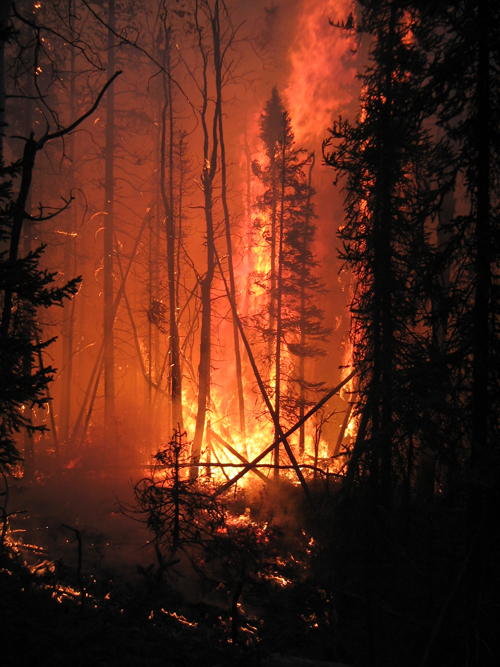
    Imagine what it would be like to watch a forest fire. Would you feel sad as you watched the trees and bushes burn and gradually turn to ash? Would you feel glad at the thought of all of the new life forest fires bring? It might seem strange to be happy at the thought of so much destruction, but forest fires can be a good and necessary part of the natural cycle of life. Without them, forests might never be the rich, green places they are – homes for animals and places where people can enjoy the outdoors.

    Every spring is the beginning of forest fire season in Canada, when about 10,000 fires will burn over the next few months. Some of those fires come from natural events, such as lightning striking a tree. More than half of them start because of human activity, such as when people forget to put out their campfires properly. By the time the snow and cold weather come at the end of the fire season, about 25,000 square kilometres of forest will be gone. Fires also pollute the air with carbon dioxide, which can make it difficult for people and animals to breathe. The animals that survived the fire will have to find new places to live, and plants will have to grow in place of the ones that were destroyed.

    Despite all of the destruction they cause, fires can also be good for the forests. They clear out all kinds of dead wood and thick grass that can choke new plants. With the extra space to grow, the plants can thrive. Trees like the Douglas fir and white spruce grow best on ground that has had a recent fire. Jack pines are especially dependent on fire. Their seeds come in thick cones which open up only with intense heat from a fire. Without an occasional fire to open up the cones, jack pines would eventually disappear. Many plants like these have ways of surviving even the worst forest fires.
    Despite opening up the ground for new growth, forest fires can damage the soil on the ground. With no plant roots to hold it down, the earth can blow away in the wind or wash away in heavy rains. Fire can also change the kinds of nutrients, such as nitrogen, that are available to feed the plants. The temperature of the ground can also rise, making it hard for certain types of plants to grow again, especially if the fire also affects the amount of moisture in the soil. Very intense fires can also affect small animals living in the ground, such as earthworms. Because these animals help to keep the soil healthy and full of nutrients, their loss can destroy the ground for years after a forest fire.

    So are forest fires good or bad? It depends on where they are, how big they become, and many other factors. However, fires are part of the natural cycle of life, bringing renewal and new growth to the world’s wooded areas.

  • Bean Leaves, Bedbugs and Biomimicry

    Bean Leaves, Bedbugs and Biomimicry

    Scientists often come up with new discoveries, technologies or theories. But sometimes they rediscover what our ancestors already knew. A couple of recent findings show we have a lot to learn from our forebears — and nature — about bugs.

    Modern methods of controlling pests have consisted mainly of poisoning them with chemicals. But that’s led to problems. Pesticides kill far more than the bugs they target, and pollute air, water and soil. As we learned with the widespread use of DDT to control agricultural pests and mosquitoes, chemicals can bioaccumulate, meaning molecules may concentrate hundreds of thousands of times up the food web — eventually reaching people.

    As Rachel Carson wrote in her 1962 book Silent Spring, using DDT widely without knowing the full consequences was folly. She showed it was polluting water and killing wildlife, especially birds, and that it could cause cancer in humans. Her book launched the environmental movement but did little to change our overall strategy for dealing with bugs. Although DDT was banned worldwide for agricultural purposes in 2001, the chemical is still used to control insects that spread disease.

    Recent research shows that widespread use of pesticides like DDT may have caused us to ignore or forget benign methods of pest control. Because the chemicals were so effective, infestations were reduced and there was little interest in non-toxic methods. But bugs evolve quickly and can become immune to pesticides. That’s true of bedbugs, the now ubiquitous critters that are showing up around the world in homes, hotels, schools, movie theatres — even libraries.

    But a method used long ago provides an effective and non-toxic weapon against the pests, according to a U.S. study in the Journal of the Royal Society Interface. The authors looked into the once-common Eastern European practice of spreading bean leaves around a bed to control bedbugs;. What they found was fascinating.

    “During the night, bed bugs walking on the floor would accumulate on these bean leaves, which were collected and burned the following morning to exterminate the bed bugs. The entrapment of bed bugs by the bean leaves was attributed to the action of microscopic plant hairs (trichomes) on the leaf surfaces that would entangle the legs of the bed bugs,” the scientists, from the University of California, Irvine, and University of Kentucky, wrote.

    They discovered that after bugs get caught up in the hooked plant hairs, they struggle to escape, and in the process vulnerable parts of their feet are pierced by the hooks, permanently trapping them. The research focuses on a way to replicate this. “This physical entrapment is a source of inspiration in the development of new and sustainable methods to control the burgeoning numbers of bed bugs,” the researchers wrote, adding that the method “would avoid the problem of pesticide resistance that has been documented extensively for this insect.”

    Other research has literally dug up pest control methods that go back millennia. An international team of archeologists recently found evidence that people living in South Africa almost 80,000 years ago made bedding out of insect-repelling plants.

    According to the journal Science, the research team found 15 different layers containing bedding made from compacted stems and leaves of sedges and rushes, dating between 77,000 and 38,000 years ago. One layer of leaves was identified as River Wild-quince, which contains “chemicals that are insecticidal, and would be suitable for repelling mosquitoes.” The archeologists also found evidence that people often burned the bedding after use, possibly to remove pests.

    These are just two examples of what we can learn from our ancestors and from nature. Because natural systems tend toward balance, the fascinating field of biomimicry has developed to explore what nature can teach us. It’s aimed at finding “sustainable solutions by emulating nature’s time-tested patterns and strategies,” according to the Biomimicry Guild website. “The goal is to create products, processes, and policies — new ways of living — that are well-adapted to life on earth over the long haul.”

    Maybe the truest sign of human intelligence is not to learn how we can shoehorn nature into our own agenda, but to see how we can better find our own place in nature.

  • Astronomers: Observers of Space

    Astronomers: Observers of Space

    It’s easy to imagine an astronomer spending their days (or, rather, their nights) gazing up at the stars observing planetary activity and other celestial bodies. To a certain extent you wouldn’t be too far off from the truth, but the life of an astronomer isn’t anywhere near as romantic as we’d like to think it is. In fact, the majority of the a professional astronomer’s career is spent analyzing pre-recorded data. There are occasions when an astronomer might take a seat at the helm of an optical telescope or use the recorded data from a radio telescope to inspect extraterrestrial space, but these instances will usually take place every few months or even years, depending on the nature of his or her research. Others exclusively use programmed computer simulations to research and simulate recorded findings to learn more about them. An astronomer’s primary focus, however, remains to observe planets, stars, galaxies and the ever changing intergalactic landscape.

    Education you say?
    The academic background of an astronomer can vary. There are universities like York and the University of Toronto that offer degree programs in Astronomy. Typically, a bachelor’s degree in science (usually chemistry or physics) is completed first. Then an aspiring astronomer might set his or her sights on a Master’s of Astrophysics and/or a Doctorate in Astronomy. Needless to say that there are a variety of paths to take, most of which generally stay close to the mathematics, chemistry and physics fields.

    Where can you get a job?
    Generally, astronomers find work with research institutions and universities. Working at a research station will require the astronomer to be fully focused on a branch of research, while a position at a university usually includes a teaching component, instructing courses at the undergraduate level, or supervising those at the master’s and doctorate levels.

    The skills you’ll need
    If you’re thinking of pursuing astronomy in the future, there are a few things you can start on now to help increase your chances of success. In high school it’s a good idea to take a wide range of courses while also taking all of the sciences and mathematics, of course. Geography and geology (if your school offers it) wouldn’t be such a bad idea either, since most celestial objects are composed of the same components as Earth. Lastly, work on developing your research skills, as well as reading and writing. As you enter post-secondary education you won’t have as much time to perfect those skills, so the sooner you feel confident in your ability to think critically and articulate your thoughts, the better.

  • Uncovering Life on Mars with the Curiosity Rover

    Uncovering Life on Mars with the Curiosity Rover

    The Curiosity Rover is a mobile laboratory built by NASA’s Mars Science Laboratory. Launched on November 26, 2011 from Cape Canaveral in Florida, Curiosity’s 23 month journey through outer space finally came to an end on August 6, 2012. On landing day, a live stream of NASA’s JPL (Jet Propulsion Laboratory) team gave the public a small glimpse into the landing process. Upon successfully reaching its destination, Gale Crater, Curiosity began its official mission to determine if that area of the Martian surface was ever able to sustain microbial life.

    Over the course of a two-year mission, Curiosity will deploy its 10 instruments to collect data on its surroundings. Curiosity will analyze samples of rocks, dust and minerals looking for any evidence of favourable conditions for life. In the first three weeks after arriving on Mars, NASA reported the rover had beamed back more data than all of the other rovers previously deployed to Mars.

    As of March 2013, Curiosity has uncovered considerable evidence that suggests ancient life existed on Mars. Samples from what is thought to be an ancient lake bed reveals the remnants of clay and minerals that could have only come into being with the presence of favourable conditions for microbes.

    Mount Sharp: The Key to a Martian History?
    Early on in its documentation of the Red Planet, Curiosity sent back various images of Gale Crater. One image, taken with a wide angle telephoto lens, revealed a “geological unconformity” in the layers of Mount Sharp, the 5km-high peak at the centre of Gale Crater. According to the New York Times, for planetary geologists, the layers of Mount Sharp are an archive of the planet’s history and could bring us closer to discovering if Mars sustained microbial life at one time.

    “Those layers are our ultimate objective,” says Mastcam (Master Camera) principal investigator Michael Malin. “The dark dune field is between us and those layers. In front of the dark sand you see redder sand, with a different composition suggested by its different color. The rocks in the foreground show diversity – some rounded, some angular, with different histories. This is a very rich geological site to look at and eventually to drive through.”

    Curiosity will take the better part of a year to make its journey towards Mount Sharp, making brief stops to take readings and test samples along the way.