Tag: Self Esteem

  • How to Be Body Positive: Five Things to Stop Telling Yourself

    How to Be Body Positive: Five Things to Stop Telling Yourself

    When it comes to self-esteem, one of the biggest hurdles is body image. Unfortunately this issue is difficult because it comes from within. Here are five things to stop saying to yourself right now:

                 Being overweight or underweight is unhealthy and promotes bad eating habits.

     We’ve all heard the concerned friend say something derogatory about weight, followed by “…but I’m just worried about your health.” They couch insults in concern for your well-being. However, health and weight are two separate issues. It’s true that being extremely over or under weight can lead to certain health conditions, but unless they’re your doctor, an outsider cannot determine your health by your appearance alone. Begin to separate health and weight in your own mind.

                 How I look is more important than anything else.

    As they say, beauty is only skin deep. Our society is wrapped up in the idea that appearance matters more than character. We have turned being beautiful into a contest, where the rules of what IS beauty change unpredictably. There’s more to you than what you see in the mirror. Make a list of all the wonderful qualities you have that are not visible. Post it where you can see it. Talk about an ego boost!

                 Advertising campaigns are looking out for my best interests.

    Companies spend millions of dollars on advertising campaigns. The commercials might look like they’re solving your problems, but their one goal is to make you buy their product. End of story. Where would the weight loss industry be if people quit believing the advertisements? When you think critically about the advertisements that you see every day, you can begin to make better choices for YOU, and not for what THEY think you should be.

                 Hating how I look will motivate me to work harder.

    Shaming yourself or others about how they look will never be a positive motivating factor for them to change. Feeling bad about yourself tends to lead to damaging behaviours, depression and worse. We always take better care of something that we love and care about, so change self-talk to caring words. It will make a big difference in how easy it will be to make healthy choices.

    When I finally look perfect, I will be happy!

    Again, outward appearance is a separate entity from emotions. Deciding to be happy NOW will boost your mood, elevate your confidence and make it easier to make healthy loving choices for your body. Think of two people, one with a permanent scowl, and the other with a cheery disposition. Knowing nothing else about how they look, which one will be more attractive to you? I bet you said the one with the smile.

    Being happy and healthy are choices that are in your control. You can’t control how others perceive you, but you can choose every single day to be cheerful, and to make healthy choices. I suggest thebodypositive.org or bigbeautifulwellness.com for more resources.

    Stay amazing!
  • Bullying and Self Esteem: The Bullied and the Bully

    Bullying and Self Esteem: The Bullied and the Bully

    Bullying continues to be a pressing threat among students, one that unfortunately is dismissed, misunderstood or ignored. The potential consequences of bullying, however, including dangerously low self-esteem (which can lead to serious, lifelong issues for victims), suggest that we have to address bullying more directly in an attempt to put a stop to it once and for all.

    If you are being bullied and experiencing problems of low self-esteem, you should remember that you are not alone. Many individuals are bullied at some point in their lives, and most, if not all, individuals experience low self-esteem. It’s likely even your bully faces this problem from time to time, which could be a reason why they are picking on you (in order to avoid some of the root causes of their own insecurity). Understanding that your experiences are similar to those of others is a great first step towards addressing bullying.

    A principle to live by—not just in situations of bullying, but whenever you’re interacting with others—is one of mutual respect. Try to empathize with the needs of others, while at the same time treating them with compassion, especially when they are going through a tough time. Communication is key: if you understand where people are coming from, you can more effectively respond to their actions. In situations of bullying, this actually includes the bully as well. A bully’s problem doesn’t give them an excuse to mistreat others at all, but knowing about this can shed light onto some of the potential solutions for conflicts. You could end up helping them in the end, rather than allowing the cycle to continue.

    Overall, bullying is not an acceptable way to manifest low self-esteem. Bullying, even if at face value, can seem like a nuisance and can equate to the physical, verbal, or emotional harassment of another individual. This is certainly not an okay way to treat others, and moreover can lead to some dangerous consequences. It is important to put an end to the bullying as soon as possible, hopefully before anyone gets hurt.

    If you are the bullied, stay strong, and know that any hurtful comments or actions are likely coming from a deeper place of insecurity for the bully him/herself. That being said, it’s absolutely important to reach out if the problem persists: speak to a friend or family member that you trust, seek counseling from a teacher or a guidance office, or even contact a help line (like Kids Help Phone: 1-800-668-6868). Low self-esteem as a result of bullying can escalate into serious anxiety or depressive disorders, sometimes even self-harm. Don’t let it get to that point, and don’t wait until it’s too late.

    If you are the bully, seriously consider the impact that your actions have on other individuals. If you are going out of your way to make others feel small, maybe you should take a look at your own life, problems, and insecurities before interfering in those of others. In light of the potential consequences that bullying can have on victims, respecting others should certainly be one of your top priorities.


  • Embrace Your Weirdness

    Embrace Your Weirdness

    A lot of people spend time trying to fit in. They don’t want to stand out or be considered different, weird, awkward or strange. Having the same clothes, interests and ideas seems like the most important thing in the world. Everyone just wants to fit in.

    But who established what is normal ?  And what exactly is considered weird? For most people, normal is what they are used to and weird is what they are not used to.

    The word weird is defined by www.dictionary.com in three ways, one of which is fantastic and bizarre. Interesting, isn’t it, how we took a word meaning fantastic and bizarre and created a label for people with an unflattering connotation? When you look at it like that, being “weird” really doesn’t seem that bad. In fact, some of the most successful people in the world were considered strange, different or weird growing up.

    Take Justin Timberlake, for example. He was once quoted as saying, “I grew up in Tennessee, and if you didn’t play football, you were a sissy. I got slurs all the time because I was in music and art.” He also suffers from Attention Deficit Disorder (ADD) and Obsessive Compulsive Disorder (OCD), both of which haven’t stopped him from succeeding.

    Prince Harry was ridiculed and bullied for being a redhead. He was quoted as saying he was teased “for being ginger.” However, not everyone made fun of him. His fellow soldiers in the British Army all wore red wigs to make him stand out less in combat.

    Michael Phelps is one of the most successful Olympians of all time, but as a kid his long limbs, large ears, and lisp caused him to be bullied and teased by his classmates. He also has ADD, and was told he’d “never be able to focus on anything.” Yet he didn’t let that stop him. He used all of his feelings, both good and bad, as motivation to win and as a result became the most decorated Olympian of all-time (winning 22 medals, 18 gold, 2 silver and 2 bronze).

    Chris Colfer, who plays Kurt on Glee, was called a “freak” growing up. He said, “I was teased daily, mainly because of my voice. They said I sounded like a chipmunk! Now everyone likes to remind me how they used to be my best friend, but I have a very good memory- that wasn’t always the case.”

    Lady Gaga has said she didn’t have the best high school experience. She said she didn’t fit in as a teen. “I wanted to be like Boy George and I felt like a freak. So I like to create this atmosphere for my fans where they feel like they have a freak in me to hang out with, and they don’t feel alone.”

    The list of differences goes on and on…

    Albert Einstein, whose name is pretty much synonymous with genius, was a theoretical physicist, and one of the most renowned scientists of all time. However, he didn’t talk until he was four and he didn’t learn to read until he was seven. It is now believed he had Asperger’s Syndrome, which is a form of Autism. Sir Isaac Newton is also believed to have had Asperger’s, and he too was a mathematical and scientific genius.

    Jay Leno, Orlando Bloom, Vince Vaughan, Alexander Graham Bell, John Lennon and Muhammad Ali all had dyslexia.

    Christopher Columbus, Karina Smirnoff, Eleanor Roosevelt, JFK, Walt Disney, Will Smith, Jim Carey and Ernest Hemingway and Bill Gates had ADD.

    Mozart, Daryl Hannah, Tim Burton, Andy Warhol and Susan Boyle all had or have forms of Autism.

    All of these people were considered weird for how they behaved, what they felt and what made them different. They all experienced obstacles they needed to overcome, and they did so by embracing their weirdness. They didn’t let others define who they were and what their limits would be.  They used their uniqueness to their advantage and succeeded. So don’t be afraid to embrace your weirdness too. As Lady Gaga has said, “let your teenage freak flag fly.”

  • The Road to Self-Acceptance

    The Road to Self-Acceptance

    How’s your self-esteem doing? If you’re like me, you tend to see the best in others—and the absolute worst in yourself. Self-acceptance can be a difficult concept to wrap your head around when you’re constantly beating yourself up for every little mistake. There’s good news, though; you aren’t alone by a long shot. By considering your lapses in self-acceptance, you might start to find that the people around you are in the exact same predicament.

    Maybe you’re hung up over your poor marks in Spanish, or you think you look “fat” today. Maybe you couldn’t run the ten-minute mile, or your shirt doesn’t match your shoes. Well, odds are – and it’s kind of funny if you think about it – the people around you probably won’t even notice. It’s not that people don’t care. But did you ever stop to wonder that you aren’t the only one who’s preoccupied with your own flaws? Just as you can’t stop thinking about what you’ve done wrong, the people around you are too busy wrapped up in their own shortcomings to really identify yours. Here’s what ends up happening: each individual person sees themselves as the odd one out, when in actuality, everyone is in the same boat.

    You’ve probably heard the (albeit cliché) phrase, “Nobody’s perfect.” Everyone has flaws, weaknesses, spots for improvement—but there’s no need to focus on those. The next time you find yourself hung up over your lesser traits, try redirecting your thoughts to something you actually like about yourself. “Maybe I’m not great at sports, but I have straight A’s in math.” “Maybe I’m a little shy, but I’m excellent at reading people.” It is important to acknowledge your shortcomings, but it is much more important to remember all the great things you have to offer. And when you’re trying out this little mental compromise, your good traits should always win out.

    You must realize, by this point, how damaging it is to sell yourself short. Time passes, things change, life goes on—basically, you are the only constant force in your life. Why not respect yourself for who you are? It’s normal to feel conflicted at times, but you should never feel like you don’t matter, and by obsessing over every little flaw, you’re doing yourself a serious disservice. The next time something goes wrong, instead of attacking yourself, focus on what you’re doing right. If you start to wean yourself off self-criticism, slowly but surely, those negative feelings will start to go away.

    As for myself? Well, I’m a work-in-progress too. But I know that I deserve more than to be constantly criticized and mistreated – even if it’s coming from my own head. The road to self-acceptance is a rewarding process, and in order to become stronger people we all have to overcome our insecurities. The self-hate stops now.

  • Escaping Negativity: Maintaining a Positive Lifestyle

    Escaping Negativity: Maintaining a Positive Lifestyle

    Negativity can seem like a losing battle. One thing goes wrong, then another, and then another, and you eventually wind up trapped in your own web of bad thoughts. An optimistic outlook on the world is also a healthy one; you’d be surprised how much of a difference a positive change in attitude makes. If you’re just having a bad day (or week, or month), don’t be discouraged. Keep the following things in mind and consider making some positive changes to your mindset and lifestyle.

    Begin with a positive environment, both physically and socially. Firstly, you should feel comfortable and confident around your group of friends, since they are the people you see day-to-day. If you constantly feel bogged down by their negativity—and especially if they disrespect you or put you down—maybe it’s time to reconsider who you spend your time with. Your physical environment is also important, especially if it’s a place that you spend a lot of time in (e.g. your work area). Even the simplest changes to a space (your favourite music, natural lighting or a comfortable chair) can improve your mood.

    Being positive doesn’t necessarily equate to having a perfect day; rather, it’s not letting the little things that go wrong completely ruin it. If you keep going back to the one “terrible” thing that happened to you in the morning, you’re going to feel sour throughout the entire day. Instead, it helps to have something to look forward to, even if it doesn’t seem like much at first—even something like looking forward to the weekend can do wonders for your motivation. Focus on that positive goal, and you’ll be able to handle all the wrenches in your plans with ease.

    Self-improvement is important. Often it can be helpful to evaluate what you did wrong (what part of that test you messed up, or what you said to your parents that made them angry). However, there is a fine line between self-improvement and negativity, and always focusing on your mistakes can make you forget all about the good parts of your life. When you’re giving yourself constructive criticism, treat it as a positive learning experience, not as an excuse to hate on yourself. You’ll learn more in the process and feel better about yourself, too.

    Finally, be thankful for what you have. Are you struggling under exam pressure? Did your professors assign too many readings? Somewhere out there, there’s an individual who can’t afford school at all—and would love to be in your shoes. There are lots of issues that seem huge in the moment, but in due time you realize how insignificant or silly they actually are. This is in no way an attempt to devalue your problems: everyone has problems! Just remember there’s definitely someone out there who not only shares your feelings, but might have a more serious issue on their hands.

    Stay positive and stay happy.

  • The Importance of Being True to Yourself

    The Importance of Being True to Yourself

    Each and every single one of us has a unique set of values, beliefs, and even inspirations that make us who we are as individuals. Naturally, as we progress through life, these very important elements that lie at the very core of our existence will slightly alter and adjust in a manner to allow for the new experiences and situations that we have endured. Life is much like a sea… at one time; we may drift peacefully and quietly atop the glistening waters. Then, there will be situations in which we must work to keep ourselves afloat waters that are ferocious and ominous in nature.

    Yes, it is true, there will be treacherous waters and frightening and intimidating clouds that linger among us throughout life, but it is essential that we each realize the importance of being true to ourselves. Is it not true that in the roughest of seas men learn to survive? Is it not among the violent waves that men learn to welcome and appreciate the calm surfaces of the water? Is it not true that when men face the evil of the storm that they relish in the calm that occurs after the thunders and treacherous waves have passed? If you are searching for the importance of being true to yourself, consider the man that was consumed by something much larger than he.

    In order to be true to yourself in the midst of peace and calmness, you must stand firm in your beliefs when staring opposition in the face. This is what assists in developing who you are, this is what defines you… your ability to overcome and learn.

    Many times in life, we will be faced with temptations that may defy who we are as individuals. It is so much easier to go with the natural flow of the tide than to push against it. It is human nature to want to experience as little complications as possible. What you must consider is if you are denying yourself of some important lesson, of something much bigger than you or you ever imagined. If floating with the direction of the tide defies you as an individual, and you feel as if you will not gain any type of insight as to who you are, or it does not allow you to stand alongside of your personal beliefs and convictions, turn that boat around and push with all of your might against the tide.

    It is better for a man to be true to who he is, rather than deny himself of all the rewards he will experience as standing alone in his personal convictions and beliefs.

    Being true to yourself is a very rewarding experience. Many experiences and situations will come your way and threaten the very existence of your unique stand in life. We pass over many different waves in life, many ships come in, and many ships pass us by. In many cases, animals of the wild such as sharks will want to engulf us in order to define their existence. Stormy skies will sometimes linger over us, and violent wars sometimes rest on the banks of life. In all of these things, you must stand strong in who you are. Allowing these situations to overcome you, violate you, and even control you in any way, just may be the point in which you lose sight of the horizon, sight of who you truly are.

  • How to Feel Good About Yourself

    How to Feel Good About Yourself

    Imagine for a second a world where you truly believe you can do anything; where the words “I can’t” no longer exist as part of your vocabulary. A place where you are as great as you always dreamed you could be. Now imagine that as your reality. Sounds great, doesn’t it?

    Here’s a few tips on how to feel good about yourself every single day!

    –Discover yourself: Get to know you. Listen to what you are thinking and feeling. Know what you want and why you want it. If it helps, keep a journal to help you understand yourself better.

    –Make a list every day: On the list write at least three things you really like about yourself. For instance, “I like how I can make people laugh even in uncomfortable situations” or “I like my eye colour.” It can be absolutely anything you like about yourself. This will help remind you why it’s great being you.

    –Remove the word can’t: Stop saying “I can’t do that” before you even try. Fear of failure is common and sadly it prevents most of us from doing things we’ve always wanted to do. To overcome this, think positively – don’t think of the worst possible scenario. Picture yourself succeeding. Some of the greatest experiences you will have in this life will come from overcoming things you thought you couldn’t do.

    –Treat others the way you want to be treated: It’s karma, baby; the idea you get back what you send out into the world. So send out the good, and always remember to treat others fairly and kindly.

    –Be prepared: One of the best ways to improve your self-confidence is by being prepared. Whether it’s a test you need to study for or a big basketball game coming up, make sure you are ready. Stop putting stuff off and get to it. You will feel more confident if you are ready to face what’s ahead.

    –Be grateful: Don’t dwell on what you don’t have. Be thankful for all you do have.

    –Exercise: It’s a great way to immediately boost your mood. It also helps in the long term to boost self-confidence. You will be healthier, happier and more sure of yourself.

    –Listen to your favorite song: Nothing gives me an instant boost of confidence and energy, especially in the morning, as my favorite song. It really helps me have the right attitude to face the day with.

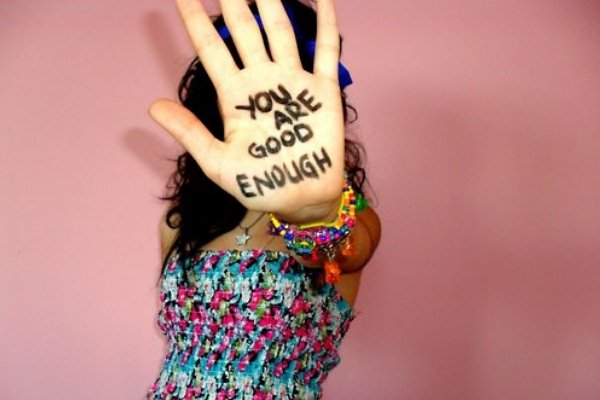
    The most important thing to remember is to think positively. If you believe you are good enough, the world will see you that way.

  • Why Gossiping is Bad for You

    Why Gossiping is Bad for You

    Gossip is something that is very prevalent in high school, generally due to all of the changes that people are going through. With any luck, gossiping will diminish as you grow up and move on with your life. It is a type of conversation that is not very productive in terms of creating positive change in communities, and in fact is often the source of a lot of unnecessary harm and pain.

    An interesting quote I read recently said: “Great minds discuss ideas, average minds discuss events, and small minds gossip about people. Life is much too short to be lived talking about people, gossiping, and stirring up trouble that has no substance. If you don’t understand someone, ask questions. If you don’t agree with them, tell them. But don’t judge them behind their back to everyone else” –Entrepreneur Secrets 2012.

    This quote draws attention to the fact that there are often conversations that you would rather avoid, because they are nothing but mean-spirited and a waste of time. I disagree with the quote because I think that there is a time and a place for gossip. Often talking about other people is a way of understanding the social world that we live in, which is just as important as understanding anything else. Sometimes not talking about other people is a mistake because you don’t have an opportunity to digest what another person is about. People are interesting, and talking about them is not always a waste of time. The linchpin is the intention that you have when talking about other people. If you are attacking someone out of mean-spiritedness and to gain power over that individual, you must be bored or looking to “stir trouble” like the quote above says.

    I agree with the above mentioned quote in how they draw attention to the fact that not understanding someone should bring you to asking more questions. This is really true, because most of the time other people are misunderstood simply for lack of information. This is not something to capitalize on with gossip, but rather an opportunity to learn more about something that you don’t understand. A popular old adage states “don’t hate what you don’t understand”.

    In school and work situations, there will always be times when people will say or do things that you don’t agree with. It is during these situations that it is healthy to vent about the outcome of a certain conversation or event. The distinction to be made, however, is between attacking someone’s character and attacking their words or behaviours. There are relevant points and there are irrelevant points when talking about other people. If you are trying to capture them as an individual with pros and cons, this is usually a better approach than trying to twist them into a character with only cons. Most people are not evil, so spreading rumors and creating a monster out of someone else is simply mean and counter-productive.

  • The Road to Self-Acceptance

    The Road to Self-Acceptance

    How’s your self-esteem doing? If you’re like me, you tend to see the best in others—and the absolute worst in yourself. Self-acceptance can be a difficult concept to wrap your head around when you’re constantly beating yourself up for every little mistake. There’s good news, though; you aren’t alone by a long shot. By considering your lapses in self-acceptance, you might start to find that the people around you are in the exact same predicament.

    Maybe you’re hung up over your poor marks in Spanish, or you think you look “fat” today. Maybe you couldn’t run the ten-minute mile, or your shirt doesn’t match your shoes. Well, odds are – and it’s kind of funny if you think about it – the people around you probably won’t even notice. It’s not that people don’t care. But did you ever stop to wonder that you aren’t the only one who’s preoccupied with your own flaws? Just as you can’t stop thinking about what you’ve done wrong, the people around you are too busy wrapped up in their own shortcomings to really identify yours. Here’s what ends up happening: each individual person sees themselves as the odd one out, when in actuality, everyone is in the same boat.

    You’ve probably heard the (albeit cliché) phrase, “Nobody’s perfect.” Everyone has flaws, weaknesses, spots for improvement—but there’s no need to focus on those. The next time you find yourself hung up over your lesser traits, try redirecting your thoughts to something you actually like about yourself. “Maybe I’m not great at sports, but I have straight A’s in math.” “Maybe I’m a little shy, but I’m excellent at reading people.” It is important to acknowledge your shortcomings, but it is much more important to remember all the great things you have to offer. And when you’re trying out this little mental compromise, your good traits should always win out.

    You must realize, by this point, how damaging it is to sell yourself short. Time passes, things change, life goes on—basically, you are the only constant force in your life. Why not respect yourself for who you are? It’s normal to feel conflicted at times, but you should never feel like you don’t matter, and by obsessing over every little flaw, you’re doing yourself a serious disservice. The next time something goes wrong, instead of attacking yourself, focus on what you’re doing right. If you start to wean yourself off self-criticism, slowly but surely, those negative feelings will start to go away.

    As for myself? Well, I’m a work-in-progress too. But I know that I deserve more than to be constantly criticized and mistreated – even if it’s coming from my own head. The road to self-acceptance is a rewarding process, and in order to become stronger people we all have to overcome our insecurities. The self-hate stops now.

  • Accept Yourself: Dealing with Body Image

    Accept Yourself: Dealing with Body Image

    People are afraid of their bodies. They avoid mirrors, scales and eye contact with strangers; they are not confident when they walk down the street. Somewhere along the way, they realized that they are not pretty enough, or tall enough, or fit enough – and it is taking over their lives. It has become “cool” to bring yourself down, to shed light on the things you hate about yourself and toil tirelessly in order to get rid of them. This is a destructive habit that you need to break right away.

    The media is one of the biggest culprits of this craze; by presenting us with paper-thin female supermodels and impossibly muscular male icons, these unrealistic ideals become something we feel obliged to live up to. That’s not to say there is anything wrong with the bodies of the people in the media. Every person is special in their own way. The thing is, people come in all shapes and sizes and by asking everyone to conform to a cookie-cutter ideal, the beauty industry is shattering the self-esteem of its subscribers all around the world.

    There is absolutely no fault in looking how you look, nor should you ever feel that way. So what if you hate your freckles or you think your feet are too big? What you pick out as ugly may be someone else’s cup of tea. Diversity is beautiful and it is often our differences that make us stand out from the crowd. We only want what we don’t have, but our bodies are our selves and we’re stuck with them whether we like them or not. Everyone has assets and everyone has flaws – hold your head high and show off yours with pride.

    Body image isn’t only about image, either. Consider your well-being and how comfortable you feel in your own skin. It is important to take care of yourself: while overeating should be avoided and exercise is important, excessive physical activity and calorie counting to the point of obsession is definitely not good for you. Find a balance because, ultimately, your happiness is the most important factor.

    Look at your body in a positive light. Focus on what you like and don’t look to others for visual cues. Your appearance is your identity and you are free to do with it what you like. Why bother emulating someone else when you are unique? You can definitely express yourself using your appearance. If you decide to dye your hair, get a tattoo or start an exercise program, that’s great — but make sure you’re making these decisions for yourself, not just following the leader. If you want to make changes, these changes are up to you and you alone – don’t let others dictate what you should look like or how you should feel about yourself. After all, it is your body.

    Accept yourself for who you are. Respect yourself and expect to be treated accordingly.