Tag: Self Esteem

  • It’s Only Hard Until It’s Not

    It’s Only Hard Until It’s Not

    Walking, tying your shoes, reading, riding a bike, solving equations…they all seem hard to do at first. But suddenly, one day – it’s not.

    We generally enjoy doing things we are good at because they are easiest. But when it comes to post-secondary education, this would be the wrong mentality to have. College is not easy and requires a lot of dedication. Be sure to pick a course you’re passionate about, but don’t be discouraged if it gets hard. You’re definitely not the only one feeling that way! There IS help. Find out what services your school offers and use them. Most schools have tutors, counselors and other friendly staff who are there to help you succeed.

    Do not let the difficulty of a particular course effect you personally. Accept that it will be hard and devote yourself to getting through it. Remember – no program is made to be impossible. The best part of learning is surprising yourself about how much you can do. The more you do it, the easier it will become. Giving up is easy, but generally the easy choice is never the right one.

    Never say you can’t do anything. The ones who quit so easily without giving it their all are the ones who never really intended to stay. If you are someone with low self-confidence, try saying or writing down some daily affirmations. It may seem silly, but there’s magic in it. Say, “I am strong enough, I am smart enough, I can do it,” over and over again. Looking into the mirror is the best way to do your affirmations because you are confronting yourself. Motivational speaker Tony Robbins said, “People who fail focus on what they will have to go through; people who succeed focus on what it will feel like at the end.” This is what you should focus on, not the obstacles. Think back at other goals you have never accomplished; goals you had set for yourself a year of more ago but gave up on. Now think about what you could have accomplished had you not given up on that goal. Before you submit your application to the program of your choice, go see a counselor and talk to them about it. They know what the courses consist of and can help you make the right decision for you.

    It’s your life, it’s your time, it’s your future!

  • Gossip Is Bad For You

    Gossip Is Bad For You

    Gossip is something that is very prevalent in high school, generally due to all of the changes that people are going through. With any luck, gossiping will diminish as you grow up and move on with your life. It is a type of conversation that is not very productive in terms of creating positive change in communities, and in fact is often the source of a lot of unnecessary harm and pain.

    An interesting quote I read recently said: “Great minds discuss ideas, average minds discuss events, and small minds gossip about people. Life is much too short to be lived talking about people, gossiping, and stirring up trouble that has no substance. If you don’t understand someone, ask questions. If you don’t agree with them, tell them. But don’t judge them behind their back to everyone else” –Entrepreneur Secrets 2012.

    This quote draws attention to the fact that there are often conversations that you would rather avoid, because they are nothing but mean-spirited and a waste of time. I disagree with the quote because I think that there is a time and a place for gossip. Often talking about other people is a way of understanding the social world that we live in, which is just as important as understanding anything else. Sometimes not talking about other people is a mistake because you don’t have an opportunity to digest what another person is about. People are interesting, and talking about them is not always a waste of time. The linchpin is the intention that you have when talking about other people. If you are attacking someone out of mean-spiritedness and to gain power over that individual, you must be bored or looking to “stir trouble” like the quote above says.

    I agree with the above mentioned quote in how they draw attention to the fact that not understanding someone should bring you to asking more questions. This is really true, because most of the time other people are misunderstood simply for lack of information. This is not something to capitalize on with gossip, but rather an opportunity to learn more about something that you don’t understand. A popular old adage states “don’t hate what you don’t understand”.

    In school and work situations, there will always be times when people will say or do things that you don’t agree with. It is during these situations that it is healthy to vent about the outcome of a certain conversation or event. The distinction to be made, however, is between attacking someone’s character and attacking their words or behaviours. There are relevant points and there are irrelevant points when talking about other people. If you are trying to capture them as an individual with pros and cons, this is usually a better approach than trying to twist them into a character with only cons. Most people are not evil, so spreading rumors and creating a monster out of someone else is simply mean and counter-productive.

    So resolve to stop the bad gossip in 2013!

  • The Bully, The Bullied and The Bystander

    The Bully, The Bullied and The Bystander

    There is a dangerous notion of what normal is for today’s young person, defined in part by media images, Hollywood and reality television. The rest in a cocktail definition is pieced together by those with a voice and a platform. Whether that platform is prom queen or king, fashion icon or cultural diva, it matters little for the message is clear from wherever it is preached; normal is what normal does and if you don’t fit the mold you do not fit in.

    The reality is that you either fit in or you are cast out. As long as you have a group to fit into, life should pace itself to the rhythmic meter that is everyone else’s. This is the important distinction. Friendship circles do not have to mimic each other, in actuality the only common factor they might have is the willingness to accept each other. What happens when there is no peer group that accepts you? What does a young person do when no one extends welcome and isolation creeps in? Suffer in silence? Dig deep for resilience and self-respect? Perhaps, but the number of suicides in this country has reached an all-time high. More and more teenagers are choosing to end their lives rather than fight for them.

    Why?

    The simple answer is that bullying is also on the rise, but this is an unsatisfactory conclusion. Bullies have always existed. Cruel pranks and hurtful words are nothing new. So why the percentage increase? It comes down to one thing, neither small nor easy to fix – the internet. Cyber-bullying is an emerging form of cruelty that is wreaking havoc on many a teen life and there is little to no awareness on the part of parents and teachers. Think of how fast gossip used to travel before Facebook, text and Twitter. We may live in the age of technology, but when it comes to human decency it appears we are in the dark ages. Kindness, acceptance and grace for our mistakes do not seem to exist.

    Barbara Coloroso, international speaker, author and expert on the topic of bullying, says bullying is about contempt; putting one down to build the bully up. She also asserts that bullying is a learned behaviour and that home is where children first learn how set their moral compass. Those who are bullied typically remain secretive about it. They don’t want their parents to think of them as weak and are afraid of retaliation. They endure while quietly losing themselves. The bystander is the one who watches the bullying and does nothing to prevent it. They may even contribute with laughter or taunts. Bystanders are usually afraid of bullies as well and may have low self–esteem. They worry about becoming a target themselves or go along with the bully for lack of a better option. Even if a bystander would never bully on their own, by not stepping in they are picking the side of the bully and in essence enabling them.

    It is too late to care after the fact. A suicide is not the time to ‘tsk’ the sad situation or wish something had been done about it. Kind words for those around us, a smile, inclusion and a willingness to see into the heart and soul of a person will make a difference. The greatest desire in all of our hearts is to be known.

    We all need to have a story. What do you want to do in the future? What are your goals? What would you like to get better at and how can you make that a reality? When we have a story we have focus on the horizon and all that lies ahead, which makes the daily struggles a little easier to endure.

  • Don’t Be What Others Want You to Be – BE YOU!

    Don’t Be What Others Want You to Be – BE YOU!

    What makes you different from others? Many people struggle to answer this question. It is the differences in each other that make us unique. We may have many things in common with each other, but there will always be one skill, one trait, one quality that sets us all apart.

    College is a good example of this. In it, there are thousands of students of different ages and from various walks of life learning something they have taken an interest in. When you are choosing programs, you are faced with a long list of career options and you may skim through a few without taking interest, knowing that this particular program is not for you. However, it may be exactly what someone else wants and it’s because of this that we are able to have a functioning society. There are so many jobs and for each job there is someone who this job is for. We have doctors and dentists, teachers and chefs, engineers and business owners, garbage collectors and police officers and we all need each other but could not do each other’s jobs. I would not want my dentist making my food or Gordon Ramsey teaching my children. We are not all supposed to be great at the same things. Though society and its media encourage us to look alike and be alike, it actually needs us to be different and, more importantly, ourselves.

    Too many people hide their true talents and skills, in fear that they will stand out too much as being “different”. They fear that they will end up unhappy, doing a job they don’t really like. We all seek acceptance in each other to the point that we lose ourselves and more or less put our true self away in a box, trying to mold ourselves to suit the desires of other people. Change or self-improvement is a good thing, IF you’re improving YOURSELF. Going to school, losing weight, building some muscle, changing your hair color, whitening your teeth – these are all fine things but they do not change the core of you. You are still you when you graduate; You are still you a few pounds lighter. These are only improvements on what you already are and it doesn’t change the true you inside.

    It is so important to discover yourself and be yourself because society needs you just as you are. Realizing this will help you bloom and excel in things you are passionate about. It is easy to have things in common with people these days thanks, to media, trends and culture. It’s okay to have fun with those things, but don’t lose yourself in it and don’t let it consume you. For everyone’s sake, do not be something you are not.

    The world doesn’t need another one of THEM. It needs just one of YOU.

  • Benefits of Volunteerism in High School

    Benefits of Volunteerism in High School

    High school students, it’s time to get motivated! Volunteering while still in high school provides you with the framework for your future career path, as well as instills in you the importance of giving back to others. It may seem difficult to fit in volunteer hours with such a busy schedule of classes, studying and extracurricular activities, but with a little planning you can achieve your volunteer goals. Many not-for-profit organizations only require a few hours a week of your time. For example, the Ottawa Humane Society has a dog walking program that requires a commitment of 2 hours per week. If you love dogs, that is a very easy commitment to make! Even though you may not be reimbursed financially for your time, volunteering is something that can be put on your resume that will help impress future employers and university admissions officials alike. Below, a list of just some of the benefits that volunteerism can provide you:

    Impress Admissions Officials
    You’ve got the great GPA and amazing standardized test scores. But what makes you stand out from students with similar grades? The answer is what you do in your spare time. Volunteer hours and part-time jobs listed on your application will really make you shine. Volunteerism is a great way to show admissions officials that you not only care about the community, but are able to manage your time well enough to balance a volunteer job with your other commitments. By all means, don’t spend every spare minute working on your volunteer hours – you need to balance volunteerism with your personal life, too. But a sustained commitment to one particular cause over a year or two shows that you are willing to stick to something that you care about. This will be very impressive to admissions officials and work in your favour.

    Get Involved Outside of School
    Volunteering allows you to meet people you may not have had the opportunity to meet otherwise, especially if you are volunteering outside of school. If you have heard the term “networking”, that is essentially what you will be doing! You are forming a network of contacts that can help you get to where you want to be. If you already have a good idea of what you want to study in college or university, you can volunteer your time in that field. For example, if you want to study psychology, why not volunteer your time with the Canadian Mental Health Association? You can find volunteer opportunities for almost anything that interests you, so spread your wings outside of your school and gain immeasurable benefits!

    Earn Academic Credit and Scholarships
    Some high schools require you to put in volunteer hours in order to graduate. Others offer extra credits or scholarship opportunities if you do volunteer your time. Check with your high school’s administration office to see if any of these opportunities are available to you. If they are, take advantage of them! A scholarship will help you to cut down on your student loans when you reach university, and extra credits will look great on your transcript to help you land the university placement of your dreams. Check out studentawards.ca to find all of the different community service scholarships that are available – your volunteerism won’t only impress your university of choice, but also the officials who will be deciding whether or not you obtain your scholarship!

    Above are the curricular advantages to volunteerism. But let’s not forget the personal advantages that come from it, too. Giving back to your community and contributing positive energy to the world will do wonders for your self-esteem and self-worth. Volunteering is the way to go!

  • Self-Improvement 101

    Self-Improvement 101

    As we face September and the coming of a whole new school year, we are often faced with the same questions: Am I good enough? What can I do to make myself a better person, the person I truly want to be?

    I recently read an article that focused on improving one’s relationships by remembering six negative qualities of past relationships. Instead of dwelling on them, take those negative aspects and turn them into positive aspects to seek and ask for. For example, instead of looking at a past bad relationship in terms of, “I never want to go out with someone who cheats”, think, “I am looking for someone who will be true to me”. This type of thinking trains your brain to ask for what you do want as opposed to what you don’t want. It is a great way of turning negative points in your life into positive points and helping you to further your personal growth. So, for this effort in self-improvement, I suggest elaborating on the example of negative relationships. However, this time we will be using it to improve our relationship with ourselves.

    Pick six aspects about yourself that you find negative or that you would like to change. Here are my examples, and remember to replace “I don’t want” with “I do want”:
    – “I do want to be fit, athletic and healthy inside and out”
    – “I do want to be practical, smart and well-adapted to my world”
    – “I do want a job that will provide me with a source of steady income”
    – “I do want to live independently”
    – “I do want to have routines that keep me healthy and organized”
    – “I do want to have social relationships that nourish and energize me”

    Once you’ve nailed down some good goals or positive statements about what you want in your life, post these somewhere you can see them every day. Choose to look at this list whenever you have a negative or a self-destructive thought. Remind yourself of what you want: “I want to be fit, athletic and healthy inside and out”, and then move to setting and reaching a goal that will get you there. This way of changing negative cognitions into positive self-statements is a great way of improving your self-esteem and self-image. The way that we look at ourselves is in our control, and when you believe you can succeed, you can do anything!

    The important aspect to keep in mind is repetition. Be prepared to tell yourself positive statements over and over again. Be prepared for setbacks; You will have moments and days when it seems like you will not be able to convince yourself of your worth. It is those moments when you will have to be strong and hold on, feeding yourself positive thoughts to replace your negative thoughts. Eventually, with repetition, this will become a habit, an ingrained tendency, that will make your life that much easier! Good luck!

  • G Where are you? Finding yourself

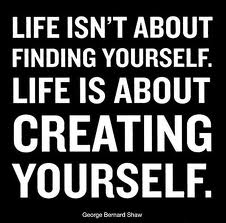
    G Where are you? Finding yourself

    Imagine your life as a timeline graph, from birth to present to future.

    Write down all of your major goals in your life that you feel you want to achieve. In turn, write down the events in your life that have already happened that you believe have affected you and have made you who you are today . This isn’t an exercise in wallowing but one about clarification and identification of issues that might be hampering your present potential and the blossoming of your true sense of self.
    Spend a little time writing with clarity about the past in your timeline.  As much as where you’re headed is important, so is making peace with the past. A timeline is an incredibly objective method for marking down past occurrences in your life that you consider to have been major. You can look at them as formation blocks and as changing experiences along your timeline without imbuing them with too much emotion (as you would  within your personal diary) . Keep it simple, real and condensed to the major effect or lesson learned from each past incident.

    When analyzing negative past experiences, look to the positive learning message in it and don’t dwell on the mistakes or the negatives. Everyone has these blips in their timeline but pretending they are either worse than they were or non-existent, won’t do you any favors. Instead, recognize that if it had not been for those past experiences you would not be where or who you are today. If there has been an abuse situation, remember, abuse thrives when kept a secret , telling someone it the antibiotic.

    Finding yourself is an enlightening experience and you become self sufficient . It  is a time of harmony because you develop that philosophy or belief system that will carry you throughout the rest of your life. When you love yourself and who you are, you will savor and enjoy both life’s pain and pleasures.