Tag: trades

  • Following Your Heart Into the Trades

    Following Your Heart Into the Trades

    Sometimes it might feel like you’re pressured to have your entire future planned out already. This is a false misconception, especially with the rapid way education and workforce demands are changing. The idea that you need to pursue one life or career path is an outdated one in today’s fast-paced, technologically driven society.

    Unlike in past decades, in the last few years education and work has shifted. It is now becoming more and more common for students to take several programs before they decide on one that they actually enjoy. It is also becoming more common for older members of the workforce to go back to school to re-train or take on new skills and professions to keep up with the competitive job market.

    It may seem like there is a lot of pressure to get into a good college or university or else you won’t be considered “successful”, but this is simply not the case. Many other fields, especially the trades, are accepting employees right out of high school. Due to the growing demand in Canada for tradespeople such as welders, plumbers, pipe fitters, and electricians. Some trades workers are making $50 or more an hour at the age of only twenty-four.

    Money isn’t everything, however, and the most important part of life is enjoying it, which pretty hard to do when you’re doing something that you hate. Yes, money is necessary for things like rent, food and entertainment, but its much more important to be happier and emotionally stable than depressed from spending every day doing something you do not enjoy.

    The world is a large place, and with the internet at your fingertips there is almost no limit to what you can be and accomplish if you set your mind to it. Just because one thing doesn’t work out it doesn’t mean something else won’t. You may even stumble into something that you really enjoy without thinking about it.

    In today’s constantly evolving job market, it’s not uncommon for people to re-train, re-educate and switch professions many times in their life. There are students who spend years at university for a Master’s program but end up going into the trades.

    So while it seems like there is a lot of pressure to choose an education path now, it is important to remember that money and prestige aren’t necessarily going to bring you any sort of happiness – but finding something that you love to do certainly will.

  • Career Profile: Patternmaker

    Career Profile: Patternmaker

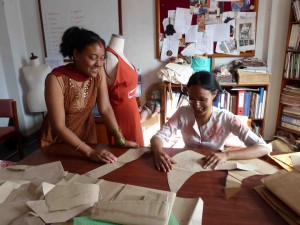
    Patternmakers in this unit group create master patterns for the production of garments, footwear and other textile, leather or fur products.

    Examples of Occupational Titles
    -dress patternmaker
    -embroidery patternmaker
    -fur garment patternmaker
    -garment patternmaker
    -leather products patternmaker
    -shoe patternmaker
    -textile products patternmaker

    Sources of Employment
    Job opportunities will result mainly from the need to replace patternmakers who will be retiring or leaving this occupation to work in other occupations or because they have been promoted to fashion designer or management positions in the clothing industry.

    People can advance their careers somewhat within the same occupation. Thus some applicants in this occupation start out as graders responsible for adapting patterns to different sizes, before obtaining positions as patternmakers.

    Industries
    According to census data, in 2006 more than 75% of patternmakers – textile, leather and fur products worked in manufacturing, primarily in the clothing industry (approximately 68%). As well, 12% worked in the clothing retail and wholesale trade and 6% in design services. Since jobs in design services and in retail and wholesale trade are also related to the manufacture of garments, generally in companies that sell clothing, and design clothing lines and prepare their own patterns before contracting out the production, it can be concluded that in 2006 more than 85% of jobs in this occupation were related to the manufacture of clothing.

    There are proportionally many more patternmakers in the women’s and children’s clothing industries than there are in the men’s clothing industry. In fact, the men’s clothing industry usually has a much smaller selection of varieties and styles, and is characterized by mass production.

    Education and Training
    It is possible for candidates to find work in this occupation if they have extensive experience in the clothing industry. However, considering the growing use of computer tools in this occupation, successful completion of specialized training is increasingly required.

    Thus employers usually require at least a vocational diploma (DEP) in apparel design. A diploma of collegial studies (DEC) in fashion design are sometimes required. The DEC is an important asset for promotion to fashion designer or supervisory positions.

    Basic knowledge or experience of garment construction may be required, as patternmakers are sometimes asked to sew samples and to alter patterns in order to maximize the cost-effectiveness of sewing activities.

  • Choosing a Trade

    Choosing a Trade

    With more than 200 trades across Canada to choose from, finding the right one can seem challenging. Here are some tips to help you identify what would be a perfect career choice for you.

    Consider a wide range of trades
    Do you like working in the garden, or fixing your car? Do you enjoy home maintenance projects or styling hair? Get familiar with the many trade choices first, and think about what work you like to accomplish.

    Narrow your choices down to 5 or fewer trades
    Keep it manageable by narrowing down your choices. Get as familiar as you can with the work, to see if you’d like it.

    Observe a trade or participate in a youth apprenticeship or pre-apprenticeship program
    Some school boards offer Observe a Trade days, which will give you the opportunity to see what’s involved in your favourite trades. For something more comprehensive, you can also participate in a pre-apprenticeship program, which gives you practical, on-the-job training with hours that are often transferable to your full apprenticeship.

    Talk to people who work in the trade
    See if you can get in touch with a journeyperson who works in the trade you’ve targeted, to see what advice they can give you. This is a great way to learn some tips from those who have already been there.

  • Non-Red Seal Trades

    Non-Red Seal Trades

    There is more to the trades than you think – here are other jobs that are part of the trade industry. See if one feels right for you! Click through to see more information on select trades from Service Canada, and check back each month as we feature profiles of some of these exciting careers right here on Jobs People Do.

    Construction Sector
    –Cement (concrete) Finisher
    -Concrete Pump Operator
    –Construction Millwright
    –Electrician (Domestic and Rural)
    -Exterior Insulated Finishing Systems Mechanic
    -Hazardous Materials Worker
    –Heat and Frost Insulator
    – Heavy Equipment Operator
    – Dozer Operator
    – Excavator Operator
    – Tractor Loader, Backhoe Operator
    -Native Residential Construction Worker
    –Painter and Decorator: Industrial
    -Precast Concrete Erector
    –Precast Concrete Finisher
    –Refractory Mason
    –Residential Air Conditioning Systems Mechanic
    –Residential (low rise) Sheet Metal Installer
    -Restoration Mason

    Industrial Sector
    -Bearings Mechanic
    –Blacksmith
    -CNC Programmer
    -Composite Structures Technician
    –Die Designer
    –Draftsperson (Mechanical, Plastic Mould Design, Tool and Die Design)
    -Electrical Control (Machine) Builder
    -Electrician – Signal Maintenance (TTC)
    -Elevating Devices Mechanic
    -Entertainment Industry Power Technician
    -Facilities Mechanic
    -Facilities Technician
    –Fitter-Assembler(Motor Assembly)
    –Gas Technician
    -Hydraulic/Pneumatic Mechanic
    -Light Rail Overhead Contact System Lineperson (TTC)
    -Locksmith
    -Machine Tool Builder and Integrator
    -Mould Designer
    -Mould Or Die Finisher
    -Mould Maker
    -Optics Technician (Lens and Prism Maker)
    –Packaging Machine Mechanic
    –Pattern Maker
    -Precision Metal Fabricator
    -Pressure Systems Welder
    -Process Operator (Food Manufacturing; Power; Refinery, Chemical and Liquid Process; Wood Products)
    -Pump Systems Installer/Mechanic
    –Railway Car Technician
    -Relay and Instrumentation Technician
    -Roll Grinder/Turner
    -Saw Filer/Fitter
    -Ski Lift Mechanic
    –Surface Blaster
    –Surface Mount Assembler
    -Thin Film Technician
    –Tool And Cutter Grinder
    -Tool And Gauge Inspector
    –Tool/Tooling Maker
    –Tractor Trailer Commercial Driver
    –Water Well Driller

    Motive Power Sector
    –Alignment and Brakes Technician
    –Auto Body Repairer – Br.2
    -Automotive Electronic Accessory Technician
    –Automotive Glass Technician
    –Marine Engine Mechanic
    -Motive Power Machinist
    -Powered Lift Truck Technician
    –Small Engine Technician
    -Tire, Wheel and Rim Mechanic
    –Transmission Technician
    -Turf Equipment Technician

    Service Sector
    -Aboriginal Child Development Practitioner
    –Agriculture – Dairy Herdsperson
    –Agriculture – Fruit Grower
    –Agriculture – Swine Herdsperson
    –Arborist
    –Baker
    -Bicycle Mechanic
    –Chef
    –Child and Youth Worker
    -Child Development Practitioner
    –Cook – Assistant Br. 1
    –Developmental Services Worker
    –Educational Assistant
    –Electronic Service Technician
    -Gem Setter/Goldsmith
    -Hardware, Lumber and Building Materials Retailer
    –Service Sector Horse Groomer
    -Horse Harness Maker
    –Information Technology (Hardware Technician,  Network Technician)
    –Institutional Cook
    -IT Contact Centre (Customer Care Agent, Sales Agent, Technical Support Agent)
    -Micro-Electronics Manufacturer
    -Native Clothing and Crafts Artisan
    -Network Cabling Specialist
    –Pool and Hot Tub/Spa Installer
    –Pool and Hot Tub/Spa Service Technician
    –Retail Meat Cutter
    -Saddlery
    –Special Events Coordinator
    -Utility Arborist
    -Wooden Boat Rebuilder/Repairer

  • Skilled Trades Workers Key Drivers of Canadian Economy

    Skilled Trades Workers Key Drivers of Canadian Economy

    Nearly half of Canadians don’t know how to install a faucet, replace a zipper or change a flat tire, a new survey has found.

    “There’s a serious underlying message here that many Canadians are lacking basic, practical knowledge when it comes to completing everyday skills, admitting they require help,” Skills/Competences Canada CEO Shaun Thorson said in a release about the survey.

    The survey, conducted April 12 to 16, asked 1,011 Canadians in telephone interviews whether they could complete certain tasks. The results are considered accurate to within 3.1 percentage points, 19 times out of 20.

    The Harris/Decima survey found 46% of Canadians don’t know how to install a bathroom or kitchen faucet, while 14% said they have no idea how to turn off the water main in their home.

    When it comes to fixing their clothes, 45% of Canadians said they can’t replace a zipper. This percentage jumped to 63% when just the men were counted.
    About a third of Canadians – 31% – don’t know how to install a light fixture.

    As well, 28% of Canadians don’t know how to change a flat tire – but when looking at just the women’s answers, that jumps to 48%.

    “Industries that depend on skilled trade workers are key drivers of the Canadian economy contributing over 50% of Canada’s GDP. But the growing shortage of skilled trade workers is not only a concern for industry – it is only a matter of time before every Canadian will feel the impact in their everyday lives,” Thorson said.

    Skills/Competences Canada commissioned the survey. The organization promotes careers in skilled trades and technologies.

  • Non-Red Seal Trades

    Non-Red Seal Trades

    There is more to the trades than you think – here are other jobs that are part of the trade industry. See if one feels right for you! Click through to see more information on select trades from Service Canada, and check back each month as we feature profiles of some of these exciting careers right here on Jobs People Do.

    Construction Sector
    –Cement (concrete) Finisher
    -Concrete Pump Operator
    –Construction Millwright
    –Electrician (Domestic and Rural)
    -Exterior Insulated Finishing Systems Mechanic
    -Hazardous Materials Worker
    –Heat and Frost Insulator
    – Heavy Equipment Operator
    – Dozer Operator
    – Excavator Operator
    – Tractor Loader, Backhoe Operator
    -Native Residential Construction Worker
    –Painter and Decorator: Industrial
    -Precast Concrete Erector
    –Precast Concrete Finisher
    –Refractory Mason
    –Residential Air Conditioning Systems Mechanic
    –Residential (low rise) Sheet Metal Installer
    -Restoration Mason

    Industrial Sector
    -Bearings Mechanic
    –Blacksmith
    -CNC Programmer
    -Composite Structures Technician
    –Die Designer
    –Draftsperson (Mechanical, Plastic Mould Design, Tool and Die Design)
    -Electrical Control (Machine) Builder
    -Electrician – Signal Maintenance (TTC)
    -Elevating Devices Mechanic
    -Entertainment Industry Power Technician
    -Facilities Mechanic
    -Facilities Technician
    –Fitter-Assembler(Motor Assembly)
    –Gas Technician
    -Hydraulic/Pneumatic Mechanic
    -Light Rail Overhead Contact System Lineperson (TTC)
    -Locksmith
    -Machine Tool Builder and Integrator
    -Mould Designer
    -Mould Or Die Finisher
    -Mould Maker
    -Optics Technician (Lens and Prism Maker)
    –Packaging Machine Mechanic
    –Pattern Maker
    -Precision Metal Fabricator
    -Pressure Systems Welder
    -Process Operator (Food Manufacturing; Power; Refinery, Chemical and Liquid Process; Wood Products)
    -Pump Systems Installer/Mechanic
    –Railway Car Technician
    -Relay and Instrumentation Technician
    -Roll Grinder/Turner
    -Saw Filer/Fitter
    -Ski Lift Mechanic
    –Surface Blaster
    –Surface Mount Assembler
    -Thin Film Technician
    –Tool And Cutter Grinder
    -Tool And Gauge Inspector
    –Tool/Tooling Maker
    –Tractor Trailer Commercial Driver
    –Water Well Driller

    Motive Power Sector
    –Alignment and Brakes Technician
    –Auto Body Repairer – Br.2
    -Automotive Electronic Accessory Technician
    –Automotive Glass Technician
    –Marine Engine Mechanic
    -Motive Power Machinist
    -Powered Lift Truck Technician
    –Small Engine Technician
    -Tire, Wheel and Rim Mechanic
    –Transmission Technician
    -Turf Equipment Technician

    Service Sector
    -Aboriginal Child Development Practitioner
    –Agriculture – Dairy Herdsperson
    –Agriculture – Fruit Grower
    –Agriculture – Swine Herdsperson
    –Arborist
    –Baker
    -Bicycle Mechanic
    –Chef
    –Child and Youth Worker
    -Child Development Practitioner
    –Cook – Assistant Br. 1
    –Developmental Services Worker
    –Educational Assistant
    –Electronic Service Technician
    -Gem Setter/Goldsmith
    -Hardware, Lumber and Building Materials Retailer
    –Service Sector Horse Groomer
    -Horse Harness Maker
    –Information Technology (Hardware Technician,  Network Technician)
    –Institutional Cook
    -IT Contact Centre (Customer Care Agent, Sales Agent, Technical Support Agent)
    -Micro-Electronics Manufacturer
    -Native Clothing and Crafts Artisan
    -Network Cabling Specialist
    –Pool and Hot Tub/Spa Installer
    –Pool and Hot Tub/Spa Service Technician
    –Retail Meat Cutter
    -Saddlery
    –Special Events Coordinator
    -Utility Arborist
    -Wooden Boat Rebuilder/Repairer

  • All About Apprenticeships

    All About Apprenticeships

    What is apprenticeship?
    Apprenticeship is an agreement between a person (an apprentice) who wants to learn a skill and an employer who needs a skilled worker — “earning while learning.” Apprenticeship is a proven industry-based learning system that combines on-the-job experience with technical training to produce a certified journeyperson. Upon completion of the specified training period, apprentices receive a Certificate of Qualification. On average, 85% of the apprentice’s training, which usually takes two to five years, is spent in the workplace; the rest is spent at a training institution.

    What is a designated trade?
    Under the terms of the Canadian Constitution, each province and territory has the responsibilities for education and training which includes apprenticeship. The legislation permits each jurisdiction to designate occupations for apprenticeship.

    Designated trades are governed by regulations under the Provincial and Territorial Apprenticeship Acts. These regulations outline the administrative procedures and in some cases the standards and conditions of training for specific trades (e.g. methods of registering apprentices, curriculum, accreditation, and certification).

    Who administers apprenticeship programs?
    Apprenticeship programs are generally administered by provincial and territorial departments responsible for education, labour and training (under the direction of the provincial or territorial Director of Apprenticeship) with authority delegated from the legislation in each province and territory.

    The Program is supported by a network of advisory bodies, such as Apprenticeship and Certification Boards, Local Advisory Committees and Provincial Advisory Committees.

    Industry-driven provincial and territorial apprenticeship training boards are major policy-making and governing bodies for apprenticeship training relating to recommendations of trade designation, curriculum requirements and regulatory aspects of trades and occupations.

    Is certification compulsory or voluntary?
    The skilled trades are classified as either compulsory or voluntary. Generally, compulsory trades require workers to be certified or registered as apprentices in order to work in the occupation. Voluntary trades involve voluntary apprenticeship training and certification as workers are not required to be registered or certified to work in that trade.

    Even though many trades deemed compulsory in some of the jurisdictions are also Red Seal trades, it is not mandatory for a worker to obtain the Red Seal endorsement.

    What is the Interprovincial Standards Red Seal Program?
    The Red Seal Program represents industry’s recognition of an interprovincial standard of excellence for the skilled trades.

    Through the Program, apprentices who have completed their training and become certified journeypersons are able to obtain a Red Seal endorsement on their provincial or territorial Certificates of Qualification and Apprenticeship by successfully completing an interprovincial Red Seal examination.The Program encourages harmonization of provincial and territorial apprenticeship training and certification programs by developing and maintaining interprovincial standards of qualification for Red Seal trades, in partnership with apprenticeship and certification stakeholders. To date, there are 55 trades included in the Red Seal Program on a national basis.Legislation permits provinces and territories to designate trades and develop apprenticeship programs for their own requirements. Thus, in excess of 300 apprenticeship programs are available across Canada. The Ellis Chart, a comparative chart of apprentice training programs across Canada, is produced by HRSDC in collaboration and consultation with the provinces and territories and provides training and certification details for all of these apprenticeable programs.

    How to obtain a Red Seal?
    In certain trades, holders of provincial and territorial Certificates of Qualification can apply to write an Interprovincial Examination; if successful, they receive a distinctive Red Seal, which is affixed to their Certificate of Qualification.

    An Interprovincial Standards Red Seal can be obtained in the trades designated as Red Seal by:
    – graduating from a recognized provincial or territorial apprenticeship training program; o
    – meeting requirements established by the provincial or territorial apprenticeship authority; or
    – having the time and experience working in a Red Seal trade assessed to qualify to write the Red Seal examination.
    – passing the interprovincial standards Red Seal examination for that trade.

  • Youth Apprenticeship Programs

    Youth Apprenticeship Programs

    Youth apprenticeship programs are available in most provinces and territories. Check out the programs available in your area.

    Alberta
    The Registered Apprenticeship Program (RAP) allows high school students to participate in an apprenticeship program while they are still attending school. RAP apprentices earn income as well as hours of on-the-job training and work experience as credit towards their apprenticeship program, and their high school diploma. Scholarships are also available for RAP students.

    British Columbia
    The Secondary School Apprenticeship (SSA) is a career program that provides students with the opportunity to begin an apprenticeship while still in high school, and to earn high school credits for doing so. It provides a smoother road from school to work, and a head start to an apprenticeship.

    ACE IT is an industry training program for high school students, with trade classes offered at colleges and sometimes at a high school. ACE IT programs involve a partnership of schools, employers and industry and provides funding for the first level of schooling. Local employers get involved in the development of ACE IT programs, leading to a higher employment rate following completion of the program.

    Manitoba
    The High School Apprenticeship Program (HSAP) combines regular high school instruction with paid, part-time, on-the-job training. Students can earn up to 8 supplemental academic credits for graduation based on 110 working/practical hours per credit.

    Youth Build is a job training and pre-apprenticeship program whereby young people are working under the supervision of a journeyperson to renovate homes and develop building skills. Young people can attend the Youth Build Program full time, as an alternative to school. In Manitoba, there is a 30 hour per week paid vocational component and a 10 hour per week unpaid academic component.

    New Brunswick
    The Career Connections Program (CCP) offers students experience, hands-on paid work experience, and expands their essential employability skills.

    Newfoundland and Labrador
    Youth apprenticeship courses are available for high school students through Skilled Trades Jump Start Your Life.

    Northwest Territories
    The Schools North Apprenticeship Program (SNAP) is an opportunity for high school students to earn credit and pursue a career in the trades.

    Nova Scotia
    The Workit Youth Apprenticeship Initiative is open to youth between the ages of 16 and 19.

    Options and Opportunities (O2) offers students more hands-on learning experiences with a career focus. It’s designed to prepare students for successful transitions from high school to work, a career path, or a post-secondary program.

    Ontario
    The Ontario Youth Apprenticeship Program (OYAP) is a School to Work program that opens the door for students to explore and work in apprenticeship occupations starting in Grade 11 or Grade 12 through the Cooperative Education program.

    Prince Edward Island
    Youth Apprenticeship or Accelerated Secondary Youth Apprenticeship Program (ASAP)Youth Apprenticeship is for students wanting to explore their trade career options and gain a head-start on the post-secondary apprenticeship training program while working toward their Grade 12 diploma.

    Québec
    Québec offers vocational and technical education programs under the apprenticeship system, which are run jointly by Emploi-Québec and the Ministère de l’Éducation, du Loisir et du Sport .

    Saskatchewan
    Saskatchewan Youth Apprenticeship (SYA) raises awareness of apprenticeship in Saskatchewan schools by helping young people discover what rewards come with being a Youth Apprentice and working in the skilled trades.

    Yukon
    The Yukon Secondary School Apprenticeship Training program is open to Yukon secondary school students who would like to explore a skilled trade and complete high school at the same time.

  • Career Profile: Blacksmiths and Die Setters

    Career Profile: Blacksmiths and Die Setters

    Blacksmiths forge a variety of metal items, such as tools, chains, wrought iron fixtures, agricultural implements and structural components. Die setters set up forging machines, such as forging presses, drop hammers, forging rolls and upsetters. They are employed primarily by fabricated metal products, machinery and transportation equipment manufacturing companies.

    Main Duties
    Blacksmiths perform some or all of the following duties:
    -Heat metal items in forge
    -Hammer, punch, cut or otherwise form metal workpieces into desired shapes and sizes
    -Forge special tools from metal or devise special jigs or fixtures
    -Temper, harden or anneal forged items
    -Shape metal using power forging machinery.

    Die setters perform some or all of the following duties:
    -Select dies for forging according to work order and specifications
    -Position, align and bolt dies to ram and anvil of power presses and hammers
    -Check initial operation of forging machine to ensure that machine is set up properly for use by forging machine operators.

    Employment Requirements
    -Completion of secondary school is usually required.
    -On-the-job training is provided.
    -Several years of experience as a forging machine operator may be required.

  • Canada Apprentice Loan

    Canada Apprentice Loan

    Economic Action Plan 2014 proposes to create the Canada Apprentice Loan by expanding the Canada Student Loans Program to provide apprentices registered in Red Seal trades with access to over $100 million in interest-free loans each year.

    Apprentices in skilled trades do most (80 to 85 per cent) of their learning during on-the-job paid employment. They are also required to participate in technical training for short periods of time ranging from six to eight weeks each year. Apprentices can face significant costs to complete these periods of technical training required by their program, including educational fees, tools and equipment, living expenses and forgone wages. These costs can be particularly acute for apprentices who intend to complete their training after a number of years on the job, while supporting their families.

    Economic Action Plan 2014 proposes to create the Canada Apprentice Loan, which will offer interest-free loans to help registered apprentices with the cost of their training. The Canada Apprentice Loan will assist more apprentices in completing their training and encourage more Canadians to consider a career in the skilled trades.

    Apprentices registered in their first Red Seal trade apprenticeship will be able to apply for interest-free loans of up to $4,000 per period of technical training. Interest charges and repayment of Canada Apprentice Loans will not begin until after loan recipients complete or terminate their apprenticeship training program. At least 26,000 apprentices per year are expected to apply for over $100 million in loans. The estimated net cost of these loans to the Government would be $25.2 million over two years and $15.2 million per year ongoing.