Tag: trades

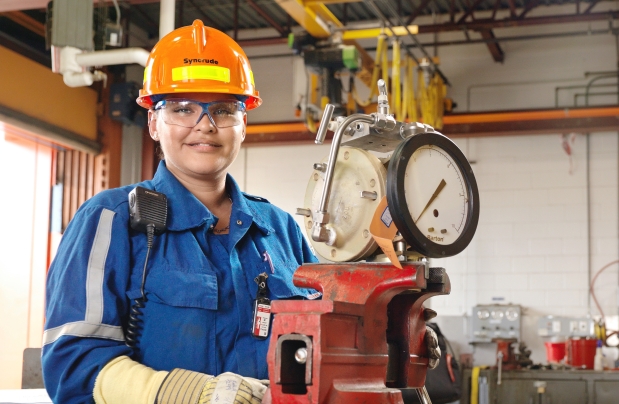
  • Women in Skilled Trades (French version available)

    Women in Skilled Trades (French version available)

    You’re a girl that knows what she wants.

    Rolling up your sleeves for a demanding, rewarding, and well-paying career that combines both your hands-on and creative interests; that’s the future you want. And now is the perfect time to go get it!

    Currently, the Canadian government is working to address a skills mismatch, which has many workers undertrained or unprepared for the current economy’s workforce.

    There is a worsening shortage of tradespeople in Canada. For women interested in pursuing a career in the skilled trades, this means that now is the perfect time to start the path to career success in this high-demand industry.

    While some may be nervous to start a career in the skilled trades, which has been and is predominantly male, there are a number of support programs and aids available to assist women as they train for a career in the trades.

    The government of Ontario offers a Women in Skilled Trades and Information Technology Training program, which provides unemployed and underemployed women in communities with a high demand for skilled trades and IT professionals funding and training both in-class and on-the-job.

    Additionally, there are other organizations and support programs throughout the province, country, and world dedicated to women interested in the trades. For example, Women in Nuclear (WIN) offers mentorship, networking and professional development opportunities for women interested in nuclear energy.

    Similarly, the Canadian Association of Women in Construction provides support for women interested in pursuing a successful career in the construction industry.

    There are plenty of other programs designed for women interested in pursuing a career in the skilled trades, offering a community of mentorship, funding, networking, and support specifically for women.

    With a growing presence of women entering the skilled trades, there has also been a growing presence of women’s skilled trades equipment and clothing. Moxie Trades provides mentorship, support, and apparel for women working in the trades. Whether it’s pink work boots, hard hats or safety glasses, or speaking at events across North America, Moxie Trades is a voice for women in the trades.

    Once thought of as primarily a male industry, women are moving toward more inclusion in the skilled trades.

    If you’re looking for a rewarding, secure, financially stable career in your future – it’s time to invest in the next steps toward a career in the skilled trades.

  • What’s an Apprenticeship?

    What’s an Apprenticeship?

    Apprenticeship is a form of post-secondary training that teaches the skills and competencies necessary to perform tasks to an industry standard. Apprenticeship training provides the opportunity for hands-on learning under the direction of a certified journeyperson, with the ability to earn while you learn. The training combines alternating periods of on-the-job (80 to 85%) and technical training (15 to 20%). Technical training can occur at a college, a union training centre, a private trainer or online. Once the apprentice has completed the required hours and/or modules for the trade, the apprentice can write a certification exam. Apprenticeship is regulated by the provinces and territories, creating 13 unique systems geared to the labour market needs and conditions in each region of Canada.

    Canada also has a standard of excellence known as the Interprovincial Standards Red Seal Program. It is offered in 55 trades. Through the Program, tradespersons obtain an endorsement on their provincial/territorial certificates by successfully completing an interprovincial exam, making it easier for them to move between provinces or territories and employers.

    How long does it take to complete an apprenticeship program and become a certified tradesperson?
    The length of the training varies depending on the trade, but generally takes between 2 and 5 years. Most of the training is provided in the workplace. Normally, an apprentice works for 40 to 44 weeks a year and goes to school for a six-to-eight week “block” of training.

    How much does it cost to complete an apprenticeship?
    Apprenticeships cost very little compared to most post-secondary training options. Tuition costs vary depending on the trade and the province/territory. There may be additional costs for books, equipment, tools and living expenses. However, apprentices are paid during their on-the-job training. There are also a number of grants and tax credits available to reduce the cost of apprenticeship training. Consult your local apprenticeship office to learn more about both federal and provincial/territorial supports.

    Another big benefit of apprenticeship training is that it allows apprentices to “earn while they learn,” significantly reducing student debt loads. University undergraduates left school with an average debt load of $25,000 in 2005, with much higher rates of debt in the eastern provinces. As paid employees, apprentices are generally able to cover their costs without substantial student debt.

    Does an apprentice receive an income while attending a technical school?
    If apprentices have been employed for long enough to qualify, most are eligible for Employment Insurance (EI) while they are in school. Some employers pay their apprentices while they’re in school or “top up” EI benefits so apprentices continue to receive the equivalent of their wages while they’re in school. It is recommended that apprentices have this discussion with their employers upfront. Apprentices serve only one two-week waiting period per apprenticeship and are not generally required to wait in subsequent training periods. It is important to understand the regulations surrounding Employment Insurance eligibility, so be sure to contact Service Canada for more information.

    Are apprenticeships regulated by the government?
    Apprenticeship programs are regulated by provincial and territorial governments. Each province and territory is responsible for deciding whether a trade is designated “compulsory” or “voluntary.” If a trade is compulsory, legislation generally requires someone working in that trade to be a qualified journeyperson or an apprentice working under the supervision of a journeyperson. This typically comes into play in areas involving public safety (i.e. an electrician). Check with your provincial/territorial apprenticeship authority to learn more about designated trades in your jurisdiction.

  • Why Should Girls Get Involved with STEM?

    Why Should Girls Get Involved with STEM?

    In our society, girls seem to be underrepresented in fields related to science, technology, engineering, and mathematics. Even more interesting is that in contrast to girls, boys seem to be actively involved in all of these fields. So what’s the deal? Why are girls not participating in these fields as much as boys? These are questions that are stumping researchers and other experts.

    There is a stereotype that has been circulating around, that maybe girls just aren’t as good at these subjects as their male counterparts. However, research suggests that there isn’t any evidence to support this claim. We all know girls are just as capable and smart as boys. Researchers have found that, when tested, girls are equally as successful in any of these subjects as boys. However, as long as this negative stereotype continues to persist it can cause real harm. It can actually cause girls to believe that they aren’t good at these subjects before even trying them. There is a natural bias for people to assume that science and math are fields best suited to males and that the arts are better suited to females. Why not disprove this theory?

    People also believe that maybe girls aren’t involved in STEM because there aren’t enough female role models in these fields to look up to. Seeing women who are thriving and successful in these fields could make them more enticing to younger females. People like Bill Gates and Mark Zuckerberg have made their fortunes in fields related to STEM. However, there still seems to be lacking female equivalents. It would be great to see females who have invented or developed ideas related to STEM in our society. The women that are contributing and involved in STEM should be given more visibility in order to promote these fields.

    There are many reasons why girls should get involved in STEM. Firstly, positions related to these fields are abundant. Why not make contributions to them and stand out from others? Scientists are trying to solve some of the most difficult questions in our time. Engineers are designing different things that we can use to better our lives and make things easier. With the internet and other forms of communication becoming more popular, there are a wide variety of job opportunities relating to technology.  People in these professions are doing creative and innovative things. In addition to this, these positions provide a person with a really great income (who doesn’t like money?). Helping the world and making great money doesn’t sound like a bad thing to me!

  • Not Your “Typical” Welder: Women In The Trades

    Not Your “Typical” Welder: Women In The Trades

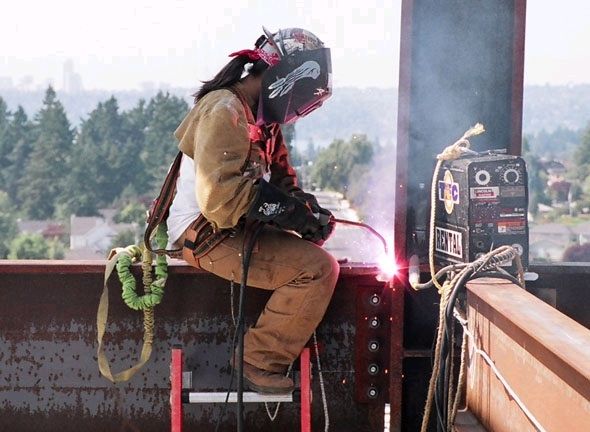
    Let’s be honest – how many of us girls grew up dreaming of being a mechanic or a welder? The answer is probably not many, and if you did you probably didn’t tell anybody because of the possibility of them thinking you were weird. When I was little I first wanted to be a marine biologist; I loved animals and wanted to work with them very badly. Then my life goal changed from a stunt car driver to a photographer to a mechanic and finally a welder.

    One of the things I was most excited about going to high school for was that I was now able to take the auto mechanics and construction classes. I took them all through high school and loved every minute of it. I learned, fixed and made things that a lot of people didn’t. How many of you can honestly say you are comfortable with changing a flat tire on your own? I can say with all honesty I am and that’s because of my awesome auto teacher. My technology teachers not only gave me the skills and knowledge about their trades but also the courage to love the trades; to not be scared of trying something totally out of my comfort zone and to not care about what people think.

    I got the smart remarks in class – “Girls can’t do that” and the classic, “Don’t break a nail!” Taking those courses gave me the courage to pick something not many girls pick for a college program – Welding Technician. I knew two things that I wanted for sure out of what I picked for a program. I wanted to be able to get a job and I wanted to make money. I know those are not the best reasons for someone to pick a program, but they were honest. I had originally wanted to be a mechanic because of how much I loved my auto class but I soon realized there were a lot of mechanics and not a lot of jobs. So I had cut up an exhaust pipe about two times in auto with an old oxy-acetylene torch and I knew welding was an in demand job, so I decided on being a welder. The only knowledge I had on welding was what I learned from those two experiences using the torch, so not a whole lot.

    I remember showing up for my first welding class and them telling me that I would need safety boots, safety glasses and a welding helmet for tomorrow. The first thing I thought to myself is, “What have I done?! I have gotten myself into something I can’t handle, I know nothing about welding! This is a horrible idea.” Then it got worse after I got all my equipment and they asked me to actually weld something. I don’t think I have ever sweated that much for a school assignment and it wasn’t from the heat of my torch. But with practice, some really great teachers and perseverance, I got the hang of it and now I am actually a very good welder. I am able to weld in shielded metal, arc welding in flat, horizontal and vertical positions. I can use gas metal arc and flux core arc welding machines and I am learning tungsten arc welding at the moment.

    For those of you out there wondering what kind of woman I am, I would say I am not your typical looking welder, but then again isn’t that what we are trying to change? The notion of what the “typical” welder looks like? So this is what the typical welder looks like – a petite 19-year-old woman, who stands at five feet and two inches, has a boyfriend and loves to go shopping just as much as anyone. The moral of the story is look at trades when you are deciding on college programs – any trade! Believe me, it’s a rewarding experience that is challenging.

    If I can do it, you can do it.

  • Being an Entrepreneur

    Being an Entrepreneur

    When people are young, they might dream of the freedom that they will have as adults. For some of them, part of that dream might be to become an entrepreneur, living a risky but exciting life with a lot of freedom but also responsibility. Although entrepreneurship can be very satisfying, it involves risks that people should consider before they begin that life.

    The first thing to consider is the difference between an entrepreneur and a freelancer. Working as a freelancer can often lead people to become entrepreneurs, but they can be two very different things. Basically, a freelancer has no official employer but instead works for many different people, whether the work is pet care, house painting, or something completely different.

    An entrepreneur builds a company and often employs other people to work there. A freelance dog walker, for example, would go to different places and take the dogs out, but an entrepreneur might organize the schedule but hire others to do the actual pet care. Often, entrepreneurs ask people to invest money in the company, and they get a portion of the profits.

    People can be entrepreneurs in almost any area of work. They might help others buy and sell houses, start a restaurant, or even run a dental office. The hours can be very long, and the amount of money they make depends on how successful they are. If you want a regular schedule and dependable pay, the life of an entrepreneur is probably not for you.

    Being an entrepreneur can also be very stressful. There can be tight deadlines to finish projects, and other people’s jobs often depend on the entrepreneur’s abilities. As the business becomes established, entrepreneurs can take more time off, but the first few years or even longer can be very busy.

    Why would anyone become an entrepreneur with all of the stress and hard work that it involves? This type of work can be very exciting, and it can pay well for people with good ideas and the ability to work hard. Entrepreneurs generally have a lot of freedom to choose their own hours, and once the business is going well, they can decide how much of the work they want to do themselves. They can take holidays whenever it works for them, and they can move on to another project when they want.

    Some people are well suited to being entrepreneurs. The ability to talk with other people and to persuade them to invest in the company is essential to entrepreneurs, making this type of work very difficult for shy people. However, almost anyone can learn to give presentations and to talk to investors, as long as they can manage the stress.

    Two very important aspects of being an entrepreneur are patience and persistence. Starting a business can be a very slow process, and it can take years before an entrepreneur will really be successful. If you want to be an entrepreneur, the best place to start might be freelancing in an area that you would like to pursue later. Then, if you have a great idea for a new business, you’ll already be a step ahead of others.

    Bibliography:

    Entrepreneur.com. “Entrepreneurship vs. Freelancing: What’s the Difference?” https://www.entrepreneur.com/article/285804.

    Future of Working.co. “8 Advantages and Disadvantages of Entrepreneurship.” https://futureofworking.com/8-advantages-and-disadvantages-of-entrepreneurship/.

    First Institute. “The Good and Bad of Being an Entrepreneur: The Pros and Cons Explained.” https://www.first.edu/the-good-and-bad-of-being-an-entrepreneur-pros-and-cons-explained/.

    South University.edu. “Pros and Cons of Being an Entrepreneur.” http://source.southuniversity.edu/pros-and-cons-of-being-an-entrepreneur-96101.aspx.

  • Community and Social Service Workers

    Community and Social Service Workers

    Community and social service workers administer and implement a variety of social assistance programs and community services, and assist clients to deal with personal and social problems.

    Outlook
    Over the past few years, the number of community and social service workers has risen very sharply. This growth is attributable to the large increase in the range and intensity of social service needs, and the handling of a growing proportion of these needs by community organizations. Since the community network is now well established, higher government spending in the health and social services sector should be more conducive to the hiring of members of other occupations and the number of income security claimants should continue, the number of community and social service workers is expected to grow sharply over the next few years, but at a more moderate pace than before.

    Sources of employment
    Openings will arise first from employment increase and from the need to replace community and social service workers who will be retiring or entering jobs in other occupations. In fact, with appropriate training, quite a large number of them will find positions in other occupations, for instance as social workers. Turnover is actually quite frequent within the occupation. For instance, many community and social service workers start their careers in community organizations, and move on after a few years to better paid positions in the public and parapublic sectors.

    Industries
    According to census data, in 2006 approximately 62% of community and social service workers worked in the health care and social assistance sector. About 15% worked in public administration, primarily as income security program administrators, mainly in the provincial civil service, but also in municipal government. Another 14% worked in associations, especially civil and social organizations (8%) and social advocacy organizations (4%).

    Education and Training
    To enter this occupation, it is generally necessary to have a diploma of college studies (DEC) in social work technology, special care counselling or correctional intervention, or a Bachelor’s degree in a field related to social services, such as social work, social service, psychoeducation, psychology, criminology or sexology. Experience of the social services sector as a volunteer or even as a former beneficiary, such as a former drug addict, alcoholic or pathological gambler, may in some cases be accepted in lieu of the academic requirements.

  • Careers In Trades: A List

    Careers In Trades: A List

    The trades sector in Canada is constantly growing and changing. So how do you know which career path is right for you? Here at Jobs People Do, we’ve assembled a list of some of the hottest jobs in the trades industry that will be in high demand for years to come. Take a look at just some of your options and then click on the link to be taken directly to career information. Find out what kind of education you will need and how much you can expect to be paid.

    Aboriginal Child Development Practitioner
    Agricultural – Dairy Herdsperson
    Agricultural – Fruit Grower
    Agricultural – Swine Herdsperson
    Agricultural Equipment Technician
    Alignment and Brakes Technician
    Appliance Service Technician
    Arborist
    Architectural Glass and Metal Technician
    Assistant Cook
    Auto Body and Collision Damage Repairer
    Auto Body Repairer
    Automotive Electronic Accessory Technician
    Automotive Glass Technician
    Automotive Painter
    Automotive Service Technician
    Baker
    Baker-Patissier
    Bearings Mechanic
    Blacksmith
    Brick and Stone Mason
    Cabinetmaker
    Cement (Concrete) Finisher
    Chef
    Child and Youth Worker
    Child Development Practitioner
    Composite Structures Technician
    Computer Numerical Control (CNC) Programmer
    Concrete Pump Operator
    Construction Boilermaker
    Construction Craft Worker
    Construction Millwright
    Cook
    Developmental Services Worker
    Die Designer
    Draftsperson – Mechanical
    Draftsperson – Plastic Mould Design
    Draftsperson – Tool and Die Design
    Drywall Acoustic and Lathing Applicator
    Drywall Finisher and Plasterer
    Educational Assistant
    Electric Motor System Technician
    Electrical Control (Machine) Builder
    Electrician – Construction and Maintenance
    Electrician – Domestic and Rural
    Electrician (Signal Maintenance)
    Electronic Service Technician
    Elevating Devices Mechanic
    Entertainment Industry Power Technician
    Exterior Insulated Finish Systems Mechanic
    Facilities Mechanic
    Facilities Technician
    Fitter – Assembler (Motor Assembly)
    Floor Covering Installer
    Fuel and Electrical Systems Technician
    Gemsetter / Goldsmith
    General Carpenter
    General Machinist
    Hairstylist
    Hardware, Lumber and Building Materials Retailer
    Hazardous Materials Worker
    Heat and Frost Insulator
    Heavy Duty Equipment Technician
    Heavy Equipment Operator – Dozer
    Heavy Equipment Operator – Excavator
    Heavy Equipment Operator – Tractor Loader Backhoe
    Hoisting Engineer – Mobile Crane Operator 1
    Hoisting Engineer – Mobile Crane Operator 2
    Hoisting Engineer – Tower Crane Operator
    Horse Groomer
    Horse Harness Maker
    Horticultural Technician
    Hydraulic / Pneumatic Mechanic
    Industrial Electrician
    Industrial Mechanic Millwright
    Information Technology – Contact Centre Customer Service Agent
    Information Technology – Contact Centre Sales Agent
    Information Technology – Contact Centre Technical Support Agent
    Information Technology – Hardware Technician
    Information Technology – Network Technician
    Institutional Cook
    Instrumentation and Control Technician
    Ironworker – Generalist
    Ironworker – Structural and Ornamental
    Light Rail Overhead Contact Systems Lineperson
    Locksmith
    Machine Tool Builder and Integrator
    Marine Engine Technician
    Metal Fabricator (Fitter)
    Micro Electronics Manufacturer
    Motive Power Machinist
    Motorcycle Technician
    Mould Designer
    Mould Maker
    Mould or Die Finisher
    Native Clothing and Crafts Artisan
    Native Residential Construction Worker
    Network Cabling Specialist
    Optics Technician (Lens and Prism Maker)
    Packaging Machine Mechanic
    Painter and Decorator – Commercial and Residential
    Painter and Decorator – Industrial
    Parts Technician
    Pattern Maker
    Plumber
    Pool, Hot Tub and Spa – Installer
    Pool, Hot Tub and Spa – Service Technician
    Powered Lift Truck Technician
    Powerline Technician
    Precast Concrete Erector
    Precast Concrete Finisher
    Precision Metal Fabricator
    Pressure Systems Welder
    Process Operator – Food Manufacturing
    Process Operator – Power
    Process Operator – Refinery, Chemical, and Liquid Processes
    Process Operator – Wood Products
    Pump Systems Installer
    Railway Car Technician
    Recreation Vehicle Technician
    Refractory Mason
    Refrigeration and Air Conditioning Systems Mechanic
    Reinforcing Rodworker
    Relay and Instrumentation Technician
    Residential (Low Rise) Sheet Metal Installer
    Residential Air Conditioning Systems Mechanic
    Restoration Mason
    Retail Meat Cutter
    Roll Grinder / Turner
    Roofer
    Saddlery
    Saw Filer / Fitter
    Sheet Metal Worker
    Ski Lift Mechanic
    Small Engine Technician
    Special Events Coordinator
    Sprinkler and Fire Protection Installer
    Steamfitter
    Surface Blaster
    Surface Mount Assembler
    Terrazzo, Tile, and Marble Setter
    Thin Film Technician
    Tire, Wheel and Rim Mechanic
    Tool / Tooling Maker
    Tool and Cutter Grinder
    Tool and Die Maker
    Tool and Gauge Inspector
    Tractor-Trailer Commercial Driver
    Transmission Technician
    Truck and Coach Technician
    Truck-Trailer Service Technician
    Turf Equipment Technician
    Utility Arborist
    Water Well Driller
    Welder
    Wooden Boat Rebuilder
  • Career Profile: Roofer

    Career Profile: Roofer

    Description:

    When you are a roofer, you have many jobs. However, the main part of being a roofer is to install, re-install or repair roofs on any type of building structure. They can work on industrial or residential buildings. You must not be afraid of heights, love working with your hands, and have a keen eye for detail. Roofers work with materials such as shingles, slate, asphalt, aluminum, wood, or related materials.[1] Some sample job titles within the roofing industry can be: aluminum shingle roofer, applicator, composition roofer, gravel roofer, gypsum roofer, metal roofer, slate roofer.[2] A roofer, as you may have already guessed, works outside, 99% of the time. You might end up working in harsh weather, and or be a seasonal worker. Although roofers work in the winter, there are always more jobs available in the spring, summer and fall seasons.

    Education and Training:

    The best way to become a roofer is through an apprenticeship. However, according to http://www.roofingcanada.com/, you can either choose to have around 3 years of work experience in the trade with your high school diploma or GED, or a two-three year apprenticeship program in order to qualify for trade certification. Also, “Roofing trade certification is compulsory in Quebec and British Columbia and available, but voluntary, in Newfoundland, Nova Scotia, Prince Edward Island, New Brunswick, Ontario, Manitoba, Saskatchewan, Alberta, the Yukon and the Northwest Territories.”[3] Thus, it is much better to learn everything you can through programs and education, or you will be working outside of the industry standard requirements. As always, the more education and experience you gain, the better your salary will be. Conestoga College in Ontario offers a Roofing Fundamentals program that will set you up to receive an Ontario College Certificate. It will teach you the basics of roofing and also give you a chance to work in the field.

    Salary and Wages:

    The national pay range for a roofer is from $14.75 to $31.29. The national average pay per hour is $21.94. Again, when starting out or working in an apprenticeship program, you might not be making very much money. Your pay will increase with time like every job, within reason. The national salary range for a roofer is $31,411 to $73,978. So, if you keep learning and gaining experience in roofing, you can make very decent money.

    There are 3 consistent job characteristics of being a roofer: working outside, being up high (heights), and working with your hands. If you can accept those main characteristics of the job, give it a try!

    Sources:

    [1] http://www.myplan.com/careers/roofers/description-47-2181.00.html

    [2] http://www.myplan.com/careers/roofers/description-47-2181.00.html

    [3] http://www.roofingcanada.com/html/careersinroofing/appinfo.html

  • Bridging the Gap: Women in Skilled Trades

    Bridging the Gap: Women in Skilled Trades

    A documentary by Elizabeth Smith, in association with Rogers TV

    In this awesome documentary, we get to see hardworking, dedicated women working in the trades industry of Canada. It is a helpful summary of women that have made extraordinary leaps in the trades industry, building a great reputation for excellence, accuracy and attitude. The 23 minute documentary goes over the things you have to do, have or acquire in order to become a trades-woman. It sheds a very positive light on women and their future in the trades, and what kind of obstacles you may have to overcome in order to reach your goals. Being a trades-woman is not only a good vocation, but a really great way to make a living, financially.

    Presently, the video states that only 4% of people in the trades are women. An interesting and challenging trade for women is high pressure welding and fitting. In the documentary, you will meet the first woman to work on the pipeline in Canada, Courtney Chard. As it stands, male pipeline fitters make up 99.1% of the trade, where women make up .9%. These numbers can rise if we all learn more about the opportunities available, and “take gender out of the equation”. Courtney presses that if you like hard work and an honest, decent pay check, you can do it. You will face challenges with other male workers, but if you can brush those trivial things off, you will do well.

    You will also meet Lynn Mackinlay, a certified Red Seal Cabinet Maker from Nova Scotia. She presses that if you have an understanding of the oppression issues that women face in the trades, you will be able to accept any challenges faced. Lynn says that it is often a cultural and systemic issue when it comes to women working in the trades, and we need to look past it. This is a strange stigma, because women have been literally working in the trades since the 40s during the war.

    So, check out this Rogers documentary and learn all you can about working in the trades- they’re waiting for you!

    http://rogerstv.com/page.aspx?lid=237&rid=73&gid=220812


  • Career Profile: Computer Technician

    Today, society has become more dependent on technology than ever. Computers like desktop PCs and laptops play an essential role in our daily lives, from communicating with e-mail to reading the news feeds and self-advertising through social media networks. All of these require a computer of some sort. Computer technicians are capable of building, repairing and maintaining all of these systems.

    Typically, computer technicians work in an office environment, but can also have the privilege of working at home. Their duties range from repairing computers by means of adding new components to a system, or repair internal errors. They can work on the road and take service calls on a regular basis. Their area of expertise expands beyond desktop PCs and laptops. They can work with printers, projectors, tablets cell phones and even maintaining websites.[1]

    Colleges, such as Humber offer an extensive computer technician course that includes everything from network security to electrical circuits.[2] Many employers require technicians to have an A+ certification administered by CompTIA. This is a basic certificate that shows you are able work confidently and effectively with computers and their accessories. The certification can be any many local colleges; most offer a prep course prior to taking the actual exam.[3]

    Cisco, a leading manufacturer in computer networking equipment has a certification process. These courses educate users on how to install and maintain their equipment and give them general knowledge of networking procedures. Both of these certifications make a great asset for potential employees looking to get into the computer technician field.[4]

    Computer technicians must have excellent problem solving skills. Additionally they must be able to communicate effectively with customers. Technicians should be able to detect the root cause and explain to customers how the problem was fixed and how if possible, it can be prevented in the future.[5]

    The average salary for a computer technician is approximately $44,724 a year. However, many individuals in this field must obtain contract work for additional income. Some build websites and install networking equipment. Depending on the scale of the company you work for, either corporate or non-corporate, you can make a very decent living.

    So if your passion is technology and communications, this is the career path for you!


    References:

    [1] http://www.humber.ca/program/computer-and-network-support-technician

    [2] https://www.humber.ca/program/computer-and-network-support-technician

    [3] http://certification.comptia.org/getCertified/certifications/a.aspx

    [4] http://www.cisco.com/web/learning/certifications/index.html

    [5] http://www.careerstep.ca/computer-techniian-job-description