Tag: volunteer hours

  • Need Volunteer Hours? Join a Mob!

    Need Volunteer Hours? Join a Mob!

    The student’s quest for 40 community service hours is not always a pretty one. Sponge-bathing senior citizens and picking up garbage are healthy for the community, but often so uninspiring to the average teenager that procrastination happens and some diploma-getting is in jeopardy.

    What if you could find volunteer work that you’re passionate about, that gives you larger opportunities, that is part of a worldwide social activist movement? The Me to We (Mob)ilizers are students all across Canada, working from the ground to promote and support the charity Free The Children and facilitate real social change in the world.

    It’s all about going from thinking ‘me’, with selfish or self-centred motives and aspirations, to thinking ‘we’, with motivation to do right for all. If you are seeking to volunteer and get involved as a global citizen on a larger scale, consider joining the Me to We MOB.

    The entire enterprise began when a 12 year old Craig Kielburger read a news article about a 12 year old in South Asia who had died as a result of horrible child labour exploitation. This inspired him to make a difference. In 1995 Craig began speaking out for children’s rights in different small venues throughout Ontario. His vision caught on and late that year, he founded the Free the Children organization, with what he described as the motivation to “free the children from poverty, and free the children from the notion that they are powerless to affect change”.

    This means that while we work to end the enslavement and exploitation of children far from home, we can help children here to understand how valuable they are to the world, becoming enlightened and empowered.

    Today, Free the Children is the world’s largest network of children helping children through education, with more than one million youth in 45 countries involved in its education and development programs (like the Me to We initiatives).

    When an organization gets so large, it can become difficult to stay connected to the individual people while continuing to bring new, passionate youth into the cycle. That’s where the MOB comes in, taking Free the Children back to its grassroots and spreading the message from the ground up.

    Erica Baker is a MOB-Lead for Canada’s West Coast and a summer intern with Free the Children headquarters. When asked to describe what the MOB is Erica’s response, “Can I just say amazing?” was one of honest passion.

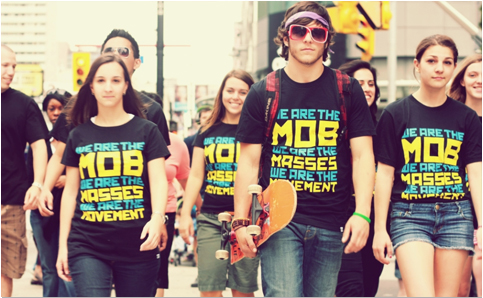
    “We are the masses. We are the movement. We are the MOB,” Erica said, “a vast group of students operating out of many cities across Canada, who are serious about making a mark on the social issues of our time. We organize events and fundraisers to benefit Me to We and Free the Children, and bring awesome, motivated young people together from across the country to make change,” Erica continued.

    She revealed that this year, the (Mob)ilizers are supporting one village in India, one in Ecuador, and one in Haiti, with funds going toward building houses, schools, and health clinics there. (Mob)ilizers have the option of going to one of these villages at the end of the school year to see exactly what their efforts are accomplishing.

    Applications are open until July 25th for next year’s MOB. To check out more or apply for a MOB position in your city, visit http://www.metowe.com/movement/mobilizers/join/.

  • Getting Your 40 Volunteer Hours

    Getting Your 40 Volunteer Hours

    As you know, all high school students need to have 40 hours of community service in order to graduate. Use this information to discover where your 40 hours can best be used.

    Volunteer Centres work in local communities to strengthen volunteering and citizen engagement. With more than 200 in Canada, each volunteer centre’s name, size, structure and services reflect the unique characteristics of their community.

    To find a volunteer centre in your area, click here.

    Many volunteer centres are independent non-profit organizations, while others are part of a United Way, Social Planning Council, Community Information and Referral Centre or municipal services. Though diverse in many ways, they share the following common functions:

    – Promote volunteering

    – Build the capacity of organizations to engage volunteers

    – Facilitate connections between people with volunteer opportunities

    – Provide leadership on issues related to volunteering and citizen engagement

    If you want to volunteer, your local volunteer centre is there to connect you to opportunities in your community. It may have a database of volunteer opportunities or can connect you directly to opportunities within its member organizations.

  • Don’t Put Off Your Volunteer Hours!

    Don’t Put Off Your Volunteer Hours!

    Second semester is creeping its way into your life, pressure from exams have fled, and you are starting as fresh as an untouched blanket of winter snow (depending on your geographic climate, substitute snow for a bed of grass). This may be an opportune time to begin those volunteer hours you have put off “for next year” since grade 9.

    So where do you start volunteering? The first place to look is within your school community. Volunteering your time to benefit the environment of your school is a great way to establish a substantial rapport with teachers and peers alike. This does not mean you should ask your automotive teacher if he needs any work done on his front lawn! Try and find things that help the community as whole, and not just individuals you know personally. For example, you can help out with school events that may include, but are not limited to: environmental/horticultural projects, school plays, events, and fundraisers. Helping out in scenarios like the ones mentioned will not only get you some community hours, but can also foster connections with people you may have never thought about talking to! There are also clubs and teams that need assistance every once in a while. The school football team will always need a field marker for their home games! However, if you can not find anything remotely close to these examples at your school, talk to you guidance counselor and they will be happy to aid you in your quest to
    support your community!

    Letʼs not forget the great world outside of your school! Helping your own neighbourhood is also a beneficial way to not only get the hours you need for that diploma, but you can also tailor your time volunteering to gain skills you can put on a resume or use in an interview. For example, if you want to become a teacher, tutoring students after school will allow you to explore some aspects of the career. If you are thinking about nursing or becoming a doctor, helping at your local hospital may give you more of an understanding and appreciation for those professions. On the other hand, it may lead you toward never wanting to catch a cold again! Nevertheless, donʼt just volunteer for the sake of getting those hours out of the way, think about what potential careers you might want to investigate and use the volunteer hours as an opportunity to explore! Also, do not be afraid to check out universities around your neighborhood to see if they want help as well. The harder you search, the more rewarding the experience will be!

  • Get Your 40 Volunteer Hours!

    Get Your 40 Volunteer Hours!

    As you know, all high school students need to have 40 hours of community service in order to graduate. Use this information to discover where your 40 hours can best be used.

    Volunteer Centres work in local communities to strengthen volunteering and citizen engagement. With more than 200 in Canada, each volunteer centre’s name, size, structure and services reflect the unique characteristics of their community.

    To find a volunteer centre in your area, click here.

    Many volunteer centres are independent non-profit organizations, while others are part of a United Way, Social Planning Council, Community Information and Referral Centre or municipal services. Though diverse in many ways, they share the following common functions:

    – Promote volunteering
    – Build the capacity of organizations to engage volunteers
    – Facilitate connections between people with volunteer opportunities
    – Provide leadership on issues related to volunteering and citizen engagement

    If you want to volunteer, your local volunteer centre is there to connect you to opportunities in your community. It may have a database of volunteer opportunities or can connect you directly to opportunities within its member organizations.

  • How to Get Your Volunteer Hours

    How to Get Your Volunteer Hours

    As you know, all high school students need to have 40 hours of community service in order to graduate. Use this information to discover where your 40 hours can best be used.

    Volunteer Centres work in local communities to strengthen volunteering and citizen engagement. With more than 200 in Canada, each volunteer centre’s name, size, structure and services reflect the unique characteristics of their community.

    To find a volunteer centre in your area, click here.

    Many volunteer centres are independent non-profit organizations, while others are part of a United Way, Social Planning Council, Community Information and Referral Centre or municipal services. Though diverse in many ways, they share the following common functions:

    – Promote volunteering
    – Build the capacity of organizations to engage volunteers
    – Facilitate connections between people with volunteer opportunities
    – Provide leadership on issues related to volunteering and citizen engagement

    If you want to volunteer, your local volunteer centre is there to connect you to opportunities in your community. It may have a database of volunteer opportunities or can connect you directly to opportunities within its member organizations.

  • Get Your Volunteer Hours the Old Fashioned Way

    Get Your Volunteer Hours the Old Fashioned Way

    In order to graduate high school, students must complete 40 hours of volunteer work. Rather than dragging it out over the course of an entire high school career, why not get them all done at once? And for that matter, even learn something while you are at it? If you’re interested thus far, you should look into volunteering with your local history museum.

    You will often find that any city’s museum would welcome student volunteers, especially those who have a vested interest in history or plans to continue historical studies into university.

    Maja Bannerman, Public Programmer for the Niagara Falls History Museum said that the museum accepts volunteers aged 10 to 80. Bannerman commented that their graveyard tour program in specific attracts many student volunteers, “a lot of the high school students are doing their hours and getting beyond what they need,” she added.

    The graveyard tour has students dress up in period clothing and imitate those buried in the Lundy’s Lane Battle of 1814 graveyard.  These students put on three shows per night, every Friday and Saturday for the last three weeks in October. Beyond the official shows, there are numerous dress rehearsals and technical rehearsals throughout September in preparation for the show. Though it is a large time commitment, you could easily complete your volunteer hours by the end of October, and you’d have some great stories to tell from the experience.

    Though the Graveyard Tour is only one program at one museum, it is a fine example of an unconventional way to complete your volunteer hours quickly. Beyond getting your required volunteering done, there is enormous opportunity to learn something new about the place you live.

    However, your involvement does not have to stop there. By volunteering to the best of your abilities, you can show yourself to be a very useful asset to the museum. If you are particularly talented, it is possible to turn your volunteer position into a future job or career.

    “There have been students in the past who have attained paid positions here,” Bannerman said. Making such connections through volunteering can lead to a job, a career, or even just an excellent reference for your resume. It is very important to begin making connections like this while you are still in high school, as they will carry you through your college or university years and into the real world.

  • Getting Your Volunteer Hours the Fun Way

    Getting Your Volunteer Hours the Fun Way

    “40 hours of community service!?” – It does sound like a lot, especially when just entering high school and finding out that it’s absolutely mandatory. The most frequently asked question is: What benefit do I receive from performing community service and volunteering? To be honest, I just discovered the answer last week during a job interview. When I was asked, “Why do you want this job?” I replied that I did a lot of community service that related to customer service and public relations. It all clicked right there – yes, about five years later, it clicked that I really appreciate the fact that I did those community hours and there are so many reasons why you should start sooner than later!

    Testing The Waters
    Until you are legally able to work, it is a good idea to test the waters and see what works for you. By volunteering you get a chance to test many fields of work; there are so many opportunities out there for you. By searching and trying new things not only do you find out what works for you, but you gain experience to add to your growing resume. Employers love seeing what you have gotten your hands on, and it helps when you have relevant experience. For example: If you are volunteering for a customer service position in the future, it really helps to have relevant experience working and interacting with different people.

    Networking
    The places you volunteer at and the people you make connections with become your networks and references. Networks are important in the future as they can greatly help you find a job placement when you are ready. You can go back to them when you are legally able to work, and ask to be placed as an employee or ask for their contact information as a reference.

    Finding Your Niche and Finding Some Fun
    You are bound to meet a lot of fun and awesome people who may share similar interests. Another part of networking is making new friends outside of school, and in making these friendships you can help each other find and share new opportunities to work again in the future. Alongside that, when you find a place you find enjoyable, you will definitely want to stay for longer. This means that you will get a lot more than 40 hours.

    YOU WILL GRADUATE!
    Last but not least, you would have successfully completed your 40 hours of community service! Without even realising it, when I graduated high school I had more than 100 hours of community service, all because I found an array of positions I really enjoyed and wanted to do for fun. Volunteering with friends is also a big bonus!

    How is completing 40 hours of community service relevant? High School helps shape you as a person and helps you experience life – without the “being an adult” part. You can shape your career path, you can find what you’re good at, and you can network with experienced professionals. It’s completely beneficial for you to complete those community service hours – so start now!

  • The Importance of Volunteering

    The Importance of Volunteering

    Here are some good reasons to get involved and volunteer!

    “Why would I bother to volunteer?”, you might think. “Isn’t it better to get a job and be paid for my time?” If you are like most teenagers, the word volunteer may make you cringe as your mind races back to so many occasions of being told what to do by your parents, otherwise known as being “voluntold”. If this describes you, then read on.

    One of the first and foremost reasons to volunteer is out of necessity: you may need to have 30-40 volunteer hours by the end of grade 12 in order to graduate. These hours (also referred to as community service) can change from province to province, so if you are already in high school and have not heard of them, you should probably ask a teacher.

    Another good reason to volunteer in high school is that, by offering to volunteer, you may have access to opportunities you otherwise would not. For example, a local newspaper is unlikely to hire a high school student as a journalist, but they would probably be happy to have you as a volunteer and, although you will not be writing headlines, at least you will be getting involved in a field you may be interested in.

    Speaking of getting involved in a field you are interested in, by volunteering you can also gain valuable work experience, connections, and references. You may not think it, but employers value volunteer experience almost as much as real work experience and even education. Think about it: you are a lot more likely to be hired as a mechanic if you volunteered at Bob’s Oil Change, even if it was for 40 hours three years ago. Failing that, it never hurts to have multiple references ready: if you have an interview with a reputable law firm, they are still more likely to hire you with Bob as your reference (assuming he had good things to say about you) then another equally qualified candidate with no references at all!

    You probably hear this reason all the time, but right now you have all the time in the world – so why not volunteer? Speaking as someone only in their mid-twenties, I can attest to the fact that free time is now an elusive thing. If I am not working, I am cleaning or fixing things around the house. Oh, and I have to go to that wedding next weekend, and visit the folks, and so on. You get the idea? Life has a habit of swallowing up every spare moment pretty much as soon as you walk out of school for the last time. Because of that, you should do anything and everything you can now while you still have the flexibility to do it!

    Finally, and most importantly, volunteering can offer you the kind of fulfillment that sitting around on the computer, watching Netflix, or texting all day cannot. Imagine the satisfaction of seeing an elementary school student you have helped tutor passing that big test they did not think they could? Or the day your humanitarian group finishes building a house for disaster victims? Or even something as small as raking the leaves for an elderly neighbour? So get out there and try it and you may find yourself addicted!

  • Volunteer Centres in Canada – Get Your Volunteer Hours

    Volunteer Centres in Canada – Get Your Volunteer Hours

    As you know, all high school students need to have 40 hours of community service in order to graduate. Use this information to discover where your 40 hours can best be used.

    Volunteer Centres work in local communities to strengthen volunteering and citizen engagement. With more than 200 in Canada, each volunteer centre’s name, size, structure and services reflect the unique characteristics of their community.

    To find a volunteer centre in your area, click here.

    Many volunteer centres are independent non-profit organizations, while others are part of a United Way, Social Planning Council, Community Information and Referral Centre or municipal services. Though diverse in many ways, they share the following common functions:

    – Promote volunteering
    – Build the capacity of organizations to engage volunteers
    – Facilitate connections between people with volunteer opportunities
    – Provide leadership on issues related to volunteering and citizen engagement

    If you want to volunteer, your local volunteer centre is there to connect you to opportunities in your community. It may have a database of volunteer opportunities or can connect you directly to opportunities within its member organizations.

    If you are an organization, your local volunteer centre may offer workshops on volunteer engagement, post your volunteer positions on its database or help you network with other volunteer-involving organizations.

    There are many other activities that volunteer centres involve themselves in, including but not limited to employee volunteering project management; community service learning initiatives; volunteer resource management for various programs and initiatives; research; community leadership programs and public policy dialogues.

    Volunteer Canada works in partnership with the Canadian Volunteer Centre Network, which includes local volunteer centres and provincial associations of volunteer centres to strengthen volunteering and citizen engagement.

  • Volunteer Centres in Canada – Get Your Volunteer Hours!

    Volunteer Centres in Canada – Get Your Volunteer Hours!

    As you know, all high school students need to have 40 hours of community service in order to graduate. Use this information to discover where your 40 hours can best be used.

    Volunteering and Community Hours

    What is a Volunteer Centre?

    Volunteer Centres are non-profit organizations or groups dedicated to fostering and developing volunteerism in the community as a whole. While other organizations contribute to sustaining our national heritage of volunteering through their programs and outreach, Volunteer Centres serve the broadest membership. Volunteer Centres reach across the non-profit and public sectors to include organizations working in human and social services, health care, education, the arts and recreation – regardless of their source of funding.

    What if my community does not have a Volunteer Centre?

    Volunteer Centres reflect the needs of the community they serve. Volunteer Centres exist primarily to foster and develop volunteerism in the community as a whole. They engage in four general kinds of services and activities:

    1. Promoting volunteerism and raising awareness of the power of service
    2. Building capacity for effective local volunteering through management consulting on volunteer programs and training of managers of volunteer resources
    3. Providing leadership and advocacy on issues relating to volunteerism and volunteer programs
    4. Connecting people with opportunities to serve through recruitment and referral of volunteers to community agencies

    Four Main Reasons to Volunteer

    1. Make a contribution to society.
    2. Share your skills.
    3. Support a cause.
    4. Do something meaningful with your friends and colleagues.

    One of these reasons probably makes sense for you. You may already be working as a volunteer or are thinking about what you might want to do next. Whatever your reason, there are many different opportunities out there – and organizations that need your help.