
Author: Anthony Teles

  • October 2026 Scholarships – Apply now!

    October 2026 Scholarships – Apply now!

    Jobs People Do | JobsPeopleDo.com

    AmericanMuscle Student Scholarship Program
    Scholarship Value: $2,500
    Awards Available: 2
    Award Deadline: October 15, 2026

    York University Awards of Achievement
    Scholarship Value: $6,000
    Awards Available: 8
    Award Deadline: October 31, 2026

    Excellence in Ag Scholarship Program
    Scholarship Value: $16,000
    Awards Available: 4
    Award Deadline: October 31, 2026

    Wolf Scholars
    Scholarship Value: $100,000
    Awards Available: N/A
    Award Deadline: November 2, 2026

    SMART Scholarships
    Scholarship Value: $38,000
    Awards Available: 10
    Award Deadline: December 4, 2026

    Walsh / Di Tolla / Spivak Scholarship
    Scholarship Value: $10,000
    Awards Available: 10
    Award Deadline: December 31, 2026

    Automotive Women’s Association Scholarships
    Scholarship Value: $5,000
    Awards Available: 15
    Award Deadline: January 2, 2027

    Connex Foundation Scholarship
    Scholarship Value: $5,000
    Awards Available: 2
    Award Deadline: February 15, 2027

    Commerce 1981 Entrance Scholarship
    Scholarship Value: $40,000
    Awards Available: 1
    Award Deadline: February 15, 2027

    Harrison McCain Scholarship
    Scholarship Value: $20,000
    Awards Available: 3
    Award Deadline: March 1, 2027

    Trent University Prestigious Scholarships
    Scholarship Value: $30,000
    Awards Available: 20
    Award Deadline: March 2, 2027

    Western Continuing Admission Scholarship of Excellence for Black Students
    Scholarship Value: $6,000
    Awards Available: 30
    Award Deadline: Ongoing

    Western Continuing Admission Scholarship of Excellence for Indigenous Students
    Scholarship Value: $6,000
    Awards Available: 30
    Award Deadline: Ongoing


    Print and Graphic Communications Scholarship

    Canadian Printing Industries Scholarship Trust Fund

    This scholarship supports students committed to careers in printing and graphic communications who are entering the first year of an approved Canadian college or university program.

    • University applicants: Grade 12 or equivalent with an overall average of at least 75%.
    • College applicants: Grade 12 or equivalent with an overall or required-course average of at least 67%.
    • Continuing eligibility: Recipients must remain in their program and maintain the academic standard published by the Trust Fund.
    • Scholarship value and availability: Vary according to available awards.

    Choose an approved school and apply for a Canadian Print Scholarship.

  • Indigenous Student Scholarships for October 2026

    Indigenous Student Scholarships for October 2026

    Jobs People Do | JobsPeopleDo.com

    Taking Flight Scholarship
    Scholarship Value: $5,000
    Awards Available: 7
    Award Deadline: October 30, 2026

    Western Continuing Admission Scholarship of Excellence for Indigenous Students
    Scholarship Value: $6,000
    Awards Available: 30
    Award Deadline: Ongoing

  • Exploring Careers in Print

    Exploring Careers in Print

    Jobs People Do | JobsPeopleDo.com

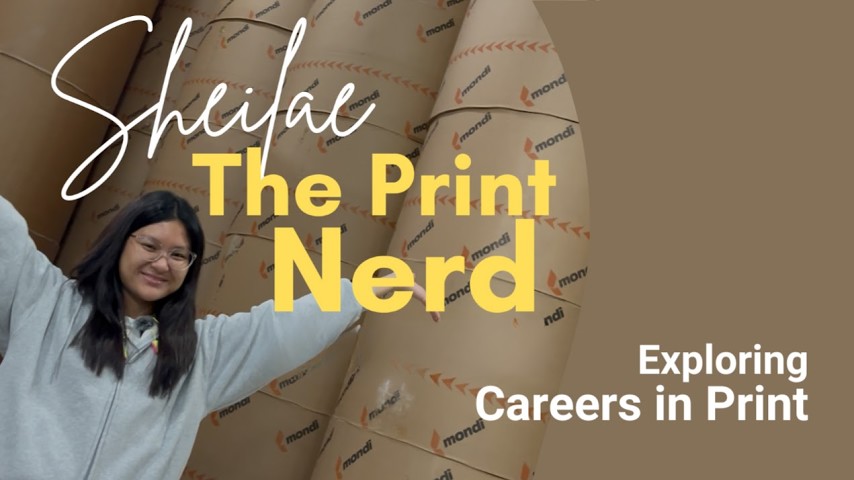
    From packaging on store shelves to photo books, retail displays, signs, stickers, and books, the print industry is part of everyday life. As part of Canada’s manufacturing sector, it combines creativity, technology, and production expertise to turn digital designs into physical products. In this series of short videos, Sheilae, better known as “The Print Nerd,” goes behind the scenes to explore the people, materials, equipment, and processes behind modern printing while showcasing the wide range of careers the industry offers.

    Choosing the Right Paper: Exploring Swatch Books

    Every print project starts with choices, and one of the most important is paper. Sheilae visits a resource centre filled with swatch books containing paper samples in a variety of textures, colours, weights, and finishes. These collections help designers, clients, and printers compare options before a project goes to press, since a glossy coated paper creates a very different impression from a thick uncoated stock. It’s a side of the industry that combines creativity with product knowledge and customer service. Careers in this area include designers, print sales representatives, paper specialists, and production coordinators.

    Turning Digital Memories into Photo Books

    Creating a photo book online is only the beginning. Sheilae follows the production process as digital files become finished books through high-resolution printing, automated folding and gathering, and precision binding. It’s a good example of how digital technology and manufacturing work together to produce high-quality products. Behind the scenes are digital press operators, bindery technicians, maintenance specialists, production coordinators, and quality-control personnel who keep everything running smoothly.

    From Stickers to Large-Format Graphics

    The same printing technology can produce everything from small promotional stickers to oversized signs and wall graphics. Sheilae follows the process from artwork preparation through printing, cutting, and finishing. While the products vary in size, they share the same basic workflow: design, print, finish. Careers in this area include graphic designers, prepress technicians, large-format print operators, finishing specialists, and production coordinators.

    Packaging That Gets Noticed

    Packaging is often the first thing shoppers notice. Sheilae explores how printed boxes, wraps, and specialty finishes help products stand out while protecting what’s inside. Creating effective packaging combines design, printing, and manufacturing, making it one of the industry’s most creative fields. Career opportunities include packaging designers, graphic artists, print production specialists, packaging technicians, and manufacturing professionals.

    How Books and Manga Are Printed

    Turning digital files into books requires a carefully coordinated production process. Sheilae shows how high-speed presses print thousands of pages before they’re folded, assembled in sequence, bound, and finished. She also highlights specialty features such as sprayed edges, which add a distinctive finishing touch. Producing books at scale relies on press operators, bindery technicians, finishing specialists, quality-control personnel, and production managers working together.

    Creating In-Store Marketing Displays

    Retail displays help brands capture customers’ attention. Sheilae explores how these marketing materials are printed, cut, laminated, and mounted onto foam board or corrugated substrates to create durable displays for stores, trade shows, and other commercial spaces. Careers in this specialty include print technicians, display fabricators, finishing specialists, installers, project managers, and production coordinators.

    Together, these videos showcase the variety of work found across Canada’s print industry, from paper selection and packaging to books, signs, and retail displays. Whether your interests lie in design, production, machinery, or project management, printing offers career paths that blend creativity with manufacturing. As Sheilae “The Print Nerd” shows throughout the series, printing is about much more than putting ink on paper. It’s an industry that brings ideas, brands, stories, and products to life.

  • Indigenous Perspectives on AI Ethics

    Indigenous Perspectives on AI Ethics

    Jobs People Do | JobsPeopleDo.com

    Have you been keeping up with all the crazy advancements in Artificial Intelligence (AI)? It’s cool stuff, like a super-powered brain learning and doing all sorts of things. But with all this new tech, there are questions about how to use it right, especially for folks with different backgrounds and traditions.

    That’s where Indigenous communities come in. They’ve been around for a long time, connected to the land and each other in deep ways. Their knowledge can teach us a lot about developing AI ethically.

    Think about it — if an AI system is helping with healthcare or even how our communities are run, wouldn’t it be awesome if it worked for everyone, not just some? Including Indigenous voices in these discussions is key to making sure AI reflects a range of experiences and values.

    Here’s the thing: Indigenous perspectives on AI ethics are unique. They focus on a few key areas:

    1. Respecting Your Space: Imagine having full control of your photos or what people know about you online. That’s what autonomy is all about. Indigenous communities emphasize this, and in the world of AI, it means making sure these systems don’t take over our choices.
    2. Community First: Remember that big family gathering you loved? That’s the kind of community spirit many Indigenous cultures have. AI shouldn’t break that up, right? Instead, it should help people connect and make things stronger, not widen any gaps.
    3. Honouring the Land: The land isn’t just dirt for Indigenous communities, it’s like a wise old friend and a source of knowledge and identity. AI shouldn’t push people away from their land, but instead help us take care of it for generations to come.
    4. Thinking Long Term: Imagine looking out for your grandkids, making sure they have a good world to grow up in. That’s intergenerational equity. When building AI, we need to think about how it will affect people way down the line.
    5. Fairness Matters: Imagine helping someone out and getting a thank you in return. That’s reciprocity. Just as Indigenous communities emphasize giving back to the water, plants, soil, and animals that provide life, if their knowledge helps develop AI, it’s only fair they get something back, not taken advantage of.

    Here’s the kicker: talking to Indigenous communities about AI ethics isn’t enough. We need to work together, share ideas, and build this AI thing right from the start. This way, AI becomes something that works for everyone, not just a select few.

    Sure, there might be some bumps along the road when putting ancient wisdom together with fancy new tech. But there’s also a huge chance to use AI for good: protecting languages, keeping traditions alive, and building tools that address specific needs in Indigenous communities.

    By embracing these perspectives, we can create AI that’s not just smart, but also respectful and fair. Pretty cool, right? That’s how we build a digital future where everyone has a seat at the table.

  • Fostering Allyship to Indigenous Communities: Driving Change

    Fostering Allyship to Indigenous Communities: Driving Change

    Jobs People Do | JobsPeopleDo.com

    In recent years, the tragic history regarding the horrors behind the systematic discrimination of Canada’s Indigenous communities has come to light in mainstream media. In 2021, the devastating news of over 200 remains of children in unmarked graves being discovered at Kamloops Residential School shocked the world (Dickson & Watson, 2021). And even more residential school sites are being investigated today, with 66 more potential graves found at St. Joseph’s Mission School in British Columbia (CBC News). The harrowing discoveries sparked candle vigils around Canada and even a visit from Pope Francis himself. Most notably, it also spawned Truth and Reconciliation Day (also known as Orange Shirt Day).

    Taking place every year on September 30th, the holiday is meant to acknowledge the mass devastation that has been inflicted upon Indigenous communities. It is a day in which all Canadians commit themselves to act against the discrimination that Indigenous people continue to face daily. However, this should not be limited to just one day. We should all strive to be allies to Indigenous people all around the world every day. Establishing Truth and Reconciliation Day has indeed brought more awareness towards educating people about the residential school system and the government’s role in their operation of them. That said, it has yet to bring more attention to many of the other obstacles Indigenous people are dealing with.

    For instance, the mental health and housing crises on reserves. According to Statistics Canada, the suicide rate for First Nations people in Saskatchewan is four times higher than the national average (Stefanovich, 2021). There is also the fact that despite Canada being a first-world country, most reservations do not have access to clean water. This has subjected many communities to health concerns like skin problems such as sores, rashes and eczema, birth defects, and gastrointestinal illnesses (Goldfinger, 2021).

    These are just a few of the systemic barriers they continue to grapple with every day. This is why your allyship is so important. When it comes to issues like these, they can feel far away; we can feel like nothing we do makes a difference. But this is not true; being an ally to Indigenous communities is what can raise awareness and educate people. With education and awareness comes a change for a better future.

    So, what can you do? Read below for tips!

    Learn Your History

    To be an ally to Indigenous communities, you must know what you are fighting for. Therefore, I would recommend doing some reading about the history of Indigenous people in Canada. While it is important to make sure that you read about all the systematic discrimination they have faced ever since the settlers came to Canada, don’t just read about the tragic side of things. Take some time to research the history of Indigenous culture and traditions. What were they like before the settlers came to Canada? How did everyone play a role in the community? It is important to remember that their history is not just one of tragedy; it is also one of great beauty and diversity.

    Learn about the Indigenous Communities Where You Live

    I am sure you’ve noticed the Land Acknowledgements at the beginning of morning announcements and meetings at your school. But have you ever taken the time to learn about those communities? It is important to know whose land you’re living on. There are so many different communities to learn about: the Haudenosaunee Confederacy, Moose Cree First Nation, the Attawapiskat First Nation. There is so much to learn about! I have linked a website where you can learn more about Indigenous communities and where they live in Canada.

    Diversify Your Media Intake

    The media that you consume is an avid teacher in your life. We can learn a lot from the characters and people that we watch on TV because they show us so many different perspectives. As such, what you choose to entertain yourself with can teach you a great deal. A personal recommendation of mine is Sterlin Harjo’s Reservation Dogs. The show is dominated by Indigenous actors and producers, and it addresses the mental health crisis faced by Indigenous youth.

    I also know many of us spend way too much time on our phones. Hence, I would also recommend supporting Indigenous content creators on platforms such as Instagram. There are so many out there, such as James Jones (@notoriouscree), Michelle Chubb (indigenous_baddie) and Tia Wood (tiamischik). A lot of these content creators are dedicated not only to educating people about the obstacles facing Indigenous communities but also to Indigenous culture and its traditions. I recommend supporting Indigenous music groups. A personal favorite is Young Spirit, a Cree drum group.


    Map of First Nations on Government of Canada Website:

    Map of Canada


    Follow Indigenous Content Creators:

    @notoriouscree @indigenous_baddie @tiamiscihk


    Works Cited

    CBC News. “66 more potential burial sites discovered at former B.C. residential school.” CBC News, 25 January 2023, https://www.cbc.ca/news/canada/british-columbia/williams-lake-st-josephs-residential-school-1.6724370 Accessed 25 November 2023.

    Dickson, C., & Bridgette Watson. “Remains of 215 children found buried at former B.C. residential school, First Nation says.” CBC News, 28 May 2021, https://www.cbc.ca/news/canada/british-columbia/tk-eml%C3%BAps-te-secw%C3%A9pemc-215-children-former-kamloops-indian-residential-school-1.6043778. Accessed 25 November 2023.

    Goldfinger, Daina. “‘An ongoing symbol of colonization’: How bad water affects First Nations’ health.” Global News, 30 September 2021, https://globalnews.ca/news/8199988/first-nations-water-crisis-health-effects/.  Accessed 25 November 2023.

    Myer, K., & Kaitlin Grable. “Honor With Action: 10 Ways to be an Ally to Indigenous Peoples.” GreenPeace, 8 October 2021, https://www.greenpeace.org/usa/10-ways-to-be-ally-indigenous-peoples/. Accessed 25 November 2023.

    Stefanovich, Olivia. “‘We don’t want any more tears’: First Nations urge Ottawa to boost mental health spending.” CBC News, 17 April 2021, https://www.cbc.ca/news/politics/indigenous-mental-health-resources-federal-budget-2021-1.5989070. Accessed 25 November 2023.

  • Teaching Indigenous History in Canadian Elementary Schools

    Teaching Indigenous History in Canadian Elementary Schools

    Jobs People Do | JobsPeopleDo.com

    Teaching Canada’s history is useful for understanding the way people think and act. An important part of this education is learning Indigenous history. For Canadian elementary school students, learning Indigenous history with good teachers can be a useful experience.

    For many years, Indigenous stories were only a minor part of history classes in Canadian schools. Recently, however, people have become aware of the need to learn about Indigenous history. Part of the change came because of the Truth and Reconciliation Commission, which published its report in 2015.

    Among other things, the report recommended correcting the way that many people ignored or minimized Indigenous history in education. Even when teachers talked about these people, they tended to focus on the history of exploration and settlement. They tended not to talk about what happened before European explorers and settlers came to live in what later became Canada.

    Many people now agree that including Indigenous history in Canadian elementary schools is important. However, knowing how to do this can be difficult. The University of Victoria has information and suggestions for how to incorporate this kind of education. Some of the suggestions, such as fostering respect, are useful for any kind of learning. Students cannot learn about another culture if they are afraid of being bullied by their classmates for speaking up.

    Another suggestion is to include storytelling and sharing circles. Although every culture has some element of storytelling in its background, this feature is especially important for Indigenous cultures, which might not have as many written records as people of European backgrounds.

    Bringing in subject matter experts is another suggestion that could help students understand Indigenous culture better. A subject matter expert is someone who has studied a particular subject, such as transportation or food and can give people detailed information about that topic. Having someone come in to talk about farming or cooking in traditional Indigenous cultures could help students understand more about everyday life for the people.

    One of the major points that participants in the Truth and Reconciliation Commission considered was the effects of residential schools on Indigenous children. For many years, Indigenous children were taken from their families and forced to go to residential schools, where they lived in dormitories and were sent to classes. Conditions could be very bad in some of these schools, and many children died or lost their connection to their families and communities.

    Learning about residential schools should be an important part of every student’s education because it is part of Canadian history. Students need to know what happened in the past so that they can understand how these events are still affecting the present. If they can also use this information to help them find solutions for the problems people are facing now, that will help make their education especially valuable.

    Indigenous history is an important part of Canada’s past, but it can also help people understand the present. If people teach it sensitively and in the context of other events in Canada and around the world, Indigenous history can be a valuable tool for students to use in their careers and their daily lives.


    Bibliography:

    Amin, Faiza. “Calls Grow to Overhaul Indigenous Studies Taught in Canadian Schools.” https://toronto.citynews.ca/2021/06/14/calls-grow-to-overhaul-indigenous-studies-taught-in-canadian-schools/.

    Kabatay, Jasmine and Rhiannon Johnson. “Charting Progress on Indigenous Content in School Curricula.” https://www.cbc.ca/news/indigenous/indigenous-content-school-curriculums-trc-1.5300580.

    Mandewo, Alexandra. “The Importance of Teaching Indigenous History in Education.” https://www.theindigenousfoundation.org/articles/the-importance-of-teaching-indigenous-history-in-education.

  • The Pros of Being Cheap While in School

    Assuming you have a student loan from the government or the Bank of Mom and Dad, it’s still a good idea to be careful with your money in school (high school or post-secondary). There are a lot of things that you can do to help yourself financially. I did these myself in university, and it really did help:

    As we all know, everything is going up: rent and groceries in particular. When you don’t have to worry too much about monthly rent in residence – you still have to pay “rent”. It’s just not the rent that you deal with off campus as that’s a different process. You need to figure out avoidable expenses and unavoidable expenses, because everything is going to cost you money. It’s just a matter of figuring out how and when to save money, or spend money.

    List everything you can think of: if you rent a car, if you’re renting off or on campus (and how much it is), textbooks, groceries or the meal plan offered on campus (or both), and outings with friends. Then consider what is avoidable and what isn’t. Rent is definitely unavoidable, it’s a fixed amount that you agreed to when you signed your lease. Consider the ones you can change that isn’t included in rent: a phone line, cable, internet, or even hydro if it’s not included. Could you cancel that phone line and save some money by using your cell phone instead? Do you really need a cable subscription if you can just watch stuff online?  And if hydro is separate from rent – is there ways you can minimize your electrical consumption – by turning off lights and unplugging electronics when not in use?

    Then there are the avoidable expenses. Textbooks – they may sound unavoidable, but some schools do offer rentals these days. You can gain some of that money back; or flip it and sell it, if possible, to a future student of the same class. (This unfortunately doesn’t work for every class, especially math and science classes, so rental is the best option for classes like these.)

    Groceries are a manageable expense because you can be as picky as you want. Consider vegetables – you would save more by buying the store’s brand instead of the more expensive one. There are also coupons and deals on all the time, so it may require more effort to keep up, but can pay in the longer term if you coordinate your meals with the deals going on in the stores. In return, if you are making your own meals, consider cancelling (if possible) your meal plan, or not renewing it the following year. (Note: If you are a freshman about to start your new school year, don’t get a meal plan until you know you want or need one to help you save money.)

    You might also have to give up a night out once in a while, too.  Fun times cost money, and that money might be more useful to you if you save it for other things.

    There are additional variable things to consider: clothing, books, and gifts. They’re completely avoidable, you don’t necessarily need them right now, especially when you’re trying to save money. So hopefully, by doing this, you have saved money that can be used for several reasons; primarily for those unexpected, unavoidable emergencies (i.e. a trip home for a family matter, your car breaking down, being kicked out of your apartment). These are just examples, but hopefully they give you some thoughts about how being cheap can benefit you and your wallet ( and future!)

  • Welcoming a New Student to Your Class

    Welcoming a New Student to Your Class

    Jobs People Do | JobsPeopleDo.com

    Being a new student at a new  school can be very scary and intimidating. We all know what it’s like to have first day school jitters, but imagine joining a class in the middle of the year! That would be very nerve racking!

    Why is someone joining my class now instead of at the start of the year?

    A new student may be joining your class for many different reasons. Maybe they just moved to a new community, maybe their school got closed, or maybe they just didn’t enjoy their school’s community. Regardless of why they changed schools, I’m sure you can imagine how scary it would be to join a class where kids already know each other, and everyone is already caught up on all the work.

    How can I make the new student feel welcome?

    Be kind,open and be accepting. You can start off  by introducing yourself to the new student. Be polite and invite them to join you and your friends at recess or to sit with you during class time if the teacher doesn’t have assigned seating. This will make the new student feel less nervous, and accepted into the classroom community. You can ask them questions about themselves, for example what sports they enjoy, if they have any pets or siblings, etc. You can also tell them things about yourself. You may have more in common than you think, which could lead to a great friendship! You can also ask the new student if they want help get caught up on some of the work they’ve missed. The teacher will be helping the student to catch up, but having a friend who’s there to help as well can always feel great!

    Put yourself in their shoes

    Although it may feel strange to have a new face in the classroom during the middle of the year, try not to judge. Instead, be curious and welcoming to make the student feel like they belong. If you find it difficult to understand what the new student is saying or doing, for example if they aren’t making eye contact, or not replying to your questions, try to put yourself in their shoes. How would you feel if you joined a new class in the middle of the year? I know that I would be very nervous that’s for sure!

    Overall things to remember

    Being the new kid in a school can be very overwhelming. Be polite, be inclusive and try to imagine that it was you joining the school! Treat others the way you want to be treated. Who knows, the new kid could become your best friend!

    Sources:

    https://www.wikihow.com/Welcome-the-New-Kid-at-School

    https://www.wgu.edu/heyteach/article/welcoming-new-student-your-classroom1701.html

  • Positive Mindsets During School

    Positive Mindsets During School

    Jobs People Do | JobsPeopleDo.com

    The idea of returning to school after a long, relaxing summer is never overly enthralling. Students usually tend to dread the idea of going back; so much so that the word ‘school’ can’t even be spoken. It seems like a lot of students nowadays have a very negative perception of school. Not all, but most. I’ll admit, I wasn’t very excited to go back at all. It’s admittedly quite difficult to get back into the routine of school; you have to get up early and get ready to leave for school where you have to learn. I’m pretty sure that anyone would choose their warm comfy bed over a boring classroom. School may not be very exciting at times but that doesn’t mean it’s all bad.

    This year, I am going into Grade 11. I think that’s one of the reasons why I was apprehensive going back; time is moving very fast and I am fearful that I can’t keep up with everything. I also know that this year is going to be a challenging fight to win. Going into a new grade can be both scary and exciting; you don’t know if you’ll have any friends in your classes, or if you can continue to keep your grades up. You also go back to school knowing that each year will be at least a little bit more challenging than the other, especially in high school. You want to be able to get into a good University so that you can have a good future. Every year you constantly put the pressure on yourself. Sometimes you may not even feel motivated to get back to work, especially after the summer. Here I have provided some tips on how to keep a positive mindset during the school year.

    Establish a routine: Creating a routine for school mornings and nights always makes going back to school much easier. That way, you can create time for everything. I would suggest setting an alarm for the morning (or maybe 5 because getting up in the morning is extremely hard). Try and go to bed at a decent hour especially for back to school because studies show that teenagers between the ages of 14-17 need at least 9-11 hours of sleep to properly function. Otherwise, you get sleepier and can’t perform properly with your studies. Sleep is also known to reduce stress levels so it is important that you get a good bit of sleep during the school year.

    Take Care Of Yourself: I don’t know if everyone is like this but when I am in school, my main focus is school, and school only. I am not the best at taking care of myself during the school day, whether it be the small things like chapped lips or dirty glasses, I tend to get bothered easily during school because I am still a bit tired. I suggest to bring a small bag of items you may need during school: a small pack of tissues, chapstick, glasses cloth (if you wear glasses), maybe a small snack so that you do not get too hungry during class. Don’t just take care of yourself physically but also, mentally. School is one of the leading causes of anxiety and stress in teens. It’s important that you take your mental health into consideration during school. Don’t push yourself too much and cause a lot of stress and anxiety on yourself. There are many ways to cope with stress and anxiety during school: meditation, sleep, keeping organized, exercising which can be good for both your physical and mental health. Or, you could just try and confide in a friend or trusted adult to feel better, talking about your feelings is always helpful.

    Focus On The Positives: Everything in life has a positive side to it. Nothing’s all bad. During the school year try and look past all the stress and anxiety you may be feeling. Look at the future and how much the hard work that you are doing will pay off in the end. School is not all that bad, it can be fun too. You get to spend a lot more time with your friends and get to see them more often-this might not be the case when you graduate and people go their separate ways.

    Websites used:

    https://www.helpguide.org/articles/sleep/sleep–needs–get–the–sleep–you–need.htm

    https://www.verywellmind.com/top–school–stress–relievers–for–students-3145179

  • How to Create an Eco-Friendly Dorm/Lifestyle at School!

    Jobs People Do | JobsPeopleDo.com

    By Erin Rebello

    It’s that time of year when university acceptance letters are coming out and high school senior students are getting excited about leaving their homes to live on their own. Though the “dorm life” is a dream for many, it can actually be quite stressful not to know what to expect before moving into a new place. Not only this, but the amount of waste produced by students living on campus is much higher than you might imagine. It’s not easy living green when you’re on your own for the first time, and on a budget. There are ways that you can reduce your ecological footprint to help the planet:

    Schoolwork

    When in university or college, education should be your number one priority. Even so, there are several ways to reduce your carbon footprint while keeping up your grades:

    • Avoid unnecessary printing. Although you cannot (and should not) skip assignments that must be turned in on paper, it’s good to have a conversation with your profs in advance. With the availability and accessibility of online submission software, you may be able to hand in your work online. As a matter of fact, many universities are already switching to this paperless option, so you may not even have to ask!
    • Skip the notes- well, the paper ones! Although it can be fun to take a hard copy of your notes on paper, with numerous courses throughout the school year, this quickly adds up! Instead, try taking notes on Google Docs or Microsoft Word, to avoid having to use paper every single lesson. If you use software such as the Google Suite, you’ll also be able to access your notes from anywhere, so you won’t have to worry about losing your notes or forgetting them in your dorm! If you still love the physical aspect of writing, consider trying out the Apple Pencil and iPad Pro. The software Procreate allows you to take stunning notes with the Apple Pencil at the tap of a button. Easy peasy and Mother Nature approved!

    Food and Meals

    While gaining your diploma, you’re sure to need brain food to keep you going! When reaching for nourishment, remember that there are ways to eat that are sustainable and good for the Earth!

    • Although they are easily overlooked, disposable waste contributes to quite a lot of waste generated in dorms. When living on your own, it can be easy to use plastic cutlery, paper plates, and disposable cups to avoid having to do the dishes afterwards. This hurts not only the planet but also our wallet! Over time, it’s far more expensive to keep repurchasing paper and plastic products than it is to buy one set of quality reusable cups, plates, and cutlery.
    • Avoid the temptation of using meal delivery services. With the advent of apps such as UberEats, Skip the Dishes, Foodora, etc, instant food service has never been easier. As convenient and tempting as it may sound, it’s important to recognize the amount of additional carbon generated by the transportation of food, as well as the disposable cutlery provided. If you want to eat out, opt for on-campus options and try to dine in!

    Hygiene

    If there’s one thing you shouldn’t forget when living on your own, it’s hygiene! Keep your room (and yourself) smelling fresh with these eco-friendly reminders!

    • Instead of using harsh chemical cleaners to disinfect your dormitory, opt for more environmentally friendly alternatives! Brands like Common Good, Seventh Generation, and Mrs. Meyers are less irritating and more environmentally friendly in terms of their ingredient lists and business practices. You can also follow some simple DIY tutorials on YouTube to make your own cleaning products!
    • Switching your makeup, skincare, and body care products are also a crucial step on your path to being more eco-friendly. Look into brands that are fair-trade, eco-friendly, and cruelty-free for the most socially and environmentally friendly products to purchase! With a bit of research it’s easy to find products which generate far less waste than their drugstore counterparts.

    Lifestyle

    If you truly want to embrace the eco-friendly lifestyle, university is a great time to start! Below are a few ways to change up your general lifestyle to be better for the environment.

    • Thrift and buy goods and furniture secondhand. If you’re planning to live in a dorm, you’re probably preparing to do a lot of shopping for the furniture and wall decor. Instead of buying everything brand new, why not save money and do Mother Nature a favour at the same time by purchasing second-hand furniture? Online second-hand retailers like Kijiji and Craigslist make it easy to browse hundreds of options at once. You can also head to your local Goodwill or Salvation Army if you prefer to shop in person instead.
    • Thrift your clothing too! With thrifting making a comeback, it’s becoming trendy to purchase second hand clothing again! Capitalize on this trend and say no to fast fashion by bargain-hunting through the racks of thrift stores in your area. Grab a friend and you can make it an event!
    • The final thing that a lot of people tend to forget is the fact that eco-friendly tips you used back home also apply to dormitory life. Simple acts like taking shorter showers and closing the windows when the AC/heater is on make a huge difference in the long run. Keep up with the habits your parents have taught you in your own household and you’ll be able to continue being eco-friendly!