
Author: Laurel Walsh

  • Bringing Ballet to the Bank

    Jobs People Do | JobsPeopleDo.comBrooke Nagy is an 18 year old on a fast-track to becoming Canada’s next prima ballerina. Becoming a professional ballet dancer was not a decision Brooke made on a whim. It has taken a lifetime of preparation and focus. Since age three she has been classically trained in Ceccetti ballet, and has developed an advanced knowledge of both classical ballet and modern dance.


    Brooke has had the opportunity to dance professionally at many points throughout her career, but decided that it was important for her to complete her high school education before devoting herself entirely to the art. “I’ve already trained with the CanadianNational Ballet School and the Quinte Ballet School,” Brooke explains.

    “For two summers I was accepted to study as a part of the Canadian National Ballet School’s ballet-intensive summer school program, which led to the opportunity to be a part of their full-time program. I’ve also been accepted to (and attended) the Quinte Ballet School’s Summer School Program, which led to an acceptance into their full-time program” she continued.


    Ballet may well be in her blood, as her mother is a classical ballet teacher and former professional ballerina for the Miami Cityballet. Brooke intends to one day take over her mother’s dance studio, after travelling and performing as much as possible. She applied to the National Ballet of Canada’s Teacher Training program, New York’s Adelphi College and Suny Purchase College’s Conservatories of Dance and George Brown College’s prestigious dance program, garnering preliminary acceptance to all, but choosing to accept George Brown’s offer.

    The Toronto-based program will prepare her for an intensive Bachelor of Fine Arts transfer after earning her two year diploma, and set her up for work with Canada’s Ballet Jörgen, a renowned Canadian classical ballet company that selects dancers from George Brown program alumnus.


    Among the highlights of Brooke’s auditioning process was when famed Canadian dancer Frank Augustyn called her out from a class of second and third year Adelphi ballet students she was placed with, praising her grace and skill above those of professional dancers with many more years of training. She was then offered a ten thousand dollar dance scholarship for Adelphi, a tempting offer that she may return to later in her career.


    Choosing a career in dance is not always wise. As a professional dancer, it is extremely rare for you to be onstage for more than ten years, and afterwards you are left with few employable skills unless you want to teach it. Commonly considered viable careers probably won’t care that you can do 32 continuous foutee turns. Also, even if you are taken into a ballet company or performance troupe, it is very unlikely for you to occupy any sort of principal or soloist position. “The vast majority of dancers in classical ballet companies still occupy positions at the bottom of the corps de ballet as very minor dancers in very large numbers”, according to Helena Wulf’s Career and Culture in the World of Dancers. But if you are passionate about becoming a dancer at any level, and you are willing to accept the likely financial instability and certain physical strain, you will find happiness in pursuing professional dance.


    For Brooke, the choice of dance over other more job-stable programs was quite simple. “I want to be a dancer over everything else. I know that the field of dance is where I excel and where I belong.” Whether it be the National Ballet School or Frank Augustyn himself, the ballet world agrees.
  • The Dorm: Your Home Away from Home

    The Dorm: Your Home Away from Home

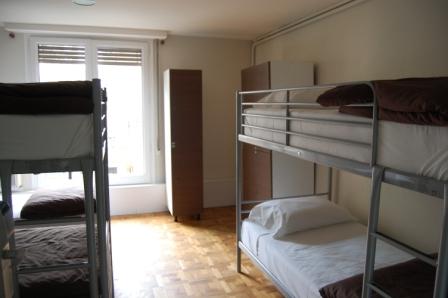
    Almost every university or college has dorms for students to live in while going to school. Dorms come in all shapes and sizes with unique characteristics just like the people who live in them every year. Depending on your school, you probably had/have to fill out a questionnaire type sheet asking you things like your interests, how much time you expect to spend studying, whether you prefer quiet all the time or are comfortable with noise, etc. These sheets are the university version of eHarmony for roommates; based on your answers the school will match you up with someone they think will be a suitable roommate for you for the year. Sometimes it works brilliantly, and other times it might feel like there’ve been a few snags. Before you start panicking though, remember that your on-campus experience is going to be what YOU make of it!

    Here is a quick guideline to two styles of the university/college room:

    The double:

    The room houses two people of the same sex (I’ve never heard of any college or university in Ontario or even Canada having co-ed rooms). Your first day in the room with your new roommate might be an awkward dance of deciding territory – I’ve heard of people putting a line of tape down the middle of the room – or it could be the start of a brilliant bonding experience with your new roommate. As long as you don’t have any gross hygiene habits (you really should try making sure that your dirty underwear makes it to the hamper and not over by the stack of comics that your roommate worships) and don’t hang up any scary posters (it might be nice to ask your roommate what they think of Marilyn Manson before plastering him all over the room) then you should be on your way to beginning a healthy roommate relationship.

    The single:

    A room all to yourself – home sweet home! During my first year at Brock University, I lived in a single room in a five-floor building. The rooms were big enough to be comfortable and despite the concrete block walls, my floor mates and I managed to make our rooms fun and even visitor-friendly. Each person shared a bathroom with one other individual. The bathrooms connected two rooms and if you left both doors to the bathroom open, you and your “broomie” could walk back and forth between your rooms. This was especially handy during long night study sessions or hall parties (with 51 students on each floor of the building, it was pretty tough to jam them all in one room so sometimes a bunch of rooms would be open and your floor friends could wander between them and socialize.)

    The dorm is your home away from home, so be excited! Once you get over your first-year jitters, you’ll probably love on-campus college/university life. Check back for more campus life tips and guides in the future!

  • Show Me the MONEY!

    Show Me the MONEY!

    SHOW ME THE MONEY!

    During your first year of post-secondary education, you might feel like you have a chorus of administrators telling you to SHOW ME THE MONEY! This is probably the least awesome part of your university/college experience but don’t lose hope! You can pay for your education and still have some dough left over if you manage your money.

    There are some great resources for student loans and scholarships that you can check out later but for now, I’m going to share the best money-managing tip that’s saved me some mulahs over four years of university.

    Some students may want to work during their first year, while some might prefer having more time to focus on their studies and soak up the university/college atmosphere. Either way, you’re going to want to have some extra cash handy to buy food, clothes, videogames, hovercrafts, etc. The best way to make sure you’re not broke by October 1st is to…
    (more…)

  • Five Places Teens Should Look for Summer Employment

    Five Places Teens Should Look for Summer Employment

    You can begin your search now  !
    1. Golf Courses. Golf courses are everywhere and have a huge need for seasonal employment. Caddying, landscaping and working in the gift shop or restaurant are some opportunities available to teens. (more…)

  • Healthy Eating On Campus

    jobs people do

    Healthy eating is a great way to

    • Have energy all day long
    • Get the vitamins and minerals your body needs
    • Stay strong for sports or other activities
    • Reach your maximum height (if you are still growing)
    • Maintain a healthy weight
    • Prevent unhealthy eating habits, like skipping meals and feeling overly hungry at the next meal
  • Living Off Campus

    Finally you have a shower and bathroom that’s your own, or shared with only a few. You can do in your room whatever you want as loudly or quietly as you want to. You have a lot more personal freedom (and personal peace and quiet) than your friends do back on the campus. You can buy your own groceries, which means you can enjoy some good home cooking

    Be Picky About Your Housemates
    If you’re looking for housemates, look carefully. Don’t assume everyone is honest or fair on the first glance. Make sure you know everyone well, and if you don’t, get references. New roomies shouldn’t care about you asking for references and if they do, think twice!
    Look for someone with a history of being responsible. When the rent comes due, you need someone you can trust to pay up, regularly and on time.  In most cases you will have to sign an agreement with the landlord that says if someone doesn’t pay, you will all have to be responsible for the money your housemate owes.  They may even call your parents to share in this money owed to them.
    Also look for someone who shares your ideas of quietness and neatness or living arrangements in general. Slobs need to live with slobs, and people who like to play heavy rock at midnight need to find roomies who enjoy rock at midnight. (Although, I don’t know when they study)
    If you’re a neat freak, look for another neat person. Otherwise you’re asking for constant conflict with someone who doesn’t mind the smell of beer-soaked carpet, or crusty dirty dishes on the coffee table.
    Before you move in, talk about how you feel about overnight guests, drug and alcohol use and late-night parties. Talk all this stuff out in the beginning, so everybody knows what the house rules are
    Enjoy and have fun!
    Sean,
    Prince Edward Island

  • Why you should Consider the Skilled Trades

    Let me start with a disclaimer: I am not a tradesperson. But I know enough to know why you should consider this kind of career.  My goal here is to help you check out the skilled trades to see if that’s an option that you would like to consider, especially if it’s something you never thought of before.

    The number and range of trades have expanded greatly in recent years: it’s not just construction, plumbing and electrical. Those are the primary careers (the foundation, if you like) but they branch out into lots of different fields: such as painters, installers (say, for hardwood floors, cabinets, home security, roofing, or even for renovations in a house); and sheet metal workers.  There are welders and furniture makers and finish carpenters. There are even HVAC technicians (Heating, Ventilation and Air Conditioning). There are lots of jobs that aren’t as well known and should be considered when entering the trade sector.

    When there are some trades that may not interest you, consider the variety that are available. Most offer an apprenticeship once you get through school, allowing you to get the immediate experience that many others spent a lot of time searching for in order to become employable.  Apprenticeships generally involve spending time on the job site, learning from people who actually do that job, as well as in-class instruction.  While others are searching for a career, you are already gaining experience from someone who can answer your questions one-on-one.  And remember: there is no such thing as a stupid question.   You are there to learn, and they are there to help you do that, and make sure that you develop a sound body of knowledge and learn the proper and safe way to do things.

    In addition, work done by tradespeople must follow a set of rules and requirements, as per the Building Code, to be approved or inspected before it can be called complete.  Therefore, with an apprenticeship you can claim that your work fits the requirements necessary (or to a higher standard), and be known as someone who does the right job in the right way.

    Apprenticeships tend to vary in the length of time, so research helps you here if you know the career. You can also examine the job trades through the Canadian Job Bank, which helps you find occupations related to that career along with the average wage.

    I had always thought the trades were something not to be admired or respected, because many people strive for something with an “intellectual pursuit” (as in working in an office or something like that). However, I’ve come to realize that the trades are actually a highly-desired career choice, if you can complete the tasks required of you. The stereotypes of trades workers not being “smart” or “intelligent” is just wrong and misguided. They are highly respected because they can do beautiful things that you can’t.  I can’t make furniture or lay bricks in a straight line, but a skilled tradesperson can do these things and make them look wonderful as well as work the way they should.   The trades are considered reliable jobs (particularly when compared to teachers) – you can start up your own company marketing your skills and develop clients that way. More people are employed than those looking for jobs, so the trades really help you obtain all the things people from all industries strive for: hard work, steady income, and the satisfaction of a job well done.